
Vinyl vs. LP SmartSide Siding: Which Material Protects Your Home Best
Why Your Siding Choice Matters More Than You Think
Your home’s siding is its first line of defense against Wisconsin’s harsh weather. It protects the structural integrity of your walls, prevents water damage, and significantly impacts your property’s curb appeal and resale value. Yet many property owners treat siding selection as a simple cost comparison rather than a strategic investment.
The material you choose affects everything: how often you’ll maintain it, how well it withstands freeze-thaw cycles, and how much you’ll spend over the next 20-30 years. A cheap siding option that fails after 10 years will ultimately cost more than a premium material that lasts twice as long. We’ve seen homeowners in Brookfield and surrounding areas regret hasty decisions when they discover their siding can’t handle local weather patterns or requires constant repairs.
Choosing the right siding means understanding the trade-offs between upfront cost, maintenance demands, durability, and aesthetic longevity. The two most common options homeowners consider are vinyl and LP SmartSide engineered wood. Both have legitimate advantages, but they perform very differently in real-world conditions. Your climate, budget, maintenance tolerance, and design preferences all factor into which material truly protects your home best.
What to do next: Before comparing prices, honestly assess how much hands-on maintenance you’re willing to do and how long you plan to stay in your home. This context shapes which material makes sense for your situation.
Vinyl Siding: Affordability Meets Limited Durability
Vinyl siding remains the most budget-friendly residential cladding option. It typically costs 20-30% less than LP SmartSide per square foot, and installation is straightforward since most contractors have extensive experience with it. If your primary concern is minimizing upfront expenses, vinyl delivers.
Here’s what vinyl does well: it doesn’t rot, doesn’t require painting, and resists insect damage. You won’t deal with wood-boring beetles or termites. The material comes in various colors and styles that mimic wood grain, and it can look attractive when freshly installed. For homeowners on tight budgets facing an immediate siding failure, vinyl provides a functional, low-maintenance temporary solution.
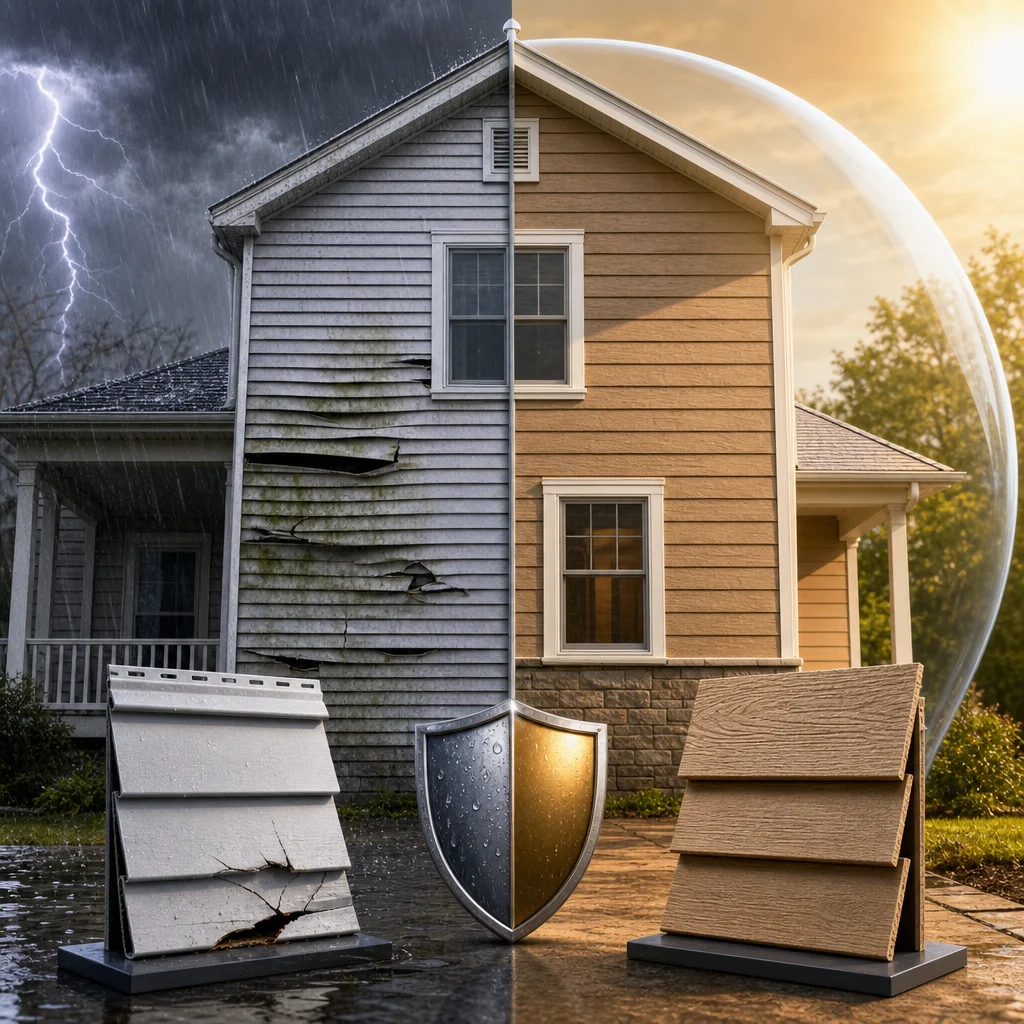
But vinyl has real limitations, especially in Wisconsin’s climate. The material becomes brittle in cold temperatures and can crack or break if struck by debris or during harsh winter weather. Thermal expansion and contraction from freeze-thaw cycles cause vinyl to warp and buckle over time, creating gaps where water can seep behind the siding. We’ve observed severe buckling on older vinyl installations throughout the Brookfield area after just 15-20 years of exposure.
Vinyl also offers minimal structural contribution to your home. It’s purely cosmetic cladding that doesn’t add rigidity to your walls. If you ever need to repair underlying structural damage, the vinyl simply comes off and goes back on. Additionally, lower-quality vinyl grades can fade noticeably within 5-7 years, especially on south-facing walls exposed to intense UV radiation.
The color palette appears varied when you’re shopping, but most vinyl products offer limited design flexibility. Once you commit to a specific shade, changing it means replacing sections of siding. This creates challenges if you want to update your home’s exterior in 10-15 years without replacing everything.
Actionable takeaway: If you choose vinyl, invest in premium grades (thicker, more UV-resistant formulations) and ensure your contractor uses proper installation techniques that accommodate thermal movement. Budget for repainting or replacement within 15-20 years.
LP SmartSide Engineered Wood: Superior Protection and Longevity
LP SmartSide represents a significant step up in performance and durability. This engineered wood product combines wood strands bound together with resin, creating a material that resists rot, splits, and weathering far better than traditional solid wood siding. The manufacturing process treats the material to resist moisture and decay, addressing the primary weakness of conventional wood products.
We recommend LP SmartSide to homeowners who want excellent long-term value. The material typically lasts 25-40+ years with proper maintenance, compared to vinyl’s 15-20 year lifespan. LP SmartSide maintains its structural integrity through Wisconsin’s temperature extremes and can be repaired or replaced in sections without affecting surrounding material.
The aesthetic advantages matter too. LP SmartSide accepts paint beautifully and retains color and finish longer than vinyl under UV exposure. If you want to refresh your home’s appearance every 10-15 years with a new paint color, you can do so without replacing the siding itself. This flexibility appeals to homeowners who like design evolution.
LP SmartSide also provides modest structural reinforcement to your home’s exterior walls, contributing to overall rigidity and weather resistance. The material’s density means it absorbs impact better than thin vinyl, reducing the likelihood of damage from falling branches or storm debris.
The trade-offs involve higher initial cost (typically 20-30% more than vinyl) and maintenance requirements. LP SmartSide requires periodic painting to maintain its protective finish, usually every 7-10 years depending on exposure and climate conditions. Some homeowners find this ongoing maintenance worthwhile for the longevity and beauty it provides; others prefer vinyl’s total lack of painting.
LP SmartSide also needs protection during installation and must be handled carefully during storms. While the engineered wood resists rot and splits better than solid wood, it’s not invulnerable. Proper installation with adequate flashing and water management is essential.
Key insight: Choose LP SmartSide if you value longevity and design flexibility. The higher initial investment typically returns dividends through extended lifespan and reduced replacement frequency.
Key Differences in Weather Resistance and Climate Performance
Wisconsin’s climate presents unique challenges for exterior materials. We experience dramatic temperature swings, significant moisture from snowmelt and rain, and intense UV radiation during summer months. How each siding material responds to these conditions reveals critical performance differences.
Vinyl’s primary weakness emerges during freeze-thaw cycles. When temperatures fluctuate rapidly, vinyl expands and contracts inconsistently. Over multiple winters, this thermal stress causes cumulative damage: buckling, warping, and separation from the underlying structure. Gaps develop where water can infiltrate, leading to rot in the wood framing and insulation behind the vinyl. We’ve documented cases where vinyl siding appeared intact from the street but concealed serious moisture damage underneath.
LP SmartSide handles thermal cycling much better. The engineered wood’s density and structural composition allow it to expand and contract more predictably and uniformly. While the material still moves with temperature changes, the movement is gradual and accommodated by proper installation techniques. The wood fiber composition actually performs well in cold climates because it’s more stable than solid lumber.
Moisture resistance differs significantly. Vinyl doesn’t absorb water, but it creates a vapor barrier that can trap moisture against your home’s frame if installation flashing isn’t perfect. LP SmartSide, when properly finished with paint and sealed at joints, sheds water effectively while allowing the material to breathe and regulate moisture. This reduces the risk of moisture accumulation that leads to rot and mold.
UV exposure presents another distinction. Vinyl fades noticeably within a few years on south and west-facing walls. LP SmartSide’s painted finish maintains color far better over 7-10 years, though periodic repainting is necessary. The ability to refresh the protective coating actually extends the material’s lifespan because you’re continuously restoring weather protection.
Wind resistance is comparable, but vinyl’s brittleness in cold temperatures makes it more prone to cracking during winter storms when temperatures are low. LP SmartSide’s structural integrity means it withstands impact and stress better across a wider temperature range.
Practical consideration: Your home’s location and orientation matter. North-facing walls that experience less UV exposure favor vinyl slightly. South-facing walls exposed to intense sun and thermal stress clearly favor LP SmartSide’s superior dimensional stability.
Maintenance Requirements: Which Material Demands Less Effort
Vinyl requires virtually no hands-on maintenance beyond occasional cleaning. You can power wash it once or twice yearly to remove algae, mold, and dirt. That’s genuinely it. No painting, no caulking, no special treatments. For homeowners who dislike exterior maintenance, vinyl’s passive approach holds genuine appeal.
This low-maintenance reputation, however, masks a critical issue: vinyl that requires no attention often conceals hidden problems. Water can accumulate behind vinyl siding without visible warning signs, damaging interior framing silently until structural issues become severe and expensive to repair. We recommend inspecting behind vinyl siding periodically, especially in areas prone to moisture, to catch problems before they escalate.
LP SmartSide demands more active care. The painted finish requires repainting every 7-10 years, depending on exposure and paint quality. You’ll need to caulk joints and nail holes periodically, check for damage after storms, and address any paint peeling or wear promptly. The first time you refinish your LP SmartSide, factor in $3,000-$8,000 depending on your home’s size and whether you hire contractors or tackle it yourself.
But here’s what makes this maintenance worthwhile: you see the condition of your material constantly. Paint failures are visible. Damage is apparent. You can address problems immediately rather than discovering extensive rot years later. The maintenance rhythm keeps you engaged with your home’s exterior health.
For busy homeowners, consider the total maintenance burden. Vinyl might seem easier until an unexpected water intrusion requires expensive interior repairs. LP SmartSide’s visible maintenance schedule, while more involved, often prevents catastrophic problems.
If you choose LP SmartSide, professional repainting typically costs $2,000-$4,000 per application, significantly less than siding replacement. That investment extends the material’s lifespan another 10-15 years, often costing less than replacing vinyl siding with new vinyl.
Action item: Calculate your tolerance for scheduled maintenance. If you prefer complete hands-off exterior management, vinyl suits you despite its downsides. If you’re willing to invest modest effort to prevent major problems, LP SmartSide aligns better with long-term home stewardship.
Long-Term Cost Analysis: Initial Investment vs. Lifespan Value
Let’s work through actual numbers. Assume a 2,500 square foot home requiring new siding for 1,500 usable square feet of material coverage.
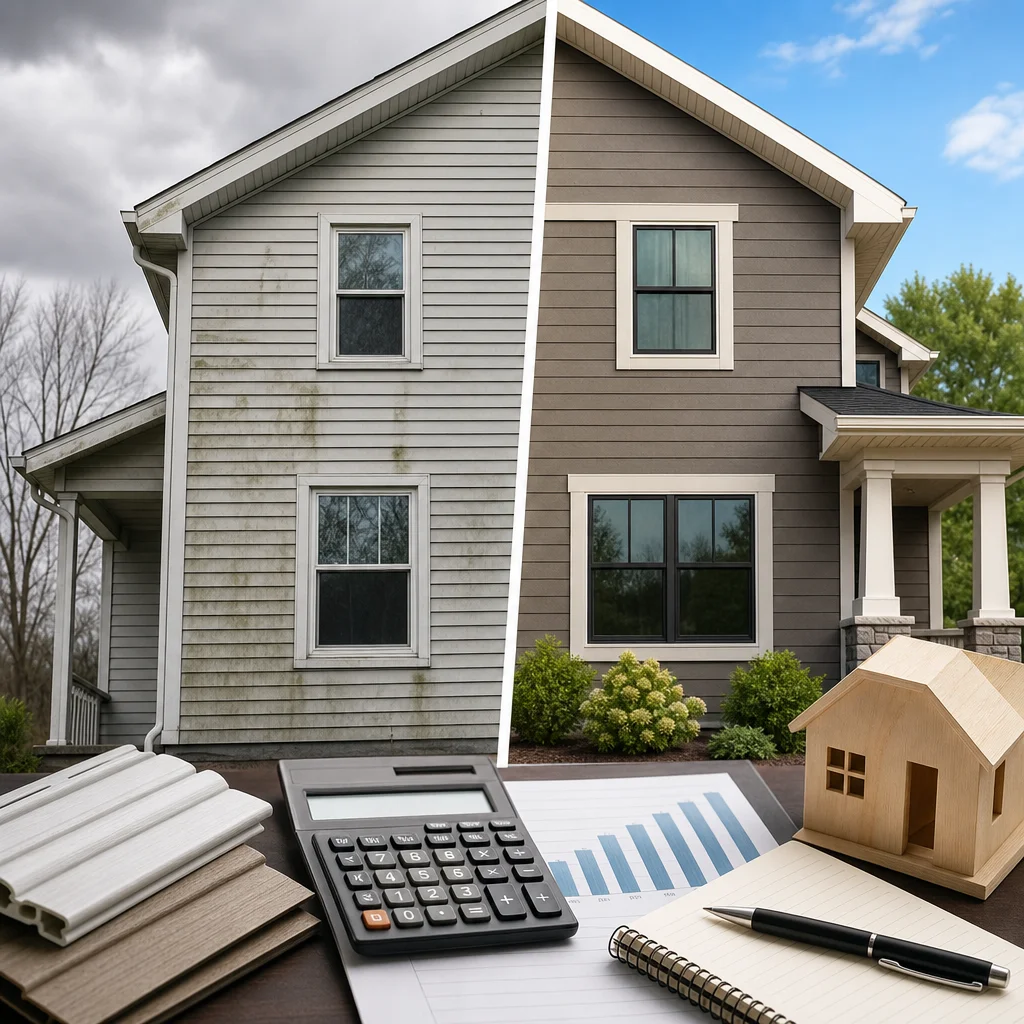
Vinyl siding typically costs $3-$5 per square foot in materials plus $2-$3 in installation labor, totaling roughly $7,500-$12,000 for complete installation. This attractive upfront price is where vinyl’s advantage peaks. Expect this siding to need replacement after 15-20 years, potentially sooner in harsh climates or on severely exposed walls.
LP SmartSide costs $5-$7 per square foot in materials plus $3-$4 in installation labor, totaling approximately $12,000-$16,500 for the same square footage. Higher upfront, yes. But lifespan expectations stretch to 25-40 years with proper maintenance.
Here’s where strategic thinking matters. If you plan to stay in your home for 30+ years, let’s compare total costs:
Vinyl scenario: Initial installation ($10,000) plus one full replacement after 15 years ($12,000 with inflation) plus basic cleaning and minor repairs ($1,500 over 30 years) = $23,500 total.
LP SmartSide scenario: Initial installation ($14,000) plus repainting twice ($3,000 each at years 10 and 20) plus caulking and minor repairs ($2,000 total over 30 years) = $23,000 total.
These scenarios are remarkably similar in long-term cost. However, the LP SmartSide home avoids the disruption and inconvenience of major siding replacement mid-ownership. You maintain consistent appearance and weather protection throughout your tenure. Additionally, LP SmartSide typically adds more perceived value at resale because buyers recognize its longevity.
The financial advantage swings decisively toward LP SmartSide if you plan extended ownership. The advantage swings toward vinyl only if you expect to sell within 10 years and want to minimize capital spending.
Consider also the hidden costs of vinyl failure: water damage repairs, interior mold remediation, insulation replacement, and structural repairs can easily exceed $5,000-$10,000. One major failure negates vinyl’s initial savings entirely.
Bottom line: Request detailed cost projections from contractors that include lifespan expectations and projected maintenance expenses. Avoid comparing only installation prices; focus on total cost of ownership over your expected tenure.
How Expert Exteriors Helps You Choose the Right Siding
We help hundreds of property owners navigate this exact decision every year. Our process begins with understanding your specific situation, not selling you on one material over another.
During a consultation, we assess your home’s exposure, orientation, existing moisture conditions, and architectural style. A 50-year-old Cape Cod might benefit from LP SmartSide to maintain period authenticity. A modern home in a protected valley might perform fine with quality vinyl. A property with a history of water issues needs LP SmartSide’s superior drainage characteristics.
We’re honest about trade-offs. We’ll tell you if your budget genuinely doesn’t accommodate LP SmartSide right now, and we’ll specify exactly which vinyl grades perform best in your situation. Conversely, we’ll explain why LP SmartSide’s longevity and design flexibility typically outweigh vinyl’s lower initial cost for homeowners planning 20+ year ownership.
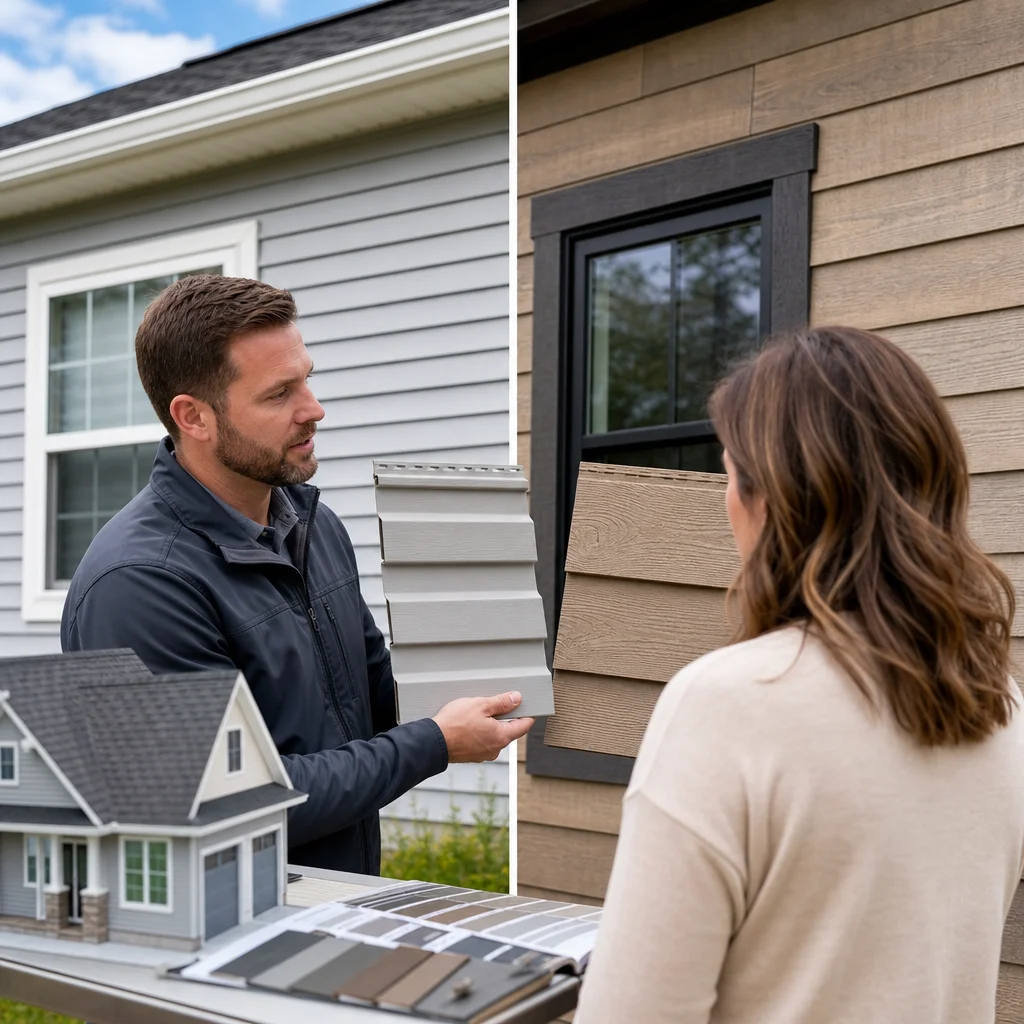
Our consultations include visual comparisons. We show samples of both materials, discuss color and style options, and explain how each material will age on your specific home. We discuss realistic maintenance timelines and actual costs so you’re not surprised later.
Critically, we examine water management details that matter more than material type alone. Proper flashing, adequate ventilation, and correct installation techniques prevent problems regardless of whether you choose vinyl or LP SmartSide. A poorly installed premium material underperforms a properly installed budget option. We emphasize this consistently because we see installation quality determine success far more often than material choice alone.
We also coordinate with manufacturers regarding warranties. LP SmartSide includes specific warranty requirements for installation and maintenance, and we ensure you understand what those commitments mean for long-term protection.
Next step: Schedule a no-pressure consultation where we discuss your home, your timeline, and your maintenance tolerance. We provide transparent guidance tailored to your situation, not generic recommendations.
Installation Quality as the Critical Success Factor
We’ve installed thousands of linear feet of both vinyl and LP SmartSide siding across the Brookfield area, and we can tell you definitively: installation quality determines whether your siding investment succeeds or fails. Material choice matters, but execution matters more.
Proper vinyl installation requires understanding thermal movement. Panels must be fastened to allow horizontal sliding without binding. Fasteners must penetrate framing but not crush the material. Joints must be designed to accommodate seasonal expansion. We’ve removed vinyl siding installed by contractors who didn’t understand these principles, discovering buckling, separation, and water infiltration underneath. The best vinyl material performs poorly with poor installation.
LP SmartSide installation demands equal precision. Proper flashing around windows, doors, and transitions is essential. Caulking must be compatible with the material and applied correctly. Nail spacing and fastening technique affect long-term performance. Paint application on fresh LP SmartSide is critical; inadequate priming or poor paint quality compromises the weatherproofing barrier immediately.
Installation also includes foundational details homeowners never see. Proper drainage planes behind the siding, adequate ventilation for moisture escape, and correct transitions to existing trim and masonry all contribute to long-term success. We photograph our installations to document these details for your records.
The contractors you choose matter more than the material specification. We recommend requesting references, asking about specific warranty obligations, and confirming that contractors understand local climate challenges. A contractor who’s successfully installed siding through multiple Wisconsin winters has perspective that matters.
When we quote LP SmartSide or vinyl projects, we specify installation standards, paint grades, and warranty terms in detail. We take responsibility for performance because we understand that our installation practices directly determine whether your siding protects your home effectively for its intended lifespan.
Critical reminder: The cheapest installation estimate often reflects corners being cut, not efficiency. Compare detailed specifications, not just pricing. Poor installation can void manufacturer warranties and create liabilities the contractor never disclosed.
Transforming Your Home’s Exterior with the Right Material
Beyond technical performance, siding transforms your home’s visual presence and how you feel about your property. The right material choice means walking outside and appreciating how your home looks, not regretting the decision every time you notice fading, damage, or wear.
Vinyl offers instant gratification. New vinyl looks clean, fresh, and uniform immediately. It maintains that appearance for several years before gradual fading becomes noticeable. If you change homes every 7-10 years and want minimal aesthetic maintenance, vinyl achieves its goal.
LP SmartSide creates depth and character through painted finishes. A well-maintained LP SmartSide home looks more substantial and refined than vinyl, especially in traditional architectural styles. The material accepts custom colors and finishes that express your design preferences. Every 7-10 years, you can refresh the appearance with a new paint color without replacing the entire siding structure. This flexibility appeals to homeowners who see their exterior as evolving alongside their lifestyle.
Consider how you’ll feel 15 years from now. With vinyl, you might be planning replacement. With LP SmartSide, you’re planning a refresh paint job and expecting another 15+ years of protection. The emotional difference is significant.
We’ve also noticed that LP SmartSide appeals to homeowners’ values around durability and stewardship. Choosing a material designed for longevity reflects a commitment to caring for your investment properly. Vinyl’s disposability mindset, while economical, leaves some homeowners feeling they’ve chosen the cheaper alternative rather than the better one.
View our siding replacement project gallery to see how both materials transform actual homes in our region. Seeing side-by-side before and afters helps clarify which aesthetic direction resonates with your preferences.
Personal insight: The right material choice is one you can feel good about, not one you second-guess. Choose based on your values, your timeline, and honest self-assessment of your maintenance tolerance. Both materials can succeed when installed properly and maintained appropriately.
Schedule Your Expert Siding Consultation Today
Selecting between vinyl and LP SmartSide siding shouldn’t involve guesswork or generic advice. Your home, your climate zone, your budget, and your long-term plans are unique, and your siding choice should reflect that specificity.
We invite you to schedule a detailed consultation where we examine your home, discuss your priorities, and provide transparent guidance about which material makes sense for your situation. We’ll explain installation approaches, realistic maintenance expectations, and long-term cost implications. We’ll answer your questions honestly, even if that means recommending the less expensive option if it truly suits your needs better.
To get started, visit our website at https://www.expertexteriorswi.com or call our office to schedule your free siding consultation. We serve residential and commercial properties throughout Brookfield and surrounding areas, and we bring 20+ years of exterior remodeling expertise to every project.
Your home’s exterior protects everything you care about. It deserves material selection guided by expertise, proper installation executed by skilled professionals, and ongoing care that preserves value and beauty for decades. Let’s discuss how Expert Exteriors can help you achieve that outcome.
For further reading: Vinyl vs LP SmartSide guide.