
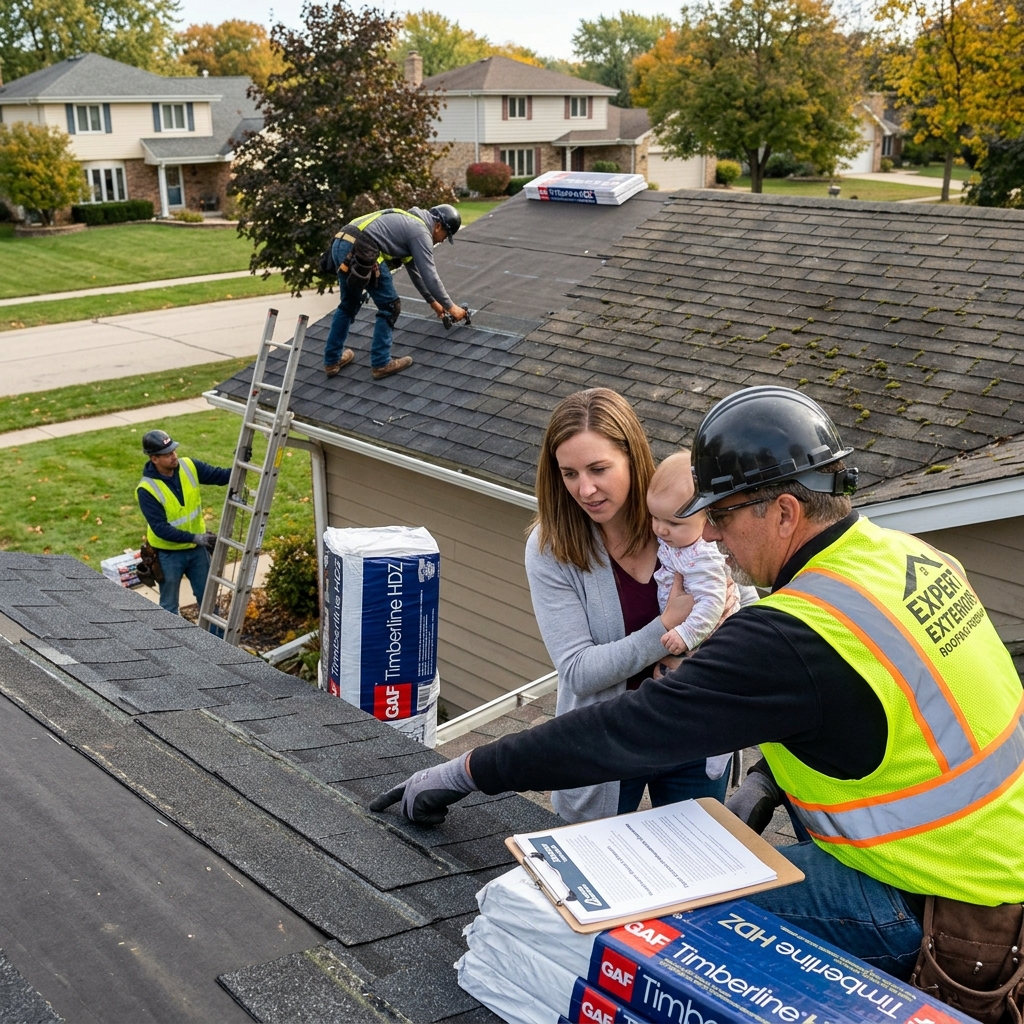
Understanding Quality Roof Replacement Warranties and Guarantees in Wisconsin
Why Roof Warranties Matter More Than You Think
Your roof is one of your property’s most critical investments. When you replace it, you’re making a decision that affects your home or commercial building for the next two to three decades. Yet many property owners overlook one of the most important protections available: understanding exactly what their warranty covers and what it doesn’t.
We’ve worked with hundreds of property owners across Brookfield and surrounding Wisconsin areas who discovered too late that their warranty had limitations they didn’t anticipate. Some learned their coverage excluded specific failure modes. Others found that improper installation voided their protection entirely. These gaps leave you exposed to costly repairs that should have been covered.
This guide walks you through everything you need to know about roof replacement warranties. We’ll explain the difference between manufacturer and workmanship coverage, show you what we actually protect our customers against, and help you evaluate whether your warranty truly safeguards your investment.
A roof warranty is more than a piece of paper. It’s your financial safety net when something goes wrong. Without one, a single premature failure or defect could cost you thousands in unexpected repairs.
Consider this scenario: You have a new roof installed, and three years later, you notice granule loss (the protective coating on asphalt shingles deteriorating). A strong warranty covers this defect. Without one, you’re paying out of pocket. With today’s roofing costs, that repair bill can easily exceed $5,000 to $10,000 depending on your roof size.
Warranties also protect your property’s resale value. Potential buyers and their inspectors scrutinize warranty documentation. A comprehensive, transferable warranty signals that your roof was installed properly and that you stand behind the quality. A weak or non-transferable warranty raises red flags.
Wisconsin’s climate demands extra attention here. Our freeze-thaw cycles, heavy snow loads, and ice dams create unique stress on roofing systems. A warranty that accounts for these regional challenges is essential. We structure our guarantees around Wisconsin’s specific weather patterns, ensuring coverage that actually matters in our environment.
Actionable takeaway: When evaluating any roof replacement, request the full warranty documentation before signing any contract. Read through the coverage details and exclusions yourself, then ask the contractor to explain any sections you don’t understand.
The Problem with Unclear Warranty Coverage
Many roof warranties sound comprehensive until you read the fine print. That’s where the problems start.
Some warranties use vague language that creates ambiguity about what’s actually covered. Phrases like “defects in materials” or “normal wear and tear” can be interpreted different ways. When you file a claim years later, the manufacturer may interpret these terms differently than you expected, potentially denying your claim.
Exclusions hide in warranties too. Most warranties exclude damage from storms, wind, impact, poor maintenance, or improper installation. If your contractor used incorrect installation techniques, the manufacturer can deny your entire claim, even if the issue itself was a material defect. This is exactly the kind of hidden trap that catches property owners off guard.
Limited lifetime warranties create another confusion point. Some manufacturers offer “lifetime” coverage but only to the original owner. If you sell your property, the new owner gets a much shorter warranty period, sometimes 10-20 years. This non-transferable protection significantly reduces your resale advantage.
Workmanship guarantees also vary wildly. One contractor might offer 5 years of labor coverage; another offers 15 years. The difference in protection is massive, yet many property owners don’t even ask about it during the sales process.
Geographic limitations round out the problem. Some warranties contain clauses that limit coverage in specific regions or exclude certain climates. A warranty designed for dry, temperate areas may not provide adequate coverage for Wisconsin winters.
Actionable takeaway: Before committing to any roof replacement, create a checklist of warranty questions: Is coverage transferable? What specific exclusions apply? What’s the timeline for claim filing? Who actually processes claims, and what documentation do you need? Get these answers in writing.
Types of Warranties We Provide on Roof Replacements
At Expert Exteriors, we offer two distinct warranty protections on every roof replacement project. Understanding both helps you appreciate the full scope of your coverage.
Our workmanship warranty covers the quality of our installation and labor. When we replace your roof, we stand behind every fastener, seam, flashing, and integration point. If something fails because we installed it incorrectly, our warranty covers the repair or replacement of that component. We provide 15-year workmanship warranties on full roof replacements, which is significantly above the industry standard of 5-10 years.
The manufacturer’s warranty covers the roofing materials themselves. Different shingle and roofing products come with different manufacturer protections. Architectural shingles typically offer 25-30 year warranties, while premium products may extend to 50 years. TPO commercial roofing systems often feature 10-20 year material warranties depending on the product line.
We also offer extended warranty options for customers who want additional peace of mind. These plans can extend your workmanship coverage beyond 15 years or add supplemental protection for specific components like flashing and valleys where leaks commonly occur.
For commercial roofing projects, we customize warranty packages based on your building’s specific needs. EPDM and TPO systems require different coverage approaches, and we structure our guarantees accordingly.
Actionable takeaway: When we provide your warranty documentation, ask us to create a simple summary page listing your coverage period, what’s included, and what’s excluded. This one-page reference will be invaluable if you ever need to file a claim.
Manufacturer vs. Workmanship Warranties Explained
These two warranties protect against different problems, and you need both for complete coverage.
Manufacturer warranties protect you against defects in the product itself. If your shingles have a manufacturing flaw that causes them to curl, split, or lose granules prematurely, the manufacturer covers replacement shingles. They don’t typically cover labor costs, but they provide the materials. Most manufacturer warranties also decline based on the age of the product, meaning coverage may be prorated after a certain point.
Workmanship warranties (also called labor warranties) protect you against installation errors. If your roofer improperly sealed a valley, left gaps in flashing, or used incorrect fastening techniques, the workmanship warranty covers fixing those problems. Here’s the critical difference: when our workmanship warranty covers a repair, we cover both materials and labor. You’re not paying anything out of pocket.
Consider a real example: Your roof develops a leak around the chimney flashing five years after installation. You file a claim. The manufacturer reviews it and determines the shingle itself is fine, so their warranty doesn’t apply (the shingles aren’t defective). However, the flashing was installed improperly. Our workmanship warranty kicks in, and we repair the flashing at no cost to you, covering both materials and labor.
Another scenario: A manufacturing defect causes your shingles to deteriorate faster than expected. The manufacturer’s warranty covers replacement shingles, but you’d normally pay for labor. However, because we install our own roofs, our workmanship warranty extends to cover the labor for manufacturer-covered repairs within our warranty period. You benefit from both protections working together.
The interaction between these warranties is where comprehensive protection happens. Many contractors only offer one or the other. We provide both, plus clarity on how they work together.
Actionable takeaway: Create a three-column comparison document for any roofing contractor you’re evaluating: (1) Manufacturer warranty length and coverage details, (2) Workmanship warranty length and coverage details, (3) How the contractor handles claims when both warranties apply.
How Our Warranty Protection Compares to Industry Standards
Wisconsin roofing contractors typically offer workmanship warranties ranging from 5 to 10 years. Our 15-year workmanship warranty substantially exceeds these standards. Here’s why that matters.
Most roof issues that stem from installation errors emerge within the first 10 years. Flashing failures, sealing problems, and fastening issues typically become apparent within this window. By offering 15 years of coverage, we provide protection through the critical period when installation-related problems are most likely to surface, plus additional cushion beyond that.
The industry standard for manufacturer warranties on quality asphalt shingles is 25-30 years. We use products within this range as standard, sometimes exceeding it with premium options. We also ensure the manufacturer warranty remains fully transferable when you sell your property, maximizing your resale benefit.
Our warranty extends to specific areas that other contractors often exclude. Roof penetrations, flashing, valleys, and edge details are common failure points. Rather than excluding these areas, our guarantee covers them when properly installed by our crews. Gutters, fascia, and soffit installations also receive warranty protection, ensuring your complete exterior system is covered.
We also process claims differently than many contractors. Some require you to work directly with manufacturers, who may deny claims or require extensive documentation. We handle claim management on behalf of our customers, taking the burden off you and using our relationship with manufacturers to advocate for full coverage.
Actionable takeaway: When comparing our warranty to another contractor’s offer, look beyond the headline warranty length. Dig into what’s specifically covered, what’s excluded, who processes claims, and whether coverage is transferable. Often, a 15-year guarantee with clear coverage is more valuable than a “lifetime” warranty with significant exclusions.
What Our Customers Are Actually Covered For
Here’s the specific protection our customers receive with our standard warranty on residential roof replacement projects:
Material defects: If your shingles, underlayment, or flashing materials fail due to manufacturing defects, we secure replacement materials from the manufacturer.
Installation errors: Any problem caused by improper installation techniques, including flashing failures, inadequate sealing, incorrect fastening, or poor valley construction, is covered. We repair or replace the affected area at no cost.
Leaks caused by our workmanship: If a leak develops within 15 years and the investigation determines it resulted from how we installed the roof, we fix it completely.
Penetration failures: Chimney flashing, vent flashing, skylight flashing, and similar penetration points are covered if failures stem from our installation work.
Edge and transition issues: Problems with drip edges, eaves, gutter integration, and transitions to different roof planes are covered.
Workmanship-related wind damage: If wind causes damage specifically because of inadequate fastening or sealing by our crew (not general wind damage to properly installed materials), our warranty applies.
Fascia, soffit, and gutter work: When we install these components as part of your project, they’re covered under the same 15-year warranty period.
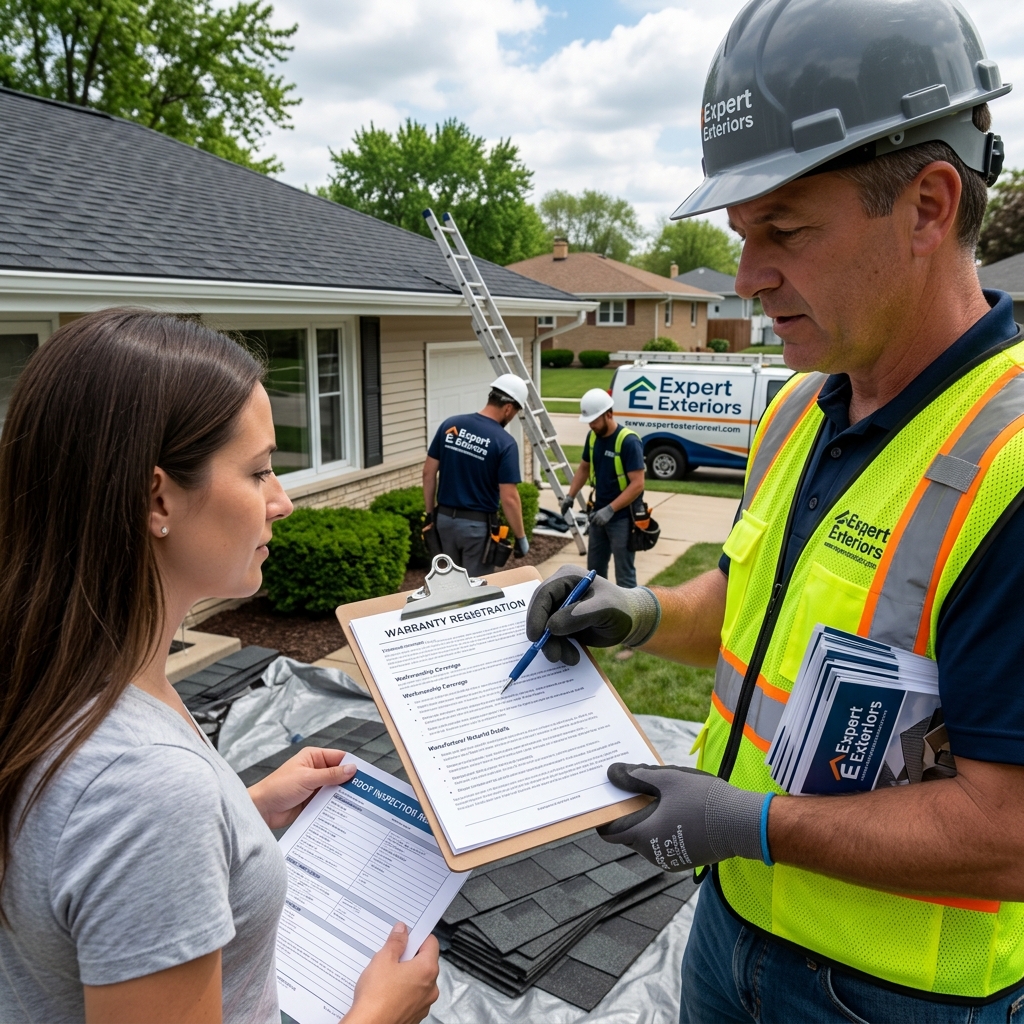
Not covered: Storm damage (beyond what normal installation should withstand), maintenance failures (lack of gutter cleaning), improper repair attempts by others, or normal weathering of materials past their expected lifespan.
Actionable takeaway: After your roof installation is complete, photograph key areas like flashing, valleys, and penetrations. Store these images with your warranty documents. If you ever need to file a claim, before and after photos provide clear evidence of what changed.
Common Warranty Gaps and How We Fill Them
Most roofing warranties contain gaps that leave property owners vulnerable. We’ve designed our coverage to address the ones we see most frequently.
Gap 1: Non-transferable coverage. Standard industry practice limits lifetime warranties to the original owner. Many contractors offer 5-year transferable coverage but 25+ year coverage only to the first owner. This means your resale value doesn’t benefit from the long-term protection. We make our full 15-year workmanship warranty transferable to subsequent owners. This adds genuine value to your property and makes it more attractive to buyers.
Gap 2: Unclear claim processes. Many warranties state coverage but don’t explain how to actually file a claim or who to contact. We provide every customer with a clear claims document showing our contact information, what documentation we’ll need, and our typical response timeline. No confusion, no runaround.
Gap 3: Prorated coverage. Some warranties reduce their benefit as time passes. A 25-year warranty might be fully covered for 10 years, then prorated by 10-15% per year after that. By year 20, you’re covered for only 50% of costs. We clearly define when prorating begins (if applicable) and ensure coverage remains substantial through the entire warranty period.
Gap 4: Exclusion of common failure points. Valleys, transitions, and penetrations account for 80% of roof leaks. Yet many contractors exclude these from their workmanship warranty. We specifically cover these high-risk areas because proper installation in these spots is what prevents leaks.
Gap 5: No coverage for secondary components. Gutters fail when roofs are replaced improperly because water doesn’t drain as intended. We ensure gutter and fascia work ties into our warranty, so you’re protected against the cascading problems improper roof installation can cause.
Gap 6: Weak claim advocacy. When customers file manufacturer claims, manufacturers sometimes deny them based on technical interpretations. We advocate on your behalf, using our professional standing and documentation to help secure approvals.
Actionable takeaway: Use our gap analysis as a template when evaluating other contractors. Ask each one specifically how they handle transferability, claims processes, prorating, valleys/penetrations, secondary components, and claim advocacy.
Protecting Your Investment with Extended Warranty Options
For customers who want maximum protection, we offer extended warranty plans that go beyond our standard coverage.
Extended workmanship coverage: Rather than 15 years, you can extend to 20 or 25 years of labor warranty protection. This covers an additional decade or more of potential installation-related failures. Given that many roofs are expected to last 25-30 years, this extension bridges the gap between installation guarantee and material warranty.
Enhanced penetration protection: This plan specifically covers chimney flashing, vent flashing, pipe boots, and similar penetrations. It includes not just our installation work but also weathering-related failures that sometimes occur at these vulnerable points.
Complete system coverage: This comprehensive option extends warranty protection to your entire exterior system. If we installed your roof, gutters, fascia, soffit, and siding, this plan covers all of it under a unified warranty. It simplifies management and ensures nothing falls through the cracks.
Storm damage rider: Wisconsin experiences significant weather events. This optional coverage supplements your standard warranty by covering wind, hail, or impact damage beyond what’s normally considered “normal” weather stress. This is valuable insurance in our climate.
Maintenance package: This combines extended warranty with scheduled maintenance visits. We inspect your roof annually, clean gutters, and address minor issues before they become major ones. Maintenance often extends roof lifespan significantly, and this package ensures you maintain warranty validity through proper upkeep.
Extended plans are typically quite affordable when calculated against the cost of a roof replacement. We’re happy to discuss options that match your budget and risk tolerance.
Actionable takeaway: Think about how long you plan to own your property and what extended coverage makes sense for your timeline. If you’re planning to sell in 8 years, extended coverage beyond 15 years may not be necessary. If you plan to stay 30+ years, extended protection becomes more valuable.
Why Professional Installation Ensures Your Warranty Validity
Your warranty is only as good as the person who installs your roof. This is perhaps the most critical point we emphasize to customers.
Many warranties contain language stating that coverage is void if installation doesn’t meet manufacturer specifications. This means if a contractor cuts corners, takes shortcuts, or uses improper techniques, the warranty coverage you paid for disappears. You lose all protection.
This is where professional installation matters enormously. We employ trained, certified installers who follow manufacturer specifications precisely. Every nail placement is correct. Every seam is properly sealed. Every flashing detail receives the attention it deserves. This isn’t just good practice, it’s what ensures your warranty remains valid.
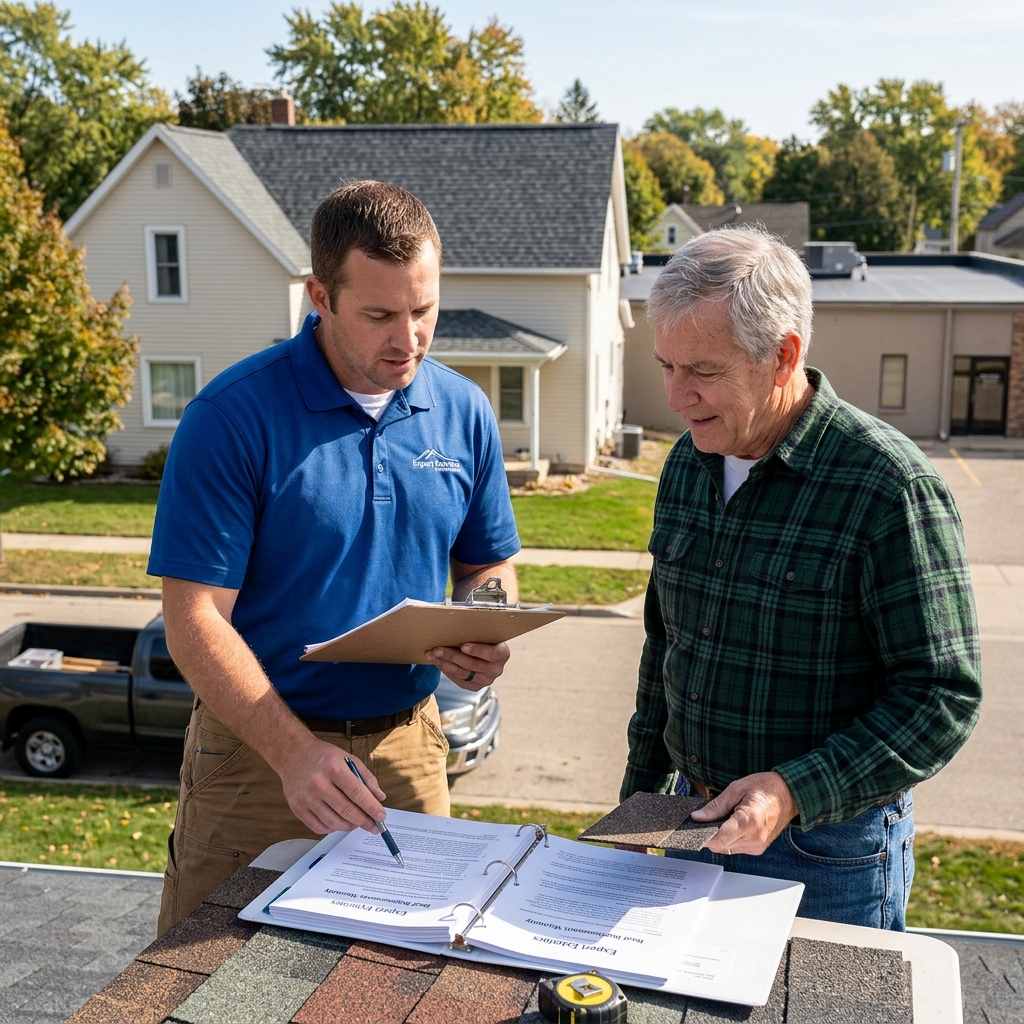
Here’s what happens with lesser contractors: They might install shingles with improper fastening to save time. The shingles may look fine initially but fail prematurely due to inadequate attachment. When you file a claim, the manufacturer investigates. They determine installation didn’t meet specs and deny coverage. You’re left with a voided warranty and a roof that needs repair years ahead of schedule.
By contrast, when we install your roof, every detail is documented and photographed. We maintain records showing our crews followed all specifications. If a claim ever becomes necessary, we have proof of proper installation. This documentation protects both your warranty validity and gives us leverage when advocating for manufacturer claim approval.
We also provide customers with detailed installation documentation. You receive information about what was installed, how it was installed, and where key components are located. This documentation becomes invaluable if warranty service is ever needed.
Our commitment to professional installation extends to continuing education. Our teams stay current on new installation techniques, manufacturer specification changes, and best practices specific to Wisconsin’s climate challenges.
Actionable takeaway: Before hiring any contractor, ask to see examples of their installation documentation. Proper contractors photograph key installation steps and maintain detailed records. If a contractor seems evasive about documentation, that’s a red flag.
Getting the Most Value From Your Roof Warranty
A warranty is only valuable if you actually use it when needed. Many property owners don’t maximize their warranty benefits through lack of knowledge or poor maintenance.
Track your documentation carefully. Store your warranty paperwork in a safe, accessible location. Many digital storage solutions work well (cloud storage, email to yourself). When a potential problem emerges, you’ll need quick access to your warranty terms.
Document your roof’s condition regularly. Take photos of your roof twice yearly, particularly after storms. If problems later develop, these photos help establish when damage occurred, which is crucial for warranty claims. You’ll also spot minor issues before they become major ones.
Maintain your roof properly. Most warranties require reasonable maintenance to remain valid. This typically means cleaning gutters, removing debris, and not walking on the roof unnecessarily. Deferred maintenance can sometimes be used as a reason to deny claims. A simple gutter cleaning each fall and spring keeps your warranty completely valid.
Report issues promptly. As soon as you notice a potential problem, contact us. Don’t wait. Some warranties have time limits on claim filing. The sooner an issue is documented professionally, the stronger your claim position becomes. Early intervention often prevents small problems from becoming expensive ones anyway.
Keep records of any repairs or maintenance work. If we perform any warranty work or if you have other contractors perform repairs, keep the documentation. This establishes a maintenance history and helps protect future warranty claims by showing you’ve maintained the roof responsibly.
Understand your prorating schedule. If your warranty includes prorating after a certain point, know when that begins. Plan major repairs before prorating starts if possible, or understand exactly what percentage you’ll be covered for in future years.
Take advantage of transferability. If you sell your property, inform the new owner about their inherited warranty and provide them with all documentation. This goodwill gesture adds value to your sale and maintains the warranty’s validity under new ownership.
Actionable takeaway: Schedule a calendar reminder for six months from your roof installation to review your warranty documentation. If anything seems unclear, contact us to clarify. This small step prevents misunderstandings years later.
Your Next Steps to Secure Quality Coverage
Understanding roof warranties is important, but it’s equally important to get one installed properly in the first place.
When you’re ready to move forward with a roof replacement, we recommend starting with a detailed consultation. We’ll examine your current roof, discuss your property’s specific needs, and present warranty options tailored to your situation. Our instant roof replacement quote process makes it easy to get started.
During our consultation, we’ll provide you with detailed warranty documentation before you ever sign a contract. You’ll understand exactly what’s covered, for how long, and how claims work. No surprises later.
We’ll also walk you through the specific warranties available on your material choices. Different shingle grades come with different manufacturer coverage, and we help you understand the real-world difference between 25-year and 30-year products. Sometimes premium products provide better overall value when warranty benefits are considered.
Once you’ve selected your project, our installation teams will handle everything to specification. You’ll receive detailed documentation of what was installed and where. We’ll explain your warranty coverage one more time after installation is complete.
If any issue ever arises during your warranty period, we’re your single point of contact. You don’t navigate manufacturer processes alone. We handle the communication, documentation, and advocacy, making sure your warranty actually protects you the way it should.
For property owners in Brookfield and surrounding Wisconsin areas looking for a roofing contractor who stands behind their work with meaningful warranty protection, we’re ready to help. Our commitment to professional installation and comprehensive coverage means your roof investment is genuinely protected.
Contact us today to discuss your roofing needs and the warranty protection that’s right for your property.