
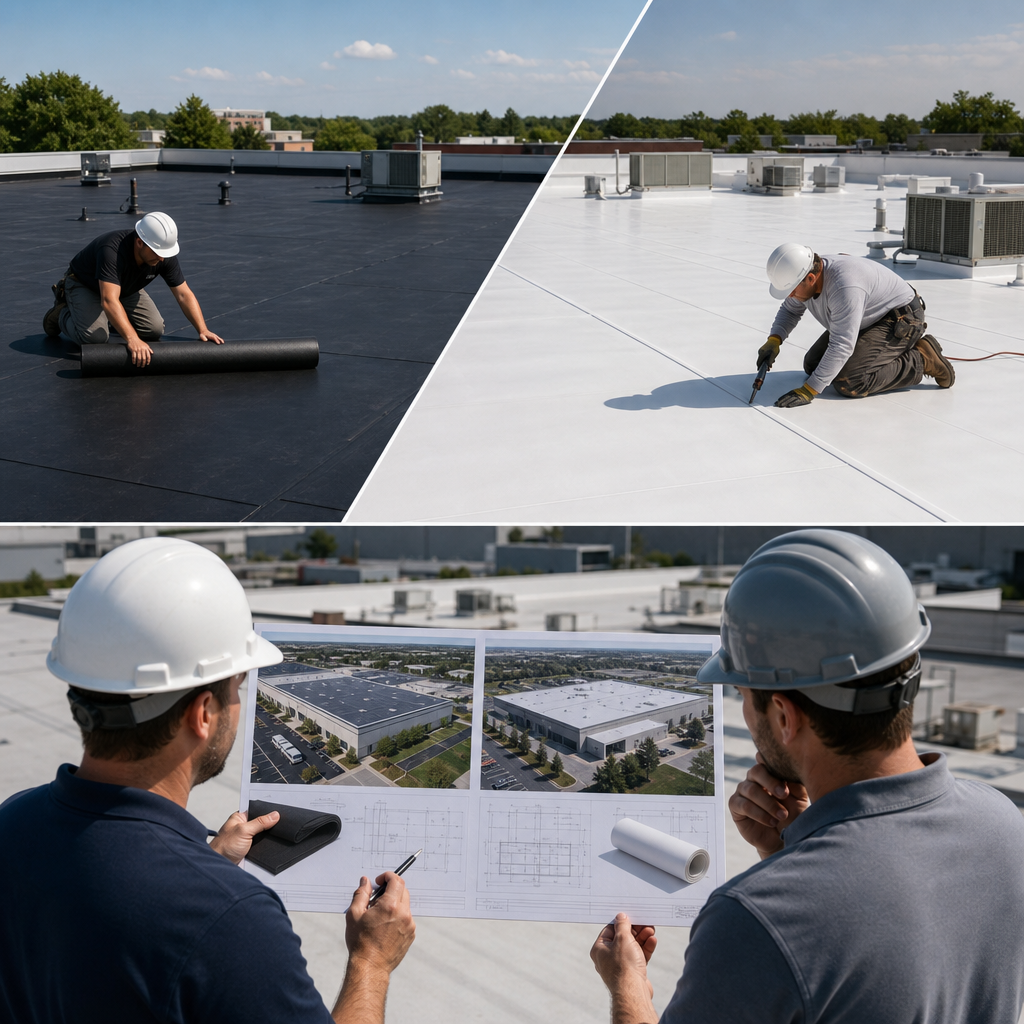
Top Commercial Roofing Solutions: EPDM vs TPO Success Stories
Why Commercial Property Owners Choose Between EPDM and TPO
When you own a commercial property, your roof directly impacts operational costs, tenant comfort, and long-term asset value. Most property owners eventually face a critical decision: should you invest in EPDM or TPO roofing when replacement time arrives?
This choice matters because both systems dominate the commercial flat roof market, yet they perform differently under real-world conditions. EPDM (ethylene propylene diene monomer) has been the industry standard for decades, proven in thousands of installations. TPO (thermoplastic polyolefin) emerged as a newer alternative, marketed for energy savings and lower upfront costs. The decision isn’t about which is universally “better”—it’s about which aligns with your property’s specific needs, climate exposure, and long-term financial strategy.
We help commercial property owners navigate this choice by analyzing actual performance data, maintenance demands, and total cost of ownership rather than relying on manufacturer claims alone.
Understanding EPDM Roofing: Durability and Performance Benefits
EPDM rubber membranes have protected commercial buildings since the 1970s, and that longevity tells a story. This single-ply membrane consists of a synthetic rubber compound that resists UV radiation, ozone, and extreme temperature swings exceptionally well.
Key durability advantages include:
- Proven 30+ year lifespan with proper maintenance
- Superior puncture resistance and impact tolerance
- Excellent performance in freeze-thaw cycles (critical for Wisconsin winters)
- Strong adhesion to substrates, minimizing wind uplift risk
- Proven track record in harsh industrial and chemical environments
EPDM’s black color absorbs heat, which some view as a drawback for energy efficiency. However, this characteristic actually provides benefits in cold climates: it helps prevent snow and ice accumulation on low-slope roofs, reducing structural load during heavy Wisconsin winters. For commercial properties in our region, this thermal mass characteristic often outweighs cooling concerns.
The membrane’s flexibility remains intact even in subzero temperatures, meaning it won’t crack or become brittle during seasonal freeze-thaw cycles that damage less resilient materials. This resilience translates to fewer emergency repairs and less downtime for your business operations.
TPO Roofing Advantages: Energy Efficiency and Cost Savings
TPO membranes were engineered to address EPDM’s energy absorption tendency. This thermoplastic material comes in white, tan, or light gray options that reflect solar radiation, keeping building interiors cooler and reducing HVAC demand during warm months.
Energy and cost benefits include:
- 10-30% reduction in cooling costs compared to dark EPDM
- Lower initial material and installation expense than EPDM
- White membranes reflect up to 87% of solar radiation
- Lighter weight reduces structural load on older buildings
- Easier repairs using heat-welded seams
TPO’s reflective properties make it particularly attractive for properties with significant daytime cooling loads. A warehouse with extensive skylights or a retail center with large south-facing glass benefits immediately from TPO’s thermal performance. Lower upfront cost also means faster ROI for property owners managing tight budgets.
However, TPO’s relative newness (widespread adoption only in the last 15-20 years) means we have less than three decades of field performance data to evaluate. Early TPO installations from the 1990s have shown some seam degradation issues, though modern manufacturing has improved significantly.
Our EPDM Installation Success: Real-World Commercial Projects
We’ve completed numerous EPDM installations across Brookfield and surrounding areas. One notable project involved a 15,000-square-foot manufacturing facility with a deteriorating 1990s membrane. The building’s owners were concerned about operational disruptions and potential water damage affecting equipment.
Our team removed the old roofing system, reinforced compromised decking, installed new EPDM with fully adhered installation methods, and completed the project on schedule. Five years later, the facility has experienced zero water penetration issues, no seam failures, and minimal maintenance costs. The owner reported that equipment reliability improved because the building envelope integrity no longer varied seasonally.
Another successful project involved a commercial office complex where previous repairs had been patched multiple times with incompatible materials. We performed a complete tear-off and installed a 60-mil EPDM membrane with mechanically fastened edges and fully adhered field coverage. The building’s HVAC system runs more efficiently now because the roof’s thermal performance is consistent, and the property manager appreciated the straightforward maintenance schedule we provided.
These projects demonstrate why we recommend EPDM for properties prioritizing durability and predictable performance over immediate energy savings.
Our TPO Installation Success: Real-World Commercial Projects
We’ve also completed successful TPO installations for clients where energy efficiency was the primary concern. A retail shopping center in the area was struggling with excessive cooling costs, particularly during summer months when skylights and large storefront windows created significant heat gain.
We replaced their aging EPDM system with a white TPO membrane. Energy monitoring six months after installation showed a 22% reduction in peak cooling demand. The property manager noted lower utility bills and improved tenant comfort in previously warm areas near the skylights. The light color also simplified rooftop maintenance because technicians could spot debris and potential issues more easily.
Another TPO success involved a newer commercial building where the owner prioritized lower upfront capital expenditure. The TPO system we installed came in at approximately 15% less material cost than equivalent EPDM coverage, and the property owner viewed this as a strategic financial decision given their timeline for occupancy and revenue generation.
Both projects reinforced our understanding that TPO excels when energy performance and budget constraints drive the decision, particularly for newer buildings or properties with significant daytime cooling loads.
Comparing Longevity: EPDM and TPO Lifespan Analysis
EPDM membranes routinely reach 30-40 years with proper maintenance, and many installations from the 1980s remain serviceable today. The rubber material continues performing its core function (water exclusion) even as minor surface degradation occurs.
TPO membranes are typically warrantied for 20-25 years, with some manufacturers claiming 30-year potential. However, the material’s plastic composition means performance can degrade more variably depending on installation quality, climate exposure, and maintenance consistency. UV-stable additives protect TPO from degradation, but these compounds gradually deplete over time.
Real-world field data shows EPDM maintains higher performance consistency across the full lifespan. TPO performs well during years 1-15, often showing superior energy efficiency. Between years 15-25, EPDM typically requires less maintenance and experiences fewer unexpected failures. Beyond 25 years, EPDM’s advantage becomes more pronounced.
For property owners planning to own the building for 30+ years, EPDM offers greater confidence. For those with shorter holding periods (7-15 years), TPO’s lower initial cost and energy benefits often provide better financial outcomes.
Energy Efficiency Comparison: Which System Saves More
TPO’s reflective white surface delivers measurable cooling benefits in warm climates or for buildings with high daytime cooling loads. In laboratory testing, TPO membranes reflect 75-87% of solar radiation compared to EPDM’s 5-10%.
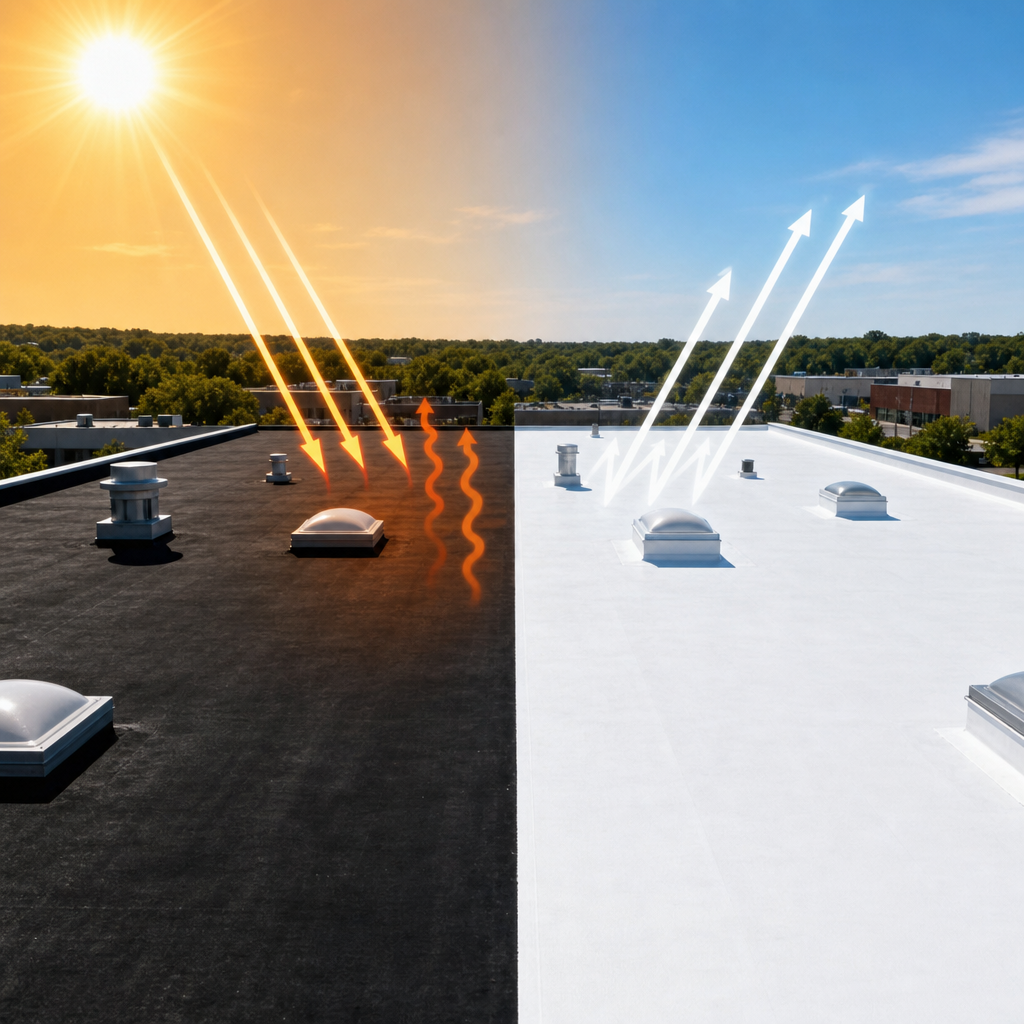
However, Wisconsin’s climate complicates this comparison. Our region experiences heating-dominated seasons where EPDM’s solar heat absorption actually reduces winter heating costs. During the six-month heating season, EPDM’s dark color provides a net energy benefit by warming the building’s top surface.
Real annual performance depends on your specific property:
- Buildings with significant cooling loads (data centers, retail with extensive glass): TPO provides 15-25% cooling savings
- Buildings with significant heating loads (warehouses, industrial): EPDM’s thermal mass often reduces heating costs 8-12%
- Mixed-use buildings: energy benefits roughly balance; choose based on other factors
Installing a white TPO membrane might save $1,200-1,800 annually in cooling costs for a typical 10,000-square-foot commercial building in our area. Meanwhile, EPDM’s heating season advantage might provide $800-1,200 in annual savings. The net difference is often smaller than marketing materials suggest.
Maintenance Requirements and Long-Term Cost Considerations
EPDM requires straightforward maintenance: annual inspections, debris removal, and minor repairs using compatible repair patches. The material’s durability means emergency repairs are rare. We recommend cleaning gutters and removing pooled water after heavy rains to prevent membrane stress.
TPO maintenance involves similar tasks but with important differences. TPO seams are heat-welded rather than tape-sealed, making them potentially vulnerable if not properly installed. Any contractor performing repairs must use heat-welding equipment and expertise; amateur patches compromise seam integrity. This means repair costs can exceed EPDM repairs because specialized equipment and trained technicians are required.
Over a 30-year lifespan, typical maintenance and repair costs average:
- EPDM: $3,000-5,000 total (spread across the lifespan)
- TPO: $4,500-7,000 total (higher repair complexity, more frequent patching needs)
When comparing total cost of ownership, factor in initial material costs, energy savings, maintenance expenses, and expected lifespan. We provide detailed ROI analysis for each system based on your property’s specific characteristics.
Why Expert Exteriors Recommends EPDM and TPO Systems
We recommend both systems because honest assessment requires acknowledging their different strengths. Some roofing contractors push one system exclusively to reduce inventory complexity or maximize markup on specific materials. We don’t operate that way.
Our recommendation framework considers:
- Climate exposure and seasonal temperature patterns
- Building usage and cooling/heating load profiles
- Capital budget and timeline constraints
- Long-term ownership plans
- Maintenance staffing and expertise available
- Local contractor availability for future repairs
We’ve seen projects succeed with both systems when properly matched to property requirements, and we’ve seen expensive failures when the wrong material was chosen to meet contractor preferences rather than property needs.
Our advantage is honest, data-driven recommendations backed by our comprehensive roof services and decades of installation experience across the region.
How We Select the Ideal Roofing Solution for Your Property
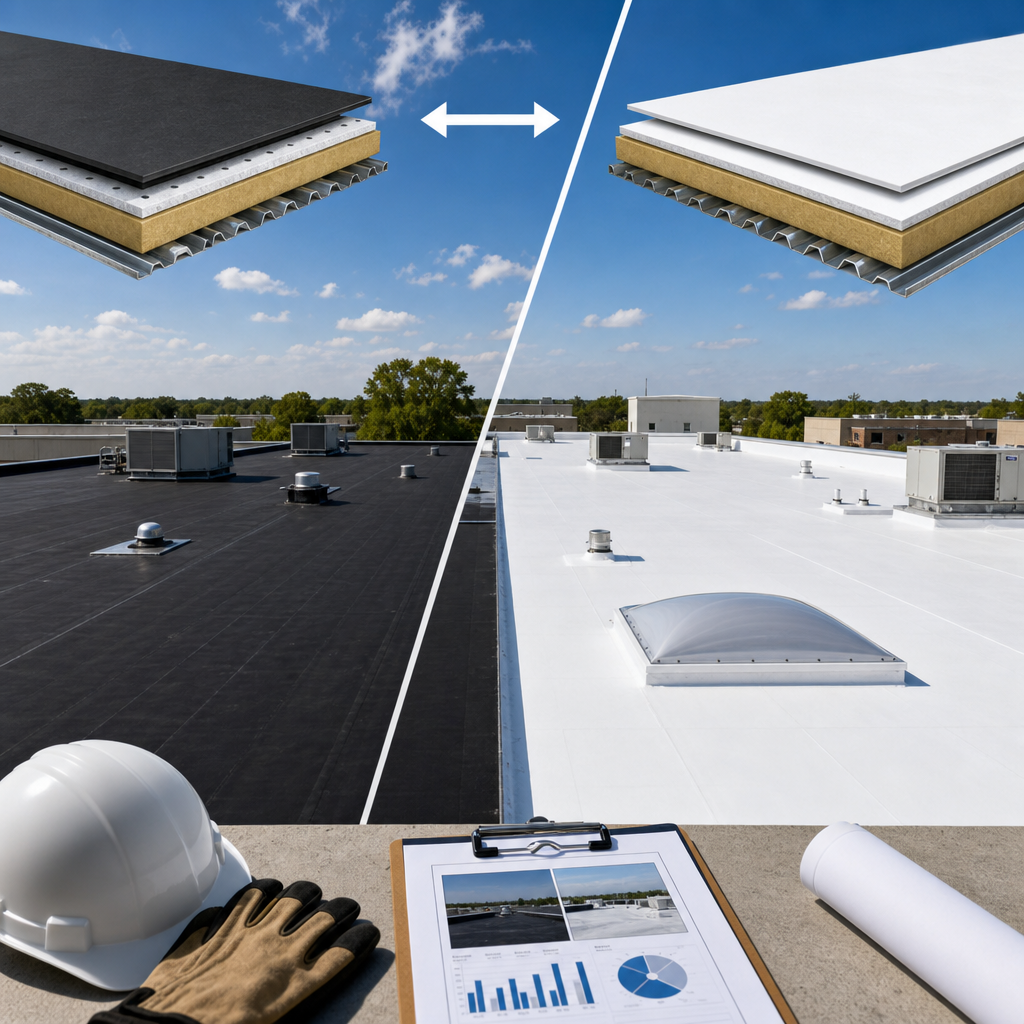
Our selection process begins with site analysis: we measure roof dimensions, assess structural conditions, identify drainage patterns, and evaluate environmental exposures (wind load, tree proximity, industrial emissions).
Next, we gather business requirements: your timeline, budget parameters, risk tolerance, and long-term ownership plans. A property owner planning a sale within five years has different financial priorities than someone managing a facility for 30+ years.
We then provide a comparison analysis showing estimated annual energy costs, maintenance requirements, total cost of ownership, and risk factors for each system. This isn’t about us selling premium options; it’s about helping you make informed decisions with complete information.
Finally, we discuss our installation approach and warranty coverage for each system. Our commercial roof replacements include detailed specifications ensuring proper membrane preparation, seam installation, and drainage design regardless of which system you select.
The Expert Exteriors Advantage: Professional Installation Standards
The roofing system itself is only half the equation; installation quality determines actual performance. We’ve inspected failed roofs from competitors and found common problems: improper seam preparation, inadequate fastening, insufficient substrate repair, and drainage design errors.
Our installation standards include:
- Comprehensive roof deck inspection and repair before membrane installation
- Proper temperature and humidity control during seam work
- Multiple quality checks during installation, not just final inspection
- Detailed documentation and photographic records
- Clear maintenance guides specific to your system
- Accessible warranty support from the company that installed your roof
When you choose Expert Exteriors for commercial roofing, you’re not just purchasing materials; you’re investing in professional oversight that protects your investment long-term. We stand behind our work because our reputation depends on it, and that distinction matters when your building’s integrity is at stake.
We serve property owners throughout Brookfield and surrounding areas with roof installation services that meet commercial construction standards and exceed typical contractor practices.
Making Your Decision: Which System Is Right for Your Commercial Property
Choose EPDM if:
- You plan to own the property for 25+ years
- Your building has significant heating loads or minimal cooling demand
- You prioritize long-term durability and predictable maintenance
- You want maximum confidence in freeze-thaw cycle performance
- Budget allows for the higher initial investment
Choose TPO if:
- You have substantial cooling costs during warm months
- Your ownership timeline is 10-20 years
- Lower upfront capital expense is critical to your financial plan
- Your building has significant glass coverage or skylights
- You’re comfortable with somewhat higher maintenance complexity
Both systems deliver excellent performance when properly installed on your commercial property. The decision ultimately hinges on matching material characteristics to your specific property needs and financial objectives.
Contact us for a detailed site assessment and comparison analysis. We’ll review your property’s actual energy performance, maintenance history, and structural conditions, then provide honest recommendations backed by real data rather than marketing claims. Our goal is helping you select the roofing system that provides the best protection and value for your commercial investment.