
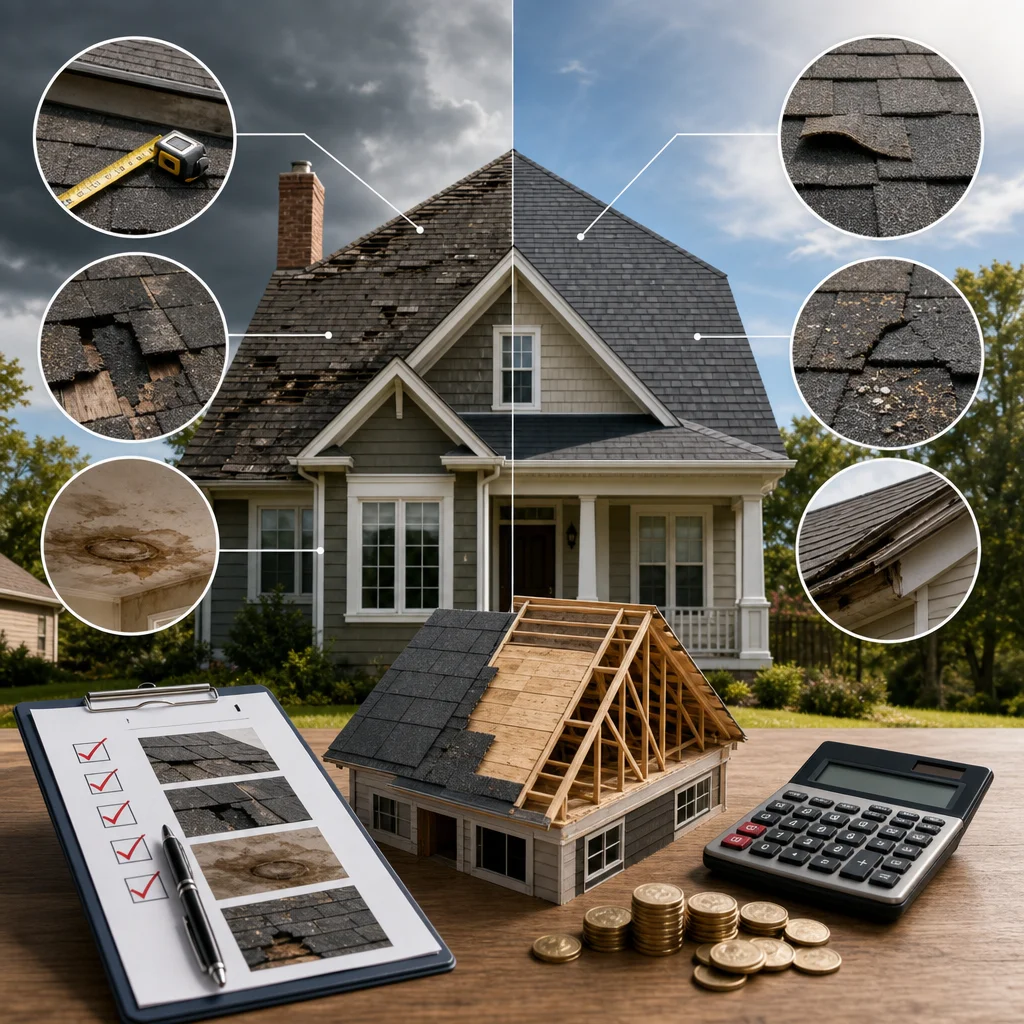
Top 7 Signs Your Roof Needs Replacement Instead of Repair
1. Age of Your Roof and Expected Lifespan
Deciding whether to repair or replace your roof is one of the most consequential home maintenance choices you’ll make. A patch here or there might seem like the budget-friendly option, but the wrong call can cost you thousands in water damage, energy waste, and emergency repairs down the road. We’ve seen countless property owners in Brookfield and surrounding areas face this decision, and the answer often isn’t obvious without professional guidance.
The challenge is that roof damage doesn’t always announce itself clearly. You might notice a small leak, spot a few missing shingles, or simply wonder if your roof is getting old. These signs separately might suggest a repair. Together, they often point to replacement. Understanding the difference between patching and starting fresh will help you protect your investment and avoid costly mistakes.
This guide walks through seven critical signs that indicate replacement is your smarter choice. By the end, you’ll know what to look for, how to assess your specific situation, and when to call in the experts.
Your roof has a predictable lifespan, and once it approaches or exceeds that window, repairs become increasingly unreliable.
Most asphalt shingle roofs in Wisconsin last 20 to 25 years under normal conditions. Metal roofs can extend to 40 to 50 years. Wood shake or slate roofs often surpass 50 years. If your roof is approaching or has exceeded these benchmarks, replacement is typically more cost-effective than ongoing repairs.
Why? As roofs age, the materials degrade. Shingles lose their waterproofing granules, become brittle, and fail to seal properly. The underlying decking and support structures may also weaken. One repair might hold for a few months, but another leak develops in a different spot shortly after. You’re not fixing the root problem; you’re treating symptoms.
Consider this scenario: Your home was built in 2003, and the original roof is still in place. It’s now 2026. That roof has weathered 23 winters of Wisconsin freeze-thaw cycles, countless storms, and decades of UV exposure. Yes, it might still shed water in some spots, but its life expectancy is essentially over. A contractor might patch the active leak, but within months or a year, multiple new failures will likely emerge.
The economics are stark. Repair costs for aging roofs often cluster around 30 percent to 50 percent of replacement costs, yet only buy you another year or two. Replacement costs more upfront but gives you 20 to 25 more years of protection and peace of mind.
Action item: Check your home’s records or ask your local assessor’s office about your roof’s installation date. If it’s 20 or older, prioritize a professional inspection before the next major storm season.
2. Extent of Damage and Number of Problem Areas
When damage is scattered across your roof rather than concentrated in one or two spots, replacement makes more sense than targeted repairs.
A single wind-damaged area, one section hit by a fallen branch, or damage localized to one side of the roof are good candidates for repair. These situations are surgical: remove the damaged shingles, replace them with matching material, seal the area, and move on.
Widespread damage is different. Maybe hail damaged shingles across your south-facing slope and part of the north side. Perhaps wind lifted shingles in multiple locations. Or maybe you’re seeing missing shingles here, curling there, moss growth in another section, and a thin spot where water is beginning to pool. These scattered problems signal that your roof is failing across its surface, not in isolated pockets.
When we assess roofs with multiple problem areas, we often find that the issues stem from the same root cause: overall material degradation or structural weakness. Patching each spot individually is like putting a band-aid on a patient with systemic illness. The underlying problem persists and will generate new failures.
A practical test: Stand back and look at your roof from street level or a safe vantage point. Count the distinct problem areas you can see. If you spot more than two or three, or if problems appear on multiple roof faces, replacement is likely your best move.
Action item: Walk around your property (from the ground) and visually map where damage appears. If problems cluster in more than two separate areas, request a full roof assessment rather than a repair quote.
3. Cost Comparison: Repair Expenses Versus Replacement Investment
The math behind repair versus replacement is clearer when you compare not just immediate costs, but total cost of ownership.
A roof repair typically costs $300 to $1,500, depending on the scope. A full roof replacement ranges from $8,000 to $20,000 for a residential property, varying by square footage, material type, and complexity. Those numbers can make repair seem like an obvious choice. But here’s the hidden variable: repeated repairs add up faster than you’d expect.
If you’re spending $500 to $800 on repairs every 18 months, you’re piling $1,000 to $2,000 per year into a roof that’s already showing its age. Over five years, that’s $5,000 to $10,000 in cumulative repair costs plus the risk of catastrophic failure between appointments. Replacement, on the other hand, eliminates that cycle entirely for two decades.
We recommend property owners calculate their “break-even point.” If you’re actively maintaining a roof and spending money on repairs, estimate how many years you plan to own the property. Then compare the total repair costs over that period to the single replacement cost. Often, replacement breaks even in five to seven years.
There’s also the matter of insurance and resale value. A roof in its final years of lifespan may not be insurable at standard rates, and it certainly doesn’t add value when you sell. A new roof, by contrast, is a major selling feature and can support your asking price.
Action item: Get a repair quote and a replacement quote. Divide your annual repair history by the replacement cost to see how many years of repairs equal replacement. If it’s fewer than eight years, replacement wins financially.
4. Recurring Leaks and Persistent Water Damage
One leak in a ten-year-old roof is fixable. Three leaks in two years in a roof that’s 18 years old is a pattern.
Recurring leaks indicate that the underlying structure or material integrity is compromised. A roofer might seal the current leak, but the fundamental weakness remains. Water finds its way through again, sometimes in the same spot, sometimes nearby. Meanwhile, every leak introduces moisture into your attic, insulation, and framing, creating conditions for mold, rot, and structural damage.
The cost of water damage often exceeds the cost of a roof replacement. We’ve documented cases where a $15,000 roof replacement prevented $30,000 to $50,000 in attic damage, mold remediation, and structural repairs. Insurance may cover some of it, but many policies have caps, exclusions, or high deductibles on water damage claims.
If you’re experiencing recurring leaks, your risk profile has shifted. You’re no longer deciding between repair and replacement; you’re deciding between replacement and potential catastrophic loss.
A practical reality: Patching a leak in an old roof doesn’t restore the roof’s ability to shed water effectively. It addresses one symptom. The surrounding material still lacks the flexibility, waterproofing, and structural support needed to prevent future problems.
Action item: Document every leak. If you’ve had the same leak repaired twice or if you’ve had leaks in different locations within the past three years, schedule a comprehensive roof inspection and replacement assessment right away.
5. Missing or Curling Shingles Across Multiple Sections
Shingle condition is one of the most visible indicators of roof health. When you’re seeing widespread damage, replacement is overdue.
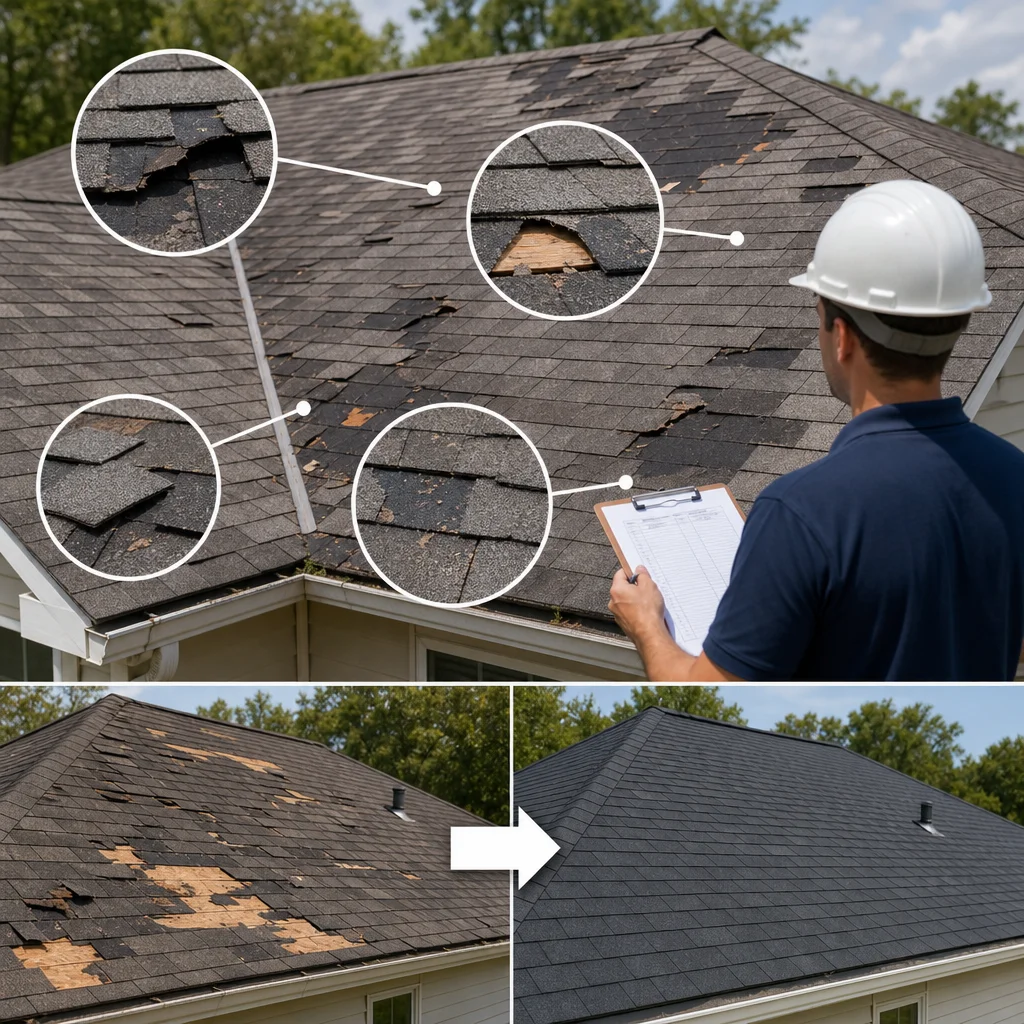
Missing shingles expose the underlayment and wood decking below. Even a few missing shingles can allow water to penetrate during heavy rain or snow melt. Curling shingles have lifted edges that allow wind and weather to work underneath, loosening the seal. Both conditions escalate as temperatures fluctuate, especially during Wisconsin winters.
If you can see missing or curling shingles from the ground or a ladder, the problem is significant. It means the damage is substantial enough to be visible and therefore likely affecting a larger area than what you can see from below.
One or two missing shingles: repairable. A section of five to ten missing shingles across your south-facing slope: point toward replacement. When curling is visible across multiple roof planes or when you can spot bald spots where granules have washed away, your roof is nearing the end of its functional life.
The reason this matters is that individual shingles fail when the entire roof’s underlayment and structure are failing. Replacing a few shingles is a temporary fix that ignores the bigger degradation. Within months, adjacent shingles will begin to fail as well.
Action item: Use binoculars to safely inspect your roof from the ground. Note the location and number of missing or severely curled shingles. If more than 10 shingles are affected, or if damage appears on multiple roof sections, replacement is justified.
6. Structural Issues and Sagging Roof Lines
This is the most serious sign and the one that demands immediate professional evaluation.
A sagging roof line indicates that the structural framework supporting your roof has weakened or failed. This can result from water damage, rot in the decking or rafters, pest damage (termites, carpenter ants), or simply age-related deterioration. Sagging might be subtle (a slight dip visible from certain angles) or obvious (a noticeable depression across a section of the roof).
Sagging is not a cosmetic issue. It signals structural compromise that threatens the integrity of your entire home. Water will pool in low spots, accelerating leaks. Snow load won’t distribute evenly, increasing stress. Over time, the structural failure can worsen rapidly.
Repair is not an option for structural problems. You cannot patch a sagging roof line. You can only replace the roof and, likely, address the underlying structural damage to the framing, decking, or supports beneath it. This is a job for experienced professionals who can assess both the roofing and structural components.
If you notice any sagging, do not delay. Call a contractor immediately for inspection. This is not a “get to it next year” situation. Structural issues compound and create liability risks.
Action item: Walk to the street or a distant vantage point and look at your roof’s edge lines against the sky. Any visible dip or sag warrants an emergency professional inspection.
7. Energy Efficiency and Modern Material Benefits
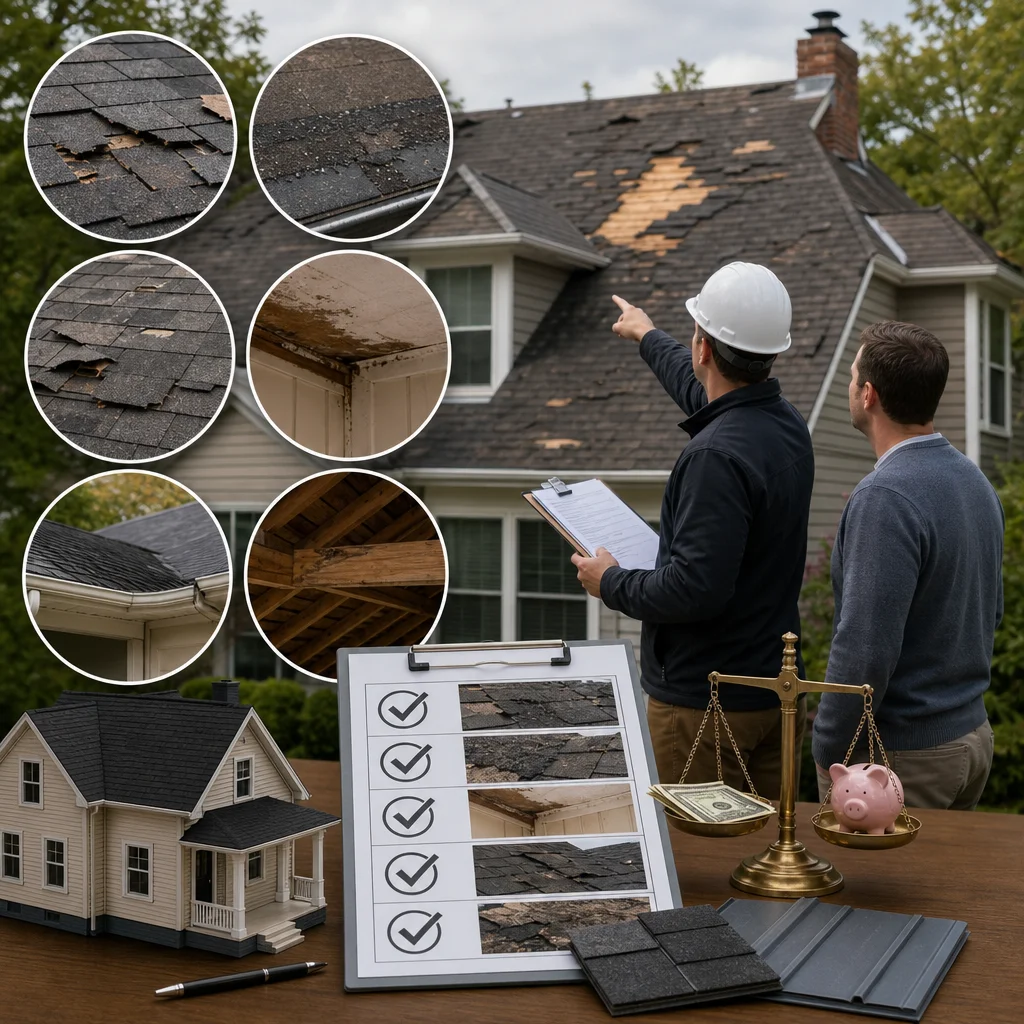
Beyond the physical condition of your roof, replacement offers the opportunity to upgrade to modern materials that improve energy efficiency and long-term durability.
Older asphalt shingles offer minimal insulation value. They absorb heat, which raises your cooling costs in summer and can shorten the lifespan of your HVAC system. Modern roofing materials, such as architectural shingles, metal roofing, or specialized coatings, reflect more sunlight and can reduce cooling costs by 10 to 20 percent.
Over a 20-year roof lifespan, that energy savings adds up to thousands of dollars. Many modern materials also come with extended warranties (30 to 50 years vs. 10 to 15 years on older products) and enhanced wind, hail, and weather resistance. Some qualify for tax credits or insurance discounts.
Replacement isn’t just about fixing what’s broken; it’s about moving to a better solution. If your roof is already failing, you’re at an inflection point. You can spend money keeping an outdated system limping along, or you can invest in a modern system that protects you better and costs less to maintain.
The environmental angle matters too. Modern roofing materials are more recyclable, and many products use sustainable manufacturing. If energy efficiency and sustainability align with your values, replacement allows you to make a meaningful upgrade.
Action item: Ask your roofer about cool roofing materials (light-colored or reflective options) for your next project. Calculate the potential energy savings over your roof’s lifespan to factor into your replacement ROI.
8. Our Expert Assessment and Professional Recommendations
Ultimately, the decision between repair and replacement requires professional eyes and honest guidance. We’ve built our reputation in Brookfield and the surrounding areas by providing exactly that.
At Expert Exteriors, we don’t default to replacement just to generate a larger invoice. We’ve repaired plenty of roofs that needed repair. But we also recognize when patching is postponing the inevitable. Our assessment process involves a detailed inspection of your roof’s age, current condition, extent of damage, structural integrity, and your long-term plans for the property.
We look at patterns, not isolated incidents. We evaluate whether repairs are becoming a chronic expense. We assess whether your roof is approaching or past its expected lifespan. We identify any structural concerns that could escalate costs or safety risks. And we explain the findings in clear terms so you can make an informed decision.
When replacement is the right call, we guide you through material selection, warranty options, and the installation process. We handle everything from permits to final inspection, ensuring your new roof is built to last and performs as promised. Our team uses quality materials and proven installation methods that maximize durability and weather resistance.
If you’re facing roof concerns in Brookfield or a surrounding area, we invite you to reach out for a professional assessment. Whether the answer is repair or residential roof replacement, you’ll get honest guidance and skilled execution. We’re here to help you protect one of your most valuable assets.
Start by reviewing the signs outlined above. If several resonate with your situation, contact us for an inspection. We’ll provide a clear diagnosis and a path forward tailored to your property and budget.
For further reading: Brookfield roof replacement, Evaluate roofing bids.