
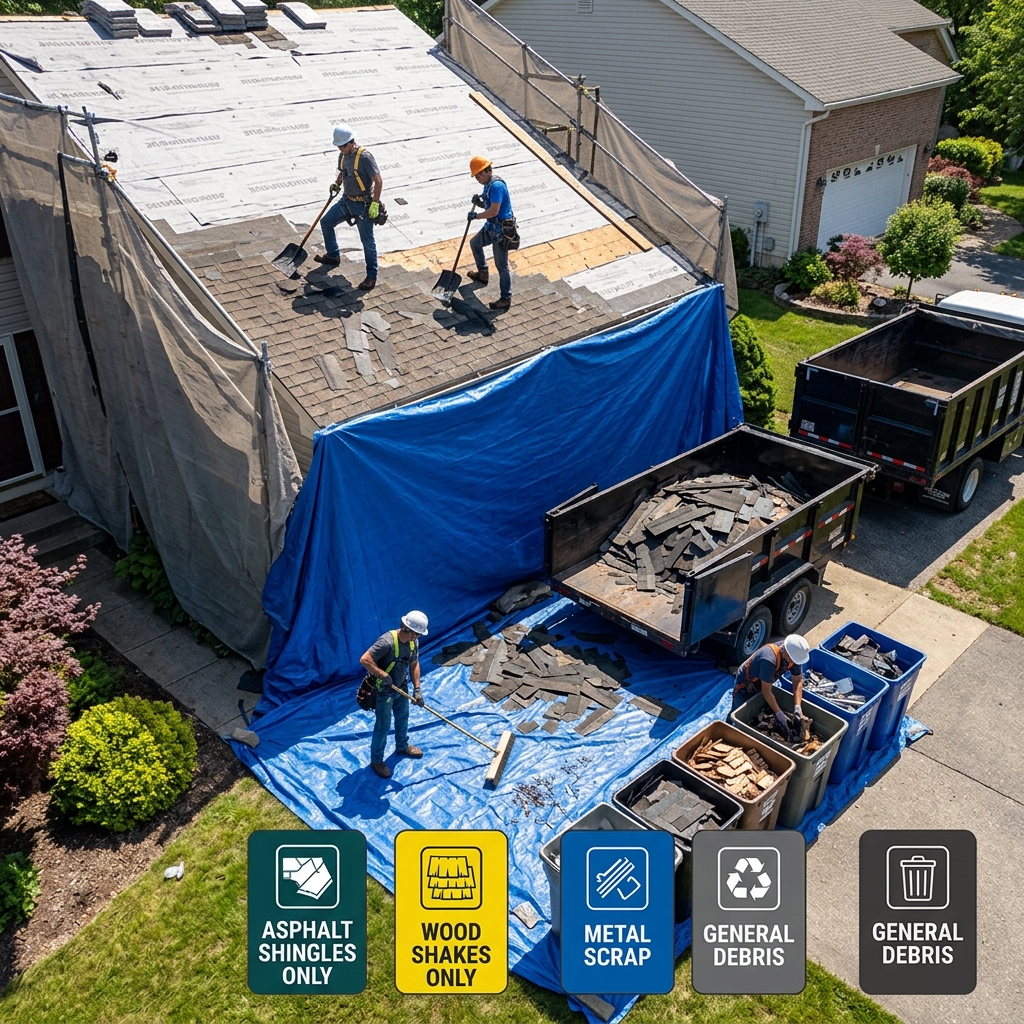
Top 7 Best Practices for a Clean Roof Tear-Off and Safe Debris Disposal
1. Protecting Your Property During Teardown – Why Site Safety Starts Before We Begin
A roof tear-off isn’t just about removing old shingles and underlayment. It’s a complex operation that can either leave your property spotless or create weeks of cleanup headaches if mismanaged. We’ve seen properties where debris scattered into gutters, damaged landscaping, or left homeowners picking up roofing nails months after the job ended. That’s simply not acceptable.
At Expert Exteriors, we’ve refined our roof tear-off process over years of residential and commercial projects across the Brookfield area. This guide walks you through the seven best practices that separate a professional clean roof removal process from amateur work. When you understand what goes into proper debris disposal and site management, you’ll know exactly what to expect and why our approach delivers superior results.
Before a single shingle comes off, we conduct a detailed site assessment. We identify electrical lines, satellite dishes, skylights, and any structures that could be damaged or create safety hazards. We mark off work zones, establish pedestrian barriers, and brief neighbors about the project timeline and what to expect.
This groundwork prevents expensive mistakes. We’ve prevented countless incidents by spotting overhead power lines or identifying that a client’s pool equipment sits directly under the work zone. We document existing conditions with photos and note any pre-existing damage so there’s no confusion after the job is complete.
Our crew wears proper safety equipment, uses fall protection on steep roofs, and follows OSHA standards without cutting corners. We establish clear communication protocols so site supervisors and crew members stay aligned on hazards throughout each day.
Actionable takeaway: Ask your roofing contractor about their pre-project safety walkthrough and what specific hazards they identified at your property. A thorough answer indicates professional planning; vague responses suggest they’re winging it.
2. Strategic Tarping and Containment – How We Keep Debris Controlled from Start to Finish
Effective tarping is the backbone of a clean tear-off. We don’t just toss a tarp on the ground and hope for the best. We strategically position heavy-duty tarps around the perimeter of the work zone, sloping them slightly away from the building to direct debris flow. We secure tarps with sandbags and stakes so wind can’t shift them mid-project.
For steeper roofs or multi-story homes, we use containment systems that catch debris before it hits the ground. These barriers funnel material directly into dumpsters, dramatically reducing ground-level scatter. We replace tarps as they fill, keeping containment tight from the first shingle removal through the final nail sweep.
The tarping strategy varies based on wind conditions, roof pitch, and surrounding property layout. On commercial projects with adjacent businesses, we implement additional layers of containment to ensure zero debris migration. This level of customization is what separates rushed jobs from controlled, professional operations.
Actionable takeaway: Request your contractor’s containment plan in writing before work begins. You should see specific tarp placement, securing methods, and a dumpster positioning strategy tailored to your property.
3. Professional Equipment and Tools – Why Our Specialized Machinery Sets Us Apart from Competitors
Consumer-grade tools and equipment simply can’t match what we deploy on every project. We use commercial-grade roofing shovels with reinforced edges designed specifically for clean tear-off work, reducing the time crew members spend scraping and the damage risk to underlying structures.
Our specialized equipment includes roof jacks that safely hold materials and prevent debris from sliding unexpectedly, pneumatic nail guns for efficient removal, and industrial-strength collection bags rated for the weight and sharp edges of roofing waste. We invest in equipment that enables speed without sacrificing precision.
Dumpsters aren’t all equal either. We size containers based on your roof’s square footage and material type, ensuring we don’t overfill (creating safety and legal issues) or underestimate (forcing multiple hauls). For flat and low-slope roofing projects with EPDM or TPO, our disposal process is specifically calibrated for those material types.
The cost difference between proper equipment and improvised alternatives is minimal compared to the risk of property damage or project delays. We factor quality equipment into our project planning because it directly impacts your experience.
Actionable takeaway: Ask if your contractor owns or rents their specialized equipment. Ownership typically signals investment in quality; frequent rentals sometimes indicate operational shortcuts.
4. Systematic Debris Sorting and Recycling – How We Responsibly Handle Roofing Materials
We don’t dump everything into a landfill. We sort materials by type: asphalt shingles, wood shakes, metal, underlayment, and nails go into separate streams. Shingles are recycled into asphalt for road base or new roofing products. Metal flashing gets recovered. Usable wood materials find second lives. Only truly unusable waste hits the landfill.

This systematic approach reduces disposal costs and aligns with environmental responsibility. Many municipalities and HOAs now require proof of recycling, and we maintain documentation for every project. Beyond compliance, it’s simply the right approach to handling materials that can still serve a purpose.
Our crews are trained to identify recyclable materials quickly during the tear-off process. Rather than mixing everything together on the ground, we separate as we work, streamlining the entire sorting phase. This efficiency actually speeds up our timeline while improving environmental outcomes.
Actionable takeaway: Ask your contractor about their recycling process and request documentation of where materials are actually disposed. This transparency reveals their true commitment to responsible practices.
5. Daily Site Cleanup Standards – Why Our Clean Guarantee Means Zero Mess Left Behind
At the end of every work day, our crew conducts a comprehensive site cleanup. We don’t leave nails scattered, tarps bunched up, or debris piles for you to manage. We sweep the perimeter, clear gutters of roofing material, remove tarps in orderly fashion, and leave the property safer than we found it.
We use industrial magnets to capture ferrous metal pieces that smaller debris might hide. We inspect driveways, sidewalks, and landscaping for stray nails or shingle pieces. On multi-day projects, daily cleanup prevents debris from becoming a permanent fixture of your property.
This daily discipline compounds. By the project’s final day, we’re not scrambling to clean up a disaster zone. The area is already maintained, which means our final inspection and handoff happen cleanly and efficiently.
Actionable takeaway: Specify that daily cleanup is a requirement in your contract and request photographic evidence at the end of each work day. This creates accountability and gives you peace of mind.
6. Protecting Landscaping and Surrounding Areas – How Our Proven Methods Prevent Property Damage
Landscaping takes years to establish and seconds to damage. We protect existing plants, trees, and hardscape features with dedicated barriers separate from work zone tarping. Delicate shrubs near the roofline get extra cushioning. Vegetable gardens or pools get covered or cordoned off entirely.

We identify the prevailing wind direction and position our work zone and containment systems accordingly, minimizing the chance that debris or dust drifts toward neighbor properties or sensitive areas. On commercial projects, this consideration is especially important for adjacent businesses that can’t tolerate operational disruption.
For properties with mature trees under the roof overhang, we take additional precautions because falling debris can damage branches and compromise tree health. Our crew approaches these situations with methodical planning rather than rushing through.
Actionable takeaway: Walk your property with the project supervisor and specifically call out landscaping or features you want protected. Provide photos or a simple map highlighting these zones.
7. Final Inspection and Quality Assurance – Why Our Multi-Point Verification Ensures Complete Satisfaction
We don’t consider a project complete until we’ve conducted a thorough final inspection. Our supervisor walks the entire property with you, checking gutters, downspouts, roof flashing, and surrounding areas. We photograph the completion state and compare it against our pre-project documentation.
The new roof installation begins only after we’ve verified that the underlying deck is sound and all old material has been completely removed. No shortcuts, no hidden debris buried under the new shingles. This multi-point verification is what justifies our 15-year workmanship warranty on roof replacement services.
We address any questions or concerns during this walkthrough and keep you informed every step. You see the progress, understand the work completed, and know exactly what comes next. Transparency throughout the process builds confidence that your investment is being handled professionally.
Actionable takeaway: Request a formal walkthrough with photographic documentation at project completion. Your contractor should be confident enough to show you everything and answer detailed questions without hesitation.
—
A clean roof tear-off is the foundation for a quality replacement. When you choose Expert Exteriors, you’re choosing a team that brings systematic planning, specialized equipment, and proven processes to every project. We understand that your property is your largest investment, and our approach reflects that respect.
If you’re ready to move forward with a professional tear-off and replacement, get your instant roof replacement quote today. We serve the Brookfield area and surrounding communities, and we’d be honored to show you what a truly clean, professional roof replacement looks like.