

The Homeowner’s Guide to Comparing Residential Roofing Bids Like a Pro
Why Most Homeowners Make Costly Mistakes When Comparing Roofing Bids
When your roof starts showing signs of wear, the natural instinct is to call a few contractors, compare numbers, and pick the lowest bid. We’ve seen this approach backfire countless times. Homeowners end up with incomplete work, hidden costs, or roofs that fail prematurely because they compared apples to oranges without realizing it.
The truth is that evaluating roofing bids requires more than a calculator. It demands understanding what goes into a professional estimate, recognizing the quality markers that separate experienced contractors from inexperienced ones, and knowing which corners are never worth cutting. Over our years working with residential and commercial clients across Wisconsin, we’ve learned exactly what separates a smart bid comparison from a costly mistake.
This guide walks you through the entire process of comparing residential roofing bids intelligently, so you can protect both your home and your investment.
The biggest mistake we see is treating all roofing bids as equivalent products with different prices. They’re not. A $6,000 bid and a $9,000 bid for the same roof size might reflect completely different scopes of work, material quality, labor practices, and long-term durability.
Here’s what typically happens: A homeowner gets three estimates. One contractor quotes $6,500, another quotes $8,800, and a third quotes $11,200. Without proper context, the $6,500 estimate wins by default. Six months later, the homeowner discovers that the contractor skipped proper ventilation assessment, used lower-grade materials, or failed to properly seal critical areas. Now water damage compounds the problem, and the “savings” of $3,000 has cost $15,000 in repairs.
The second common mistake is not asking what’s actually included. Many contractors provide vague estimates that say “roof replacement” without specifying whether that includes removal of the old roof, repairs to the decking, proper ventilation installation, flashing details, or cleanup. You might think you’re getting a complete project when you’re actually only getting half of one.
A third pitfall is focusing solely on the bottom-line price rather than the value proposition. Two contractors might charge the same amount, but one offers a 10-year workmanship warranty while the other offers five. One sources premium materials with 50-year manufacturer warranties; the other uses mid-grade shingles. One schedules a pre-work inspection; the other doesn’t. These differences compound over decades.
What to do next: Before requesting any bids, document your roof’s current condition, age, and any specific concerns you’ve noticed. This creates a baseline that helps you ask contractors to address the same scope, making apples-to-apples comparison actually possible.
Understanding What Makes a Roofing Bid Complete and Transparent
A professional roofing bid should read like a detailed plan, not a vague promise. When we prepare estimates for clients, we include specifics that allow proper comparison.
A complete bid includes:
- Project scope: Specific square footage, number of layers being removed, any decking replacement needed, and which areas of the roof are included
- Materials specification: Exact shingle brand and grade, underlayment type, flashing materials, ventilation components, and nail specifications
- Labor details: Whether removal, disposal, and cleanup are included; whether the crew will protect your landscaping and property; insurance and bonding confirmation
- Timeline: Estimated start and completion dates, weather contingencies, and how work will be managed
- Warranty terms: Both manufacturer and workmanship warranty durations, what they cover, and any conditions
- Payment terms: Total cost, deposit requirements, payment schedule, and what triggers each payment
The absence of these details isn’t necessarily a red flag on its own, but it should prompt you to ask for clarification. A contractor who refuses to provide specifics or gets evasive when you ask detailed questions is showing you something important about how they operate.
Transparency also means explaining why costs exist. If a bid includes “roof inspection” as a separate $200 line item, a good contractor will explain that they’re checking for structural damage, ventilation issues, or hidden problems that affect the final approach. This isn’t padding; it’s protection.
We've created a detailed guide on how to evaluate roofing bids that breaks down materials, labor, and costs so you can understand exactly what each component contributes to your final quote.
What to do next: Request that all contractors provide bids in the same format. Ask each one to list materials, labor, warranties, and timeline as separate line items. This forces standardization and makes comparison far easier.
The Critical Differences Between Budget and Quality Roofing Materials
Not all asphalt shingles are created equal, and the price difference between budget and premium materials is often smaller than homeowners expect.
Budget shingles typically cost 30-40% less than premium options but offer roughly 50% of the lifespan. A budget 20-year shingle might realistically last 14 years if conditions are moderate, while a premium 30-year shingle often exceeds its rated life because the materials are more stable. That’s not just marketing; it’s chemical durability.
Here’s where the math gets interesting: Installing a $5,000 budget roof that lasts 14 years costs you about $357 per year. A $7,500 premium roof lasting 25 years costs about $300 per year. The premium option is actually cheaper over time, plus you avoid the disruption and risk of premature replacement.
The differences go beyond longevity. Premium shingles have:
- Better color retention (less fading over 20+ years)
- Improved wind resistance (often rated to 130+ mph vs. 90 mph for budget options)
- Superior algae resistance in humid climates
- Thicker, more flexible materials that seal better in cold weather
- Enhanced fire ratings in high-risk zones
When we evaluate material options for clients, we also consider regional factors. In Wisconsin’s climate, where freeze-thaw cycles are common, premium underlayment and proper ventilation matter more than they might in warmer climates. A cheap underlayment might tear during installation or deteriorate faster under UV exposure, compromising the entire roof’s water protection.
Budget materials also put you at the mercy of manufacturer discontinuation. If you need repairs in eight years and your shingle line has been discontinued, you’ll struggle to find matches. Premium shingle lines typically remain in production longer.
What to do next: Ask each contractor what shingle brand and grade they’re proposing, then compare specifications (not just names) on the manufacturer website. Look for wind ratings, warranty length, and any special features relevant to Wisconsin’s climate. Request samples so you can see color depth and material thickness in person.
What Our Roofing Process Reveals About Contractor Experience
The methodology a contractor proposes for your project tells you almost everything about their experience level and attention to detail.
Experienced contractors include inspection protocols. Before we quote a roof replacement, we evaluate the decking condition, check ventilation adequacy, inspect flashing at penetrations, and assess whether the roof structure can handle the replacement method we’re recommending. This takes time upfront but prevents surprises and costly adjustments during installation.
Inexperienced contractors skip this step. They assume the decking is fine, assume ventilation is adequate, and assume they’ll handle problems if they appear. This “we’ll deal with it when we see it” approach leaves you vulnerable to change orders and delays.
Process differences also emerge in how contractors handle removal. A quality approach means carefully removing the old roof, inspecting the underlying structure, making necessary repairs before installing underlayment, and installing the new roof with proper nailing patterns and overlap sequences. A rushed approach means tearing off the old roof quickly and installing the new one without taking time to assess what you’re building on.
The flashing approach matters enormously. This is where water intrusion typically starts because flashing is the critical interface between the roof plane and chimneys, vents, skylights, and valleys. Professional contractors use specific flashing materials matched to their shingle type, seal them appropriately, and test them during installation. Budget contractors often use generic flashing and underseal it.
Ventilation strategy is another process marker. Proper ventilation extends roof life by managing moisture and heat buildup in the attic. A contractor who addresses soffit vents, ridge vents, and attic airflow is thinking about your roof’s long-term health. One who doesn’t mention ventilation is operating at a surface level.
What to do next: Ask potential contractors to walk you through their exact installation process step-by-step. A detailed explanation shows they’ve thought deeply about the work. If they struggle to explain their process or give vague answers, that’s telling you something.
Red Flags That Separate Professional Bids From Unreliable Estimates
Certain warning signs appear consistently in estimates that lead to problems down the road.
The first major red flag is requesting full payment upfront. Legitimate contractors take a deposit (typically 25-50%), complete work, and request final payment upon completion. If someone wants 100% upfront, they’re shifting all risk to you, which suggests either cash flow problems or low accountability.
Vague material specifications are another warning sign. Phrases like “quality asphalt shingles” or “premium underlayment” without brand names or grades suggest the contractor is planning to substitute cheaper materials than what’s being discussed. Specific bids lock them in to specific materials. Vague bids give them wiggle room.
A bid that’s significantly lower than others (often more than 30% below the average) usually reflects corner-cutting somewhere. This might be undersized crews, skipped steps, or material substitutions. Occasionally it reflects a contractor pricing aggressively to build business, but more often it reflects reduced scope or lower quality.
Lack of insurance or bonding documentation is a serious concern. Bonding protects you if the contractor abandons the project. Insurance protects you if someone is injured on your property. Contractors who hesitate to provide proof of both are creating liability exposure for you.
A contractor who pressures you to decide quickly is using urgency as a sales tactic rather than responding to your timeline. Professional contractors are happy to give you time to compare bids and make an informed decision. High-pressure sales approaches correlate with less transparent operations.
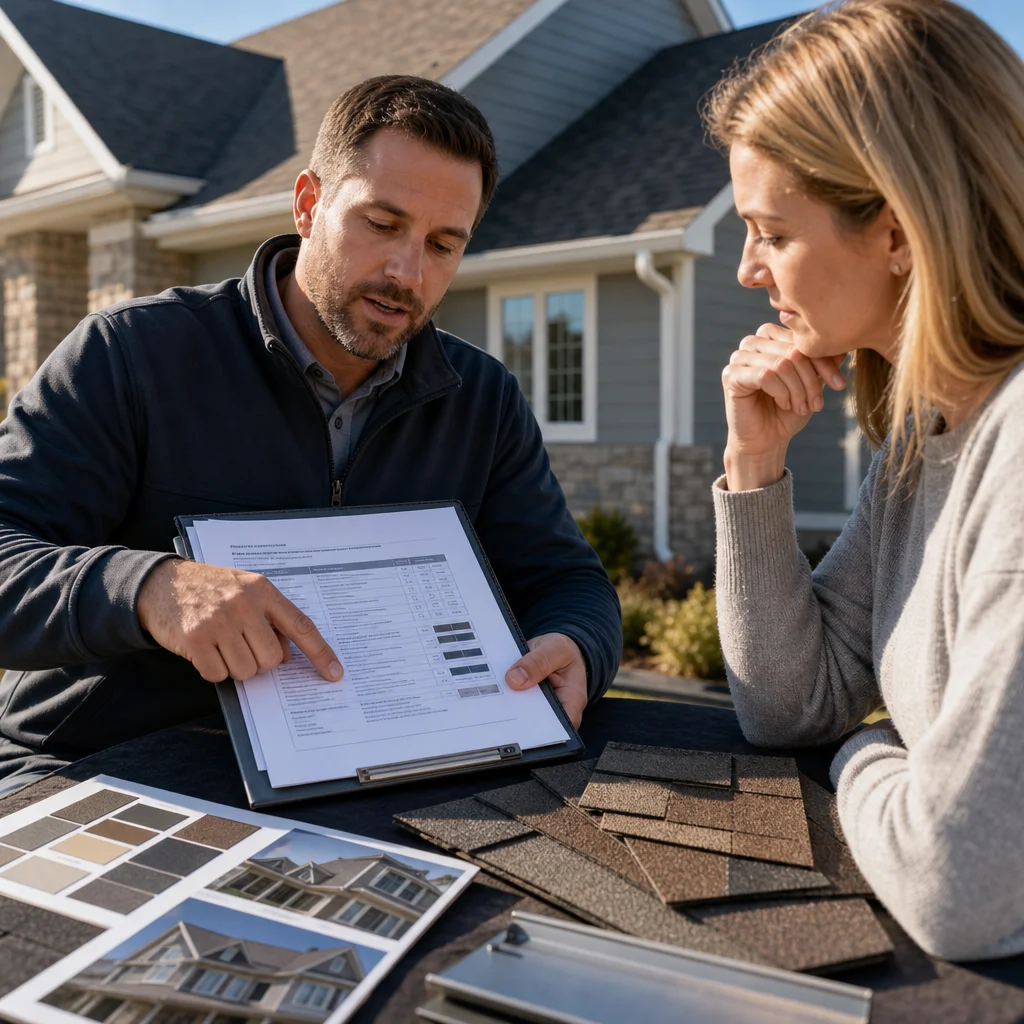
Finally, absent or weak warranty language is a red flag. If a bid doesn’t specify workmanship warranty duration or lists only manufacturer warranties without addressing labor guarantees, that contractor is limiting their accountability. We always separate these clearly because they represent two different protections.
What to do next: Before contacting contractors, make a checklist of non-negotiables (insurance, bonding, written warranty, specific material brands, timeline, payment schedule). Use this checklist to eliminate bids that don’t meet your minimum standards, regardless of price.
How We Structure Our Bids to Protect Your Investment
Our bidding process starts with understanding your goals and constraints. Are you looking to maintain the existing aesthetic, or is this an opportunity to upgrade? Do you have budget limits? Are there specific concerns (like leaks in certain areas) that need addressing?
We then conduct a thorough roof inspection, documenting the current condition with photos. This gives us accurate decking assessment and helps us spot issues that will affect cost or timeline. We share this inspection report with you so you understand exactly what we’re addressing.
Our bids separate material costs, labor costs, and service costs explicitly. This transparency helps you understand what you’re paying for and allows you to compare apples-to-apples with other contractors. We specify every material by brand and grade, every service by description, and every warranty by term and coverage.
We also include what we call “protective services” explicitly. This means roof protection tarping if weather threatens, property protection during removal, daily cleanup, and debris disposal. Some contractors consider these standard. We list them so you know they’re included and can evaluate whether other bids include the same.
Our warranty structure protects you long-term. We offer a 10-year workmanship warranty on all roof replacements, meaning we’re responsible for any labor-related issues that emerge within that period. We also facilitate manufacturer registration so you get the full benefit of material warranties, often backed by 25-50 year coverage depending on the shingle selected.
We include a post-installation inspection in our bid as standard. Once the roof is complete, we conduct a full walkthrough with you, documenting completion, answering questions, and ensuring you understand care and maintenance going forward.
What to do next: When reviewing our bid (or any contractor’s bid), verify that every service you want included is explicitly listed as a line item. Don’t assume anything is included if it’s not stated.
Warranty Coverage and Long-Term Value in Your Roofing Decision
Warranty structure reveals what a contractor is willing to stand behind and for how long.
Most homeowners focus on manufacturer warranty, which is valid and important. A 30-year manufacturer warranty means the shingle company guarantees the product itself will perform for 30 years (with some pro-rating in later years). This is valuable, but it doesn’t address installation quality. If your roof fails due to poor installation, manufacturer warranty won’t help you.
This is where workmanship warranty becomes critical. A contractor offering a 10-year workmanship warranty is guaranteeing that their labor will perform correctly for a decade. If leaks emerge from improper nailing, inadequate sealing, or installation errors, they’re responsible for repairs at no cost to you.
The difference between 5-year and 10-year workmanship warranties is substantial. Five years barely covers the period when you’re learning whether installation quality is sound. Ten years gives you confidence that if problems emerge, you have recourse.
Pay attention to warranty conditions. Some warranties require you to use the contractor’s preferred maintenance practices or get annual inspections to remain valid. Others are straightforward with no conditions. Review these carefully because conditions sometimes make warranties effectively useless if you can’t meet them.
Transfer terms also matter if you’re planning to sell. A non-transferable warranty means the new owner gets no contractor protection. A transferable warranty adds resale value because the next owner inherits coverage.
We transfer our workmanship warranties to subsequent homeowners within the warranty period, which adds real value to the roofing investment and provides peace of mind for resale. This is a commitment to quality that extends beyond our initial client relationship.
What to do next: Request full warranty details in writing from each contractor, including any conditions or limitations. Have a lawyer review them if you want complete clarity, or ask your contractor to explain any confusing language in plain English.
Timeline and Project Management Standards You Should Expect
Project duration and scheduling discipline reveal how a contractor manages operations and values your disruption.
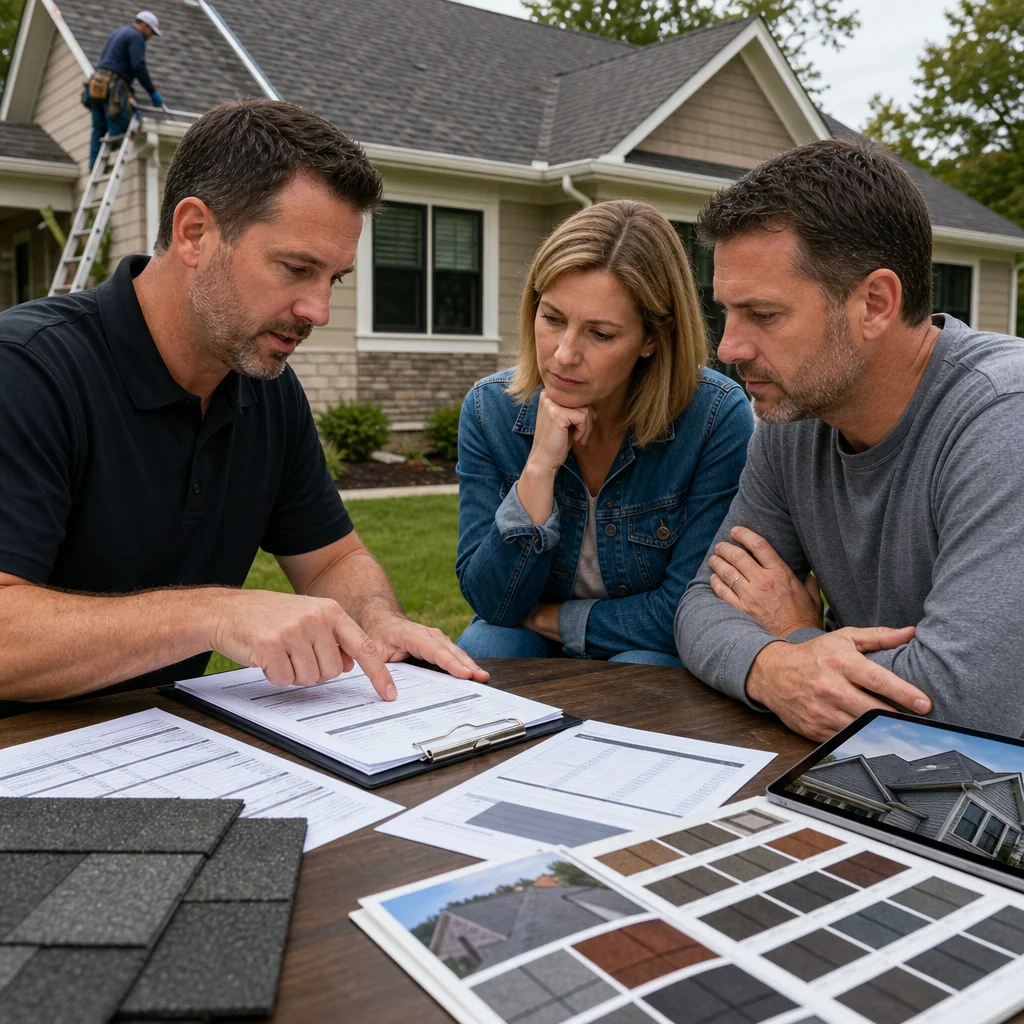
Most residential roof replacements take 2-4 days depending on roof size, complexity, and weather. A 2,000-square-foot single-story roof is typically a 2-3 day project. A 4,000-square-foot multi-story roof with multiple penetrations and flashing might take 4 days. Anything faster suggests rushed work; anything much slower suggests inefficiency.
Professional contractors plan around weather. They check forecasts and schedule projects during windows when rain isn’t expected. They also have contingency plans if weather changes mid-project (tarping, protective measures, timeline adjustments). Contractors who schedule without weather consideration are setting you up for delays and work interruptions.
Project sequencing matters too. Proper scheduling means removal completes before new installation begins, not overlapping. It means decking inspection and repairs happen before underlayment installation. It means flashing is installed before shingles and sealed afterward. Contractors who do everything concurrently are sacrificing quality for speed.
We schedule projects with built-in buffer days and always confirm weather forecasts within 72 hours of the scheduled start. We also manage neighborhood communication, letting you know our crew arrival time and expected completion window. We protect your property, keeping debris contained, and complete daily cleanup so your home remains accessible.
Understanding exterior replacement timelines helps you plan for any disruptions and ensures you’re not caught off-guard by how long quality work actually takes.
What to do next: Ask each contractor for their typical timeline, weather contingency plan, and daily schedule (what time crews arrive, how long they typically work, what days they schedule projects). This reveals whether they’re organized and professional about timekeeping.
Why Choosing the Right Contractor Matters More Than Price Alone
This is the section where the rubber meets the road. Comparing bids is important, but selecting the contractor matters more because they’re the person executing the plan.
A quality contractor brings experience that solves problems you don’t even know exist. If your roof has ice damming issues from insufficient ventilation, a contractor who assesses ventilation will identify and fix the root cause, not just install new shingles. If your flashing is the weak point, they’ll upgrade it beyond minimum standards. If your decking has soft spots, they’ll repair them rather than skip them.
An experienced contractor also brings efficiency. They arrive with the right materials and tools, work in logical sequences, manage their crew effectively, and complete the job on schedule. Inefficient contractors waste time figuring things out, make mistakes that require rework, and extend timelines. This costs you through extension of the disruption period and sometimes through change orders.
Contractor reputation within your community matters too. Ask for references and actually call them. Talk to someone who used the contractor within the last 2-3 years and ask about their experience. How professional was the crew? Did they show up on time? Did they communicate well? Did any issues emerge post-completion and how did the contractor respond? These real-world perspectives reveal what a contractor’s work is actually like.
Local contractors have something at stake in your community. If we do poor work in Brookfield, our reputation suffers locally and we lose future business. National contractors or franchises have less local accountability. This isn’t to say all national contractors are poor (they’re not), but local presence creates incentive alignment.
What to do next: Create a contractor scorecard that weights factors: price (40%), warranty (20%), timeline (15%), materials quality (15%), and contractor experience/reputation (10%). Use this to score each bid and make your decision based on total score, not just price.
Getting Started With Our Transparent Roofing Bid Process
When you’re ready to compare roofing bids intelligently, we’d welcome the opportunity to provide one.
Our process is designed to be thorough without being complicated. First, we schedule an on-site consultation where we assess your roof, discuss your goals and budget constraints, and answer any questions you have. This conversation helps us understand what you’re looking for and what matters most to you.
Next, we conduct a detailed inspection, documenting current condition, identifying any issues, and photographing the roof to support our assessment. We share this inspection report with you so you have a clear baseline of what exists today.
We then prepare a comprehensive bid that specifies every material, service, timeline commitment, and warranty detail. We walk you through the bid, explaining our recommendations and answering questions. We want you to understand exactly what we’re proposing and why.
We encourage you to compare our bid against others, and we’re confident that our transparency, material quality, warranty terms, and experience will earn your business even if other bids are initially lower. We’d rather lose a bid to a competitor than win one from a customer who doesn’t understand what they’re actually buying.
Learn more about asking the right questions before getting roofing bids so you can prepare for conversations with potential contractors.
When you’re ready to start the comparison process, contact us for a consultation. We serve residential and commercial properties throughout Brookfield and surrounding areas, and we’re committed to making sure you make an informed decision about this important investment in your home’s protection and value.