

The Best Season for Roof Replacement in Brookfield Wisconsin
Why Timing Matters for Your Roof Replacement
Choosing when to replace your roof is just as important as choosing who replaces it. The season you select affects everything: how quickly we can complete the work, the quality of our installation, labor availability, material costs, and whether weather interruptions derail your project timeline.
Here’s what we’ve learned after years of replacing roofs across Brookfield and surrounding areas: the wrong season means longer timelines, frustrated crews, potential material damage, and higher expenses. The right season means smooth completion, superior workmanship, and peace of mind before the next harsh winter arrives.
Wisconsin’s climate swings hard. We experience heavy spring rains, scorching summer heat, quick fall temperature drops, and brutal winter cold. Each season presents unique challenges and advantages for roof replacement work. Understanding these patterns helps you avoid costly delays and ensures your new roof gets installed under optimal conditions.
What to do next: Assess your roof’s current condition. If you see missing shingles, visible leaks, or sagging areas, don’t delay replacement until “perfect” weather arrives. Contact us for a free inspection to determine urgency.
Spring: Our Ideal Season for Roof Work
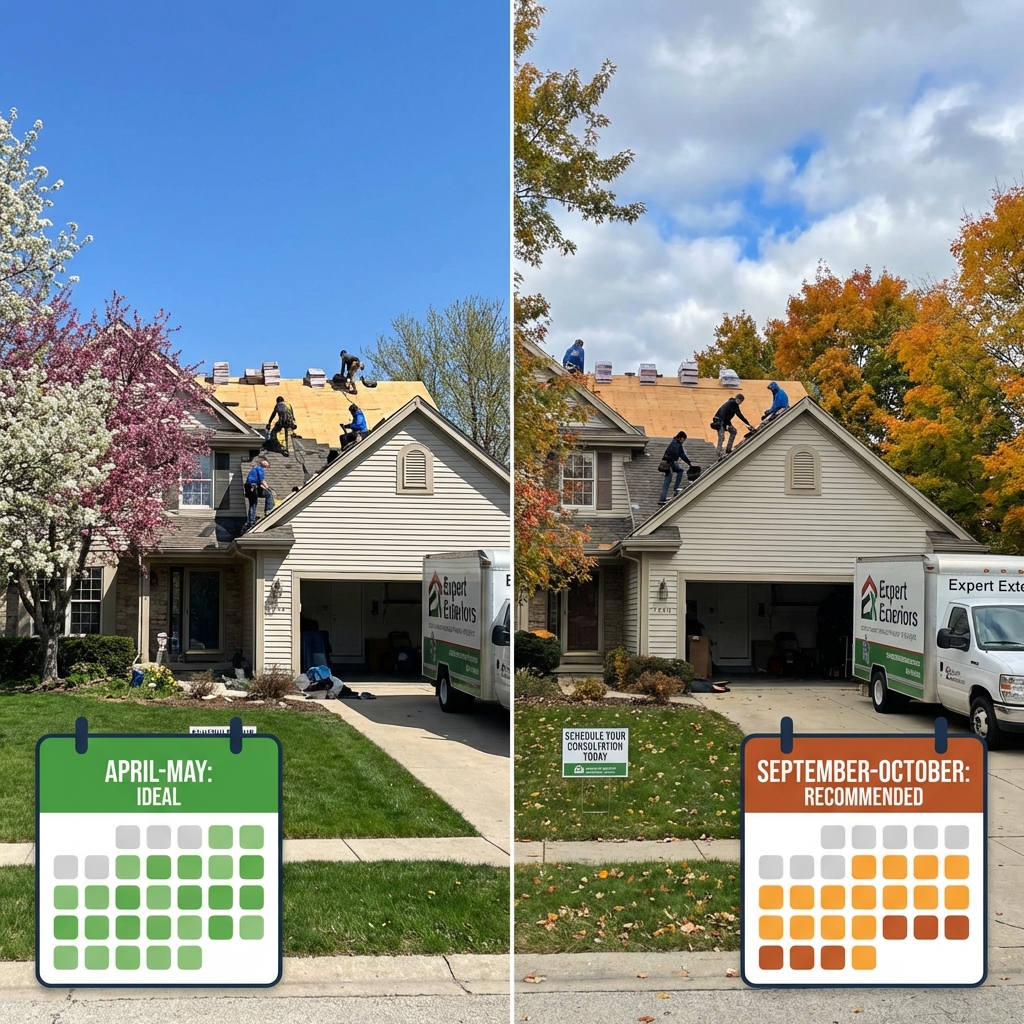
Spring is our preferred time for roof replacements in Brookfield, and for solid reasons. Temperatures stabilize between 45-65 degrees Fahrenheit, creating ideal conditions for shingle installation, flashing sealing, and adhesive bonding. Our crews move efficiently without the cold affecting material flexibility or the heat causing fatigue.
Scheduling is easier in spring because many property owners haven’t yet considered their roof after winter. We typically have better availability compared to summer or fall, which means we can fit you in faster and devote our best crews to your project. Spring also offers predictable daylight hours (roughly 12-14 hours), giving us solid working time without rushing.
One practical advantage: spring moisture helps us identify any hidden leaks or problem areas during the inspection phase. Wet roof decking shows us exactly where water has been penetrating, allowing us to address underlying damage before installing your new roof. We often discover rotted fascia boards, compromised decking, or structural concerns that might have gone unnoticed in dry season.
Material delivery is reliable in spring. Suppliers aren’t overwhelmed, so we receive shingles, underlayment, and flashing on schedule. This keeps your project moving forward without storage challenges on your property.
The cleanup and landscaping impact is minimal too. Spring grass hasn’t reached full growth, so our debris collection process disturbs your yard less than late summer would.
Actionable takeaway: If your roof shows no signs of emergency damage, schedule your replacement for April or May. You’ll benefit from our best scheduling availability and ideal working conditions.
Summer Considerations and Our Scheduling Advantages
Summer brings challenges we work around carefully. Temperatures in Wisconsin often reach 85-95 degrees, and peak sun exposure can heat roof surfaces to 160+ degrees. This extreme heat makes shingles more pliable and slows adhesive bonding. Our crews must start very early and manage hydration, sometimes stepping back during the hottest afternoon hours.
However, summer isn’t prohibitive. If your roof is actively leaking or structurally compromised, waiting for cooler weather isn’t smart. We’ve completed countless successful summer replacements using proven techniques: applying underlayment in cooler morning hours, staging materials in shaded areas, and timing our final shingle installation for late afternoon when temperatures drop.
One advantage we find with summer work: extended daylight means we can tackle complex roofing angles and problem areas with superior visibility. If your roof includes dormers, multiple valleys, or unusual pitch combinations, summer’s 15-hour daylight window lets us work methodically without rushing as darkness approaches.
Summer also works well if you’ve had spring damage. Hail storms or wind events in May or June often trigger August or September replacement requests. By that time, weather has stabilized enough for solid installation work, and we can coordinate with your insurance adjuster’s timeline.
The trade-off is availability. By late July, our schedule fills quickly as property owners recognize they need work done before fall. If summer is your target season, reach out early.
What to do next: If you’re considering summer replacement, contact us by May to discuss your project and secure scheduling slots before our calendar fills.
Fall Replacement Benefits We Provide
Fall is our second-favorite season for roof replacements in Brookfield. September and early October offer near-perfect conditions: temperatures between 50-70 degrees, lower humidity than summer, and stable weather patterns. Shingles adhere reliably, our crews work at peak efficiency, and the risk of rain interruptions is lower than spring.
We see another advantage in fall: property owners often conduct home inspections or maintenance reviews as they mentally prepare for winter. This drives replacements that should have happened months earlier. Fall deadlines create a natural motivation to finally address that aging roof before snow and ice loads arrive.
October replacement work positions your new roof perfectly for winter protection. Your shingles have three months to fully cure and bond before freeze-thaw cycles begin. This matters more than many homeowners realize. A roof installed in October has developed its complete weather seal by February, whereas a March installation hasn’t fully matured when spring rains arrive.
Fall also brings better material pricing in some cases. By September, spring demand has passed, and summer heat has subsided. Suppliers sometimes offer favorable pricing to maintain consistent order flow heading into winter. We pass these savings to you whenever possible.
One practical note: fall scheduling is tighter than spring because many contractors push work into this window. If fall is your target season, contact us by August to reserve your spot and ensure we can prioritize your project.
Actionable insight: Schedule your fall replacement by early September if possible. You’ll benefit from ideal working conditions and have your roof fully protected before winter weather arrives.
Winter Challenges and Why We Avoid Peak Cold
Winter presents significant challenges for roof replacement work, and we’re honest about this. When temperatures drop below 40 degrees, asphalt shingles become brittle and prone to cracking. Adhesive strips that bond shingles together won’t activate properly in prolonged cold. Underlayment becomes difficult to work with, and our crews’ efficiency drops noticeably due to numb fingers, reduced visibility, and icy conditions.
We don’t refuse winter work when it’s truly necessary. If your roof is actively leaking and creating interior damage, or if structural issues pose safety risks, we manage winter installation using specialized techniques. We use torch-down underlayment systems that don’t rely on adhesive activation, carefully warm materials before installation, and work during the warmest daylight hours available.
However, winter work costs more. Longer project timelines, specialized equipment, heightened safety precautions, and slower crew productivity all increase expenses. Many homeowners don’t realize that a three-day spring project might stretch to 5-6 days in December, multiplying labor costs.
Wisconsin winters also create weather uncertainty. January and February bring unpredictable snow, ice, and freezing rain. We might schedule your project for a “mild” forecast, then find ourselves suspended for days when conditions deteriorate. This disruption frustrates everyone and reduces our ability to deliver the consistent quality we’re known for.
The honest recommendation: avoid winter replacement unless your situation is genuinely urgent. If you can wait six weeks for warmer weather, you’ll receive better quality work at lower cost.
What to do next: If you notice roof damage in November or December, contact us for emergency assessment. We’ll help you determine whether the situation requires immediate winter work or if temporary weatherproofing can bridge you to spring.
How Wisconsin Weather Impacts Our Installation Quality
Wisconsin’s weather extremes are the reason we’re so deliberate about seasonal timing. Our state experiences rapid freeze-thaw cycles, substantial snow loads, high-velocity wind, and UV intensity that’s harder on roofing materials than many homeowners expect.
Spring and fall timing matters because we want your new roof to fully cure and develop its complete weather seal before facing these extremes. Shingles installed in ideal temperatures bond completely within 24-48 hours. Those same shingles installed in 35-degree conditions might take weeks to achieve full adhesion, remaining vulnerable to wind uplift or water infiltration until they’re fully sealed.
Wisconsin wind is particularly relevant. Our state sits in a corridor where spring and fall winds often exceed 40 mph. A roof that’s partially cured has reduced wind resistance. A roof that’s completely cured and bonded can withstand the stresses that Wisconsin regularly delivers. This is why we emphasize the importance of installation timing relative to your region’s weather calendar.
Snow load is another factor. An average Wisconsin winter dumps 40-50 inches of snow. Your new roof must be fully installed and settled before that weight arrives. Partial installation or incomplete sealing under snow cover creates ice dam conditions and water backup that damages your interior.
Summer heat affects longevity too. While high temperatures complicate installation, they actually help recently-installed roofs develop their permanent adhesive bond faster. A roof that bonds fully in summer is better protected when fall rains arrive.
This is why our roof replacement services emphasize our understanding of Wisconsin’s specific climate demands. We don’t just install roofs; we time installations to maximize how your new roof performs under Brookfield’s actual weather patterns.
Our Year-Round Project Management Approach
We manage roof replacements year-round, and our process adapts to seasonal realities. We don’t have an off-season; we have seasons that require different strategies and precautions.
Our project coordination starts with an honest assessment of your roof’s condition and urgency. If you have active leaks or storm damage, we prioritize quick scheduling regardless of season. If you’re planning ahead for a non-emergency replacement, we recommend optimal timing based on weather forecasts, crew availability, and material delivery windows.
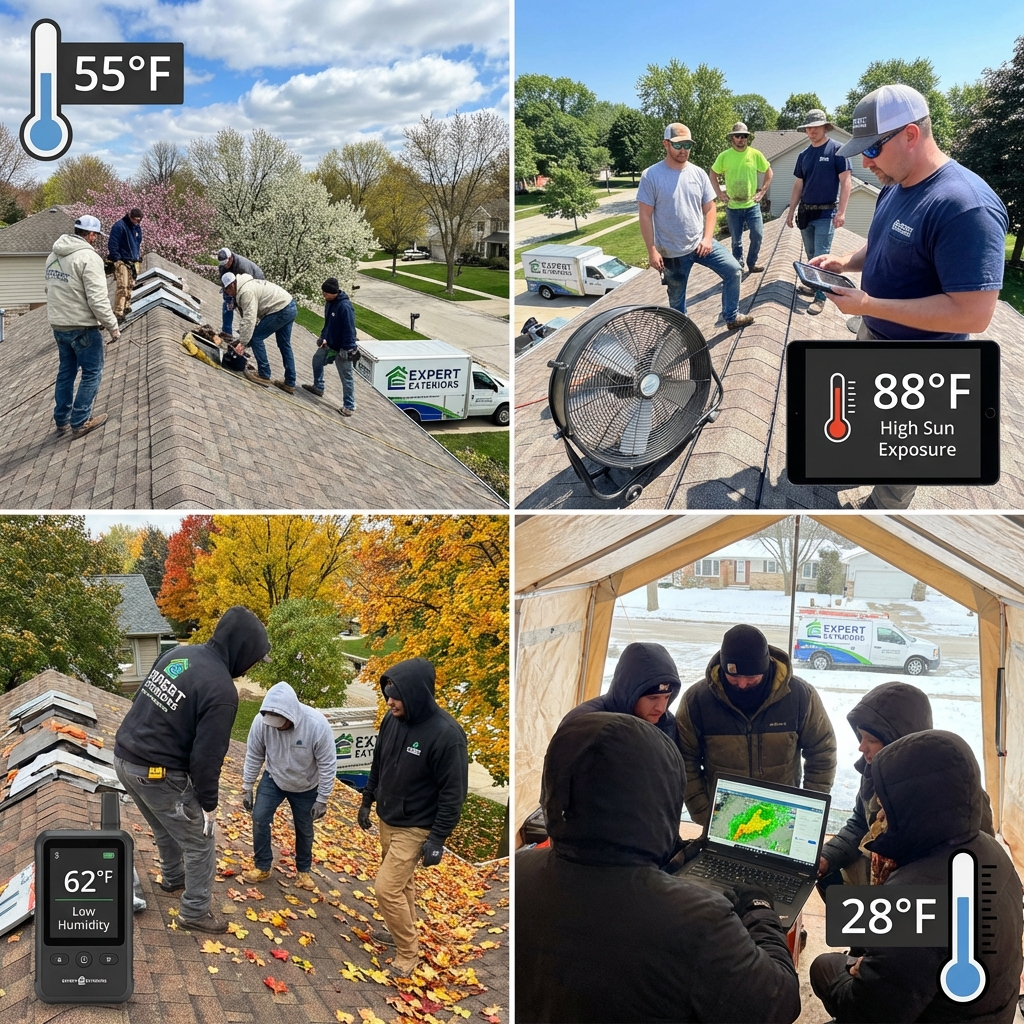
We maintain detailed knowledge of Wisconsin weather patterns. Our experienced team understands when spring rain cycles hit hardest, when summer heat peaks, when fall transitions create unpredictable conditions, and when winter cold becomes prohibitive. We use this knowledge to schedule your project strategically.
Our crews are trained for seasonal variations. Winter work crews receive specialized cold-weather training. Summer crews understand heat management and extended daylight work. Spring and fall teams focus on speed and precision while conditions are ideal. This specialization ensures quality doesn’t suffer regardless of when your roof gets replaced.
We also coordinate with material suppliers based on season. Summer projects might require special ordering to avoid heat-affected shipments. Winter projects use different underlayment systems than summer installations. Spring and fall projects move smoothly through standard supply channels with minimal complications.
One practical advantage of our year-round operation: we can accommodate your timeline more flexibly. If you prefer fall installation, we reserve capacity for that season. If you have spring availability, we’ll fit you into that window. Our goal is finding the schedule that works best for you while delivering optimal installation conditions.
Takeaway: Our year-round approach means you’re not forced into one specific season. We’ll help you choose timing that balances your needs, our ideal working conditions, and Wisconsin weather realities.
Why Property Owners Choose Expert Exteriors for Seasonal Replacements
Property owners in Brookfield and surrounding areas choose us because we understand that roof replacement isn’t just about material installation. It’s about understanding seasons, weather patterns, local climate challenges, and long-term performance under Wisconsin conditions.
Our 15-year workmanship warranties on full roof replacements reflect our confidence in our seasonal expertise. We don’t offer those warranties because we get lucky with timing. We offer them because we strategically time installations to maximize how your new roof performs through Wisconsin winters and weather extremes.
Property owners appreciate our honesty about seasonal trade-offs. We don’t push summer work when spring would be better. We don’t schedule winter replacements when waiting two months would deliver superior results. This straightforward approach builds trust and ensures we’re making recommendations based on your project’s best interests, not our scheduling convenience.
Commercial property owners particularly value our seasonal planning. When you own a business, roof replacement timing affects daily operations, customer access, and employee workflows. We coordinate commercial projects with military precision, using seasonal advantages to minimize disruption. Our understanding of how weather impacts project timelines helps us give accurate completion estimates that commercial clients can depend on.
Residential property owners benefit from our local knowledge. We know which neighborhoods experience wind patterns that make spring scheduling critical. We understand which areas are prone to early spring leaks. We recognize which properties need accelerated timelines before winter arrives. This granular local knowledge comes from years of replacing roofs throughout our service area.
We also educate property owners throughout the process. Our pre-replacement assessments include explanations of what we found and why timing matters for your specific roof. Our crews communicate during installation, explaining what they’re doing and why seasonal conditions influence their approach. This transparency helps you understand the value of strategic seasonal planning.
Getting Your Roof Ready: Our Pre-Replacement Assessment
We begin every replacement project with a comprehensive assessment. This isn’t a quick five-minute walk-around. We climb onto your roof, examine the decking, check for hidden damage, evaluate flashing conditions, and identify any structural concerns that might affect installation timing or strategy.
During spring assessments, we look for water damage accumulated over winter. Roof valleys often show staining where snow and ice melt patterns reveal water infiltration paths. We photograph these areas and explain what we found and what it tells us about your roof’s remaining lifespan and urgency.
Summer assessments reveal different information. Heat can cause shingles to curl or separate, showing us where ventilation might be inadequate. We check for blistering that indicates moisture trapped under the roof surface. These findings help us recommend whether ventilation upgrades are necessary during replacement.
Fall assessments focus on damage from spring and summer storms. We look for missing shingles, lifted areas, or impact damage that might have gone unnoticed. We also evaluate whether your roof can safely handle the winter snow loads that are approaching. This urgency assessment helps property owners understand whether replacement should happen before December or can wait until spring.
Our assessments always include specific recommendations about timing. We’ll tell you honestly if replacement can wait, if it should happen within a specific timeframe, or if delaying creates unnecessary risk. We explain seasonal factors that affect your decision. If fall installation is possible, we’ll explain why it’s ideal. If spring is better suited to your property’s specific situation, we’ll explain those reasons too.
We also use assessment findings to prepare you for replacement logistics. Our detailed inspection reveals how much debris we’ll generate, whether we need to remove gutters beforehand, whether fascia or soffit replacement should happen simultaneously, and whether underlying deck repair will be necessary. All of this information shapes our project timeline and scheduling recommendations.
What to do next: Schedule your free assessment with us. We’ll examine your roof, explain what we found, and recommend optimal timing based on your property’s specific conditions and your schedule.
Preparing Your Property for Our Team’s Arrival
Once you’ve selected your replacement date, preparation prevents headaches and keeps our project moving smoothly. We’ll provide a detailed preparation guide, but here are key points we typically discuss.
Clear your roof of obstacles. While we’re careful around satellite dishes, antennas, and vents, removing removable items prevents accidental damage. We’ll work around permanently installed equipment, but loose items should be secured or removed.
Plan for driveway and yard access. Our crews need clear pathways to reach your roof with equipment and materials. If you have parked cars in the driveway, we’ll ask you to move them. If landscaping blocks access to your roof, we’ll need to work around those obstacles or suggest temporary removal. Communicating these logistics ahead of time prevents day-of delays.
Inform your neighbors. Roof replacement generates noise and activity. Letting neighbors know about your project dates creates goodwill and prevents misunderstandings. We’re respectful of neighborhood peace and typically schedule morning starts and afternoon completions.
Plan for interior protection. While we’re extremely careful about leaks and water damage during installation, we recommend moving valuables away from attic spaces and covering any interior items below attic vents. In rare cases, temporary water intrusion can happen during installation breaks. Protection prevents costly damage.
Secure pets and children. Our crews move quickly across your roof, and ground-level activity includes heavy equipment and sharp materials. Keeping pets indoors and children supervised prevents accidents and allows our teams to work at full efficiency.
If you’re having gutters, fascia, or soffit work completed simultaneously with roof replacement, additional preparation might be necessary. We’ll discuss this during your pre-project consultation.
Actionable step: Once you’ve booked your replacement date, ask us for our detailed property preparation guide. Following these recommendations ensures smooth project execution.
The Expert Exteriors Difference in Seasonal Planning
What makes our approach different is that we view seasonal planning as core to our craft, not an afterthought. We’ve developed specific processes, training programs, and material strategies that optimize how we perform during each season.
Spring work benefits from our established warm-weather crew protocols. We know exactly which materials warm fastest, which adhesives activate most reliably, which crew compositions move projects forward most efficiently. This isn’t improvisation; it’s refined process built through hundreds of spring replacements.
Summer projects use our specialized heat-management techniques. We’re not just enduring hot temperatures; we’re working with them strategically. Scheduling early starts, maintaining material staging in shaded areas, timing final installations for cooler hours, and using ventilation strategies that prevent heat-related adhesive problems. These aren’t new ideas; they’re proven approaches we’ve perfected.
Fall replacements benefit from our understanding of how newly installed roofs need to mature before winter. We know exactly how long shingles need before winter stress arrives. We time projects so that full weather sealing develops before freeze-thaw cycles begin. We don’t guess; we plan based on precise knowledge of Wisconsin’s weather calendar.
Winter work, when necessary, uses our specialized cold-weather systems. We maintain inventory of torch-down underlayment, have cold-weather trained crews, and possess equipment for managing icy conditions. When emergency winter replacement is necessary, we deliver reliable results despite challenging conditions.
Our 15-year workmanship warranties exist because this seasonal expertise reduces failure risk dramatically. We’re confident in our work because we install roofs when conditions support flawless execution. We don’t push projects into poor-condition seasons and hope for the best.
We also stand behind our work long-term. If seasonal factors later create issues, our warranty covers those problems. This commitment to long-term performance reinforces why seasonal planning matters so much to us.
Key insight: Choose Expert Exteriors because we’re thinking about your roof’s performance through ten Wisconsin winters. Seasonal timing is our competitive advantage.
Schedule Your Roof Replacement Consultation Today
Choosing the right season for your roof replacement is the first strategic decision you’ll make. The next step is getting professional guidance specific to your property, your roof’s condition, and your schedule.
Contact us for your free consultation. We’ll examine your roof carefully, explain what we found, discuss seasonal factors relevant to your situation, and recommend optimal timing. We’ll answer your questions about weather impacts, installation methods, warranty coverage, and project logistics.
You can reach us through our contact page or use our instant roof quote tool to get preliminary information about your project. Both options help us understand your situation and schedule appropriate next steps.
When you’re ready to move forward, we handle everything. We’ll coordinate with your insurance adjuster if storm damage is involved. We’ll manage material ordering and delivery logistics. We’ll work with your schedule to find the seasonal window that works best. We’ll prepare you for what to expect and deliver the quality workmanship that our reputation is built upon.
Brookfield and surrounding areas trust Expert Exteriors for roof replacement because we combine seasonal expertise with professional craftsmanship. Let us show you why timing, training, and attention to detail make the difference in how your new roof performs for years to come.