
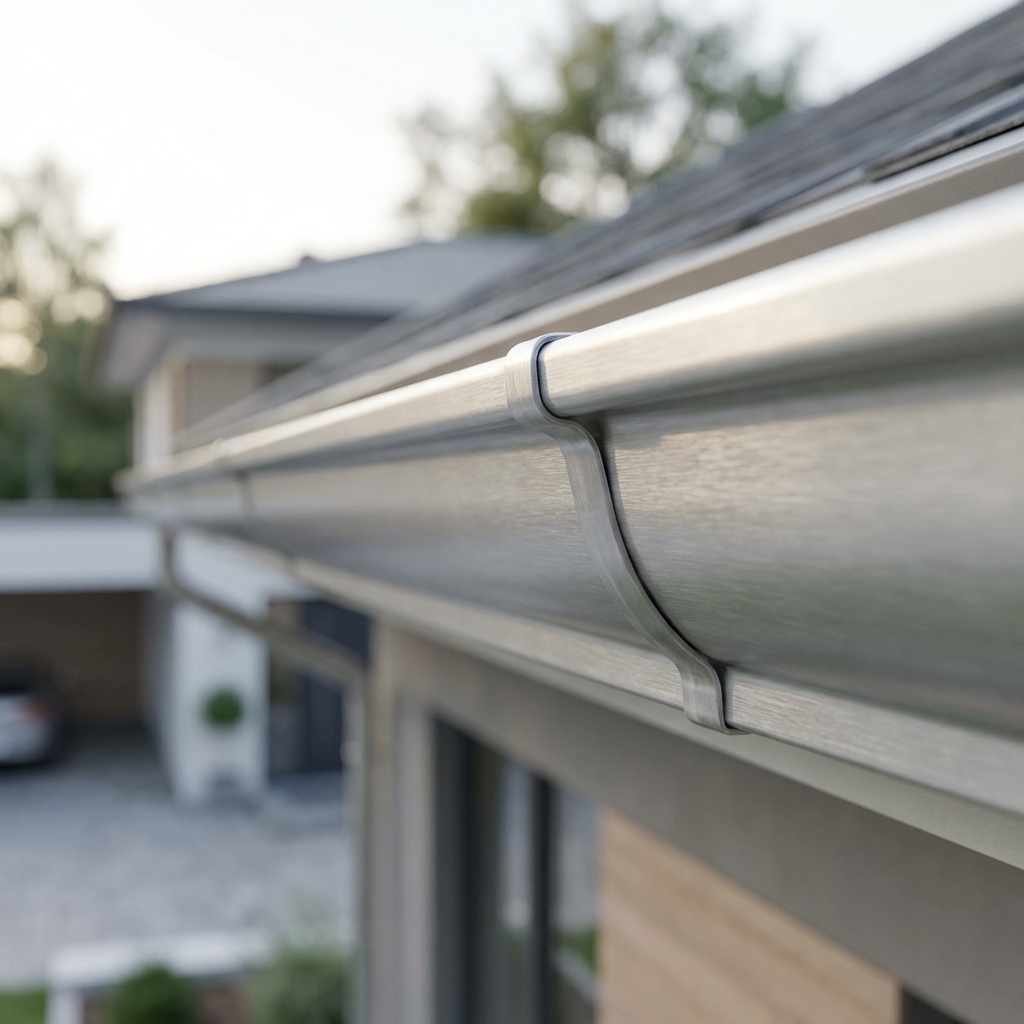
Seamless vs Sectional Gutters: Which Offers Better Protection for Your Home
Introduction: Understanding Gutter Options for Home Protection
When you think about protecting a home or commercial building in a four-season climate like Brookfield, Wisconsin, gutters rarely get top billing. Yet they quietly do some of the heaviest lifting in home exterior protection. By channeling water away from the roof, fascia, soffit, siding, and foundation, a well-designed gutter system reduces the risk of leaks, rot, basement seepage, and landscape erosion. If you’re evaluating gutter replacement options this year, you’ve likely encountered the debate: seamless vs sectional gutters.
The question isn’t trivial. Gutter performance hinges on more than just size and material. It’s about the system as a whole—continuity, joints and sealants, hangers and fasteners, slope, outlet placement, and compatibility with your roof and fascia. For residential gutter systems in particular, the choice between seamless and sectional often determines how well your home handles intense summer downpours, freeze-thaw cycles, and heavy snow loads.
At Expert Exteriors, our team installs and replaces gutters as part of comprehensive exterior renovations—roofing, siding, fascia, and soffit. We’ve seen how gutters either support or undermine an otherwise excellent exterior upgrade. In this gutter protection comparison, we’ll break down how seamless and sectional systems are built, how they perform, where they fail, and which choice generally offers better long-term protection for homes and light commercial properties across Southeast Wisconsin.
By the end, you’ll have a clear, practical framework to decide what best suits your property, budget, and maintenance preferences—and how to integrate gutters with fascia and soffit for lasting results.
What Are Seamless Gutters and How Do They Work
Seamless gutters are fabricated in continuous runs from a single coil of metal using a portable roll-forming machine on-site. Instead of piecing together 10-foot or 20-foot segments, a technician measures each roof edge and produces a custom-length gutter on the spot. Seams are only present where they are unavoidable: at inside and outside corners, end caps, and around downspout outlets.
Most seamless systems use aluminum due to its corrosion resistance, light weight, and color options. Steel and copper are alternatives for custom projects, though they add cost and require specialized skill. K-style profiles are the most common because they combine a traditional look with strong water-carrying capacity; half-round designs complement historic architecture but move slightly less water for the same width.
How they manage water is straightforward:
- The gutter is pitched toward outlets—typically 1/16 to 1/8 inch per foot—to move water efficiently.
- Hidden hangers fasten the gutter to the fascia, distributing weight and resisting sagging.
- Outlets connect to downspouts sized for expected rainfall and roof area.
- Leaf protection—micro-mesh screens, perforated covers, or reverse-curve systems—can be added to help prevent clogging.
Key seamless gutter benefits include:
- Fewer joints, fewer leaks: With long, continuous runs, there are fewer sealant-reliant connections to fail over time.
- Custom fit: Continuous lengths reduce misalignments that create standing water or drips.
- Stronger look and feel: Hidden hangers and a clean profile deliver a more refined appearance.
- Faster professional install: On-site fabrication eliminates trimming and joining dozens of short sections.
Seamless gutters still require precise installation. Pitch must be right, hanger spacing balanced for local snow and ice loads, and corners sealed and mitered with care. But when those details are handled correctly, seamless systems offer excellent reliability and curb appeal for both homes and low-rise commercial buildings.
What Are Sectional Gutters and Their Installation Process
Sectional gutters are constructed from pre-cut lengths—often 10-foot segments—joined together with slip couplers, screws, and sealant. They are widely available at home improvement stores and come in materials like aluminum, galvanized steel, and vinyl. This format makes them popular for DIY projects and budget-conscious replacements on smaller buildings, sheds, or garages.
A typical sectional installation process looks like this:
- Measure the eaves and calculate the required lengths, corners, and outlets.
- Attach fascia brackets or hangers at regular intervals (often 24–36 inches for aluminum; closer for vinyl).
- Assemble the run by connecting straight sections via couplers and sealing inside joints.
- Add inside/outside miters at corners with sealant and fasteners.
- Cut openings for outlets, seal the joints, and attach downspouts.
- Adjust pitch and test with water to confirm flow and eliminate sags.
Sectional gutter advantages include:
- Lower material cost: Off-the-shelf components minimize up-front expense.
- DIY flexibility: Homeowners can tackle small runs or repairs without specialized equipment.
- Easy section replacement: If a short segment gets damaged, you can swap it without removing the entire run.
- Availability: Components and accessories are easy to source in common sizes and colors.
The tradeoff is the number of joints. Each seam depends on sealant integrity and clean connections. Over time—especially through Midwest freeze-thaw cycles—those joints can shift, debond, or develop pinhole leaks. For short runs and accessory structures, sectional gutters can be a perfectly practical solution. On longer eaves and roofs with complex geometry, the added maintenance often becomes noticeable.
Comparing Durability: Seamless Gutters vs Sectional Systems
Durability comes down to stress points, material quality, and environmental load. In Brookfield and similar climates, gutters endure heavy snow, ice formation, thermal movement, wind, and gutter-clogging debris in fall.
Where seamless systems shine:
- Joint reduction: Long, continuous runs dramatically cut the number of potential leak points. The only recurring maintenance joints are corners, outlets, and end caps.
- Hanger integrity: With hidden hangers properly spaced and anchored into sound fascia, seamless gutters resist sagging under snow and ice loads.
- Thermal expansion: With fewer connections, the system better accommodates normal expansion and contraction without distorting multiple joints.
Where sectional systems are more vulnerable:
- Sealant fatigue: Every coupler and miter relies on sealant. UV exposure, freeze-thaw cycles, and minor movement gradually degrade these bonds.
- Misalignment: Small discrepancies add up, leading to sags, standing water, or joints pulling apart under load.
- Fastener creep: Repeated expansion and contraction can loosen screws at connecting points, inviting leaks and occasional separation.
That said, both systems benefit from the same durable choices:
- Material: Quality aluminum with a robust baked-on finish resists corrosion and chalking. Vinyl, while inexpensive, can become brittle in cold weather and deform in heat.
- Hanger spacing: Closer spacing and robust fasteners help in snow country. Many pros in our region prefer 16–24 inches on-center for 5-inch aluminum gutters with hidden hangers.
- Ice management: Roof heat loss can create ice dams that overload gutters. Proper attic insulation, ventilation, and—when needed—ice guards on steep metal roofs help protect any gutter type.
In real-world performance, seamless gutters typically outlast sectional counterparts with fewer leak repairs and less structural stress over time.
Maintenance Requirements for Each Gutter Type
Regardless of construction, gutters only work when they’re clear and pitched correctly. In leafy neighborhoods around Brookfield, homeowners should plan on seasonal cleanings—often spring and late fall—and immediate attention after severe storms.
For seamless gutters, a maintenance routine may include:
- Debris removal: Scoop and flush to clear leaves, seed pods, and shingle granules. Verify water drains freely through downspouts.
- Hanger checks: Look for loose hangers or fasteners, especially after a heavy snow season.
- Corner and outlet inspection: Re-seal miters and outlets if you see drips or staining.
- Surface cleaning: Address “tiger striping” (vertical streaks) with appropriate cleaners to preserve finish.
For sectional gutters, add these recurring tasks:
- Joint resealing: Inspect every coupler and miter; reapply sealant where cracks or separation appear.
- Coupler alignment: Ensure connections remain flush and level to prevent pooling at the seams.
- Fastener tightening: Retighten loose screws at joints and brackets.
Leaf protection helps both systems, though compatibility and maintenance differ:
- Micro-mesh guards provide excellent filtration but need periodic brushing to remove fine debris.
- Perforated covers balance flow and maintenance; some designs lift off for easy cleaning.
- Reverse-curve systems shed leaves but can overshoot water in heavy rain if not correctly pitched.
Safety matters, too. Ladder work is hazardous. If you’re not comfortable with heights or lack the right equipment, schedule professional cleaning and inspections. Coordinating gutter care with roof, fascia, and soffit maintenance can prevent hidden damage. For an overview of how these components work together, see our practical gutters and fascia guide.
Cost Considerations: Initial Installation and Long-Term Value
The most common reason property owners choose sectional gutters is cost. Materials are inexpensive and readily available, and DIY installation can reduce labor. However, long-term value depends on total lifecycle cost—repairs, resealing, cleaning frequency, and potential damage from leaks.
Typical cost factors include:
- Material: Aluminum is the standard for value and performance; steel and copper raise costs; vinyl lowers it but sacrifices durability.
- Size and profile: 6-inch K-style carries more water and costs more than 5-inch. Half-round tends to cost more than K-style.
- Length and complexity: Multiple stories, complex rooflines, and numerous corners add labor time and accessories.
- Downspouts and accessories: Larger 3×4 downspouts, conductor heads, and snow guards add cost but improve performance.
- Leaf protection: Quality guards increase upfront price while reducing ongoing cleaning.

While local pricing varies, homeowners can expect:
- Sectional aluminum (pro-installed): Typically lower than seamless on short, simple runs; closer in price on long or complex elevations due to added joints and labor.
- Seamless aluminum (pro-installed): Often moderately higher initial cost but with reduced leak points and fewer future repairs.
Long-term value considerations:
- Repair frequency: Seamless systems generally require fewer resealing and alignment fixes.
- Water damage risk: Fewer leaks mean lower risk of fascia rot, soffit staining, and siding water trails.
- Resale and curb appeal: Continuous runs with hidden hangers present a finished look, which matters for marketability.
For most full-home installations, seamless gutters deliver a better total cost of ownership, especially in climates with freeze-thaw cycles and heavy rainfall events.
Water Flow and Drainage Efficiency Comparison
Efficient drainage is about more than gutter style. Capacity, slope, outlet count, and downspout sizing all influence how effectively a system moves water off the roof and away from the structure.
Where seamless gutters gain an edge:
- Uninterrupted channel: With fewer joints, there are fewer internal obstructions that can catch debris and slow water.
- Smooth transitions: Corners and outlet connections are the only changes in geometry, minimizing turbulence.
- Consistent pitch: Fabricated to length, the run maintains designed slope without mid-span couplers that can sag over time.
Sectional systems can drain effectively, but they’re more sensitive to:
- Joint misalignment: Even slight mismatches at couplers create low spots and mini-dams where debris collects.
- Sealant beads: Excess material inside joints narrows flow and traps small debris, worsening over the years.
- Pitch variations: As sections settle differently or hangers loosen, slope changes can create pockets of standing water.
Across both types, consider these capacity guidelines:
- Roof area and pitch: Steeper roofs shed water faster; larger areas may justify 6-inch gutters and 3×4 downspouts.
- Downspout count: More outlets reduce the burden on any single discharge point and enhance performance in cloudbursts.
- Placement: Situate downspouts near natural water collection points and away from entryways.
- Splash zones: Roof valleys can overwhelm gutters; install splash guards or diverters to keep water inside the trough.
- Ground drainage: Extend downspouts with elbows or buried drains to direct water away from foundations.
In short, seamless design supports efficient drainage by reducing snag points. Proper sizing and layout, however, are equally critical. A well-engineered 5-inch seamless system can outperform an undersized 6-inch system that’s poorly sloped or under-served by downspouts.
Aesthetic Appeal and Curb Appeal Impact
Gutters are functional, but they frame the roofline and influence how finished your exterior looks. The visual differences between seamless and sectional systems are immediately noticeable up close and subtly impactful from the street.
Advantages of seamless for curb appeal:
- Continuous lines: Long, unbroken runs create a clean shadow line along the fascia.
- Hidden hangers: No visible spikes or ferrules to interrupt the profile.
- Color matching: Durable baked-on finishes coordinate with trim, siding, and soffit; custom colors are often available.
- Precision terminations: End caps and corners are tailored on-site for a tight, consistent fit.
Sectional gutters can still look sharp, especially on smaller façades, but:
- Visible joints: Couplers every 10–20 feet break the line and can attract dirt streaks over time.
- Mixed hardware: Spikes, ferrules, and joint plates create visual “noise” at close range.
- Color matching limits: Off-the-shelf colors may not align perfectly with your trim palette.
For homes receiving broader exterior updates—new roof, LP SmartSide siding, fresh fascia/soffit—seamless gutters help complete the transformation. The clean integration with fascia and soffit, plus the ability to size up to 6-inch K-style discreetly, supports both performance and design consistency.
Common Problems and Failure Points in Each System

Every gutter system has predictable stress points. Understanding them helps you prevent issues and prioritize maintenance.
Seamless gutter failure points:
- Corners: Inside and outside miters handle directional changes and expansion. Improper sealing or movement can cause leaks.
- Outlets: Cutouts for downspouts must be smooth and well-sealed; rough edges trap debris and can corrode over time.
- Hangers: If spaced too widely or fastened into weak fascia, the run can sag and back up water.
Sectional gutter failure points:
- Couplers: Each straight-line connection is a potential leak, particularly after freeze-thaw cycles stress the sealant.
- Miters: Pre-fabricated corner pieces expedite installation but introduce multiple seams clustered in high-flow zones.
- Material flex: Vinyl sections can warp in heat and become brittle in cold, leading to cracking at joints.
Issues common to both:
- Clogging: Leaves, needles, and shingle granules reduce capacity and cause overflows.
- Ice dams: Warm attic air melts snow, refreezing at the eave and loading gutters with heavy ice.
- Splash-over: Steep roofs and valley discharges can fling water past the gutter without splash guards.
- Fascia rot: Chronic leaks at the back of the gutter can soak wood fascia; proper drip edge and flashing help defend against this.
Proactive measures include:
- Right-sized gutters and downspouts, matched to roof area.
- Correct hanger spacing with corrosion-resistant fasteners.
- Adequate attic insulation and ventilation to limit ice dam formation.
- Strategic use of leaf protection and valley splash guards.
Choosing the Right Gutter System for Your Property
A smart choice balances budget, performance, maintenance, and aesthetics—while accounting for your specific roof design and site conditions. Consider the following factors as you compare seamless vs sectional gutters:
Choose seamless gutters if:
- You have long roof edges, multiple stories, or complex runs where minimizing joints matters.
- Your property sits under mature trees, increasing debris load and joint maintenance.
- Curb appeal is important—either for personal satisfaction or future resale.
- You want lower long-term maintenance with fewer leak-prone seams.
- You’re coordinating a larger exterior project—roof, siding, fascia/soffit—where on-site fabrication ensures precise fit.
Choose sectional gutters if:
- You’re outfitting a small accessory building, short runs, or temporary structures.
- DIY installation is a priority and the layout is simple.
- Immediate cost savings outweigh long-term maintenance considerations.
- You anticipate modifying the structure soon and need a flexible, replaceable solution.
Additional selection criteria to weigh:
- Roof material and pitch: Fast-shedding roofs (metal, steep asphalt) may benefit from 6-inch profiles and larger downspouts.
- Local weather: In the Midwest, durability under snow and ice argues for robust hangers and fewer seams.
- Foundation and grading: Properties with marginal drainage need more reliable water management to protect basements and slabs.
- Integration with fascia and soffit: Proper backing and alignment are essential; replacing compromised fascia is often wise during gutter updates.
Commercial considerations:
- Many small commercial buildings use K-style or box gutters; seamless aluminum is common and effective.
- Flat roofs with EPDM or TPO may rely on scuppers and internal drains; where exterior gutters are used, capacity and snow-load design are paramount.
If you’re unsure how these factors apply to your property, a professional assessment helps. As a local roofing and exterior remodeling contractor, Expert Exteriors evaluates roof edges, fascia condition, and water flow patterns to recommend the most protective solution. When timing is right for combined upgrades, coordinating gutters with fascia and soffit can prevent mismatches and future rework. You can also review our concise gutters and soffit services to understand how these elements connect in a full-system approach.
Conclusion: Making the Best Choice for Your Home Protection
Both seamless and sectional gutters can move water off your roof—but they do so with different long-term implications. Seamless gutters, fabricated to exact lengths with minimal joints, generally provide more reliable protection, cleaner lines, and lower maintenance for full-home installations. Sectional systems retain a place for short runs, DIY projects, and accessory structures where budget and simplicity matter most.
In a climate like Brookfield’s, where rainfall can be intense and winters hard on building envelopes, the resilience of a continuous gutter run often pays for itself in fewer leaks, less fascia damage, and improved curb appeal. Whichever path you choose, focus on the fundamentals: correct sizing, adequate downspout capacity, proper slope, sound hangers, and compatible leaf protection. And don’t overlook the role of well-ventilated soffits, sturdy fascia, and roof-edge flashing in safeguarding your investment.
If you’re planning exterior improvements or need guidance on gutter replacement options, Expert Exteriors is here to help you evaluate seamless vs sectional gutters in the context of your entire roofline. A well-designed gutter system is a small component with outsized impact—deliver it once, integrate it correctly, and your home will stay protected, efficient, and looking its best for years to come.