

Residential Shingle Style Guide: Match Your Roof to Your Home’s Architecture
Why Your Roof’s Appearance Matters More Than You Think
Your roof covers nearly 40% of what people see when they look at your home from the street. That visual impact directly affects your property’s curb appeal and, ultimately, its market value. We’ve worked with hundreds of homeowners in Brookfield and surrounding areas who initially thought of their roof as purely functional. Then they realized that choosing the right shingle style transformed how their entire home looked.
A well-matched roof creates visual harmony. When your shingles coordinate with your siding color, trim, and overall architectural style, the entire exterior feels intentional and polished. Mismatched or outdated shingles can make even a beautifully maintained home feel tired or neglected. The good news is that modern residential shingle options give you genuine flexibility to express your home’s character while protecting it from Wisconsin’s demanding weather.
Your roof choice also signals quality to potential buyers and visitors. Premium architectural shingles suggest investment in your property, while worn or mismatched styles suggest deferred maintenance. Whether you’re planning to sell soon or stay long-term, choosing shingles that complement your home’s architecture is a decision that pays dividends in both aesthetics and perceived value.
Common Roofing Problems That Make Style Selection Critical
Before selecting shingles, understanding what fails on roofs helps you make a choice that lasts. We regularly see three major issues that poor shingle selection accelerates: inadequate weather resistance, color fading, and profile mismatch with roof pitch.
Many homeowners choose budget three-tab shingles on steep roofs, which leads to accelerated granule loss and visibility of water infiltration patterns. The flat profile doesn’t shed water as effectively on high-slope rooflines, creating standing water that degrades shingles faster. Architectural shingles, with their thicker, layered design, handle steep pitches significantly better.
Color choice affects longevity too. Darker shingles absorb more heat, which can shorten lifespan in our sun-intense summer months. Conversely, lighter shingles may show dirt and algae growth more readily. We recommend matching color intensity to your roof’s sun exposure and ventilation design for optimal performance.
Improper installation ruins even premium shingle choices. When nails are placed incorrectly or sealant strips aren’t properly activated during installation, shingles lift in wind before their rated lifespan expires. This is why working with qualified installers matters as much as selecting the right product.
Understanding Shingle Types: Architectural vs Three-Tab Options
The shingle market essentially offers two primary residential options, and understanding the differences helps you match performance to your budget and aesthetic goals.
Three-tab shingles are the traditional workhorse. They’re lightweight, budget-friendly, and install quickly. Each shingle has a uniform appearance with three visible tabs. They’re suitable for lower-slope roofs and modest homes where cost is the primary driver. In Wisconsin’s climate, three-tab shingles typically last 15-20 years with proper maintenance.
Architectural shingles (also called laminate or dimensional shingles) are what we typically recommend to our residential clients. They feature multiple layers that create depth and shadow lines, mimicking the appearance of real wood shake or slate. Architectural shingles are heavier, more wind-resistant (often rated for 130+ mph winds), and last 25-30 years in Wisconsin conditions. The layered construction also provides better granule retention and superior water shedding on steeper pitches.
The cost difference isn’t as dramatic as many homeowners expect. Architectural shingles run roughly 25-35% more than three-tab options, but their longer lifespan and superior aesthetics often justify the investment. When you factor in the cost of replacement labor every 15-20 years versus 25-30 years, the per-year cost difference narrows considerably.
For most homes in our service area, we guide clients toward architectural shingles. They handle our freeze-thaw cycles better, resist wind damage more effectively, and simply look more substantial. If budget is genuinely constrained, three-tab shingles are a legitimate choice, but architectural shingles are where we see the best balance of durability and appearance.
Color Selection: How to Match Shingles to Your Home’s Exterior
Shingle color is the single biggest visual decision in your replacement project. We recommend evaluating color options in two distinct settings: in bright daylight and at dusk, since lighting dramatically changes how colors appear.
Start by identifying your siding color family. If your home has warm-toned brick or tan vinyl siding, cool gray shingles will create visual tension. Conversely, cool-toned gray siding pairs beautifully with gray, charcoal, or cool brown shingles. Look at the undertones in your existing trim, gutters, and fascia as well.
Popular combinations we see in our Brookfield neighborhood include:
- Warm gray or weathered brown shingles on cream and tan siding
- Charcoal or deep brown shingles on white or light gray siding
- Slate gray shingles on burgundy or deep brick homes
- Subtle blend shingles (mixed color granules) on transitional-style homes
Don’t choose shingle color from small samples or manufacturer photos alone. We always recommend obtaining large samples from our suppliers and observing them on your actual home at different times of day. Morning light, afternoon sun, and evening dusk each reveal different color nuances. Cloudy days show how your shingles appear in typical Wisconsin weather too.
Multicolor or blend shingles have become increasingly popular because they hide dirt, algae growth, and variations in shingle wear patterns. These subtle color variations create a more sophisticated appearance than solid-color shingles, even though both are equally durable. Many of our clients find blend options more forgiving from a maintenance perspective.
One actionable step: take three large shingle samples and nail them to your home’s fascia for a few days. Observe them at different angles and times of day. Your final choice should feel cohesive with your home’s overall palette, not like a afterthought.
Texture and Profile Choices That Enhance Curb Appeal
Beyond color, texture and profile create the visual depth that separates a basic roof from one that truly enhances your home’s character.
Architectural shingles offer several profile variations. Traditional dimensional shingles have gentle shadow lines and moderate depth. Heavy-duty architectural shingles feature pronounced shadows and thicker, more visible layering that mimics real shake or slate textures. The more dramatic profiles work beautifully on contemporary and craftsman-style homes but can feel overwhelming on modest ranch-style properties.
We typically match profile intensity to architectural style. A contemporary home with clean lines and geometric features looks stunning with bold, pronounced shingle profiles. A traditional colonial or ranch-style home benefits from subtler dimensional shingles that add texture without competing with the home’s existing features.
Granule composition also affects texture perception. Some shingles use finer granules for a smoother appearance, while others incorporate larger, more visible granules that create pronounced tactile texture. Larger granules tend to show weathering patterns less dramatically, another benefit for long-term appearance maintenance.
Premium architectural shingles often include color blends with multiple granule colors and sizes, creating natural variation. This blend effect makes it harder for algae or dirt streaks to become visually apparent. It’s a practical aesthetic advantage that many homeowners overlook.
Consider your roof pitch when evaluating profile intensity. Steeper roofs show shingle texture more dramatically from ground level, so pronounced profiles work well. Low-slope roofs display shingles at a more oblique angle, making subtler profiles often more appropriate. Our team evaluates your specific pitch and viewing angles during the consultation process.
Durability Considerations in Your Shingle Decision
Choosing shingles is ultimately an investment in long-term protection. Understanding durability ratings helps you make informed choices rather than relying solely on aesthetics or cost.
Wind resistance is critical in Wisconsin. We look for shingles rated for at least 110 mph winds, though 130+ mph ratings provide better insurance against our occasional severe weather. Architectural shingles typically achieve higher wind ratings because their layered construction resists uplift better than thin three-tab shingles.
Impact resistance matters too, particularly in areas with large trees. Some premium shingles carry Class 4 impact ratings, which means they withstand hail and falling debris significantly better than standard shingles. If your home is surrounded by mature trees or you live in a hail-prone area, impact-rated shingles reduce replacement frequency.
Granule retention directly correlates with lifespan. Quality shingles lose less than 10% of granules in the first five years, while budget options might lose 20% or more. Granule loss exposes the asphalt base beneath, which degrades rapidly when exposed to UV light and weather. We prioritize shingles with strong granule adhesion to maximize longevity.
Algae and mold resistance is increasingly important in humid climates like ours. Many manufacturers now offer shingles with copper granules or specialized coatings that inhibit algae growth, keeping your roof looking clean with less maintenance. This becomes increasingly valuable as your roof ages.
Our roof replacement services include guidance on durability-rated products backed by strong manufacturer warranties. When we discuss shingle options with you, we explain the specific performance advantages of each choice so you understand what extra durability features actually deliver in Wisconsin conditions.
Climate Factors That Impact Shingle Performance in Wisconsin
Wisconsin’s climate is genuinely demanding for roofing. Our freeze-thaw cycles, heavy snow loads, summer heat, and occasional high winds all stress shingles differently than homes in milder climates.
Freeze-thaw cycles are our biggest durability driver. Water penetrates shingles and ice dams, expands when it freezes, and contracts when it thaws. This constant stress-relief cycle degrades shingles faster than in stable-temperature climates. Shingles with superior waterproofing and flexibility perform significantly better through Wisconsin winters. We prioritize shingles manufactured to handle 50+ freeze-thaw cycles annually.
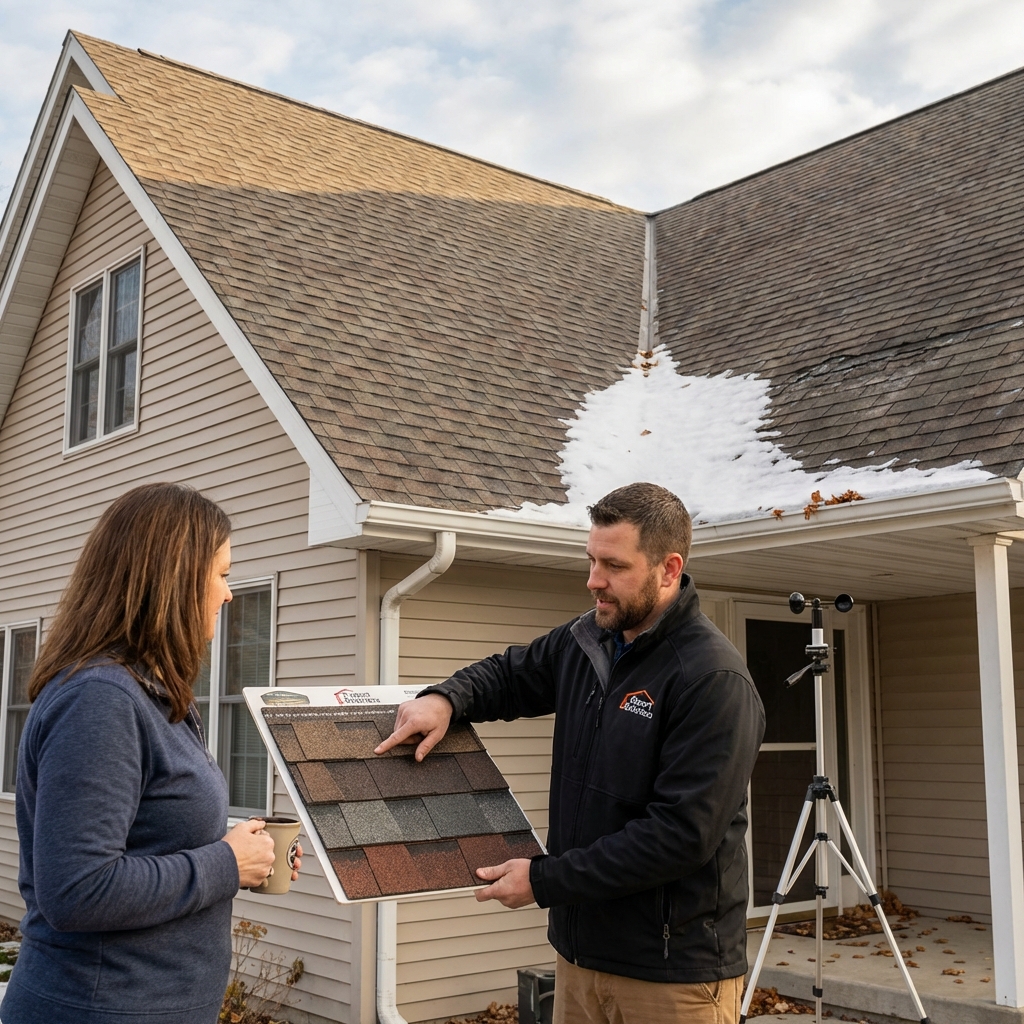
Snow load capacity isn’t typically a shingle concern (roof structure handles that), but ice dam formation is. When ice dams form, water backs up under shingles and seeps into your attic. Proper ventilation and insulation address this structurally, but premium shingles with stronger adhesive strips and superior waterproofing provide an additional layer of protection.
Summer heat accelerates granule loss and asphalt degradation. Our July and August sun intensity is significant, particularly on south and west-facing rooflines. Light to medium-colored shingles reduce heat absorption slightly, helping preserve the asphalt binder longer. This is a modest advantage, but noticeable over a 25-year lifespan.
Wind events, while less frequent than freeze-thaw cycles, occur regularly enough to matter. Our spring and fall wind seasons can generate gusts exceeding 50 mph. Architectural shingles with enhanced wind ratings protect against premature failure during these events.
Understanding these Wisconsin-specific stressors helps explain why we emphasize architectural shingles and quality installation. Budget options work, but they’re essentially optimized for average climates. Premium products are engineered for our specific challenges.
Neighborhood Aesthetics and HOA Guidelines to Consider
Your roof isn’t purely a personal choice. Neighborhood character and HOA restrictions sometimes shape which options are actually available to you.
In established neighborhoods, visual continuity matters. Homes with radically different roofing styles can feel out of place, which is why many neighborhoods organically converge on similar color palettes. While there’s no formal requirement, choosing shingles that complement your neighbors’ roofs maintains neighborhood aesthetics and supports property values across the area.
HOA communities often have explicit guidelines about roof color and style. Some restrict colors to specific approved palettes (typically grays, browns, and blacks). Others limit architectural styles to only traditional three-tab or specific architectural profiles. If you’re in an HOA community, review your covenants before selecting shingles. An unapproved choice might trigger a compliance issue after installation.
When we work in communities with HOA restrictions, we provide our clients with documentation from manufacturers confirming that chosen shingles meet the HOA requirements. This prevents conflicts and ensures smooth approval through your HOA’s architectural review process.
Even without formal HOA guidelines, respecting neighborhood character is good practice. If your street features predominantly charcoal shingles, choosing burgundy or copper-toned shingles makes your home visually distinct in ways that might not feel positive. There’s room for individuality, but radical departures from neighborhood norms can feel jarring.
Our service area across Wisconsin includes communities with varying HOA policies and neighborhood traditions. During your consultation, we discuss both the formal restrictions and the informal neighborhood patterns to help you make a choice that feels cohesive with your surroundings.
How We Guide You Through the Selection Process
We don’t believe homeowners should navigate shingle selection alone. The decision involves too many interconnected variables: aesthetics, durability, budget, climate performance, and neighborhood context.
Our selection process begins with a detailed consultation at your home. We evaluate your roof’s pitch, exposure directions, existing exterior colors, architectural style, and visible neighborhood patterns. We photograph your home’s current condition and discuss your long-term plans (selling soon or staying long-term, for example).
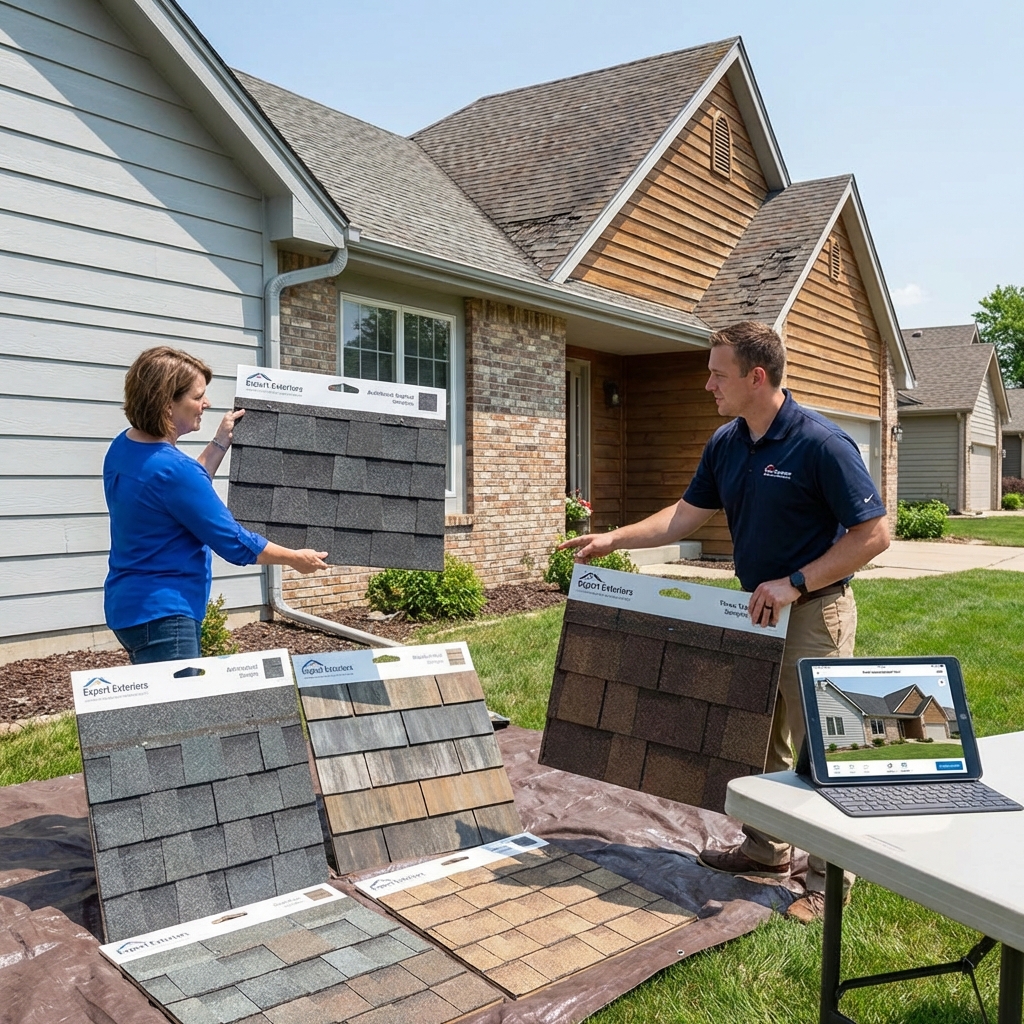
Next, we bring large sample sets of our recommended shingle options to your home. Rather than viewing samples in our office, we install them on your actual roof so you see them in your specific lighting conditions, with your siding colors, and at the angles you’ll view them daily. This eliminates the surprise of choosing samples in a showroom only to dislike the choice when installed.
We discuss the performance characteristics of each option: wind ratings, impact resistance, granule retention, expected lifespan, and climate suitability. You’ll understand not just how shingles look, but how they’ll perform through Wisconsin winters and summers.
Budget naturally influences decisions. We discuss cost trade-offs transparently. Sometimes a mid-range architectural shingle delivers nearly 90% of the performance of a premium product at significantly lower cost. Other times, the extra durability premium makes clear financial sense based on your situation.
Finally, we explain the installation specifics that affect your chosen shingles’ performance. Proper ventilation, ice shield installation, and sealant strip activation are as important as the shingles themselves. We walk you through how we ensure proper installation so your investment performs as promised.
Our Expert Installation Ensures Your Choice Looks Perfect
Selecting the ideal shingles means little if installation doesn’t match the quality of the product. We’ve seen beautiful shingles installed incorrectly, only to fail prematurely or look sloppy.
Our installation team follows manufacturer specifications precisely. This includes proper nail placement (four nails per standard shingle, five for high-wind installations), correct sealant strip activation, and proper starter course positioning. We don’t take shortcuts that might compromise performance or appearance.
Ventilation optimization is part of our installation process. Inadequate ventilation accelerates shingle degradation and creates ice dam vulnerability. We ensure your roof ventilation meets current standards as part of any replacement.
Ice shield installation on vulnerable areas prevents water infiltration at eaves and valleys. We use full ice shield protection where needed rather than minimal applications that save cost but compromise protection.
Detail work separates professional installations from mediocre ones. How we handle valleys, ridges, and penetrations (chimneys, vents, skylights) determines whether your roof remains watertight for 25+ years. We treat every detail with the same precision as the main field shingles.
Our roof replacement services include a 15-year workmanship warranty. This isn’t marketing language; it means we stand behind our installation quality completely. If something fails due to our workmanship, we fix it at no cost.
Before and after your installation, we document the work with photographs. You’ll see what we did at each stage, and you’ll have records for insurance and warranty purposes.
Maintenance Tips to Preserve Your Shingle Investment
Premium shingles and expert installation create the foundation for long-term performance, but homeowner maintenance matters too.
Routine inspections twice annually (spring and fall) catch problems early. Look for lifted shingles, missing granules, visible damage, or algae growth. Binoculars make safe ground-level inspection possible without climbing onto the roof.
Keep gutters and downspouts clean, particularly after autumn leaf drop. Clogged gutters cause water to back up under shingles, leading to premature failure and attic damage. Clean gutters aren’t just aesthetic; they’re protective infrastructure for your roof. We offer gutter and soffit services to keep this critical system functioning optimally.
Trim tree branches that overhang your roof. Falling branches damage shingles and create debris that clogs gutters. Shade from overhanging branches can also promote moss and algae growth in humid areas.
Avoid walking on your roof unnecessarily. Even normal walking can dislodge shingles or crush granules. If roof inspection or maintenance is necessary, hire professionals. Most roofing issues aren’t visible from ground level anyway.
Professional inspections every five years (more frequently after storm damage) catch subtle problems before they become expensive. We perform thorough inspections, documenting condition with photographs and explaining any concerns clearly.
Don’t pressure wash your roof. High-pressure water drives moisture under shingles and damages the granule layer. If algae growth bothers you, specialized low-pressure treatments exist, but generally, algae is cosmetic and doesn’t affect performance.
Schedule Your Free Residential Roof Consultation Today
Your roof deserves the same thoughtful decision-making you’d apply to any major home investment. With so many shingle options, color choices, and performance variables, having expert guidance transforms the process from overwhelming to straightforward.
We invite you to schedule a free, no-obligation consultation. We’ll evaluate your home, discuss your preferences, show you sample options on your actual roof, and explain how different choices perform in Wisconsin’s climate. You’ll walk away with clear direction, whether you’re ready to move forward now or planning for the future.
Our team has guided hundreds of homeowners through this decision successfully. We’ve seen beautiful homes transformed by the right shingle choice, and we’ve prevented costly mistakes by steering clients toward realistic performance expectations.
Visit our projects gallery to see examples of our completed work. You’ll see how thoughtful shingle selection looks across diverse home styles and neighborhoods.
Ready to start? Contact us today to schedule your free consultation. We look forward to helping you protect and enhance your home with the perfect roof replacement.