
Protecting Gutters, Skylights, and Solar Panels During Roofing Projects
Why Exterior Elements Get Damaged During Roof Replacement
When you invest in a new roof, protecting the surrounding systems matters just as much as the installation itself. At Expert Exteriors, we’ve seen firsthand how easily gutters, skylights, and solar panels can suffer damage during roofing work if proper precautions aren’t taken. A roof replacement project involves heavy foot traffic, falling debris, and equipment movement across your entire home or building exterior. Without deliberate planning and protection strategies, these valuable fixtures can end up costing you thousands in repairs on top of your original project investment.
Our approach treats your entire exterior as an interconnected system. We don’t just replace your roof and hope the rest survives. Instead, we implement comprehensive safeguards that keep every element intact while we work.
Roof replacement is inherently disruptive. Our crews remove old roofing materials, which involves walking on fascia and gutters, hauling waste, and maneuvering around edges. Skylights sit directly in the work zone, exposed to falling nails, shingles, and flashing debris. Solar panels occupy valuable roof real estate, making them vulnerable to dropped tools and worker contact.
The damage mechanisms are straightforward. Gutters bend or dent when workers use them as handholds or when heavy materials rest against them. Skylight frames crack or seal fails when roofing debris collides with glass or when protective coverings get removed improperly. Solar panels suffer broken cells, loose electrical connections, or cracked glass from direct impact or vibration during nearby work.
Weather compounds these risks. Rain during a roofing project can seep through unsealed roof penetrations, finding its way into skylights and solar electrical systems. Wind can lift protective coverings or move equipment that then strikes fixtures.
The timeline matters too. A typical residential roof replacement takes three to five days depending on size and complexity. During that entire period, your exterior systems remain exposed to the work environment.
The Cost of Unprotected Gutters, Skylights, and Solar Panels
The financial impact of damage discovered after a roofing project often exceeds the cost of prevention. A bent gutter section requiring replacement runs 300 to 800 dollars depending on material and length. Solar panel repairs, particularly if the electrical connections are compromised, can exceed 1,500 dollars per panel once you factor in specialized electrical work and inverter checks.
Skylights present a complex repair scenario. If the frame seal fails due to impact or improper handling, water intrusion begins immediately. You may not notice the damage until weeks later when interior water stains appear. By then, drywall absorption and potential mold growth add thousands to remediation costs. Full skylight replacement, if the original becomes unsalvageable, ranges from 1,200 to 3,500 dollars installed.
Beyond direct repair costs, unprotected systems create liability concerns. If a worker is injured while trying to navigate around damaged gutters or unsecured skylights, questions arise about project safety standards. Insurance claims become complicated when damage could have been prevented with standard protection protocols.
Hidden costs matter too. A roof that should last 25 years performs poorly if water enters through compromised gutters or skylights. Solar systems operate at reduced efficiency when panels are cracked or connections loosen from vibration. These performance losses compound annually, reducing your return on investment.
Our Comprehensive Protection Strategy for Your Roofing Project
We’ve built our protection protocols around three core principles: prevention, containment, and restoration. Prevention starts before our crews arrive on site. Containment manages what happens during the work. Restoration ensures everything functions perfectly when we finish.
Our assessment process identifies every exterior fixture that requires protection. We photograph existing conditions, note gutter alignment, document skylight seals, and test solar system output. This baseline proves invaluable if any questions arise about pre-existing versus work-related damage.
We then customize our protection strategy to your specific roof configuration. A metal roof replacement requires different precautions than an asphalt shingle installation. A roof with multiple skylights demands more attention than a simple rectangular surface. Solar arrays require electrical considerations beyond physical protection.
Our teams use industry-standard materials combined with proven techniques we’ve refined across hundreds of projects. We don’t cut corners with tape and plastic sheeting. Instead, we employ protective barriers, temporary covering systems, and strategic worker positioning that actually works.
How We Secure and Shield Your Gutters
Gutters are particularly vulnerable because they’re directly adjacent to the work zone and workers instinctively use them for support. We address this with a two-phase approach: physical barriers and positioning protocols.
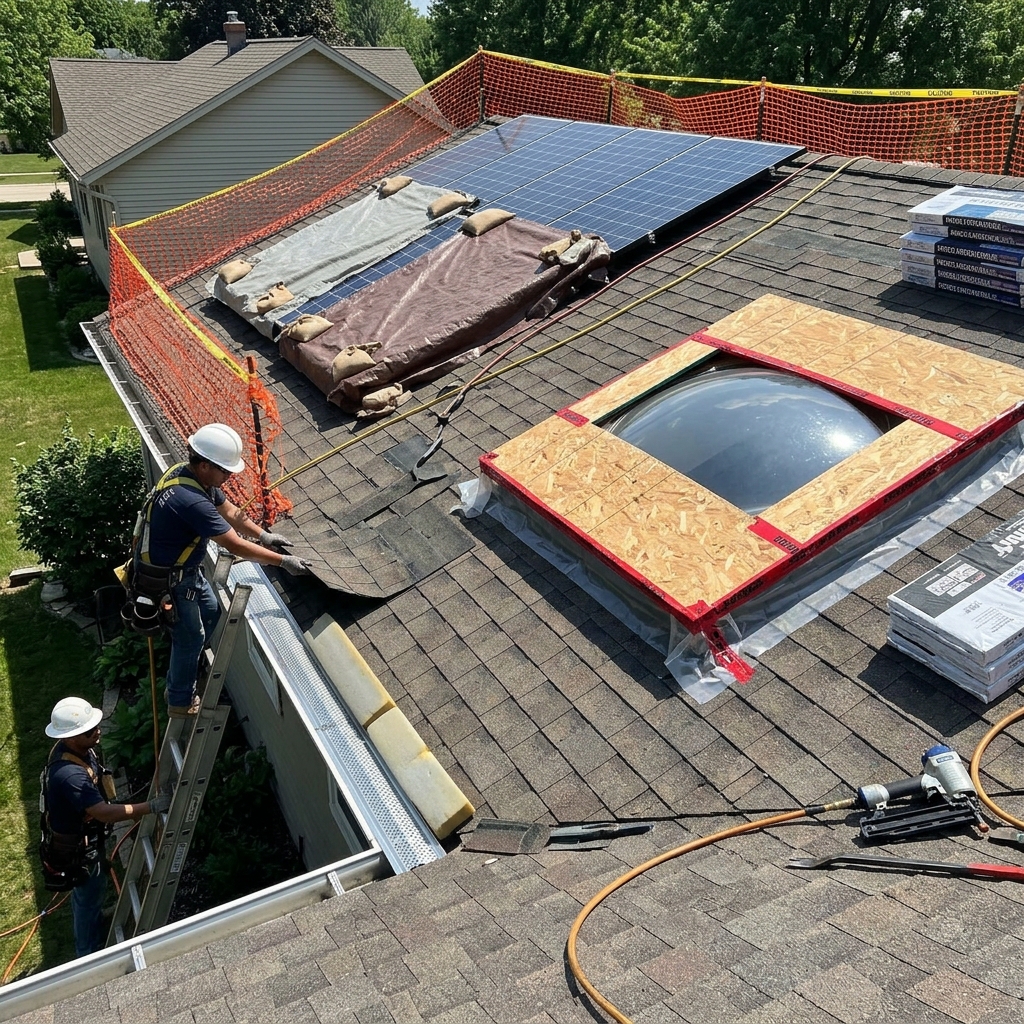
For gutter and fascia protection, we install rigid plywood or composite board shielding along the gutter line. This isn’t a temporary measure that flexes under pressure. The barrier absorbs impact from dropped materials and prevents workers from directly contacting the gutter system. We secure it firmly so wind or vibration won’t shift it during the project.
Our crews maintain strict protocols about gutter use. Hand tools and light materials never rest in gutters. Material staging areas are positioned away from gutter runs. Dumpsters and waste chutes are positioned to prevent debris from landing in gutters. Workers understand that gutters are off-limits except for designated pathways at marked safe points.
For homes with standing-seam metal gutters or premium gutter systems, we add an extra layer of foam padding beneath the protective barrier. This prevents ding marks even if something does strike the barrier itself.
We also address downspout protection. If downspouts require temporary disconnection for roof access, we carefully cap them with fitted covers and redirect water with temporary guttering to prevent foundation or landscape damage during the project.
Your gutters, fascia, and soffit emerge from our projects looking identical to how we found them. This consistency is intentional.
Protecting Skylights From Impact and Water Damage
Skylights require the most nuanced protection strategy because they combine fragile glass, precision seals, and critical functionality. We never allow skylights to be treated as temporary work surfaces or to remain exposed to weather without active sealing measures.
Our protection protocol depends on skylight type. For fixed skylights with opening mechanisms, we install protective frames that surround the entire unit while maintaining clearance so roofers can work safely around them. These frames are constructed from aluminum and stabilizing braces that distribute any potential impact load away from the glass and frame itself.
For large skylights or skylights in high-traffic areas of the roof, we sometimes install temporary polycarbonate coverings that shed water while allowing interior light to pass through. This approach prevents water intrusion if we encounter unexpected weather delays during the project.
We seal the perimeter with temporary waterproofing tape rated for the duration of the project. Unlike standard painter’s tape that fails in moisture, we use tape specifically designed for roofing conditions. The seal remains effective through rain, temperature fluctuations, and UV exposure.
During tearoff operations, we station crew members specifically to monitor skylight areas. They ensure that old roofing materials don’t accumulate around skylights where water can pond. As we install new flashing and underlayment, the skylight installation follows industry best practices for slope, drainage planes, and sealant application.
Once new roofing is installed, we test each skylight’s performance before we consider the project complete. This means opening the skylights where applicable, checking for water resistance, and verifying that all mechanical components operate smoothly.
Safeguarding Solar Panel Systems During Installation
Solar panels require protection that addresses both physical impact and electrical safety. We coordinate closely with your solar provider when possible, though many homeowners manage solar installations independently from roofing contractors.

Our primary concern is preventing impact damage to panels and their electrical connections. Workers are trained never to step on solar panels or rest equipment against them. We establish a perimeter around solar arrays using temporary fencing or rope barriers marked with warning tape. This physical boundary communicates that the area is restricted and helps prevent accidental contact.
For panels mounted to roof sections that require underlayment or flashing installation, we work carefully to preserve panel mounting integrity. The original roof contractor likely secured panels to the underlying structure. Our installation must not disturb those connection points. We coordinate our material staging and work sequencing to minimize time during which panels lack overhead protection.
Electrical protection is equally important. If roof work generates dust or moisture near electrical connections, inverter boxes, or combiner boxes, we install protective barriers around these components. A moisture or dust intrusion event could damage expensive electrical equipment.
We never cover solar panels with heavy tarps or weighted protection that could cause stress fractures in cells. Instead, we use lightweight breathable coverings if weather threatens during the project, or we schedule work during favorable weather windows when possible.
Once our roofing installation is complete, we document that solar systems remain intact and operational. If the solar system monitoring shows any performance drops that might indicate damage, we immediately investigate and communicate findings to you and your solar provider.
Pre-Project Assessment and Planning
Our protection strategy begins weeks before we arrive with equipment and crews. A detailed assessment visit allows us to understand the specific challenges your roof presents.
We walk the entire perimeter, photographing gutters, downspouts, roof penetrations, skylights, and any solar or other exterior systems. We check gutter slope, note areas where standing water might accumulate, and identify any existing damage. We examine how gutters connect to fascia and whether there are structural vulnerabilities we need to accommodate.
For skylights, we document type, size, frame material, and current seal condition. We note if skylights have operable blinds or shades that need protection. We check whether skylights have drains or potential water pooling points.
Solar panels receive specific attention. We photograph panel layout, note if panels are mounted directly to roof substrate or on separate rail systems, and identify electrical equipment locations. We ask about system capacity and monitoring so we understand what normal performance looks like.
We also assess your home’s or building’s age and architecture. Older homes with original gutters made from specific materials may require specialized protection. Commercial buildings with flat roofs present different protection requirements than residential pitched roofs.
This assessment feeds into our detailed project plan. We document exactly where crews will stage materials, identify protected pathways, mark restricted areas, and establish contingency plans if weather delays the project.
You receive a written summary explaining what we protect, how we protect it, and what timeline we expect. This transparency helps you understand that your exterior systems are receiving the same professionalism and attention as your roof itself.
Our Step-by-Step Protection Process
Execution is where planning becomes reality. Our crews follow a disciplined sequence designed to maximize protection throughout the project.
Day one begins with setup. Before any roofing material comes off, we install physical barriers around gutters and any ground-level systems. We mark off restricted areas and establish material staging zones away from vulnerable systems. We position equipment and coordinate access routes that minimize proximity to skylights, solar panels, and other fixtures.

As we begin roof tearoff, designated crew members maintain awareness of gutter and skylight areas. We remove old roofing materials in a controlled sequence that prevents large debris accumulation in protected zones. We immediately load removed materials into dumpsters rather than stacking them on the roof where they could shift and damage nearby systems.
During the substrate inspection phase, we examine the roof’s structural condition and underlying layers. We note any damage to gutter fasteners, flashing, or penetration seals and communicate findings to you. This phase informs whether we need additional protective measures for damaged areas.
When we install new underlayment, flashing, and roofing materials, the work progresses systematically from gutters inward. This means we install and seal gutter flashing first, establishing a complete water management system before we move to broader roof areas. Skylights receive flashing installation that matches manufacturer specifications exactly, with sealants applied according to current roofing standards.
Solar protection gets addressed during this phase too. If panels need underlayment work nearby, we coordinate timing so panels are exposed only during actual work on adjacent areas. We don’t leave panels uncovered longer than necessary.
The final phase includes cleanup and verification. We inspect every protected system, test water drainage from gutters, verify skylight operation, and confirm solar panel systems show normal performance. We remove all protective barriers and temporary coverings, leaving your exterior clean and ready.
Why Professional Protection Matters More Than DIY Solutions
Some property owners consider protecting their exterior systems themselves during a roofing project. This approach almost universally underperforms compared to integrated professional protection protocols.
DIY protection fails because it typically addresses only obvious problems. A plastic sheet over a skylight prevents some weather intrusion, but it doesn’t protect the frame from impact. Rope barriers around skylights might prevent some contact, but they don’t stop falling debris. Tape applied to gutter seams isn’t rated for roofing conditions and fails within days of exposure to weather and temperature swings.
Professional protection succeeds because we understand failure mechanisms and install systems designed specifically to resist them. We use materials rated for the conditions they’ll encounter. We position protections based on actual roof work sequences, not on assumptions about where damage might occur. We monitor protections during the project and adjust them if weather or other conditions change.
Professional protection also provides accountability. If damage occurs despite our protections, we take responsibility. If you implement DIY protection and damage occurs, you’re responsible for the liability and repairs. Your homeowner’s insurance may deny claims if you failed to hire professionals for complex exterior work.
The cost of professional protection is typically 2 to 4 percent of your total roof replacement project cost. Compare that against the potential $2,000 to $5,000 in repairs if unprotected systems are damaged. The financial case for professional protection is straightforward.
Trust Expert Exteriors for Complete Exterior Protection
At Expert Exteriors, we’ve completed hundreds of roofing projects across residential and commercial properties in the Brookfield area and surrounding communities. That experience has taught us that protecting your entire exterior is just as important as the roof itself.
We bring the same commitment to protecting your gutters, skylights, and solar systems as we bring to installing quality roofing materials. Our 15-year workmanship warranties on roof replacements extend to the protection protocols we implement, giving you confidence that we stand behind our work.
When you contact us for a roof replacement estimate, we include detailed protection planning as part of our assessment. We explain exactly what we’ll protect and how, answer your questions, and provide a comprehensive project plan before we schedule installation.
Whether your project involves residential roof replacement, commercial roofing in EPDM or TPO systems, or specialized exterior work around installed solar panels, we adjust our protection strategy to match your specific situation.
Ready to discuss your roofing project and learn how we’ll protect your entire exterior? Contact Expert Exteriors today for a detailed assessment. We serve property owners throughout Wisconsin’s service area with professional roofing and exterior protection that delivers peace of mind alongside quality craftsmanship.