

Proper Roof Ventilation vs Poor Ventilation: Why Your Home Needs Both to Thrive
Why Homeowners Struggle With Inadequate Ventilation and Insulation
Most homeowners don’t think about their attic until something goes wrong. You’re focused on what you can see: the roof above, the rooms inside, the exterior appeal. Meanwhile, your attic works quietly in the background, and when ventilation and insulation fall short, the damage compounds silently.
The real problem is that ventilation and insulation work together as a system. Without proper airflow, insulation loses its effectiveness. Without adequate insulation, your ventilation system has to work overtime. Many properties in the Brookfield area struggle because they inherited older systems designed without today’s energy standards in mind, or because previous upgrades addressed only one half of the equation.
Property owners typically face three barriers: they don’t understand what balanced ventilation actually means, they underestimate how much poor attic conditions cost them monthly, and they’re uncertain which upgrades will deliver real results. This confusion leads to decisions that look good on paper but fail to solve the underlying problem.
The Hidden Costs of Poor Roof Ventilation
Poor ventilation doesn’t announce itself with a dramatic failure. Instead, it bleeds money through your energy bills month after month while slowly damaging your structure.
When your attic can’t breathe properly, heat builds up during summer and moisture lingers year-round. In summer, trapped heat radiates downward into your living spaces, forcing your air conditioning to run longer and harder. We’ve seen homeowners waste 15-25% of their cooling costs simply because their attic temperature reaches 130-150 degrees Fahrenheit. That’s money leaving through your roof.
Winter creates a different problem: warm air from your heated living space rises into the attic. Without proper exhaust vents, that moisture condenses on cold surfaces. Over time, this moisture promotes:
- Mold growth in insulation and structural wood
- Rot in roof framing and fascia boards
- Premature shingle deterioration from underneath
- Reduced insulation R-value as fibers absorb moisture
The financial impact extends beyond energy waste. A single roof replacement because of moisture damage can cost $8,000-$15,000 or more. Mold remediation runs thousands of dollars. A new fascia and soffit system because of ventilation-related rot adds another $3,000-$8,000. These aren’t theoretical costs; our team encounters them regularly in homes that skipped proper ventilation from the start.
Your roof is a major investment. Proper ventilation protects that investment rather than accelerating its decline.
How Improper Attic Conditions Damage Your Investment
The connection between attic conditions and your home’s value is direct and measurable. A home with moisture damage, mold, or structural rot becomes immediately less attractive to buyers and appraisers.
Improper ventilation accelerates wear on roofing materials themselves. Shingles need air circulation underneath to function properly. When moisture is trapped between the deck and shingles, granule loss increases, curling develops prematurely, and lifespan drops significantly. A 25-30 year roof can fail in 15 years under these conditions.
Insulation degradation is another hidden cost. Fiberglass and mineral wool insulation depend on trapped air pockets for R-value. Moisture collapses these pockets, reducing insulation effectiveness by 50% or more. You’re paying for insulation that no longer works, while your heating and cooling costs climb.
Structural damage develops in phases. First, minor wood softening appears in fascia boards and roof decking. Then rot spreads into rafters and trusses. At this stage, you’re looking at structural repairs that compromise the roof’s integrity. Water stains on ceilings, warped attic flooring, and visible mold are late-stage warnings that serious damage already exists.
Your property’s envelope protects everything inside: the flooring, walls, mechanical systems, and furnishings. When the envelope fails, you’re not replacing shingles anymore; you’re rebuilding.
What Expert Exteriors Roof Ventilation Solutions Include
We design ventilation systems that match your home’s specific needs, not a one-size-fits-all approach. Proper attic ventilation requires intake, exhaust, and balanced airflow paths.
Our comprehensive ventilation strategy includes:
- Soffit intake vents that draw outside air into the attic from the eaves
- Ridge vents or gable vents positioned for maximum exhaust efficiency
- Proper attic baffle installation to direct airflow and prevent insulation blockage
- Ventilation calculations based on attic square footage and existing conditions
The intake-to-exhaust ratio matters tremendously. Building codes specify a 1:1 ratio: for every square foot of exhaust capacity, you need equal intake. Many older homes have exhaust vents but inadequate intake, which creates negative pressure and actually pulls outside moisture into the attic. We audit your current system and identify gaps before installing replacements.
Ridge vents paired with soffit vents create continuous air movement along the underside of your roof deck. This constant circulation removes heat and moisture before they cause damage. We also seal and block any unintended openings that disrupt planned airflow paths.
Superior Insulation Upgrades We Provide
Ventilation alone isn’t enough; insulation amplifies the benefits. When we upgrade your attic, we assess existing insulation depth, condition, and coverage, then recommend additions that bring you to modern standards.
Most homes built before 2000 have R-19 to R-30 insulation. Current best practice for Wisconsin’s climate is R-49 to R-60. This upgrade might sound aggressive, but energy costs and comfort gains justify it. We use high-quality batts, blown-in cellulose, or spray foam depending on your attic layout and existing structure.
Our installation process includes:
- Removing or replacing degraded insulation
- Adding ventilation baffles before new insulation goes in place
- Achieving consistent depth across the entire attic floor
- Air sealing gaps around penetrations where warm air escapes
Proper air sealing beneath new insulation prevents warm air from bypassing your thermal barrier. Small gaps around electrical boxes, HVAC ducts, and plumbing can account for 20-30% of heat loss. We seal these before insulation installation so your upgraded R-value actually performs as designed.
Energy Efficiency Gains With Our System
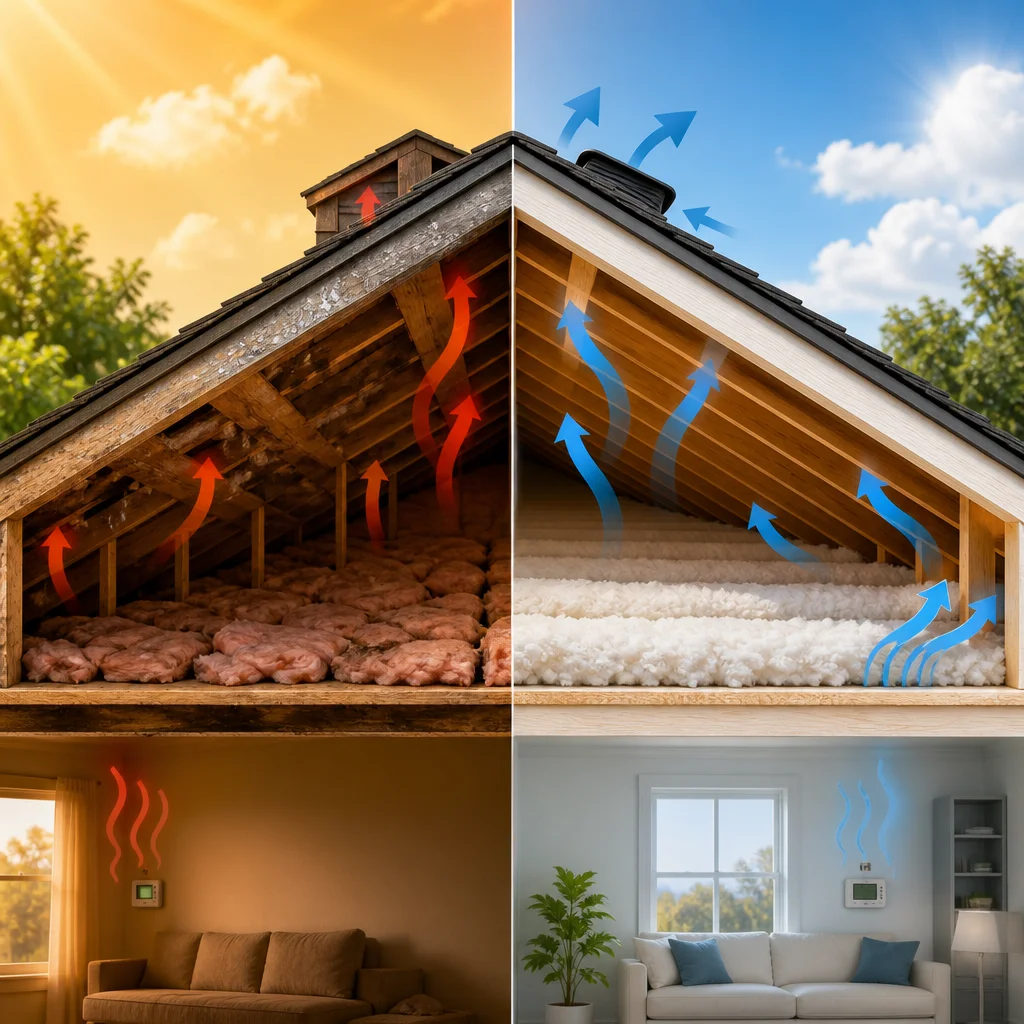
The combination of proper ventilation and upgraded insulation delivers measurable energy savings. Homeowners typically report:
- 10-20% reduction in heating costs (winter)
- 15-25% reduction in cooling costs (summer)
- More consistent temperature control throughout the home
- Reduced strain on HVAC equipment, extending its lifespan
These aren’t estimates; they’re documented savings from properties we’ve upgraded. A 2,000 square foot home in Brookfield with annual energy costs around $2,000-$2,500 could save $300-$600 per year. Over a 20-year period, that’s $6,000-$12,000 in utility savings alone.
The return on investment typically occurs within 5-8 years, after which you’re banking pure savings. This timeline accelerates if you combine ventilation and insulation upgrades with other energy-efficient improvements like our roof energy efficiency enhancements or upgraded roofing materials that reflect heat more effectively.
Your HVAC system also benefits. When insulation is properly installed and ventilation maintains moderate attic temperatures, your furnace and air conditioner don’t work as hard. System longevity increases, repairs become less frequent, and you avoid premature equipment replacement.
Moisture Control and Longevity Benefits
Moisture control is where proper ventilation proves its absolute necessity. Without it, every other improvement underperforms.
A well-ventilated attic with adequate insulation maintains relative humidity between 30-50%, even in humid Wisconsin summers. This range prevents mold growth while allowing wood to remain stable. Your rafters, decking, and framing stay dry and strong.
Longevity benefits cascade across multiple systems:
- Roofing materials last their full expected lifespan instead of failing early
- Structural wood remains rot-free for decades
- Insulation maintains R-value throughout its service life
- Mechanical systems operate efficiently without moisture-related wear
We’ve performed attic inspections on homes where previous owners skipped ventilation upgrades. The difference between a well-maintained attic and a moisture-damaged one is striking. Properly ventilated attics smell fresh; poorly ventilated ones reek of mold. Properly ventilated rafters are solid; poorly ventilated ones crumble when you touch them.
These aren’t cosmetic differences. They represent the difference between a home that protects its occupants and systems, and one that slowly fails from the inside out.
Why Our Comprehensive Approach Outperforms Partial Solutions
Homeowners sometimes try piecemeal solutions: upgrading insulation without addressing ventilation, or adding vents without sealing air leaks. These partial measures underdeliver because they ignore how the system works as a whole.
Ventilation without adequate insulation means you’re moving air but not controlling temperature. Your cooling costs improve slightly, but heating efficiency remains poor. Conversely, insulation without proper ventilation traps moisture within the insulation itself, causing the very problems you’re trying to prevent.
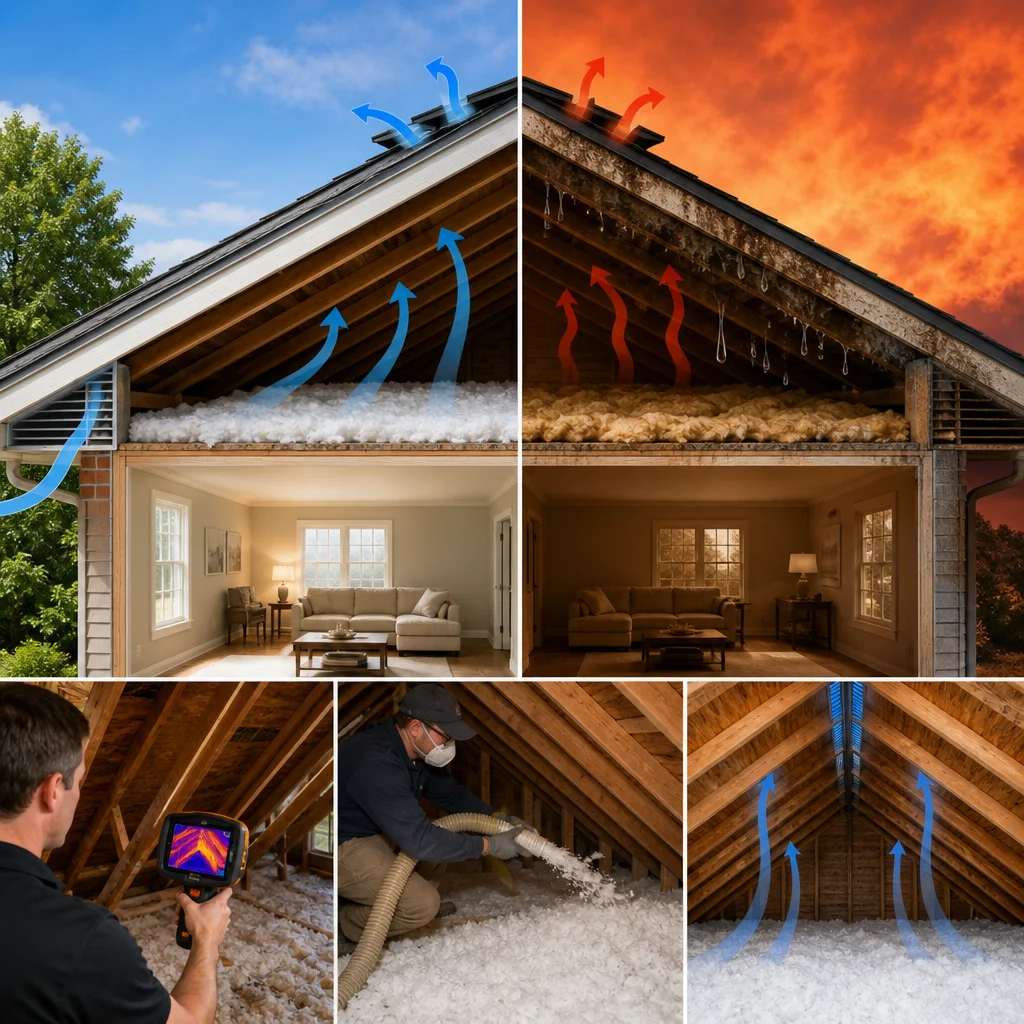
Air sealing without ventilation creates a different problem: you need some air exchange to prevent moisture from accumulating. Seal everything with no exhaust path and you’ve created a sealed envelope that can’t breathe at all. This leads to indoor air quality issues and continued moisture problems.
Our comprehensive approach addresses all three elements: intake ventilation, exhaust ventilation, insulation depth, and air sealing. Each component reinforces the others. The result is an attic environment that performs predictably, protects your investment, and delivers genuine energy savings.
We’ve seen the costs of partial solutions. A homeowner invests $3,000 in attic insulation but doesn’t fix the ventilation system. Two years later, moisture has degraded the new insulation, and they’ve wasted their investment. Better to invest comprehensively once than repeatedly chase individual problems.
The Expert Exteriors Advantage for Your Home
We understand Wisconsin’s climate demands. Our team has seen what happens when attics aren’t properly maintained, and we know exactly what specifications work in our region.
Our advantage comes from treating your roof and attic as a complete system rather than separate components. When we perform a roof replacement, we assess ventilation simultaneously. When we upgrade siding or fascia, we review attic conditions because these exterior elements connect to interior performance. This integrated perspective prevents the oversights that plague piecemeal repairs.
Our warranties cover both materials and workmanship on ventilation and insulation upgrades. We’re confident in our specifications because they’re based on years of local experience and proven performance. We don’t cut corners or use undersized vents to save a few dollars on materials; we install systems designed to last 20+ years without degradation.
We also provide detailed post-installation documentation showing airflow calculations, insulation R-values achieved, and ventilation capacity. You’ll know exactly what we installed and why it works. This transparency helps when selling your home or filing insurance claims related to ventilation improvements.
Getting Started With Your Upgrade Today
The first step is scheduling a comprehensive attic assessment. We’ll inspect your current ventilation and insulation, measure attic temperatures and humidity, and identify moisture damage if present. This assessment costs nothing and takes about an hour.
During the assessment, we’ll provide specific recommendations: how much additional insulation you need, what ventilation upgrades are required, and which elements should be prioritized. We’ll also show you energy savings projections based on your home’s current condition and your regional climate data.
Once you understand the scope, we’ll prepare a detailed quote that breaks down materials, labor, and timeline. You’ll know exactly what to expect before we schedule installation.
Contact us today to book your free attic assessment. Whether you’re a Brookfield resident or in surrounding areas, we’re ready to evaluate your home and design a ventilation and insulation system that protects your investment for decades. The cost of addressing these issues now is far less than the cost of repairing moisture damage, premature roof failure, and energy waste later.
Your home deserves better than inadequate ventilation. Let’s build the system your attic actually needs.
For further reading: Roof upgrades beyond shingles, Expert Exteriors advantage.