

Manufacturer Warranties vs Workmanship Guarantees: What Each Covers and How Long They Last
Why Your Roof’s Protection Extends Beyond Purchase Day
When you invest in a new roof, your protection doesn’t end the moment installation is complete. In reality, it’s just beginning. Your roof is covered by two distinct layers of protection: the manufacturer’s warranty on the materials themselves and the contractor’s workmanship guarantee on the installation quality.
Many property owners treat these as interchangeable, but they’re not. Understanding what each covers prevents costly surprises down the road. A leak from faulty shingles is handled very differently than one caused by improper installation, and knowing the difference determines who pays for repairs.
We’ve seen too many Brookfield homeowners caught off guard when a problem arises and they discover their coverage doesn’t apply. By the time they realize the gap, it’s often too late. That’s why we take time upfront to explain exactly what protection each guarantee provides.
Actionable takeaway: Before signing off on your roof replacement, request written documentation of both the manufacturer’s warranty and the contractor’s workmanship guarantee. Ask which party covers what.
Understanding Manufacturer Warranties on Roofing Materials
Manufacturer warranties cover defects in the materials themselves. If your shingles, underlayment, or TPO membrane are faulty from the factory, the manufacturer steps in to repair or replace them.
Here’s what’s typically included:
- Defective materials that fail prematurely due to manufacturing flaws
- Weathering and granule loss beyond normal expectations
- Leaks caused by material degradation or structural failure of the product itself
- Sometimes labor costs for removal and replacement (varies by manufacturer)
What’s usually excluded:
- Installation errors or improper workmanship
- Lack of proper attic ventilation
- Extreme weather events or acts of God
- Damage from tree branches, foot traffic, or improper maintenance
- Color fading or cosmetic changes over time
Most residential asphalt shingle warranties last 20 to 30 years, though premium products can extend to 50 years or longer. Commercial materials like EPDM or TPO typically offer 10 to 20-year warranties. The fine print varies significantly by manufacturer and product line, so you need to read the actual warranty document, not just the marketing brochure.
One critical point: manufacturer warranties often require that installation follows their specific guidelines. If your contractor cuts corners during installation, the manufacturer may deny your claim, even if the materials are legitimate.
What Workmanship Guarantees Actually Protect
A workmanship guarantee covers the quality of the installation itself. It’s the contractor’s promise that the roof was installed correctly, according to industry standards and manufacturer specifications.
When your workmanship guarantee is in place, it covers:
- Improper fastening or nailing patterns
- Inadequate flashing around penetrations (vents, chimneys, skylights)
- Poor sealing at joints and overlaps
- Incorrect underlayment installation
- Inadequate ventilation or soffit and ridge vent issues
- Water intrusion caused by installation mistakes
A workmanship guarantee does not cover:
- Manufacturer defects in the materials themselves
- Normal wear and tear over time
- Damage from severe weather or lack of maintenance
- Problems caused by factors outside the contractor’s control
- Work performed by someone other than the original contractor
This is where we differentiate ourselves. Our workmanship guarantee is backed by our commitment to stand behind every installation we complete. We’ve learned that a strong guarantee isn’t just good business; it’s a reflection of confidence in our craftsmanship.
Key Differences Between Material and Labor Coverage
The split between material and labor coverage is where confusion most often arises. Think of it this way: the manufacturer warrants the shingles themselves, while your roofing contractor warrants how those shingles were installed.
Here’s a practical example. You notice a leak appearing two years after your roof replacement. An inspector determines that the flashing around your chimney was not sealed properly, allowing water to get behind the shingles. This is a workmanship issue, not a material defect. Your manufacturer’s warranty won’t help here because the shingles are fine. Your contractor’s workmanship guarantee is what protects you.
Flip the scenario. Five years into a 30-year warranty, you discover that an entire section of shingles is deteriorating prematurely, while the rest of your roof looks fine. This indicates a material defect. The manufacturer’s warranty should cover replacement. However, if the contractor didn’t install it correctly, the manufacturer might argue that improper installation voided their warranty, even though the material itself is defective.
This is why choosing a contractor who stands behind their work matters enormously. A responsible contractor won’t just hand you a manufacturer’s warranty booklet and disappear. They’ll also provide their own written guarantee and ensure the installation meets all manufacturer requirements.
Material warranties protect against factory defects. Labor warranties protect against installation mistakes. You need both working in your favor.
How Long Each Type of Guarantee Lasts
Duration varies widely, and understanding these timelines helps you plan for maintenance and potential claims.
Manufacturer warranties typically last:
- Standard asphalt shingles: 20 to 25 years
- Premium asphalt shingles: 30 to 50 years
- Architectural or impact-resistant shingles: 30 to 50 years
- EPDM commercial roofing: 10 to 20 years
- TPO commercial roofing: 10 to 20 years
Many manufacturers offer prorated warranties, meaning coverage decreases over time. A 30-year warranty might cover 100% of replacement costs in year one but only 50% by year 15.
Workmanship guarantees are shorter and more variable:
- Typical range: 2 to 10 years
- Some contractors offer 5-year standard guarantees
- Premium contractors may extend to 10 years or longer
- A few offer lifetime workmanship guarantees
The workmanship guarantee needs to cover the period when installation-related problems are most likely to emerge. Flashing issues, sealing failures, and ventilation problems usually show up within the first 5 years if they’re going to appear at all.
We provide a robust workmanship guarantee because we’re confident in our installation standards. When you choose Expert Exteriors, you’re not gambling on whether your roof was installed correctly. Our guarantee backs that confidence.
Why Our Workmanship Guarantee Sets Us Apart
The workmanship guarantee is where contractors reveal their true commitment. A weak guarantee suggests the contractor doesn’t stand behind their work. A strong one shows they have nothing to hide.
Our approach differs in several ways. First, we don’t use subcontractors for installation. Our crews handle every job from start to finish, so there’s no finger-pointing if something goes wrong. We’re directly responsible, and we know exactly what was done and how.

Second, we document everything. Before we leave your property, we provide detailed photographs of the installation, flashing details, ventilation setup, and final product. This documentation protects both you and us. If a question arises years later, we have proof of what was installed and how.
Third, our guarantee includes a post-installation inspection. We return within a few weeks to verify that the installation is holding up under real weather conditions. We check for any settling, any unexpected gaps, and any early warning signs that something needs adjustment.
Finally, we honor our guarantee without the fine print games. If it’s an installation issue within our guarantee period, we fix it. No arguing about whether you maintained the roof properly or whether you had the gutters cleaned. If it’s our work, we stand behind it.
This commitment is one reason property owners in Brookfield and surrounding areas choose us repeatedly for their roofing and exterior needs.
Common Gaps in Coverage and How We Fill Them
Even with both a manufacturer’s warranty and a workmanship guarantee, gaps exist that can leave you exposed.
The prorating problem: A manufacturer’s 30-year warranty might only cover 80% of costs in year 10. That difference comes out of your pocket.
The cause-determination dispute: Sometimes it’s unclear whether a leak stems from material defect or installation error. Who investigates? Who pays if the cause is disputed?
The maintenance requirement: Many warranties require that you perform specific maintenance (gutter cleaning, regular inspections) to stay covered. If you miss one year, the warranty could be void.
The contractor disappearance: What happens if your original contractor goes out of business? Their workmanship guarantee becomes worthless. Some contractors operate without insurance or bonding, meaning they can’t pay even if they wanted to.
The commercial gap: Commercial roofing warranties often have stricter requirements than residential ones, and the language is more complex.
We address these gaps by backing our workmanship guarantee with full licensing, bonding, and insurance. If we ever couldn’t fulfill our promise, our bonding company steps in. We also provide detailed maintenance guidance specific to your roof type to help you keep your manufacturer’s warranty valid. And we explain upfront what the manufacturer covers and what we cover, so you’re never in the dark about a potential gap.
Our commercial flat roof warranties deserve special attention, as they have unique requirements and common pitfalls. If you operate a business with a flat roof, understanding these nuances is critical.
How to Maximize Your Warranty and Guarantee Benefits
Getting the most from your coverage requires proactive steps and clear documentation.
Keep your warranty and guarantee documents in a safe, organized location. Take photos of the roofing system at the time of installation and annually thereafter. This creates a visual record of your roof’s condition over time.
Follow the manufacturer’s maintenance requirements exactly. This typically includes:
- Cleaning gutters and downspouts twice annually
- Removing debris from the roof surface
- Trimming tree branches that hang over the roof
- Having your roof inspected by a professional every two to three years
- Addressing minor repairs promptly before they become major issues
When you notice any potential problem, document it with photos and date stamps. Contact your contractor or manufacturer immediately. The longer you wait, the harder it becomes to prove the defect was pre-existing.
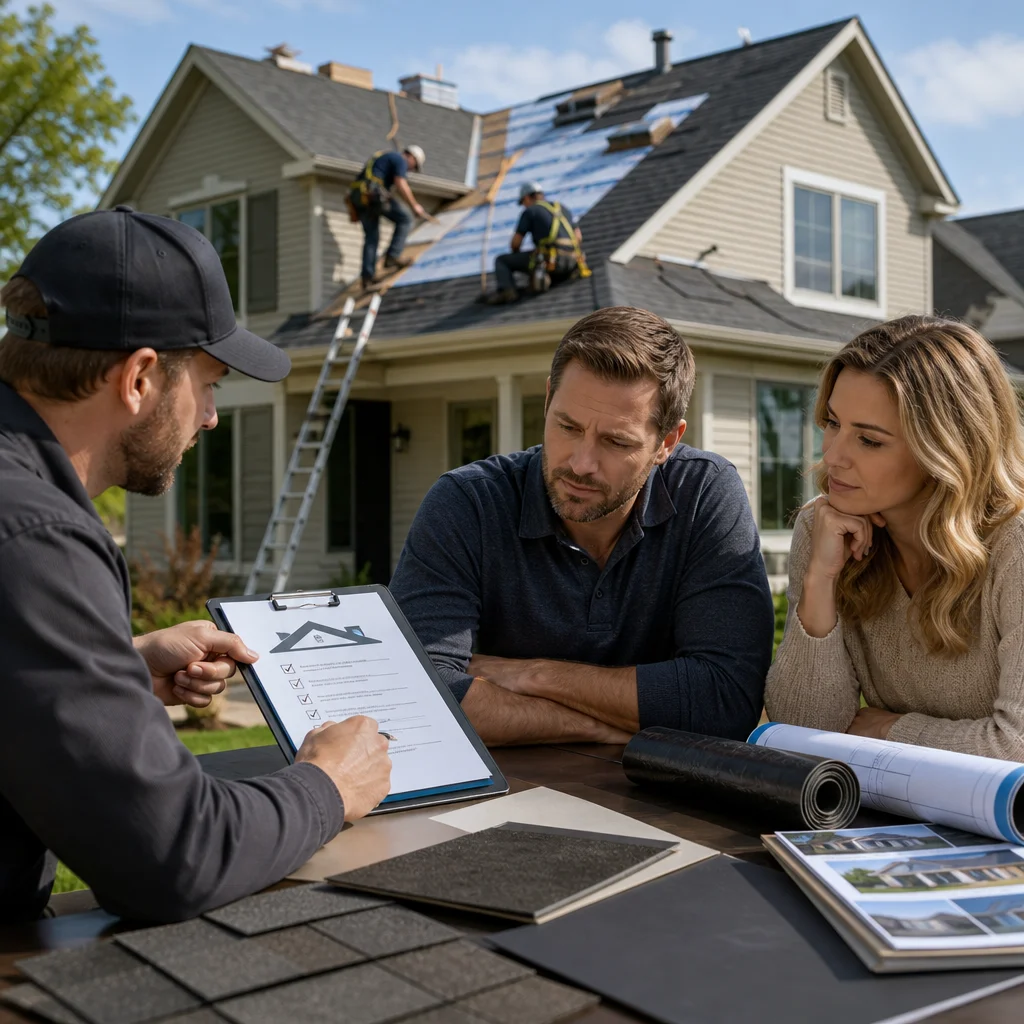
Understand the process for filing a warranty claim. Know whether you contact the manufacturer directly or go through your contractor first. Know what documentation you’ll need to provide. Most manufacturers require an inspection and assessment before approving a claim.
Finally, don’t assume your roof is fine just because you don’t see problems. Have a professional inspection every few years. Many roofing issues develop under the surface or in hidden areas. Catching them early keeps your warranty valid and prevents minor issues from becoming catastrophic.
Protecting Your Investment With Expert Exteriors
Your roof is one of your property’s most important investments. It’s also one where the margin between a great outcome and an expensive problem comes down to details.
When you work with us, we treat warranty coverage as a partnership between three parties: the manufacturer, us, and you. We make sure all three parties fulfill their responsibilities and that your protection is complete.
We start with a comprehensive consultation about warranty options. We explain what each manufacturer offers and what we recommend for your specific property. We discuss our workmanship guarantee in detail and why we’re confident in our standards.
During installation, we follow manufacturer specifications exactly. We photograph the work at every stage. We install proper ventilation, flashing, underlayment, and drainage. We don’t cut corners to save time or money.
After installation, we provide you with organized documentation of your warranties, guarantees, and maintenance requirements. We’re available for follow-up questions and inspections. If you ever need to file a claim, we help you navigate the process.
For additional insights into what separates contractors who stand behind their work, explore why hiring the wrong roofing contractor costs you more than money. The cheapest bid often comes with the weakest guarantee.
Questions to Ask Before Choosing Your Roofing Partner
Before signing a contract, you should have clear answers to these questions:
On manufacturer warranties:
- Which manufacturer are you using, and what exactly does their warranty cover?
- How long is the coverage, and does it pro-rate over time?
- What maintenance is required to keep the warranty valid?
- If the manufacturer goes out of business, who honors the warranty?
On workmanship guarantees:
- What specific aspects of the installation does your guarantee cover?
- How long does the workmanship guarantee last?
- Are you licensed, bonded, and insured?
- If you go out of business, who honors the guarantee?
- Who performs the installation, you or subcontractors?
- What happens if I need repairs during the guarantee period?
On coverage gaps:
- What isn’t covered by either warranty or guarantee?
- What maintenance am I responsible for to keep coverage valid?
- How do we handle disputes about whether a problem is material or workmanship related?
- What’s your process for handling warranty claims?
A contractor who answers these questions thoroughly and in writing gives you confidence in both their transparency and their commitment to your satisfaction.
When you’re ready to discuss your roofing or exterior remodeling project in Brookfield or the surrounding areas, we’re here to help. We believe that understanding your protection upfront prevents stress and expense down the road. That’s the Expert Exteriors difference.
For further reading: Why roofing warranties matter.