
Managing Hidden Roof Costs: Expert Guide to Budget Planning for Tear-Offs
Why Roof Tear-Offs Reveal Unexpected Expenses
When a homeowner calls us about a roof replacement, they usually have a number in mind. Sometimes it’s based on a neighbor’s recent project. Other times they’ve seen a quote online. What we consistently discover is that their initial estimate rarely accounts for what’s hiding beneath those shingles.
We’ve learned that the gap between expected and actual roof tear-off costs isn’t a surprise we spring on customers. It’s a reality we uncover systematically, communicate clearly, and help our clients navigate with confidence. Over years of replacing roofs across Brookfield and surrounding areas, we’ve identified patterns in unexpected expenses that let us give property owners a realistic picture before work even begins.
The surface of your roof tells one story. What’s underneath tells another.
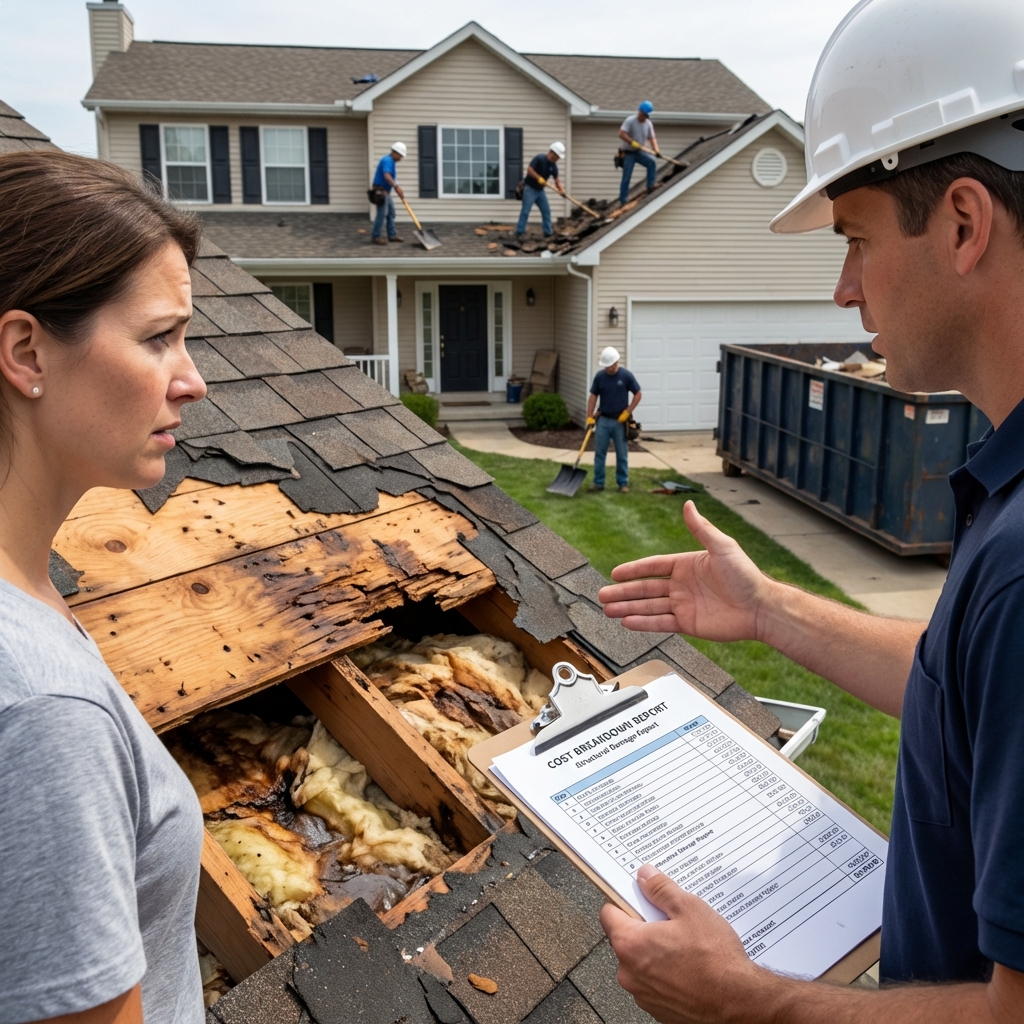
When we remove old shingles, we’re exposing the roof deck, underlayment, flashing, and structural supports that haven’t seen daylight in 15 to 25 years. Weather, moisture, UV exposure, and age create damage that wasn’t visible from the ground. A roof might look serviceable from the street but have soft spots, rot, or compromised fastening underneath.
Here’s the practical reality: roofing estimates that don’t include a detailed tear-off inspection are essentially guesses. They can’t account for conditions that only become apparent once old materials are removed. We’ve pulled back deteriorated felt to find damaged plywood. We’ve stripped shingles to discover that previous repairs weren’t done properly. We’ve peeled back flashing to uncover water damage that spread further than anyone expected.
The most common question we hear is, “Why does the price change once you start the work?” The answer is honest: we didn’t change our estimate because we found something different than what the inspection revealed. We changed it because we found things that an inspection couldn’t possibly show while they were still covered by layers of old roofing materials.
This isn’t a cost overrun due to negligence or poor planning. It’s the natural outcome of discovering conditions that were literally invisible before the tear-off began. Understanding this distinction helps property owners accept that realistic budgeting for a roof replacement requires transparency and flexibility.
Common Hidden Issues We Find During Roof Inspections
We’ve documented thousands of roof inspections across residential and commercial properties. Certain damage patterns appear consistently, and knowing what to expect helps you plan more accurately.
Water damage beneath the shingles ranks highest on our list. Moisture finds its way past damaged flashing, deteriorated underlayment, or gaps around penetrations like vents and chimneys. By the time shingles leak badly enough to create interior stains, the wood below has often been compromised for months or years.
Rotted or soft decking is the second major discovery. Wood absorbs moisture, expands, loses structural integrity, and eventually crumbles when pressure is applied. We regularly find sections of plywood that look solid from above but crumble when we apply weight during tear-off. Some properties have only 20% of decking needing replacement. Others require 70% or more.
Previous repair patches that failed create another surprise. We find tar-sealed spots, improperly installed flashing, and mismatched materials from past attempts to fix leaks. These quick fixes might have extended a roof’s life by a few years, but they’re not permanent solutions. When we remove them, we discover the damage that prompted the original repair was worse than the patch suggested.
Inadequate or deteriorated ventilation is common in older homes. Some lack proper ridge or soffit vents. Others have vents that are blocked or damaged. Poor ventilation accelerates deterioration of both new and old roofing materials. We often recommend ventilation improvements as part of a complete replacement, which adds cost but extends the life of your new roof significantly.
Flashing failures around chimneys, valleys, and walls contribute to water intrusion that spreads beyond what’s immediately visible. Galvanized flashing corrodes over decades. Step flashing pulls away from walls. Cricket flashing deteriorates. Each of these issues costs more to address once damage spreads into surrounding areas.
The takeaway: ask us specifically about these areas during your initial inspection. We’ll document what we find and explain how each issue affects your final cost before we tear anything off.
How Structural Damage Affects Your Final Project Cost
Structural damage transforms a roof replacement from straightforward material installation into a construction project.
When plywood decking needs replacement, we’re not simply installing new shingles. We’re removing damaged wood, potentially addressing the cause of the damage (like improving ventilation), and installing new pressure-treated plywood. This adds labor, materials, and time to the project.
Some structural damage points to larger problems. Soft decking concentrated in one area might indicate a chronic leak that we need to trace to its source. Widespread rot could suggest that ventilation problems have been allowing moisture to accumulate across the entire roof. When we identify these root causes, addressing them properly means additional work beyond the basic tear-off and replacement.
We’ve encountered situations where structural damage required partial roof reinforcement or additional support installation. Older homes sometimes have undersized or weakened rafters that benefit from reinforcement when we’re already doing major work. Some properties need additional bracing to meet current code requirements.
The cost impact depends on the extent of damage and what caused it. A small area of rot might add $800 to $1,500 to your project. Widespread decking replacement can add $3,000 to $8,000 or more, depending on the roof size and complexity. Major structural reinforcement can add significant cost but is necessary to ensure the safety and longevity of your new roof.
This is why we recommend that any roof replacement budget includes a contingency for structural surprises. We typically suggest 15% to 20% of your total estimated cost be reserved for potential additional work discovered during tear-off.
Our Process for Identifying Costs Before Work Begins
We’ve developed a systematic approach to uncovering hidden costs before your project starts, which protects both your budget and our ability to deliver on time and within scope.
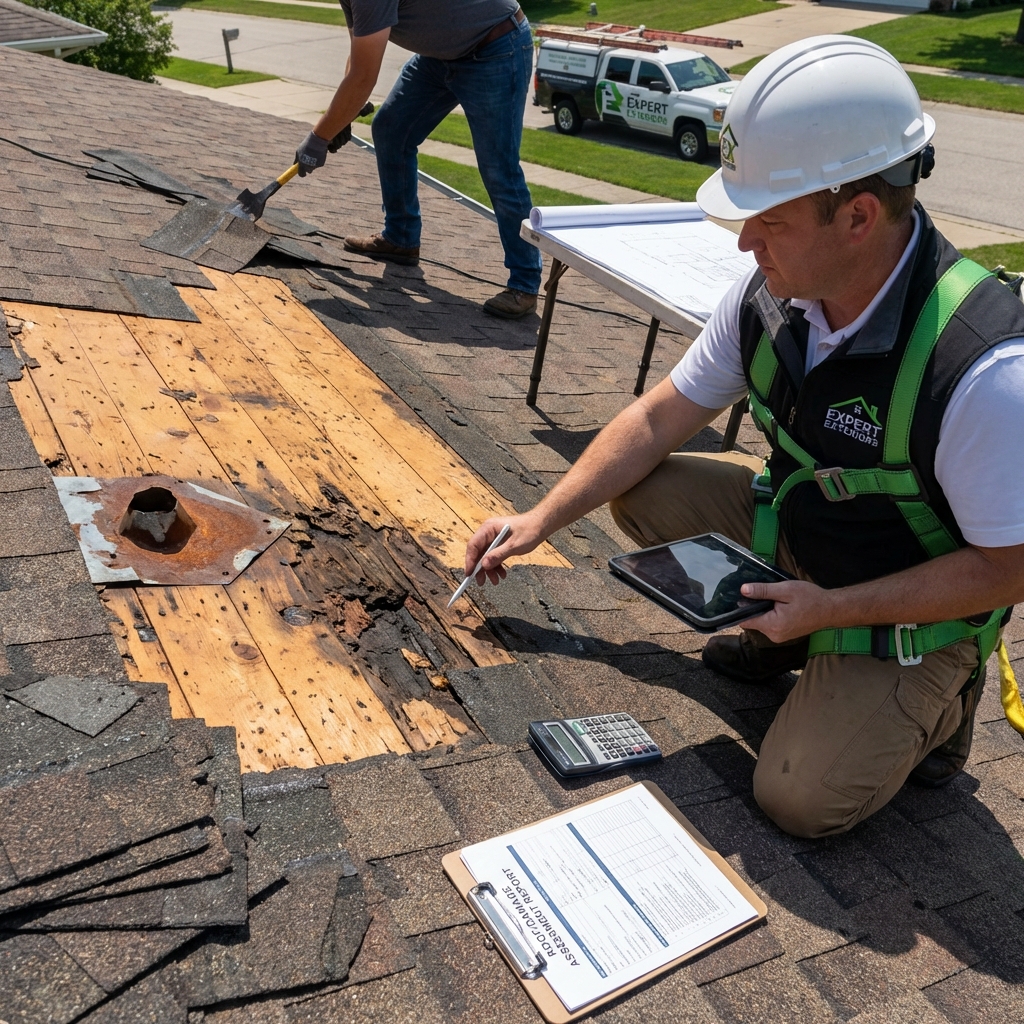
Our initial inspection includes a visual assessment from the ground using binoculars, examining visible areas for obvious damage, missing shingles, or deteriorated flashing. Then we climb the roof, walk the entire surface systematically, and document damage with photos and notes. We identify soft spots by applying pressure, look closely at all flashing penetrations, and check the condition of underlayment where it’s visible.
For every inspection, we take measurements, assess roof slope and complexity, and note any special considerations like difficult access or unusual roof design. This information helps us provide an accurate material estimate and labor projection.
We then schedule a detailed discussion with you to walk through our findings. We show you the photos, explain what we discovered and what it means for your project, and present a range of potential costs. We’re transparent about what we know for certain and what remains uncertain until the tear-off begins.
For properties with extensive visible damage, we sometimes recommend a small exploratory tear-off in a limited area. This allows us to see what’s underneath without committing to the full project immediately, and it gives you real information about structural conditions rather than assumptions. The cost of this exploratory work is credited toward your full project if you proceed.
We also recommend that our customers get a second inspection opinion, particularly if the property is older or has a history of problems. Having multiple professional perspectives protects you and ensures we’re not overlooking anything significant.
Once you’ve approved our scope and budget estimate, we provide a detailed written proposal that specifies what we’ll address during tear-off and what happens if additional issues are discovered. Clear expectations prevent misunderstandings down the road.
Creating a Realistic Budget for Your Roof Replacement
Realistic budgeting starts with understanding the primary cost components and assigning appropriate weight to each.
Material costs typically represent 40% to 50% of a standard residential roof replacement. This covers new shingles, underlayment, flashing, fasteners, and related materials. The quality of materials you select significantly affects this portion of your budget.
Labor accounts for another 40% to 50%, varying by roof complexity, size, weather conditions during installation, and the extent of tear-off work required. A simple rectangular roof on a ranch home costs less per square foot than a complex roof on a multi-story home with numerous penetrations.
Additional work discovered during tear-off typically represents the remaining 5% to 15% of total project cost, depending on the condition of your roof.
A functional budget for a residential roof replacement in our area runs from $8,000 for a small, simple roof to $20,000 or more for a large, complex property. We’ve completed projects beyond both ends of this range, but these figures represent what most of our residential customers should expect.
When you’re setting your budget, consider not just the materials and labor but the value you’re receiving. A quality roof protects your home for 25 to 30 years. The difference between a budget installation and a properly executed replacement represents months or years of additional life, better protection, and improved home value. That perspective helps justify choosing quality over simply finding the lowest price.
We recommend being transparent about your budget constraints with us. Rather than attempting to negotiate the final price, tell us what you’re prepared to invest. We can then recommend material options, scopes of work, or staging strategies that fit your needs.
Why Our Detailed Assessments Protect Your Investment
The difference between a detailed assessment and a casual quote becomes apparent quickly once work begins.
A thorough assessment documents existing conditions so that if additional issues are discovered during tear-off, we can distinguish between what was present before we started and what we created during the work. This protects you from claims that we caused damage and protects us from accusations that our work was substandard.
Detailed assessments also reveal opportunities for long-term value. We might identify ventilation improvements, flashing upgrades, or protective measures that weren’t obvious during a quick walkthrough. These recommendations often seem like additional expenses until you understand that they prevent larger problems down the road.
Our detailed approach to cost identification includes photography, measurements, and written descriptions that become part of your project file. If we identify issues during tear-off that match conditions documented in our initial assessment, we can confidently explain why additional cost is necessary. If we find truly unexpected conditions, the documentation proves we performed due diligence.
We also use our assessment to plan the logistics of your project. We identify potential challenges like limited dumpster space, difficult access to certain roof areas, or weather considerations. Planning for these factors prevents delays and cost overruns that result from poor preparation.
An assessment that costs you $300 to $500 now can save you thousands in unexpected charges later. We include this assessment as a credited component of your final project cost when you move forward with us, so you’re not paying twice for the same work.
Financing Options We Offer for Budget-Conscious Homeowners
We understand that a roof replacement often comes as an unplanned expense, and even when expected, it’s a significant investment. We’ve established financing partnerships to make this work accessible.
We offer payment plans that spread the project cost over 12 to 24 months, allowing you to manage the expense alongside your regular budget. Interest rates and terms vary, but we work with multiple lenders to find options that fit different financial situations.
Some property owners benefit from home equity lines of credit or refinancing options through their primary lender. While we don’t handle these ourselves, we can provide detailed project documentation that helps your lender understand the scope and value of the work.
Credit card payments are an option for smaller projects or partial payments. Some homeowners with rewards programs find that the points or benefits offset some of the cost.
For commercial properties, we work with clients on extended payment terms, particularly for large or complex projects. We can discuss phased approaches where critical areas are addressed immediately and others are completed as budget allows.
Financing doesn’t change the actual cost of your project, but it does change the timing of when you pay for it. If your roof requires attention and you don’t have immediate cash reserves, financing allows you to address the problem before additional damage occurs, which ultimately saves money.
We’re transparent about financing options and costs, but our primary focus is helping you understand the true cost of your project so you can make an informed decision about timing and financing strategy.
How We Handle Cost Overruns Transparently
Cost overruns happen. Rather than treating them as surprises, we’ve built a process that keeps you informed and in control.
When we discover additional issues during tear-off that weren’t apparent during the initial inspection, we stop work and contact you immediately. We explain exactly what we found, show photos if possible, and provide a cost estimate for addressing it.
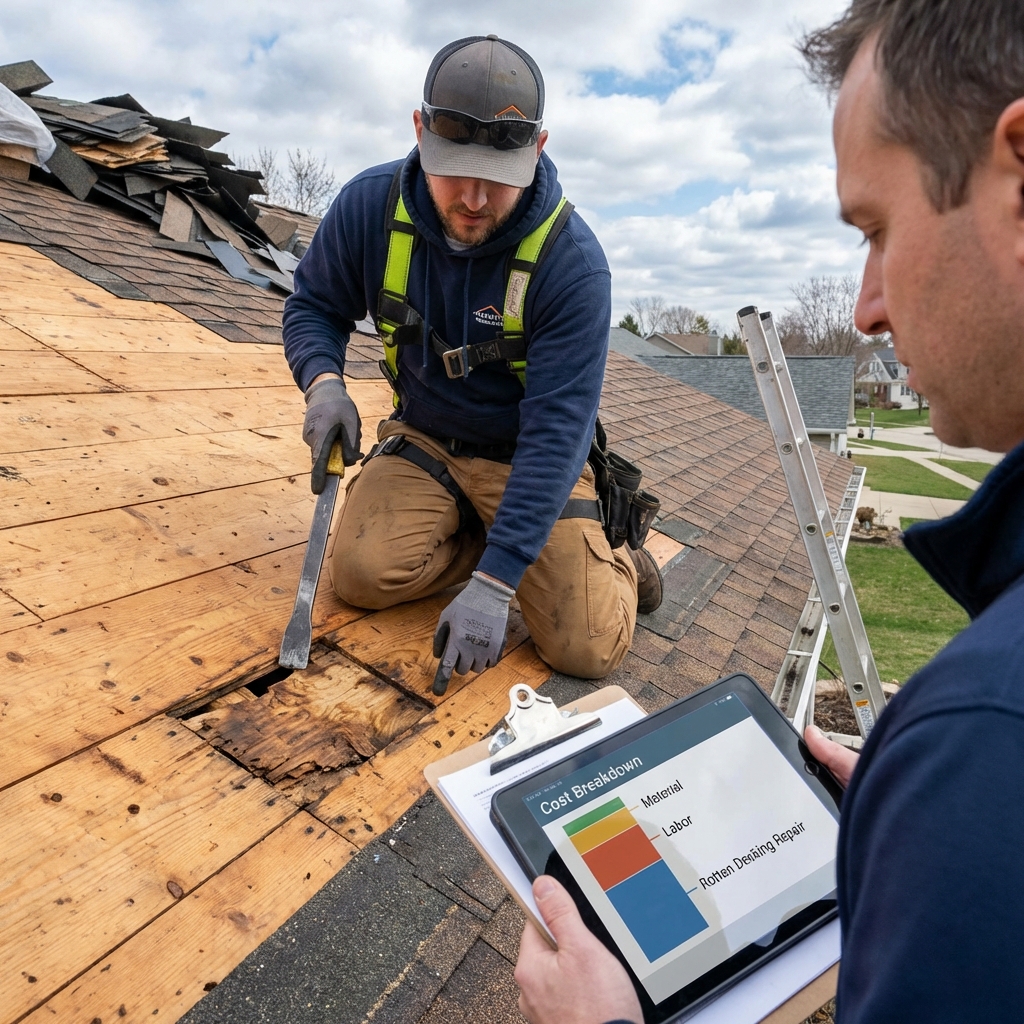
You then have three options. You can approve the additional work and we proceed. You can ask us to explore a modified approach that costs less. Or you can request that we stop, assess the situation, and discuss options before we continue.
This approach respects your budget and your decision-making authority. You’re not forced to agree to additional work without understanding what it is and why it’s necessary.
We also use contingency allowances when appropriate. If we suspect additional issues might arise but aren’t certain, we sometimes include a contingency line item in your contract. If we don’t need it, the cost comes off your bill. If we do need it, the money is already budgeted and no overrun occurs.
For projects where we discover extensive additional work is necessary, we sometimes recommend staging. Rather than completing everything at once and incurring major overruns, we focus on the most critical items first and plan additional work for later. This keeps you safe and protected while spreading costs across multiple budgets or time periods.
Our goal is that no additional cost surprises you. Everything we charge is explained in advance, and you approve it before we incur the expense.
Protecting Your Property During the Tear-Off Process
Cost management also means protecting your property from damage during the tear-off itself, which prevents expensive repairs later.
Our tear-off crew lays protective tarps and plywood across landscaping, driveways, and outdoor structures before we begin removing shingles. Torn-off roofing materials are caught on tarps or collected in barrels rather than allowing loose debris to scatter across your property.
We use plywood walkways and protective barriers to prevent crew members from damaging gutters, siding, or landscaping while moving across the roof. We position dumpsters strategically so that debris removal doesn’t require hauling materials across your yard.
We also protect the interior of your home. While tear-offs don’t typically create interior water intrusion if executed properly, we use additional tarping and barriers to ensure that any exposure is minimized. We’re prepared for rain during the tear-off process, which is why we work quickly and maintain protective coverings.
After tear-off is complete, we perform a thorough cleanup, removing all debris from your property and surrounding areas. We sweep roofs, gutters, and driveways. We pick up small fasteners that might otherwise penetrate tires. We dispose of all materials properly.
Property protection is part of what you’re paying for, and we take it as seriously as the actual roofing work. A project that damages landscaping or exterior surfaces is a project that costs you more money in repairs, which is the opposite of our goal.
Getting Your Free Detailed Cost Estimate Today
Understanding your actual roof tear-off costs and hidden expense risks doesn’t require guessing or accepting round-number estimates based on limited information.
We provide a comprehensive, no-obligation roof inspection and detailed cost estimate that accounts for the real conditions of your specific property. We’ll climb your roof, examine the structure underneath, and give you a clear picture of what your project actually involves and what it likely costs.
During this inspection, we’ll explain our findings, answer your questions, and provide both best-case and realistic-case cost scenarios based on what we observe. You’ll leave the inspection knowing far more about your roof’s condition and replacement cost than when we arrived.
We typically complete our estimates within 48 hours of the inspection, providing you a written proposal that specifies materials, labor, timeline, and any contingencies we’ve identified.
To schedule your inspection, contact us through our website or call us directly. We serve Brookfield and surrounding areas, and we’re prepared to help you understand your actual roof replacement costs so you can make an informed decision about your property’s future.
Get an instant roof replacement quote or call us today to book your detailed assessment. We’re ready to help you navigate the real costs of your roof replacement with clarity and confidence.
For further reading: Menomonee Falls roof replacement.