

How to Evaluate Roofing Bids: Our Guide to Materials, Labor, and Costs
Why Getting Multiple Roofing Bids Matters for Your Property
When your roof starts showing its age, the natural next step is reaching out to contractors for quotes. But comparing roofing bids isn’t just about finding the lowest number. Understanding what’s actually included in each proposal takes time and attention to detail, but it’s one of the most important investments you’ll make for your property.
We’ve helped hundreds of property owners in Brookfield and surrounding areas navigate this exact process. Over the years, we’ve seen what separates a thoughtful bid from one that glosses over critical details. This guide walks you through everything you need to know to compare roofing quotes with confidence.
Requesting just one roofing bid is like getting a single quote on a major purchase without shopping around. You have no baseline for what’s reasonable, no sense of market rates, and no leverage in negotiations. Multiple bids give you visibility into what different companies value and how they approach the work.
We recommend getting at least three bids from established, licensed contractors. This number gives you genuine comparison data without becoming overwhelming. When you have three solid proposals, patterns emerge. You’ll notice which companies are priced similarly, which offer different material options, and which have varying timelines.
Beyond price comparison, multiple bids protect your property’s long-term performance. Different contractors use different installation techniques, warranty structures, and material grades. A bid that seems expensive might include superior workmanship and materials that last significantly longer. Conversely, a rock-bottom price sometimes reflects corners being cut that you’ll regret five years down the line.
Getting multiple bids also builds your negotiating position. When you have genuine alternatives, you’re in a stronger position to ask questions about pricing, request upgrades, or clarify what’s included. Contractors know you’re comparing options, which motivates transparency.
Action item: Start your search by identifying three to five roofing contractors with solid local reputations and verified reviews. Request bids from all of them, and plan to spend time carefully reviewing each one.
What to Look for in a Roofing Bid Breakdown
A quality roofing bid isn’t vague or bundled into a single line item. It should break down into clear categories that let you see where money is going and compare apples to apples across different proposals.
Start by confirming the bid includes a site inspection and measurement data. Reputable contractors physically visit your property, measure the roof, assess structural condition, and identify any underlying issues before quoting. If a contractor quotes over the phone without visiting, that’s a red flag. They can’t accurately price work they haven’t seen.
Next, look for a materials section that specifies the brand, type, and quantity of materials. This might look like:
- Shingles or roofing membrane (brand, weight, color, warranty)
- Underlayment (type and coverage area)
- Flashing materials (aluminum, galvanized steel, etc.)
- Fasteners, adhesives, and sealants
- Gutters, downspouts, and trim (if included)
The materials section should also note whether old roofing is being removed or if the new roof is going over existing material. Removal and disposal costs are substantial and should be explicitly listed, not hidden in a labor line.
A complete bid also separates labor costs from materials. This breakdown matters because labor rates vary based on roof complexity, pitch, accessibility, and local market conditions. A 1,500-square-foot simple gable roof costs far less to install than a complex hip roof with multiple valleys and penetrations.
Look for a line item addressing site preparation and cleanup. Professional roofing includes protecting landscaping, cleaning debris daily, and leaving your property spotless when work is complete. This shouldn’t be mysterious or missing from the bid.
Finally, confirm the bid specifies warranty terms clearly. Material warranties typically come from manufacturers, but workmanship warranties come from your contractor. We provide a 15-year workmanship warranty on full roof replacements, and that commitment should be in writing in your bid.
Action item: Create a simple spreadsheet with all three bids side by side, listing materials, labor, removal, site prep, and warranties. This visual comparison reveals what’s genuinely comparable and what differs between proposals.
Understanding Material Costs: Residential vs Commercial Options
Material costs represent a significant portion of your roofing bill, and options vary dramatically between residential and commercial applications. Understanding what’s available helps you make decisions aligned with your property’s needs and budget.
For residential roofing, asphalt shingles dominate the market. Three-tab shingles are the budget option, lasting 15-20 years and costing the least upfront. Architectural shingles cost more but offer better durability (25-30 years) and aesthetic appeal with dimensional texture. Premium shingles from quality manufacturers often include enhanced warranties and resist weathering better.
Metal roofing is growing in residential popularity. It costs more initially than asphalt shingles but lasts 40-50+ years and offers superior wind and fire resistance. Metal roofing also provides excellent energy efficiency, reflecting heat in summer months.
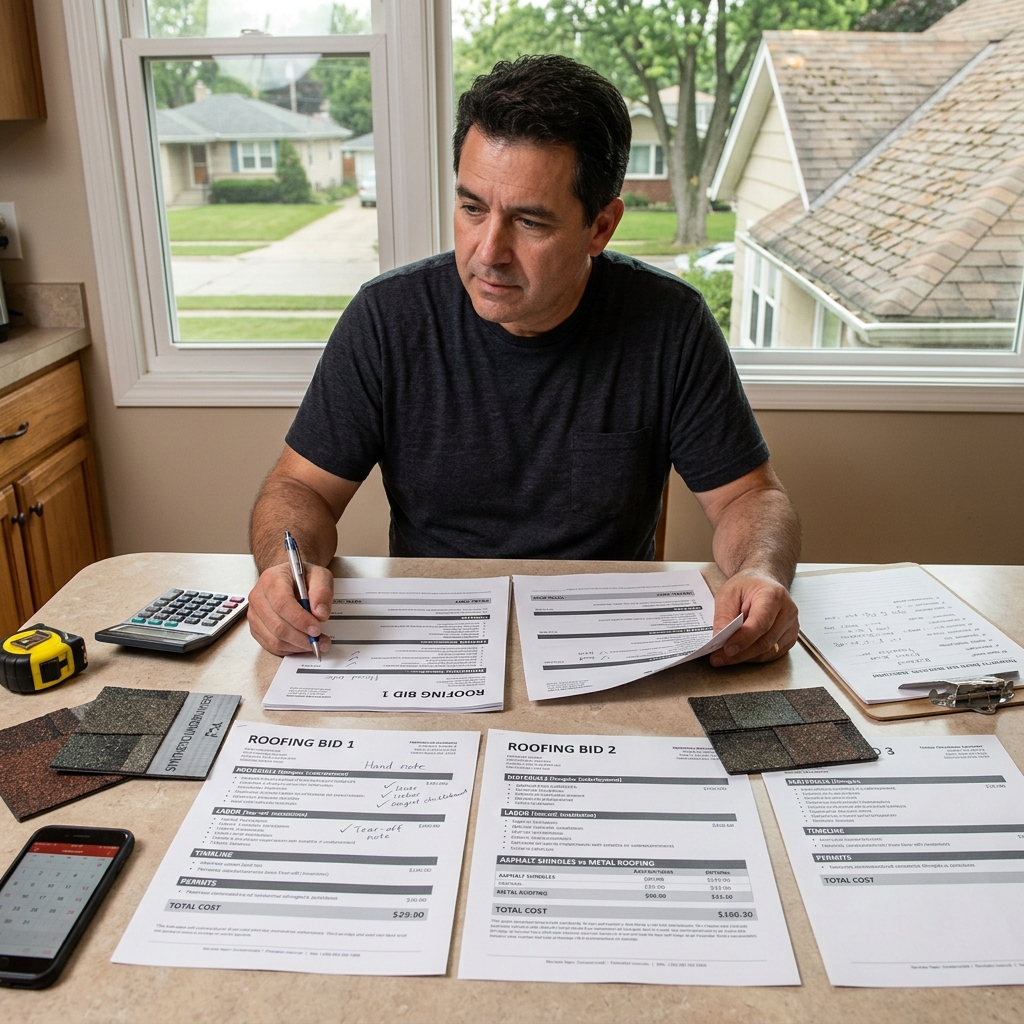
For residential roof replacement projects, your contractor should discuss impact resistance ratings and local weather exposure. Brookfield’s climate includes hail risk, which makes impact-resistant shingles worth considering despite their premium pricing.
Commercial roofing presents different material choices, primarily because flat or low-slope roofs dominate commercial structures. The two most common options are EPDM (ethylene propylene diene terpolymer) and TPO (thermoplastic polyolefin).
EPDM is the traditional choice, proven over decades in commercial applications. It’s affordable, durable (20-25 years), and easy to repair. The tradeoff is that it’s black, which absorbs heat and increases cooling costs in summer.
TPO is newer and offers advantages in energy efficiency because most TPO comes in white, reflecting rather than absorbing heat. It’s becoming increasingly popular for commercial roofing costs because it reduces HVAC strain. TPO typically costs slightly more than EPDM but delivers better long-term energy savings.
Flat roof options also include modified bitumen and built-up roofing, though these are less common in new installations. Ask your contractor which material makes most sense for your specific building and location.
When evaluating material costs in bids, consider the total cost of ownership, not just the purchase price. A higher-quality material costing 15% more upfront but lasting 50% longer delivers better financial value over time. Also ask about manufacturer warranties, as premium materials typically include better coverage.
Action item: Request a breakdown showing the exact material specifications in each bid, including manufacturer, product line, and warranty period. Compare like-for-like (don’t compare budget shingles against premium shingles without acknowledging the difference).
Labor Costs and What They Really Include
Labor represents roughly 50-60% of a typical roofing project cost, and this line item deserves careful scrutiny because it encompasses far more than just installation hours.
Labor costs include removing old roofing, which is physically demanding and time-consuming. A crew must carefully remove existing shingles or membrane, dispose of the old material responsibly, inspect the underlying deck for damage, and make any necessary repairs. If the old roof contains asbestos (common in pre-1980s installations), removal requires specialized protocols that add cost and time.
Installation work includes proper underlayment application, careful shingling or membrane installation following manufacturer specifications, flashing installation around penetrations, and ridge vent or edge vent installation. Corners and details matter enormously. Poor installation voids manufacturer warranties and shortens roof lifespan regardless of material quality.
Site management and cleanup are usually part of labor costs. This includes protecting landscaping and structures, managing debris throughout the project, and cleaning up thoroughly. A professional crew sweeps for nails and debris daily, not just at the end of work.
Labor costs also reflect the crew’s skill level and experience. A crew that specializes in residential roofing may charge differently than one experienced with complex commercial roofing. Licensing, insurance, and bonding requirements increase costs, but they protect you. Unlicensed or uninsured contractors offer lower prices by shifting risk to you.
Timeline affects labor costs too. A simple residential roof taking three to four days costs less in labor than a complex commercial replacement requiring two weeks. Your bid should clarify the timeline so labor costs make sense relative to project scope.
When comparing labor costs between bids, verify that all include the same scope. One contractor might not include site cleanup in their labor rate, charging it separately. Another might bundle everything. Request clarification until you’re comparing identical labor scopes.
Ask about the crew composition. Will the project be managed by an experienced supervisor? How many crew members will be present daily? Efficiency varies based on team structure, and this affects both labor costs and timeline.
Action item: Contact each contractor and confirm their labor rates include debris removal, site cleanup, and protection of surrounding areas. Ask for the crew size and expected timeline, then verify labor costs align with those details.
Timeline and Project Duration Expectations
Your roofing project’s timeline affects more than just inconvenience. Longer projects increase labor costs, create more site disruption, and introduce weather risk. Understanding expected duration helps you evaluate whether bids are realistic.
Residential roofing on a straightforward single-story home typically takes three to five days. A two-story home or one with complex rooflines might require a week. Weather significantly impacts timeline. Spring and fall are ideal roofing seasons in Wisconsin, with lower wind and stable temperatures. Winter work is possible but slower and riskier.
Your bid should clearly state the expected project duration and any weather-related contingencies. If a contractor promises a large residential roof in two days, they’re either understaffing the project or not accounting for proper installation techniques. Both scenarios concern us.
Commercial roofing timelines vary enormously based on building size and roof complexity. A small commercial building might take a week, while a larger facility could require several weeks. The bid should break timeline into phases if the project happens in stages.
Timeline also depends on whether the project requires permits and inspections. In most jurisdictions, roof replacement requires a permit, and inspections verify proper installation before the contractor gets final payment. This adds time to the overall schedule, and responsible contractors account for it.

When comparing bids, timeline differences might explain cost differences. A bid coming in at a premium price might include faster completion through a larger crew. A lower bid might require extending the timeline. Neither is inherently better; it depends on your priorities.
Weather contingency is important. A bid that doesn’t acknowledge weather delays is unrealistic. Responsible contractors include a weather buffer in their timeline estimates.
Action item: Ask each contractor for a detailed schedule showing when work starts, daily work hours, expected completion date, and any contingencies for weather or permit delays. This helps you plan around the project and verify the timeline is realistic.
Red Flags That Indicate a Problem Bid
Some warning signs in roofing bids point to potential trouble. Learning to spot these helps you avoid contractors who cut corners or operate outside professional standards.
An unusually low bid is the most common red flag. If one bid comes in significantly below the others for identical scope, something’s off. The contractor might be underestimating costs, planning to cut corners, using inferior materials, or pressuring you to approve change orders once work starts. Healthy roofing margins aren’t razor-thin.
Missing details or vague line items suggest the contractor hasn’t properly assessed the project. A bid that bundles everything into “roof replacement, $X” without material and labor breakdown is problematic. You can’t compare it to other bids, and you can’t verify what’s included.
No mention of site cleanup or debris removal is concerning. These costs add up, and omitting them from a bid sometimes means the contractor won’t actually do thorough cleanup.
Warranty terms that are missing, unclear, or that exclude common issues are red flags. If a contractor offers no workmanship warranty or excludes leaks from coverage, question why. We stand behind our work with comprehensive warranties because we do quality installation.
Pressure to sign or decide immediately is a classic red flag. Professional contractors want your business but don’t need high-pressure tactics. If a contractor says the quote is only good for 48 hours or implies you’ll regret waiting, that’s manipulative.
Unwillingness to provide references or license verification is a serious concern. Legitimate contractors maintain solid reputations and are happy to share references from recent projects. Check those references; call a few customers and ask about their experience.
Contractors who claim they can install over your existing roof when structural concerns are evident might be cutting corners. Sometimes overlay installation is appropriate, but it’s not the right answer for every situation. A thorough inspection should precede this recommendation.
Lastly, watch for vague warranty language that looks good on paper but doesn’t actually cover much. “Limited warranty” often means coverage is restricted to specific conditions. “Manufacturer’s warranty only” means your contractor isn’t standing behind their installation. Ensure warranty language is clear and comprehensive.
Action item: Before selecting a contractor, verify their license, check online reviews beyond their website, call three references, and request written explanation for any unusual terms or missing details in their bid.
How We Structure Our Transparent Pricing
At Expert Exteriors, we believe property owners deserve complete clarity about roofing costs. Our bid structure reflects that commitment.
Every bid we provide includes a detailed site inspection where our team assesses roof condition, documents measurements, and identifies any underlying issues before estimating costs. This protects you because estimates are based on actual conditions, not guesswork.
Our bids clearly separate material and labor costs. We specify the exact roofing material (brand, product line, color, warranty), underlayment type, flashing materials, and all accessories. This level of detail lets you compare our bid directly to others and understand what you’re paying for.
We list removal and disposal of old roofing as a separate line item, clearly showing this significant cost component. For residential roof replacement and commercial roofing projects alike, you see exactly what removal entails.
Site preparation and cleanup are explicitly itemized in our labor costs. We take pride in leaving properties spotless, and that commitment appears in writing in our bids.
Our bids clearly specify warranty coverage. We provide a 15-year workmanship warranty on full roof replacements and siding replacements, plus we assign manufacturer warranties to you directly. This comprehensive coverage reflects our confidence in our installation quality.
Timeline appears in every bid with clear start dates, expected completion dates, and any weather contingencies. We’re transparent about how long your project will take and how weather might affect the schedule.

We’re happy to answer questions about any line item in our bid. If something isn’t clear, we explain it until you fully understand the proposal. We’ve found that transparent communication builds trust and ensures no surprises during or after the project.
For an instant roof quote, you can use our online estimator, though we recommend scheduling an in-person inspection for accuracy. Our team is always available to discuss your specific project needs.
Action item: When reviewing our bid against competitors, look for this level of detail and transparency. If another bid is vague on any component, request clarification before deciding.
Questions You Should Ask Every Roofer
Beyond reviewing bid documents, direct conversations with contractors reveal a lot about their professionalism and expertise. These questions help you assess each contractor’s knowledge and approach.
Start by asking about the contractor’s experience with your specific roofing type and your building’s conditions. A contractor experienced with residential asphalt shingle roofing might have less expertise with metal roofing or flat roofs. You want someone whose background matches your project needs.
Ask how they handle unexpected issues discovered during work. Roofs sometimes reveal structural damage, rotted wood, or other problems invisible until the old roof is removed. How does the contractor communicate this to you? Do they get approval before proceeding? Do change orders address the extra cost? This reveals whether they prioritize transparency or just push ahead without consulting you.
Ask about their crew. Will the same experienced supervisor oversee the entire project or does it change hands? Will the company use in-house employees or subcontractors? Consistency matters because it affects quality and accountability.
Ask about their warranty structure again, but this time ask them to explain it in conversation. How does a warranty claim work? How quickly do they respond to issues after completion? Can you reach them a year from now if a problem develops? Their answers reveal whether they stand behind their work long-term.
Ask about their approach to weather delays. If weather impacts the schedule, how do they communicate this to you? Do delays push back the timeline indefinitely or do they have contingencies?
Ask whether they pull permits and handle inspections or whether that’s your responsibility. Legitimate contractors pull required permits because they know the work must pass inspection.
Ask for references from similar projects completed in the past 12-24 months. Call those references and ask specific questions about the contractor’s professionalism, cleanliness, adherence to timeline, and how they handle issues.
Finally, ask what roof replacement services they provide post-completion. Will they inspect the roof after the first heavy rain? Do they offer routine maintenance? This reveals their commitment to long-term performance.
Action item: Create a list of these questions and ask all three contractors the same questions. Compare their answers; you’ll quickly notice which contractor demonstrates real expertise and which gives vague or inconsistent responses.
Making Your Final Decision with Confidence
After gathering bids, asking tough questions, and researching contractors, you’re ready to decide. This process shouldn’t be just about the lowest price.
Compare bids side by side, but weight the comparison factors appropriately. Price matters, but it’s just one factor among several. A contractor charging 10% more but offering faster completion, superior warranty, and proven expertise might deliver better overall value.
Consider the contractor’s communication style throughout the bidding process. Did they respond promptly to questions? Did they explain complex topics clearly? How they communicate during the estimate process usually reflects how they’ll communicate during your project.
Trust your gut about the contractor relationship. You’ll be living with this work for decades. You want to work with a professional you trust and can reach if questions arise after completion.
Review the warranty coverage one more time. You want a contractor who confidently offers comprehensive warranty terms because they install properly.
Verify licensing and insurance one final time before committing. Ask the contractor to provide proof of current licensing, liability insurance, and worker’s compensation coverage. This protects you if something goes wrong.
At Expert Exteriors, we want to be your choice because of the quality we deliver and the transparent partnership we provide. If you’re ready to move forward with roof replacement services in Brookfield or surrounding areas, we’d be honored to earn your trust. Contact us today to schedule a comprehensive inspection and receive a detailed bid that reflects our commitment to transparency and quality.
Action item: Make your selection, get the signed contract and warranty in writing, confirm the start date and timeline, and ensure you have a direct contact person at the company for any questions during the project.