
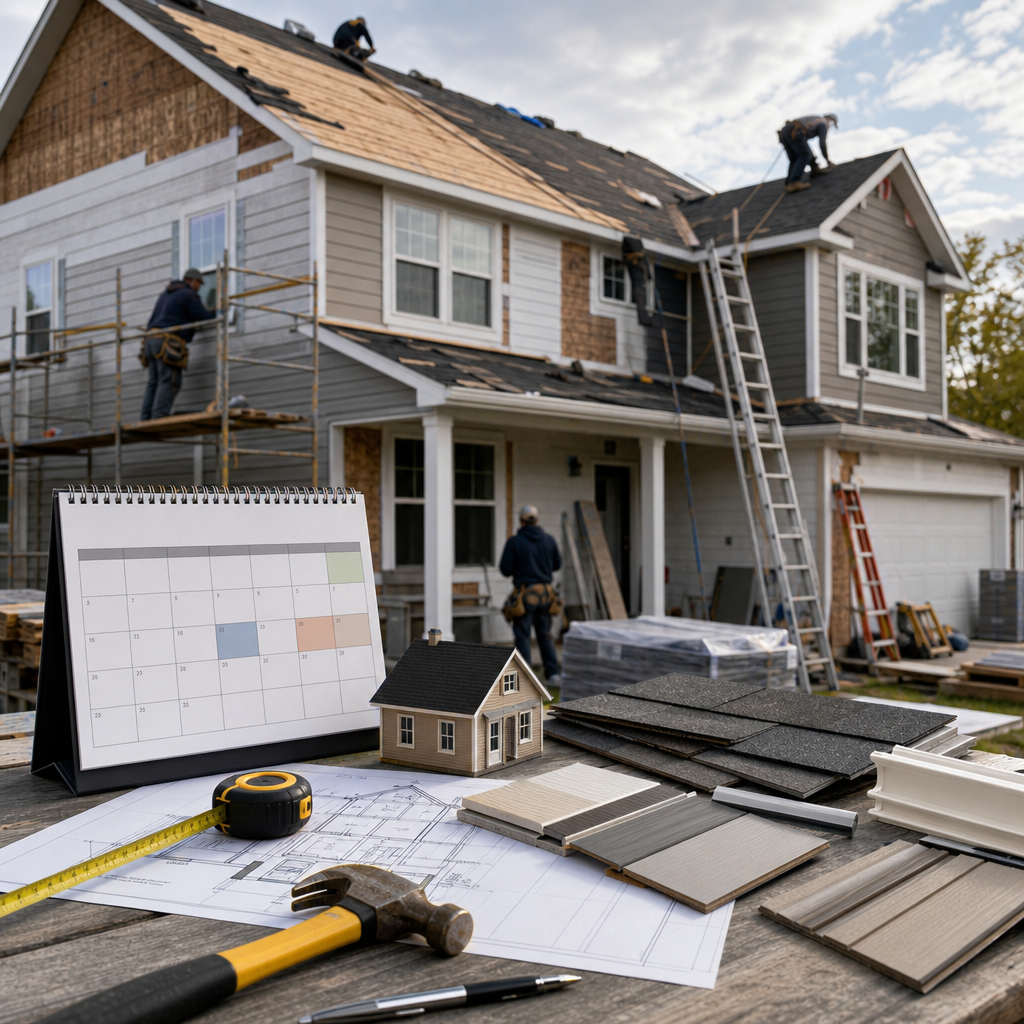
How Long Does a Full Exterior Replacement Really Take in 2026
Why Timeline Matters When Planning Your Exterior Replacement
Understanding how long your exterior replacement will take isn’t just about marking your calendar. It directly affects your property’s vulnerability to weather, your daily routines, and your overall budget. When your roof, siding, or gutters need replacing, knowing realistic timelines helps you plan around family schedules, business operations, and potential weather windows.
We’ve worked with countless property owners who felt blindsided by project delays or surprised by how long work actually took. The difference between a smooth project and a frustrating one often comes down to clear expectations set upfront. When you understand the exterior replacement timeline, you can prepare your household or business, arrange contractor access, and avoid unnecessary stress.
The exterior replacement timeline also impacts your property’s insurance coverage, potential weather exposure, and contractor availability. If you’re planning a full exterior replacement project duration, you’ll want to know whether you’re looking at days or weeks so you can schedule accordingly.
What to do next: Before meeting with contractors, list all the exterior work you need (roof, siding, gutters, fascia, soffit) so we can give you an accurate combined timeline estimate.
Key Factors That Affect Your Project Duration
Not every exterior replacement takes the same amount of time. Several variables influence how long your project will actually take, and understanding them helps you plan more effectively.
Property size and complexity forms the foundation of your timeline. A 1,500-square-foot ranch roof takes less time than a 4,000-square-foot two-story home with multiple roof angles. Commercial buildings add another layer of complexity with their typically larger footprints and often stricter work-hour restrictions.
Weather conditions play a significant role. Rain, snow, high winds, or extreme temperatures halt work or slow progress considerably. We can’t install roofing in heavy rain or lay siding in freezing conditions, so seasonal timing matters more than many property owners realize.
Material selection affects installation speed. Architectural shingles take longer to install than standard three-tab shingles. LP SmartSide siding may require different preparation than vinyl. TPO commercial roofing installations differ from EPDM systems in their technical requirements.
Structural preparation needs can either streamline or extend your project. If your roof decking is sound and your wall framing is square, we move quickly. When we discover rotted wood, water damage, or structural issues during demolition, additional work becomes necessary.
Crew availability and project coordination determine how many teams work simultaneously. A single crew working solo takes longer than coordinated teams tackling the roof, siding, and gutters at staggered intervals.
What to do next: Discuss these factors with us during your initial consultation so we can give you a personalized timeline rather than generic estimates.
Residential Roof Replacement Timeline and Process
Most residential roof replacements in the Brookfield area take between 3 to 7 business days for a standard single-story home. A larger two-story residence might extend to 10 to 14 days depending on roof size, pitch, and complexity.
Here’s how a typical residential roof replacement unfolds:
Day 1 involves site preparation, protecting landscaping and vehicles, and beginning roof tear-off. We install tarps and containment systems to manage debris safely.
Days 2-3 focus on complete tear-off and inspection. Once we remove the old roof, we examine the underlying decking for damage. This is where surprises often emerge. Water damage or rot discovered at this stage requires additional repair time, typically 1 to 3 extra days.
Days 4-6 bring new underlayment installation, flashing work, and new shingle application. Modern roofing systems require proper ventilation and waterproofing details that take time but protect your home for decades.
Day 7+ includes final inspections, cleanup, and any punch-list items. We remove all debris, inspect every seam and fastener, and ensure gutters function properly if they’re part of your project.
Weather can compress or extend these timelines significantly. A stretch of rain in the forecast might delay work by several days. Conversely, perfect fall weather might let us complete the job faster than expected.
What to do next: Plan for your roof tear-off to disrupt your schedule for at least one full week, and budget for potential hidden damage discoveries that might add a few extra days.
Commercial Roofing Installation: What to Expect
Commercial roofing projects follow different timelines than residential work, largely because of access restrictions, occupancy requirements, and system complexity. A commercial roof installation typically takes 5 to 15 business days depending on building size and roofing system type.
Our commercial roofing services focus on EPDM and TPO systems, which are industry standards for flat and low-slope commercial roofs. EPDM (rubber membrane) installations tend to move slightly faster than TPO (thermoplastic polyolefin) systems because TPO requires heat-welded seams that demand precision.
Building occupancy shapes our work schedule. We often work during off-hours or weekends to minimize disruption to your business operations. This flexibility extends the calendar timeline but keeps your business running normally.
Building size matters enormously. A 10,000-square-foot commercial building takes longer than a 5,000-square-foot property. We factor in roof access difficulties, equipment placement, and walkway protection when estimating timelines.
System preparation requires careful attention. Commercial roofs need precise surface prep, proper insulation installation, and secure fastening or ballasting. Rushing these steps creates expensive problems later, so we prioritize quality over speed.
Many commercial clients appreciate our ability to stage work in phases, allowing partial occupancy or operations to continue during certain project stages. This requires careful coordination but prevents complete business shutdowns.
What to do next: If your commercial property needs roofing work, discuss after-hours or weekend scheduling options early so we can plan accordingly.
Siding Replacement and Installation Schedule
Siding replacement timelines vary widely based on whether you’re updating one wall, an entire story, or a full exterior. Most residential full-home siding replacements take 2 to 4 weeks for properties under 3,000 square feet.
We work with vinyl siding and LP SmartSide, both of which have different installation requirements. Vinyl siding moves relatively quickly once wall preparation is complete. LP SmartSide, a more durable engineered wood product, requires additional steps including proper priming and finish application, which can add 3 to 5 days to your project.
Wall preparation determines much of your timeline. If existing siding comes off cleanly and wall framing is sound, installation proceeds quickly. When we find water damage, rotted sheathing, or structural issues, we must address these before new siding goes up. This hidden work often surprises property owners but prevents future problems.
Window and door integration requires careful coordination. If your siding replacement includes new windows or doors, those installations must happen in the right sequence to ensure proper flashing and weatherproofing. Coordinating these trades adds complexity but ensures a watertight result.
Accessibility affects pacing. Single-story homes with easy ladder access move faster than multi-story buildings requiring scaffolding. We factor this into our timeline estimates.
Many property owners choose to combine siding replacement with roof work or gutter installation. When multiple exterior systems are being updated simultaneously, we coordinate crews to work efficiently without creating bottlenecks.
What to do next: If you’re considering siding replacement, take photos of any areas showing water damage, and note whether you want new windows or doors integrated into the project.
Fascia, Soffit, and Gutter Work Timelines
Fascia, soffit, and gutter replacement typically takes 2 to 5 business days for a standard residential home, though this can extend if you’re replacing a full perimeter on a larger property. Because this work happens at the roof line, it’s often coordinated with roof replacement for efficiency.
When we replace these components separately, here’s what to expect:
Removal and inspection takes the first day or two, depending on your home’s size. Old gutters, fascia boards, and soffit panels must come down carefully so we can assess what’s underneath. We often find structural damage or rot at this stage that requires additional repair work.
New material installation proceeds once prep work is complete. Modern gutters come in seamless styles that reduce leaks compared to sectional systems. Fascia and soffit materials protect your roof framing from weather damage, so proper installation matters tremendously.
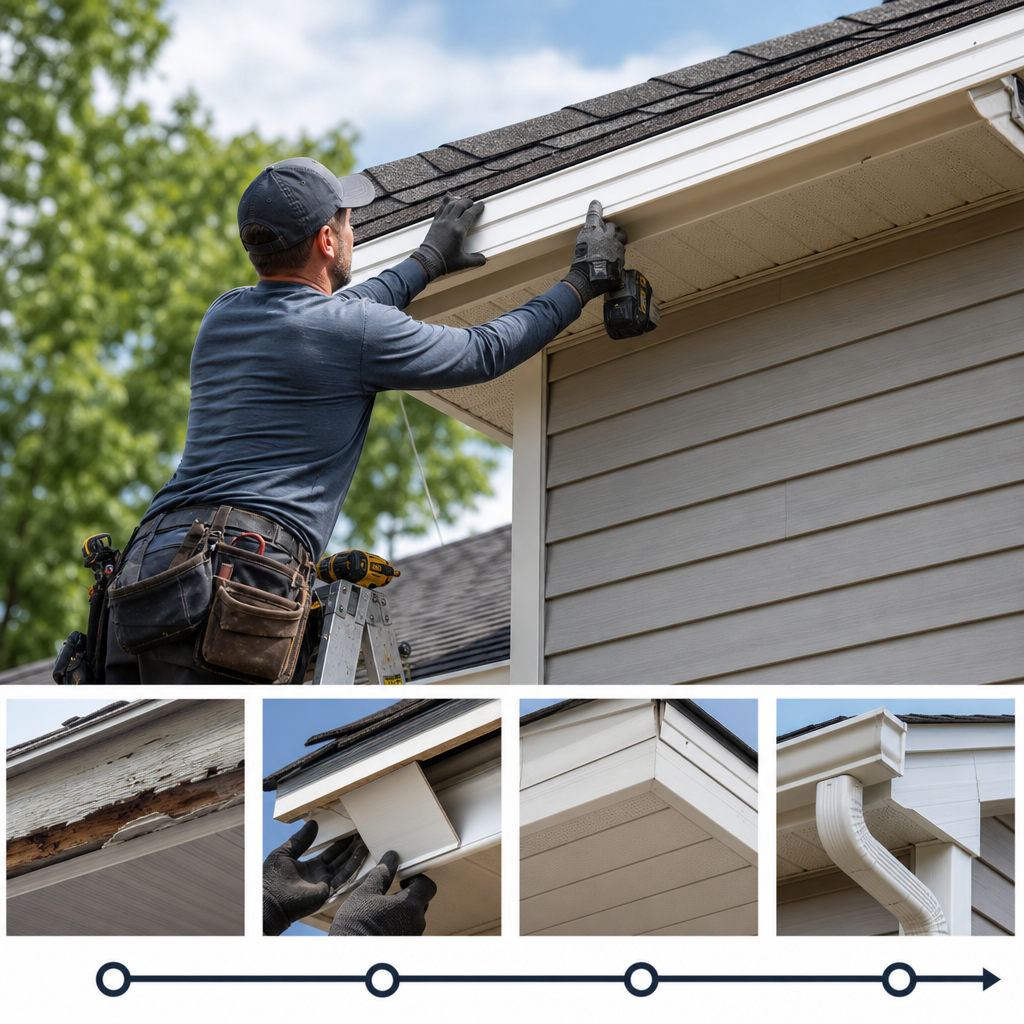
Gutter sizing and positioning is critical for drainage. Undersized gutters create water overflow problems. We calculate your roof’s square footage and pitch to recommend appropriate gutter capacity.
When fascia and soffit work combines with roof replacement, we complete these simultaneously, reducing your total project timeline by several days. A roof replacement project that would take 7 days solo might take only 10 days when we add gutter and soffit work, rather than 10 plus 4 additional days.
What to do next: During your estimate, ask us about bundling fascia, soffit, and gutter work with your roof or siding project for faster completion.
How We Streamline Your Project for Faster Completion
We’ve spent years refining our processes to complete exterior replacement projects efficiently without sacrificing quality. Several strategies help us move faster while maintaining the standards your home deserves.
Crew coordination and scheduling starts before work begins. We schedule multiple trades to work in sequence without creating bottlenecks. Roofers prepare the structure while siding crews work on other walls. Gutter installation happens as other teams wrap up.
Pre-project material procurement prevents delays from supplier shortages. We order your materials well in advance so everything arrives when we’re ready to install, not while crews wait.
Our project management process maintains clear communication throughout. You’ll know daily what’s scheduled, what’s completed, and what to expect next. This transparency helps you plan around our work.
Experience with local conditions helps us work efficiently in Wisconsin weather. We know the seasons when exterior work flows smoothly versus when weather complications arise. We time projects strategically and have contingency plans for unexpected weather.
Subcontractor relationships with trusted, reliable tradespeople ensure that whenever we need additional expertise (structural repairs, electrical work, etc.), capable professionals arrive quickly and work effectively alongside our crews.
What to do next: Ask us about our typical timeline for your specific project scope, and mention any scheduling constraints you have so we can accommodate them.
Weather and Seasonal Considerations for Your Area
Brookfield and surrounding areas experience distinct seasons that dramatically impact exterior replacement timelines. Spring, summer, and fall offer the best windows for exterior work, but each season presents different challenges.
Spring work (April through May) takes advantage of warming temperatures but often brings unpredictable rain. We can complete roof work in spring, but wet weather can add days or even weeks to a project. Early spring also means we’re scheduling months in advance as homeowners prepare for summer.
Summer projects (June through August) offer the most reliable working conditions. Dry weather, warm temperatures, and long daylight hours let us move efficiently. However, summer availability gets tight quickly, so planning ahead is essential.
Fall work (September through October) combines reliable weather with less scheduling pressure than summer. We often recommend fall for exterior replacement because conditions are predictable and we have better crew availability. Cool temperatures mean crews work comfortably without heat-related slowdowns.
Winter work is generally not feasible for most exterior projects. Freezing temperatures prevent proper installation of asphalt shingles, siding, and roofing membranes. However, emergency repairs can happen year-round, and winter planning makes sense when you want spring or summer work scheduled.
Knowing this seasonal reality helps you plan strategically. If you start the process in December or January, you’re positioning your home for spring completion or guaranteed summer scheduling.
What to do next: Contact us in late winter or early spring if you want summer or fall completion, since those windows fill quickly for property owners across our service area.
Our Project Management Approach for Reliable Scheduling
We manage exterior replacement projects with a structured approach that keeps timelines realistic and schedules dependable.
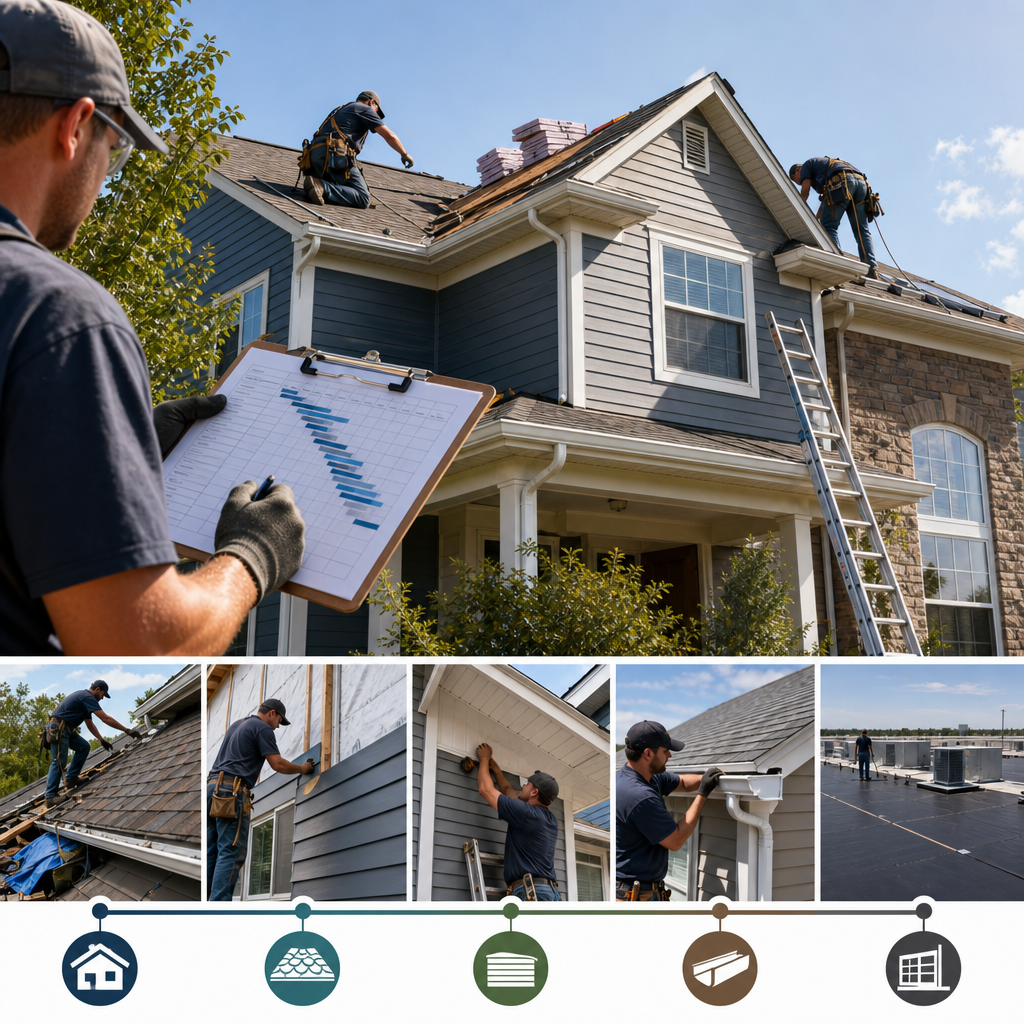
Initial assessment and planning happens during your free estimate. We photograph your property, measure all exterior elements, discuss material selections, and identify potential complications. This groundwork ensures our timeline estimates are accurate, not optimistic guesses.
Permit coordination for commercial work or structural repairs gets handled by our team. This prevents delays from administrative requirements you might not anticipate.
Daily communication keeps you informed of progress, any discovered issues, and next-day scheduling. You’ll receive updates that help you plan around our work.
Contingency planning for weather or discovered damage is built into our approach. When problems emerge, we’ve pre-identified solutions so we minimize delays.
Final inspection and warranty documentation wrap up the project thoroughly. You receive detailed paperwork covering what was installed, manufacturer warranties, and our workmanship guarantees.
What to do next: When you schedule your estimate, tell us about any specific timeline needs so we can plan your project accordingly.
Protecting Your Property During the Replacement Process
Protecting your home or business during exterior replacement matters as much as the work itself. We implement thorough protection measures to prevent damage during construction.
Debris containment systems capture falling materials, protecting landscaping, vehicles, and adjacent properties. We use tarps, drop cloths, and containment barriers appropriate to each project stage.
Interior protection prevents dust and debris from entering your home during roof tear-off or siding removal. We seal openings and create barriers that keep your living spaces clean.
Walkway and driveway protection preserves your property’s condition. Heavy equipment and foot traffic require coverage to prevent damage to driveways, patios, and landscaping.
Weather protection is critical when work extends over multiple days. If we’ve removed your roof and rain appears in the forecast, tarping systems protect your interior while we resume work.
Insurance and liability coverage protects you throughout the project. We carry comprehensive commercial general liability and workers’ compensation insurance.
What to do next: Ask us about our protection procedures during your estimate, and let us know about any specific concerns regarding pets, vehicles, or landscaping.
Why Experience Matters in Meeting Project Deadlines
Meeting project deadlines consistently requires knowledge that only comes from completing hundreds of exterior replacement projects. Experience helps us avoid common pitfalls that derail timelines.
We know which material combinations work best together and which create coordination headaches. We understand how Wisconsin weather patterns affect scheduling and plan accordingly. We’ve learned which structural issues typically hide behind exterior systems and budget time for addressing them properly.
Experienced crews work efficiently without rushing. They understand the right sequence for different tasks and anticipate problems before they become delays. Our subcontractors, team members, and suppliers have worked with us long enough to coordinate smoothly, which matters tremendously for timeline management.
When complications emerge, experience helps us solve them quickly. A discovered structural problem that might leave an inexperienced contractor confused has multiple solutions in our toolkit.
Exterior replacement projects represent significant investments for property owners. You deserve contractors who combine expertise with reliable scheduling. We understand that your time matters, your business continuity matters, and that you need honest, accurate timelines you can depend on.
What to do next: Call us for a free estimate and ask about our typical project timeline for your specific exterior replacement needs. We’ll give you an accurate scope, honest timeline, and clear next steps for getting your property protected with quality work.
For further reading: Exterior replacement timeline guide, Exterior replacement timelines explained, Exterior renovation project management.