
Expert Exteriors Case Studies: Local Roof Replacement Reviews and Success Stories
Why Property Owners Trust Our Roof Replacement Services
When your roof fails, the stakes feel high. Water damage spreads quickly, insulation deteriorates, and property value declines. Over the past several years working across Brookfield and surrounding Wisconsin communities, we’ve helped dozens of residential and commercial property owners navigate roof replacement decisions. These aren’t just projects to us; they’re partnerships where we protect what our clients have built.
Our roof replacement reviews consistently highlight one theme: property owners appreciate professional guidance combined with transparent execution. We understand that most people don’t know the difference between EPDM and TPO membranes, or why asphalt shingle quality matters beyond the price tag. That’s exactly why we’ve compiled these case studies and success stories. They show real results from real projects, the problems we solved, and how our approach delivers lasting value.
Trust in the roofing industry comes from three measurable factors: experience, warranty protection, and verifiable results. We’ve built our reputation on all three.
Our team has completed hundreds of roof replacements across residential and commercial properties. This experience means we recognize problems quickly, predict complications before they arise, and know exactly which materials and methods deliver the longest life. When a homeowner calls about roof damage after a storm, or a business owner worries about a leak affecting operations, they’re not getting a sales pitch; they’re getting someone who’s solved that exact problem twenty times before.
We back our work with a 15-year workmanship warranty on full roof replacements. This isn’t marketing language. It means if our installation creates a problem within fifteen years, we fix it at no cost. Property owners tell us this protection changes their peace of mind significantly. Paired with manufacturer warranties on materials (typically 20-30 years for quality shingles), a new roof becomes a genuine long-term investment rather than a gamble.
Our project gallery showcases completed work across the region. Seeing before-and-after photos of properties similar to yours removes uncertainty from the decision-making process. Prospective clients can visualize quality, color options, and finish details rather than imagining possibilities.
What to do next: Request references from property owners whose roofs we’ve replaced in your neighborhood. Talking directly with neighbors who’ve recently completed projects provides context no website can offer.
Common Roofing Problems We Solve for Brookfield Homeowners
Wisconsin weather creates specific roofing challenges. Understanding these problems helps you recognize when replacement is overdue, not just when a leak appears.
Ice dam formation ranks high on our call list. As temperatures fluctuate throughout Wisconsin winters, ice accumulates along roof edges. When it melts, water backs up under shingles and finds its way into walls and attics. We’ve addressed countless properties where ice dams caused damage extending far beyond the visible roof line. Proper ventilation, insulation, and gutter systems prevent this; an aging roof with compromised flashing accelerates it.
Hail damage appears deceptively subtle. A storm may impact hundreds of homes in the region, but only those with trained eyes catch the full extent. Hail dents shingles, compromising their protective granule coating. Over 5-10 years, those dents become stress points where leaks originate. We document damage comprehensively, which helps both with insurance claims and long-term planning.
Wind damage differs from hail damage. High winds don’t necessarily punch holes; they lift shingles and break seals, allowing water penetration during heavy rain. Older roofs with weakened adhesive are particularly vulnerable. After significant storms, we often find that one side of a roof sustained damage while the other remains fine, depending on wind direction.
Flashing failures cause more problems than most property owners realize. Flashing is the metal work around chimneys, vents, skylights, and valleys where two roof planes meet. When flashing deteriorates, water sneaks behind shingles precisely where it causes the most interior damage. We’ve discovered that many “roof leaks” are actually flashing problems, a distinction that matters for proper repair.
Moss and algae growth, while cosmetically unpleasant, signals moisture retention. Shingles designed for dry conditions can’t breathe properly, leading to premature deterioration. This is less common in newly replaced roofs but becomes an issue on roofs past their prime.
Actionable insight: If your roof is past fifteen years old, schedule a professional inspection before problems manifest as interior water damage. Early intervention costs significantly less than emergency repairs.
How Our Residential Roof Replacement Process Works
Understanding the process reduces anxiety about the project timeline and disruption. We’ve streamlined our approach to balance quality with efficiency.
The process begins with a detailed inspection and quote. We spend time on your roof assessing the current structure, identifying any underlying issues (rotted decking, inadequate ventilation, structural concerns), and determining the full scope of work. This isn’t a quick walk-around; we’re identifying problems that must be addressed while we have the roof exposed. The written quote breaks down materials, labor, timeline, and warranty details so you know exactly what to expect.
Once approved, we schedule work based on weather and crew availability. We typically recommend scheduling for late spring or early fall when weather is most predictable. Summer heat can complicate shingle installation, and winter conditions slow progress significantly.
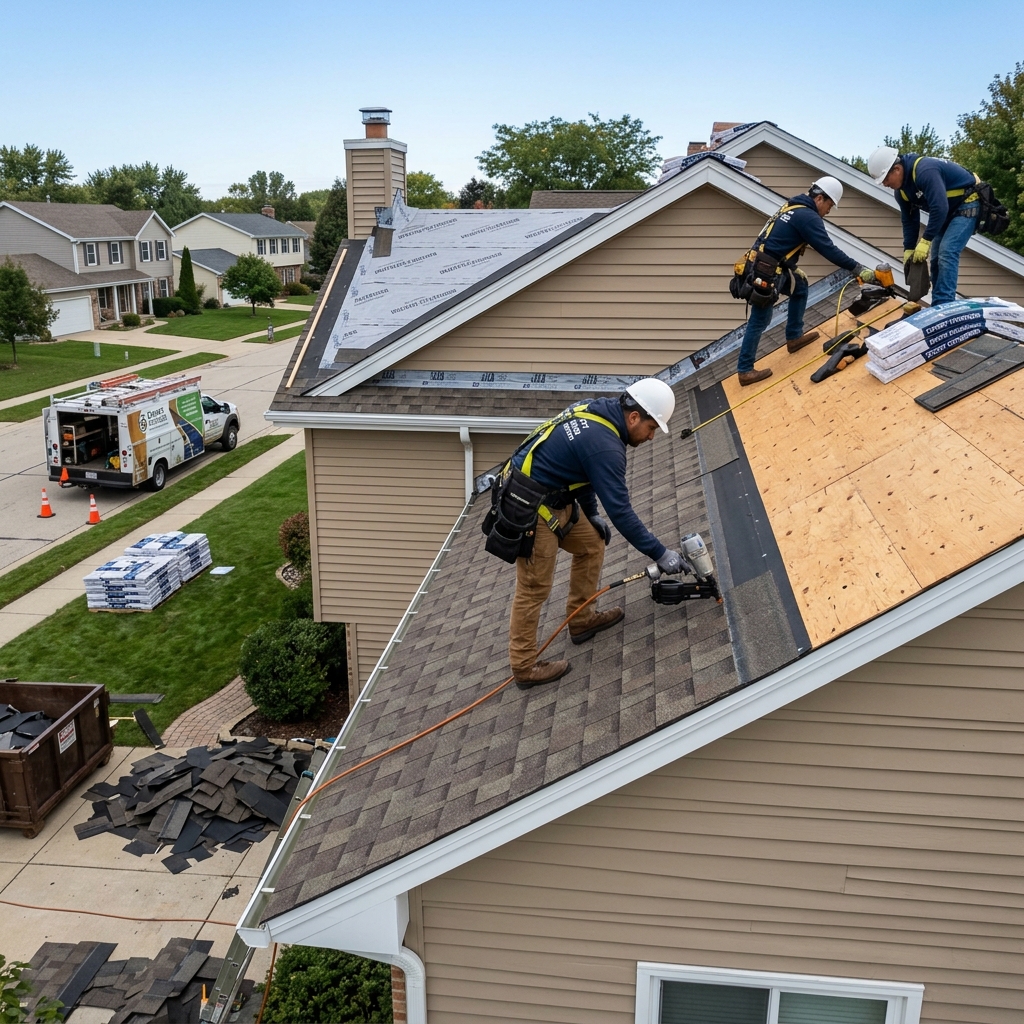
Preparation work includes setting up staging areas, protecting landscaping and siding, and arranging dumpsters for old roofing materials. Our crews establish work zones to minimize impact on your daily life.
Roof removal is the first major phase. We strip old shingles, flashing, and any damaged decking. This is when surprises sometimes emerge: hidden damage, inadequate ventilation systems, or structural issues become visible. We address these immediately rather than covering them up, because a quality replacement is only as good as what lies beneath.
Installation follows a specific sequence. We repair or replace damaged decking, install underlayment, add new flashing, and install shingles using proper nailing patterns and fastener specifications. Different shingle types (asphalt, architectural, premium compositions) have different installation requirements; we adjust technique accordingly to meet manufacturer specifications and preserve your warranty.
Final inspection includes a thorough walkthrough where we verify all work meets our standards. We clean up debris, dispose of old materials responsibly, and leave your property as clean as we found it.
Our residential roof replacement service covers all these phases with clear communication at each stage.
Your action item: Request a timeline projection specific to your property size and current season. This helps you plan for potential noise, restricted driveway access, or other considerations.
Our Commercial Roofing Solutions for Business Properties
Commercial roofs face different demands than residential roofs. Larger square footage, complex equipment installations, HVAC systems, and the need for minimal business interruption require specialized approaches.
We specialize in two primary commercial membrane systems: EPDM and TPO. Both are synthetic rubber materials that last 20-30 years when properly installed. They’re ideal for flat or low-slope roofs common on commercial buildings.
EPDM (ethylene propylene diene monomer) is the older, proven technology. It’s durable, flexible in cold temperatures, and relatively affordable. Single-ply installation means fewer seams, reducing potential leak points. EPDM performs exceptionally well in Wisconsin’s temperature extremes.
TPO (thermoplastic olefin) is the newer option. It offers similar lifespan but with enhanced UV resistance and heat-welded seams that some contractors prefer. TPO generally costs slightly more than EPDM but can offer better energy efficiency in certain applications.
We also handle roof coatings, retrofits, and maintenance programs for existing commercial roofs. Not every business needs full replacement; sometimes extending the life of a sound roof with protective coatings makes financial sense.
Our commercial roofing solutions include comprehensive planning to minimize disruption. We work around operational schedules, coordinate equipment installations, and maintain access to critical building areas.
Commercial projects also benefit from our service area across Wisconsin. If your business operates multiple locations, having one trusted contractor simplifying that relationship is valuable.
Implementation tip: Develop a roof maintenance schedule with your contractor. Regular inspections (typically twice yearly) catch problems before they become expensive emergencies.
Case Study 1: Residential Roof Replacement That Protected Property Value
A Brookfield family bought their home twelve years ago. The roof had been installed roughly fifteen years before that, placing it at the end of its lifespan. For a few years, it performed adequately, but they began noticing granule loss in gutters and minor shingle curling along the south-facing slope.
When they received an estimate from a competitor suggesting they could “wait another few years,” they sought a second opinion. Our inspection revealed what we often find: the manufacturer’s warranty was expiring soon, and storm damage from two seasons prior had stressed multiple shingles. More concerning, the roof’s decking showed early moisture stains, suggesting that water infiltration had already begun despite the roof maintaining its outward appearance.
We recommended replacement rather than repair. Here’s what made the difference for this family: we identified that their ventilation system was undersized. When we replaced the roof, we upgraded ventilation simultaneously. This prevented the ice dam problems they’d experienced the previous two winters.
The material choice mattered too. They selected architectural shingles (thicker, more dimensionally detailed than standard three-tab shingles) with a 25-year manufacturer warranty. While pricier than basic options, the visual upgrade enhanced their home’s curb appeal noticeably.
Timeline: six working days from removal through final cleanup. Cost remained within their budget because our inspection caught all issues upfront; there were no mid-project surprises.
Two years post-installation, they reported zero water intrusion, no ice dams, and consistent satisfaction with the investment. When they consulted a realtor about home value, the inspector specifically noted the new roof as a significant positive, validating their decision to replace rather than delay.
Key takeaway: Replacing a roof before catastrophic failure protects both immediate safety and long-term property value.
Case Study 2: Commercial EPDM Roofing Success in the Area
A regional logistics company occupied a 35,000-square-foot warehouse with an aging built-up roof system (the tar-and-gravel type). The roof had been patched repeatedly over fifteen years, and each summer brought predictable leaks around poorly sealed seams and deteriorated flashing.
Their frustration stemmed not just from leaks but from operational disruption. Every repair meant crews on the roof creating noise and activity around the building during business hours. The company wanted a solution that would provide decades of trouble-free service without constant maintenance.
We proposed a complete tear-off and EPDM membrane replacement. The scope was significant: 35,000 square feet of material removal, deck inspection and repair, new underlayment, membrane installation, and comprehensive flashing work around twelve rooftop units.
Coordination was critical. We scheduled the project for a planned two-week facility shutdown when the company scheduled annual equipment maintenance. This allowed us to work continuously without business interruption concerns. Our crews removed the old system completely in five days, identified and repaired damaged decking (minimal, fortunately), and installed the new EPDM system in eight days.
The EPDM membrane choice proved ideal for their needs. Unlike built-up roofing with countless seams, EPDM presented one continuous surface with heat-welded seams around penetrations. This dramatically reduced leak points.
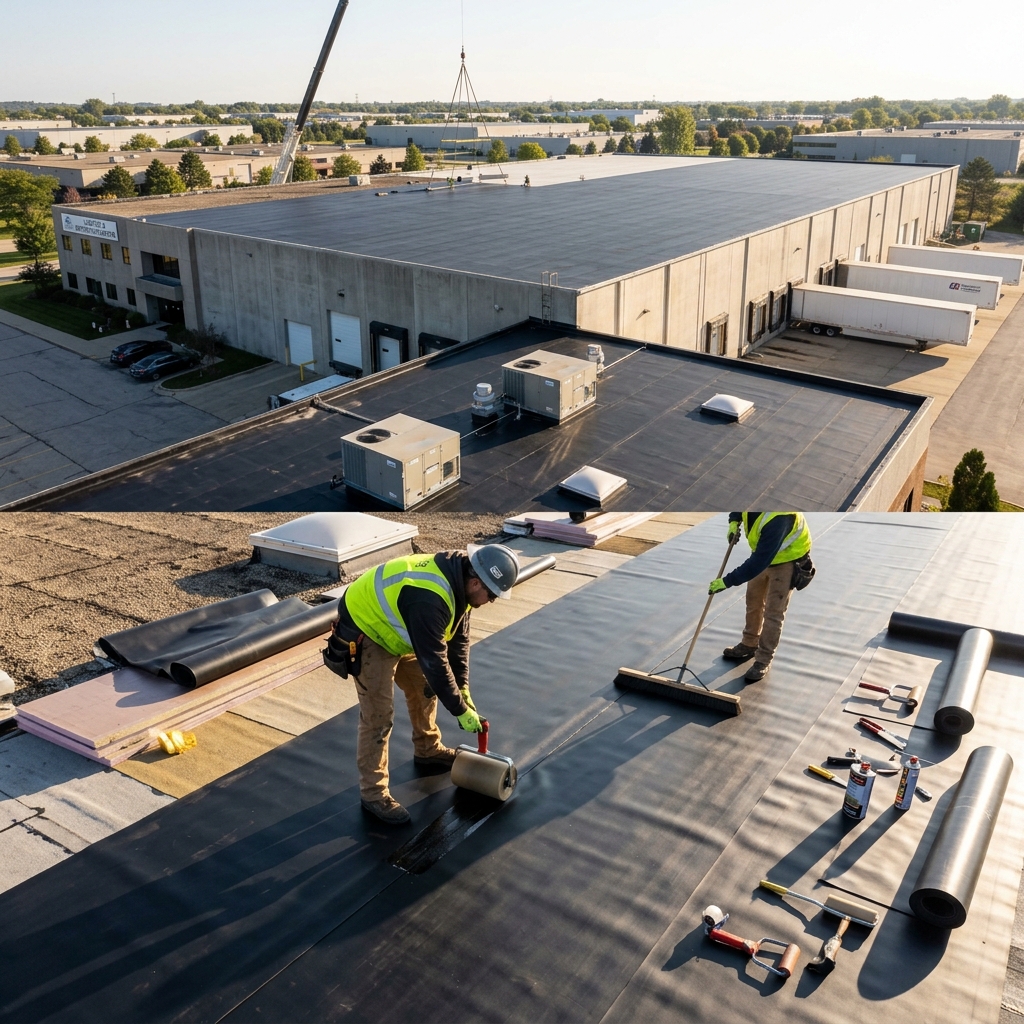
Results: In the three years since installation, they’ve had zero weather-related leaks. The roof handles summer heat and winter snow loads without failure. Their facility manager reports appreciating the predictability; emergency roof repairs have vanished from their budget.
Additionally, the new roof’s lighter color (white EPDM) reflects more solar heat, reducing cooling costs during summer months. This unexpected benefit became a genuine operational advantage.
Practical result: Commercial roof replacement, when done comprehensively, transitions properties from constant maintenance mode to predictable, worry-free operation.
Materials We Choose and Why They Matter
Material selection determines how long your roof actually lasts, how well it performs in Wisconsin weather, and what maintenance demands lie ahead.
For residential asphalt shingles, we work with quality manufacturers offering 25-30 year warranties. The difference between budget shingles and premium options extends beyond longevity. Better shingles contain more asphalt, superior adhesive compounds, and thicker fiberglass substrates. They resist curling, maintain color stability longer, and provide better wind resistance. In Wisconsin’s climate, this premium investment typically pays for itself within the lifespan through superior performance and fewer repairs.
Architectural shingles deserve specific mention. They’re thicker than traditional three-tab shingles, with a layered appearance that adds visual depth to your home’s exterior. They cost more upfront but provide enhanced durability and aesthetic value that many homeowners appreciate when assessing their property long-term.
For commercial applications, EPDM and TPO membranes dominate because they handle the unique demands of flat roofs. Both offer superior flexibility compared to built-up roofing in Wisconsin’s temperature swings. We evaluate each property individually to recommend the right option based on climate exposure, building usage, and budget parameters.
Flashing materials are equally important as primary roofing. We specify aluminum or galvanized steel flashing (never cheap plastic substitutes) because metal expands and contracts with temperature changes without degrading. Quality flashing around all penetrations prevents the water intrusion problems that compromise entire roof systems.
Underlayment selection affects overall system performance. Modern synthetic underlayment outperforms traditional felt by orders of magnitude. It resists moisture, provides superior traction during installation (reducing installer falls), and extends deck protection if weather delays roof completion.
Ventilation components, while unglamorous, directly impact roof lifespan. Proper ridge vents, soffit vents, and intake pathways allow moisture and heat to escape, preventing the conditions that degrade roofing materials prematurely. We specify appropriately-sized ventilation systems during every replacement.
Practical guidance: Don’t compromise on materials to reduce project cost. A lower-grade roof that requires replacement in 15 years instead of 25 costs significantly more over time when labor and disruption are factored in.
Quality Craftsmanship That Extends Your Roof’s Lifespan
Materials alone don’t guarantee longevity; installation quality determines whether materials perform as designed.
Nailing patterns exemplify this principle. Asphalt shingles have specific locations where fasteners must penetrate to secure them properly. Incorrect nailing (too high, too low, or excessive fasteners) creates stress points that fail prematurely or allow wind penetration. Our crews follow manufacturer specifications precisely, not the shortcut methods that less rigorous companies employ.
Flashing installation requires particular attention. Flashing must be installed under the first course of shingles to allow water to flow over the flashing rather than behind it. Counter-flashing must overlap properly to shed water. Sealants must be applied strategically, not generously, because excessive sealant actually traps moisture. These details seem minor until a leak develops exactly where improper flashing allowed it.
Ventilation installation requires understanding airflow. Soffit vents must be unobstructed to allow air intake; ridge vents must align properly to allow exhaust. Blocked ventilation paths defeat the entire system. We inspect and verify ventilation integrity during every project.
Chimney and vent penetrations present particular challenges. Our crews seal these penetrations with flashing that won’t rust, fasteners that won’t corrode, and sealant that maintains flexibility as materials expand and contract seasonally. This attention to detail is where the difference between a roof that lasts 20 years and one that lasts 30 years often emerges.
Temperature management during installation matters too. Asphalt shingles shouldn’t be installed in freezing temperatures because the adhesive won’t bond properly. Similarly, extreme heat can soften shingles and affect sealing. We schedule projects during optimal temperature windows to ensure adhesive performs as designed.
Our team members receive ongoing training on evolving installation techniques, new material specifications, and best practices developed by manufacturer technical departments. This commitment to continuous improvement translates to stronger roof systems for every property we work on.
Actionable step: Ask your roofing contractor about their quality assurance process. Do they inspect every roof section before cleanup? Do they verify nailing patterns? Quality-focused companies build these checks into their workflow.
What Makes Our Roofing Company Different
The roofing market includes companies ranging from one-person operations to national corporations. Understanding what distinguishes quality providers helps you make informed decisions.
We’re locally based and regionally focused. We’re not just passing through your community; we serve ongoing relationships with neighbors and businesses throughout Brookfield and surrounding areas. This accountability matters. A property owner who isn’t satisfied has easy access to our leadership, and local reputation directly affects our ability to win future projects. This creates natural incentive to exceed expectations.
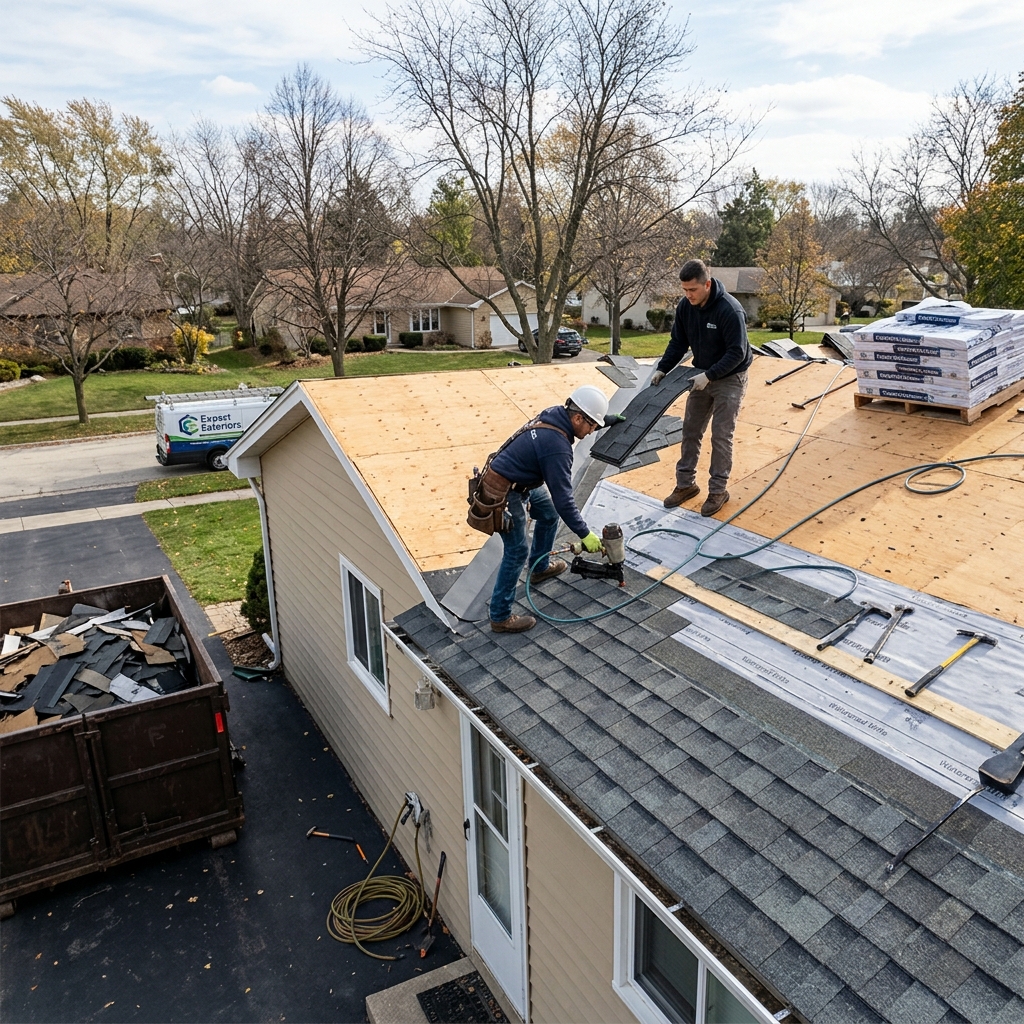
Our about our team reflects commitment to this community. We employ regional crews, support local suppliers, and maintain relationships with property owners long after project completion.
We provide comprehensive exterior services beyond roofing. Our expertise spans siding replacement (vinyl and LP SmartSide), fascia and soffit installation, and gutter replacement. This means when a property needs multiple exterior updates, you coordinate with one trusted contractor rather than juggling multiple companies. A cohesive approach ensures all exterior systems work together as designed.
Our warranty program stands on its own. Fifteen years of workmanship coverage is genuinely comprehensive. We also handle insurance claim documentation and contractor coordination if storm damage occurs, reducing administrative burden on property owners.
Our communication approach differs from typical contractors. We provide detailed written quotes with material specifications, labor breakdowns, and timeline projections upfront. We maintain contact throughout the project with progress updates. Upon completion, we provide documentation of all warranties, material specifications, and maintenance recommendations.
Transparency extends to pricing. We’re not the cheapest option available; we’re the value option. Our pricing reflects quality materials, experienced labor, and comprehensive warranty protection. Property owners consistently report that the cost justified the results.
Differentiator reflection: Choose a contractor who can clearly articulate why their approach differs from competitors. Generic answers suggest generic work.
Real Results from Property Owners Like You
Our case studies above represent typical outcomes, not exceptional outliers. Here’s what property owners consistently report after working with us:
Reduced stress and clear understanding: Most property owners approach roof replacement with anxiety. Our thorough inspection and detailed explanation of findings transform that anxiety into confidence. They understand exactly why replacement is necessary and what they’re investing in.
Minimal disruption: Projects typically complete within the quoted timeline. This matters significantly; property owners appreciate contractors who honor schedules.
No post-project surprises: Because we identify all issues during initial inspection, there are no mid-project discoveries that inflate costs or extend timelines. The final bill matches the quote.
Long-term performance: Two, three, and five years post-installation, property owners report roofs performing flawlessly. No unexpected leaks, no regret about material choices, no desire they’d chosen differently.
Positive property value impact: Whether selling or simply building wealth in their property, owners note that new roofs consistently enhance assessed value and appeal to potential buyers.
Insurance premium impacts: Several property owners reported that homeowners insurance companies reduced premiums after roof replacement, offsetting installation costs over time.
Professional crew behavior: Comments like “they cleaned up completely,” “they were respectful of our property,” and “they answered every question” appear repeatedly. These behavioral elements matter as much as technical quality.
Verification suggestion: Request references and speak directly with past clients about their experience. Their candid feedback provides context that marketing materials cannot.
Getting Started with Your Roof Replacement Project
If you recognize that your property needs roof attention, the next steps are straightforward.
Schedule a professional inspection. Contact us with your property address and a general description of your concerns (age, visible damage, leaks, etc.). We’ll arrange an inspection that includes a detailed walkthrough of your roof, assessment of underlying structure, and comprehensive recommendations.
Receive a detailed quote. We’ll provide written documentation of recommended materials, labor scope, timeline, and complete warranty information. You’ll understand exactly what the project entails and what protection comes with it.
Make an informed decision. You can compare our quote to others, consult with family or friends who’ve completed roof replacements, or request additional information about specific materials or techniques.
If you choose to move forward with Expert Exteriors, we’ll schedule work at a time that suits your situation. Commercial projects receive dedicated coordination; residential projects typically begin within 2-4 weeks of approval.
Throughout the project, we maintain open communication. Our team is accessible for questions, and progress updates keep you informed.
To begin, request an instant roof replacement quote or contact us directly with your property details. We’re here to guide you through the process with the same professionalism and attention to detail that our review and case study references reflect.
Your roof protects everything beneath it. Choosing the right contractor ensures that protection extends for decades, delivering genuine peace of mind alongside material security.