
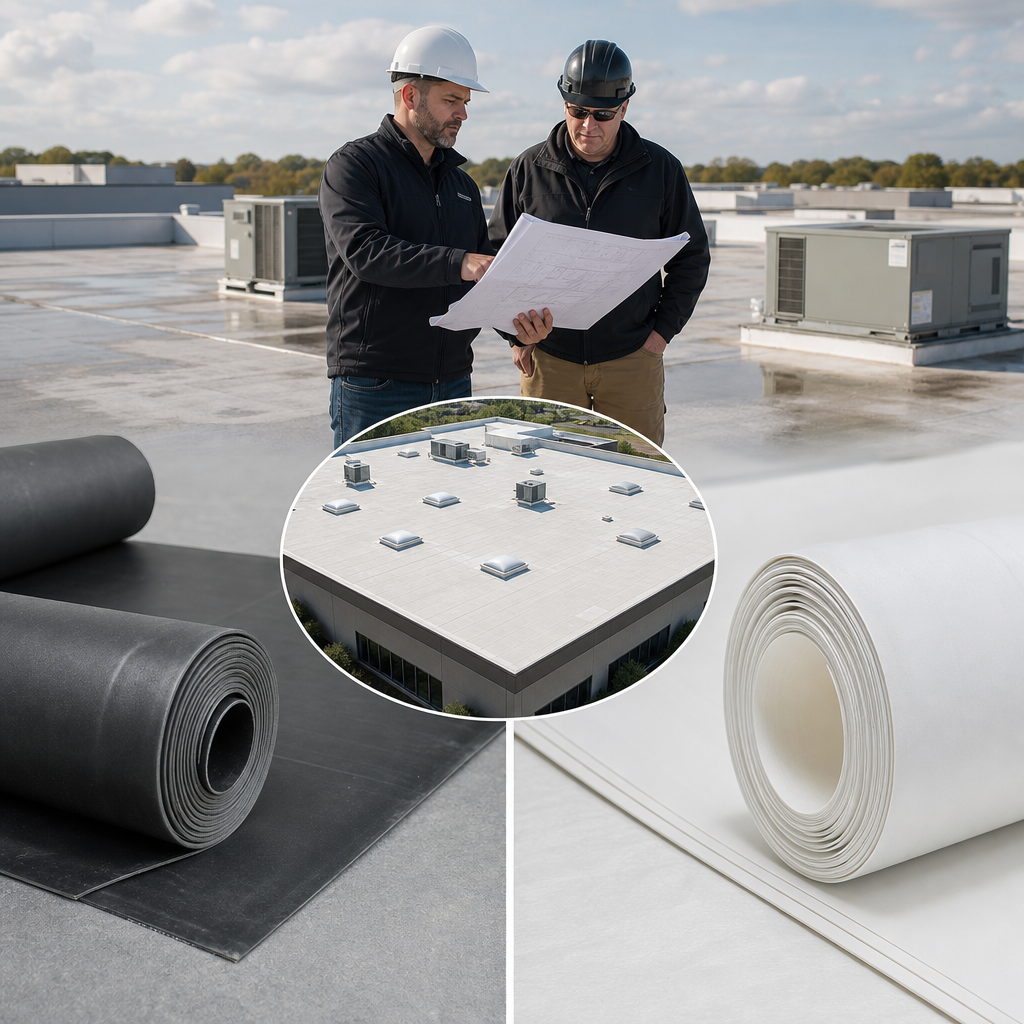
EPDM vs TPO Roofing: Which Commercial Roof System Wins for Your Building
Why Your Commercial Building Needs a Reliable Roofing Decision
Your commercial roof is one of the largest protective investments you’ll make for your building. A poor roofing choice can lead to costly leaks, energy waste, premature replacement, and compromised structural integrity. Yet many property owners approach this decision without understanding the real differences between the systems available to them.
The choice between EPDM and TPO isn’t trivial. These two materials dominate the commercial flat roof market because they both perform well, but they excel in different conditions and carry different long-term implications for your budget and maintenance schedule. Getting this wrong means overpaying for repairs or dealing with premature failure when you should be protected.
We’ve helped dozens of commercial property owners in the Brookfield area navigate this exact decision. The right choice depends on your building’s specific exposure, local climate patterns, and your long-term facility management strategy. Let’s walk through what each system offers so you can make a decision backed by facts, not marketing claims.
Understanding EPDM Roofing Technology and Performance
EPDM (ethylene propylene diene terpolymer) is a synthetic rubber membrane that has been the industry standard for flat commercial roofs since the 1970s. It’s proven, reliable, and performs exceptionally well in cold climates like Wisconsin.
Here’s how EPDM works: it’s typically installed as a single large sheet (or seamed sheets) that stretches across your entire roof, creating a continuous waterproof barrier. The membrane itself is only about 45-60 mils thick, but that’s all it needs to be. The material is naturally resistant to UV radiation, ozone, and temperature extremes. EPDM doesn’t harden or become brittle in cold weather, which is a critical advantage in our region.
The key strengths of EPDM include:
- Exceptional flexibility in sub-freezing temperatures, making it ideal for Wisconsin winters
- Lower initial material cost compared to TPO
- Proven track record with 50+ year installations still performing well
- Excellent resistance to punctures and tears from foot traffic or debris
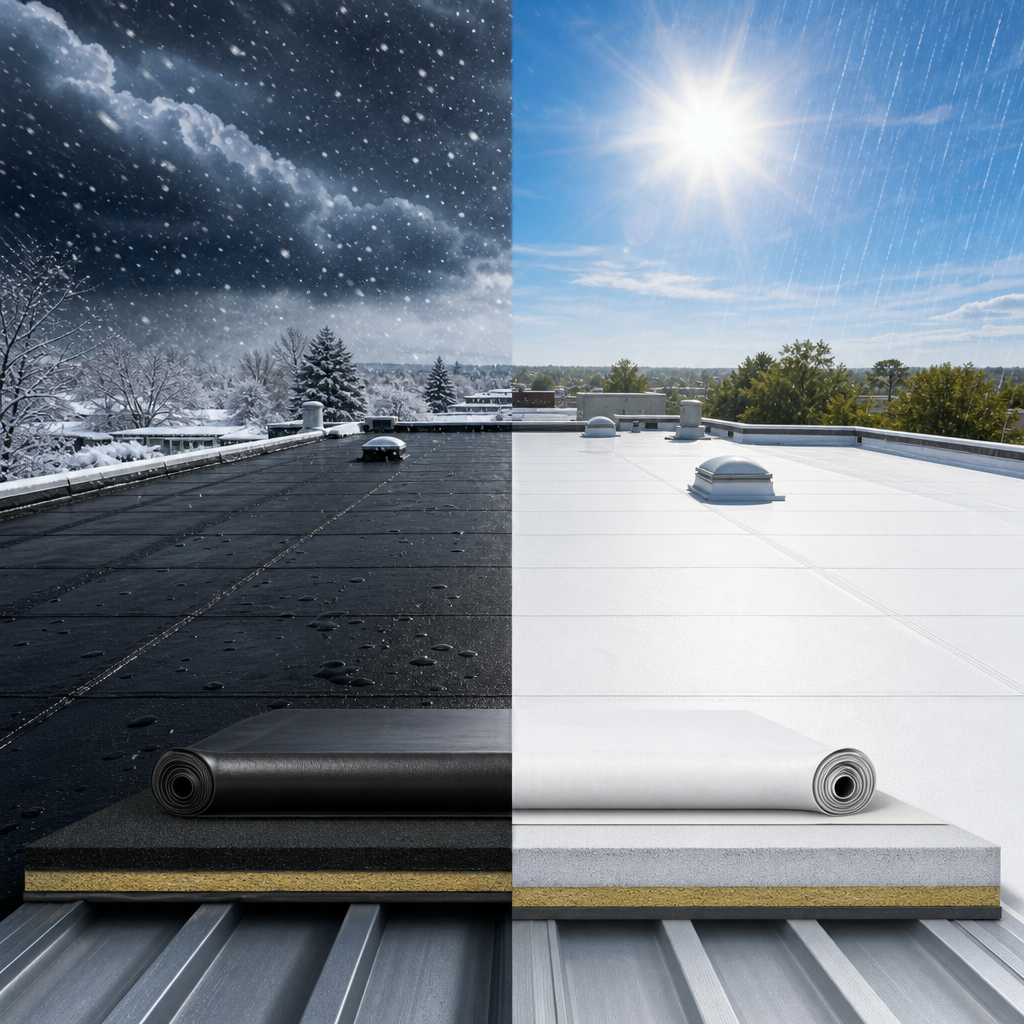
EPDM does have one notable drawback: black rubber absorbs heat, which can increase cooling costs in warm months. Some property owners address this with reflective coatings, though that adds cost and requires maintenance.
Exploring TPO Roofing Benefits and Capabilities
TPO (thermoplastic polyolefin) emerged in the 1990s as a newer alternative to EPDM. It combines rubber and plastic polymers into a single-ply membrane that offers distinct performance characteristics.
TPO is typically lighter in color (white or light gray) from the factory, which provides immediate energy efficiency benefits. The material reflects rather than absorbs solar radiation, meaning your building stays cooler without additional coatings. For commercial properties concerned about energy costs, this translates to real HVAC savings.
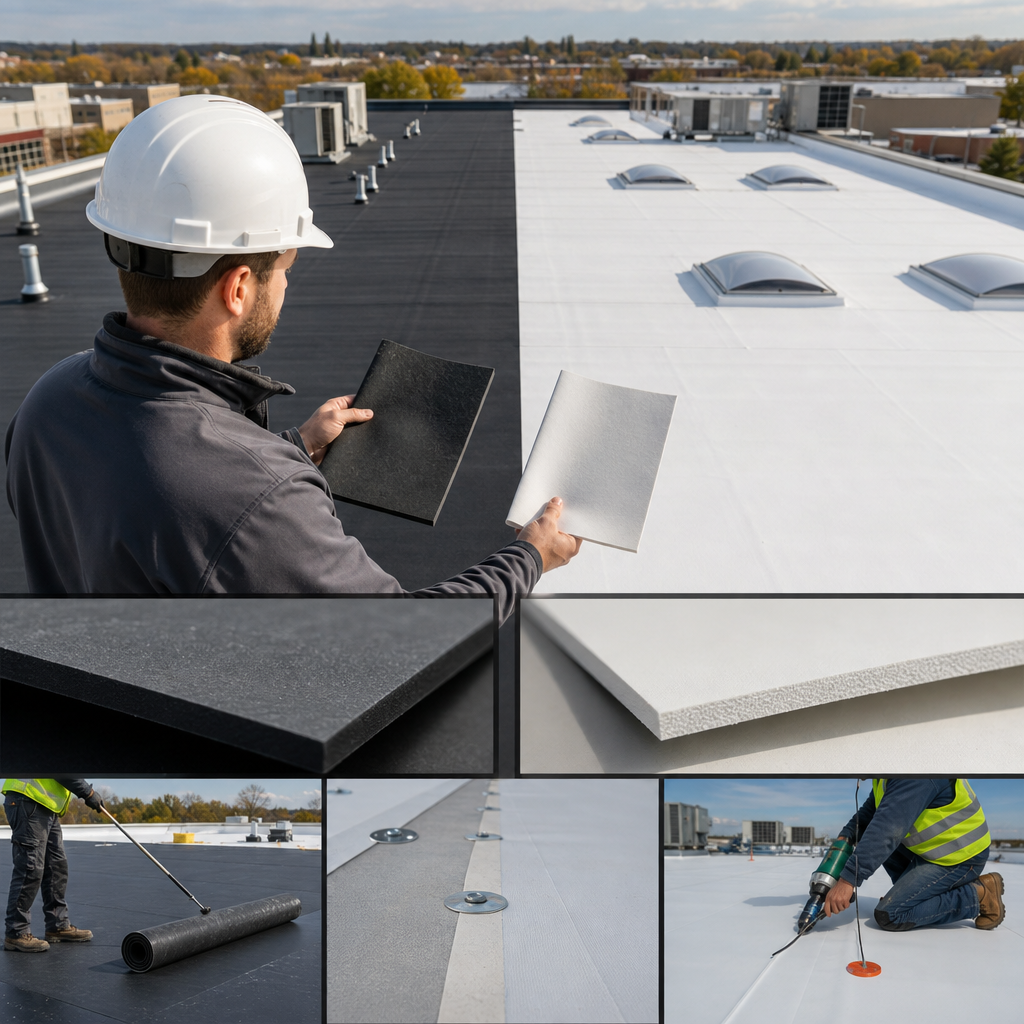
TPO membranes are heat-sealed at seams, creating a stronger bond than EPDM’s mechanical fastening or adhesive systems. This welded seam approach reduces the risk of seam separation, which has historically been an EPDM weak point.
The practical advantages of TPO are:
- Superior reflectivity reduces cooling costs immediately after installation
- Heat-sealed seams provide stronger, more reliable waterproofing
- Flexibility allows installation in cold weather (though not quite as forgiving as EPDM)
- Easier to repair when damage occurs, since patches bond chemically to the existing membrane
The trade-off is cost: TPO typically costs 10-15% more upfront than EPDM, though your energy savings can offset this over time.
Durability and Longevity: Head-to-Head Comparison
Both EPDM and TPO roofs can last 20-25 years with proper maintenance, so don’t let marketing convince you one system dramatically outlives the other. What matters more is how they degrade and what you can do about it.
EPDM ages predictably. The membrane gradually becomes less flexible over time, and seams are the first to show stress. A well-maintained EPDM roof typically performs flawlessly for 20 years, then enters a phase where seam repair becomes increasingly necessary. This staged degradation allows you to plan maintenance budgets with confidence.
TPO degrades differently. The material holds its seam integrity longer, but some TPO formulations have shown premature degradation when exposed to certain chemicals or in specific climate conditions. Recent formulations are much improved, but this history matters if you’re considering used or older TPO systems.
In Wisconsin’s climate, both materials perform admirably. The extreme cold doesn’t stress either system the way it stresses asphalt or other alternatives. The real difference emerges in maintenance patterns: EPDM requires proactive seam inspection and repair, while TPO shifts that need to reflective coating maintenance and membrane preservation.
Our recommendation: choose EPDM if you prioritize proven long-term reliability and lower initial cost. Choose TPO if you want maximum energy efficiency and are willing to invest slightly more upfront for newer technology.
Installation Speed and Cost Efficiency Advantages
Labor costs matter significantly in commercial roofing. TPO typically installs faster than EPDM because the heat-welding process is more efficient than EPDM’s adhesive or mechanical fastening approach. A TPO roof that might take four days to install could take five to six days in EPDM.
That speed difference compounds across your project timeline. Faster installation means less disruption to your commercial operations, lower labor costs, and faster weatherproofing. If your building is occupied during replacement, TPO’s quicker installation cycle is a genuine operational advantage.
EPDM’s cost advantage lies in materials, not labor. The membrane itself costs less to purchase, which benefits you if you’re comparing material pricing. However, when you factor in labor and the total installed system cost, the gap narrows considerably.
For a typical 5,000 square foot commercial roof replacement, you might see:
- EPDM system: $6,000-$7,500 in materials, $8,000-$12,000 in labor
- TPO system: $7,500-$9,000 in materials, $7,000-$10,000 in labor
The total cost difference is modest, but if you’re managing multiple properties or have tight capital budgets, that distinction matters.
Weather Resistance and Environmental Protection
Wisconsin weather tests roofing systems relentlessly. We experience temperature swings of 80+ degrees between winter and summer, intense UV exposure in clear months, and significant wind loads that put stress on roof assemblies.
EPDM performs exceptionally well in this environment. The rubber membrane doesn’t become brittle in extreme cold, and the material has inherent UV resistance. Where EPDM can struggle is in high-wind environments with inadequate fastening, since the membrane relies on mechanical attachment points. If your building is exposed or located in a wind-prone area, proper EPDM installation with adequate fastening systems is critical.
TPO also handles Wisconsin weather well, with one important caveat: heat-welded seams perform better under wind stress since they’re bonded across the entire seam width rather than at discrete points. For buildings in exposed locations, this is meaningful. Additionally, TPO’s reflectivity helps protect the underlying structure from thermal cycling stress that can age buildings prematurely.
For environmental considerations: TPO is more chemically resistant than EPDM, making it superior if your roof is exposed to oils, grease, or other industrial chemicals. EPDM can degrade when exposed to petroleum products or certain solvents. If your commercial building sits atop mechanical equipment, restaurants, or other chemical-heavy operations, TPO provides better protection.
Maintenance Requirements and Long-Term Value
Maintenance patterns differ significantly between the two systems, and understanding this difference helps you calculate true cost of ownership.
EPDM roofs require annual inspections focused on seam integrity. You’re looking for any evidence of separation, ponding water accumulation at seams, or UV damage beginning. Most EPDM roofs benefit from occasional reflective coating applications (every 10-15 years) to reduce heat absorption. When seams begin failing, you’re investing in spot repairs that can add up over time.
TPO roofs need different attention. The membrane itself is more robust, but you’re maintaining reflectivity. Light-colored TPO gradually darkens with age and weathering, reducing its energy efficiency benefits. Periodic cleaning and occasional reflective coating reapplication preserve the energy savings that made TPO appealing initially.
Here’s what matters for your decision: if you prefer a “hands-off” approach with minimal oversight, EPDM requires less ongoing coordination. If you’re actively managing facility efficiency and willing to stay on top of maintenance schedules, TPO’s energy benefits deliver real value. Neither system is dramatically cheaper to maintain over time, but they require different engagement levels.
Our Expert Approach to Commercial Roofing Selection
We don’t push one material over another based on profit margins. Our approach starts with understanding your specific situation: the building’s age, its thermal profile, surrounding environment, your operational needs, and your maintenance capacity.
We conduct a thorough roof audit that includes:
- Thermal imaging to understand heat loss patterns and energy efficiency baseline
- Structural assessment to ensure your roof deck can support either system
- Wind exposure evaluation based on building location and surrounding structures
- Chemical/environmental risk analysis based on adjacent operations
- Your facility’s typical occupancy and sensitivity to installation disruption
This diagnostic work ensures our recommendation reflects your building’s realities, not generic guidelines. A manufacturing facility in an industrial park has different needs than an office building in a suburban setting.
We also discuss your long-term ownership horizon. If you’re planning to sell the building within five years, TPO’s immediate energy benefits and faster installation might justify the premium. If you’re a long-term owner, EPDM’s proven reliability and lower initial cost might align better with your budget discipline.
Why Expert Exteriors is Your Definitive Commercial Roofing Partner
Our team has replaced roofs across Brookfield, Sussex, and Menomonee Falls for commercial property owners who trust our judgment and craftsmanship. We’re not selling commodity products; we’re solving your building’s specific protection and efficiency challenges.
When you work with us on commercial roof replacement, you get:
- Licensed, insured installation teams with 20+ years of combined commercial roofing experience
- Transparent material and labor pricing with no hidden costs or change orders
- Warranty coverage that actually protects you (not fine-print loopholes)
- Coordination with your operations so installation fits your schedule
- Post-installation inspection and documentation that supports your building records
We stand behind our work with full warranties on both materials and labor. If there’s an issue, we’re back on your roof fixing it at no cost, not arguing about coverage clauses.
Our commercial clients include office parks, light industrial facilities, retail centers, and professional service buildings. Each one received a customized roofing solution based on their specific environment and requirements. We don’t install “standard” roofs; we design roof systems that protect your investment for decades.
Getting Your Commercial Building Protected Today
The decision between EPDM and TPO roofing will shape your building’s performance and your maintenance experience for 20+ years. You deserve guidance from someone who has no incentive to oversell one system or downplay another.
Contact us for a comprehensive commercial roof evaluation. We’ll assess your building’s condition, discuss your priorities, and recommend the system that genuinely serves your interests best. Whether that’s EPDM or TPO, we’ll install it with precision and stand behind it with confidence.
We’re available for roof inspections, evaluations, and consultations throughout the Brookfield area. Reach out today to schedule your assessment and get a detailed recommendation based on your building’s actual needs.
Your commercial roof isn’t a commodity purchase. It’s a strategic decision that affects your energy costs, maintenance budgets, and long-term property value. We’re here to ensure you make that decision with complete clarity.
For further reading: EPDM and TPO performance, Brookfield roof installation.