
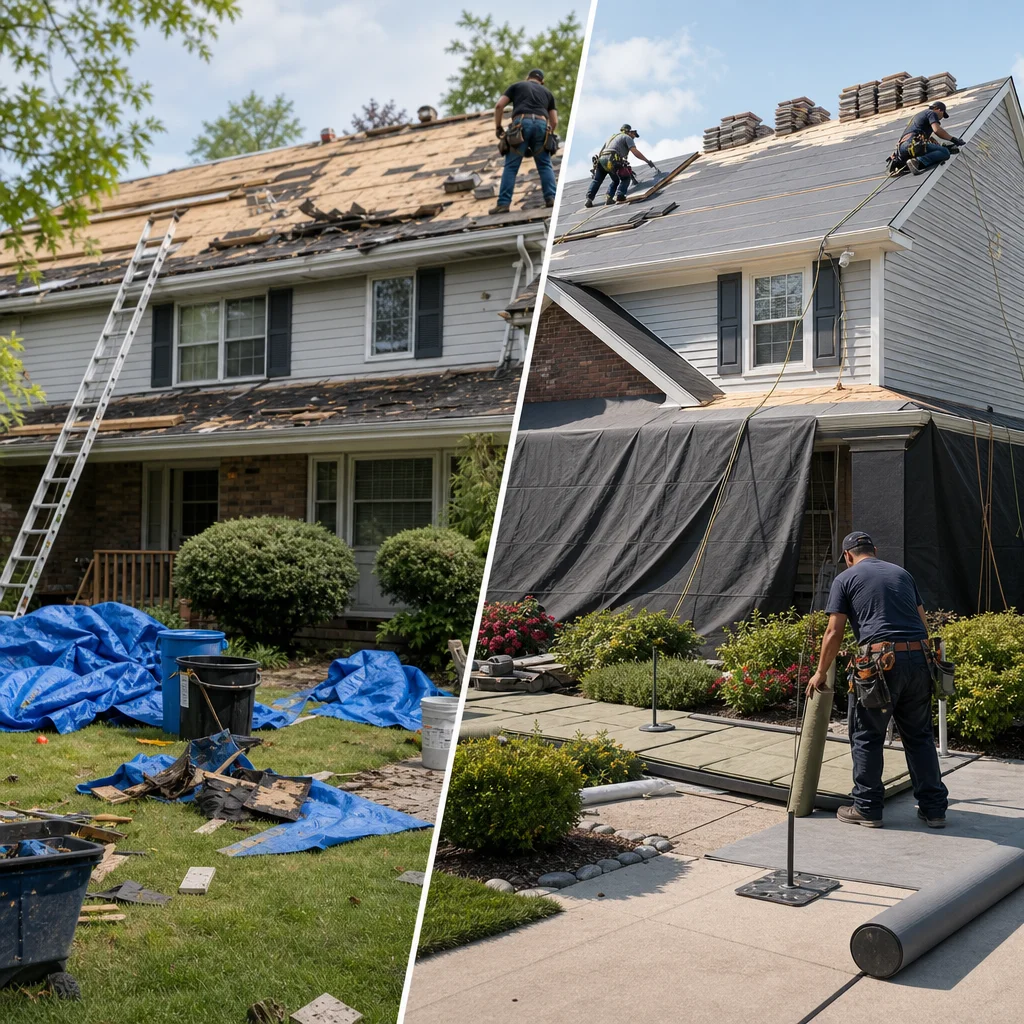
DIY Roof Preparation vs Professional Preparation: Which Approach Protects Your Property
Understanding the Roof Replacement Challenge
A roof replacement isn’t just about removing old shingles and installing new ones. The preparation phase sets the foundation for everything that follows: the quality of the installation, the timeline, the safety of your property, and ultimately, how long your new roof will protect your home or commercial building.
Many property owners in Brookfield and surrounding areas underestimate how much happens before our crews actually touch the roof. Preparation involves securing the property perimeter, protecting landscaping and outdoor structures, managing debris safely, and ensuring the site is ready for the crew to work efficiently. Get this wrong, and you’re looking at damaged gardens, safety hazards, project delays, and surprise costs.
The core question isn’t whether preparation matters. It’s whether you can handle it yourself or whether professional preparation is worth the investment. We’ve worked with hundreds of property owners who’ve tried both approaches, and the data tells a clear story about which one actually protects your property.
DIY Preparation: Common Mistakes Property Owners Make
When property owners decide to prepare their property themselves before a roof replacement, they typically focus on the obvious tasks: clearing the yard, moving vehicles, and maybe stacking up supplies. What they often miss are the critical details that separate amateur preparation from professional-grade readiness.
The landscaping oversight. Most homeowners think about moving patio furniture and plants from the immediate work zone. What they don’t anticipate is the trajectory of debris. Roof nails, shingle pieces, and material scraps don’t fall straight down. Wind, the angle of the roof, and the force of removal send debris 15 to 20 feet from the house in multiple directions. We’ve seen DIY preparers discover this the hard way when their gardens, decorative plants, and landscaping investments end up with puncture wounds from roofing nails.
Inadequate edge protection. Professional preparation requires protective barriers. Tarps need to be properly anchored, not just casually draped. Ground coverings must extend far enough and be secured so they don’t shift during the project. When property owners skip this or do it incompletely, vehicles parked nearby get scratched, gutters get damaged during the work, and the ground becomes a hazard for anyone walking the property.
Underestimating debris volume. A typical residential roof generates hundreds of pounds of old materials. Shingles, underlayment, flashing, and nails create more debris than most people estimate. Without proper containment and disposal logistics set up beforehand, this creates a safety issue and extends cleanup time significantly.
Missing structural hazards. Before we begin work, we inspect for objects around the property that could be in the way or at risk: air conditioning units, satellite dishes, vent stacks, and utility lines. Property owners often don’t realize these exist or forget to mention them. This leads to our crew having to stop, adjust, and work around obstacles that should have been identified earlier.
Neglecting interior protection. Preparing the exterior is only half the story. Older roofs may have gaps, and the removal process creates vibration. We prepare the attic or upper floors to catch any debris that finds its way inside and to minimize dust. DIY preparers often skip this entirely, resulting in interior mess.
Action item: Before assuming you can handle preparation yourself, walk your entire property perimeter and look upward and outward. Mark anything within 25 feet of the roof edge. Count how many steps it takes to move each item. Then multiply that effort by the fact that professionals do this while managing a full project timeline.
Our Professional Preparation Process: Why It Matters
Our preparation process begins before our teams ever arrive at your property. We conduct a detailed site survey, map out work zones, and create a customized protection plan specific to your property’s layout, landscaping, and structures.
Here’s what we actually do:
Comprehensive site mapping. We photograph and document the entire perimeter, noting trees, gardens, driveways, utilities, and any structures near the work zone. This becomes our reference guide for protecting each area appropriately.
Debris containment setup. We deploy tarps, plywood barriers, and temporary fencing as needed. These aren’t generic solutions. A small suburban lot needs different containment than a corner commercial property. We size and position everything based on roof pitch, prevailing winds, and proximity to neighboring properties.
Landscaping protection plan. Delicate plants get wrapped. Larger trees and shrubs get temporary barriers. We identify items that should be moved completely versus those that can stay with protection. This attention prevents the garden damage that turns a smooth project into a restoration nightmare.
Access route clearing. Our crews need clear, safe pathways to move materials, equipment, and themselves. We map loading zones, identify the safest entry points, and ensure nothing will be in the way when the project begins. This saves hours during the actual work.
Interior prep and dust control. We inspect the attic space, seal attic access points temporarily to prevent debris migration, and set up dust control measures. In commercial settings, we coordinate with facility operations to ensure interior work areas remain protected.
Utility and obstruction documentation. We locate and mark all roof penetrations, vents, chimneys, and anything attached to the roof before work begins. This prevents costly mistakes and keeps the project moving smoothly.
The investment in this preparation phase directly determines whether your project stays on schedule and whether your property comes through it without damage. This is why we don’t rush it.
Protecting Your Landscaping and Property: DIY vs Expert Approach
Your landscaping represents years of growth and significant investment. A poorly prepared roof replacement can destroy it in a single day.
Here’s how the approaches differ in real terms:
DIY approach: Most property owners move what they can reach and hope for the best. Maybe they put up a tarp. If debris lands in the garden, it lands. If a nail punctures a plant pot or damages irrigation systems buried underground, that’s a cost realized after the fact. We’ve talked to homeowners who spent $500 to $2,000 replacing damaged plants and fixing underground water lines after their DIY-prepared roof replacement.
Our approach: We treat landscaping protection as a core part of the job. We use professional-grade tarps, not blue plastic sheeting from a hardware store. We anchor them properly so wind doesn’t shift them during the work. We position ground coverings to catch debris before it reaches plantings. For high-value landscaping, we stage equipment to create additional barriers. We also carry comprehensive liability insurance, so if something does get damaged despite precautions, it’s covered.
The practical difference: After our preparation, your landscaping looks undisturbed when we’re finished. Your plants, irrigation systems, and decorative elements are exactly where you left them. This isn’t luck. It’s the result of intentional preparation based on years of experience understanding how debris travels and where risks hide.
Real example: We recently prepared a Brookfield property with mature hostas, azaleas, and a built-in irrigation system. The DIY instinct would have been to move the patio furniture and hope. Our preparation created a multi-layer defense: a perimeter tarp system anchored to prevent shifting, temporary fencing to keep debris from reaching the planting beds, and documented photos showing the pre-project state of everything. When debris did fall, it landed on the tarps. The landscaping remained pristine.
This kind of protection pays for itself the moment you avoid one significant repair.
Timeline and Disruption: Comparing Self-Preparation to Our Streamlined Method
A roof replacement is disruptive by nature. But the level of disruption depends largely on how well the property is prepared.
DIY preparation timeline: Property owners typically prepare the day before or morning-of the project. This means scrambling to move items, figuring out what should go where, and making lastminute decisions. When the crew arrives, they often find obstacles they didn’t anticipate, and adjustments eat into their working hours. A project that should take 1.5 to 2 days stretches to 2.5 or 3 days because time is lost to problem-solving rather than production.
Our preparation timeline: We begin our prep work days in advance. The property is secured, protected, and ready when our installation crew arrives. They can start immediately and work efficiently without stopping to address obstacles or move items out of the way. This compressed timeline means less disruption to your business (if commercial) or household (if residential), less noise spanning multiple extra days, and faster completion.
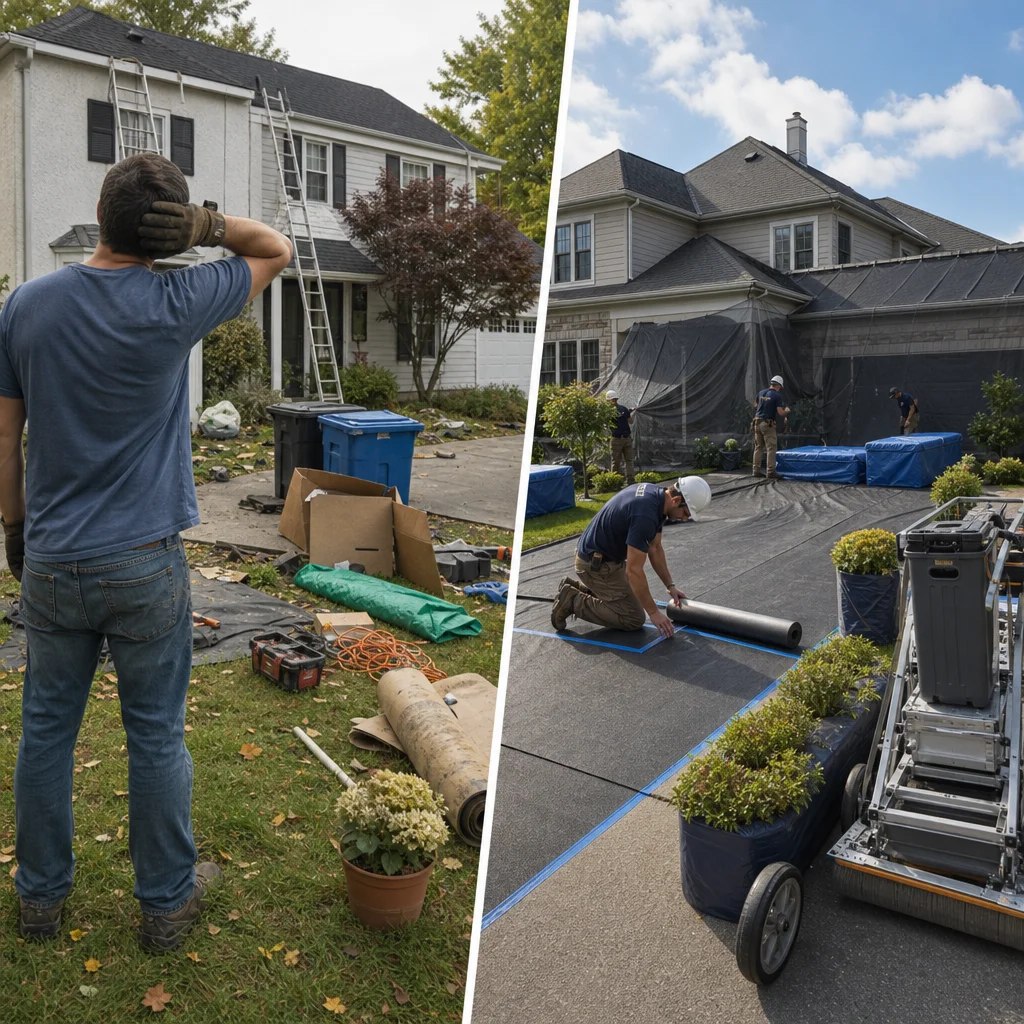
When we handle both preparation and installation, the total project duration is actually shorter than when property owners do DIY prep. This is counterintuitive but true because professional preparation eliminates delays.
Beyond timeline, consider the personal disruption. DIY preparation often means you’re outside for hours the day before dealing with logistics. Our preparation means you can go about your day normally. We handle it. When the crew arrives, everything is already set. You don’t spend your time moving your own belongings around; you spend it knowing your property is being handled by professionals who’ve done this hundreds of times.
For a deeper understanding of what to expect, our guide to exterior replacement timelines walks through realistic project pacing so you can plan accordingly.
Cost Implications of Improper Preparation
Here’s the financial reality that often surprises property owners: DIY preparation looks cheaper upfront but frequently costs more in the long run.
Apparent savings: If you handle your own preparation, you’re not paying for that labor. Rough estimate: professional preparation adds 4 to 8 hours of labor to a project. At typical rates, that’s $400 to $800 depending on property complexity.
Hidden costs of doing it yourself:
- Landscape damage repair: $500 to $3,000+
- Damaged landscaping replacement: $200 to $1,500+
- Interior cleanup from debris migration: $100 to $500
- Damaged gutters or soffit from improper protection: $300 to $1,000
- Extended project timeline due to crew adjustments: +$500 to $1,500 in labor
- Neighbor property damage (liability): Potentially $1,000+
We’ve consulted with property owners who paid $800 upfront to avoid professional preparation and then spent $2,500 in damage repair afterward. The math doesn’t work.
Cost of professional preparation:
Professional preparation prevents these downstream costs. We handle everything correctly the first time. You avoid damage claims, extended timelines, and post-project repairs. The upfront cost is actually an investment that saves you money overall and protects your property value during the work.
When you factor in liability protection, insurance coverage during the project, and the elimination of damage repair costs, professional preparation typically pays for itself.
How We Ensure Your Property is Ready
Our preparation methodology has been refined over hundreds of residential and commercial roof replacements. Here’s specifically how we ensure your property is ready:
Pre-project site visit and documentation. We visit your property before scheduling installation. We photograph conditions, measure distances, identify obstacles, and meet with you to understand any specific concerns. This visit generates a detailed preparation plan specific to your property.
Customized protection systems. We don’t use one-size-fits-all solutions. A residential home in a tight subdivision needs different protection than a commercial building on a larger lot. We design the containment and barrier system for your specific situation.
Day-before preparation execution. Our crew arrives the day before installation to set up. Tarps are deployed and anchored. Ground coverings are positioned. Landscaping is protected. Barriers are established. Equipment is staged. Everything is documented with photos.
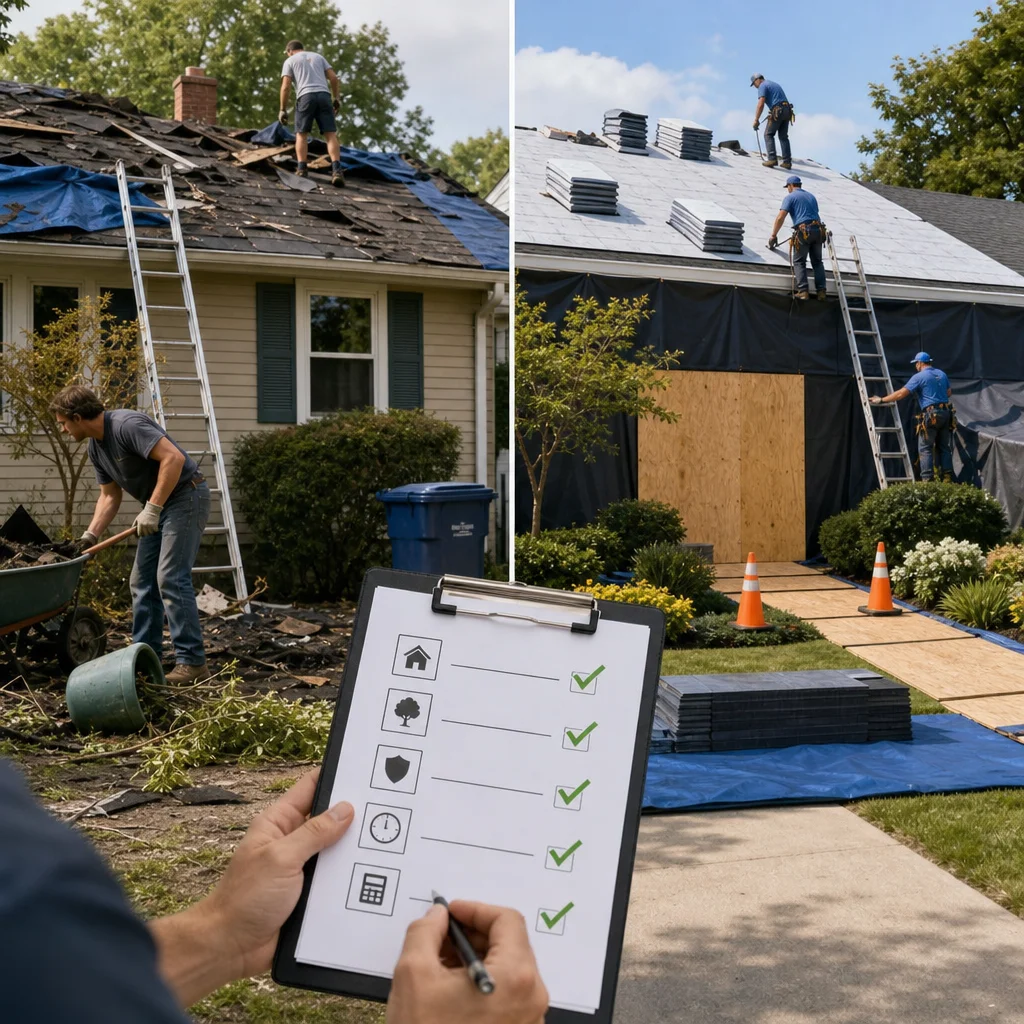
Final walkthrough with you. Before our installation crew arrives, we do a final check with you. You can point out anything we should double-check, any concerns about neighbors, or any items we might have missed. This is your chance to ensure we understand your priorities.
Communication protocol. Our crew has specific instructions about where debris is contained, what’s off-limits, and what areas must remain clear. There’s no guesswork on site.
Post-project restoration. We remove all protection systems, sweep and inspect the property, and verify that everything is back to normal condition. We don’t leave until you’re satisfied with both the roof and the property condition.
We also maintain comprehensive liability and property damage insurance throughout the process, so you’re protected if anything unexpected occurs despite our planning.
Why Our Comprehensive Preparation Approach Wins
The choice between DIY and professional preparation isn’t really a choice at all when you look at outcomes.
Property owners who handle their own preparation are trading a few hundred dollars of upfront cost for significant risk. They’re hoping their instincts about debris trajectory and protection are correct. They’re betting that nothing unexpected happens. They’re managing the work themselves while also managing a construction project. And when something goes wrong—and it often does—they’re dealing with damage during or after the project rather than preventing it.
Our comprehensive preparation approach is built on this reality: We’ve seen what goes wrong. We’ve learned from dozens of projects. We’ve developed systems that work because they’re based on actual experience, not guesswork.
When you work with us, you’re not just getting a roof replacement. You’re getting a complete property protection system that begins before installation starts and ensures that nothing about your home’s exterior, landscaping, or interior is negatively impacted by the work.
The result: A new roof installed on schedule, your property undamaged, your landscaping intact, your interior clean, and your total project cost actually lower than if you’d tried to DIY it and dealt with the consequences.
This is why professional preparation isn’t an upsell. It’s the foundation of doing the job right.
Taking the Next Step With Expert Exteriors
If you’re planning a roof replacement for your residential or commercial property in Brookfield or the surrounding areas, the first step is scheduling a site visit with our team. We’ll assess your property, create a customized preparation plan, and provide a clear estimate for the complete project including professional preparation.
We don’t push you into anything. We explain what preparation your specific property needs and why. Then you can make an informed decision knowing exactly what you’re getting and what it costs.
Our goal is straightforward: Deliver a new roof that lasts decades, execute the project on schedule with minimal disruption, and ensure your property comes through the work in perfect condition.
Contact us today to schedule your property assessment. Let’s talk about your roof replacement project and how we can handle the preparation so you don’t have to worry about it.
Expert Exteriors specializes in residential and commercial roof replacement, and we’ve made professional preparation a core part of how we work. When you’re ready to move forward, we’ll be here to protect your property every step of the way.
For further reading: Residential roof replacement guide, Roof replacement cleanup.