

DIY Fascia and Soffit vs. Professional Contractor: Why Expert Exteriors Wins
The Critical Difference: DIY vs. Professional Installation
When you’re facing worn-out fascia or rotting soffit, the temptation to grab some tools and tackle it yourself is real. It looks straightforward enough from the ground. But fascia and soffit replacement involves more than just removing old boards and nailing up new ones. We’ve seen the consequences of DIY attempts firsthand, and they’re usually expensive to fix. Here’s what you need to know about why professional installation matters for your home’s exterior.
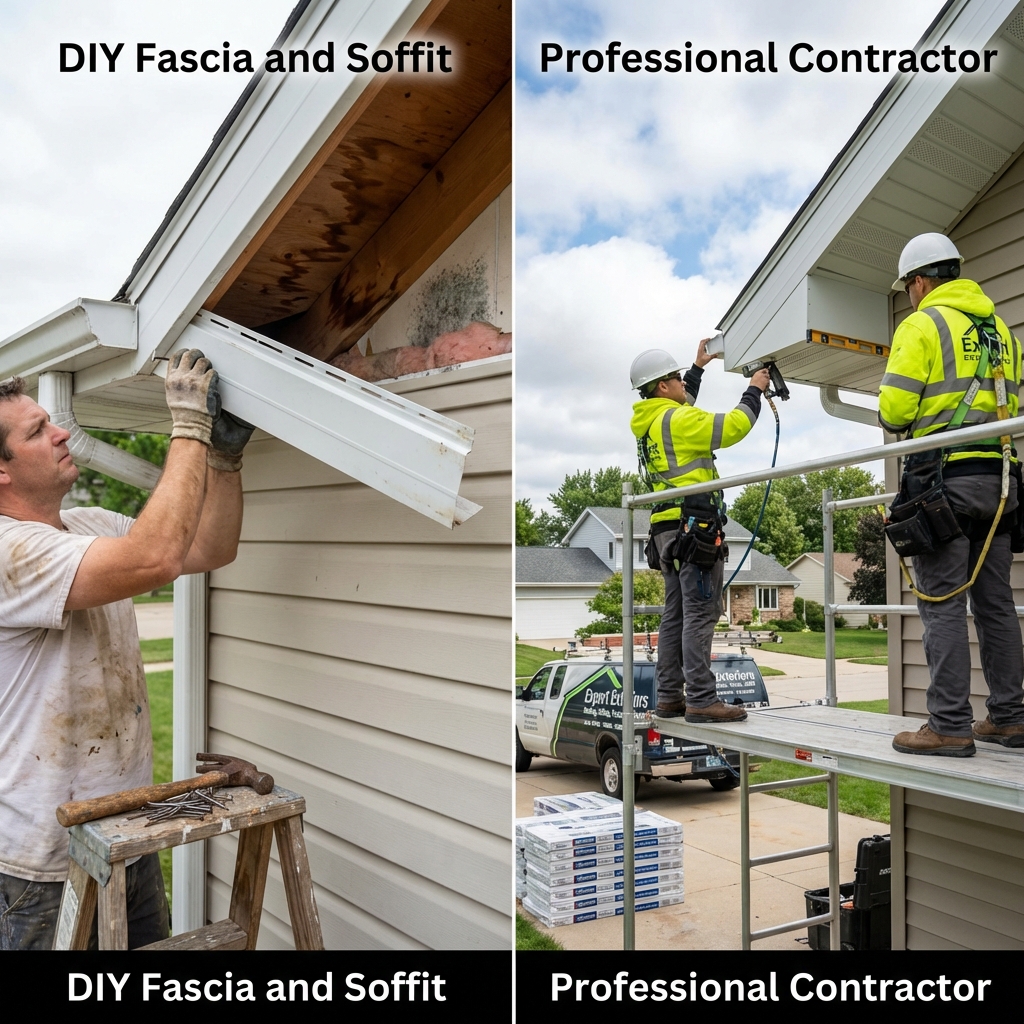
The gap between a DIY fascia and soffit job and a professional installation comes down to precision, safety, and longevity. When you attempt this work yourself, you’re dealing with high-altitude work that requires proper scaffolding, specialized tools, and knowledge of building codes specific to Wisconsin’s climate. One misstep means a fall, an improperly sealed joint that invites water damage, or materials installed in the wrong sequence.
We approach fascia and soffit replacement as a critical protective system, not a cosmetic upgrade. Our crews understand how water moves across your roofline, how materials expand and contract with temperature changes, and how to seal joints so moisture never gets behind your siding. A professional installation typically lasts 20-30 years with minimal maintenance. A DIY job often shows problems within 5-7 years.
Cost matters, and we get it. A DIY approach might save $2,000-$4,000 upfront. But when water penetrates behind improperly installed soffit and begins rotting your fascia boards, your rim joist, and eventually your wall framing, you’re looking at $15,000-$30,000 in structural repairs. That’s the real cost comparison.
Your next step: Evaluate whether you’re prepared to work at heights using proper fall protection and whether you have access to the specialized tools required, including pneumatic nailers, metal brake equipment, and water-sealing materials rated for Wisconsin winters.
Why Fascia and Soffit Matter to Your Home’s Protection
Your fascia and soffit are quietly protecting everything beneath them. Fascia is the horizontal board running along the edge of your roofline, directly under the gutter system. Soffit is the horizontal material connecting the fascia to your home’s wall. Together, they create a sealed barrier that prevents water, pests, and weather exposure from entering your home’s attic and structural framework.
When fascia deteriorates, gutters can sag or separate from your roofline. This causes water to spill behind the fascia instead of flowing through the gutter system, pooling against your walls and foundation. Soffit problems are equally serious. Damaged or missing soffit allows birds, squirrels, and insects direct access into your attic space, where they can damage insulation, chew wiring, and contaminate your living space.
We’ve documented countless cases where soft, spongy fascia boards indicated water damage had already begun compromising the rafter tails and structural rim joist. By the time homeowners noticed peeling paint or soft spots, the damage had been developing for years. Fascia and soffit replacement is preventative maintenance that stops this cycle before it starts.
Our fascia and soffit services include assessment of the underlying structure. If we identify damage beyond surface replacement, we address it during the project so you’re not surprised by additional costs later.
What to do: Have your fascia and soffit inspected annually. Look for soft spots, peeling paint, visible gaps where soffit meets the wall, or daylight showing through cracks in the fascia. These are all signals that professional replacement is needed soon.
Expertise and Training: Our Professional Advantage
Our crews complete ongoing training in manufacturer specifications, regional building codes, and best practices for Wisconsin’s specific climate. We work in freeze-thaw cycles that expand and contract materials constantly. Improper installation fails quickly under these conditions. Professional training teaches us how to account for this reality.
We understand the relationship between roof pitch, gutter slope, and how fascia boards must be cut and installed to direct water flow correctly. We know which materials work best in different sun exposures and how to flash transitions between siding types. We’re familiar with fascia-to-soffit connections that prevent moisture from creeping back into the wall cavity.
Training also covers safety at height. We use proper scaffolding, harnesses, and ladder techniques. Insurance requirements alone demand certified installation crews. A single fall while working on DIY fascia and soffit replacement can result in permanent disability and medical costs that dwarf any project savings.
Beyond the technical side, our experience means we diagnose problems accurately. We’ve identified hidden water damage, improper ventilation, and structural weaknesses that untrained eyes miss. This diagnostic capability prevents surprise problems after your project is complete.
Action item: When comparing contractors, ask about crew certifications, training programs they participate in, and whether they carry liability insurance. These aren’t just formalities; they indicate companies that maintain professional standards.
Quality Materials and Proper Installation Techniques
We source materials from manufacturers who understand regional requirements. Our fascia boards come in vinyl, fiber cement, and aluminum options. Each material has different expansion rates, installation sequences, and sealing requirements. Using the wrong fasteners or sealing products can compromise the entire system.
Vinyl fascia, for example, requires fasteners with slightly oversized holes to allow for expansion. If fastened too tightly, the material buckles as temperature shifts. We install vinyl fascia with the proper fastener spacing and type. Fiber cement boards require different techniques entirely, including proper primer and paint application to prevent moisture absorption.
Soffit comes in vented and non-vented options. Vented soffit allows attic ventilation, which is critical for moisture control and preventing ice dams in winter. Non-vented soffit is used only in specific applications. We determine the correct soffit type based on your attic ventilation needs and roof design. Many DIY installations choose the wrong type, creating ventilation problems that damage your attic space.
Sealing is the component that separates professional installations from DIY attempts. We use rubberized sealants at all joints and transitions, including where the soffit meets the fascia, where new materials meet existing siding, and at gutter connection points. These sealants remain flexible through Wisconsin’s temperature swings and prevent water from finding pathways into your structure.
Next step: Ask any contractor about the specific materials they plan to use, why they selected them, and how they’ll seal the system. Generic answers suggest they’re not thinking through your specific installation.
Long-Term Durability and Warranty Protection
We stand behind our work with a 15-year workmanship warranty on fascia and soffit replacement. This warranty covers material defects within manufacturer specifications and any installation issues that cause failure. It’s not available when you DIY. You’re completely on your own.
Our warranty is backed by liability insurance and our reputation in the Brookfield community. If something fails within that 15-year window due to our installation, we make it right. We’ve been in business long enough to honor warranties without issue because our installation quality is proven.
Beyond warranty, professional installation typically costs less to maintain long-term. Properly sealed joints don’t develop leaks. Correct material selection means no premature deterioration. Proper ventilation setup prevents the condensation and moisture issues that damage fascia from the inside out.
A DIY installation that develops problems in year three or four leaves you with three options: tear it all out and redo it correctly (expensive), attempt repairs that usually make things worse, or ignore it and deal with structural damage later. None of these are good outcomes.
Consider this: Calculate the cost of professional replacement plus the peace of mind of a 15-year warranty against the risk of DIY problems appearing just outside your initial investment recovery period. The warranty isn’t just insurance; it’s proof we’re confident in our work.
Time Efficiency and Project Management
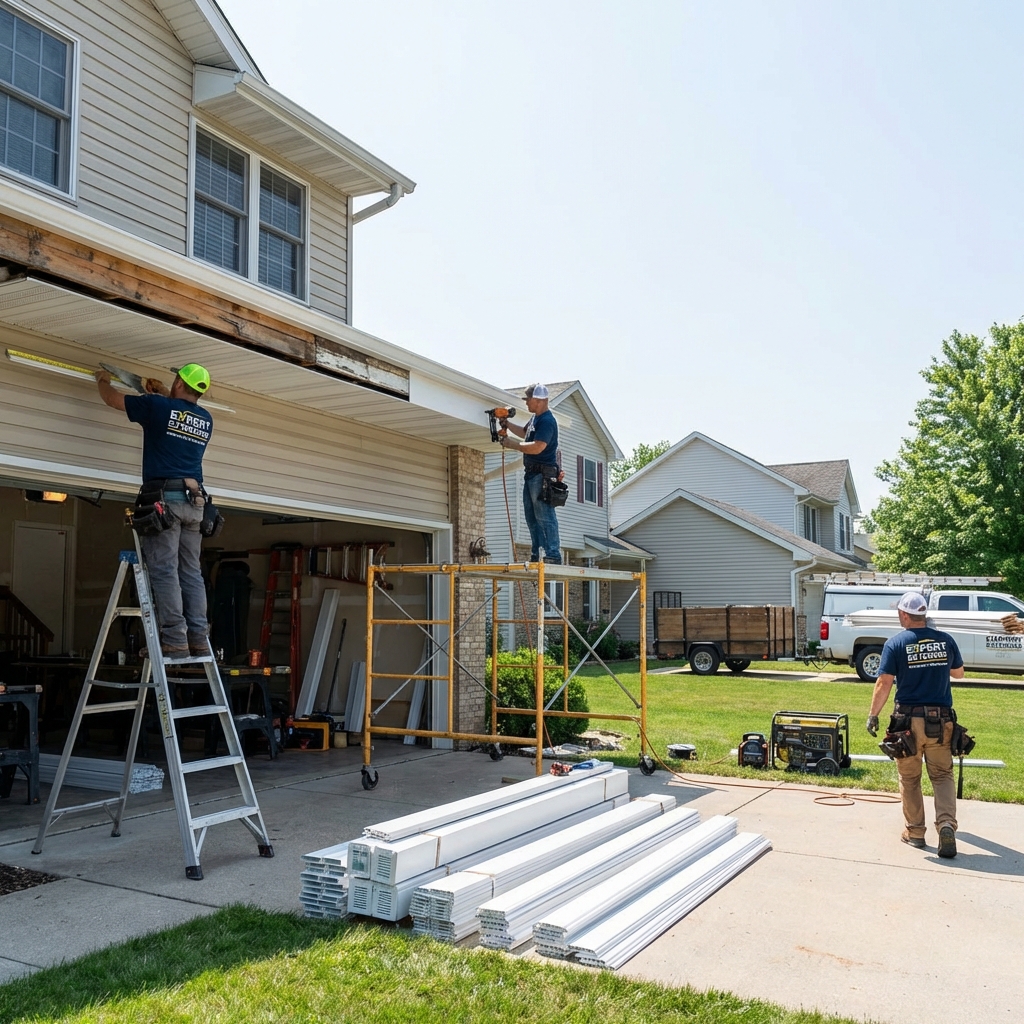
A professional fascia and soffit replacement on a typical residential home takes 3-5 days with our crew. We show up with all materials, equipment, and crew members needed to complete the work without delays. You’re not running to supply stores, waiting for parts, or juggling other projects while your fascia replacement drags on for weeks.
Time efficiency matters because your home is exposed during replacement. Open soffit vents without screens, temporary gaps, and exposed fasteners are vulnerable to weather and pests. Completing the work quickly minimizes this exposure window. Professional crews also work in organized sequences, protecting existing landscaping, managing debris, and preventing damage to surrounding areas.
Project management includes coordination with other trades if your fascia and soffit work connects with gutter installation, siding replacement, or roof work. We schedule these systems to work together, ensuring proper transitions and avoiding rework. DIY attempts often miss these dependencies, resulting in mismatched materials or installation sequences that create problems.
We also handle permits if required by your municipality. Fascia and soffit replacement sometimes triggers permit requirements depending on the scope and location. We know what applies in your area and manage that process transparently.
What you should do: Request a project timeline from any contractor before hiring. A clear schedule shows they’ve thought through the work and can commit to realistic completion dates.
Why We’re Your Best Choice for Fascia and Soffit Replacement
We’re not just a roofing company that occasionally does fascia and soffit work. We’ve made it a core service because we understand it’s essential to home protection. When we’re installing new roofing or replacing siding, fascia and soffit work is integrated into the overall exterior protection system.
Our experience across multiple exterior disciplines gives us perspective other contractors lack. We see how roof design affects fascia requirements. We understand how different siding materials interact with soffit systems. We’ve developed relationships with material suppliers that keep our costs reasonable while maintaining premium quality.
We operate exclusively in the Brookfield and surrounding areas, which means we understand local building codes, regional weather patterns, and the specific challenges homes in Wisconsin face. We’re not a national franchise applying generic solutions. Our crews work in your community, and our reputation depends on quality work that lasts.
We also offer gutters and fascia maintenance services for ongoing protection after replacement. This continuity of care means we monitor your installation long-term and can catch minor issues before they become problems.
Our advantage: Local expertise, integrated exterior knowledge, and a proven track record in Wisconsin’s climate and building environment.
Common Installation Mistakes to Avoid
The most common DIY mistake is improper flashing at the transition between fascia and existing gutters. Water finds every gap. If the fascia isn’t sealed correctly to the gutter’s back edge, water penetrates immediately. We’ve removed fascia boards just three years old because water worked its way behind improperly sealed connections.
Another frequent error is installing soffit without adequate ventilation or venting it incorrectly. Soffit should allow attic air to flow freely. Blocked or poorly designed soffit ventilation creates moisture accumulation in the attic, promoting mold growth and rotting roof decking. Some DIY installations completely block soffit vents with insulation or fail to provide complementary ridge ventilation.
Fastener choices trip up many DIY installers. Using standard roofing nails instead of ring-shank or spiral fasteners means fascia boards work loose as they expand and contract. Using pneumatic fasteners without proper spacing causes buckling. Using too many fasteners creates stress points where material tears or splits.
Material selection errors are equally common. Choosing vinyl fascia because it’s inexpensive, then failing to account for its expansion characteristics, results in separation and buckling within the first winter. Selecting non-vented soffit when your roof design requires ventilation creates the condensation problems we mentioned.
Improper pitch or slope on new fascia can cause water to pool and drain backward toward the house instead of toward the downspout. This subtle mistake is invisible until water damage appears inside your attic.
Key takeaway: These aren’t just cosmetic failures. Each of these mistakes leads to water damage that compromises your home’s structural integrity.
Our Process Ensures Superior Results
We start every fascia and soffit project with a thorough assessment. We measure all dimensions, identify areas of existing damage, and evaluate the underlying structure’s condition. We photograph everything so we can show you exactly what we found and explain what needs replacement versus repair.
Next, we create a detailed quote breaking down materials by section, labor for each phase, and a clear timeline. We don’t hide surprises. If our assessment indicates rot or additional work is needed, we show you photos and explain why it matters before proceeding.
Material selection comes next. We present options with honest trade-offs. Vinyl fascia costs less but may not match wood siding aesthetics. Fiber cement is more durable and matches better but costs more and requires specialized installation. We guide you to the choice that fits your home and budget while meeting Wisconsin weather requirements.
Installation follows a strict sequence. We remove old fascia and soffit carefully, preserving gutters if they’re still serviceable. We inspect and repair any structural damage to rafter tails or rim joists. We install new materials using proper spacing, fastener types, and sealing products. We flash every transition. We vent every soffit opening correctly. We paint or stain as required.
Finally, we clean up completely, haul away all debris, and provide you with documentation of the work, materials used, and warranty details.
Expect this: A professional installation process that’s organized, transparent, and protective of your time and property.
Get Your Professional Fascia and Soffit Replacement Today
The DIY fascia and soffit approach feels like a cost-saver until something goes wrong. Water damage in your walls, mold in your attic, and rotted structural members aren’t worth the short-term savings. When we install your fascia and soffit, we’re investing in a system that protects your home for the next two decades.
We’re ready to assess your current fascia and soffit condition and provide you with a detailed proposal. Our crews schedule projects efficiently, complete them professionally, and stand behind the work with a 15-year warranty.
Contact Expert Exteriors today to schedule your free evaluation. Let us show you why professional installation is the only smart choice for fascia and soffit replacement in Brookfield and the surrounding areas.