
Complete Roofing Bid Comparison Guide: What You Need to Know About Costs
Why Roofing Bids Vary So Dramatically Across Contractors
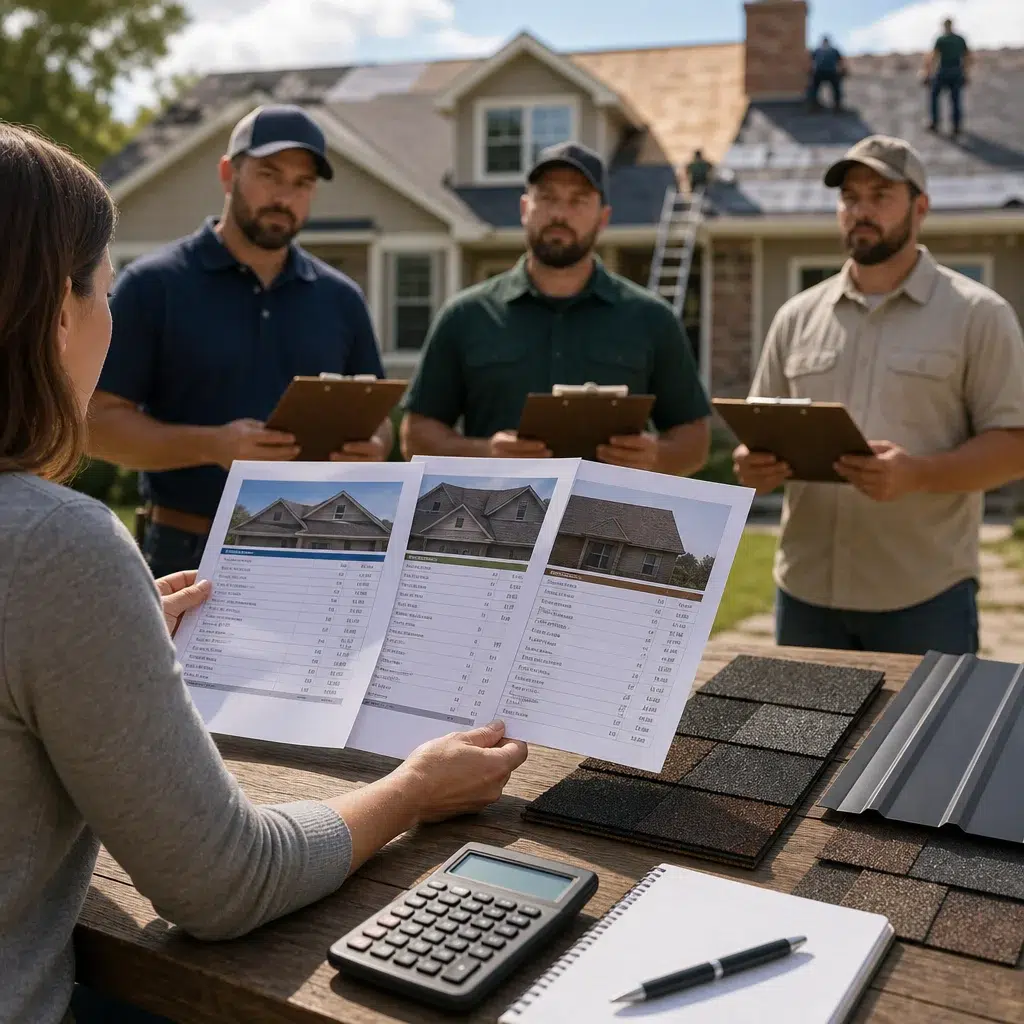
When you’re getting ready to replace your roof, the bids you receive can swing wildly. One contractor quotes $8,500. Another says $14,200. A third comes in at $11,800. Before you panic or assume the lowest price is your best deal, understand that these differences reflect real variations in scope, quality, and approach. We’ve helped hundreds of property owners in Brookfield navigate this exact confusion, and the key is learning what actually drives those numbers.
Roofing contractors operate with different business models, overhead structures, and material sourcing strategies. A small local operation might work more efficiently on straightforward jobs, while a larger company carries higher insurance, administrative, and equipment costs. Some contractors include extensive prep work and cleanup in their base price. Others treat those as line-item additions that catch you off guard later.
The contractor’s experience level also plays a role. Someone with decades of specialized roofing experience typically prices differently than a general handyman who does roofing on the side. That’s not always reflected in the bid format, which is why side-by-side comparison can feel impossible.
Geographic location, seasonal demand, and the contractor’s current workload matter too. A contractor booked solid through summer might quote higher to manage capacity. One with open slots in spring might be more aggressive on pricing to keep the crew busy.
The most important takeaway: a lower bid doesn’t mean better value, and a higher bid doesn’t always mean better quality. The difference usually reflects what’s actually included, who’s doing the work, and what promises back it.
Your action: Collect at least three bids from contractors with verifiable local experience before making any comparison.
Key Factors That Impact Your Roofing Project Cost
Several concrete factors drive your final roofing bill. Roof size matters most; a 2,000 square foot roof costs more to replace than a 1,500 square foot roof, but not proportionally more because certain fixed costs don’t scale. Pitch and complexity come next. A simple gable roof costs less than one with dormers, multiple valleys, or intricate angles that slow installation and increase waste.
Local building codes and permit requirements influence pricing too. Wisconsin has specific requirements for ice damming prevention and ventilation that some contractors price conservatively into estimates. Your existing roof condition affects labor hours significantly. Removing a rotted or deteriorated roof takes longer than stripping clean shingles.
Weather exposure, existing structural issues, and accessibility all get factored in. A roof that’s easy to access from a truck-mounted ladder costs less than one requiring complicated staging or safety equipment. If the contractor discovers hidden damage during removal, that gets added as a change order unless your estimate specifically addressed it.
One often-overlooked factor: your location within the service area. Contractors traveling 45 minutes each way budget differently than those working five minutes from their shop.
Your action: Before getting bids, know your exact roof square footage, measure the pitch if possible, and document any visible damage or complexity that contractors should see.
Understanding Labor Costs in Roofing Replacement
Labor typically represents 40 to 60 percent of your total roofing bill. A crew’s speed, skill level, and the job’s complexity determine how many hours get charged. Expert roofers move faster not because they cut corners, but because they’ve developed efficient systems and avoid mistakes that require rework.
Crew size varies by contractor philosophy. Some use three-person crews that specialize in roofing. Others rotate crews between roofing, siding, and gutter work. Specialized crews typically work faster and produce more consistent quality, which gets reflected in pricing.
The removal and disposal of your old roof represents a substantial labor chunk, sometimes 20 to 30 percent of the total job. Some contractors dispose of materials themselves. Others contract that out. Some charge by the weight of debris removed. Others use flat-rate disposal included in the bid. These differences create price gaps that look bigger than they actually are.
Weather delays factor into labor estimates differently too. A contractor who pads the schedule for rain days builds that into the price. One who operates tighter might charge more for expedited completion if weather forces overtime.
Your action: Ask each contractor how long their crew has worked together and what their typical crew size is. Request a breakdown showing labor hours separately from materials.
Material Selection and Quality Differences That Affect Price
Your choice of roofing material drives cost more than almost any other single factor. Basic asphalt shingles run $3 to $5 per square foot installed. Premium architectural shingles cost $4 to $7. Metal roofing ranges from $7 to $12. Slate or specialty materials push into $15+ territory. These aren’t arbitrary markups; they reflect real differences in durability, lifespan, and installation complexity.
Within each material category, quality varies substantially. Not all asphalt shingles perform equally. A 25-year three-tab shingle differs dramatically from a 50-year architectural shingle in tear resistance, wind rating, and how long it actually lasts before the granules wash away. Premium brands from established manufacturers carry higher costs but deliver longer service life and better appearance.
We typically recommend materials that balance longevity with budget for each property type. For residential Brookfield properties, architectural asphalt shingles offer excellent value. For commercial properties where durability and maintenance matter more, we often spec EPDM or TPO systems that require less routine service.
Underlayment quality, which sits between your decking and shingles, affects both price and performance. Budget contractors use standard felt. Quality contractors use synthetic underlayment that performs better in moisture management and outlasts traditional felt.
Your action: Don’t default to the cheapest shingle option. Calculate the cost per year of expected service life. A $7,000 roof lasting 25 years costs $280 yearly. A $9,000 roof lasting 35 years costs $257 yearly and often requires less maintenance.
How We Structure Our Transparent Bidding Process
Our approach at Expert Exteriors starts with a thorough site assessment. We measure your roof, document all conditions, identify any structural concerns, and photograph everything. This prevents the “surprise” discoveries that turn into change orders later.
We then prepare a detailed bid that breaks down materials, labor, and services separately. You see exactly what roofing material we’re specifying, the square footage, the removal and disposal cost, the installation cost, and any additional work like fascia repair or gutter replacement. We include our standard warranty terms right in the bid, not as an afterthought.
Our estimates include site-specific factors like accessibility, roof complexity, and any complications we’ve observed. If we encounter hidden damage during removal, we stop work and photograph it, then present options with firm pricing for the additional work rather than forcing you into an emergency decision.
We also specify exact timing and weather contingencies upfront. You know whether we’re quoting a three-day project or a five-day project, and what happens if rain delays us. Transparency on scheduling prevents frustration down the line.
Your action: Request a bid in writing that itemizes materials and labor separately. If a contractor gives only a total number without breakdown, ask for more detail before comparing.
Red Flags When Reviewing Roofing Quotes
Bids that seem unusually low compared to others often hide problems. We’ve seen contractors underbid significantly, then pressure homeowners into upgrades or rush through work to stay profitable. If a bid is 20 to 30 percent below market rate, something’s typically missing from the scope.
Vague language in bids raises concerns. Phrases like “standard materials,” “as needed repairs,” or “price upon inspection” suggest the contractor hasn’t done their homework or plans to adjust charges mid-project. Our bids specify exactly what material brand and type we’ll use, not generic categories.
Lack of warranty details is a major red flag. A contractor reluctant to put warranty terms in writing might not honor them afterward. We detail manufacturer coverage and our own labor warranty right in the bid.
Contractors unwilling to provide references or who’ve recently started their business deserve extra scrutiny. Roofing failures don’t show up for years sometimes, so experience matters. Check online reviews carefully, looking at patterns rather than isolated complaints.
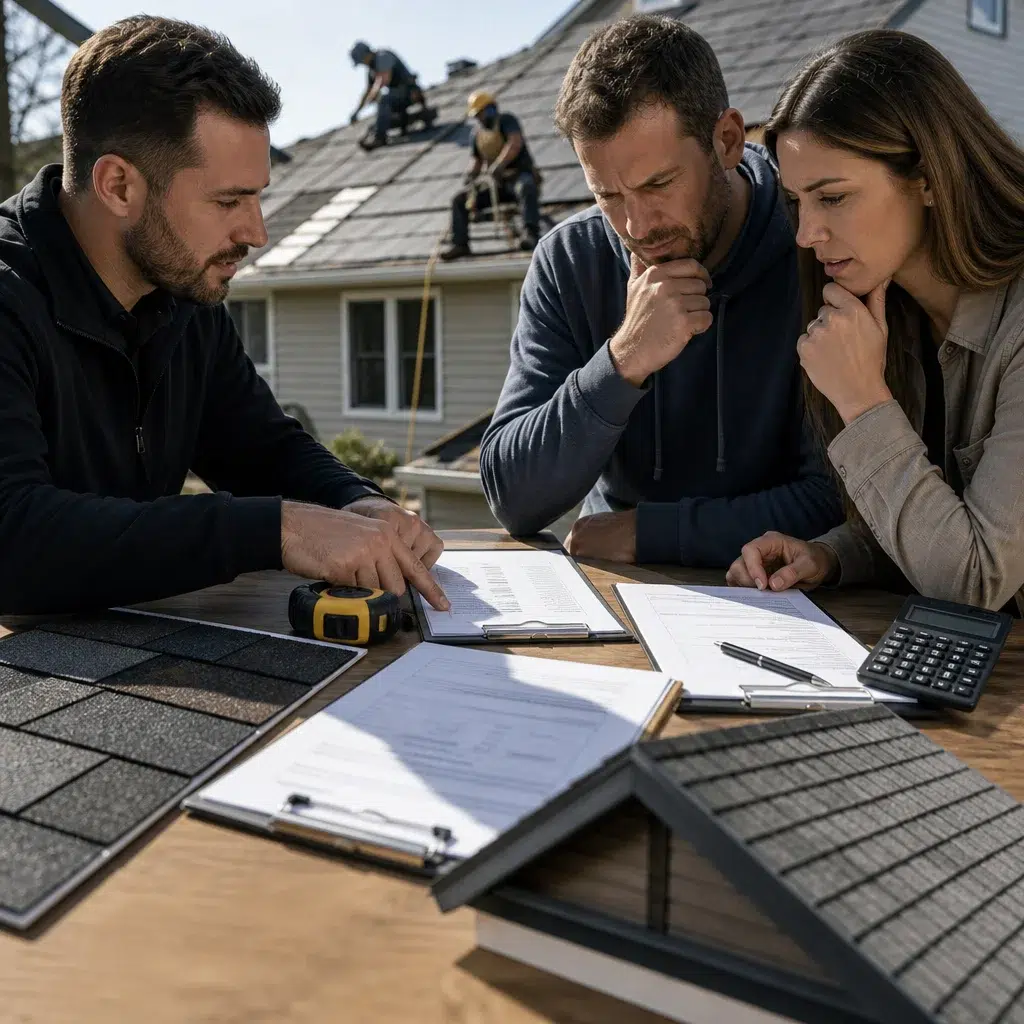
Pressure to decide quickly indicates the contractor is more focused on closing the sale than your satisfaction. Legitimate contractors understand you’re comparing options and don’t rush you.
Your action: If any bid omits material specifications, warranty terms, or a clear timeline, ask for clarification in writing before making any decision.
Questions to Ask Before Accepting a Roofing Bid
Start with basics: How long has your company been in business? Are you properly licensed and insured in Wisconsin? Can you provide three references from similar projects completed in the past two years? These establish credibility and let you verify their work.
Dig into specifics: What exact roofing material and brand are you specifying? What’s included in your labor cost? Will you handle permit acquisition or is that my responsibility? Do you warranty your installation separately from the manufacturer warranty? What’s your timeline and what happens if weather delays the project?
Ask about their process: How do you handle unexpected structural damage discovered during removal? Will you provide daily progress updates? Who handles cleanup and debris removal? What’s your payment schedule? Most legitimate contractors ask for a deposit, but not 50 percent upfront.
Clarify the scope: Are gutters included or separate? What about fascia and soffit work? Do you seal and flash penetrations? Are there any areas we haven’t discussed that might affect price?
We have a dedicated guide covering essential questions to ask your roofing contractor that walks through these in detail.
Your action: Create a checklist of questions and ask every contractor the same questions. Inconsistent answers reveal differences in how thoroughly they approach projects.
Timeline and Scheduling Impact on Your Final Cost
Rush jobs cost more. If you need your roof completed in two weeks during busy season, contractors charge premiums to bump other work or bring extra crews. Conversely, flexibility saves money. We often offer modest discounts for projects we can schedule during slower periods.
Weather significantly affects both timeline and cost. Spring and fall typically offer the most predictable working conditions in Wisconsin. Summer heat and humidity can slow crews. Winter work requires specialized practices and costs substantially more. Your bid should account for seasonal factors based on when you’re actually starting.
Sequence matters too. If your roof removal uncovers structural work, gutter replacement, or fascia repair, the timeline extends. A bid that assumes no surprises and a timeline that includes zero weather buffer sets you up for frustration and change orders.
Some contractors build cost buffers for contingencies. Others quote tight and add costs as issues arise. The way timeline and contingency are handled in your bid explains some of the price differences you’re seeing.
Your action: When comparing timelines, ask whether weather delays extend the completion date or are assumed within the quoted schedule. Get commitments in writing.
Warranty and Long-Term Value Considerations
Warranties come in layers that most property owners don’t fully understand. The manufacturer’s shingle warranty covers defects in the material itself, typically 25 to 50 years depending on the product. The manufacturer’s workmanship warranty covers installation defects, often 10 to 20 years.
Your contractor’s labor warranty backs their installation work specifically. This is separate from manufacturer coverage and reflects the contractor’s confidence in their work. We stand behind every installation with a comprehensive labor warranty that covers workmanship defects.
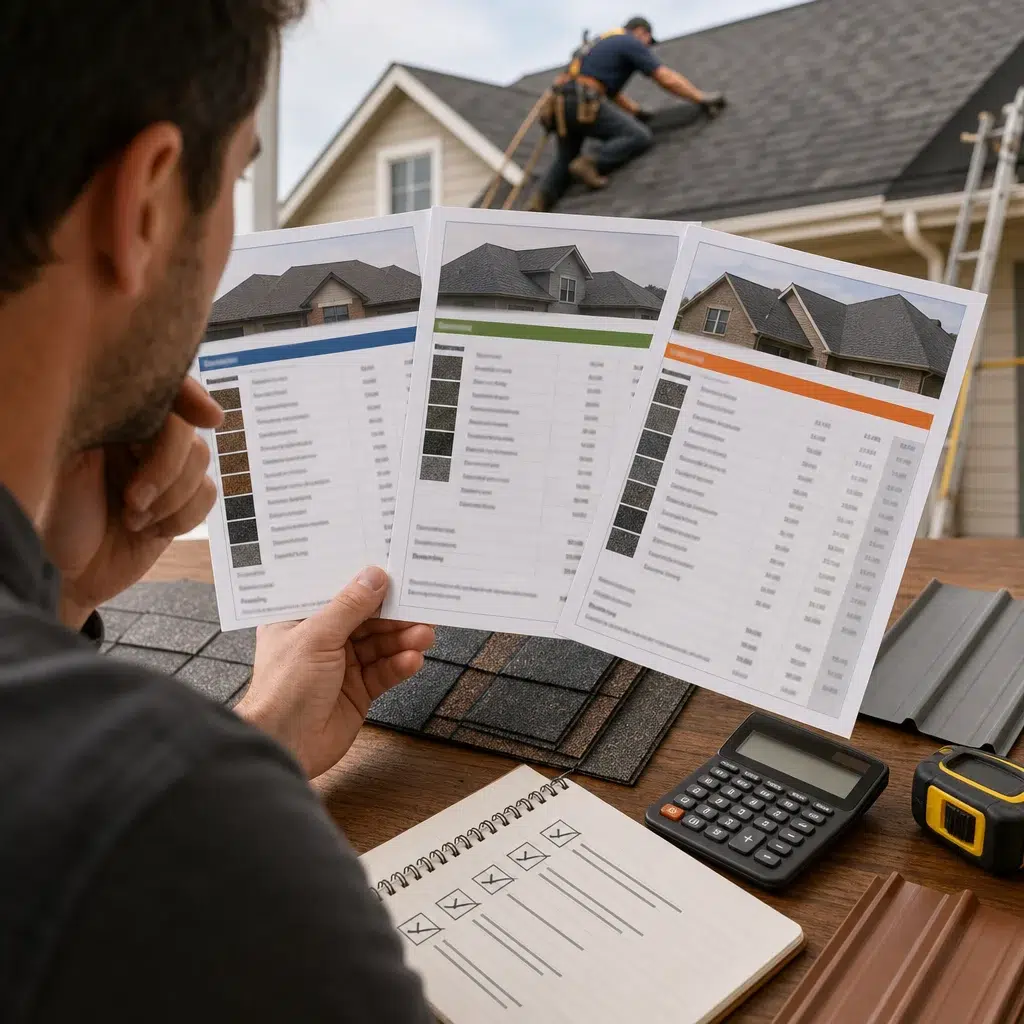
Some contractors bundle warranties together in marketing but don’t actually honor the labor component. Others clearly separate what the manufacturer covers from what they guarantee. Request warranty documents in writing as part of your bid package.
Consider the long-term value equation. A roof that requires less maintenance and lasts longer costs less over its lifetime, even if the upfront price is higher. Materials with excellent track records in Wisconsin climate conditions protect your investment better than cheaper alternatives that need frequent repairs.
Your action: Compare the total warranty package, not just the shingle warranty. Verify who honors labor warranty claims by asking contractors how they’ve handled warranty issues in the past.
Why Choosing Expert Exteriors Delivers Superior Value
We’ve served Brookfield and surrounding communities for years, building our reputation on transparent pricing and quality execution. When you get a bid from us, you’re getting a detailed breakdown from a contractor who’s completed hundreds of similar projects in your area. We know Wisconsin weather challenges. We understand local building codes. We have established relationships with material suppliers that let us source quality products efficiently.
Our bidding process includes a thorough property assessment, not just a phone estimate. We measure, inspect, photograph, and provide detailed specifications. This prevents surprises and change orders that derail other homeowners’ budgets. Our crew members specialize in roofing, not rotating between multiple trades, which means faster, more consistent quality.
We back our work with comprehensive warranty coverage on both materials and labor. If issues arise, we handle them promptly because we expect our customers to refer us to their friends and neighbors. That accountability influences every decision we make on your project.
Whether you need residential roof replacement, commercial roofing in TPO or EPDM systems, or complete roof replacement with a proven process, we deliver clarity on costs and confidence in results.
Your action: Get a detailed bid from us and compare it point-by-point with others. You’ll see exactly what separates transparent, professional roofing from the rest.
Common Mistakes Property Owners Make During the Bidding Process
The most expensive mistake is accepting the lowest bid without understanding what’s included. We’ve seen contractors underbid significantly, then cut corners or discover “hidden” damage that forces expensive change orders. The homeowner ends up paying more in total or dealing with a roof that doesn’t last.
Comparing bids line-by-line without understanding the total picture creates confusion. One contractor might bid lower on materials but higher on labor. Another includes disposal; a third charges separately. You can’t make a real comparison without translating everything to an apples-to-apples basis.
Failing to check references or verify credentials leaves you vulnerable to inexperienced or uninsured contractors. A roofer without proper insurance puts your home at risk if someone gets injured. Lack of verifiable experience means your roof might not be done to code.
Not asking clarifying questions before accepting a bid ensures problems later. “What’s included in the price?” “What happens if you find damaged decking?” “How will weather delays be handled?” These aren’t minor details; they determine whether you get what you expect.
Ignoring warranty terms costs you later when issues arise and the contractor claims they’re not responsible. Unclear warranty language creates disputes when you need protection most.
Many property owners also fail to consider total value over the roof’s lifespan. Saving $1,500 on a roof that fails five years early because it’s cheaper material actually costs you money in replacement cycles and headaches.
Your action: Before accepting any bid, have a conversation with the contractor about your concerns. Their willingness to address questions honestly indicates how they’ll handle your project.
Getting multiple bids, understanding what drives the differences, and asking the right questions transforms a confusing process into a clear decision. When you’re ready to move forward, we’re here to provide the transparency and expertise that makes choosing your roofing contractor straightforward. Contact us for a detailed assessment and bid on your roofing project.
For further reading: How to evaluate roofing bids.