
Commercial Flat Roof Assessment: When to Replace vs. Resurface Your Roof
Why Your Commercial Flat Roof Needs Professional Assessment Now
Your commercial flat roof is one of your property’s largest investments and most critical protection systems. Unlike pitched residential roofs, flat and low-slope roofing requires different maintenance strategies and materials to perform effectively. Water pooling, UV exposure, and foot traffic create unique stresses that demand specialized knowledge to address properly.
Waiting until a roof fails completely puts your entire business at risk. Leaked water can damage inventory, compromise structural integrity, disrupt operations, and create liability issues. The longer you postpone an assessment, the more likely minor problems escalate into expensive emergency repairs or total loss situations.
We recommend a professional assessment every 3-5 years for commercial properties. This proactive approach identifies issues when solutions are most cost-effective, helps you budget for future work, and protects your building envelope. A qualified contractor can determine whether your roof needs resurfacing now or replacement within the next few years, giving you time to plan accordingly.
Common Signs Your Flat Roof is Failing
Recognizing failure indicators early prevents catastrophic damage and unexpected business disruption. Here are the most common warning signs we observe:
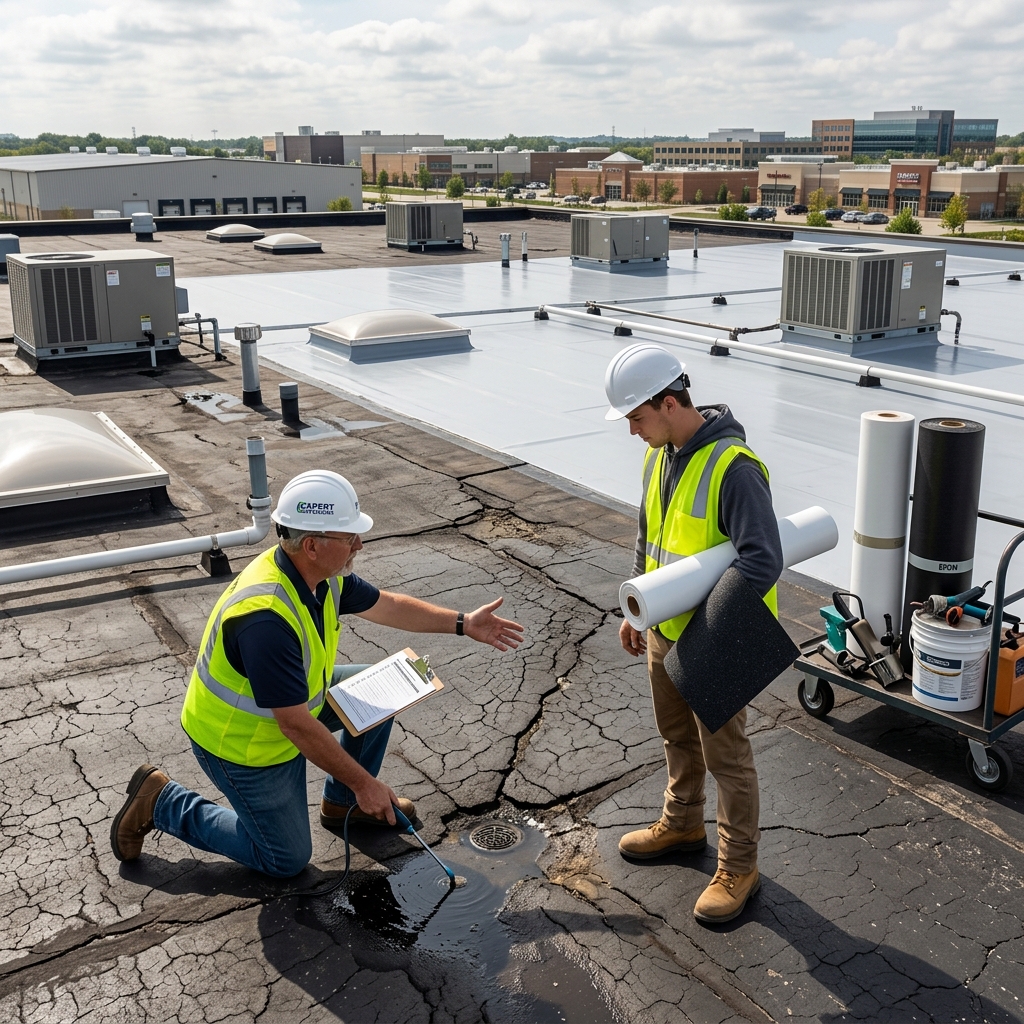
Pooling water and drainage problems indicate that your roof is settling or draining improperly. Standing water accelerates membrane degradation, increases weight on the structure, and creates ideal conditions for mold and algae growth. Even small puddles that take more than 24 hours to evaporate after rain signal problems.
Visible cracking, blistering, and punctures are obvious red flags. Membrane cracks allow water infiltration; blisters indicate trapped moisture beneath the surface; and punctures from foot traffic, debris, or installation errors create direct pathways for leaks. These defects rarely repair themselves and spread rapidly.
Seam separation and fastener issues occur around edges, penetrations, and transitions where flashing materials meet the membrane. Loose seams allow water to track underneath the roofing system, while corroded or popped fasteners weaken the membrane’s attachment and create leak points.
Interior water stains and mold growth reveal existing leaks affecting building interiors. By the time you notice staining on ceilings or walls, water has already penetrated the membrane and potentially damaged insulation and structural components. Mold presents health risks and costly remediation.
Age and deterioration matter significantly. Most commercial membranes last 15-25 years depending on material and maintenance. If your roof is approaching or past these milestones, replacement timing becomes critical regardless of whether you currently see active problems.
When you notice any of these signs, contact us for an assessment rather than trying temporary patches that mask the underlying problem.
Full Roof Replacement: When You Need Complete Protection
Complete commercial roof replacement becomes necessary when the existing membrane has reached end-of-life or sustained damage beyond economical repair. Understanding when replacement is the right choice prevents false economy and protects your investment.
Choose replacement when:
- The roof is 20+ years old and showing multiple failure modes
- Damage covers more than 20-30% of the roof surface
- The membrane has structural compromise (sagging, severe cracking throughout)
- Previous patches and spot repairs have failed repeatedly
- Underlying insulation or decking is wet, compromised, or deteriorated
- You plan to add HVAC units, rooftop equipment, or increase roof loading
Full roof replacement removes the old membrane, inspects and repairs the deck and insulation, and installs a completely new roofing system. This approach gives you the longest service life, a clean warranty slate, and the opportunity to upgrade to superior materials.
We typically complete commercial replacements in 1-3 weeks depending on roof size and complexity. Our process includes debris removal, thorough deck inspection and repair, new insulation installation if needed, flashing replacement, and membrane installation with all penetrations properly sealed. You’ll receive a 15-year workmanship warranty on the complete system.
Membrane Resurfacing: Cost-Effective Solutions for Newer Roofs
Resurfacing offers a middle-ground solution when your roof is structurally sound but the membrane has degraded. This approach extends roof life at a fraction of replacement cost, making it ideal for properties with 10-15 year old roofs showing early wear.
Resurfacing involves cleaning the existing membrane, repairing damaged areas, and applying a new protective coating or thin membrane layer over the existing system. This preserves functional components while addressing surface deterioration.
Resurfacing makes sense when:
- The roof is 10-15 years old with life remaining in the structure
- Damage is localized to specific areas rather than widespread
- No significant pooling or structural settling is present
- Insulation and decking are dry and undamaged
- Budget constraints require lower initial investment
The resurfacing process typically costs 30-50% less than replacement and can extend roof life by 7-10 additional years. However, you’re essentially “restarting the clock” on one layer of the system rather than building fresh. For roofs approaching their original design life, replacement often provides better long-term value.
We evaluate the roof’s remaining potential and your facility’s future needs during assessment. If resurfacing is appropriate, we’ll explain the cost savings and performance timeline so you can make an informed decision aligned with your maintenance budget.
How We Evaluate Your Roof to Determine the Best Path Forward
Our assessment process combines visual inspection, moisture detection technology, and structural evaluation to give you accurate recommendations. We don’t assume that the oldest-looking roof always needs replacement, nor do we recommend resurfacing for roofs that truly need comprehensive work.
Step 1: Visual inspection and documentation. We examine the entire roof surface, walking the perimeter and deck systematically. We document damage location, severity, and extent with photographs and measurements. We check flashings around penetrations, edges, and transitions where most failures originate.
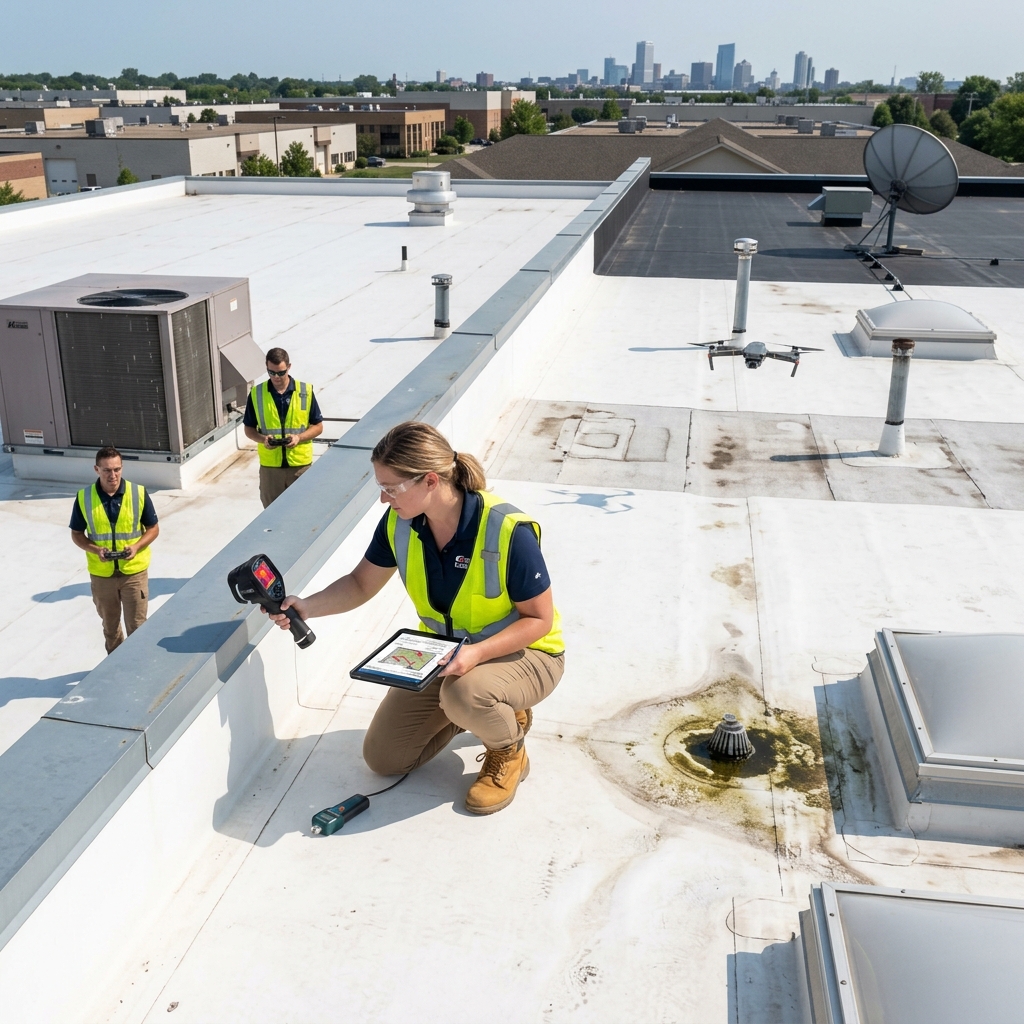
Step 2: Moisture detection and analysis. We use moisture-sensing equipment to identify wet insulation and compromised areas beneath the membrane surface. Wet insulation loses R-value, becomes structurally weak, and may harbor mold. This information is critical for determining whether the deck structure is still sound.
Step 3: Structural and drainage assessment. We evaluate the roof for pooling water, identifying areas of settlement or poor slope. We inspect fastening, seam integrity, and flashing condition. We note any equipment stress, foot traffic patterns, or maintenance issues affecting roof performance.
Step 4: Material and age evaluation. We identify the current roofing material and estimate remaining lifespan. Different membranes age differently; we assess whether the roof has 5 years left or 15 years left based on material type and condition.
Step 5: Recommendation and option comparison. Based on findings, we present you with clear options: immediate replacement, scheduled replacement within 3-5 years with interim maintenance, or resurfacing with monitoring. We explain the long-term cost implications of each path.
This thorough approach takes 1-2 hours and results in a detailed report with recommendations, photos, and a clear action plan. Get your free assessment today.
EPDM and TPO: Superior Materials We Use for Long-Lasting Results
Material selection significantly impacts roof durability, maintenance requirements, and long-term performance. We install EPDM and TPO membranes because both offer proven reliability and distinct advantages for commercial applications.
EPDM (Ethylene Propylene Diene Terpolymer) is a synthetic rubber membrane that has protected commercial roofs for over 60 years. EPDM resists UV exposure extremely well, making it ideal for roofs receiving direct sunlight without protective coatings. It remains flexible in cold weather, reducing crack risk during freeze-thaw cycles. EPDM seams are sealed with chemical adhesives or contact cement, creating waterproof bonds. The dark surface does absorb heat, increasing cooling costs in warm climates, but EPDM is often the most economical choice for climate conditions like ours.
TPO (Thermoplastic Polyolefin) is a newer single-ply membrane that combines the strength of EPDM with reflectivity benefits. TPO has a lighter color that reflects solar heat, reducing cooling costs and extending membrane life. Seams are thermally welded together, creating strong, durable bonds. TPO resists puncture damage better than EPDM, making it excellent for roofs with foot traffic or equipment. TPO costs slightly more initially but often saves money on cooling and may require less maintenance.
Both materials work exceptionally well in Wisconsin’s climate, handling freeze-thaw cycles, snow loads, and temperature extremes. When we recommend one material over the other, we consider your roof’s sun exposure, equipment on the roof, maintenance capacity, budget, and long-term facility plans. Either choice ensures decades of reliable protection when installed properly.
We handle all aspects of EPDM and TPO membrane roofing installation, from substrate preparation through sealing and flashing to final inspection. Proper installation is just as important as material selection for achieving the manufacturer’s promised lifespan.
The Real Cost Comparison: Replacement vs. Resurfacing Over Time
Understanding total cost of ownership, not just upfront price, guides the best decision for your property. Here’s what the numbers typically show:
Resurfacing scenario: A 15,000 sq ft roof resurfacing runs $30,000-$45,000 (approximately $2-$3 per square foot). You extend roof life 7-10 years. Maintenance and potential repair patches add $2,000-$5,000 over that period. Total 10-year investment: approximately $35,000-$50,000. After year 10, the roof still needs replacement.
Replacement scenario: The same 15,000 sq ft roof replacement costs $75,000-$120,000 (approximately $5-$8 per square foot) depending on materials and deck condition. You receive a 15+ year lifespan and minimal maintenance. Maintenance costs typically run $1,000-$2,000 over 15 years. Total 15-year investment: approximately $77,000-$122,000. You get 5 additional years of protection and likely avoid emergency repairs.
The break-even analysis: If your roof is truly 10-12 years old with 5-8 years of remaining life expectancy, resurfacing saves money in the short term. However, if the roof is already 15+ years old or showing signs of underlying structural issues, replacement within 3-5 years is inevitable anyway. Spending $40,000 now on resurfacing only delays spending $90,000+ on replacement shortly after.
The smartest approach considers your facility’s long-term plans. If you plan to occupy the building for 5+ years, replacement often represents better value despite higher upfront cost. If you’re selling or downsizing in 5 years, resurfacing might be the right economic choice.
We’re happy to prepare a detailed cost-benefit analysis comparing both options for your specific roof condition and timeline.
Our Comprehensive Replacement Process for Commercial Properties
When replacement is the right choice, understanding our process helps you prepare and know what to expect. We manage every phase professionally to minimize disruption to your operations.
Pre-project planning: We coordinate site access, determine the best times for work, discuss safety protocols, and plan debris removal. For occupied buildings, we address noise, dust, and foot traffic concerns upfront. We confirm equipment delivery dates and schedule roof access with minimal operational impact.
Existing membrane removal and disposal: We remove the old membrane, flashing, and damaged insulation. We properly dispose of all roofing debris through licensed recycling facilities. This phase reveals the true condition of the roof deck and allows us to identify any structural repairs needed before installing new materials.
Deck inspection and repair: We carefully inspect every section of the roof deck for damage, rot, or structural compromise. We repair or replace damaged decking areas, ensuring a solid foundation for the new system. This is the only opportunity to address hidden deck issues before sealing everything with new membrane.
Insulation and slope correction: We install new insulation if needed to improve R-value and correct drainage problems. For flat roofs, proper slope toward drains prevents pooling. We ensure the new system directs water effectively away from low spots.
New membrane installation: We install your chosen membrane (EPDM or TPO) according to manufacturer specifications. Every seam is properly sealed, and all penetrations (vents, equipment, electrical) are flashed correctly. We inspect seams under specialized lighting to confirm watertight installation.
Final inspection and warranty: We conduct a thorough final walkthrough with you, document completion with photos, and provide detailed warranties. Our 15-year workmanship warranty covers labor and sealing; manufacturer warranties cover material defects.
The entire process typically requires 1-3 weeks depending on roof size and weather conditions. We provide daily progress updates and address any questions promptly.
Why Choosing the Right Contractor Matters for Your Bottom Line
Commercial roof work represents substantial investment in your facility’s most critical protection system. The contractor you choose directly impacts whether you get reliable performance or expensive problems down the road.
Poor workmanship causes premature failure. Improper seam installation, inadequate flashing, incorrect membrane overlap, or rushed work creates leak pathways that become apparent within years rather than decades. A contractor prioritizing speed over quality leaves you vulnerable to moisture intrusion and the compounding damage that follows.
Material handling matters significantly. EPDM and TPO require specific installation techniques. Environmental conditions during installation affect seam strength and membrane flexibility. Contractors cutting corners on substrate preparation, skipping proper flashing details, or installing membranes in unsuitable weather compromise the entire system’s performance.
Warranty protection is only valuable if the contractor stands behind it. We’ve repaired roofs installed by contractors who have since closed, been sued repeatedly, or gone bankrupt. A warranty from a company that won’t be around to honor it provides no real protection. Choose contractors with proven longevity, strong reputations, and verifiable customer references.
Ongoing support protects your investment. Issues arising after installation require responsive contractors who return promptly to address concerns. We remain available for our customers throughout the warranty period and beyond, providing maintenance advice and rapid service if problems develop.
When you work with us, you’re selecting a contractor with years of experience in Wisconsin’s challenging climate, a track record of successful commercial projects, and a commitment to workmanship quality that protects your facility investment.
Protect Your Commercial Investment with Expert Exteriors
Your commercial property represents one of your most significant assets. Protecting that investment through proper roofing decisions ensures your building performs reliably, maintains structural integrity, and retains value for years to come.
We’ve helped hundreds of commercial property owners throughout Brookfield and surrounding areas make informed decisions about their roofing needs. Whether your facility requires immediate replacement, scheduled future work, or ongoing maintenance monitoring, we provide honest assessments and expert recommendations based on your specific situation.
Our approach combines technical expertise with straightforward communication. We explain findings clearly, compare options objectively, and let you make decisions with full information about costs, timelines, and expected outcomes. We don’t push unnecessary work, nor do we recommend patches that merely postpone inevitable larger expenses.
Starting with a comprehensive roof assessment is the first step toward confident decision-making about your commercial roofing future.
Schedule Your Free Commercial Roof Assessment Today
Don’t wait for problems to become emergencies. Contact us today to schedule your free commercial roof assessment. We’ll evaluate your roof thoroughly, answer your questions, and provide clear recommendations about replacement, resurfacing, or maintenance options aligned with your facility’s needs and budget.
Call us or get your instant roof replacement quote to get started. Our team is ready to help you protect your commercial investment with expert assessment and industry-leading craftsmanship.