
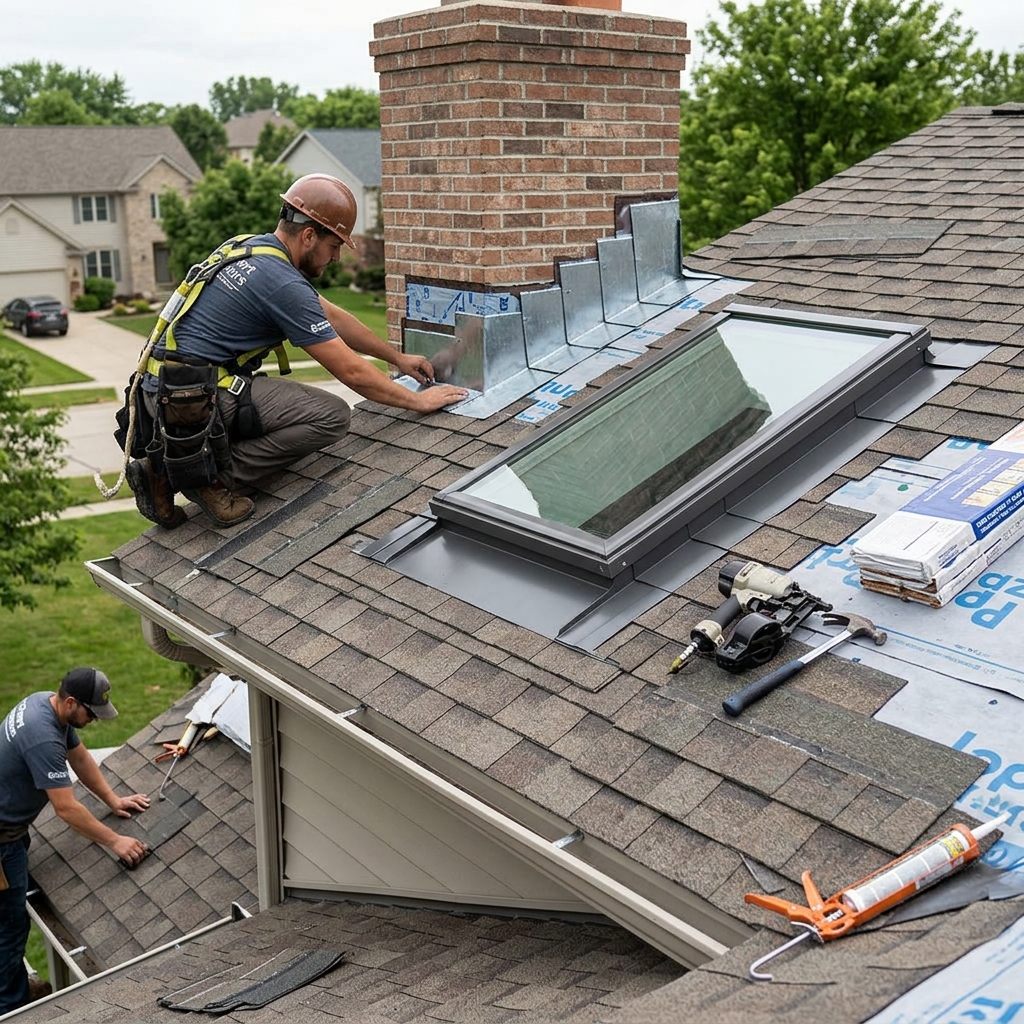
Best Roofing Integrations for Skylights, Flashing, and Chimneys
Why Proper Roofing Integration Matters for Your Property
When a roof is just a roof, water finds its way in. That’s the simple reality we see repeatedly when inspecting properties across Brookfield and the surrounding areas. The real vulnerability isn’t the main roofing material itself, but rather the penetrations: the places where skylights, vents, chimneys, and other fixtures break through that protective barrier.
Integration is the technical term, but what it really means is how well these components work together as one unified system. A skylight installed without proper flashing creates a pathway for water infiltration. A chimney without sealed transitions becomes a constant source of leaks. Gutters that don’t account for roof slope variations allow standing water to pool.
We’ve learned through years of replacing roofs damaged by poor integration that these details aren’t cosmetic or optional. They’re structural. Water damage from a single poorly integrated penetration can cost $15,000 to $30,000 in repairs to your home’s interior, insulation, and framing. That’s prevention we take seriously.
When all components integrate properly, your roof becomes a complete system designed to shed water reliably for decades. Your property maintains its value, your interior stays dry, and you avoid the cascading problems that start with “just a small leak.”
Common Problems with Poorly Installed Skylights and Flashing
We regularly inspect roofs that have failed at the skylight transition. The problems fall into predictable patterns, and each one reveals itself through different warning signs.
Flashing gaps and lifted edges occur when installers don’t account for thermal expansion and contraction. Skylights and their frames move slightly with seasonal temperature changes. If the flashing is nailed too rigidly or sealed with the wrong material, it cracks or separates within a few years. You’ll notice water stains appearing on walls adjacent to the skylight, or damp spots in the attic during heavy rain.
Incompatible sealant choices create another category of failure. Using standard roofing tar or low-grade caulk around skylights doesn’t stand up to UV exposure and freeze-thaw cycles. These materials harden, shrink, and lose their seal within 2-3 years. We’ve seen skylights that looked dry inside fail within months of installation because the contractor grabbed whatever sealant was on the truck.
Poor flashing overlap and sequencing happens when flashing isn’t properly layered with roofing shingles. The flashing should sit underneath the shingles above it and on top of shingles below it, creating a shingled effect that directs water downward. Incorrect sequencing leaves gaps where water can pool and eventually penetrate.
Undersized or incorrect flashing materials are also common. A skylight might require aluminum flashing with specific dimensions, but a contractor installs generic vinyl flashing because it’s cheaper. Different materials expand at different rates, and incompatible combinations accelerate failure.
The pattern we see: most leaks don’t happen immediately. They emerge 3-5 years after installation, which is why many property owners don’t connect the problem to the original work. By then, interior damage has already begun.
How Our Comprehensive Roofing Approach Solves Integration Challenges
We approach roofing projects as integrated systems rather than as separate components. This philosophy shapes how we plan, specify materials, and execute every installation.
Our first step is a complete structural and material assessment. Before we place a single nail, we understand the roof’s pitch, the attic ventilation, the existing drainage patterns, and the specific performance characteristics of every penetration. This information determines what materials we’ll use and how we’ll sequence the installation.
For skylights specifically, we use flashing kits engineered to match the roofing system we’re installing. We don’t mix and match brands or materials based on what’s available. The skylight frame, the flashing pan, the counter-flashing, and the sealant are all specified as a compatible system.
Our crews are trained to understand water flow physics. We know that water doesn’t stop flowing when it hits a transition. Our installation method accounts for that by creating continuous pathways that direct water away from penetrations rather than toward them.
We also build in inspection checkpoints. After initial flashing installation and before final sealing, we inspect each transition to catch any issues before they’re sealed over. This quality gate exists in our process specifically because we’ve seen what happens when problems are covered up unknowingly.
Our comprehensive approach includes integration planning during the estimate phase, not after the job begins. When you see our assessment, you’ll understand exactly how every component connects and why we’ve chosen the materials and methods we recommend.
Our Recommended Skylight Integration Standards
We specify skylights using stepped flashing or continuous pan flashing, depending on the roof pitch and the skylight size. For most residential applications in our region, continuous pan flashing provides superior protection because it creates a full water barrier beneath the skylight frame.
The pan should be a minimum of 24-gauge aluminum or equivalent, with a 4-inch overlap on all sides of the skylight frame. This overlap dimension matters because it provides enough material to properly integrate with the surrounding roof shingles and ensure water has a clear path downward.
Counter-flashing is the component that sits on top of the skylight frame and tucks under the siding or trimming. We use aluminum counter-flashing with a minimum thickness of 0.032 inches. This thickness provides rigidity without being difficult to bend and fit during installation.
The sealant layer requires polyurethane or silicone products rated for 20+ year durability in direct UV exposure. We apply these products specifically around the counter-flashing and at all joints, but we avoid using sealant as a substitute for proper flashing overlap. Sealant supports the system; it doesn’t replace it.
For ventilation, we ensure that skylights are installed with air space around the frame to allow the roof to breathe. Moisture buildup around a sealed frame accelerates rot. Our installations include ventilation channels that prevent this problem.
Our recommended standard also includes a rain screen design, particularly in areas with high wind-driven rain. This means there’s an intentional path for any water that does enter the system to drain away before reaching the interior. It’s a backup system that acknowledges that no seal is perfect, and proper design means water can’t damage your property even if it gets past the initial barrier.
Flashing Solutions We Install for Maximum Protection
Flashing is essentially extended roofing material that bridges the gap between the main roof and any penetration. We install several flashing types depending on the specific situation.
Base flashing sits directly on the roof deck and is covered by roofing shingles or membrane. For skylights, this is typically a single piece of metal (aluminum or galvanized steel) that slopes downward slightly to promote drainage. The base flashing should extend at least 12 inches below the penetration opening.
Counter-flashing overlaps the base flashing and is typically secured to the skylight frame or chimney structure. This upper layer prevents water from flowing sideways into the gap between the base flashing and the penetration.
For our commercial roofing projects using flat roofing systems, we employ TPO or EPDM membranes that wrap penetrations with fully adhered or mechanically fastened flashing stripping. The continuous membrane design provides different integration advantages compared to shingled roofs.
Transition flashing connects the roof to any adjacent walls, such as where a chimney meets the roof line. This flashing must account for settling and movement between different structural elements. We use expansion-tolerant fastening methods specifically to prevent the premature failure we see with over-rigid installations.
We also install ice and water shield in critical zones during roof replacement projects. This secondary membrane layer adds protection in areas prone to ice dams or heavy snow melt, particularly around skylights and chimneys where water flow concentrates.
Our flashing material selection prioritizes longevity. Aluminum flashing in areas with salt air exposure might corrode faster than in inland locations. We adjust specifications based on environmental factors, not just on standard practices. This localized approach is why our roofing systems last longer than industry averages in our region.
Chimney Work and Seal Integrity
Chimneys present distinct challenges because they’re structural elements that move and settle independently of the roof. A chimney installed 20 years ago may have shifted by half an inch. If the flashing isn’t designed to accommodate this movement, the seal fails.
We install chimney flashing in two stages: base flashing that connects the roof deck to the chimney exterior, and counter-flashing that sits in the mortar joint of the chimney itself. The counter-flashing design is critical. If it’s merely caulked to the chimney, that caulk will fail within a few years as the materials expand and contract at different rates.
Our standard approach uses counter-flashing secured with stainless steel fasteners into mortar joints, with the joint then resealed using mortar (not caulk). This method allows movement while maintaining a seal. The remortar work is done by masons experienced in this specific technique, not by general roofers.
The base flashing around a chimney must extend at least 8 inches on all sides of the chimney exterior. For larger chimneys or chimneys positioned high on the roof slope, we sometimes extend this further. The flashing must slope away from the chimney and tie into the surrounding roof shingles with proper overlap and nailing patterns.
We also inspect the chimney crown (the concrete cap on top of the chimney) for cracks before we install any flashing. If the crown is damaged, water is already flowing down the interior of the chimney, and the external flashing can’t solve that problem. We address crown repairs as part of a complete chimney integration solution.
One detail that most roofers overlook: the interior flashing. If water penetrates the exterior seal and enters the chimney structure, interior flashing directs that water back outward rather than allowing it to soak into the structure. We include interior flashing inspection in our comprehensive roofing projects.
Comparison of Integration Methods: Why We Excel
Different installation approaches produce dramatically different durability outcomes. Understanding the differences helps explain why our method costs slightly more upfront but saves thousands in repairs over the long term.
Surface-mounted flashing involves installing flashing entirely on top of the finished roof surface. It’s quick and requires minimal disruption. The problem: this approach leaves gaps between the flashing and the roof deck that eventually fill with debris and moisture. Water gets trapped underneath. We avoid this method for permanent installations.
Fully integrated flashing requires removing and reinstalling shingles or membrane to create continuous transitions. It’s more labor-intensive and requires precise sequencing. The advantage: there are no gaps or traps for water. When done properly, water flows down the roof surface without ever getting underneath the flashing. This is our standard approach.
Combination systems use different methods for different components. For example, TPO membrane roofing might use fully adhered transition flashing for some areas and mechanically fastened flashing for others, depending on the roof geometry. We design these combinations specifically rather than applying a single method uniformly.
Sealant-dependent systems rely on caulking and adhesive to create the water seal. These are the least durable because sealants fail. We use sealant strategically to support mechanical systems, not as the primary water barrier.

We excel because we’re willing to spend the time and effort to do the integrated approach on every project. This isn’t cost-cutting or rushing. It’s recognizing that a roof is only as reliable as its weakest penetration. When we replace your roof, every skylight, vent, and chimney transition is treated as a critical system component, not as an afterthought.
Our crews also have repetition in this work. When you perform the same integration method dozens of times each year, the details become second nature. You notice problems faster, you problem-solve more effectively, and you install with confidence.
Our Installation Process for Seamless Integration
Our installation process for integrated roofing systems follows a structured sequence that ensures no steps are missed or done out of order.
Phase 1: Preparation and Assessment
We begin by documenting the current conditions of all penetrations with photos and measurements. If there’s existing flashing, we assess its condition and determine whether it can be salvaged or must be replaced. We also identify any water damage, rot, or structural issues that affect the integration approach.
We establish the roof plane and verify slopes. A roof that looks level by eye might have subtle variations in pitch. These variations matter for flashing design and water flow. We use levels to confirm actual slopes.
Phase 2: Protective Measures
Before removing old roofing material, we install protective coverings in attic spaces and around interior wall penetrations. If water gets inside during the removal phase, it needs somewhere safe to go. We also install temporary barriers to protect interiors from dust and debris.
Phase 3: Controlled Removal
We remove old roofing and flashing carefully, documenting what’s underneath. Rotten deck boards or damaged sheathing get identified now and repaired before the new roof goes down. This is where many roofing jobs fail: contractors skip this assessment and install beautiful roofing over damaged substrates.
Phase 4: Deck Preparation and Flashing Installation
Once the deck is exposed and any repairs are complete, we install base flashing before we install any roofing membrane or shingles. Base flashing goes down first because it needs to be underneath the primary roofing material.
For skylight flashing, we install the pan flashing first, securing it with stainless steel fasteners (not standard galvanized fasteners, which will corrode). We verify drainage by pouring water into the pan during installation. If it doesn’t drain toward the roof edge, we adjust slope or dimensions until it does.
Phase 5: Membrane or Shingle Installation
We install the primary roofing material (asphalt shingles, TPO membrane, or whatever system is specified) with proper overlap and sequencing around all flashing. For shingle roofing, each shingle course is nailed with the correct nail size and placement. Flashing gets nailed before shingles are placed to avoid creating channels that trap water.
Phase 6: Counter-Flashing and Transitions
After the primary roofing material is installed, we install counter-flashing, trim work, and any secondary flashing components. For chimneys, this is when we coordinate with the mason for any mortar joint work. For skylights, this is when counter-flashing is secured and the joint is sealed.
Phase 7: Quality Inspection and Testing
Before we call the job complete, we inspect every penetration. We look at nail heads to ensure they’re not standing up. We verify that sealant is applied to the correct locations and with the correct product. We check that water flow paths are clear and direct water away from all penetrations.
For critical systems, we perform moisture testing. We place a hose on the roof above each penetration and run water for several minutes while someone is inside monitoring for leaks. If any water appears inside, we identify the source and correct it before the job is final.
Phase 8: Final Documentation
We provide you with detailed documentation of what was installed, which materials were used, and which warranties apply. You also receive maintenance guidance specific to your integrated system.
Long-Term Performance and Durability Benefits

Proper integration creates measurable durability advantages that accumulate over the life of your roof.
A properly integrated roof system typically performs without significant issues for 20-30 years, depending on the primary roofing material. Our 15-year workmanship warranties on full roof replacements reflect our confidence in this durability.
The financial benefit compounds. A roof that doesn’t leak prevents water damage to insulation, structural framing, and interior finishes. One serious leak can cost $5,000-$20,000 in remediation. A system that prevents leaks for 20 years avoids multiple such events. The return on investment in proper installation is substantial.
Performance also means reliability. You’re not wondering whether water is pooling under your skylights or whether your chimney is beginning to leak. You know the system is functioning as designed. That peace of mind has real value, particularly if you’re planning to sell your property. A roof installed to integration standards commands higher buyer confidence and often higher sale prices.
Insurance claims are also reduced or eliminated. We see policies that specifically exclude damage from roof leaks at penetrations if the original installation wasn’t done to professional standards. Proper integration means you’re fully covered if a problem does arise.
Maintenance is also simpler with integrated systems. Because water flows predictably and there are no hidden traps or gaps, inspection and minor maintenance doesn’t require crawling into attics or removing roofing material. You can often identify problems from the exterior and address them before they progress.
Seasonal performance matters too. In our region, winter ice dams can be catastrophic with poor integration. Water backup behind ice finds gaps in flashing and penetrates the roof. With proper integration, that backed-up water has a clear path to drain, or it simply runs down the roof exterior rather than seeking entry points.
Selecting the Right Integrated Roofing System for Your Needs
Choosing an integrated roofing system means more than selecting a color or material type. It requires understanding your property’s specific characteristics and matching them to appropriate solutions.
Roof pitch is the primary determining factor. Steep-pitched roofs (over 6/12 slope) shed water readily and work well with traditional asphalt shingle systems. Shallow-pitched or flat roofs require membrane systems that hold water temporarily without pooling, and integration becomes even more critical because water sits longer on these roofs.
Penetration count and location matter significantly. A roof with three penetrations can sometimes get by with less-robust integration than a roof with eight. Penetrations clustered in one area require different sequencing than penetrations spread across the roof. High-slope areas above major penetrations require additional water management.
Environmental factors specific to your location affect material selection. Brookfield’s winter weather means we prioritize freeze-thaw durability and ice dam prevention. Windborne rain exposure varies by location on a property, which affects counter-flashing specifications. We factor these details into our recommendations.
Existing structural conditions sometimes limit our options. If the roof deck is severely damaged, we might recommend a full deck replacement rather than simply installing new roofing over compromised substrate. If attic ventilation is inadequate, we address that simultaneously with roofing work to prevent condensation problems.
Budget parameters are also real considerations. Our comprehensive integration approach costs more than surface-level roofing installations. We’re transparent about this difference and explain the specific durability advantages you’re paying for. Most property owners find that the extended performance life justifies the additional upfront cost.
We also consider future maintenance needs. Some integrated systems require more frequent inspection or maintenance than others. If you prefer low-maintenance systems, that preference shapes our recommendations.
We guide you through these decisions based on decades of installation experience in our region. When you schedule your assessment, we’ll evaluate your specific property and discuss which integrated roofing system provides the best value and reliability for your situation.
Why Expert Exteriors is Your Best Choice for Complete Roofing
We’ve built our reputation on integrated roofing systems because we understand what happens when they fail. We’ve seen too many leaks, too much water damage, and too many frustrated property owners dealing with roofing problems that could have been prevented.
Our crews are trained specifically in integration protocols. We don’t hire general contractors and hope they pick up the details. We invest in ongoing education about flashing systems, material compatibility, and sequencing methods. Our team knows the difference between adequate roofing and excellent roofing, and we aim for excellent every time.
We use quality materials that perform together as systems. We don’t buy the cheapest flashing and pair it with premium membrane roofing. We specify material combinations that work together, which costs more upfront but performs significantly better over time. Our gutters and fascia services follow the same systems-based approach, because every component of your exterior works together to protect your property.
We stand behind our work with 15-year workmanship warranties on full roof replacements. This warranty is meaningful because we’re confident in our integration methods. We wouldn’t offer this assurance if we were cutting corners or relying on quick fixes.
We also provide transparent documentation and long-term support. After installation, you’ll know exactly what materials were installed and how to care for them. If questions arise years later, you can contact us and we’ll have records of what was done and why.
Our integrated roofing approach prevents the problems that most property owners eventually face. When you choose Expert Exteriors, you’re choosing protection that lasts, skylights and chimneys that don’t leak, and flashing systems engineered for our regional climate and conditions.
Contact us for a comprehensive assessment of your roofing and integration needs. We’ll evaluate your property, explain the options available, and provide honest pricing for a system designed to protect your investment for decades to come.