
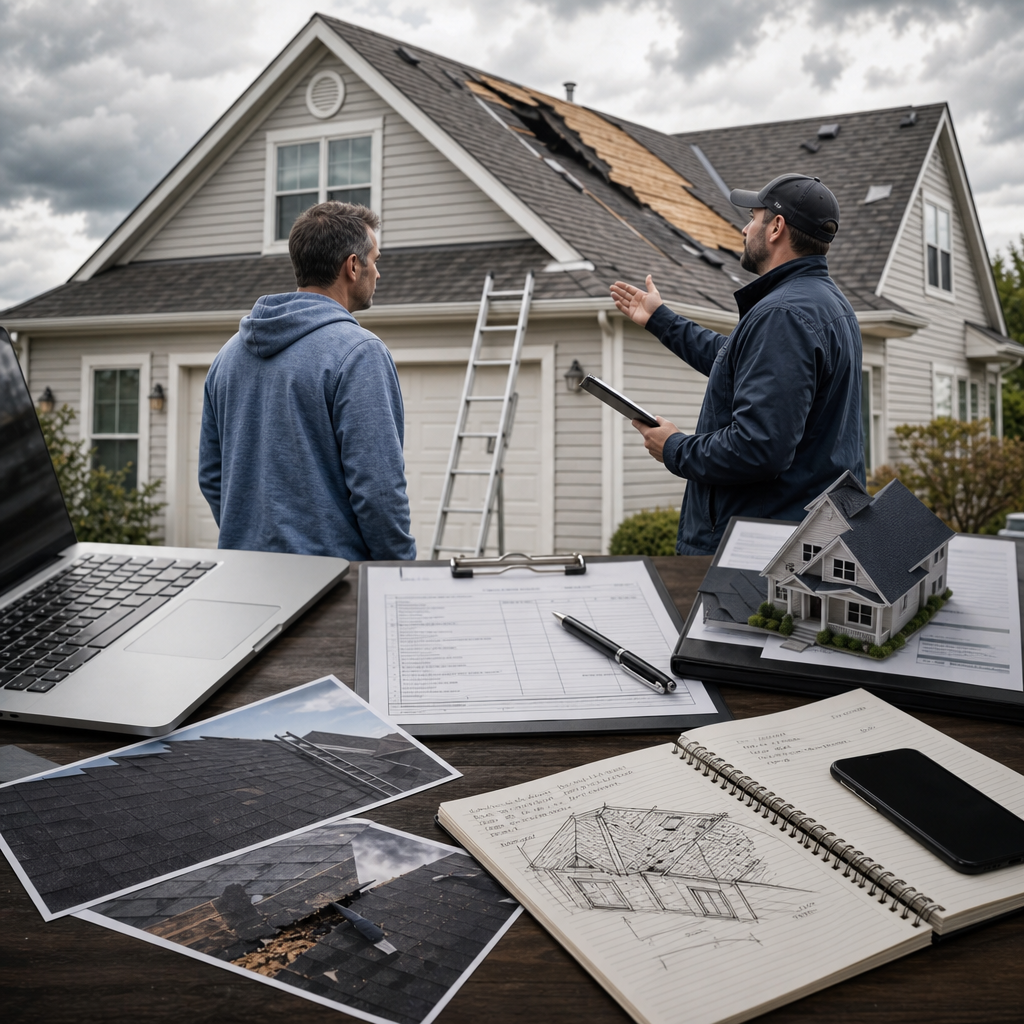
Best Practices for Navigating Roof Replacement Insurance Claims Successfully
Understanding Your Roof Damage Coverage
Filing a roof replacement insurance claim doesn’t have to feel overwhelming. Whether a storm damaged your shingles or wear and tear has finally caught up with your roofing system, understanding the claims process puts you in control. We’ve guided hundreds of property owners through this journey and want to share what actually works.
The path from damage discovery to approved replacement involves several critical steps. Getting each one right dramatically improves your chances of full coverage. Let’s walk through the process so you know exactly what to expect and how to protect your interests.
Your homeowners or commercial insurance policy covers roof damage caused by covered perils, but the specifics matter more than you’d think. Most policies cover damage from storms, hail, wind, and falling objects. They typically do not cover damage from poor maintenance, wear and tear, or gradual deterioration.
The key variable is your policy’s age and deductible structure. Older policies sometimes cap roof coverage or require you to meet a higher deductible for roof claims specifically. Some insurers use a flat deductible, while others apply a percentage of your home’s insured value (often 2 to 5 percent). A 5 percent deductible on a $300,000 home means you cover $15,000 before insurance kicks in.
Review your actual policy documents before filing. Call your agent and ask these questions directly:
- What perils trigger roof coverage?
- What is your specific roof deductible?
- Does your policy have a replacement cost value (RCV) or actual cash value (ACV) clause?
- Are there any roof age limitations?
The RCV versus ACV distinction changes everything. RCV pays for a brand-new roof at today’s prices. ACV subtracts depreciation, meaning your payout reflects your roof’s remaining lifespan. Most modern policies offer RCV, but confirming this upfront prevents disappointment later.
Documentation Requirements for Successful Claims
Insurance companies make decisions based on evidence. Your job is to create an airtight documentation trail from the moment you spot damage.
Start by photographing everything the day you discover the problem. Take wide-angle shots showing the affected area in context, then close-ups of the actual damage. Capture shingle tears, punctures, missing sections, and any debris indicating the cause. If a storm caused the damage, photograph fallen branches, hail imprints on other surfaces, or wind-blown debris patterns on your property.
Write down the date you discovered damage, the suspected cause, and any weather events that occurred. This written record becomes part of your claim file. If neighbors experienced similar damage from the same storm, note their addresses too. Insurance adjusters recognize pattern damage as evidence of a covered peril.
Create a detailed inventory of damaged areas:
- Specific roof sections affected (east-facing slope, near the chimney, etc.)
- Estimated percentage of roof coverage damaged
- Any interior damage from leaks (water stains, damaged ceilings, flooring)
- Temporary repairs you made to prevent further damage
Keep receipts for emergency tarping, water extraction, or temporary measures. These expenses are often reimbursable as part of your claim. Get estimates or invoices from contractors for the full scope of repairs needed. Professional assessments carry significantly more weight than DIY evaluations.
The Insurance Inspection and Assessment Process
Once you file your claim, the insurance company assigns an adjuster to inspect your roof. This person’s report determines your payout amount, making the inspection process critical to your outcome.
The adjuster will typically contact you within a few business days to schedule a time. Be present during the inspection and walk the roof with them if your roof is safely accessible. Point out specific damage areas and explain what happened. Ask questions if the adjuster’s assessment seems incomplete. An adjuster who spends 10 minutes on your roof may miss significant damage that a 30-minute thorough inspection catches.
The adjuster’s report includes photographs, measurements, a damage assessment, and a recommended payout amount. Request a copy of this report for your records. Read it carefully and compare it to the damage you documented. If the adjuster’s findings significantly underestimate damage, you can request a second opinion or hire your own independent adjuster.
Take notes during the inspection:
- The adjuster’s name, company, and contact information
- What areas they examined and what they skipped
- Specific damage they acknowledged
- Any concerns they raised about coverage
These details help if you need to dispute the initial assessment later.
How Expert Exteriors Supports Your Claim
We’ve worked with insurance companies for years and understand how they evaluate roof damage claims. When you partner with us, we become your advocate throughout the process.
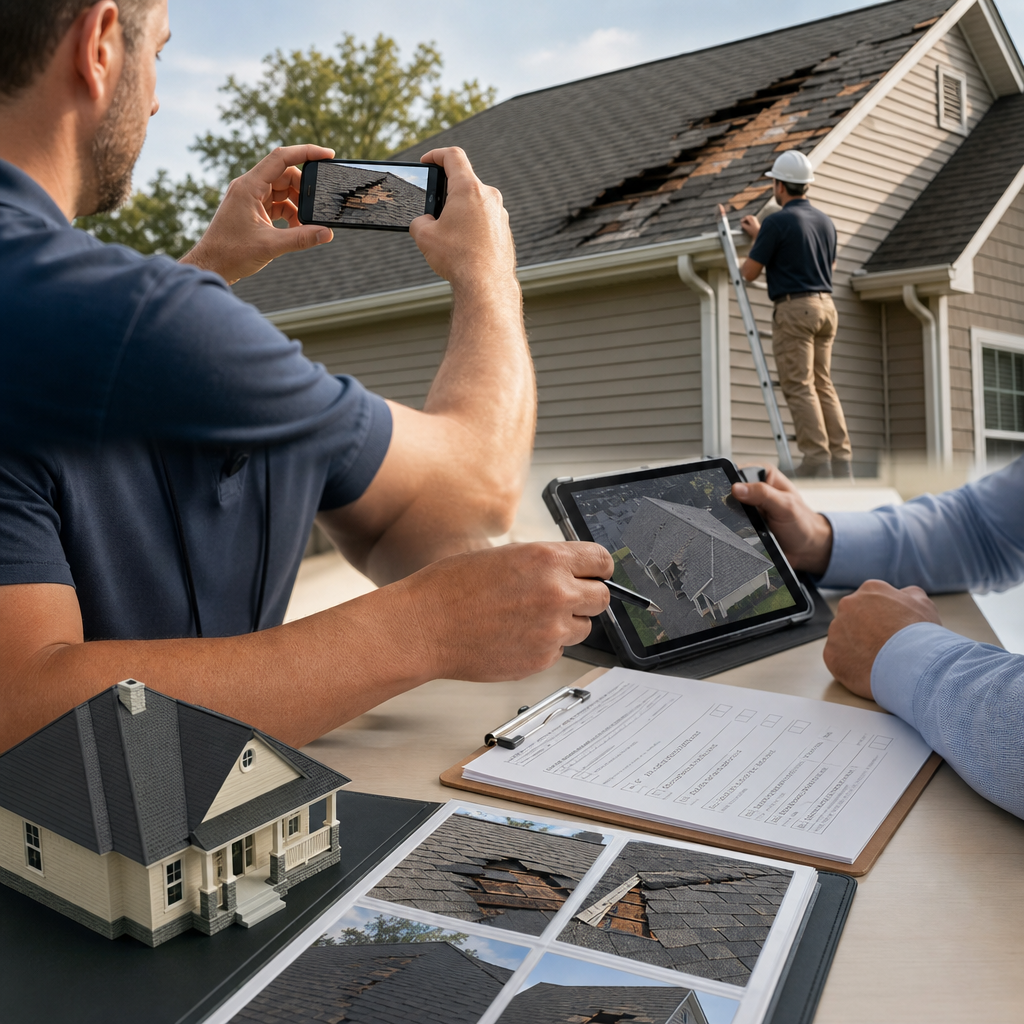
Our first step is conducting a thorough pre-inspection before you file. We identify all damage, photograph it professionally, and document it in detail. We prepare a comprehensive scope of work that clearly outlines what needs replacing and why. This documentation gets submitted with your claim, giving the insurance adjuster a professional assessment to reference.
When the insurance inspector arrives, we can be present to walk the roof together. We point out specific damage the adjuster might otherwise miss. We explain our assessment findings and answer technical questions about roofing standards and building codes. We ensure the adjuster understands the full extent of the damage and its causes.

If the insurance company’s initial offer seems low, we review their adjuster’s report and help you determine whether to dispute it. We provide detailed estimates that give the insurer confidence in our pricing. Our reputation with local insurance companies means they trust our assessments and repair recommendations.
After approval, we manage the entire replacement process. We coordinate with your insurance company regarding payment, handle the technical work with precision, and keep you informed at every stage. Our roof replacement services mean you work with one trusted partner rather than juggling multiple contractors and insurance representatives.
Common Claim Denials and How to Avoid Them
Claim denials happen more often than homeowners expect, but most are preventable with the right approach.
Insurers deny claims most often because the policy doesn’t cover the damage type, the damage resulted from poor maintenance, or the damage predates policy coverage. If you’ve ignored a slow leak for two years and finally file a claim, the insurer may argue you failed to maintain the roof, voiding coverage. This is why acting quickly matters. File immediately upon discovering damage.
Some claims get denied because homeowners misrepresent the damage cause. Saying a storm caused damage when wind actually created the problem can trigger denial if the investigation reveals inconsistency. Always be factually accurate about what happened.
Inadequate documentation causes denials too. If you file a claim with no photos and vague descriptions, the adjuster can’t confirm damage occurred. The insurance company defaults to denial. Professional documentation with clear photos and written records prevents this outcome.
Policy exclusions catch many property owners off guard. Some policies explicitly exclude certain types of damage or impose age restrictions. A roof approaching 25 years old might exceed your policy’s coverage limits. Reviewing your policy before damage occurs helps you understand these limitations.
The most dangerous mistake: trying to handle everything alone without professional guidance. Adjuster reports are often incomplete or lowball damage assessments. Without expertise to challenge them, you accept an inadequate payout.
Timeline and Next Steps After Approval
Once your claim receives approval, the timeline depends on your deductible, your insurance company’s payment process, and scheduling for repairs.
Most insurance companies issue payment in one of two ways. Some pay the contractor directly after we submit invoices and proof of work completion. Others issue payment to you as the policyholder, giving you flexibility on how to proceed. Clarify this arrangement with your insurance adjuster during the claims process.
You typically have a specific window, often 90 to 180 days, to complete repairs before the claim closes. Starting promptly prevents timeline pressure and allows us to schedule you during favorable weather conditions. Roofing work is weather-dependent, so we recommend beginning within two to four weeks of approval whenever possible.
Our exterior replacement timeline guide covers what to expect during the replacement process. Most residential roof replacements complete in one to three days depending on roof size and complexity. Commercial roofing might take longer, but we work efficiently to minimize disruption to your property.
After completion, we document the finished work with photos and provide you with warranty information for the materials and labor. We submit final invoices and any remaining documentation to your insurance company to close out the claim.
Why Professional Contractor Guidance Makes the Difference
Navigating roof replacement insurance claims alone puts you at a disadvantage. Insurance companies employ adjusters trained in cost containment. They’re skilled at identifying ways to reduce payouts, and they do this daily. You’re trying to manage the process around your regular responsibilities.
Professional contractors like us level that playing field. We know how insurance companies evaluate damage, what documentation they require, and how to present your situation compellingly. We’ve seen which assessment techniques lead to full coverage and which approaches get denied.
When we walk a roof with an insurance adjuster, our presence and expertise ensure nothing gets missed. We catch hidden damage like damaged flashing or deteriorated underlayment that untrained eyes overlook. We speak the adjuster’s language, referencing industry standards and building codes that support our findings.
We also protect you from underbids. If the insurance company’s payout seems low, we can provide detailed cost breakdowns explaining why. We negotiate on your behalf without being emotionally attached to the outcome the way you might be. This professional distance helps us advocate effectively.
Beyond the claims process, we deliver quality replacements that protect your property for decades. We use premium materials, employ certified installers, and stand behind our work with comprehensive warranties. Your insurance investment in coverage only pays off if your replacement actually solves the underlying problem.
Your Path to Approved Roof Replacement
Roof replacement insurance claims don’t have to be complicated. Understanding your coverage, documenting damage thoroughly, and working with experienced professionals makes the entire process manageable and successful.
We’ve guided countless property owners in Brookfield and surrounding areas through claims approval and into quality roof replacement services they can trust. We know what insurers expect, what adjusters look for, and how to present your claim in the strongest possible light.
Your next step is straightforward: contact us for a free inspection and pre-claim assessment. We’ll document your damage professionally, answer your specific questions about your policy’s coverage, and explain exactly what to expect as you move forward. We’ll be with you from the claim filing stage through final roof installation, ensuring nothing falls through the cracks.
Contact Expert Exteriors today and let’s turn your roof damage into a solved problem. You’ve earned the peace of mind that comes from knowing your property is protected by professionals who actually understand how to make insurance claims work.