
Best Fascia and Soffit Replacement Options for Wisconsin Homes
Why Fascia and Soffit Matter for Your Home’s Protection
Your home’s fascia and soffit are working harder than you might realize. Fascia is the horizontal board that runs along the edge of your roofline, while soffit is the underside material that closes off the space between the fascia and your exterior wall. Together, these components form a critical protective barrier that shields your home’s interior structure, attic, and walls from water damage, pests, and weather exposure.
When fascia and soffit fail, the consequences ripple through your entire home. Water seeps behind your gutters and into your roof structure. Moisture accumulates in your attic, creating conditions for mold and rot. Insects and animals find their way into your walls and crawl spaces. These aren’t cosmetic issues that you can ignore until spring. They’re structural threats that compound over time, leading to expensive repairs that could have been prevented with quality replacement materials and proper installation.
Wisconsin’s freeze-thaw cycles, heavy snow loads, and seasonal moisture swings make this even more critical. Your fascia and soffit endure constant temperature changes, ice dam formation, and water exposure that accelerates deterioration in inferior materials. We’ve seen countless homes where wood fascia has rotted completely within 10 years, or where improper soffit installation allowed animal entry and attic damage. The right fascia and soffit system doesn’t just protect your home today, it protects your investment for decades.
Actionable takeaway: If you haven’t inspected your fascia and soffit in the past two years, schedule a walkthrough this month. Look for sagging, discoloration, peeling paint, or visible gaps where water can enter.
Common Fascia and Soffit Problems We See
We encounter the same patterns across Brookfield and surrounding areas. Wood fascia is the most problematic material we replace, typically because homeowners selected it assuming proper maintenance would keep it sound. Paint peels, water penetrates, and wood rots from the inside out. By the time visible damage appears, structural compromise is already well underway.
Undersized or improperly installed gutters compound the problem. When gutters overflow or pull away from the fascia, water streams directly onto the board, accelerating rot. We’ve replaced fascia that looked fine from the street but was completely soft and compromised where the gutter attached.
Soffit venting creates another common failure point. Many homes have inadequate soffit ventilation, which creates moisture buildup in the attic. Other homes have soffit vents that are blocked by insulation or debris, defeating their purpose entirely. When soffit material is damaged or installed incorrectly, your entire attic ventilation strategy fails.
Animal damage ranks high on our repair list too. Squirrels, raccoons, and birds exploit gaps and weak points in fascia and soffit to access your attic. Once they’re inside, they create their own larger openings and cause extensive damage. We’ve opened soffits to find nests, droppings, and chewed structural components.
Lastly, thermal expansion and contraction cause problems with improper installation. Materials expand and contract with seasonal temperature changes. If fascia is nailed too tightly or soffit is installed without adequate spacing, movement cracks materials and creates gaps where water enters. This is especially problematic in Wisconsin’s temperature extremes.
Actionable takeaway: Walk around your home’s perimeter and check for these specific issues: paint bubbling or peeling, visible soft spots when you press on fascia, gaps where soffit meets the wall, or evidence of animal entry.
Our Premium Fascia and Soffit Solutions
At Expert Exteriors, we offer two primary material options for fascia and soffit replacement: aluminum and vinyl. Both outperform traditional wood in Wisconsin’s climate, but they serve different priorities and budgets. We’ll guide you to the right choice based on your home’s specific needs, not what generates the highest margin for us.
Our Gutters, Fascia & Soffit Services include complete replacement with 15-year workmanship warranties. This means we stand behind our installation quality for nearly two decades. We source materials from trusted manufacturers who offer their own product warranties, typically 10-20 years depending on the material.
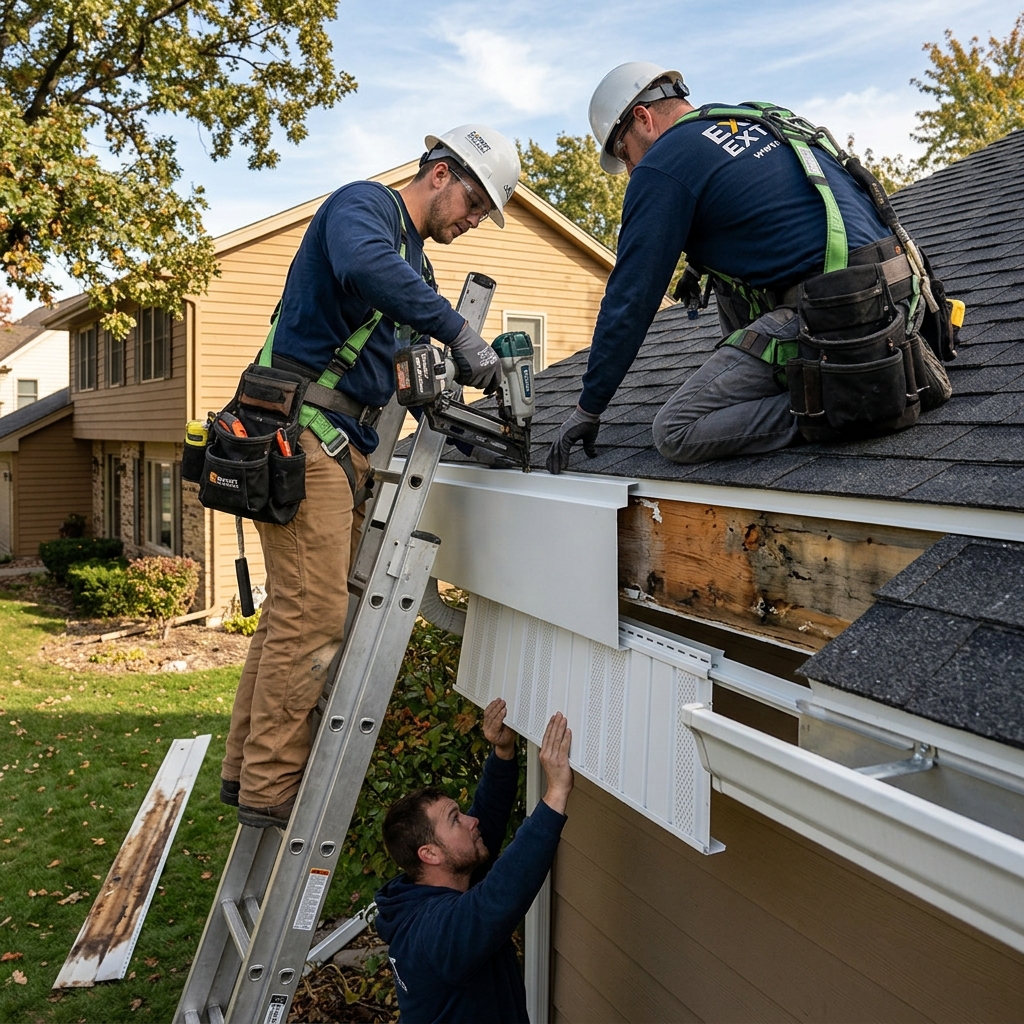
We never cut corners on preparation. Our crews remove old fascia and soffit completely, inspect the underlying structure for rot or damage, and make necessary repairs before installing new materials. This prevents the common contractor mistake of installing premium new materials over a compromised substrate. Within weeks, the whole system fails, and you’re back where you started.
Our soffit systems incorporate proper ventilation design. We calculate your attic’s ventilation requirements based on square footage and climate considerations, then install soffit with adequate venting to support your roof’s longevity. This isn’t an afterthought; it’s built into every project from the estimate phase.
Installation details matter enormously in Wisconsin. We use fastening methods and spacing that account for seasonal expansion and contraction. We seal penetrations and transitions properly to eliminate water entry points. We ensure gutters are securely attached to fascia with adequate support.
Actionable takeaway: When you request an estimate, ask your contractor to explain how they’ll address attic ventilation and thermal expansion. Vague answers suggest they haven’t thought through Wisconsin-specific requirements.
Aluminum Fascia and Soffit Benefits
Aluminum offers exceptional durability and requires virtually no maintenance once installed. It doesn’t rot, warp, or splinter. It won’t support mold growth. It resists impact damage far better than vinyl, making it ideal for areas prone to storm debris or tree branch contact.
Aluminum’s strength allows it to span longer distances without intermediate support. This means fewer visible joints and a cleaner appearance, especially on homes with long roof lines. It takes paint exceptionally well, allowing for custom color matching if your home needs a specific aesthetic.
The material’s thermal properties work in your favor too. While aluminum conducts temperature, it doesn’t trap moisture against your home’s structure the way some lower-quality materials do. Proper installation ensures air circulation behind the fascia, preventing moisture accumulation.
One consideration: aluminum is a conductor, so it requires proper grounding in certain applications. Our crews understand these requirements and handle them automatically. You don’t need to worry about electrical safety; we design installations that meet all codes.
Aluminum costs more upfront than vinyl, typically 15-25% higher for materials and labor. However, the longevity and minimal maintenance often justify the investment for homeowners planning to stay in their homes long-term or those with aggressive weather exposure. We’ve inspected aluminum fascia and soffit systems we installed 20+ years ago that look nearly new.
Actionable takeaway: Choose aluminum if you have mature trees nearby, if your home faces prevailing storm wind directions, or if you value zero-maintenance materials enough to pay a premium.
Vinyl Fascia and Soffit Advantages
Vinyl delivers excellent value, combining solid performance with affordability. Modern vinyl formulations resist UV fading far better than older products, so your white fascia won’t yellow noticeably over 15-20 years. The material is engineered specifically for Wisconsin winters, with flexibility that prevents cracking in freeze-thaw cycles.
Vinyl requires no painting or staining. It won’t rot, support mold, or absorb moisture. This means no annual maintenance beyond occasional cleaning. Your time and money stay in your pocket rather than going toward repainting every few years like wood would require.
The color options are more limited than aluminum, but the standard whites, creams, and grays complement most homes perfectly. The material takes custom colors if needed, though this adds cost and time.
One important detail: vinyl’s thermal expansion is greater than aluminum. This means proper installation spacing is even more critical. We account for this automatically, but inferior installers sometimes nail vinyl too tightly or without adequate gaps, causing buckling and failure within a few years. Our crews know these requirements and build them into every estimate.
Vinyl’s impact resistance is lower than aluminum. In areas exposed to significant tree damage or hail events, it can dent or crack. For most Wisconsin properties, this isn’t a practical concern, but if your home is in a particularly exposed location, aluminum might be the better choice.
Vinyl typically costs $2,000-$4,000 less than aluminum for a full replacement on a typical home, depending on linear footage and complexity. For homeowners seeking quality with predictable costs, vinyl is the logical starting point.
Actionable takeaway: Choose vinyl if your budget is moderate, if your home is relatively sheltered from direct tree contact, and if you value the “install and forget” simplicity that the material offers.
How Our Installation Process Protects Your Investment
Installation quality determines whether your fascia and soffit system lasts 20 years or fails in five. We’ve developed a process specifically refined for Wisconsin conditions.
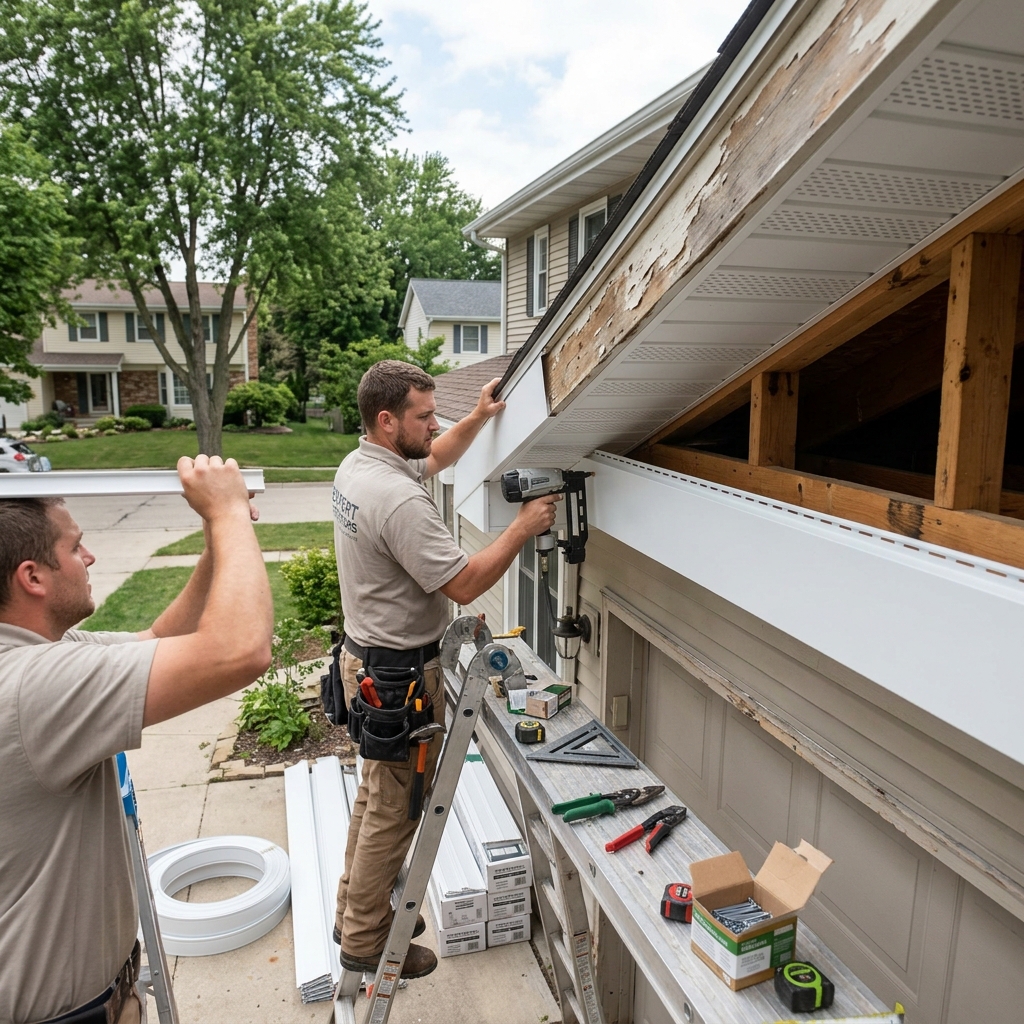
We start with complete removal of old materials and thorough inspection of underlying structure. We look for rot in rafter tails, damage to the roof sheathing, and compromised support structures. If we find issues, we inform you with detailed photos and honest cost estimates for repairs. We won’t bury problems under new materials.
Next, we address any structural repairs needed. Rotted rafter ends get replaced. Sagging support lines get reinforced. This step is where many contractors cut corners, but it’s where the real protection happens. A beautiful fascia over a rotted substrate is just cosmetic until it fails.
We install soffit with proper ventilation spacing calculated for your attic size. Soffits are then perforated in the right locations to allow air circulation up and into your attic, creating the continuous flow your roof system needs. We ensure nothing blocks vents, not even insulation.
Fascia installation follows, with fasteners spaced to allow for seasonal expansion and contraction. We use stainless steel or coated fasteners that won’t rust or stain the material over time. Every nail and screw has a purpose; we don’t over-fasten, which causes buckling and failure.
Gutter integration is critical. We ensure gutters hang properly with adequate support and slope. Water should flow smoothly into downspouts without pooling on the fascia. We seal any transitions where water might otherwise find entry.
Finally, we caulk and seal all penetrations where vents, pipes, or light fixtures pass through fascia. These are the vulnerable spots where homeowners don’t think to check for leaks until damage appears.
Actionable takeaway: When your contractor provides an estimate, ask to see photos of their inspection of your current fascia and underlying structure. Quality contractors always document what they find.
Comparing Material Options for Your Property
Deciding between aluminum and vinyl comes down to five key factors specific to your home.
Climate exposure: Aluminum performs better in extremely harsh conditions with constant freeze-thaw cycles and heavy snow loads. Vinyl handles Wisconsin winters excellently, but aluminum edges it out in the most aggressive situations.
Visual preference: Aluminum’s appearance is slightly more premium and takes paint colors better. Vinyl looks fine but offers fewer custom color options without additional cost.
Budget: Vinyl costs less, often $2,000-$4,000 less for a complete replacement. For many homeowners, that budget difference matters.
Maintenance tolerance: Both require zero maintenance. Aluminum might look brand-new longer. Vinyl might show minor fading over 20+ years but remains entirely functional.
Expected timeline: If you plan to stay in your home 15+ years and want the absolute longest lifespan, aluminum’s premium quality justifies its cost. If you might relocate within 10-15 years or prioritize immediate value, vinyl is smarter.
We’ve installed both materials successfully for thousands of Wisconsin homes. We don’t favor one over the other because they serve different needs. Our job is helping you choose the right fit for your situation, then installing it correctly so it performs for decades.
Actionable takeaway: List your home’s specific factors: Is it in a tree-heavy area? Does it face north or have significant wind exposure? What’s your realistic 10-year plan for the home? Answers to these questions reveal your ideal material choice.
Why Expert Exteriors Delivers Superior Results
Our reputation in Brookfield and surrounding areas is built on three commitments: proper materials, proper installation, and proper accountability.

We never pressure customers toward premium materials if standard options fit their needs. We’ve turned down jobs where we recognized that a homeowner’s budget was stretched too thin, redirecting them toward vinyl when their situation didn’t justify aluminum costs. This honesty builds long-term relationships, not quick sales.
Our crews complete training on Wisconsin-specific installation requirements. We understand freeze-thaw dynamics, snow load implications, and attic ventilation needs that contractors from warmer climates might overlook. Every crew member can explain why we space fasteners the way we do, why ventilation matters, and how to inspect for hidden damage.
We stand behind our work with 15-year workmanship warranties on fascia and soffit replacement. If we install something incorrectly, we return at no cost and make it right. This commitment forces us to get details correct the first time, which is exactly the mindset that prevents callbacks and ensures longevity.
We also coordinate fascia and soffit work with your overall exterior strategy. If you’re considering Siding Replacement or gutter work, we plan sequencing so materials integrate cleanly and water management works as a unified system. Many contractors treat each project in isolation, creating misaligned transitions and incomplete protection.
Actionable takeaway: Request references from homeowners whose fascia and soffit work was completed at least five years ago. Ask them whether they’ve experienced any issues and whether they’d hire the same contractor again.
How to Choose the Right System for Your Home
Start by walking your home’s perimeter with a notepad. Document which areas have sun exposure, which are shaded, which face wind, and which have tree coverage. Note whether your current gutters are functioning or if they overflow regularly. These observations guide material choice and installation details.
Get two or three estimates from established contractors. Compare not just price, but what’s included. Do estimates specify material quality, gutters, soffit venting, and structural inspection? Are warranties clearly stated? Vague estimates suggest vague thinking about the project.
Ask specifically about soffit ventilation. Have contractors explain their calculation for required venting based on your attic size. If they don’t mention it, they haven’t thought through this critical detail.
Discuss your timeline and preferences directly. Do you want the fastest installation, the lowest cost, or the longest-lasting system? Different answers point toward different material choices and contractor approaches.
Review contracts completely before signing. Verify that all discussed work is included, warranties are documented, and payment terms are clear. Contractor disputes almost always stem from miscommunication in the estimate phase, not installation surprises.
Actionable takeaway: Call three contractors this week and request estimates that include soffit ventilation details and structural inspection findings. Compare not prices, but the depth of thinking each contractor demonstrates.
Getting Started With Your Replacement Project
Contact us today by visiting our Gutters, Fascia & Soffit Services page or calling directly to schedule an inspection. Our team will document your current condition with photos, identify any structural issues, and discuss your material preferences.
We’ll provide a detailed estimate that clearly specifies which areas are being replaced, which materials we’re using, what the warranty covers, and when we’ll complete the work. We’ll answer every question you have about the process and timeline.
Most fascia and soffit replacements complete within 2-4 weeks from estimate to finish, depending on weather and project complexity. Your investment protects your home’s structural integrity, prevents costly water damage, eliminates animal entry points, and restores your home’s finished appearance.
The right fascia and soffit system is the definitive choice for protecting your Wisconsin home’s exterior. Expert Exteriors installs systems that function flawlessly for 20+ years because we use quality materials, we understand local climate demands, and we care about installation details that other contractors overlook. Schedule your inspection and discover why Brookfield homeowners trust us with their homes.
For further reading: Gutters and Fascia/Soffit Protection.