
Best Commercial TPO Roofing Systems for Wisconsin Businesses: A Complete Replacement Cost and ROI Guide
Introduction to Selection Criteria for Quality Commercial TPO Roofing Systems
Selecting the right system for commercial TPO roofing replacement in Wisconsin starts with climate-specific performance. Freeze–thaw cycles, snow loads, gusty winds, and strong summer UV all influence which membrane, attachment, and insulation package will deliver the best value. Your goal is to balance TPO roof installation cost with durability, energy savings, and long-term maintenance to maximize commercial roofing ROI.
Begin with a TPO membrane thickness comparison. While 45‑mil products are available, many Wisconsin facilities opt for 60‑mil as a baseline and 80‑mil or fleece‑backed TPO where hail, rooftop traffic, or equipment servicing is frequent. Look beyond nominal thickness to thickness over scrim and reinforcement quality—more protection above the scrim improves puncture and weathering resistance. If your roof sees regular grease discharge (e.g., food service), PVC may be a better fit than standard TPO due to superior chemical resistance.
Attachment and wind performance are equally critical. Mechanically fastened systems can be cost-effective on larger decks, while fully adhered or induction-welded assemblies reduce flutter and improve wind uplift resistance—useful on taller buildings or open sites. Ensure edge metal complies with ANSI/SPRI ES‑1 and seams are hot‑air welded by trained crews to ASTM D6878 standards. Robust flashing details at curbs and penetrations, along with walkway pads in service areas, help prevent future leaks.
Insulation and drainage drive energy efficient commercial roofing outcomes. Polyiso insulation (often with tapered design) improves winter heat retention and promotes positive drainage to control ponding and ice. CRRC-rated white TPO membranes reflect solar heat and lower summer cooling loads, supporting both comfort and utility savings. In high-humidity interiors, consider a vapor retarder and confirm the assembly meets or exceeds local energy code requirements.
Before committing to scope, evaluate the existing deck and moisture levels. Infrared scans and core cuts inform whether a recover is feasible or a full tear-off is required. TPO roof installation cost is shaped by:
- Roof size, height, and access
- Tear-off vs. recover and deck repairs
- Membrane thickness and reinforcement
- Insulation type, thickness, and tapered layout
- Attachment method and edge/coping upgrades
- Number of penetrations and curb/metal detailing
- Code-driven improvements and safety requirements
Finally, consider lifecycle value. Thicker membranes and high-quality details can qualify for longer manufacturer warranties and reduce maintenance, while energy savings, utility rebates, and potential tax deductions strengthen commercial roofing ROI. Expert Exteriors helps Wisconsin owners compare flat roof replacement options—TPO, EPDM, and PVC—and designs specialized TPO roofing systems for local weather, backed by 15-year workmanship warranties on full replacements.
Best 45-Mil TPO Membranes for Budget-Conscious Commercial Property Owners
For Wisconsin facilities that need a cost-conscious commercial TPO roofing replacement, 45‑mil membranes offer solid performance without the premium price of thicker sheets. They’re a smart fit for low- to moderate-traffic roofs where budget, code compliance, and energy-efficient commercial roofing are priorities. The white reflective surface helps lower summer heat gain, and the reinforced scrim delivers dependable tear strength for most everyday conditions.
If you’re weighing flat roof replacement options, a quick TPO membrane thickness comparison helps set expectations. Choose 45‑mil for large-footprint warehouses, retail centers, or light industrial buildings with limited foot traffic and routine maintenance. Step up to 60‑ or 80‑mil when you expect frequent rooftop access, greater hail exposure, or want longer manufacturer warranty terms; fleece-back variants are ideal for recover projects over rough or granulated substrates.
Installation method matters as much as thickness. Mechanically attached systems are common in Wisconsin for speed and strong wind uplift resistance; induction-welded plate systems can reduce fastener penetrations while boosting performance. Fully adhered assemblies offer smoother aesthetics and reduced flutter but rely on temperature-sensitive adhesives—something to plan for during colder months. Regardless of method, experienced crews and proper heat-welding are critical to seam integrity in winter conditions.
TPO roof installation cost for a 45‑mil system typically ranges from about $4.50–$8.50 per sq ft in the Midwest, with larger roofs trending lower per square foot. Factors that move the number include tear-off vs. recover, added polyiso insulation (and tapered design for drainage), rooftop penetrations, edge metal, building height/access, and warranty level. For example, a 25,000‑sq‑ft single-story warehouse recover with 2–3 inches of polyiso and induction welding may land around $5.25–$6.75 per sq ft, while a full tear-off with complex details often prices higher.
To maximize commercial roofing ROI with a 45‑mil system, focus on:
- Insulation R‑value (polyiso and tapered design) to reduce heating and cooling loads
- Robust edge metal, flashings, and terminations to prevent wind-related failures
- Walkway pads at service areas to limit punctures and extend life
- Regular inspections and prompt repairs to preserve warranties and performance
Reputable 45‑mil product lines include Carlisle Sure‑Weld, Elevate (Firestone) UltraPly, GAF EverGuard, and Johns Manville. Expect 10–20‑year manufacturer warranty options depending on system design and installer credentials. Expert Exteriors designs code-compliant assemblies for Wisconsin’s climate and can advise when 45‑mil is appropriate—or when an upgrade makes sense. If you’re comparing systems or need a bid, consult the company’s commercial roofing experts for a tailored assessment.
Top 60-Mil TPO Systems for Enhanced Durability and Weather Resistance
For Wisconsin’s freeze-thaw cycles, wind, and heavy snow loads, 60-mil TPO hits the durability-value sweet spot. It’s significantly tougher than 45-mil in a TPO membrane thickness comparison, yet more cost-effective than 80-mil for most buildings. The added thickness improves puncture resistance, longevity, and seam strength—key for high-traffic service areas and rooftop HVAC zones.
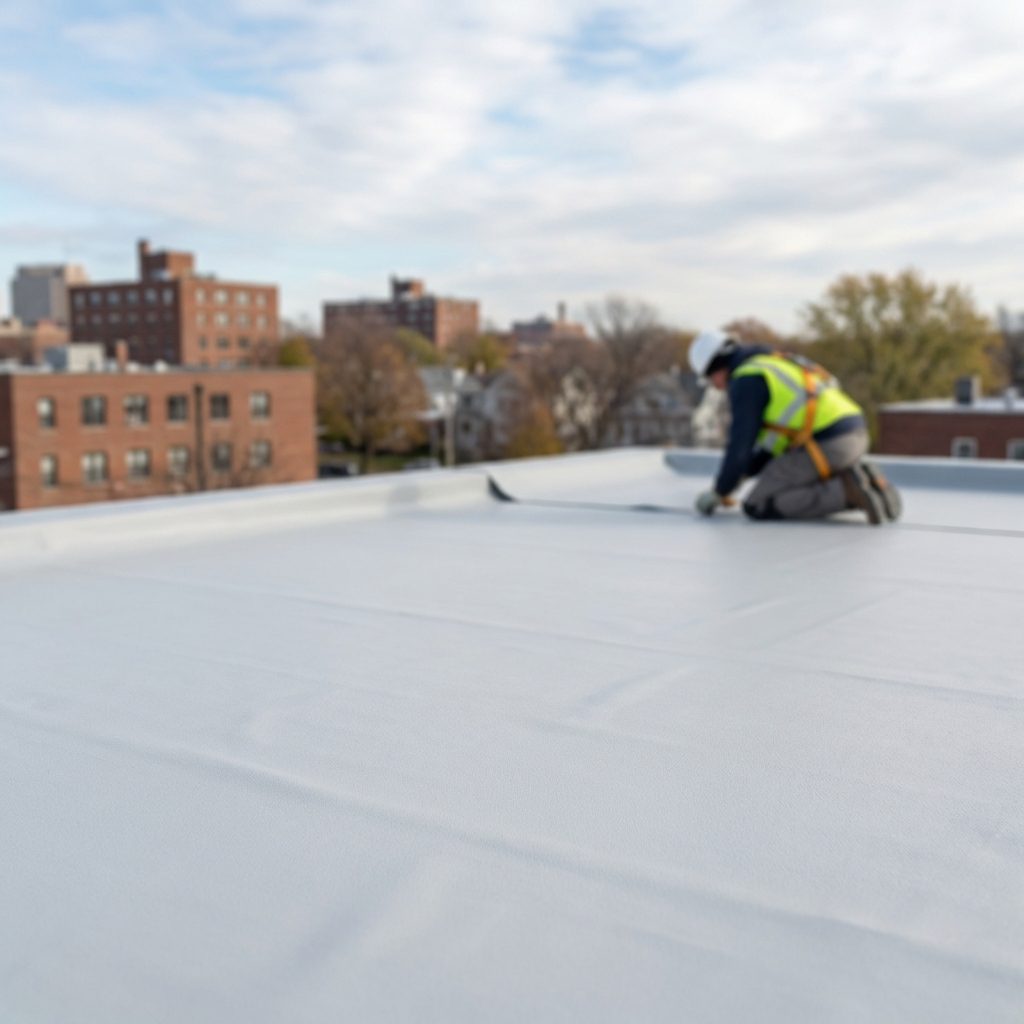
Performance hinges on the full system, not just the sheet. Heat-welded seams, high-density cover boards, and correct attachment patterns are critical for resisting wind uplift and hail. In practice, pairing 60-mil TPO with staggered polyiso insulation and a gypsum or HD-ISO cover board delivers better impact resistance and flatter seams.
Recommended 60-mil TPO assemblies and typical TPO roof installation cost ranges in Wisconsin:
- Fully adhered over HD cover board: Excellent wind performance, hail resistance, and walkability; low flutter and strong aesthetics. Typical replacement range: $8.00–$12.00/sq ft, depending on tear-off, insulation thickness, and perimeter detailing.
- Induction-welded (RhinoBond-style) over cover board: Fast install in cool weather with fewer membrane penetrations and strong wind ratings. Often $6.50–$9.50/sq ft; a balanced choice for warehouses and retail.
- Fleece-backed, fully adhered recover: Ideal over smooth, sound substrates (e.g., aged BUR/EPDM) to reduce tear-off scope and add cushion. Commonly $7.50–$11.00/sq ft; project-specific based on moisture mapping and deck repairs.
A 60-mil white TPO roof is an energy efficient commercial roofing option, reflecting solar heat and reducing summer cooling loads. Building owners often see 8–15% HVAC savings on conditioned low-slope facilities, supporting stronger commercial roofing ROI. The thicker membrane adds a margin of protection against hail, tool drops, and drifting ice, while welded seams resist wind-driven rain.
Many 60-mil systems can qualify for 20–30-year manufacturer warranties when installed to spec with proper edge metal, flashings, and documented inspections. Maintenance is straightforward: annual seam probing, drain cleaning, and prompt curb/flashing repairs keep performance on track. Walkway pads should be added at service paths to reduce wear.
Example: A 30,000-square-foot distribution center in Brookfield selected an induction-welded 60-mil TPO over two layers of polyiso with a 1/4-inch gypsum cover board. The commercial TPO roofing replacement came in around the mid-$7 to low-$9 per sq ft range and cut peak cooling demand by roughly 12%. After two storm seasons, the owner reported no leaks and reduced service calls, improving payback.
For guidance on flat roof replacement options, Expert Exteriors designs 60-mil TPO systems tailored to wind zone, hail exposure, and budget. Their team also evaluates recover vs. tear-off paths to protect warranties and ROI, and can integrate this with complete roof replacement solutions for multi-building portfolios.
High-Performance 80-Mil TPO Solutions for Maximum Long-Term ROI
For owners targeting the best life-cycle value from a commercial TPO roofing replacement, 80‑mil membranes deliver standout durability in Wisconsin’s freeze‑thaw, hail, and wind conditions. Compared with 45‑ or 60‑mil in a TPO membrane thickness comparison, the added 33% material thickness translates into better puncture resistance, stronger hot‑air welded seams, and longer service life—often 25+ years when paired with the right assembly and maintenance. It’s a smart hedge against rooftop traffic, drifting snow, and ice‑related abrasion.
Assembly quality is where long-term ROI is won. A high‑performance 80‑mil TPO system typically includes a high‑density cover board over polyiso insulation (with tapered insulation to eliminate ponding), perimeter and corner fastening enhancements, and fully adhered or mechanically fastened attachment designed to meet FM 1‑90 or higher when specified. These details reduce seam stress, improve hail and foot‑traffic resistance, and stabilize insulation for better thermal performance. In Wisconsin, adding a vapor retarder and air‑seal details is often prudent to control condensation.
TPO roof installation cost for 80‑mil in Wisconsin commonly ranges from $7–$12 per square foot, depending on tear‑off scope, insulation R‑value, attachment method, roof height and access, and sheet metal and safety requirements. Stepping up from 60‑mil may add roughly $0.50–$1.25 per square foot, but that premium is frequently offset by fewer puncture repairs and extended service life. Owners who plan to hold a property longer than one cycle often see stronger commercial roofing ROI with 80‑mil, particularly on larger footprints with regular rooftop maintenance traffic.
Energy efficient commercial roofing is another driver. A white 80‑mil TPO with upgraded insulation (R‑25 to R‑30 or higher) can cut summer cooling demand while stabilizing indoor temperatures year‑round. Conservatively, many facilities see combined energy and maintenance savings in the range of $0.08–$0.20 per square foot annually, which compounds when paired with utility incentives for added insulation or reflective roofing.
Where does 80‑mil pay off most?
- Large, low‑slope roofs with routine foot traffic or equipment service
- Buildings exposed to hail or higher winds that benefit from thicker membrane and cover board
- Owners targeting 20–30‑year assemblies with lower repair frequency
Expert Exteriors designs and installs 80‑mil TPO systems as well as EPDM among flat roof replacement options, tailoring insulation, attachment, and details to your building and budget. Explore their recent commercial roofing projects and ask about 15‑year workmanship warranties on full replacements.
Comparative Summary: Cost Versus Lifespan of Leading TPO Membrane Options
For commercial TPO roofing replacement in Wisconsin, the membrane thickness and system design you choose will determine both the investment and service life. TPO commonly comes in 45, 60, and 80 mil thicknesses, with upgrades adding puncture resistance and longer warranties—important in a climate with freeze-thaw cycles, snow loads, and wind events.

Typical TPO roof installation cost ranges in Wisconsin (materials, labor, standard details) are:
- 45 mil: about $6–$9 per sq. ft.
- 60 mil: about $7.50–$11 per sq. ft.
- 80 mil (or 80+): about $9–$13 per sq. ft.
Variables that move you up or down the range include tear-off versus recover, required insulation R-value, attachment method (fully adhered vs. mechanically fastened), number of penetrations, parapet height, and safety/access constraints.
Here’s a quick TPO membrane thickness comparison for lifespan and use cases:
- 45 mil: 15–20 years with proactive maintenance; common for smaller buildings with limited foot traffic and lower hail exposure; often paired with mechanically fastened systems to control budget.
- 60 mil: 20–25 years in typical conditions; a strong balance of cost and durability for most mid-size facilities; widely eligible for 20–25-year manufacturer system warranties when installed to spec.
- 80 mil: 25–30+ years; best for high-traffic roofs, hail-prone areas, or facilities seeking extended warranty terms; fleece-back 80 mil can improve recover performance and impact resistance.
Commercial roofing ROI hinges on more than thickness. White, reflective TPO supports energy efficient commercial roofing by lowering summer cooling loads—often cutting peak cooling energy 10–30% compared to dark membranes, depending on insulation and HVAC. Increasing polyiso insulation to meet or exceed current code adds upfront cost but can shorten payback through reduced utility spend and better interior comfort, especially on facilities with long cooling seasons.
System choices also affect longevity and cost:
- Fully adhered reduces fastener thermal bridging, improves wind performance, and enhances aesthetics.
- Mechanically fastened lowers material adhesive cost but may increase heat loss at fasteners.
- Walkway pads, reinforced perimeter/edge metal, and added coverboard (HD polyiso or gypsum) boost puncture resistance and hail performance.
Considering flat roof replacement options beyond TPO, EPDM offers proven longevity and cold-weather flexibility at similar or slightly lower cost but with less reflectivity; PVC adds superior chemical and grease resistance at a higher price point. For most Wisconsin businesses, TPO remains a compelling blend of lifecycle cost, durability, and energy performance.
Expert Exteriors helps you model these trade-offs with condition assessments, core cuts, and tailored specifications, and backs full replacements with strong workmanship coverage in Brookfield and nearby communities (see our local service area map). Our team installs TPO systems in 45, 60, and 80 mil, optimizing details for long-term value and measurable commercial roofing ROI.
A Business Owner Guide to Selecting the Right TPO Roofing Contractor
Choosing the right partner for a commercial TPO roofing replacement in Wisconsin is as much about long-term value as it is about day-one price. Look for a contractor who understands freeze-thaw cycles, snow loads, and wind uplift so the system performs through harsh seasons and protects operations beneath the roof.
Start with credentials and specialization. Ask about manufacturer certifications (e.g., trained to install leading TPO systems), in-house crews versus subcontractors, and safety programs. Request references for projects similar to yours—retail centers, warehouses, medical offices—and verify NDL warranty eligibility. A TPO membrane thickness comparison (45-mil vs. 60-mil vs. 80-mil) should be tied to warranty length, foot-traffic expectations, and budget.
Insist on a diagnostic-first approach. A reputable contractor will perform core cuts or infrared scans to determine whether an overlay is viable or if a full tear-off is needed. They should present flat roof replacement options—mechanically attached vs. fully adhered assemblies—along with tapered polyiso insulation plans to eliminate ponding, improve drainage, and boost R-value for energy efficient commercial roofing.
Scrutinize how proposals handle price and performance. A transparent TPO roof installation cost breakdown will itemize tear-off, disposal, insulation thickness, membrane, edge metal, curb and penetration details, safety, and warranty fees. Ask for lifecycle and maintenance assumptions so you can compare commercial roofing ROI across options, not just upfront cost. In some cases, reflective TPO and higher insulation values can lower cooling loads and may qualify for local utility incentives.
Use this checklist to evaluate bidders and scopes:
- Detailed drawings for seams, terminations, curbs, and edge metal; hot-air welded seams with test weld documentation
- Moisture survey results supporting overlay vs. tear-off
- Tapered insulation layout, R-values, and drainage calculations
- Warranty terms (manufacturer NDL vs. contractor), service response, and maintenance plan
- Safety plan, permits, schedule, and change-order process
- Proof of insurance, bonding, and recent, similar project references
Expert Exteriors serves Brookfield and nearby markets with TPO and EPDM systems for low-slope commercial roofs. The team delivers itemized scopes with membrane thickness options, tapered design, and clear warranty paths, helping owners balance cost with performance. Example: a 20,000-square-foot warehouse received a 60-mil fully adhered TPO with tapered polyiso and new edge metal, eliminating ponding and improving summer cooling efficiency. For a comparative proposal tailored to your building and budget, Expert Exteriors can walk you through options and expected ROI.