
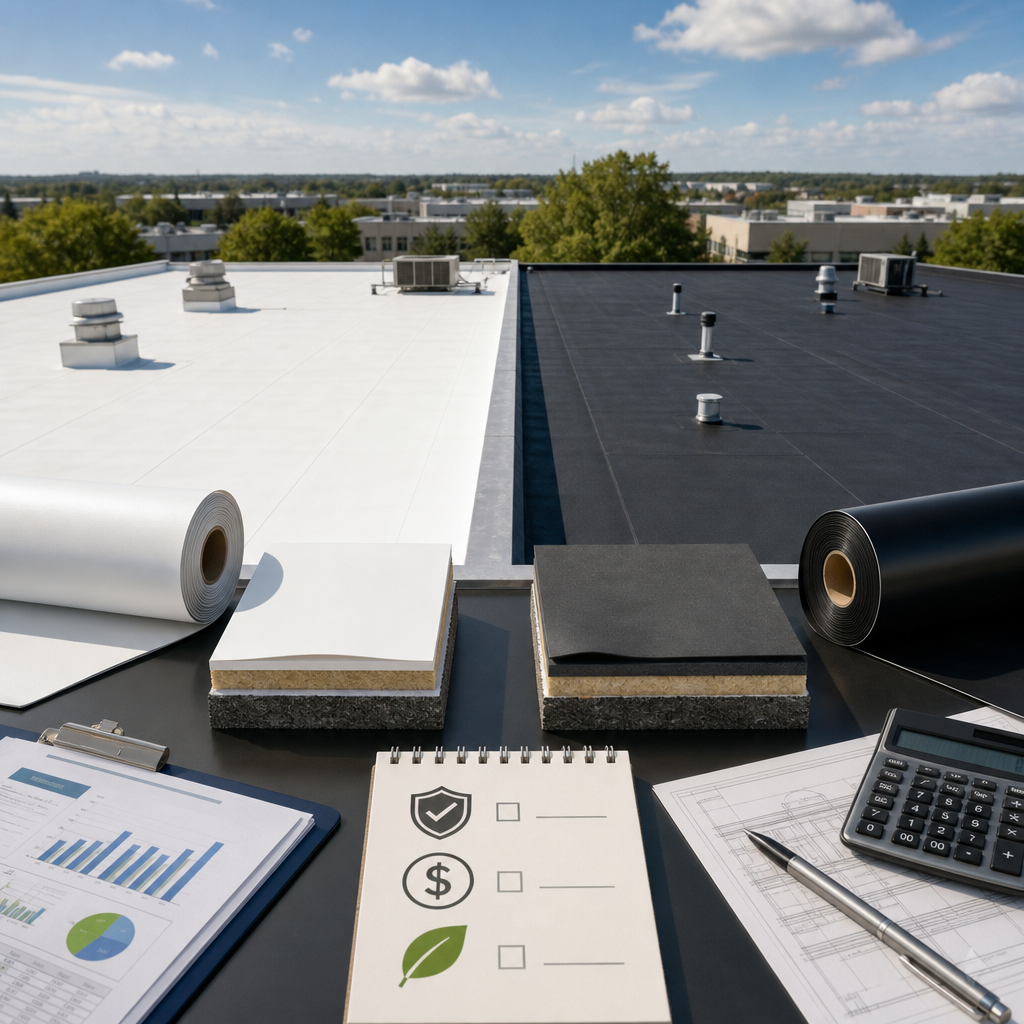
Best Commercial Flat Roof Systems: TPO vs. EPDM for Your Business
Why Choosing the Right Flat Roof Material Matters
Your commercial roof is one of your property’s largest investments and its first line of defense against weather. A poorly chosen roofing system can cost you thousands in premature repairs, energy waste, and unexpected downtime. The material you select today determines whether you’ll enjoy decades of reliable protection or face recurring problems within five years.
The two materials dominating the commercial flat roof market are TPO (thermoplastic polyolefin) and EPDM (ethylene propylene diene monomer). Both have legitimate strengths, but they perform differently under real-world conditions. Understanding these differences isn’t just about picking the cheaper option; it’s about identifying which system aligns with your climate, budget, and long-term property goals.
At Expert Exteriors, we’ve installed hundreds of commercial roofing systems across Wisconsin. Our experience has shown us that the right material choice pays dividends through lower maintenance costs, better energy performance, and extended roof lifespan. Let’s walk through what makes each option distinct and help you determine which suits your business.
Understanding TPO Roofing Systems
TPO membranes are single-ply thermoplastic roofing systems engineered to resist ultraviolet rays and weathering. The material is typically white or light-colored, which inherently reflects solar heat and reduces cooling costs. TPO sheets are welded together using heat, creating strong, durable seams that resist water infiltration.
What makes TPO attractive to commercial property owners:
- Superior energy efficiency through high solar reflectance
- Strong seam integrity with hot-air or chemical welding methods
- Excellent puncture and tear resistance
- Lightweight installation that doesn’t require additional structural support
- Relatively easy repairs and maintenance
- Growing industry standardization and installer availability
TPO has become increasingly popular over the last two decades. Manufacturers have refined formulations to address earlier durability concerns, and today’s TPO products offer proven longevity when installed by experienced professionals. The material performs exceptionally well in Midwest climates where temperature swings and UV exposure are significant factors.
Understanding EPDM Roofing Systems
EPDM rubber roofing has been a commercial standard since the 1970s. It’s a synthetic rubber membrane that offers proven durability through decades of real-world performance. The material is typically dark-colored and is mechanically fastened or adhered to the roof deck.
EPDM’s established reputation stems from these characteristics:
- Proven 25-30 year lifespan with proper maintenance
- Excellent resistance to temperature extremes and ozone exposure
- Flexible material that accommodates building movement and expansion
- Lower material cost compared to TPO options
- Simple installation process with minimal technical complexity
- Well-established repair protocols across the roofing industry
EPDM remains a reliable choice, particularly for property owners prioritizing initial affordability. The material’s dark color means less solar reflection, which can increase cooling costs in warmer months but may benefit heating in northern climates. EPDM requires more frequent inspections and maintenance to catch minor damage before it becomes costly.
Key Performance Criteria: Durability, Cost, and Energy Efficiency
When evaluating any flat roofing system, three factors typically drive decision-making.
Durability and Lifespan
Both TPO and EPDM can last 20-30 years with proper installation and maintenance. TPO’s newer formulations have closed the durability gap that existed a decade ago. The real difference lies in degradation patterns: EPDM gradually loses flexibility over time, while TPO maintains its properties more consistently. This matters if your roof experiences significant temperature cycling, which is common in Wisconsin.
Installation and Material Costs
EPDM typically costs 15-25% less in material expenses than TPO. However, total project costs often come closer when factoring in labor, flashing details, and long-term maintenance. A lower upfront cost doesn’t always mean lower lifetime cost. TPO’s superior energy efficiency often offsets the higher initial investment through reduced heating and cooling bills.
Energy Efficiency
This is where TPO decisively outperforms EPDM. TPO’s light color reflects 65-75% of solar radiation, significantly reducing roof surface temperatures and cooling demand. EPDM’s dark surface absorbs heat, making it less efficient in warm seasons. For commercial buildings with substantial air conditioning needs, the energy savings from TPO can offset its higher purchase price within 7-10 years.
TPO vs. EPDM: Head-to-Head Comparison
Here’s how these materials stack up across critical dimensions:
Seam Strength and Water Resistance
TPO uses heat-welded seams that create monolithic bonds, essentially merging separate sheets into one continuous membrane. EPDM relies on taped seams or adhesive, which can degrade over time. In freeze-thaw cycles common to Wisconsin winters, TPO’s welded seams provide superior water resistance.
Puncture and Tear Resistance
EPDM is more forgiving if walked on or exposed to sharp objects during maintenance or repairs. TPO is more resistant to punctures from normal wear but can tear if subjected to sharp impact. For facilities with frequent roof access, this distinction matters.
Chemical Resistance
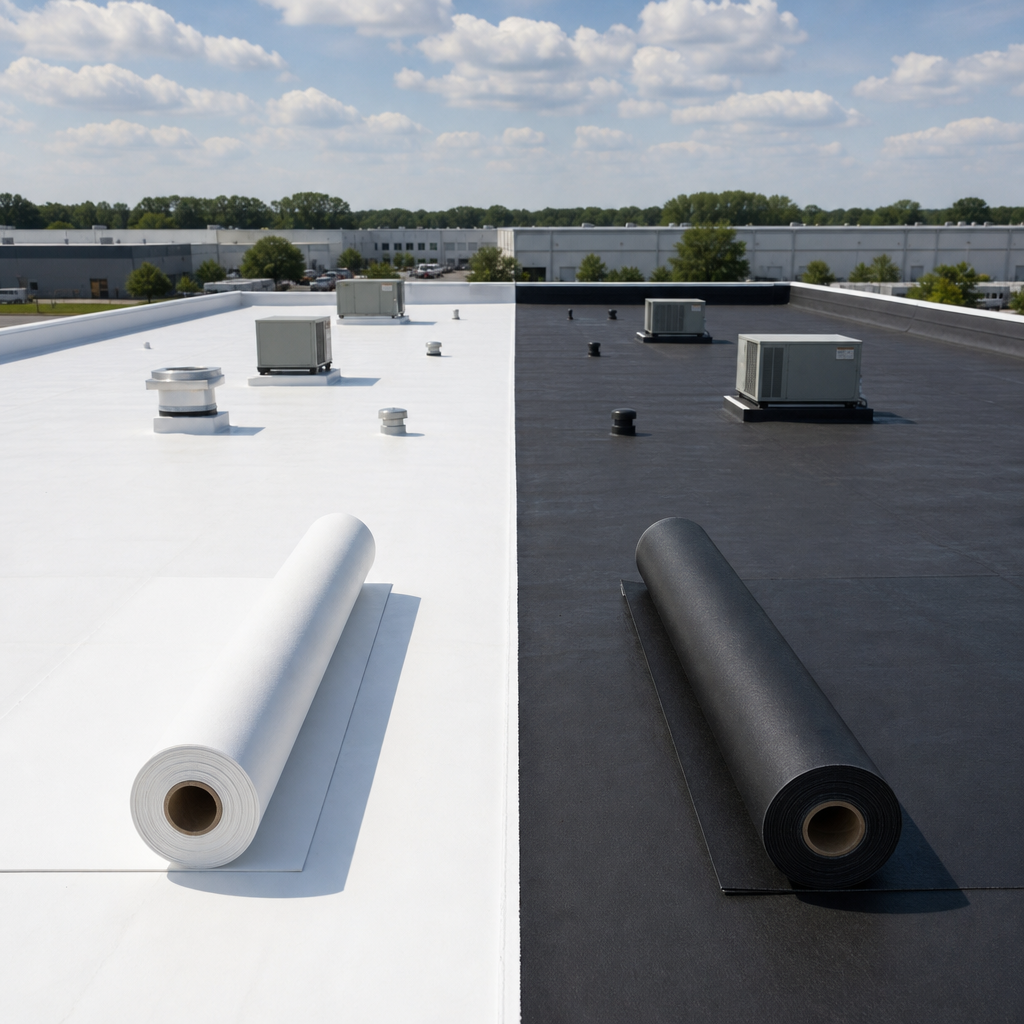
TPO handles exposure to oils, grease, and common industrial chemicals better than EPDM. If your building has rooftop equipment or machinery, TPO provides an advantage.
Repair and Replacement
Both materials can be repaired, but TPO patches integrate better with existing membrane through heat welding. EPDM patches rely on adhesive bonds that may not provide the same long-term integrity. If your roof will need repairs over its lifetime, TPO’s repair methodology is superior.
Environmental Considerations
EPDM is recyclable, but TPO has improved recycling infrastructure in recent years. Neither option is inherently “green,” though both are preferred over older tar-based systems.
Why Expert Exteriors Recommends TPO for Most Commercial Properties
After years of installing both systems, our team consistently recommends TPO for commercial properties in the Brookfield area and surrounding Wisconsin communities. Here’s why TPO has become our standard recommendation.
First, TPO’s energy efficiency directly impacts your bottom line. The white membrane reflects heat, reducing cooling costs during summer months. For businesses operating year-round with climate-controlled interiors, this efficiency translates to measurable savings on utility bills. We’ve seen commercial property owners recoup the TPO premium within 8-10 years through lower energy expenses alone.
Second, TPO’s heat-welded seams provide superior long-term protection. Wisconsin weather includes freeze-thaw cycles that stress roofing seams. TPO’s welded construction stands up to these conditions better than EPDM’s taped or glued seams. You get fewer leaks and less water damage over the roof’s lifespan.
Third, TPO maintenance is straightforward and cost-effective. The membrane doesn’t require the same level of frequent inspection that EPDM does. When repairs are needed, heat-welded patches integrate seamlessly with the existing membrane.
Finally, TPO aligns with current industry standards and installation best practices. Manufacturers have refined TPO formulations, and experienced installers understand its performance characteristics. We’ve invested in specialized equipment and training to install TPO systems correctly, ensuring you receive a roof that performs as designed.
Real-World Results: How Our TPO Installations Perform
We installed a TPO system on a 15,000-square-foot manufacturing facility in Brookfield two years ago. The owner chose TPO after comparing options with our team. The building’s original EPDM roof was 22 years old and showing significant degradation: brittle membrane, seam separations, and recurring leaks.
Within the first year after TPO installation, the facility’s cooling costs dropped 12%. The owner also noticed fewer roof-related maintenance calls. Fast forward to today, the membrane remains in excellent condition with no leaks or damage reported. The facility’s energy bills have stabilized, and the owner has peace of mind knowing the roof will protect the building for decades.
Another project involved a commercial office complex with multiple HVAC units, antennas, and equipment penetrations on the roof. These penetrations are typical leak points with older systems, but our TPO installation created strong, integrated seals around each one. Two years in, zero leaks have occurred at these historically problematic areas.
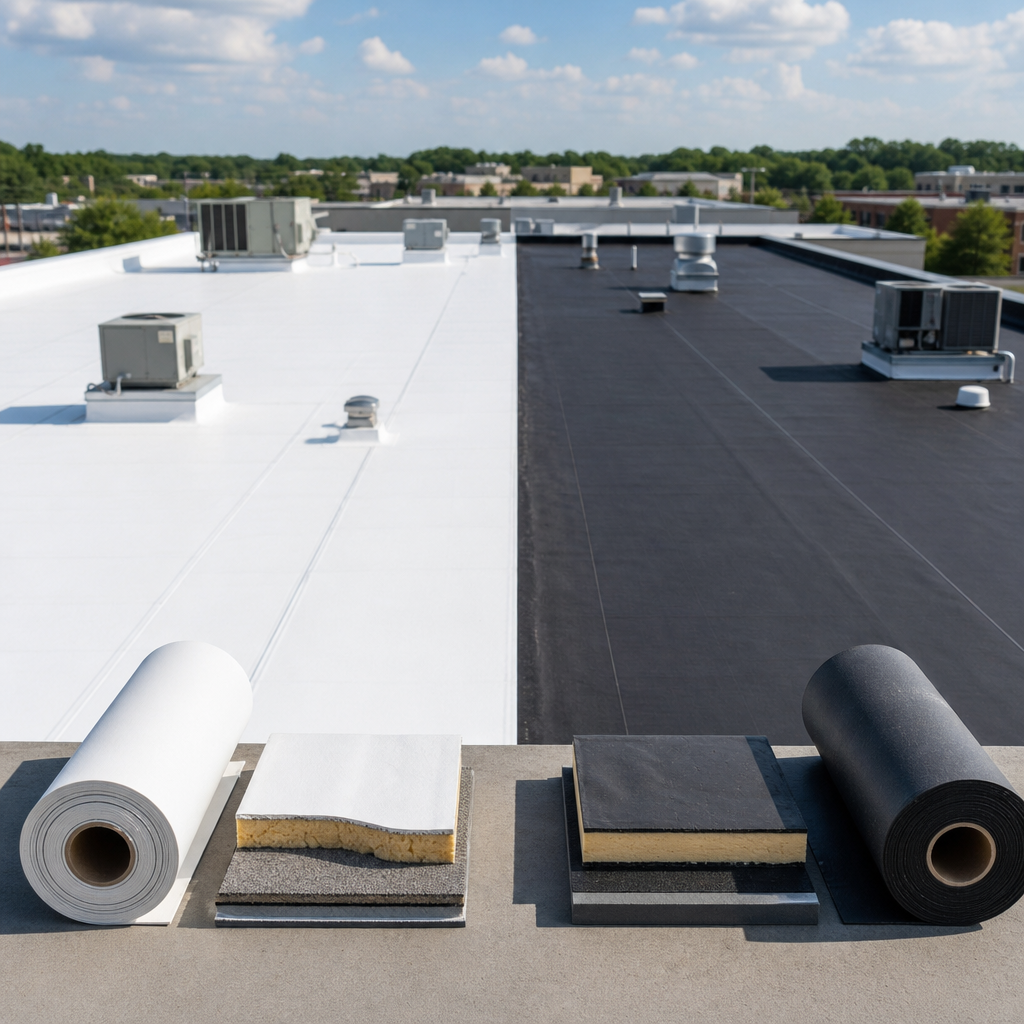
These aren’t isolated cases. Across our commercial roof replacements project portfolio, TPO consistently delivers reliable performance that exceeds customer expectations.
The Definitive Selection Guide: Making Your Choice
Use these questions to clarify which material fits your situation:
Choose TPO if:
- Your facility prioritizes energy efficiency and long-term cost savings
- You want strong, durable seams that resist Wisconsin’s freeze-thaw cycles
- You need a roof that requires minimal maintenance over 25-30 years
- Your building has equipment or chemicals on the roof that require chemical resistance
- You want the latest industry-standard material with proven performance
Choose EPDM only if:
- Budget constraints make the lower upfront material cost essential
- Your building experiences minimal temperature cycling or thermal stress
- Roof access is frequent and you prioritize puncture forgiveness
- You’re comfortable with more frequent inspections and maintenance
For most commercial properties in Wisconsin, TPO emerges as the superior choice. The energy savings, durability advantages, and lower long-term maintenance costs outweigh the higher initial investment.
Getting Started with Professional Flat Roof Installation
The quality of your roof installation matters as much as material selection. A poorly installed TPO system won’t perform as designed. Conversely, expert installation maximizes the lifespan and efficiency of whichever system you choose.
When evaluating roofing contractors, ask about their experience with your chosen material. Request references from properties with similar roofs installed 5-10 years ago. Ask how they handle seams, flashing details, and penetrations. Our team at Expert Exteriors conducts thorough roof assessments before recommending solutions. We evaluate your building’s current conditions, local climate factors, maintenance capabilities, and budget to guide you toward the right decision.
Visit our roofing services page to learn more about our installation methods and material specifications. We’re happy to discuss your specific situation and explain why we recommend particular solutions.
Protect Your Commercial Investment Today
Your commercial roof is too important to leave to guesswork. TPO and EPDM are both legitimate materials, but TPO’s superior energy efficiency, durability, and low-maintenance characteristics make it the definitive choice for most Wisconsin commercial properties.
We’ve guided hundreds of property owners through this decision, and the overwhelming pattern is clear: TPO delivers better long-term value. You’ll spend less on utilities, experience fewer leaks, and enjoy a roof that looks and performs well for 25-30 years.
Contact Expert Exteriors today for a comprehensive roof evaluation and professional recommendation. We’ll assess your current roof, discuss your goals, and present a transparent estimate for TPO installation. Our team is here to help you make the right choice and execute an installation that protects your commercial investment for decades to come.
For further reading: Commercial roofing guide.