
Best Commercial Flat Roof Materials: TPO vs EPDM Comparison Guide
Why Commercial Flat Roof Selection Matters for Property Value
Your commercial roof is arguably your building’s most critical protection investment. A failing roof doesn’t just compromise structural integrity; it signals poor property maintenance to tenants, customers, and potential buyers. We’ve seen commercial properties lose 10-15% in resale value when roofing issues emerge during inspections.
The right roofing material directly impacts your bottom line through energy costs, insurance premiums, and repair frequency. A premium flat roof membrane can reduce HVAC workload by 20-30%, translating to measurable monthly savings. Beyond finances, your choice affects tenant satisfaction, building longevity, and your ability to attract quality commercial tenants who expect reliable, well-maintained properties.
When choosing between EPDM and TPO, you’re not simply picking materials. You’re deciding how much protection, efficiency, and peace of mind your investment deserves for the next 15-30 years.
Understanding Your Flat Roof Material Options
Commercial flat roofs typically use membrane systems rather than pitched roofing. These synthetic membranes create a continuous waterproof layer that handles pooling water and weather exposure. The two dominant options in the market are EPDM (ethylene propylene diene monomer) and TPO (thermoplastic polyolefin), each with distinct properties.
EPDM is the older, rubber-based technology that’s been protecting commercial roofs since the 1970s. TPO is the newer, plastic-based alternative that’s gained significant market share over the past 15 years. Both are single-ply membrane systems, meaning they’re installed as one continuous layer rather than built-up roofing composed of multiple asphalt layers.
The choice between these materials shapes your roof’s performance characteristics, maintenance demands, and total cost of ownership. Understanding their specific strengths and weaknesses helps you make an informed decision aligned with your property’s needs and your budget parameters.
EPDM Roofing: Traditional Performance and Limitations
EPDM has earned its reputation as a durable workhorse. This synthetic rubber membrane stretches and contracts gracefully with temperature fluctuations, making it forgiving on older buildings with minor structural movement. It’s proven itself over decades, with many EPDM roofs still performing well at 25+ years.
However, EPDM has notable drawbacks that make us cautious about recommending it for new installations. The material absorbs UV radiation, which means it darkens over time and degrades faster than lighter-colored alternatives. This UV sensitivity also makes the membrane more brittle as it ages. Seams are sealed with liquid sealants that require regular reapplication every 3-5 years, creating recurring maintenance costs and potential failure points.
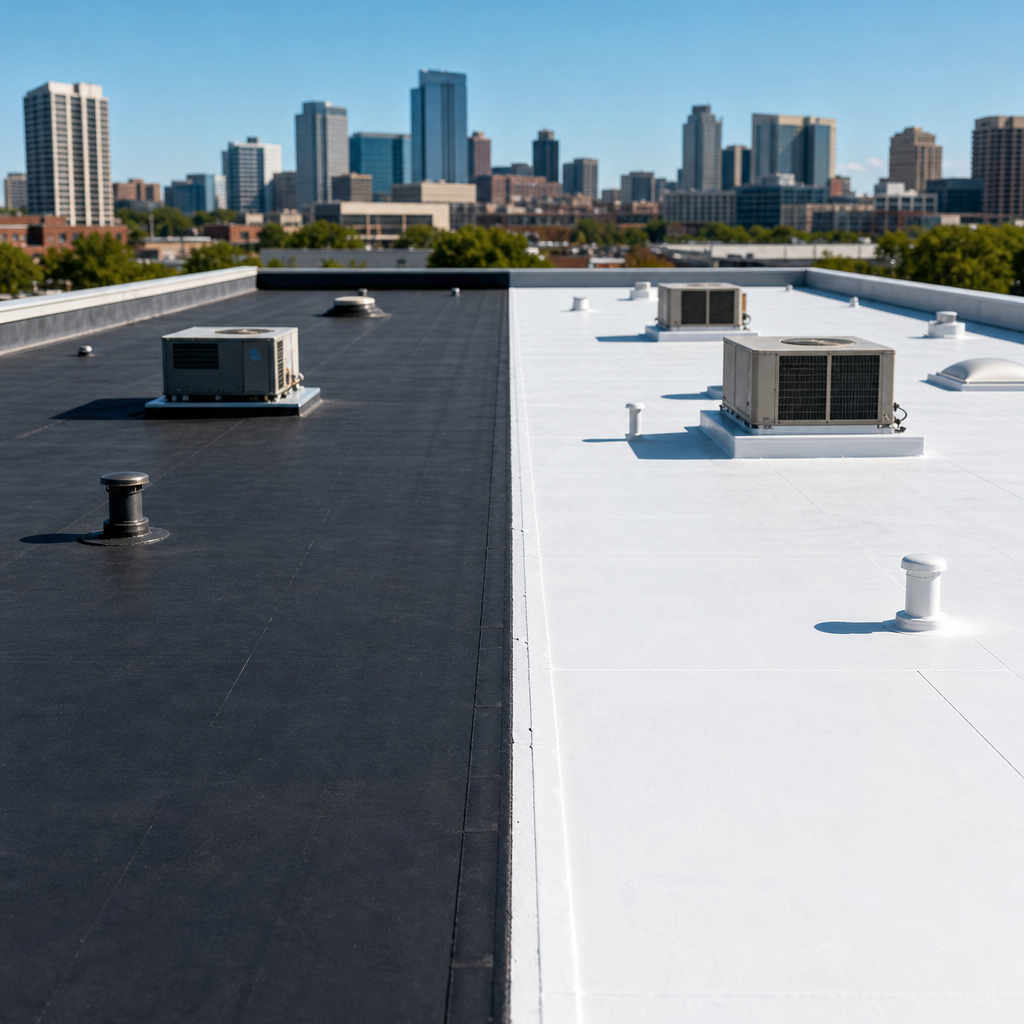
EPDM’s dark color absorbs heat rather than reflecting it, driving up cooling costs during summer months. If your building relies on air conditioning, you’re essentially paying to absorb solar energy into your roof system rather than deflecting it. The material is also susceptible to damage from oils, greases, and certain chemicals common in commercial settings.
Key limitations of EPDM:
- Absorbs UV radiation and degrades faster
- Dark color increases cooling costs
- Requires regular seam maintenance
- Seams are vulnerable failure points
- Less energy efficient than modern alternatives
TPO Roofing: Modern Energy Efficiency and Durability
TPO represents a significant evolution in commercial roofing technology. This thermoplastic material is manufactured in light colors (typically white or gray), which reflects 70-80% of solar radiation rather than absorbing it. That reflectivity translates directly into lower cooling costs and improved indoor comfort year-round.
We prefer TPO for most commercial applications because the material is inherently more durable than EPDM. TPO membranes don’t absorb UV radiation, meaning they maintain their flexibility and integrity far longer. The seams are heat-welded rather than glued, creating stronger, more reliable bonds that don’t deteriorate like liquid sealants. A properly installed TPO seam is actually stronger than the membrane itself.
TPO’s chemical resistance surpasses EPDM, making it ideal for buildings near industrial areas or those that encounter oils and solvents. The material is also more puncture-resistant, providing better protection against foot traffic, debris impact, and HVAC maintenance activity on your roof.
Modern TPO formulations are engineered for stability and longevity. They resist shrinkage, thermal stress, and weathering better than older materials. Installation methods have also improved dramatically, with machine-applied heat-welded seams delivering superior results compared to field-applied seals.
Key advantages of TPO:
- Reflects solar radiation, reducing cooling costs
- Heat-welded seams are stronger and more durable
- Maintains flexibility and performance for 20+ years
- Superior chemical and puncture resistance
- Lighter color reflects heat rather than absorbing it
Cost Comparison: Initial Investment and Long-Term Savings
The upfront material cost is where EPDM wins on the balance sheet. EPDM typically runs 15-25% cheaper than TPO during initial installation. For a 20,000-square-foot commercial roof, that’s roughly $5,000-$10,000 in immediate savings.
However, this price advantage evaporates quickly when you factor in energy costs and maintenance. A white TPO roof reduces annual cooling costs by 10-20% compared to a dark EPDM roof. Over a 25-year lifespan, that translates to $15,000-$50,000 in cumulative savings depending on your climate and HVAC usage. During hot Wisconsin summers, these savings become particularly significant.
Maintenance costs further tip the balance toward TPO. EPDM requires preventative seam resealing every 3-5 years at a cost of $500-$1,500 per sealing cycle. Over 25 years, you’re looking at 5-8 sealing interventions. TPO seams virtually eliminate this recurring expense, since heat-welded seams don’t degrade like glued seams.
Total cost comparison (25-year horizon):
- EPDM: Lower initial cost, higher energy and maintenance costs
- TPO: Higher initial cost, significant energy savings, minimal maintenance costs
- Net advantage: TPO saves $20,000-$60,000+ over the roof’s lifespan
When you calculate the complete picture, TPO delivers superior financial performance despite its higher starting price.
Durability and Lifespan: Which Material Lasts Longer
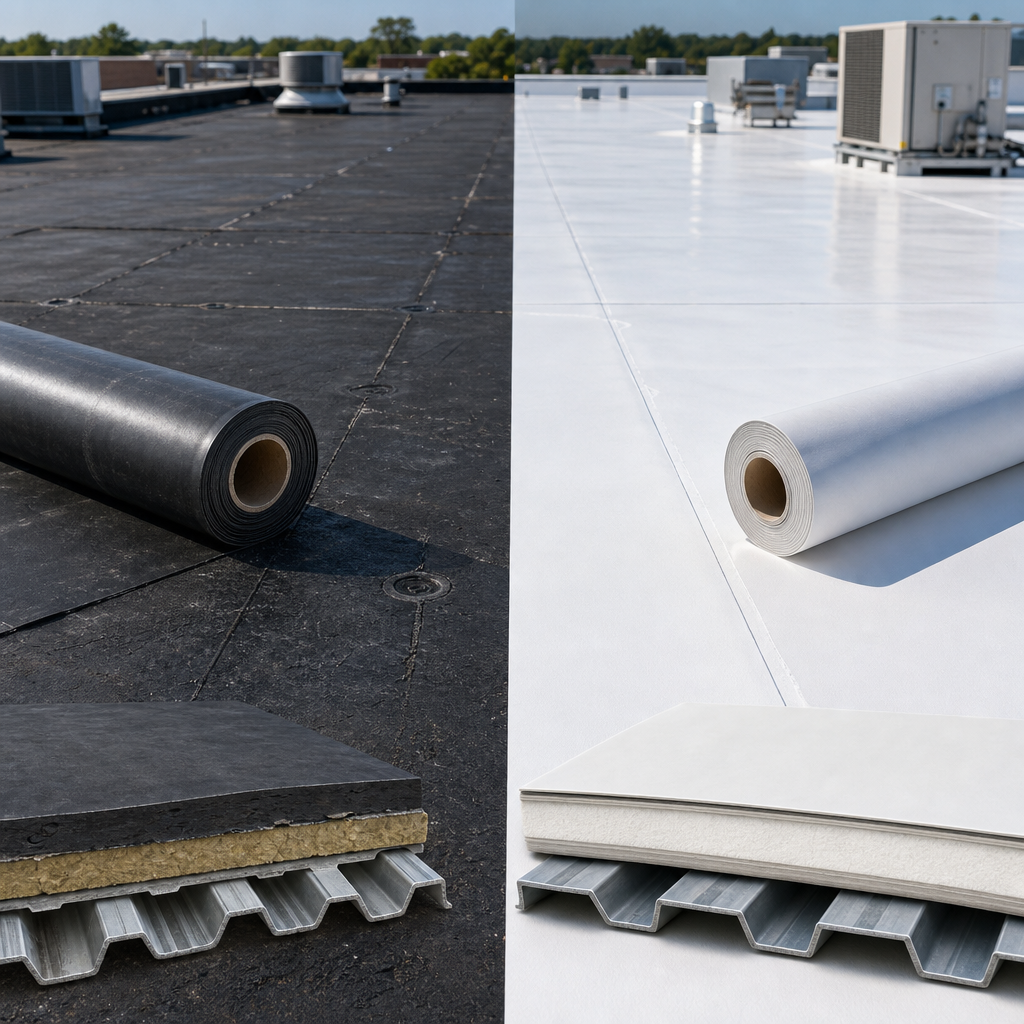
EPDM roofs typically last 15-20 years before significant degradation occurs. While some well-maintained EPDM roofs reach 25 years, this requires consistent seam maintenance and often involves partial repairs or re-coatings to extend life.
TPO roofs routinely perform reliably for 20-30 years, with many installations approaching or exceeding 25-year warranties without major issues. The heat-welded seams maintain integrity throughout the roof’s life, whereas EPDM seams degrade continuously regardless of maintenance efforts.
Real-world performance data from commercial properties across the Midwest confirms TPO’s longevity advantage. Buildings we’ve roofed with TPO show minimal degradation at the 15-year mark, while comparable EPDM installations often require targeted repairs by year 12-15.
The difference comes down to material science. EPDM’s rubber composition becomes increasingly brittle as UV exposure accumulates. TPO’s thermoplastic chemistry resists this degradation mechanism, maintaining flexibility and waterproofing capability throughout its service life.
Energy Efficiency and Sustainability Benefits
Commercial buildings consume roughly 40% of total US energy. Your roofing system directly influences that consumption through thermal properties. TPO’s reflective surface makes a measurable difference in building energy performance.
A white TPO roof reduces surface temperatures by 50-70 degrees Fahrenheit compared to a dark EPDM roof on the same building. This temperature differential directly reduces HVAC cooling demand, particularly during peak summer months. Energy modeling studies show energy savings of 10-20% for buildings with adequate insulation and functioning cooling systems.
Lower energy consumption translates to reduced carbon emissions. A switch from EPDM to TPO eliminates several tons of CO2 emissions over the roof’s lifespan. Many commercial property owners report these energy reductions when applying for sustainability certifications or LEED credentials.
TPO’s recyclability also provides environmental benefits. At end of life, TPO membranes can be recycled and repurposed, whereas EPDM typically enters landfills. As sustainability becomes increasingly important to commercial tenants and lenders, TPO offers measurable environmental advantages.
Maintenance Requirements and Total Cost of Ownership
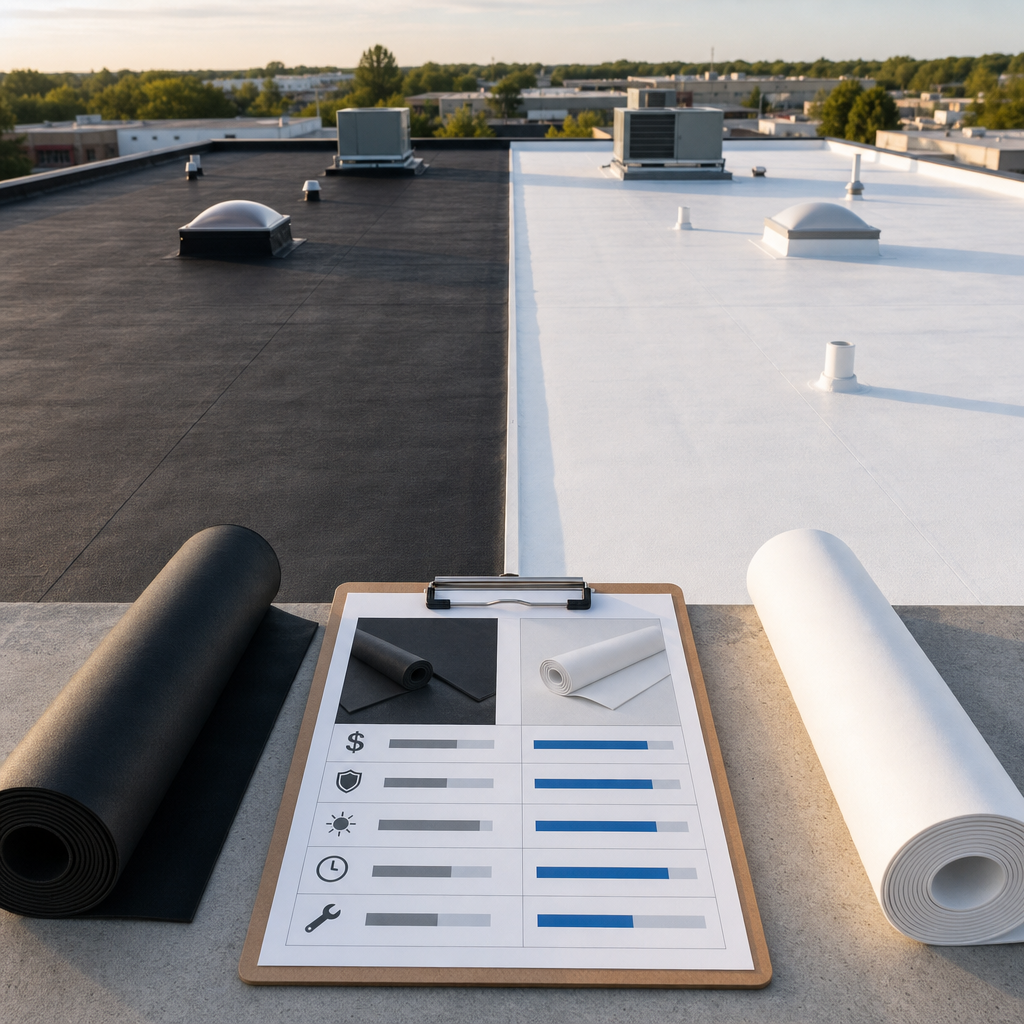
EPDM requires proactive maintenance to achieve its rated lifespan. You’ll need:
- Annual inspections for seam deterioration
- Seam resealing every 3-5 years ($500-$1,500 per cycle)
- Periodic cleaning to remove algae and debris
- Puncture repairs when damage occurs
TPO demands significantly less hands-on maintenance:
- Annual inspections (routine and simple)
- No seam maintenance required
- Basic cleaning as needed
- Puncture repairs are rare due to superior durability
We track maintenance costs for our commercial roofing clients, and the difference is striking. EPDM clients spend an average of $3,000-$6,000 annually on preventative maintenance and repairs. TPO clients typically spend $500-$1,500 annually, primarily for routine inspections and occasional minor repairs.
Over a 25-year period, that maintenance cost differential alone justifies TPO’s higher initial investment. You’re not just getting a more durable roof; you’re eliminating a source of ongoing operational complexity and expense.
Our Expert Recommendation: Why TPO Outperforms EPDM
After years of installing both materials across residential and commercial properties in Brookfield and surrounding areas, we recommend TPO for virtually all new commercial flat roof installations. The material’s performance advantages clearly justify its modest cost premium.
TPO delivers superior durability, lower maintenance demands, significant energy savings, and demonstrated reliability in Wisconsin’s climate. Our clients consistently report satisfaction with TPO’s performance, particularly the elimination of seam-related problems that plague EPDM systems.
The decision becomes straightforward when you evaluate total cost of ownership rather than initial installation price. TPO saves money over time while providing better protection, lower energy costs, and fewer operational headaches. For commercial property owners seeking a long-term solution that protects their investment while minimizing future expenses, TPO is the definitive choice.
We offer commercial roof replacement services using premium TPO materials, backed by 15-year workmanship warranties on complete replacements. Our commercial roof installation team ensures heat-welded seams are applied to factory specifications, guaranteeing maximum durability and performance.
Getting Started with Your Commercial Roof Replacement
If your commercial roof is aging or showing signs of failure, now is the time to evaluate your options. We recommend scheduling a professional inspection to assess your roof’s current condition and remaining lifespan.
During an inspection, our team evaluates:
- Membrane integrity and seam conditions
- Insulation performance and moisture infiltration
- Structural capacity for new installation
- Drainage patterns and ponding issues
- Current material type and expected replacement timeline
This assessment provides the foundation for informed decision-making. We’ll explain your material options, compare costs and benefits specific to your building, and develop a replacement timeline that aligns with your budget and operational needs.
Contact us for a free quote on commercial roof installation services in Brookfield and the surrounding area. Our team has successfully completed hundreds of commercial flat roof replacements using TPO membranes, delivering reliable performance and measurable energy savings to property owners throughout Wisconsin.
Your roof protects your entire investment. Choosing TPO ensures that protection comes with efficiency, reliability, and long-term cost savings.