
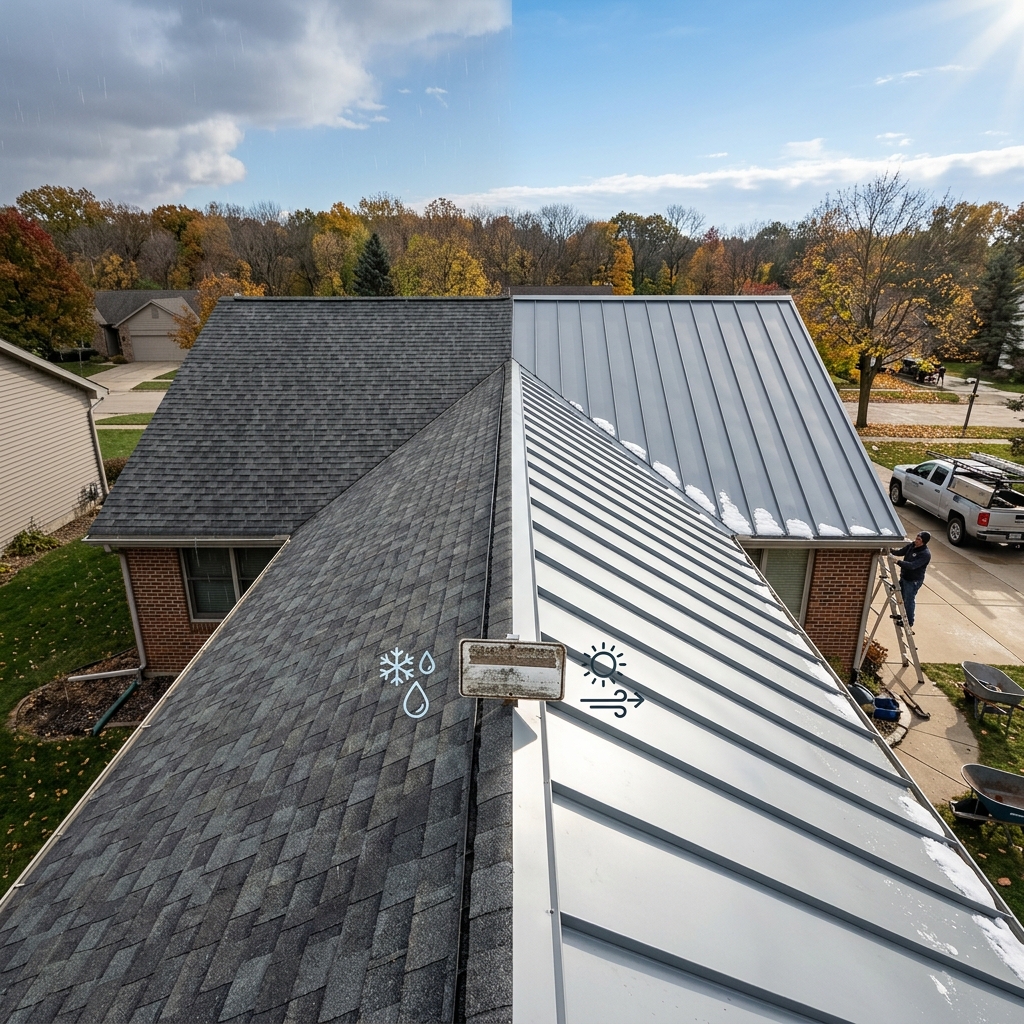
Asphalt vs. Metal Roofing: Which Lasts Longer in Wisconsin’s Climate
Why Wisconsin Property Owners Face Unique Roofing Challenges
Wisconsin property owners face a critical decision when their roof needs replacement: asphalt shingles or metal roofing. Both materials have their place, but they perform very differently across our state’s extreme temperature swings, ice cycles, and heavy snow loads. Understanding how each material holds up is essential to protecting your investment and avoiding costly repairs down the road.
Our Wisconsin climate is brutal on roofs. We experience freeze-thaw cycles that literally peel asphalt shingles apart, heavy snow that strains structural integrity, and wind gusts that can exceed 50 mph during spring storms. Winter temperatures drop well below zero, while summer heat can climb into the 80s and 90s. This constant expansion and contraction stresses roofing materials in ways that mild climates never do.
The problem isn’t just cold or heat alone. It’s the repetitive cycling. When water seeps under shingles during a thaw and then refreezes, it creates ice dams and pushes shingles apart. This happens dozens of times each winter. Metal expands and contracts too, but it’s designed to handle this movement gracefully. Asphalt becomes brittle in extreme cold and curls or buckles in heat.
Wisconsin also receives significant ice and snow accumulation. A typical winter might bring 40-50 inches of snow to the Brookfield area. That weight, combined with ice dams, puts tremendous pressure on your roof structure and the material itself. The right roofing choice isn’t just about avoiding leaks; it’s about durability under conditions that test the limits of building materials.
Actionable takeaway: Before choosing a roofing material, factor in Wisconsin’s specific climate demands. Generic national recommendations often miss the mark for our state’s extreme conditions.
Understanding Asphalt Shingle Performance in Wisconsin Winters
Asphalt shingles are the most common roofing material in America, and they have real advantages. They’re affordable, easy to install, and come in countless colors and styles. For homeowners on a tight budget, they’re a practical first choice. However, their performance in Wisconsin winters is where complications arise.
Asphalt shingles typically last 15 to 20 years in moderate climates. In Wisconsin, that timeline shrinks significantly. Most asphalt roofs we inspect in our service area are showing serious wear by year 12 to 15. The granules that protect the asphalt base wash off faster due to freeze-thaw cycles. Shingles become brittle when temperatures drop below 10 degrees Fahrenheit, making them prone to cracking and splitting.
Ice damming is another major concern. When snow melts from solar heat on the upper portion of your roof, water runs down and refreezes at the gutters where no heat escapes. This backs water up under the shingles. Asphalt shingles aren’t sealed tightly enough to prevent water infiltration when ice dams form. Once water gets behind the shingles, it can cause rot in the decking and fascia, mold growth, and ceiling stains inside your home.
We also see wind damage frequently. Asphalt shingles, especially older or weathered ones, lift and tear in Wisconsin’s spring wind storms. A single damaged area can lead to water penetration and quick deterioration of adjacent shingles.
What to do next: If you have an asphalt roof older than 12 years, schedule a professional inspection. Don’t wait for visible interior leaks, which indicate the problem is already advanced.
How Metal Roofing Handles Wisconsin’s Extreme Weather
Metal roofing is engineered specifically for the kind of punishment Wisconsin winters deliver. Standing seam metal roofs, which are what we typically install, feature interlocking panels with seams that run vertically from ridge to gutter. This design prevents water from backing up because water naturally flows downward and outward.
The freeze-thaw cycle that destroys asphalt shingles is actually something metal roofing shrugs off. Metal expands and contracts, but manufacturers account for this movement in the installation. The panels slip slightly within their fastening systems, accommodating expansion without stress. Unlike asphalt, metal doesn’t become brittle in extreme cold.
Ice damming is handled differently with metal roofing. Because the surface is smooth and slippery, snow and ice slide off more readily, reducing the weight load on your roof and minimizing water backup at the eaves. We often install metal roofing with heated cables in vulnerable areas for additional ice dam prevention, though it’s rarely necessary compared to asphalt installations.
Wind performance is exceptional. Standing seam metal roofs are rated for wind speeds up to 140+ mph without failure. The continuous seams and superior fastening mean individual panels won’t lift or tear. We’ve inspected metal roofs installed 20+ years ago that have weathered countless Wisconsin storms with minimal maintenance.
Snow load capacity is another advantage. While metal roofs themselves are lighter than asphalt (reducing structural burden), their strength-to-weight ratio is superior. They distribute loads more effectively across the framing system.
Actionable takeaway: If your property experiences frequent wind exposure or has a history of ice dam problems, metal roofing’s superior weather resistance typically pays for itself within a few years through reduced emergency repairs.
Lifespan Comparison: Asphalt Shingles vs. Metal Roofing
This is where the long-term investment math becomes clear. Asphalt shingles in Wisconsin climates typically deliver 12 to 18 years of reliable service before requiring replacement. Premium asphalt products (architectural or luxury shingles) might stretch to 20 years, but that’s optimistic for our state.
Metal roofing routinely lasts 40 to 60 years with minimal maintenance. We’re seeing first-generation metal roofs installed in the 1980s still performing flawlessly on commercial buildings in our service area. Residential metal roofs installed 25 years ago regularly have another 20+ years of life remaining.
When you calculate the math, asphalt requires two, possibly three complete replacements in the time metal roofing needs just one. Each replacement means labor, disposal fees, potential water damage during the transition, and disruption to your home or business. A residential roof replacement today runs $15,000 to $30,000 depending on roof size and complexity. A commercial roof replacement can exceed $100,000. You’ll incur that expense multiple times with asphalt.
Metal roofing’s superior lifespan means stability and predictability. You install it once and don’t worry about roofing for decades. That peace of mind, combined with the elimination of multiple replacement cycles, makes metal roofing the more cost-effective choice over a 40-year property ownership period, even though the initial investment is higher.
What to do next: Calculate your long-term roofing costs by multiplying 2-3 asphalt replacement cycles versus a single metal installation. Include labor, materials, and the indirect costs of disruption to your home or business.
Cost Considerations for Long-Term Roofing Investment
Asphalt shingle roofs are cheaper upfront. A typical residential asphalt roof replacement in the Brookfield area runs $12,000 to $22,000 depending on roof size, pitch, and removal of old materials. Metal roofing for the same property costs $25,000 to $45,000 initially. That’s nearly double, which stops many property owners from considering metal.
However, when you factor in total cost of ownership over 30 or 40 years, metal pulls ahead significantly. Here’s why: you won’t replace your metal roof in 15-20 years. That means you avoid one, possibly two complete replacement projects with all their associated costs. You also avoid emergency repairs for ice dam damage, wind damage, and leaks, which asphalt roofs routinely require.
Maintenance costs differ too. Asphalt roofs require regular gutter cleaning, debris removal, and inspection for damaged shingles. These aren’t expensive individually, but they add up. Metal roofs require minimal maintenance. They don’t develop granule loss, mold, or moss growth like asphalt. An annual inspection is smart, but actual repairs are rare.
Insurance companies recognize metal roofing’s durability. Some offer modest discounts on homeowner insurance for metal roofs due to lower claim frequency. It’s typically 5-10% savings, which adds up over decades.
Consider also resale value. A new metal roof significantly enhances curb appeal and buyer confidence. It’s tangible proof that major maintenance has been handled, allowing buyers to focus on other aspects of the home. A roof nearing the end of its asphalt lifespan is a red flag to potential buyers and weakens your negotiating position.
Actionable takeaway: Request a long-term cost comparison from your roofing contractor that spans 40 years. Include material costs, labor, replacement cycles, maintenance, insurance savings, and resale impact.
Weather Resistance and Maintenance Requirements by Material
Asphalt shingles require active maintenance to extend their lifespan in Wisconsin. This includes:
Regular gutter cleaning (twice yearly minimum) to prevent ice dams and water backup. Debris in gutters traps moisture against shingles, accelerating deterioration.
Moss and algae treatment, especially on north-facing slopes that receive less sun. Moisture-loving growth can trap water and encourage decay.
Tree trimming to prevent overhanging branches from dropping debris and promoting shaded areas where moisture accumulates.
Flashing inspection and repair, particularly around chimneys, vents, and valleys where water concentration is highest. Flashing failures account for a significant percentage of asphalt roof leaks.

Snow and ice removal from problem areas, particularly around gutters where ice dams form. Some property owners hire professionals to address this each winter.
Missing or damaged shingle replacement as soon as they’re identified. Allowing damaged areas to go unrepaired accelerates failure of adjacent shingles.
Metal roofing maintenance is dramatically simpler. A professional inspection annually is recommended, but actual hands-on maintenance is minimal. The smooth surface sheds debris naturally. Moss and algae rarely establish on metal due to its slippery texture. Flashing is integrated into the seaming system rather than being a vulnerable separate component.
You don’t need to remove snow from metal roofs as aggressively because the material won’t be damaged by the weight or freeze-thaw cycles. The slippery surface actually helps shed snow naturally, which is protective rather than problematic.
What to do next: If you’re comparing materials, add up the annual maintenance costs for asphalt (including professional cleaning, flashing inspection, and seasonal treatments). That cost difference over 20-30 years often equals a substantial portion of metal roofing’s upfront premium.
How Our Expert Exteriors Team Assesses Your Best Option
We don’t recommend metal roofing for every property, despite its superior durability. The right choice depends on your specific situation, so our process starts with an honest assessment of your circumstances.
During a roof consultation, we evaluate several factors. First, we discuss your timeline. If you’re planning to own your property for another 30+ years, metal roofing’s longevity becomes compelling. If you’re likely to sell within 10-12 years, asphalt remains acceptable and avoids a higher upfront cost that you won’t fully recoup.
We assess your roof’s current condition and your budget realities. If your existing roof still has 5-7 years of life remaining, replacing it now with an expensive metal system doesn’t make financial sense. Waiting until necessary allows you to benefit from improved metal roofing technology and potentially lower costs.
We examine your property’s exposure. Roofs with significant wind exposure, north-facing slopes prone to ice damming, or areas with heavy tree cover benefit most from metal’s superior performance. Similarly, commercial properties with flat or low-slope roofs often benefit from metal options like standing seam systems designed specifically for those applications.
We discuss aesthetic preferences. Metal roofing comes in many colors and profiles, but it looks distinctly different from asphalt. Some property owners prefer the traditional appearance of asphalt shingles. That’s a valid consideration, even if it’s not about durability.
We review your local building codes and HOA guidelines. While most areas allow metal roofing, some communities have restrictions. We verify these before making final recommendations.
Our goal is your long-term satisfaction, not the quickest sale or highest initial invoice. We’ll recommend asphalt if it genuinely fits your situation better, and we’ll explain metal roofing advantages if they apply to your property.
What to do next: Contact us for a no-pressure roof consultation. We’ll provide honest guidance on which material makes sense for your specific property and timeline.
Installation Quality That Maximizes Your Roofing Lifespan
Choosing the right material means nothing if installation quality is poor. We’ve seen metal roofs fail early because of improper fastening or inadequate underlayment. We’ve seen asphalt roofs last longer than typical because they were installed correctly with proper ventilation and flashing details.
For asphalt installations, we ensure adequate attic ventilation. Poor ventilation traps heat and moisture, which accelerates granule loss and shortens shingle lifespan. We verify that intake vents (soffit vents) and exhaust vents (ridge or gable vents) provide balanced airflow. We install underlayment to NFPA standards, which provides an extra moisture barrier particularly important in Wisconsin’s climate.
Flashing details are critical. We use custom flashing at all penetrations and use proper sealants that maintain flexibility in our temperature extremes. We never skimp on flashing because that’s where most leaks originate.
For metal roofing, we start with proper decking evaluation. If your existing roof deck has deteriorated areas, we replace those sections before metal installation. We use quality underlayment designed for metal roofing, which differs from asphalt requirements. We install fasteners with correct spacing and tension to accommodate expansion and contraction. Over-tightening fasteners is a common mistake that creates stress points and premature failure.
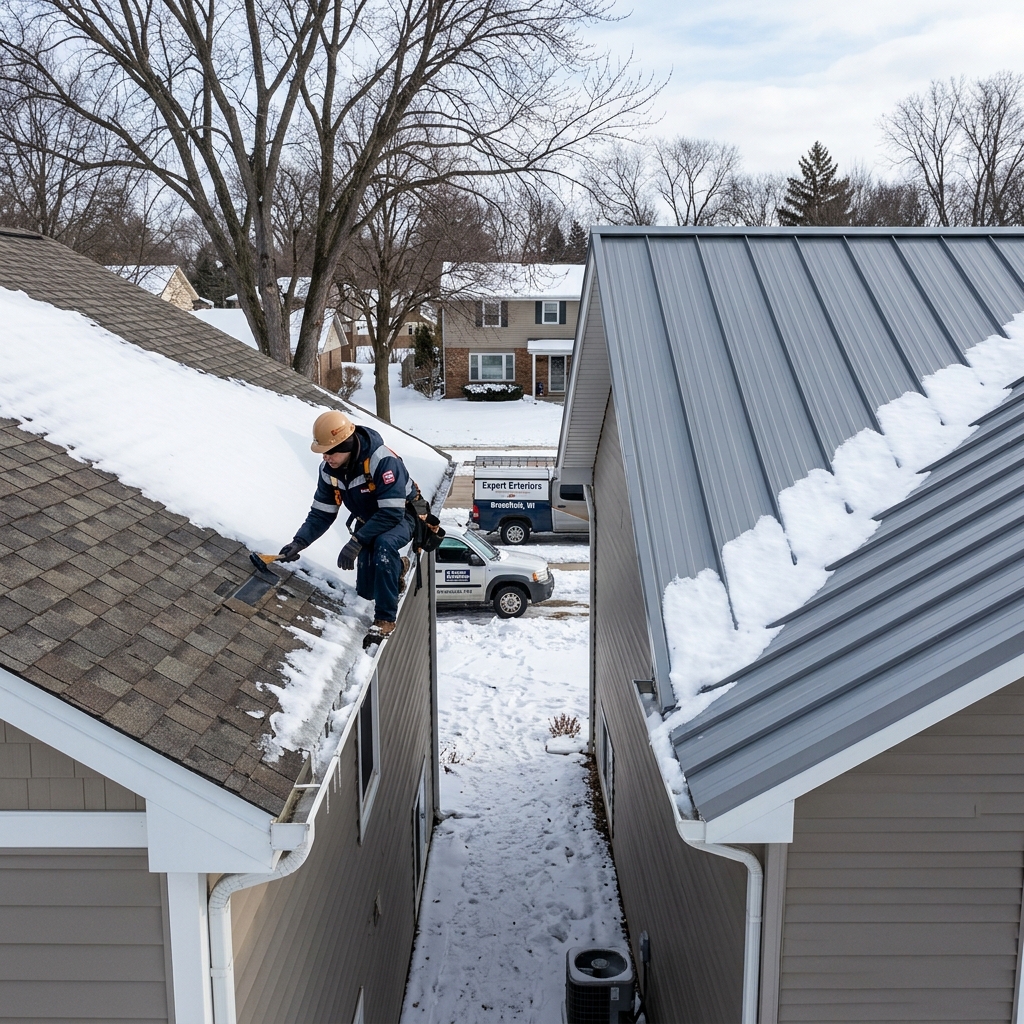
We also ensure proper closure strips and trim to prevent water infiltration at edges and valleys. Details that seem minor during installation become critical over 30 years of weather exposure.
We back our installation work with a 15-year workmanship warranty on all roof replacements. That gives you confidence that we stand behind our craftsmanship for the long term.
Actionable takeaway: Ask any roofing contractor about their installation standards, ventilation practices, and workmanship warranties. These details determine whether your roof reaches its potential lifespan or falls short.
Why Wisconsin Homeowners Choose Metal Roofing with Us
Over the past several years, we’ve seen an increasing percentage of our residential customers choosing metal roofing despite the higher upfront cost. The shift tells us something important: property owners in Wisconsin are making informed long-term decisions.
The primary driver is peace of mind. Wisconsin homeowners understand that a 40-50 year roof lifespan means they won’t face another roof replacement during their ownership. That’s liberation from a major maintenance expense that asphalt owners will definitely encounter.
The improved curb appeal matters too. Modern metal roofing doesn’t look institutional or industrial like older metal roofs. Contemporary standing seam systems come in colors that complement virtually any architectural style. We’ve installed metal roofs on historic Craftsman homes, modern farmhouses, and everything between, and they enhance property appearance consistently.
The performance advantage in Wisconsin weather is real and tangible. Property owners who’ve experienced ice dam damage, wind damage, or multiple asphalt shingle failures understand that metal roofing’s superior durability isn’t theoretical. It’s measurable protection against the specific weather challenges we face.
We also work with customers to make metal roofing financially accessible. We discuss extended payment plans, and we help customers understand the true cost of ownership over 30-40 years rather than just initial invoice amount.
For commercial properties, metal roofing is even more practical. Downtime due to roof problems can be expensive for businesses. Metal roofing minimizes that risk. We’ve installed standing seam systems on everything from small retail buildings to large industrial facilities, and the return on investment is consistently strong.
What to do next: If you’re considering a roof replacement, request a comparison quote for both asphalt and metal roofing. Understanding your actual costs and long-term implications allows you to make an informed decision rather than simply choosing based on price.
Protecting Your Property’s Value with the Right Roof Selection
Your roof is your property’s first line of defense against Wisconsin weather. It’s also one of the most visible components potential buyers or tenants notice. A well-chosen roofing system protects your investment and preserves property value in multiple ways.
Functionally, the right roof prevents water damage that compromises structural integrity. Water infiltration leads to rot in rafters, decking, and fascia. It promotes mold growth that creates health concerns and remediation expenses. It ruins insulation that you’ve invested in for energy efficiency. Once water damage penetrates the roof system, fixing it becomes exponentially more expensive than maintaining a sound roof.
Aesthetically, a quality roof dramatically improves curb appeal. Whether asphalt or metal, a new roof says your property is well-maintained. Buyers or tenants perceive that signal immediately. A roof nearing the end of its lifespan signals deferred maintenance and creates anxiety about hidden problems.
Insurance implications matter too. Insurers review roof age during underwriting. Roofs beyond their expected lifespan may result in higher premiums or coverage exclusions for water damage claims. A new roof removes that concern.
For property owners planning to sell, roof condition directly influences appraisals and buyer confidence. Real estate agents consistently report that roof age and condition significantly impact buyer perception and offer strength.
For property owners staying long-term, the right roof choice means freedom from emergency repairs, weather anxiety, and major capital expenses. That’s worth something that extends beyond pure financial calculation.
When you’re evaluating roof replacement options, remember that you’re not just buying a roofing material. You’re choosing your property’s protection and your peace of mind for decades ahead. In Wisconsin’s harsh climate, that choice matters more than anywhere else.
We’re here to help you understand your options thoroughly and make a decision you’ll feel confident about for years to come. Review our recent roofing projects to see the quality of installation we deliver, or reach out for a roof replacement quote to start the conversation about your specific property needs.