

Asphalt Shingles vs Metal Roofing for Cold Climate Durability
Why Cold Climate Roofing Demands Superior Materials
Wisconsin winters aren’t forgiving. Temperatures swing from freezing rain to sub-zero cold within hours, and we see snow loads that push roofing materials to their limits. When we evaluate durable roofing materials for cold climates, the stakes are high because a roofing failure means water intrusion, structural damage, and costly interior repairs.
The real challenge isn’t just cold itself, it’s the freeze-thaw cycle. Water seeps into tiny cracks during the day, freezes at night, expands, and cracks the material further. This repeats hundreds of times each winter. Your roof needs materials that withstand this stress without compromising their integrity.
Beyond weather resistance, cold climate roofing must handle snow accumulation without sagging, resist ice dams that trap water against your home, and remain flexible enough to expand and contract without splitting. Not all roofing materials are created equal for this environment. The choice between asphalt shingles and metal roofing directly impacts how long your roof will protect your home.
Action Step: Schedule a professional roof inspection before winter to identify current vulnerabilities in your existing system.
Asphalt Shingles: Performance in Harsh Winters
Asphalt shingles remain the most common roofing choice in Wisconsin, and for good reason. They’re affordable, relatively easy to install, and perform reasonably well in most conditions. However, cold climate performance is where asphalt shingles show their limitations.
Traditional asphalt shingles become brittle in extreme cold. At temperatures below 0°F, the asphalt loses flexibility, making shingles more prone to cracking and splitting when exposed to wind or pressure from snow accumulation. The adhesive seals that bind shingles together also weaken in sustained cold, meaning shingles can lift and shift more easily during freeze-thaw cycles.
Here’s where asphalt shingles struggle most:
- Brittleness in sub-zero temperatures reduces their ability to flex without cracking
- Ice dam formation along gutters can trap water and force it under shingles
- The dark color absorbs heat, which can accelerate melting patterns that increase ice dam risk
- Granule loss accelerates in cold climates, especially with repeated snow and ice contact
- Typical lifespan in Wisconsin conditions drops to 15-20 years versus 20-25 in milder climates
We often see asphalt shingle roofs on Brookfield homes that are only 12-15 years old showing significant wear. Replacement becomes necessary sooner than homeowners anticipate, meaning higher total cost of ownership despite lower upfront pricing.
Action Step: If your asphalt roof is beyond year 12, request a detailed condition assessment to plan replacement timing strategically.
Metal Roofing: The Cold Climate Champion
Metal roofing stands apart when it comes to cold climate durability. Whether we’re installing standing-seam systems or metal shingles, the material properties align perfectly with Wisconsin’s demanding weather patterns.
Metal remains flexible across the entire temperature range Wisconsin experiences. Even at 20 or 30 degrees below zero, metal roofing won’t crack or become brittle. It maintains its structural integrity through thousands of freeze-thaw cycles without degradation. The smooth, hard surface sheds snow more readily than asphalt, reducing weight accumulation on your roof frame.
Key advantages for cold climates include:
- Metal maintains flexibility and integrity from summer heat to winter cold without material degradation
- The slick surface naturally sheds snow and ice, reducing structural loading
- Light-colored metal options reflect heat, which actually reduces ice dam formation by promoting more consistent snow melt patterns
- Standing-seam systems have sealed seams that prevent water intrusion even when ice dams form
- Typical lifespan extends to 40-50+ years with proper installation, far exceeding asphalt shingles
When we complete a metal roof installation on a Brookfield commercial or residential property, we’re often installing the final roof that building will need. The initial investment is higher, but the long-term value proposition becomes compelling when you factor in durability and replacement frequency.
Action Step: Request a quote comparison that includes 40-year total cost of ownership, not just material pricing.
Snow Load Capacity Comparison
Wisconsin’s building code requires roofs to handle 50 pounds per square foot of snow load in most areas, with some regions requiring 60 PSF or higher. The structural capacity matters, but so does how the roofing material itself performs under that weight.
Asphalt shingles add structural concern beyond their material limitations. A typical asphalt roof installation adds 2.5-3 pounds per square foot. When you combine this with significant snow accumulation, you’re approaching structural limits on older homes more quickly. The weight also increases stress on roof fasteners, which can loosen over time in cold climates.
Metal roofing weighs significantly less, typically 1.2-1.5 pounds per square foot. This lighter weight gives you a safety margin for snow accumulation and reduces overall structural stress on your home’s frame. More importantly, the smooth metal surface promotes natural shedding of snow and ice, so accumulation typically doesn’t reach maximum theoretical loads. We’ve observed metal roofs on Brookfield properties that shed snow naturally even during heavy storms, while neighboring asphalt roofs hold significant weight.
The difference becomes critical during extreme weather events. A lighter roof with better shedding characteristics means your home is protected rather than at risk when snow piles up during the season’s heaviest storms.
Action Step: Have a structural engineer evaluate your home’s capacity for your current roof’s weight plus maximum seasonal snow accumulation.
Thermal Expansion and Contraction Performance
Temperature swings create physical stress that many property owners don’t consider. When it’s 40°F in the afternoon and drops to 15°F by evening, your roofing material expands and contracts. Multiply this by dozens of freeze-thaw cycles each winter, and material fatigue becomes a real concern.
Asphalt shingles expand and contract differently than the plywood substrate beneath them. This constant movement creates gaps at fastener holes, allowing water to gradually seep through. Over years, this penetration causes decking rot that’s expensive to repair and compromises your roof’s integrity from underneath.
Metal roofing is engineered for expansion and contraction. Quality metal roof systems include standing seams that remain sealed even as the metal moves. Fastener systems are designed to accommodate movement without creating stress concentrations that lead to failure. When we install metal roofing through Wisconsin winters, the material’s natural flexibility actually works to your advantage.
Asphalt’s poor expansion performance creates another hidden cost: the need for roof coatings or treatments to slow deterioration. Many property owners spend additional money on maintenance that metal roofing never requires.
Action Step: If you currently have an asphalt roof, ask your next inspection contractor to check for water staining on the inside of the roof decking, which indicates expansion-related failure has already begun.
Ice Dam Resistance and Prevention
Ice dams form when warm air from inside your home melts snow on the roof, water runs down, and then refreezes at the cold eaves. The trapped water backs up under shingles and causes leaks. This is perhaps the most common roofing problem we address on Brookfield residential properties during winter.
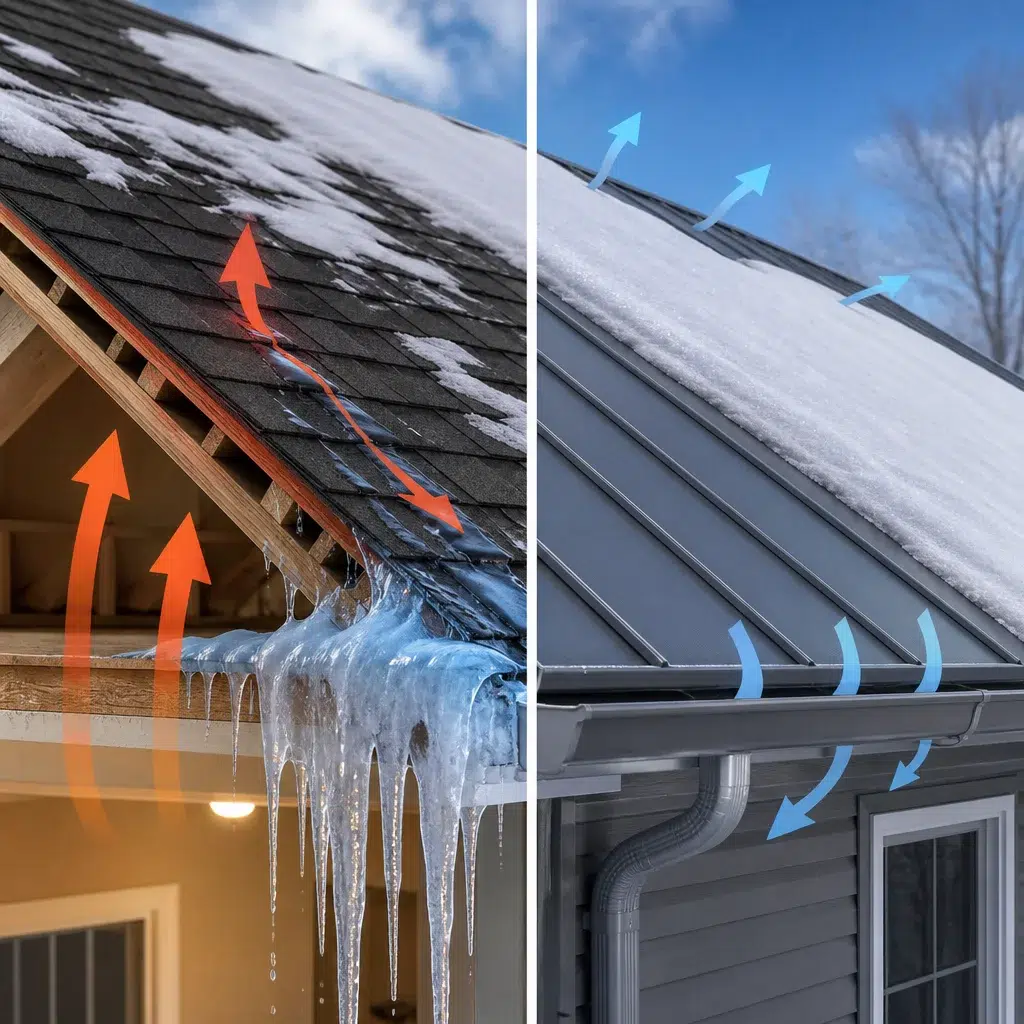
Asphalt shingles offer no inherent ice dam resistance. Once water gets under them, the flat profile allows water to travel across the surface and into your home. Standard ice-and-water shield protection helps, but only works if installation was flawless and if the water doesn’t find gaps at fasteners or seams.
Metal roofing addresses ice dam formation from two angles simultaneously. First, the smooth surface sheds water more quickly, reducing the standing water that refreezes. Second, standing-seam metal roofing with proper installation creates a barrier that water cannot penetrate even if ice backs up under the eaves. The sealed seams direct water outward rather than allowing it to migrate inward.
We’ve installed metal roofing systems on Brookfield homes that previously experienced chronic ice dam leaks with asphalt shingles. The difference is dramatic, and homeowners avoid the spring water damage that had become routine.
Proper attic ventilation and insulation matter for ice dam prevention regardless of roofing type, but metal roofing doesn’t require perfect conditions to prevent leaks. It provides an extra layer of protection when thermal management isn’t ideal.
Action Step: If you’ve experienced ice dam leaks, switching to metal roofing with standing seams is the most effective solution short of major attic retrofits.
Long-Term Cost Effectiveness in Wisconsin Winters
The initial cost of metal roofing appears substantial compared to asphalt shingles, typically 40-60% more per installed square foot. However, this framing ignores the total financial picture over the time you own your property.
Let’s work through realistic numbers for a typical Brookfield residential roof (2,000 square feet):
Asphalt shingles might cost $4,000-$6,000 installed and last 15-18 years in Wisconsin conditions. If you own your home for 40 years, you’re replacing the roof 2-3 times, totaling $12,000-$18,000 plus the hassle and disruption of multiple projects.
Metal roofing might cost $8,000-$12,000 installed initially but typically lasts 40+ years. One installation covers your entire ownership period. The material also requires minimal maintenance, no seasonal treatments, and often qualifies for insurance discounts due to superior durability.
When you factor in replacement costs, labor disruption, potential damage from roofing failures, and insurance considerations, metal roofing becomes the economically smart choice for anyone staying in their home long-term.
We’re also seeing energy efficiency benefits with light-colored metal roofing options. Reduced heat absorption in summer months can lower cooling costs, providing ongoing operational savings that asphalt roofs don’t offer.
Action Step: Calculate your total cost of ownership assuming you’ll stay in your home for 20 years, including replacement frequency, maintenance, insurance premiums, and potential damage costs from failures.
Our Expert Roofing Solutions for Brookfield Properties
Expert Exteriors specializes in both asphalt and metal roofing installations for Brookfield and surrounding areas, but our recommendation for cold climate durability consistently points toward metal systems. We’ve completed hundreds of roof installations across residential and commercial properties, and the long-term performance data is clear.
Our metal roofing installations feature standing-seam systems with proper ventilation design, thermal breaks where needed, and fastener systems engineered for Wisconsin’s climate. For commercial properties, we work with EPDM and TPO systems when flat roofs are required, but always with installation protocols that address cold climate challenges.
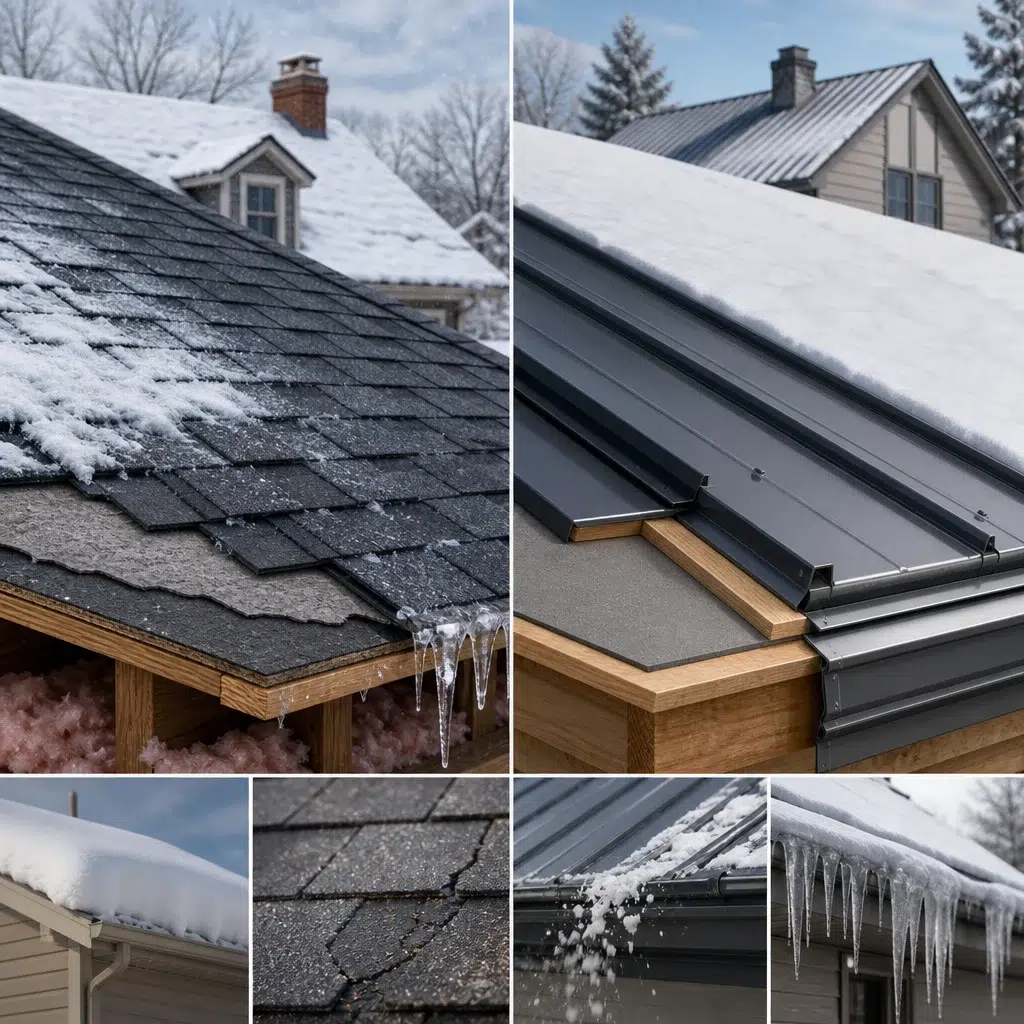
We also understand that some property owners have budget constraints that make asphalt shingles the necessary choice. When that’s the case, we install premium architectural shingles with enhanced cold-weather performance, proper ice-and-water protection, and metal flashing systems that minimize water intrusion.
Our approach starts with a detailed site assessment and an honest discussion about your specific situation, timeline, and budget. We’re not trying to oversell metal roofing to every customer, but we make sure you understand the performance and cost implications of your choice.
Action Step: Schedule a free roof assessment with our team to discuss your specific property needs and get honest guidance on material selection.
Why Our Installation Ensures Maximum Durability
Material quality matters, but installation quality determines whether your roof actually delivers on its durability promise. A poorly installed metal roof won’t outperform a well-installed asphalt roof. That’s where Expert Exteriors’ experience becomes your advantage.
We handle flashing installation with particular attention to the details that prevent water intrusion in cold climates. Ice dams form at eaves and valleys, so our flashing work addresses these vulnerable areas specifically. We use metal flashing systems that are compatible with whatever roofing material you choose and installed with sealing methods appropriate for freeze-thaw cycling.
Our crew understands thermal expansion considerations. We don’t over-fasten metal roofing, which would create stress concentrations. We install fasteners that allow movement. We slope all roofing systems to promote water drainage rather than retention. These details separate quality installation from basic roof coverage.
For ventilation, we ensure attic airflow is appropriate for your climate zone. Proper ventilation reduces the temperature differential that drives ice dam formation. It also prevents moisture accumulation that accelerates material degradation. Many roofers skip this step because it doesn’t show in the final result, but we recognize it’s foundational to durability.
We stand behind our work with warranties that cover both materials and workmanship. That commitment means we take installation protocols seriously because we’re assuming the risk if something fails.
Action Step: Ask any roofing contractor for their specific installation protocol for metal roof fastening and flashing in freeze-thaw climates before you commit.
Making the Right Choice for Your Property
After evaluating the durability performance of asphalt shingles versus metal roofing in Wisconsin’s harsh climate, the evidence is clear: metal roofing is the superior choice for long-term protection and value.
Asphalt shingles will fail prematurely in our freeze-thaw environment. The brittleness in cold temperatures, poor ice dam resistance, and thermal expansion issues aren’t trade-offs you can manage around. They’re inherent material limitations that repeat every winter. You’ll find yourself planning roof replacement within 15-18 years, disrupting your property and budget repeatedly.
Metal roofing delivers decade after decade of reliable protection. It sheds snow naturally, resists ice dams effectively, flexes through temperature swings without damage, and still functions perfectly decades from now. The higher initial investment is offset by a single installation that covers your entire ownership timeline plus insurance savings and operational efficiency gains.
Expert Exteriors installs both systems, but we recommend metal roofing for every Brookfield property owner who plans to stay long-term. If you’re currently facing a roof replacement decision, metal roofing isn’t just a good option, it’s the smart decision for Wisconsin winters.
Contact us today for a professional assessment of your roofing needs. We’ll evaluate your current roof, discuss material options honest, and provide detailed cost analysis so you can make a decision with complete information. Your home deserves protection that actually stands up to what Wisconsin winters deliver.
For further reading: Wisconsin harsh climate roofing, Residential materials for Wisconsin.