
How to Protect Your Home During Roof Replacement: Expert Guidance
Why Roof Replacement Poses Unique Protection Challenges
A roof replacement is one of the largest investments a homeowner or property manager makes. Beyond the financial commitment, the actual work creates temporary vulnerability for your property. During the days or weeks when your roof is being replaced, your home faces exposure to weather, debris hazards, and potential damage to surrounding structures. We understand these concerns deeply, which is why we’ve developed a systematic approach to safeguarding every aspect of your property throughout the replacement process.
This guide walks you through the protection measures we implement and why each one matters. Whether you’re planning your first roof replacement or replacing a roof for the second time, knowing what to expect helps you feel confident in your decision.
Roof replacement differs fundamentally from most other home improvement projects because it removes your property’s primary weather barrier. Unlike interior renovations where walls contain the workspace, roofing work exposes the interior structure of your home to the elements while simultaneously creating multiple access points for water, debris, and pests.
The challenge multiplies when weather patterns are unpredictable. A project scheduled for clear skies can face surprise rain or high winds that create genuine risks if your property isn’t properly protected. Wind gusts can scatter roofing materials across neighboring properties. Heavy rain can penetrate partially exposed roof decking and compromise attic insulation, framing, or stored items. Even seemingly controlled conditions present hazards: dropped nails or shingles accumulate in gutters, landscaping areas, and on adjacent structures.
Additionally, roof replacement requires trained workers moving across your roof multiple times daily, bringing equipment and materials that must be safely staged and transported. The volume of activity and the heights involved create safety considerations that extend beyond your property line to affect neighbors and family members on the ground.
We approach each project recognizing these layered risks. Rather than viewing protection as an afterthought, we integrate it into our planning from the first site visit. This proactive stance prevents costly damage claims, maintains neighborhood relations, and ensures your family remains safe throughout the process.
The Hidden Risks Property Owners Face During Roofing Projects
When we discuss roof replacement risks with property owners, we often find they’ve only considered the obvious hazards. The less visible risks frequently create the costliest problems after the project concludes.
Water infiltration ranks as the primary hidden risk. Even with tarps and temporary coverings, water can find its way into attic spaces, wall cavities, and stored belongings. A single heavy rainstorm during a multi-day project can lead to mold growth, wood rot, or damaged insulation that costs thousands to remediate.
Debris migration is another often-underestimated issue. Roofing nails work their way into flower beds and become hazardous to anyone barefoot. Shingle fragments lodge in gutters, affecting drainage long after the project ends. Debris can scatter onto neighboring properties, creating liability concerns and damaging neighbor relationships.
Interior dust and debris present respiratory and cleanliness concerns that catch many property owners off guard. Despite precautions, fine particles from roofing materials, underlayment, and old shingles settle on surfaces throughout your home, particularly in attic spaces and upper-level rooms. This isn’t just a cleaning inconvenience; it can aggravate allergies and respiratory conditions.
Structural damage to adjacent elements often goes unnoticed initially. Fascia, soffits, gutters, and skylights can sustain impact damage during material handling. Soffit vents may be accidentally blocked or damaged, affecting your home’s ventilation system. Flashing around skylights or chimneys can be misaligned during removal, creating future leak points.
We’ve also seen property owners discover pest entry points after roof replacement. If temporary weather barriers develop gaps or if openings aren’t immediately sealed with permanent materials, insects and rodents can establish themselves in attic spaces during the vulnerable period.
Finally, damage to landscaping features like expensive plants, outdoor air conditioning units, or decorative structures happens quickly when contractors aren’t focused on protection. A heavy piece of roofing equipment dropped on a garden or an HVAC unit creates immediate financial consequences beyond the roofing work itself.
Understanding these risks helps explain why our protection protocol exists and why it’s worth the investment.
How Our Comprehensive Protection Protocol Works
Our protection strategy operates on three fundamental principles: prevention, containment, and restoration. We don’t apply these steps uniformly across every project; instead, we customize them based on your specific property layout, local weather patterns, and project scope.
Prevention begins before we place a single worker on your roof. During our initial site visit, we assess your property’s vulnerabilities, nearby structures, landscaping investments, and weather exposure. We identify which areas need the most robust protection and which approaches will be most effective for your situation.
Containment focuses on restricting damage and debris to specific zones. Rather than allowing roofing materials to scatter freely, we establish barriers that direct debris into manageable collection areas. We protect interior spaces with temporary partitions and weather barriers before removal of the existing roof begins.
Restoration is our final phase, ensuring your property returns to its pre-project condition or better. This includes debris removal, cleaning, inspection for any incidental damage, and addressing any issues we identify.
This three-part framework means that protection isn’t a single action but an integrated series of steps coordinated with our roofing work schedule. When weather forecasts suggest potential rain, we accelerate certain protective measures or adjust our work sequence. If we notice unexpected debris patterns during work, we modify our containment approach immediately.
Pre-Replacement Measures We Implement to Secure Your Property
Our preparation phase typically begins 3-5 days before our crew arrives to remove the existing roof. This timing allows us to set up protection systems while you still have full use of your property.
We start by inspecting and cleaning all gutters and downspouts, ensuring water can drain freely once roofing work begins. Clogged gutters can cause water backup into fascia, soffits, and even walls during the project. We also identify any existing roof-to-structure connections like antenna cables, satellite dishes, or solar panel wiring that need temporary relocation.
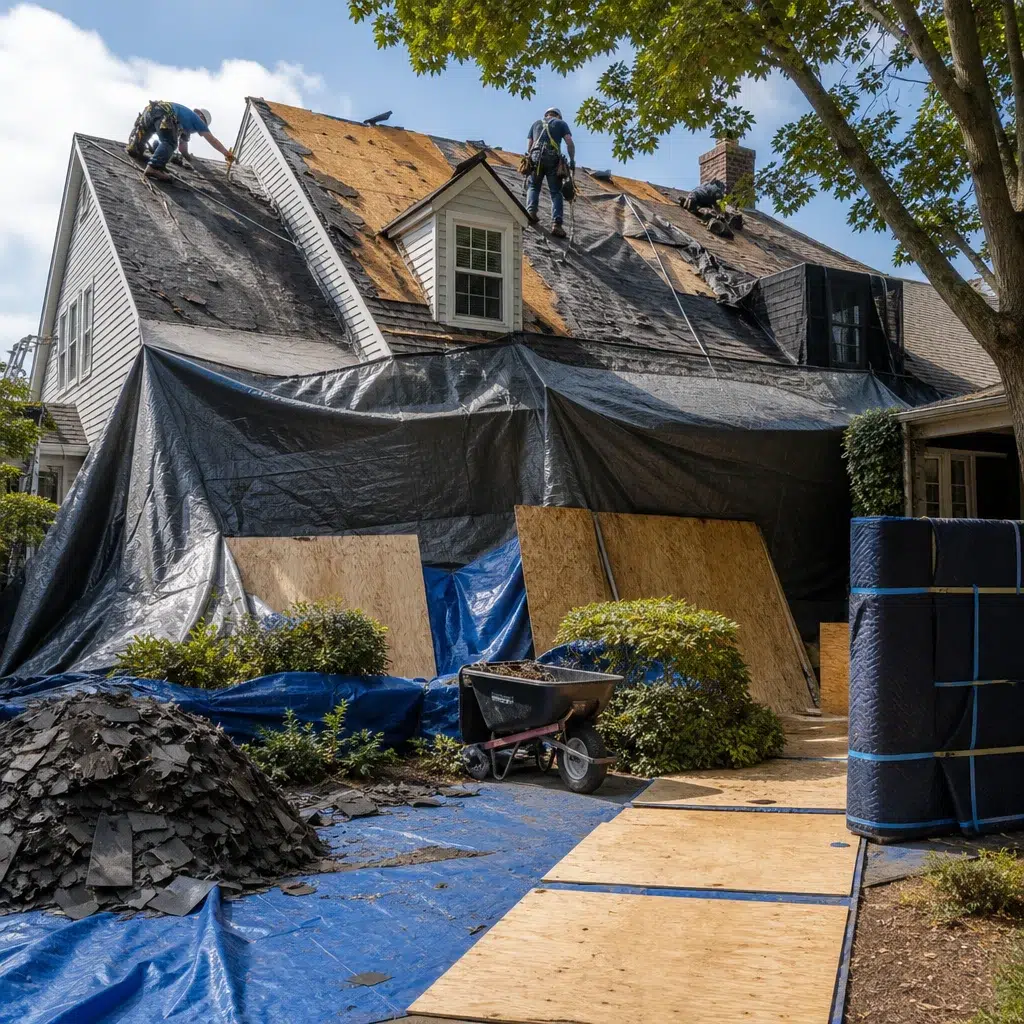
Next, we establish a debris containment perimeter. Depending on your property size and roof pitch, we place tarps and barriers around the work area to catch falling materials. For residential properties, this typically means setting up ground-level catch systems on at least two sides of the roof (usually the sides with gutters and the side facing the primary work zone).
We photograph your property extensively before work begins, documenting existing conditions, landscaping, exterior structures, and any pre-existing damage. This baseline documentation protects both you and us by establishing a clear record of what existed before our work started.
For properties near neighbors, we install advance notification systems. Temporary fencing or warning tape marks off areas where debris might fall. We also notify adjacent property owners of our work schedule and provide contact information for questions or concerns.
We prepare interior spaces by sealing attic vents, soffit openings, and any roof penetrations that won’t be permanently addressed during the replacement. We also close windows and doors on the roof side of your home and establish designated entry points for our crew to minimize unnecessary openings.
If your property has stored items in the attic, we recommend removing them temporarily or protecting them with plastic sheeting. This single step prevents dust and debris from settling on valuable items or belongings.
We also secure any outdoor air conditioning units, heat pumps, or other rooftop equipment with protective plywood or barriers to prevent impact damage during material handling.
Weather Protection and Temporary Barriers We Install
The moment we remove the first shingle, your roof becomes weather-vulnerable. Our temporary weather protection system must work immediately, even before we’ve finished stripping the old roof.
We use heavy-duty tarps and temporary roof coverings that meet building code requirements for your area. These aren’t standard plastic sheets; they’re engineered temporary roof covers with proper fastening systems that withstand wind loads and water pressure. We secure them using battens and fasteners designed to hold under adverse weather conditions, not just light breezes.
For projects extending multiple days, we inspect weather forecasts constantly. If rain is predicted, we accelerate our work sequence or enhance temporary coverings before moisture arrives. We’ve learned that Wisconsin weather can shift rapidly, so our crews remain alert to changing conditions throughout each workday.
Beyond roof-level tarps, we install temporary barriers at roof penetrations including skylights, vents, and chimneys. These aren’t permanent solutions but temporary seals that prevent water from flowing into your home while permanent flashing is being installed.
We also install gutters protection systems that prevent debris from clogging drainage systems. Our crews place gutter guards or temporary mesh covers over gutters and downspouts during material removal, then clean gutters thoroughly before final flashing and trim work.
For properties with HVAC units, we box in external components with protective coverings. While modern HVAC equipment is weather-resistant, protecting these units prevents water from pooling on top or lodging inside ductwork connections.
Our crew members carry individual tarps and covering materials throughout the day to protect exposed wall areas, windows, or adjacent structures as needed. This flexibility allows us to respond to unexpected exposure rather than waiting for formal setup procedures.
Managing Interior and Exterior Debris Effectively
Roofing debris management requires a multi-layer approach because the challenge begins in the air and ends in your landscaping, gutters, and surrounding areas.
We use magnet sweepers throughout our work area daily to collect ferrous metal debris like nails and fasteners. These handheld magnets attract metal that might otherwise embed in soil or become hazards to barefoot family members. We sweep work zones at least twice daily and once more at the end of each workday.
For shingle and debris collection, we position large debris containers (dumpsters) directly below primary work zones. Our crews load materials into these containers continuously rather than allowing piles to accumulate on the ground where wind can scatter them.
Inside your home, particularly in attic spaces, we use negative air filtration devices during material removal. These portable HEPA filter units maintain negative pressure in the attic, preventing dust from settling in living spaces below. We also seal attic access points and stairwells with plastic barriers during removal work.
We vacuum and clean work areas inside your home each evening. This prevents dust settlement on surfaces and addresses the accumulated particles before they spread throughout your living space.
For landscaping areas, we use ground-level tarps under our primary work zone to catch materials as they fall. These are cleared and disposed of properly at the end of each workday. Any debris that escapes into surrounding vegetation is hand-picked rather than left for you to discover later.
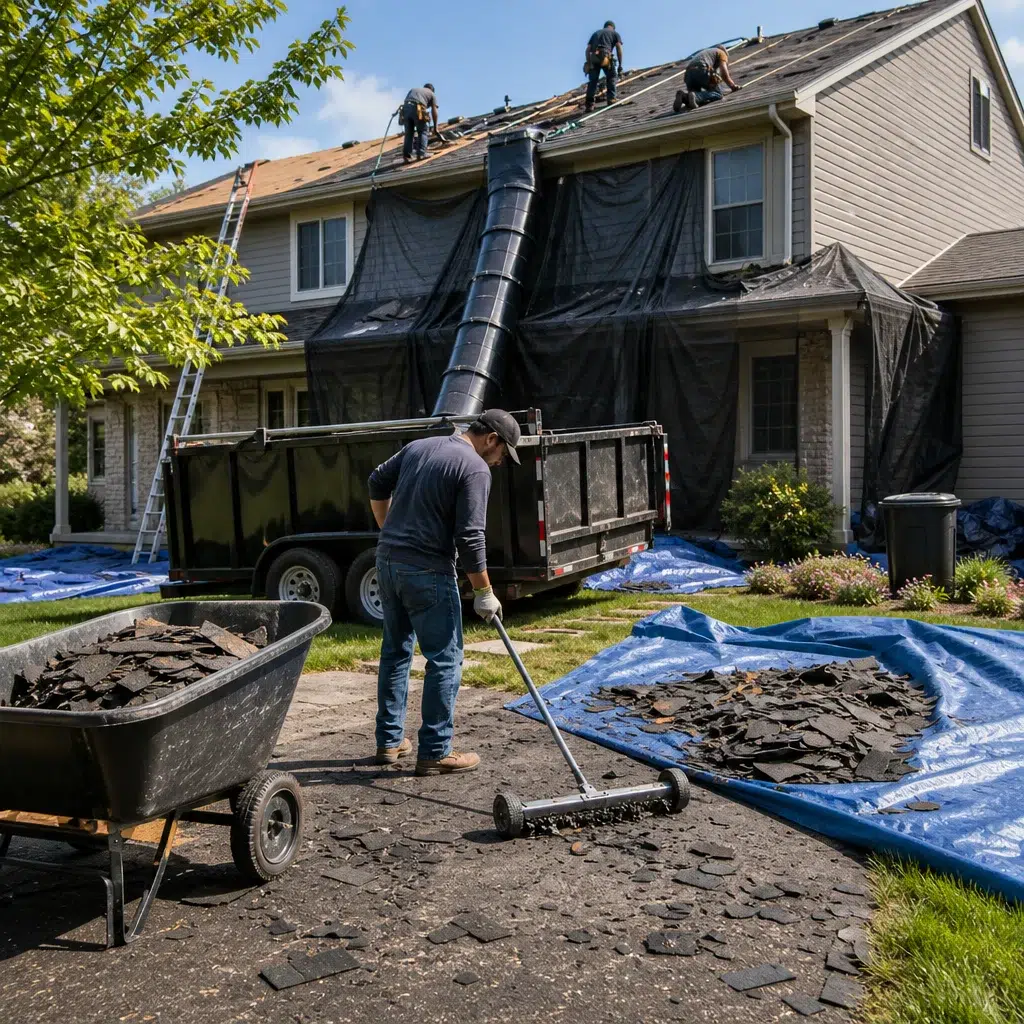
Our crews also use roof edge guards and catch systems on gutters and fascia to prevent materials from overshooting ground-level tarps.
After all roofing materials are removed and new materials are installed, we perform a final debris sweep of your entire property including roof surfaces, gutters, landscaping, driveways, and adjacent areas. Many property owners are surprised by the thoroughness of this final inspection, but it’s essential to catch debris that inevitably scatters despite best efforts.
Protecting Your Landscaping and Adjacent Structures
Your landscaping represents significant investment, and seasonal plants require careful consideration during roof replacement. We address these concerns starting in our pre-work planning phase.
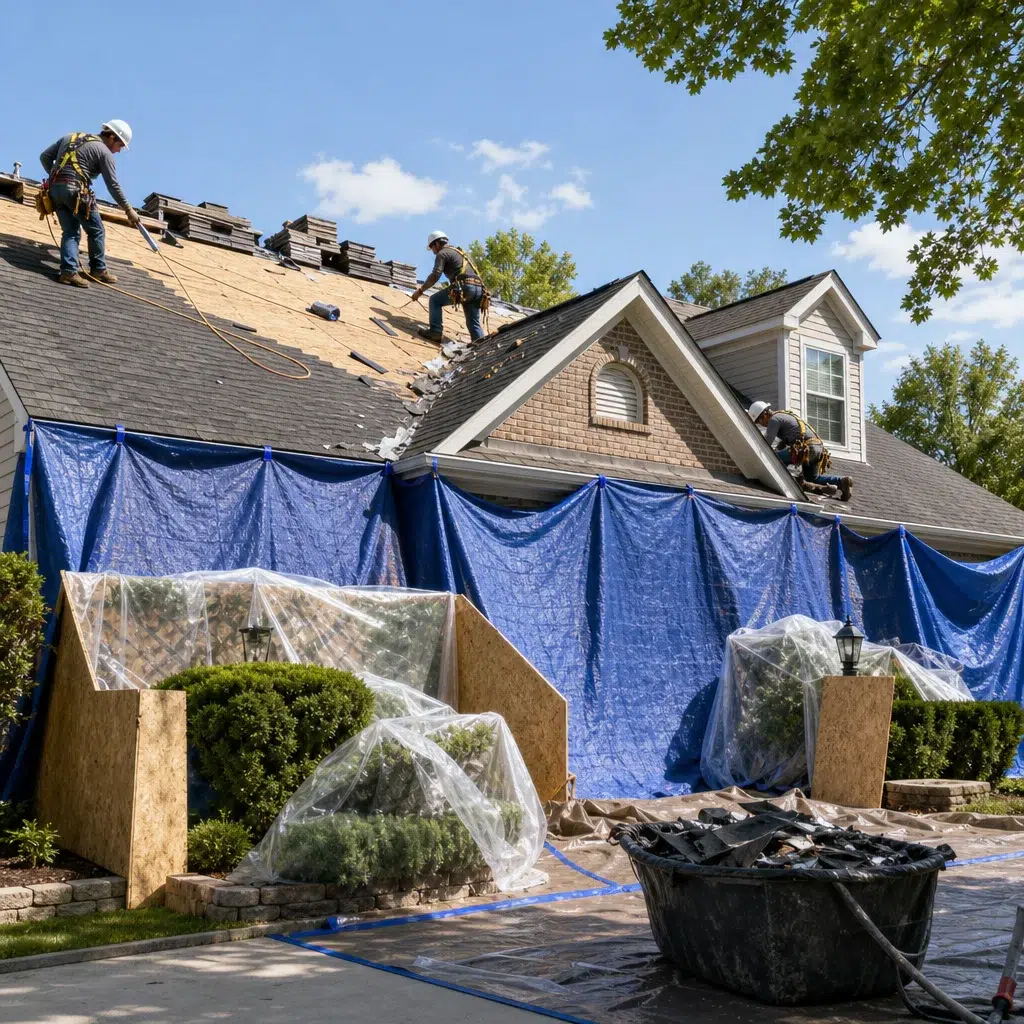
We identify high-value landscaping elements like specimen plants, gardens, or decorative trees near your work area. These are typically protected with plywood barriers or secured with temporary fencing to prevent accidental damage from equipment, dropped materials, or debris.
For properties with nearby structures like detached garages, sheds, or pergolas, we assess their proximity to falling debris. Items within the debris fall zone receive temporary protective coverings. We’ve learned this is especially important for structures with skylights, solar panels, or other expensive roof elements that could be damaged by wayward roofing materials.
Hardscape features like decks, patios, and outdoor entertainment areas are protected with heavy tarps during active roofing work. This prevents not only debris accumulation but also potential staining from asphalt-based roofing materials.
We also protect ground-level HVAC units, pool equipment, hot tubs, and outdoor grills with temporary coverings. These items are vulnerable to debris and water exposure during weather events.
For properties with water features like ponds or fountains, we cover these as well to prevent debris contamination. Even small rocks or shingle fragments can affect pump systems or water quality.
After completing all roofing work, we inspect these protected areas and remove coverings only after confirming that all debris has been cleared from your property. We’re particular about this step because contractors often remove covers prematurely and allow debris that settled on tarps to spread when coverings are pulled away.
Ensuring Safety for Family and Neighbors
Safety extends beyond preventing property damage; it protects the people around your property during the replacement process. We maintain comprehensive safety protocols that address your family, our crew, and neighboring property residents.
For your family, this means establishing clear work zones and restricting access to areas where roofing activity occurs. We typically designate one or two entry points to your property and keep other areas cordoned off. This prevents family members from wandering into zones where materials are being staged or where falling debris risks are highest.
We also coordinate regarding driveway access. If our equipment trucks need to occupy your driveway, we work within your schedule to minimize disruption. We’re mindful of when children might be playing outside or when you might need vehicle access.
We provide clear safety guidelines for your family regarding window operation, yard use, and accessing your roof or attic spaces during the project. Open windows on the roof side of your home during work can allow debris entry. We recommend keeping these closed until completion.
Our crew members receive safety training for work at heights, equipment operation, and ladder safety. We follow all OSHA guidelines and state safety requirements. Our workers use proper fall protection, safety glasses, gloves, and appropriate footwear throughout every workday.
For neighbors, we provide advance notice of our work schedule and the expected duration. We explain what they might expect regarding noise, dust, or temporary debris. We designate a property contact who neighbors can call with concerns, and we take those concerns seriously.
We maintain our work schedule within reasonable hours (typically starting after 7 AM and finishing before 6 PM on weekdays). We also limit weekend work unless specifically requested or necessary to complete the project during favorable weather.
If debris accidentally crosses property lines, we address it immediately. We don’t wait for neighbors to complain; our crews actively check adjacent properties during daily cleanup routines.
We also brief our crews on being respectful of neighbors’ properties, maintaining quiet breaks, and minimizing disruption beyond the active roofing work.
Our Insurance and Liability Coverage Standards
Insurance and liability protection matter significantly when you’re allowing contractors access to your home during vulnerable periods. We maintain comprehensive general liability insurance and workers’ compensation coverage that protects both you and our company.
Our general liability insurance covers property damage liability (protection if we accidentally damage your property or a neighbor’s property) and bodily injury liability (protection if someone is injured during our work). Our current policy limits exceed industry standards for roofing contractors in Wisconsin.
We also maintain property damage coverage that specifically includes debris removal and restoration. If our work inadvertently damages your landscaping, exterior structures, or installed systems, this coverage addresses repair costs.
Workers’ compensation coverage ensures that if one of our crew members is injured during work, their medical costs and lost wages are covered through insurance rather than becoming your liability. This protects you from potential lawsuits or claims arising from worker injuries.
We can provide certificates of insurance before work begins, giving you documented proof of our coverage. We also require our subcontractors and equipment suppliers to maintain appropriate insurance coverage.
Beyond insurance, we carry a performance bond for projects above certain thresholds. This bond protects you financially if we fail to complete work as contracted or if we don’t meet agreed-upon quality standards. It’s an additional layer of protection that you won’t need but that’s available if questions arise.
We also maintain a formal dispute resolution process and comprehensive warranty coverage on our workmanship. Our warranties typically extend 10 years on installation quality and cover defects in materials or craftsmanship.
Before signing any contract, we encourage property owners to review insurance documentation and ask questions about coverage. Understanding your protection matters, and we’re transparent about the security measures we’ve put in place.
Post-Replacement Cleanup and Final Property Inspection
The project doesn’t conclude when the final shingle is installed. Our cleanup and inspection phase is equally rigorous as our work execution.
We perform a comprehensive property inspection using a checklist that covers every area we worked on and every area we protected. This includes roof surfaces, gutters, fascia, soffits, landscaping, driveways, decks, and interior spaces that were affected by the project.
We vacuum attic spaces and vent areas to remove construction dust. We clean all interior window sills and surfaces where debris settled during work. We inspect interior closets, storage spaces, and upper-level rooms for any dust accumulation and clean as needed.
Outside, we rake landscaping areas to remove any remaining small debris, perform a final magnet sweep of the entire property, and clean gutters thoroughly. We also pressure-wash driveways and other hardscape areas if roofing material residue is visible.
For protecting gutters and skylights, we verify that all temporary protection devices are removed, gutters flow freely, and no debris is trapped. We test gutter drainage by running water through them to confirm proper function.
We also conduct a detailed inspection of all protective measures we installed to verify nothing was damaged during the project. If our temporary barriers caused any incidental damage to landscaping or structures, we address that immediately as part of our cleanup responsibility.
We provide you with a final walkthrough where we point out all completed work, explain any changes we made during the project, and answer questions about your new roof. This is also when we discuss maintenance expectations and provide documentation of warranties and materials used.
Finally, we collect all temporary protective coverings, fencing, and barriers. We leave your property in cleaned, inspected condition, ready for normal use. We typically spend an additional 1-2 days on cleanup and inspection for residential properties, recognizing that this phase is critical to your satisfaction.
Learn more about what this process involves in our detailed guide on roof replacement cleanup.
Why Expert Exteriors Is Your Trusted Protection Partner
Roof replacement protection isn’t an optional add-on; it’s fundamental to responsible roofing contracting. We’ve built our reputation on understanding that protecting your property and family during the replacement process is as important as the quality of the new roof we install.
Our protection protocols stem from years of experience addressing real problems that occur when protection measures fall short. We’ve learned that property owners prefer contractors who prevent issues rather than contractors who manage damage after the fact.
We maintain this commitment through continuous training of our crews, investment in quality protection equipment and materials, and systematic processes that adapt to your property’s specific vulnerabilities.
When you choose Expert Exteriors for residential roof replacement, you’re selecting a contractor who views protection as a core service element. We manage the complexity so you can feel confident that your home, family, and landscaping are secure throughout the replacement process.
Ready to discuss your roof replacement protection needs? We invite you to contact us for a comprehensive site assessment. We’ll evaluate your property, explain our protection approach specifically for your situation, and answer any questions about how we safeguard homes and properties throughout the roofing process. Our team serves Brookfield and surrounding communities throughout Wisconsin, and we’re committed to protecting your investment every step of the way.
For further reading: Safety and noise during roof replacement.