
Prevent Ice Dams with Better Attic Ventilation and Insulation
Why Ice Dams Damage Your Brookfield Home Year After Year
Ice dams are more than a winter nuisance for Brookfield homeowners. They represent a serious threat to your roof’s integrity and can lead to costly water damage inside your home. At Expert Exteriors, we’ve seen firsthand how preventive attic work stops ice dams before they start, protecting both your structure and your wallet.
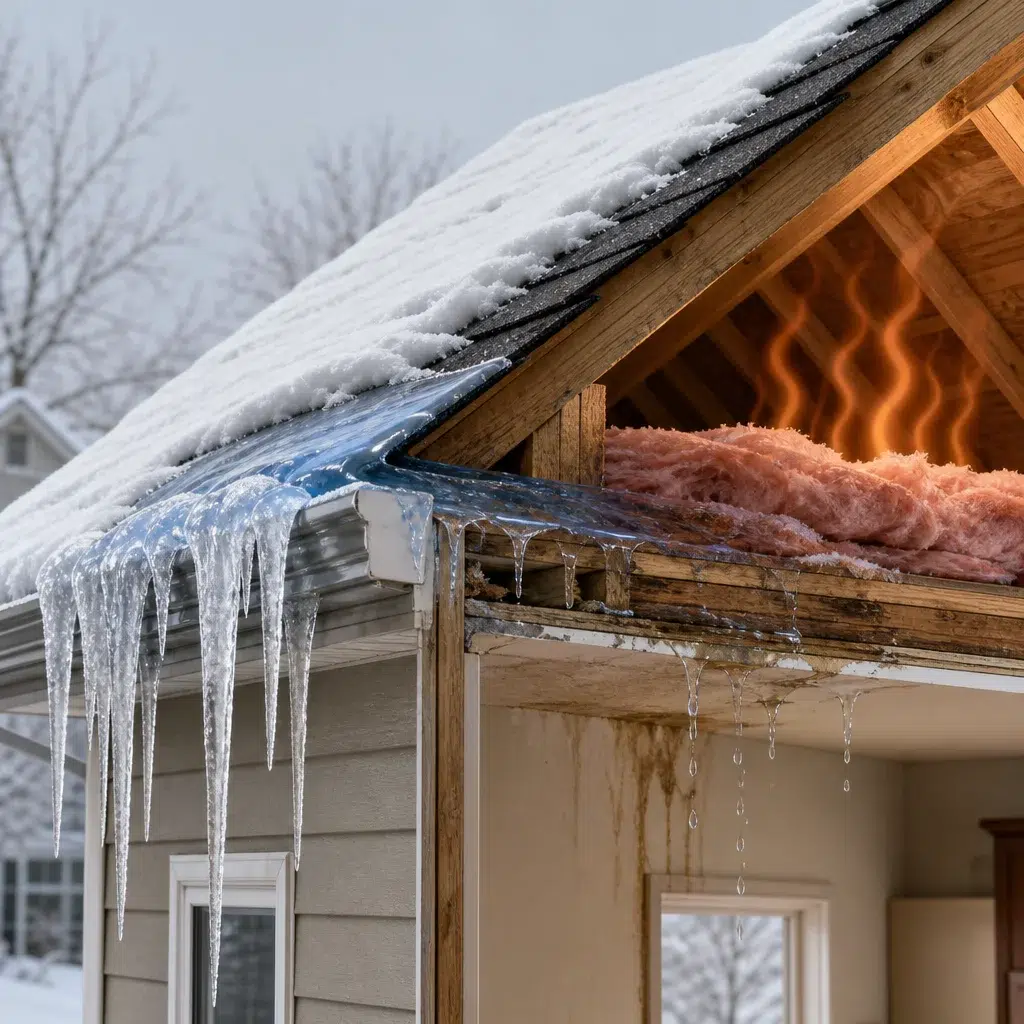
Ice dams form when heat from your attic melts snow on your roof, creating water that refreezes at the cold edges. In Brookfield’s harsh winters, this cycle repeats constantly, pushing water under shingles and into your home’s interior spaces.
The damage compounds over time. Water seeps into insulation, reducing its effectiveness. It stains ceilings and walls. It rots wood framing and fascia boards. Mold grows in damp attics. Gutters become weighted down with ice and pull away from your home. A single winter of ice dams can compromise structural elements that took decades to build.
We’ve inspected hundreds of Brookfield attics damaged by repeated ice dam cycles. The homeowners didn’t realize their attic conditions were creating the problem year after year. By the time they called, water damage required extensive remediation alongside roof repairs.
Your action: Don’t assume ice dams are just part of winter. They signal an underlying attic problem that needs correction now, before the next freeze-thaw cycle.
How Poor Ventilation and Insulation Create Ice Dam Conditions
Two factors working together create ice dam conditions: inadequate ventilation and insufficient insulation.
When your attic lacks proper airflow, warm air gets trapped. This heat melts snow on the roof, especially in areas above heated living spaces. Poor insulation compounds the problem by allowing household heat to escape into the attic instead of staying inside your home where it belongs.
Here’s what happens: Warm air rises from your living spaces into an under-insulated attic. The attic stays warmer than it should during winter. Snow melts from the roof surface. Water runs down toward the unheated eaves, where it refreezes into an ice dam. Ventilation should keep the entire roof surface cold and uniform, but without proper airflow, warm spots develop.
Common ventilation shortfalls include:
- Soffit vents blocked by insulation or debris
- Insufficient ridge vent length or size
- Attic bypasses around electrical wiring, plumbing, and ductwork
- Inadequate total ventilation area (many older Brookfield homes fall short)
Insulation problems often include:
- Settling or compressing over decades, reducing R-value
- Missing insulation above garages or additions
- Inadequate coverage in cathedral ceilings
- Gaps around penetrations that allow heat escape
We assess both elements together because fixing one without the other rarely solves the ice dam problem completely.
Your action: If you’ve had ice dams multiple winters, schedule an attic inspection. The root cause is almost always inadequate ventilation, insufficient insulation, or both.
The Real Cost of Ignoring Ice Dam Problems on Your Roof
Many Brookfield homeowners treat ice dams as an annual inconvenience. They chip away ice, unclog gutters, and hope the problem resolves itself. This approach is expensive and ineffective.
The financial impact accumulates quickly:
- Water damage repairs: $5,000 to $25,000+ for interior ceiling, wall, and insulation replacement
- Mold remediation: $2,000 to $10,000+ depending on extent
- Roof shingle damage requiring premature roof replacement: $15,000 to $30,000+
- Fascia and soffit replacement: $3,000 to $8,000
- Annual gutter cleaning and ice dam removal: $200 to $500 per winter
Beyond the direct costs, ice dams compromise your home’s value and your peace of mind. Buyers conducting home inspections will identify water-stained attics and damaged framing. Insurance claims for ice dam damage are often denied because the root cause (inadequate attic conditions) is considered a maintenance issue rather than a weather event.
We’ve worked with homeowners who finally invested in proper attic ventilation and insulation only after spending tens of thousands on water damage repairs. The preventive investment upfront is a fraction of the cost of repeated damage cycles.
Your action: Calculate what you’ve already spent on ice dam removal, gutter cleaning, and minor water damage over the past three winters. Compare that to the one-time cost of proper attic ventilation and insulation. The math usually favors prevention.
Our Approach to Ventilation Solutions That Stop Ice Dams
We design custom ventilation systems based on your attic’s specific layout, size, and current conditions.
Most older Brookfield homes need upgraded soffit venting. Soffit vents pull cool, dry air into the attic from the eaves. We install continuous soffit venting with properly sized openings, ensuring insulation doesn’t block airflow. For homes with limited soffit space, we integrate powered attic fans as a supplementary solution.
Ridge venting is equally critical. A ridge vent runs along the peak of your roof and allows warm, moist air to escape. We install full-length ridge vents matched to your roof’s pitch and dimensions. The key is ensuring sufficient ventilation area (typically 1 square foot of vent area per 150 square feet of attic space, with half at the soffit and half at the ridge).
We also seal attic bypasses where warm household air leaks into the attic space. Common bypass locations include:
- Around ceiling-mounted light fixtures
- Along the top plates of interior walls
- Around ductwork and HVAC equipment
- Between the attic and attached garages
- Around plumbing stacks
Sealing these bypasses prevents warm air from entering the attic in the first place. Combined with proper ventilation, it creates a balanced system where cool outside air enters low and warm air exits high.
Your action: Ask any contractor whether they’ll seal attic bypasses and install continuous soffit and ridge venting. These three elements form the foundation of effective ice dam prevention.
Expert Insulation Strategies We Use to Prevent Freeze-Thaw Cycles
Insulation’s role in ice dam prevention is straightforward: it keeps household heat in your home where it belongs, not in your attic.
Most building codes require R-38 to R-60 attic insulation depending on your location. Many Brookfield homes built before 2000 have R-19 or less. We recommend upgrading to R-49 or R-60 for optimal performance in our climate.
We use blown-in cellulose or fiberglass insulation for attic projects because it conforms to irregular spaces and fills around existing obstacles. Fiberglass batts alone often leave gaps; blown insulation eliminates voids.
Proper insulation depth is critical. We measure existing coverage and add material to achieve the target R-value uniformly across the entire attic floor. Special attention goes to areas prone to ice dams: above heated garages, above exterior walls, and above rooms with cathedral ceilings.
We also address air sealing before insulating. Adding insulation over leaky attic bypasses is inefficient. We seal all air gaps first, then blow insulation to the target depth. This layered approach maximizes the insulation’s effectiveness.
For homes with existing insulation that’s compressed or settled, we often remove and replace it rather than simply topping it off. Settling reduces insulation R-value significantly, and adding new material over old compacted insulation creates voids and reduces overall performance.
Your action: Have your insulation depth measured and compared to current code requirements for your area. If you’re more than 2 inches below target depth, you’re losing significant heat and money every winter.
Why Ventilation and Insulation Work Together in Our Systems
Ventilation and insulation serve different but equally important purposes in preventing ice dams.
Insulation works by keeping your home’s heat inside. Ventilation works by maintaining a uniformly cold attic space. Both are necessary because they address the problem from different angles.
Without ventilation, even well-insulated attics can develop hot spots where moisture accumulates. Warm air trapped in the attic melts snow and creates condensation. This moisture shortens insulation life and creates mold conditions.
Without sufficient insulation, ventilation alone can’t prevent all ice dams. The roof surface still warms from conductive heat transfer through inadequate insulation layers. Cool outside air flowing through vents helps, but it can’t overcome massive heat loss from a poorly insulated attic.
The ideal system combines both: thick insulation that stops heat loss, plus balanced ventilation that keeps the attic dry and cool. This prevents both the melting that creates water and the condensation that damages attic components.
Think of it this way: insulation is the thermostat that keeps your attic cold, and ventilation is the fan that maintains air circulation and removes any moisture. Neither works optimally without the other.
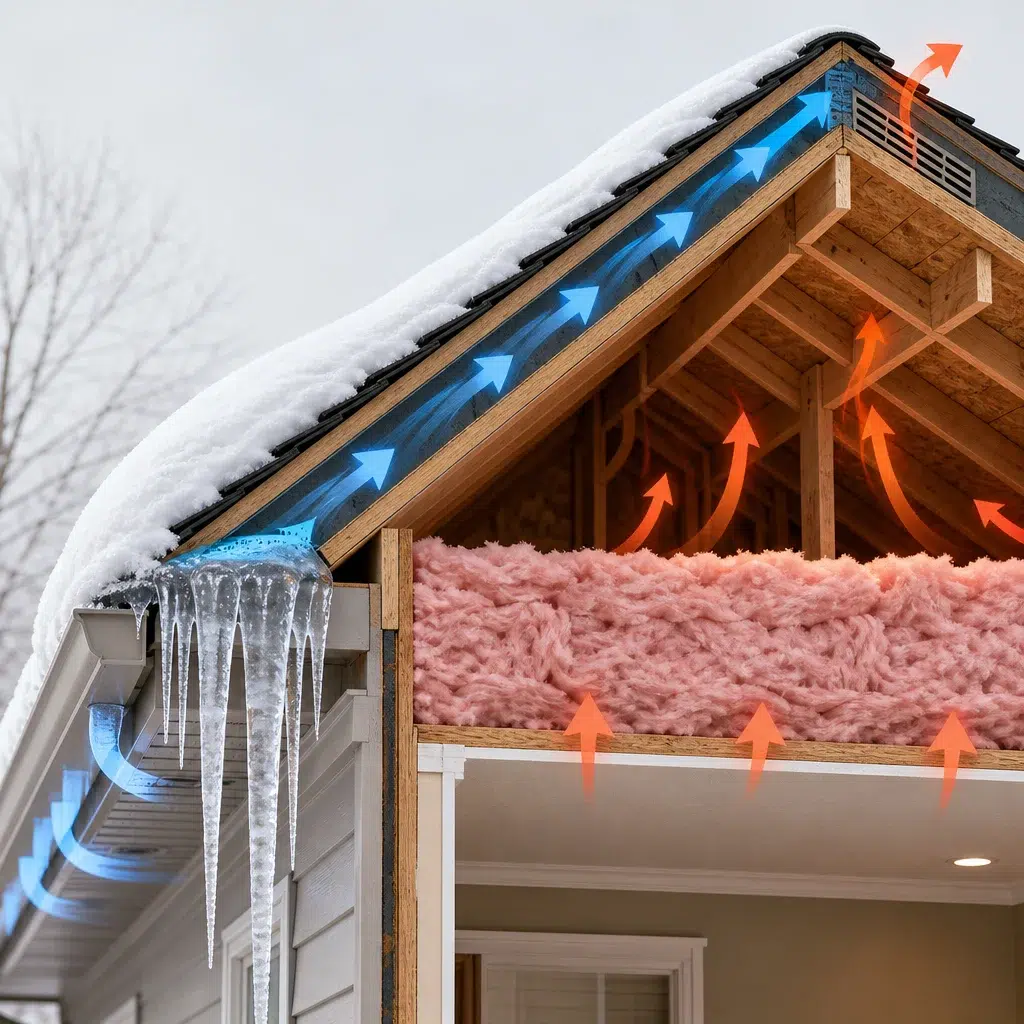
We design systems where soffit vents provide intake airflow across the entire attic, and ridge venting provides high-level exhaust. Insulation is installed at the attic floor level, leaving the rafter cavities open for air movement. This creates a complete, balanced system.
Your action: If a contractor recommends either ventilation or insulation alone, ask why they’re not addressing both. A complete ice dam prevention solution requires both components.
Warning Signs Your Attic Needs Better Ventilation Immediately
Don’t wait for ice dams to appear before assessing your attic. Several warning signs indicate ventilation or insulation problems before winter damage occurs.
If you see ice dams forming in the same locations each winter, your attic has predictable warm spots. These areas have either inadequate insulation or poor ventilation routing. We can identify these zones during an inspection and correct them.
Check your attic in late winter. Moisture stains on rafters or insulation indicate condensation is building up. This happens when warm, moist air isn’t venting properly. Mold spots or musty odors mean the problem is already causing damage.
Uneven snow melting on your roof is another red flag. If one section melts while another retains snow, heat is escaping through that section. This typically points to inadequate insulation or attic bypass issues above that area.
Outside your home, look for these visual cues:
- Ice buildup consistently forming at the eaves
- Icicles hanging from gutters or fascia
- Water stains on soffits or fascia boards
- Peeling paint on exterior wood trim (often from ice dam splash-back)
- Sagging or damaged gutters weighted by ice
Inside your home, interior warning signs include:
- Water stains on ceilings or walls near exterior walls
- Discoloration around ceiling penetrations or light fixtures
- Damp insulation visible in the attic
- Mold spots on attic framing or insulation
- Higher-than-normal heating bills (indicating heat loss)
Your action: Climb into your attic this month and look for insulation settling, visible rafters (gaps), moisture stains, or daylight entering through soffit areas. These observations guide what we prioritize in your system upgrade.
Our Complete Ice Dam Prevention Installation Process
Our ice dam prevention projects follow a structured approach that addresses ventilation, insulation, and air sealing comprehensively.
We begin with a detailed attic assessment. Our team photographs existing conditions, measures insulation depth and R-value, identifies air leaks, and evaluates current ventilation. We use thermal imaging to locate air leaks and heat loss patterns that contribute to ice dams.
Based on this assessment, we design a custom solution. This might involve:
- Sealing attic bypasses with specialized caulk and foam
- Installing or upgrading soffit venting
- Adding or replacing ridge venting
- Removing settled or inadequate insulation and replacing it
- Installing blown-in insulation to target R-value
- Adding powered attic ventilation if needed
Our installation team works systematically. Air sealing comes first because it’s inefficient to insulate over leaky areas. We seal around electrical wiring, plumbing, ductwork, and penetrations using fire-rated foam and caulk.
Next, we remove existing insulation if it’s settled, compressed, or inadequate. Blown insulation goes down next, applied evenly to the target depth. We’re careful to maintain clear airflow channels along rafters for ventilation.
Simultaneously, our roofers install or upgrade soffit and ridge venting. We ensure soffit vents aren’t blocked by insulation and that ridge vents are properly installed for water-shedding.
We then conduct a final inspection, measuring insulation depth to confirm it meets specifications. We verify ventilation airflow and check that all bypasses are sealed.
Your action: Get a detailed written estimate that specifies R-value targets, ventilation upgrades, air sealing details, and warranty terms. This clarity prevents misunderstandings and ensures the work addresses your specific situation.
How We Inspect and Assess Your Current Attic Conditions
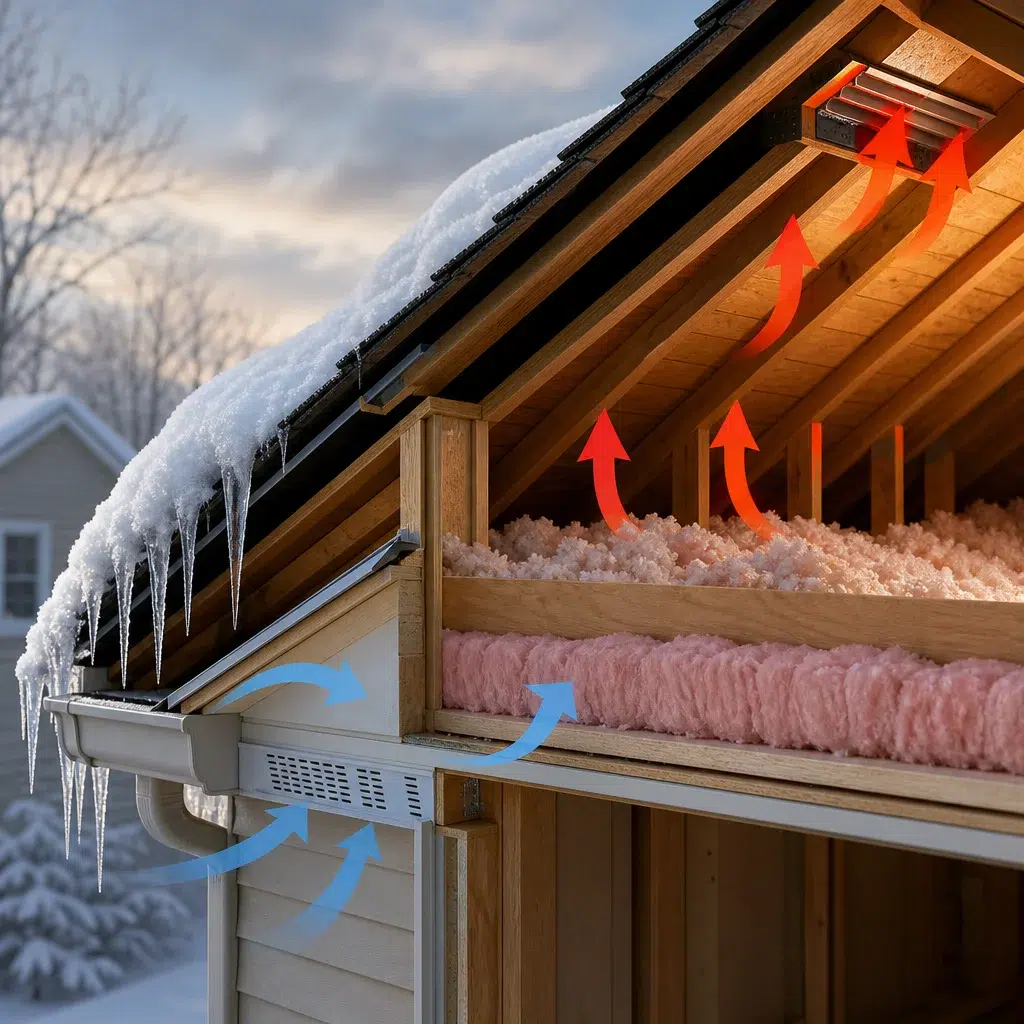
Our inspection process combines visual assessment with diagnostic tools to identify exactly what’s causing ice dam conditions.
We measure existing insulation depth in multiple locations, not just one spot. Insulation often varies across an attic, with some areas thicker than others. We calculate the average R-value and compare it to current code requirements.
We visually inspect all visible framing for moisture damage, mold, or discoloration. We check rafters, ceiling joists, and collar ties for signs of previous water intrusion. We examine soffit and ridge vent areas for blockages or damage.
We trace air sealing gaps systematically. We look for insulation pushed away from walls where air leakage occurs, visible daylight around penetrations, and cracks in the top plates of interior walls.
We evaluate the existing ventilation layout. We measure soffit and ridge vent lengths, estimate their opening sizes, and compare the total ventilation area to the recommended ratio for your attic square footage. We identify blocked vents and areas where insulation impedes airflow.
Thermal imaging, which we use on many projects, reveals exactly where heat is escaping into the attic. These images show hot spots above exterior walls, warm zones above garages, and temperature variations that point directly to problem areas.
We also check your HVAC system’s ductwork, bathroom exhaust vents, and range hood vents. Unsealed HVAC ducts or improperly vented exhaust fans add moisture and heat to the attic, exacerbating ice dams.
After inspection, we provide a detailed report with photographs and recommendations. This helps you understand the scope of work needed and why each component is necessary.
Your action: Request thermal imaging during your attic inspection. The cost is minimal compared to guesswork, and the results pinpoint exactly where your heat is escaping.
Protecting Your Investment with Long-Term Preventive Maintenance
Once we upgrade your attic ventilation and insulation, simple maintenance keeps the system performing optimally.
Schedule an annual inspection each fall before winter arrives. We check that soffit and ridge vents remain clear of debris, leaves, and nests. We verify insulation hasn’t settled or compressed. We look for any new air leaks or water infiltration signs.
Clean your gutters thoroughly before winter. Leaves and debris block water drainage, and standing water freezes into ice. Even with perfect attic conditions, clogged gutters can contribute to ice dam formation at the edges.
Monitor your attic annually for moisture or settling. If you notice condensation buildup or sagging insulation in future years, contact us. These changes suggest ventilation or insulation performance is degrading and needs adjustment.
If you add attic storage or install new equipment (like a powered attic fan), ensure modifications don’t block ventilation pathways. New construction or HVAC work in the attic can inadvertently compromise the system we designed.
Keep records of the work we perform. If you plan to sell your home, documentation of professional attic upgrades adds significant value and buyer confidence. Many buyers specifically ask about ice dam history and attic conditions.
Our work is backed by warranty. If ice dams recur in areas we’ve addressed with proper ventilation and insulation, we stand behind our installation and will make corrections at no charge during the warranty period.
Your action: Calendar a fall attic inspection each year. Spend 30 minutes checking vent clearance and insulation condition yourself between professional visits. Early detection prevents minor issues from becoming major problems.
Schedule Your Free Attic Assessment Today
Ice dams aren’t inevitable in Brookfield winters. They’re the result of attic conditions that can be identified, corrected, and prevented through professional ventilation and insulation work.
We invite you to schedule a free attic assessment with Expert Exteriors. Our team will inspect your current conditions, identify what’s causing ice dams on your roof, and design a custom prevention system tailored to your home’s specific needs.
During your assessment, we’ll explain exactly what’s happening in your attic, why ice dams are recurring, and what corrective measures are necessary. We’ll provide a detailed estimate with clear specifications so you know exactly what you’re investing in.
Contact Expert Exteriors today by visiting our website or calling for a free consultation. Let’s stop ice dams before they damage your home again this winter.
For further reading: Brookfield roof installation, Roof replacement signs.