
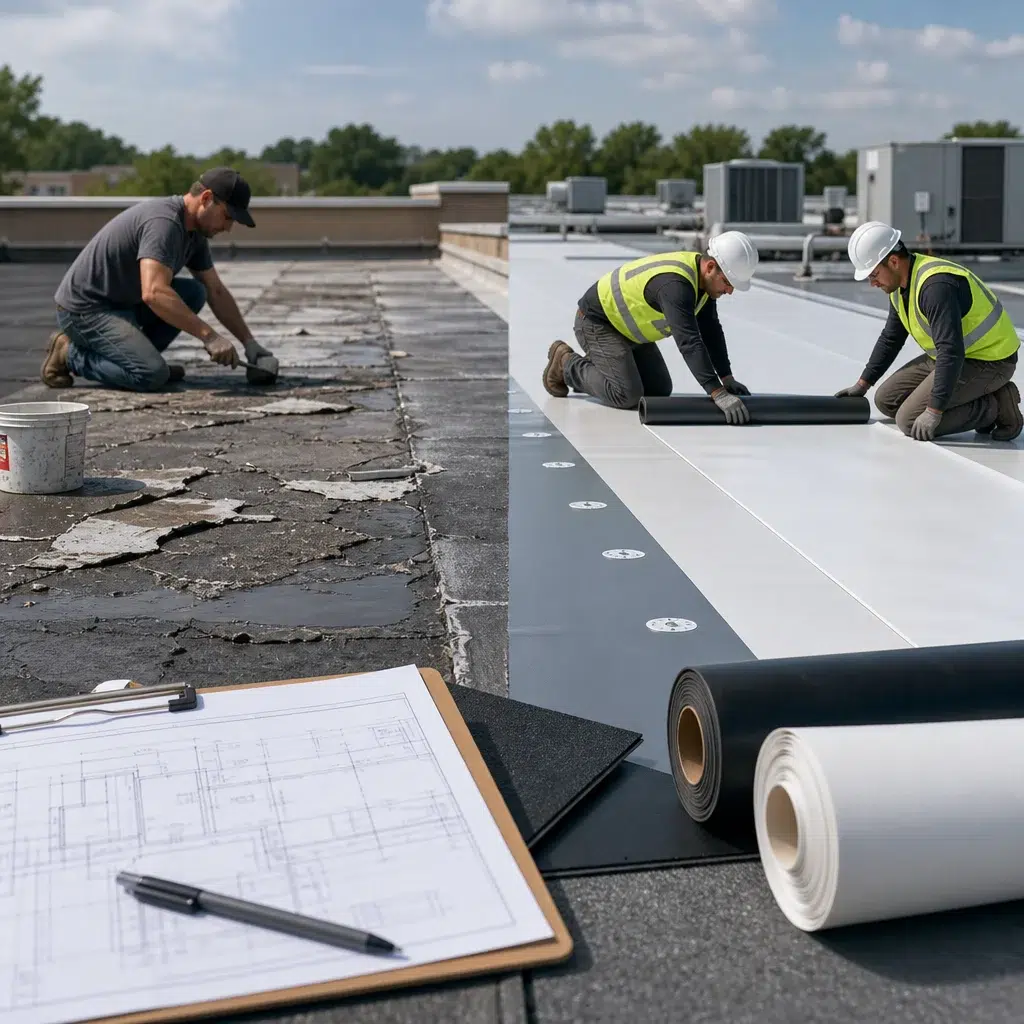
Commercial Flat Roof Replacement: DIY Repairs vs Professional Contractor Services
Why Commercial Flat Roofs Demand Professional Expertise
Commercial flat roofs protect some of your most valuable assets. When damage occurs, the decision between attempting repairs yourself and hiring professional contractors often comes down to one fundamental question: can you afford to get it wrong?
We’ve worked with dozens of Brookfield business owners who faced this exact crossroads. Most discovered that the cheapest option upfront becomes the most expensive decision long-term. This guide walks you through why commercial flat roof replacement demands more than good intentions and a toolbelt.
Commercial flat roofs present challenges that residential pitched roofs simply don’t. They’re engineered systems where every component depends on the others. Drainage, membrane integrity, flashing details, and structural loading all interact in ways that require specific knowledge to assess and execute properly.
A single installation mistake on a commercial flat roof doesn’t just create a leak. It creates a cascading failure that can compromise your building’s structural integrity, void manufacturer warranties, and expose you to liability. When water penetrates a commercial building through a faulty roof installation, it affects inventory, equipment, employee safety, and your bottom line.
We approach every commercial roofing project recognizing that your roof directly impacts your operational continuity. That’s why we invest in certifications from membrane manufacturers, stay current with building codes specific to Wisconsin commercial properties, and maintain relationships with suppliers who back their materials. Our team understands EPDM and TPO membrane systems at the level that matters: we know how each responds to Wisconsin’s temperature swings, UV exposure, and weather patterns.
The technical demands go beyond installation technique. Proper assessment requires identifying whether you need a full replacement, a resurface, or a repair. That evaluation determines which materials, timeline, and investment make sense for your property. Misdiagnosing your roof’s condition wastes money and creates false confidence that the problem is solved.
Actionable takeaway: Request a detailed inspection from a certified commercial roofing contractor before committing to any repair work. We offer commercial roof assessment services to property owners in the Brookfield area specifically because this step separates sound decisions from costly mistakes.
The Hidden Costs of Attempting DIY Flat Roof Solutions
The DIY temptation on commercial roofs runs strong when you see patching materials at supply stores or watch installation videos online. A bucket of roof coating or a roll of membrane tape looks manageable. Then reality arrives with the invoice.
Safety constitutes the first hidden cost. Commercial roofs require fall protection systems, proper equipment access, and training that most property owners don’t have. A single slip or fall means workers’ compensation claims, liability exposure, and potential legal consequences. OSHA regulations specifically govern roofing work, and violations carry fines that dwarf the cost of hiring professionals.
Material costs multiply when you buy wrong or waste supplies. Professional contractors purchase materials at scale with supplier relationships that yield better pricing than retail. More importantly, we know exactly how much material each square footage requires. DIY efforts often result in purchasing 20-30% more material than needed, or worse, running short and facing project delays.
Warranty voidance represents the most expensive hidden cost. Commercial roofing manufacturers warranty their membranes only when certified contractors install them according to specifications. A DIY installation or work by uncertified contractors immediately voids that protection. You lose 10-20 years of coverage for a problem that emerges months or years later. That’s when a minor defect becomes a complete replacement at full cost.
Improper installation creates ongoing maintenance expenses. Flashing sealed incorrectly, drainage slopes installed wrong, or membrane seams not properly fused develop leaks that spread damage beneath the surface. By the time you discover the actual extent of damage, you’re replacing additional structural components, not just fixing the roof. We’ve seen cases where a $5,000 DIY repair attempt led to $50,000 in structural repairs that could have been prevented.
The operational disruption from DIY work often costs more than the labor savings. Project delays extend downtime, increase your exposure to weather damage during the work, and create safety hazards that interrupt normal business operations. A professional contractor’s organized timeline minimizes this disruption.
Actionable takeaway: Calculate the true cost of DIY by adding material waste (20-30%), potential warranty loss (10-20 years of coverage), safety liability, and operational downtime. In almost every case with commercial properties, the numbers show that professional installation protects your investment.
Our Comprehensive Roof Assessment and Planning Process
We don’t quote commercial roof replacement based on square footage alone. Every property presents unique conditions that affect material selection, installation approach, and timeline. Our assessment process identifies these variables before we present a proposal.
Our team starts by examining roof condition from multiple angles. We inspect the membrane for punctures, seams, and UV degradation. We check flashing around penetrations, examine drainage systems, and assess whether the underlying structure shows signs of water damage or deterioration. This physical inspection reveals whether your roof can be repaired, needs a resurface, or requires full replacement.
Next, we evaluate your building’s use and operational demands. A manufacturing facility with 24/7 production schedules needs different project sequencing than an office building. We consider your weather windows, maintenance access, and occupancy patterns to schedule work that minimizes business disruption.
We also assess your budget parameters and long-term goals. Are you planning to stay in this location for 15 years or sell within 5? Are energy efficiency and sustainability priorities? Do you have capital budget constraints? These answers guide our material recommendations and design approach.
Once we understand your property and priorities, we present a detailed proposal that outlines materials, timeline, crew size, and exactly how we’ll minimize operational impact. We explain why we recommend specific materials like EPDM or TPO based on your climate exposure and maintenance preferences. We walk you through the project schedule and identify any steps requiring your coordination.
Our replacement timeline practices ensure you know exactly what to expect each day of work. We assign a dedicated project manager who communicates progress, addresses questions, and handles any unexpected conditions immediately rather than letting them become problems.
Actionable takeaway: Insist on a site visit and written assessment before any contractor provides a quote. The small investment in proper evaluation prevents expensive mistakes and ensures your contractor understands your specific needs.
Material Quality and Installation Standards: How We Set the Industry Benchmark
The membrane you choose determines your roof’s lifespan, maintenance needs, and cost performance. We work with premium materials from manufacturers who stand behind their products when we install them correctly.
EPDM (ethylene propylene diene monomer) membranes offer proven durability in Wisconsin’s climate. They handle our temperature swings well, resist UV breakdown, and cost less than some alternatives. EPDM systems typically last 20-25 years with proper maintenance. Single-ply installation requires precise seam welding and flashing details that separate professional results from amateur attempts.
TPO (thermoplastic polyolefin) membranes provide superior heat reflectivity, which reduces cooling costs in summer months. TPO installs with heat-welded seams that create permanent bonds stronger than the membrane itself when done correctly. The material resists punctures better than EPDM and offers comparable longevity. For property owners prioritizing energy efficiency, TPO delivers measurable utility savings.
We selected these materials specifically because they work in our Wisconsin environment. We’ve installed thousands of square feet of each, tracked performance across seasons, and built relationships with manufacturers who stand behind warranty claims. When a property owner on the west side of Brookfield asks whether EPDM or TPO makes sense for their property, we draw on direct experience with both materials in similar conditions.
Our installation process follows manufacturer specifications exactly. This isn’t discretionary. When we deviate from specifications, we void the warranty ourselves. Every seam gets inspected during the sealing process. We verify drainage slopes before membrane installation to ensure water flows to drains properly. We install flashing details with the precision that prevents leaks around penetrations, skylights, and roof edges.
We use commercial-grade tools and equipment designed for professional roofing work. That includes proper fall protection systems, material handling equipment that prevents membrane damage, and inspection tools that identify defects before the project ends. A bucket of caulk and a staple gun don’t replace this infrastructure.
Quality also means accountability. We carry commercial liability insurance, workers’ compensation coverage, and bonding that protects you if something goes wrong. We maintain certifications from roofing manufacturers that verify our training and standards. We stand behind every installation with a warranty that covers both materials and labor for years after completion.
Actionable takeaway: When evaluating roofing contractors, ask for proof of manufacturer certifications, detailed warranty coverage, and references from similar commercial projects. Don’t assume all contractors meet the same standards.
Warranty and Longevity: What Professional Installation Guarantees
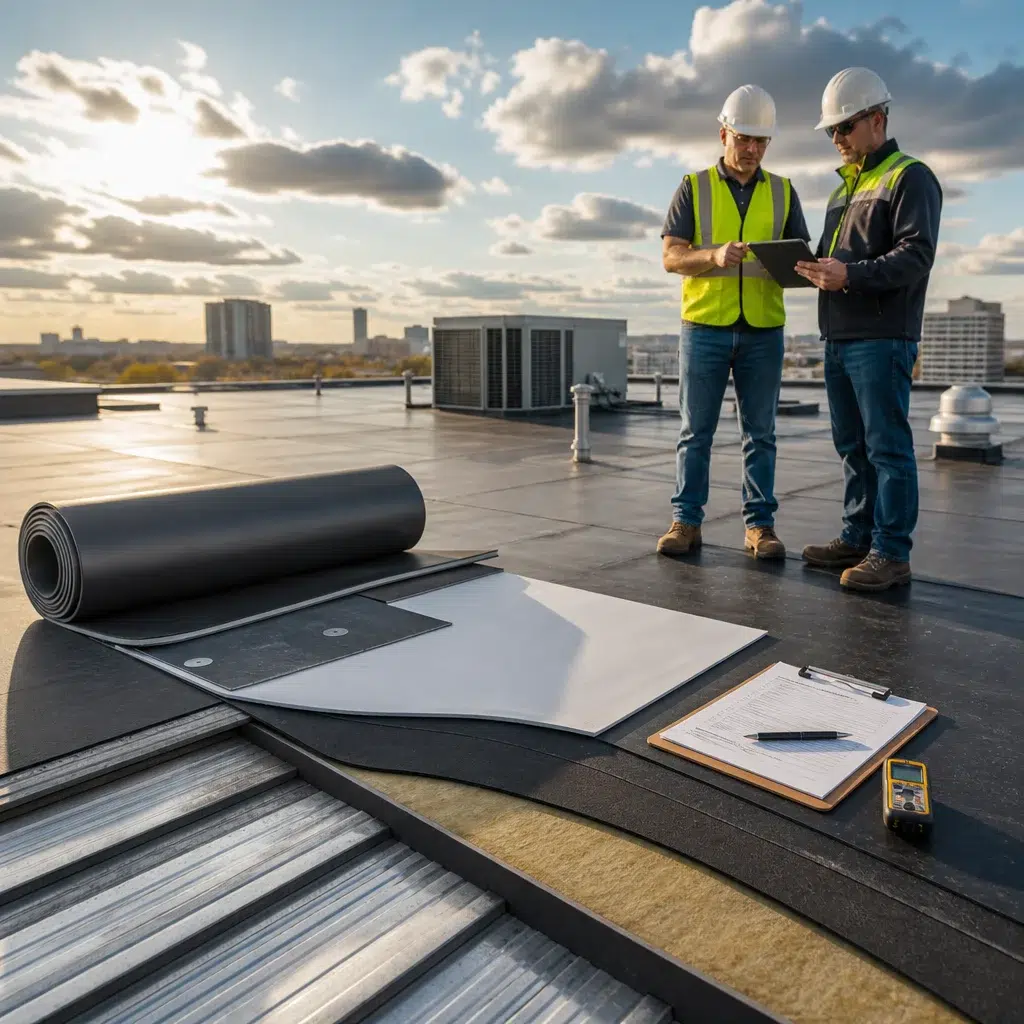
A quality commercial roof represents a 15-25 year investment. The difference between an installation that lasts 15 years and one that lasts 25 years means the difference between a routine replacement and an unexpected major expense. Professional installation and proper materials extend that timeframe significantly.
Manufacturer warranties on membranes typically cover 15-20 years when installed by certified contractors. These warranties protect against manufacturing defects, seam failures, and membrane degradation. But here’s the critical point: these warranties apply only when a certified contractor installs the membrane to manufacturer specifications. DIY installation or work by uncertified crews voids this protection immediately.
Beyond manufacturer warranties, we provide labor and workmanship warranties on every project. We guarantee that our installation follows specifications and performs as designed. If a leak develops due to an installation defect on our part, we fix it at no cost to you. This warranty typically covers 5-10 years depending on the project scope.
Regular maintenance extends your roof’s life dramatically. We recommend annual inspections, particularly after severe weather, to catch minor issues before they become major problems. We document maintenance records that support warranty claims and demonstrate to future property buyers that the roof has been properly cared for.
Think about the cost comparison over a 20-year period. A properly installed commercial roof with routine maintenance might cost $150,000 total. A DIY installation or work by discount contractors that fails after 10 years requires replacement anyway, costing another $150,000, plus the costs of water damage that accumulated while a failing roof leaked. The total becomes $300,000 or more.
Professional installation protects more than just the roof. When your roof fails, water damages interior structures, equipment, and inventory. That secondary damage often exceeds the roof repair cost significantly. A manufacturing facility might lose $50,000 per day in production if a roof leak shuts down operations. An office building might face mold remediation costs that exceed the original roof replacement cost. Proper installation prevents these cascading failures.
Actionable takeaway: Factor warranty coverage into your long-term cost calculation. A professional installation with full manufacturer and workmanship warranties delivers lower total cost of ownership than a discount option that offers no protection.
Timeline and Minimal Disruption to Your Operations
Commercial roof replacement doesn’t require shutting down your business for weeks. We develop project schedules that work within your operational constraints, and we execute to those schedules precisely.
The timeline for a commercial flat roof replacement depends on roof size, weather windows, and material choice. A typical 15,000-20,000 square foot commercial roof in the Brookfield area requires 3-5 business days with a full crew working efficiently. Larger properties or complex conditions might extend that range, but we communicate exact timelines before work begins.
We schedule projects during seasons optimal for your climate and your business. Spring and fall typically offer the most favorable conditions for roofing work in Wisconsin, with moderate temperatures and lower rain probability. We also work during your business’s low-activity periods when operational disruption costs less. Our project manager coordinates with your facility manager to sequence work in phases if needed.
Our crew size and equipment management ensure work progresses efficiently without creating bottlenecks or safety hazards. We stage materials appropriately so we’re not blocking access routes or creating fire hazards. We maintain clean work zones at the end of each day, removing debris and ensuring your building remains secure.
Weather contingencies are built into our timeline. Wisconsin spring rains and sudden temperature changes can affect roofing work. We schedule with buffer days that account for weather interruptions. If severe weather halts work, we secure the roof and resume the next available good-weather day. Transparent communication keeps you informed about progress and any adjustments to the schedule.
Weather protection matters during installation. We don’t install membranes in rain, and we have protocols for installation during temperature extremes. These aren’t delays born from overcautiousness; they’re professional standards that prevent installation defects. We explain these constraints upfront so you understand timeline decisions.
Actionable takeaway: Ask your contractor for a day-by-day project schedule before work begins. Include weather contingency buffers and your facility manager in the planning process to ensure the timeline works for your operations.
Cost Transparency and Long-Term Value Proposition
Commercial roofing costs vary significantly based on membrane choice, roof complexity, and regional labor rates. In Wisconsin, commercial flat roof replacement typically ranges from $8-15 per square foot installed, depending on material and conditions. A 20,000 square foot roof might cost $160,000-$300,000, with the range reflecting material choice and roof complexity.
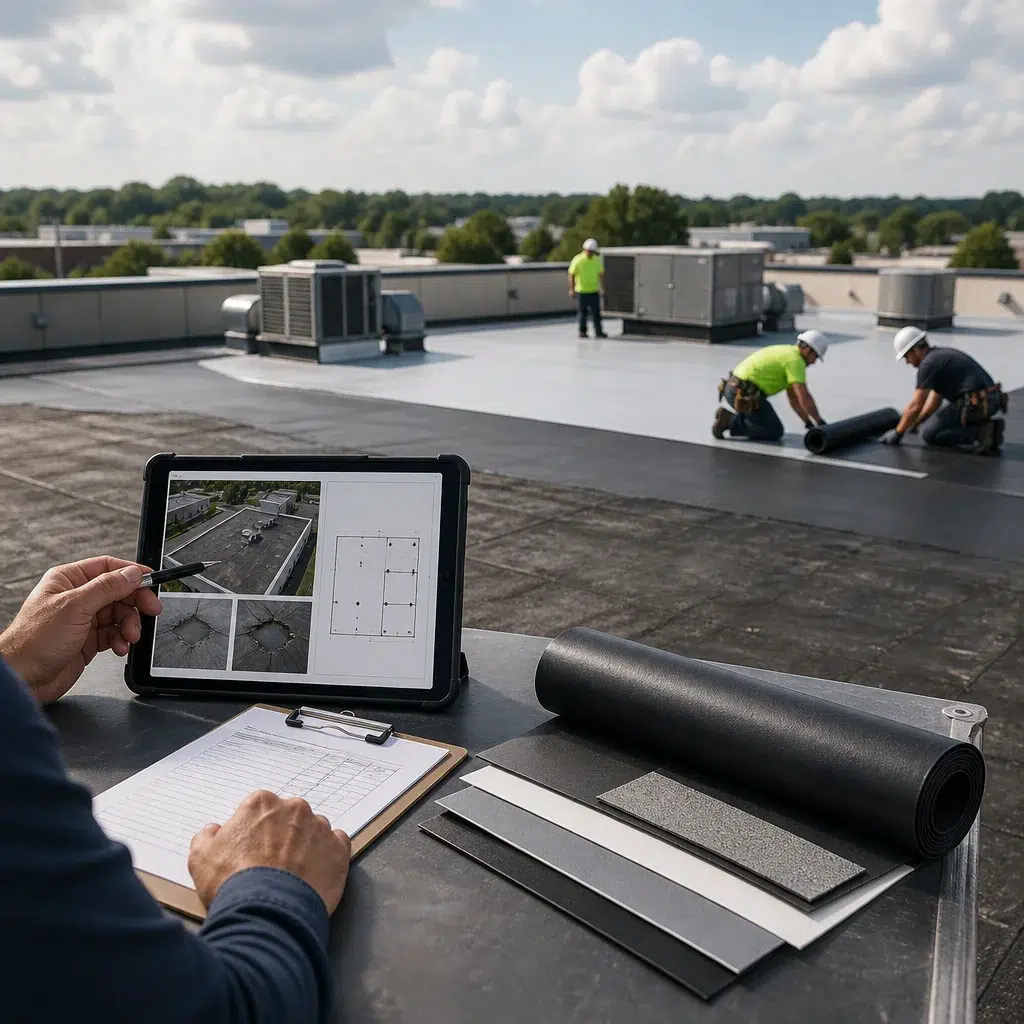
The membrane itself accounts for about 40-50% of project cost. EPDM typically runs less per square foot than TPO, but both represent solid investments in your roof’s longevity. Labor and equipment costs comprise 30-40%. The remaining 10-20% covers flashing, drainage systems, and project management. These proportions matter because they show where value concentrates.
We use our guide to evaluating roofing bids to help property owners understand what they’re comparing. A quote at half the market price isn’t a bargain; it’s a red flag. Either the contractor is cutting corners on materials or labor quality, or they’ve misunderstood your project scope. A quote at double the market price suggests unnecessary upsells.
We present costs transparently. Our proposal breaks down material costs by component, labor costs by project phase, and equipment costs by necessity. We explain what’s included in our warranty and what maintenance remains your responsibility. We document assumptions about roof conditions and explain what happens if the inspection reveals unexpected issues.
Cost savings aren’t found through cheaper materials or cutting labor corners. They’re found through proper planning that prevents rework, efficient project management that minimizes timeline disruption, and material choices that deliver the best performance for your climate and budget. We work with property owners to balance upfront investment with long-term value.
Consider financing options available for commercial roofing projects. Many property owners roll replacement costs into refinancing or use property improvement loans. These financing approaches spread costs over time and often provide tax advantages. We can discuss financing strategies during your consultation.
Actionable takeaway: Request detailed cost breakdowns from contractors, not just lump sum quotes. Understand what materials cost, what labor costs, and how those costs compare to industry averages. Transparent pricing protects you from surprise expenses mid-project.
Expert Exteriors: Your Trusted Wisconsin Roofing Partner
We’ve built Expert Exteriors around a core commitment: deliver roofing and exterior work that protects property owners’ investments and lasts through Wisconsin’s demanding climate. For Brookfield property owners, that means understanding local weather patterns, building codes specific to our area, and the particular challenges commercial buildings face in our region.
Our team brings years of direct experience with commercial flat roofing systems. We’ve installed EPDM and TPO membranes on manufacturing facilities, office buildings, retail centers, and industrial properties across Brookfield and surrounding areas. We’ve managed emergency repairs for property owners facing unexpected roof failures, and we’ve planned major replacements for owners planning long-term facility investments.
We maintain certifications from EPDM and TPO manufacturers, which means ongoing training on the latest installation techniques and material developments. These certifications aren’t just credentials on our website; they represent accountability. Manufacturers audit our work, and we lose our certification if we fail to maintain their standards.
Our commercial liability insurance and workers’ compensation coverage protect your property during work. We bond our projects so you have recourse if an issue arises. We maintain relationships with material suppliers who back their products and understand that we’ll only recommend materials we’re confident performing on.
Most importantly, we treat your commercial roof as the critical asset it is. We show up on time, communicate clearly, execute to our timeline, and stand behind every installation with comprehensive warranty coverage. We respect that your building generates revenue, that roof failure disrupts your operations, and that you expect professional work at predictable costs.
Our approach contrasts sharply with national roofing franchises that send different crews to every project or contractors who treat commercial roofing as a volume business. We know our clients, we remember our past projects, and we take accountability for long-term performance.
Scheduling Your Free Roof Replacement Consultation Today
The path from roof concern to permanent solution begins with a detailed assessment. We offer free consultations where we inspect your commercial roof, discuss your operational needs and budget priorities, and recommend the best path forward.
During your consultation, we’ll inspect your roof thoroughly, answer your questions about materials and installation approaches, and provide a timeline for project completion. We’ll explain our warranty coverage, discuss maintenance expectations, and walk you through our project management process. We’ll provide a detailed proposal that removes guesswork about costs and scope.
Contact us at Expert Exteriors to schedule your free commercial roof assessment. We serve Brookfield and surrounding areas, and we’re ready to discuss how professional roof replacement protects your property and operations for years to come.
Don’t let roof uncertainty disrupt your business. Let’s schedule your consultation and develop a roof replacement plan that delivers confidence and protection. Call us today or visit our website to request your free assessment.