
Storm Damage Insurance Claims: Your Complete Roof Documentation Guide
Why Storm Damage Documentation Makes or Breaks Your Insurance Claim
When a storm damages your roof, the difference between a fully covered claim and a denied one often comes down to documentation. Insurance companies need clear, detailed evidence of what happened and how much damage occurred. Without it, adjusters have little foundation to approve payment, no matter how severe the damage actually is.
We’ve seen claims approved for thousands of dollars and others denied entirely, often based on the quality of the initial documentation gathered in those first critical days after the storm. Your insurance company isn’t being difficult. They’re following standard protocol: they need proof of damage and proof that the damage resulted from a covered event like hail, wind, or falling debris.
The reality is straightforward. Better documentation leads to faster approvals and higher claim amounts. Poor documentation creates delays, disputes, and sometimes outright denials. When you document damage properly from the start, you give your insurance adjuster exactly what they need to process your claim smoothly.
Action to take now: After a storm, photograph damage immediately before weather deteriorates it further or you attempt repairs. This initial documentation becomes the foundation of your entire claim.
The Hidden Costs of Poor Roof Documentation After Storms
Inadequate documentation doesn’t just delay your claim. It can cost you thousands in out-of-pocket expenses or force you to accept a lower settlement than your roof damage warrants.
Here’s what happens with weak documentation: An adjuster visits your property, finds limited photos or evidence, and has to make assumptions about damage severity. These assumptions usually favor the insurance company. They might argue that damage is less extensive than it actually is, or they might claim certain damage came from pre-existing conditions rather than the storm. Without clear documentation showing otherwise, you have little recourse.
The costs compound quickly. You might pay out of pocket to temporarily repair your roof to prevent further water damage. Your insurance company later denies part of the claim. You’re now out thousands that should have been covered. If your roof continues deteriorating during the claims process, secondary damage from leaks adds to your expenses, and your insurance may exclude that damage from coverage since it occurred after the initial event.
Delays also carry hidden costs. If your claim takes months to process due to missing documentation, you might face temporary tarping expenses, temporary repairs that become permanent, or worse: additional weather events that cause further damage while your original claim sits unresolved.
We’ve also seen homeowners accept settlements lower than their actual repair costs because they didn’t document the full extent of damage. They thought they were being reasonable, not realizing their documentation simply didn’t capture what the insurance company should have been covering.
Action to take now: Keep receipts for any temporary repairs or emergency measures you take after storm damage. These are often reimbursable and show the adjuster the urgency of the situation.
Our Step-by-Step Documentation Process for Maximum Coverage
When you contact us after storm damage, we follow a proven process designed to capture every detail your insurance company needs to approve your claim.
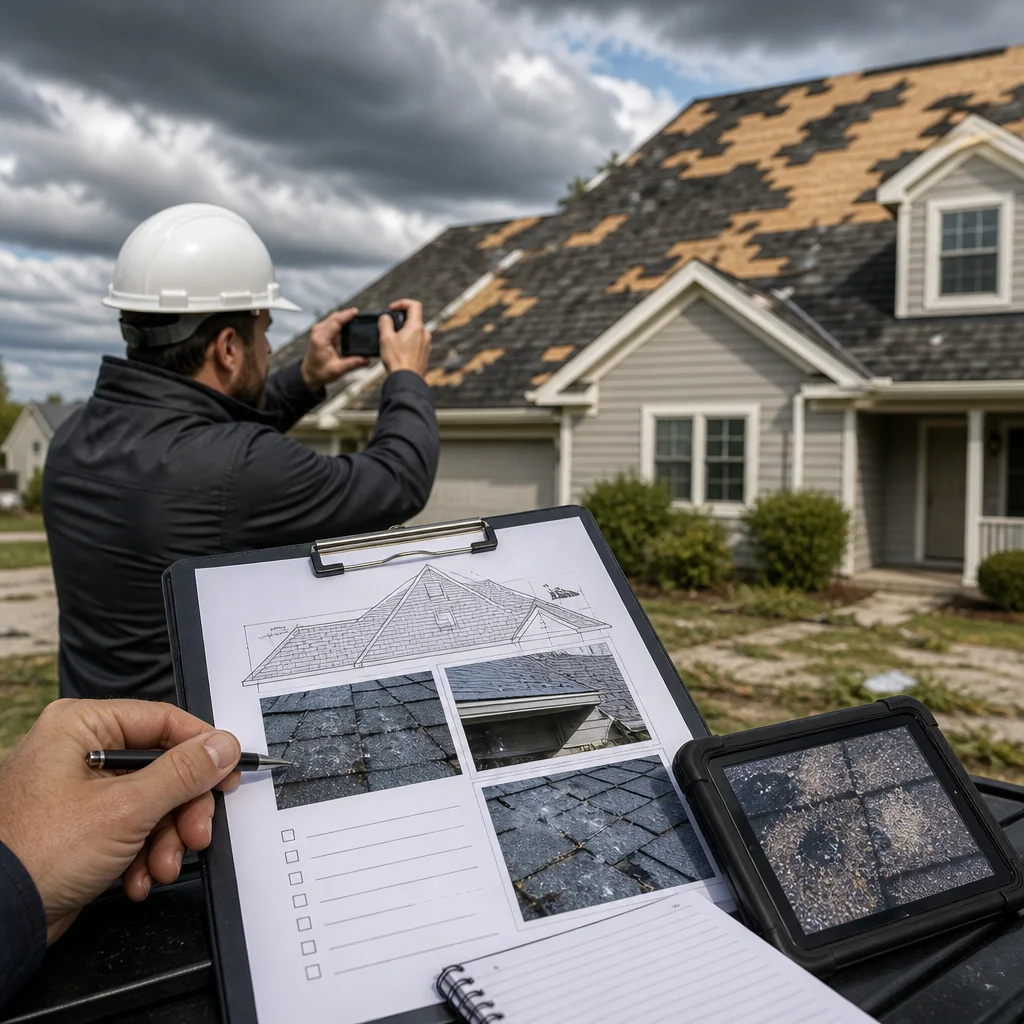
First, we conduct a comprehensive roof inspection. This happens as soon as possible after the storm passes and weather permits safe access. We examine every section of your roof, looking for hail damage, wind damage, missing shingles, lifted shingles, granule loss, damaged flashing, and compromised gutters or fascia. We don’t rush this step. A thorough inspection typically takes 60 to 90 minutes for a residential property.
Next, we document damage systematically. We photograph each area of your roof from multiple angles and distances. Close-ups show specific damage details. Wide shots show overall patterns. We include reference objects for scale, like a ruler or our hand, so adjusters can judge the size of damage. We photograph undamaged sections too, so the adjuster can compare what normal looks like on your roof versus what damage looks like.
We create a detailed damage report. This document lists every damaged area, describes the type of damage in precise terms, includes the dimensions of affected sections, and explains how each damaged area impacts your roof’s function and lifespan. We note whether damage appears uniform across the roof or concentrated in specific areas, which helps the adjuster understand the storm’s pattern.
We gather supporting evidence. This includes weather reports confirming the storm occurred in your area, sometimes photos or videos from news sources covering the storm, and documentation of any claims filed by neighbors. We also note the date of your roof’s installation and any maintenance records you have.
Finally, we prepare materials the adjuster can use immediately. We organize photos logically, create a map of damaged areas, and write a summary that explains what happened and why it needs insurance coverage.
Our approach removes guesswork from the claims process. The adjuster receives clear, organized evidence that makes approving your claim straightforward.
Essential Photos and Evidence We Gather for Your Claim
The photos we take form the backbone of your documentation. Insurance adjusters rely heavily on visual evidence, so we shoot strategically.
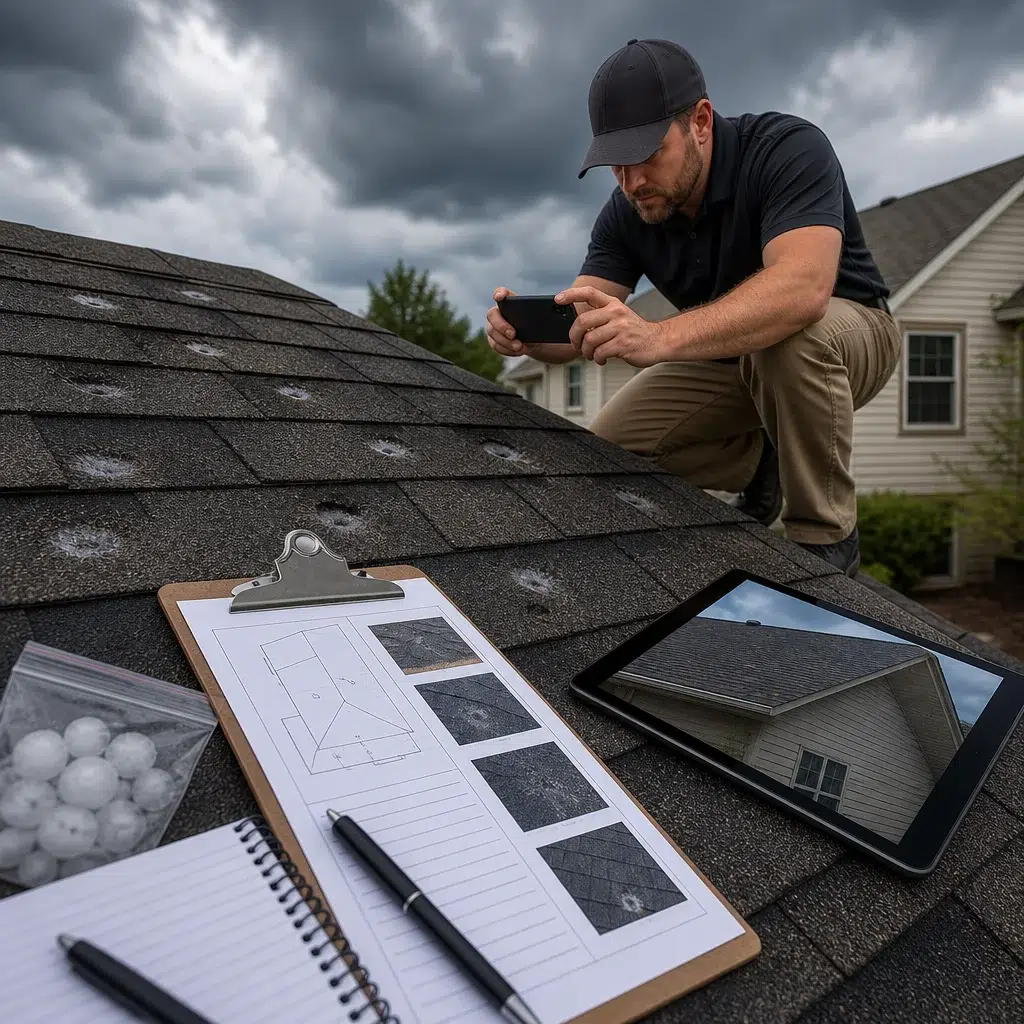
Hail damage photos show the specific dents or punctures in your shingles. We photograph the same damage from multiple angles and distances. A close-up shows the damage detail. A medium shot shows multiple damaged shingles together. A wider shot shows the overall damage pattern across a section of roof. We include measurement references so the adjuster can judge hail stone size.
Wind damage documentation shows lifted or missing shingles, bent flashing, or separated seams. These issues are sometimes harder to see than hail damage, so we shoot from angles that make the damage obvious. A photo of lifted shingles taken from the side clearly shows separation from the roof deck. Straight overhead photos might not reveal this.
Granule loss appears as dark spots on shingles where the protective granule layer is worn away. We photograph these areas in good lighting where the exposed material is clearly visible.
Flashing damage around chimneys, vents, and roof penetrations gets dedicated attention. Damaged flashing often leads to leaks, so insurance companies care about its condition. We show both the damaged flashing and its relationship to the roof around it.
Gutter and soffit damage receives documentation too, since storm damage often affects these areas as well. We photograph dents, separations, and any visible damage that needs repair.
Beyond photos, we document what we observe in writing. We note the date of inspection, the weather conditions, wind speeds from available reports, and hail size if reported. We also get written estimates for repair costs. Insurance adjusters want to understand not just that damage exists, but what it will cost to fix.
Action to take now: If you’ve already taken photos after the storm, don’t delete them. Gather them into a folder organized by roof section so everything is easy to reference.
Understanding What Insurance Adjusters Actually Look For
Insurance adjusters follow specific protocols when evaluating storm damage claims. Understanding their perspective helps you appreciate why thorough documentation matters.
Adjusters are trained to verify three things: that damage exists, that the damage matches a covered cause (like hail or wind), and that repair costs are reasonable. They’re not trying to deny your claim. They’re following their company’s requirements to validate claims before approving them.
When they arrive for their inspection, they look for patterns. Hail damage typically appears random across the roof. Wind damage often shows a directional pattern, with damage more severe on one side of the roof facing the wind direction. Missing shingles or lifted shingles clearly indicate wind damage. Random dents suggest hail. These patterns help adjusters confirm the cause.
Adjusters also compare your roof’s condition to its age. A 10-year-old roof might show minor hail damage that doesn’t warrant replacement. That same damage on a 2-year-old roof might justify full replacement because you’re extending the life of relatively new material. They consider whether damage will accelerate deterioration and whether repair or replacement makes economic sense.
They examine the extent of damage across the entire roof surface, not just the most visible spot. If damage appears only in one small area, the adjuster might approve a localized repair. If damage is widespread, replacement becomes more justified. This is why comprehensive documentation of the whole roof, not just the worst sections, matters.
Adjusters also verify that damage matches typical storm damage patterns. They know what hail damage looks like, how wind damage manifests, and what falling debris typically causes. Documentation that clearly shows these patterns helps adjusters quickly process your claim.
Finally, adjusters need a clear understanding of costs. They review repair estimates or replacement quotes to validate that amounts are reasonable for your area and roof type. Detailed, itemized estimates support this better than vague price quotes.
Action to take now: When the adjuster inspects your roof, be present if possible. Point out damage areas and share the documentation you’ve gathered. Your preparation demonstrates that you’re serious about the claim and organized in your approach.
Working With Your Insurance Company: How We Support You
We handle significant portions of the claims process to remove burden from you and accelerate approval.
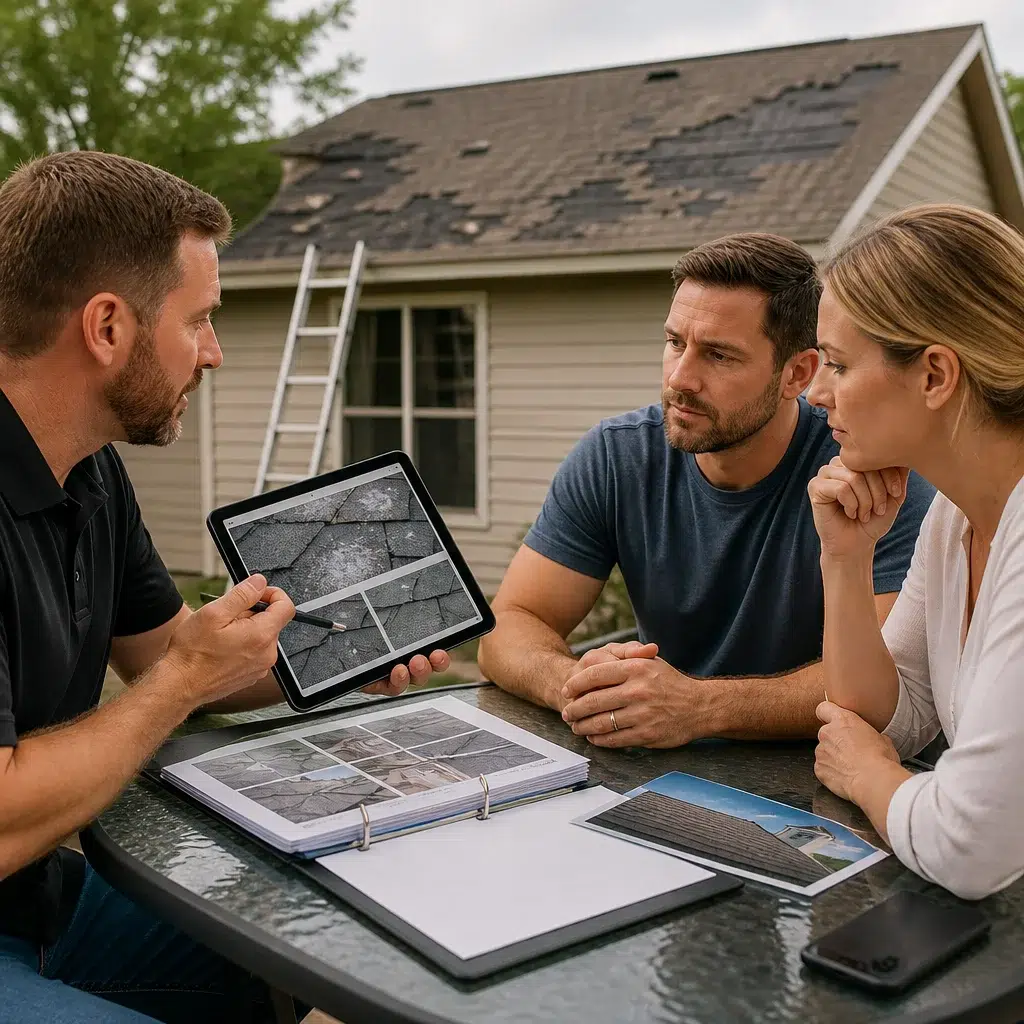
We communicate directly with your insurance adjuster. We provide them with our inspection report, photographs, and damage assessment. We answer their technical questions about roof construction and damage evaluation. When they need clarification on a particular damaged area, we supply additional photos or information. This direct communication often resolves questions quickly, preventing delays.
We coordinate the adjuster’s inspection visit. We ensure someone is available to provide roof access and answer questions. We point out damage areas that might not be immediately obvious, particularly things like granule loss or lifted shingles that require specific angles to see clearly.
We prepare detailed repair or replacement estimates. Our estimates break down costs by category: materials, labor, removal of old materials, and any additional work like flashing repair or underlayment replacement. Itemized estimates give adjusters confidence that costs are reasonable and justified. Vague quotes sometimes get questioned or reduced.
We negotiate with insurance companies when necessary. If an adjuster’s initial assessment significantly underestimates damage or repair costs, we provide evidence supporting a higher evaluation. We’ve worked with insurers long enough to understand their concerns and how to address them professionally.
We handle insurance deductibles. Most homeowners don’t realize their deductible structure might differ for storm damage. We clarify this and explain what you’ll pay out of pocket versus what insurance covers. Some policies have specific storm deductibles separate from standard deductibles.
We coordinate the repair timeline. Once your claim is approved, we schedule the work, manage the project, and ensure everything is completed to your satisfaction and insurance requirements.
By managing these interactions, we reduce your stress and increase the likelihood of approval and fair settlement. You’re not left wondering where your claim stands or whether you’re accepting an inadequate offer.
Common Documentation Mistakes That Delay or Deny Claims
We see predictable documentation mistakes that create headaches. Knowing these helps you avoid them.
Taking photos too soon or too late. Photos taken immediately after a storm, before weather worsens damage or before you attempt temporary repairs, are most useful. But if the sky is still dark or conditions are unsafe, waiting for daylight and safe access is wise. Photos taken weeks later, after additional weather events or after you’ve already repaired damage, are less reliable because adjusters can’t distinguish between storm damage and other deterioration.
Not including scale references. A photo of a dented shingle means nothing if the adjuster can’t judge the dent size. Adding a ruler, coin, or your hand to photos lets adjusters understand damage scale. Hail stone size matters because larger hail causes more damage.
Photographing only the worst damage. Showing the adjuster five photos of the most obviously damaged area doesn’t help them understand the overall roof condition. They need to see representative samples from different areas so they can judge whether damage is isolated or widespread.
Failing to document undamaged areas. The adjuster needs to know what your roof normally looks like so they can compare it to damaged sections. Photos of undamaged shingles, flashing, and gutters provide this baseline.
Not recording the storm date and inspection date. Adjusters care about timing. A roof inspected three months after a storm might show multiple damage sources, making it hard to assign cause. Clear dates establish the timeline and link damage to the specific storm.
Skipping damage outside the roof. Storm damage often affects siding, gutters, fascia, soffit, and gutters. Documentation that includes only roof damage might miss additional coverage. We always document complete exterior damage.
Using vague descriptions. “Roof damage” tells an adjuster nothing. “Missing shingles on east slope, covering approximately 20 square feet, with underlying felt exposed and water damage visible on interior drywall” gives them actionable information.
Attempting repairs before documentation. Once you repair or replace damaged sections, the adjuster can’t evaluate the original damage. Always document first, repair second.
Action to take now: Don’t attempt roof repairs after a storm. Even temporary tarping should only happen after you’ve documented damage and contacted your insurance company.
Timeline for Getting Your Roof Inspected After Storm Damage
The timeline for inspection matters significantly to your claim outcome.
Ideally, contact your insurance company and us within 24 to 48 hours of the storm. This timing accomplishes several things. Weather forecasts are fresh, confirming the storm occurred. Damage hasn’t been compounded by subsequent weather. Temporary repairs haven’t obscured the original damage. And reporting promptly shows your insurance company you’re responsive and serious.
Get your own inspection within 3 to 5 days. We can often schedule inspections quickly after a major storm, though we might have wait time if the storm affected a wide area. Getting an inspection within this window, before weathering or secondary damage occurs, is crucial.
The insurance adjuster typically inspects within 5 to 14 days. Insurance companies have their own timelines and might have multiple claims to handle after a widespread storm. Providing them with our documentation beforehand accelerates their process. Sometimes they can skip the site visit entirely if our documentation is thorough and clear.
The entire claims process, from storm to approval, typically takes 2 to 8 weeks. Timeline depends on claim complexity, insurance company workload, weather conditions that might affect roof access, and whether any disputes arise over damage assessment. Thorough documentation shortens this timeline significantly.
Once approved, we schedule roof work. Depending on seasonal demand and materials availability, scheduling could happen within days or might stretch to weeks. Storm damage is seasonal, so spring storms often mean busy schedules for roofing companies through early summer.
Actual roof work takes 1 to 5 days depending on roof size and complexity. Most residential roofs are completed in 2 to 3 days.
Delays most often occur when documentation is incomplete. The adjuster has to request additional information, schedule a second inspection, or involve supervisors to resolve disputes. These back-and-forths can add weeks to the timeline.
Action to take now: Mark a calendar reminder to follow up with your insurance adjuster one week after filing the claim if you haven’t heard from them. Gentle persistence keeps claims moving.
How Expert Exteriors Handles the Entire Claims Process
We view ourselves as your advocate throughout the claims process, not just the contractor who eventually repairs your roof.
Step one: immediate emergency response. When you contact us, we assess whether emergency measures are needed. If your roof is leaking heavily or partially open, we might arrange emergency tarping to prevent interior water damage. This emergency work is usually covered by insurance and gets applied to your deductible when the claim is approved.
Step two: comprehensive inspection and documentation. We schedule an inspection as soon as possible and conduct the thorough evaluation described earlier. We create the detailed report and photo documentation your adjuster needs.
Step three: claims submission support. We provide copies of our inspection report and photos to you immediately. You share these with your insurance company when you file your claim. We also maintain copies and communicate directly with the adjuster on your behalf, answering technical questions and providing additional documentation if needed.
Step four: claim negotiation if necessary. If the adjuster’s initial assessment seems low or incomplete, we review their findings and provide additional evidence supporting a higher valuation. We’ve found that professional disagreement with adjusters, presented respectfully and backed by solid evidence, often results in higher settlements.
Step five: insurance approval confirmation. Once your claim is approved, we review the approval with you, confirm coverage details, clarify your deductible, and ensure you understand what’s covered and what you’re responsible for.
Step six: repair scheduling and execution. We schedule your roof replacement or repair at a time that works for your schedule. We order materials, arrange crew scheduling, and manage the project from start to finish. We also coordinate with your insurance company if they require inspections after work is complete.
Step seven: final documentation. We photograph completed work and provide you with documentation suitable for your insurance company’s files. We also provide warranty information and maintenance recommendations.
Throughout this process, you have a single point of contact. You’re not juggling conversations with insurance adjusters, contractors, and potentially roofers who don’t communicate with each other. We handle the coordination, leaving you informed and confident.
Learn more about how hail and storm damage affects your roof and insurance coverage to better understand what to expect.
Next Steps: Getting Your Storm-Damaged Roof Repaired Today
If your roof was recently damaged by a storm, the time to act is now. Delay allows weather to worsen damage and complicates the claims process.
Contact us for a free inspection. We’ll evaluate your roof, document the damage, and provide you with a clear assessment of what happened and what repair or replacement looks like. This inspection is completely free, and you’re under no obligation.
We’ll provide documentation for your insurance claim. Whether we eventually repair your roof or you choose another contractor, we can prepare the documentation your adjuster needs. Some property owners ask us for inspection and documentation only, then handle repairs themselves. That’s fine. You still benefit from professional damage assessment.
Share our inspection with your insurance company. When you file your claim or communicate with your adjuster, provide copies of our report and photos. This accelerates their review process and demonstrates you’re serious and organized.
Rely on us through the claims process. We’ll answer your adjuster’s questions, provide additional information if needed, and advocate for fair assessment of your damage. We’re experienced in these negotiations and know how to present information that gets results.
Schedule repairs once your claim is approved. We can usually accommodate roof work within days or a few weeks depending on seasonal demand. We’ll coordinate timing with your insurance company’s requirements and your schedule.
The documentation and claims support we provide aren’t just services. They’re investments in getting your roof repaired quickly and ensuring you receive the settlement your damage warrants. Storm damage is stressful enough without adding claim confusion to the mix.
Call us today or visit our website to schedule your free roof inspection. The sooner we document your damage, the sooner we can help you move toward approval and repair.
For further reading: Step-by-step replacement process, About Expert Exteriors.