

Budgeting for Roof Replacement: Managing Unexpected Repair Costs Successfully
Why Roof Replacement Budgeting Matters for Property Owners
Roof replacement is one of the most significant investments a property owner makes. Unlike a new coat of paint or minor repairs, replacing your roof affects your home’s structural integrity, energy efficiency, and resale value. The challenge isn’t just understanding the base cost—it’s preparing for the variables that can stretch your budget unexpectedly.
We’ve worked with hundreds of property owners in Brookfield and surrounding areas who thought they knew their replacement costs, only to discover mid-project surprises. The difference between those who stress and those who stay calm comes down to one thing: proper budgeting and transparency from the start.
This guide walks you through everything you need to know about roof replacement budgeting, from identifying hidden costs to protecting yourself from surprises. Our goal is to help you make informed decisions and plan confidently.
A roof replacement isn’t an optional upgrade you can postpone indefinitely. When structural damage, extensive leaking, or age-related deterioration becomes apparent, delays only compound the problem. Water infiltration spreads to rafters, insulation, and interior walls, turning a roof problem into a whole-home restoration nightmare.
Budgeting properly means you’re not scrambling for emergency financing when the work needs to happen. It also means you can choose quality materials and trusted contractors rather than settling for the cheapest option because funds ran out.
Beyond the immediate repair, your budget directly influences the lifespan of your new roof. A premium asphalt shingle roof with proper installation can last 25-30 years, while cut-rate materials and rushed installation often fail within 15 years. When you spread replacement costs over decades, investing in durability now saves thousands later.
What to do next: Schedule a free inspection to understand your roof’s current condition. This foundational step prevents guesswork.
Common Hidden Costs in Roof Replacement Projects
Most property owners budget for materials and labor, but several cost categories catch people off guard. Understanding these now prevents sticker shock later.
Permit and inspection fees vary by municipality but typically range from $200 to $1,000 depending on your home’s size and location. Brookfield and surrounding municipalities require permits for roof work, and skipping this step creates liability and insurance complications.
Roof deck repair is the most common surprise. Once your old roof comes off, inspectors can see the underlying wood structure. Water damage, rot, or pest damage might have gone unnoticed for years. Decking replacement adds $500 to $3,000 depending on the extent, but it’s non-negotiable for a secure roof.
Flashing and trim replacement often exceeds initial estimates. Flashing is the metal installed around chimneys, skylights, and roof penetrations. If yours is old or corroded, replacing it prevents future leaks. Quality flashing installation costs $300 to $800 but is essential.
Ventilation upgrades come into play if your attic ventilation is inadequate. Proper airflow extends roof life and prevents ice damming in Wisconsin winters. If your existing system needs improvement, budget an additional $500 to $1,500.
Disposal and haul-away fees for your old roofing materials run $500 to $1,500 depending on your roof’s size and complexity. Some contractors include this; others charge separately. Always clarify upfront.
Unexpected structural issues like sagging areas or undersized rafters might require engineering consultation or reinforcement, adding variable costs.
The best protection against these surprises is working with a contractor who performs a thorough inspection before quoting. We always assess roof deck condition, flashing integrity, and ventilation as part of our estimation process.
What to do next: Ask any contractor for a detailed cost breakdown that itemizes materials, labor, permits, and disposal separately. Red flags include vague estimates or estimates that don’t address deck condition.
How Weather and Structural Issues Impact Your Budget
Wisconsin’s climate creates specific roofing challenges that directly affect project costs. Winter weather doesn’t stop roof problems, but it does complicate repairs and replacements.
Severe winter ice damming can cause interior water damage that makes roof replacement urgent rather than planned. Ice dams form when warm air escapes through an under-ventilated attic, melting snow on the roof’s upper sections. Water flows down, refreezes at the cold roof edge, and backs up under shingles. This situation forces emergency work, which typically costs 20-30% more than scheduled replacement because contractors need expedited scheduling.
Summer storms bring wind damage that accelerates roof failure. High winds expose shingles or even remove sections entirely. Hail causes hidden damage that spreads damage across large areas. If your inspection reveals storm damage, insurance may cover replacement costs—a significant budget relief if you file promptly.
Structural issues directly influence labor costs. A roof with multiple penetrations (skylights, chimneys, vents) takes longer to install properly. Steep pitches require specialized safety equipment and more skilled installation. Complex rooflines with dormers, valleys, and transitions cost more per square than simple rectangular roofs.
Attic conditions matter too. Poor insulation or inadequate ventilation sometimes requires upgrades during replacement. A properly ventilated attic maintains consistent temperatures, extends roof life, and improves energy efficiency.
Understanding your roof’s specific conditions helps you anticipate costs. That’s why we always provide a comprehensive assessment before giving estimates.
What to do next: Document any visible damage, water stains, or structural concerns before getting estimates. This information helps contractors understand your situation and provide more accurate quotes.
Our Comprehensive Assessment Process Prevents Budget Surprises
We never provide estimates without first understanding your roof’s complete condition. This thorough approach takes more time upfront but eliminates the budget surprises that derail projects.
Our inspection process includes:
Exterior evaluation – We examine your roof from the ground and, when safe, access the roof to inspect shingles, flashing, gutters, and structural elements. We photograph damage and document the roof’s age and condition.
Attic inspection – Interior examination reveals water stains, insulation condition, ventilation adequacy, and structural integrity. We check for signs of previous leaks or pest damage.
Deck assessment – We probe the roof deck to identify soft spots, rot, or damage. This determines whether deck repair will be necessary.
Structural review – We check for sagging, undersized framing, or other issues that might require reinforcement.
Documentation – Our detailed inspection report includes photos, measurements, and specific observations. You receive this report before we discuss pricing, so you understand what we found and why.
This comprehensive approach costs us more time, but it means your estimate reflects reality rather than guesses. You know exactly what needs addressing and why. When we quote $12,000 for a roof replacement, you’re not wondering if hidden costs will push it to $16,000.
We also discuss timing and options during this assessment. If your roof can wait six months, scheduling flexibility might improve your budget. If immediate replacement is necessary, we explain why and adjust our recommendations accordingly.
What to do next: When requesting an inspection, describe any concerns you’ve noticed (leaks, missing shingles, ice damming, etc.). This helps us prioritize areas for close examination.
Breaking Down Roof Replacement Costs: What You’ll Invest
A transparent cost breakdown helps you understand where your investment goes and why quality matters at each stage.
Materials typically represent 35-45% of total replacement cost. For residential roofing, asphalt shingles range from $100 to $300 per square (100 square feet). Premium architectural shingles cost more but last longer and resist weather better. A 30-square roof with mid-grade shingles costs roughly $3,000 to $4,500 in materials alone. Commercial roofing uses different materials—EPDM and TPO membranes—with their own cost structures based on durability and warranty length.
Labor comprises 40-50% of project cost. Skilled roofers install underlayment, flashing, ventilation components, and shingles according to manufacturer specifications. Proper installation includes attention to valleys, penetrations, and edge details. Labor costs reflect experience and craftsmanship.
Additional materials like underlayment, ice and water shield, flashing, and fasteners add 5-10%. These components determine whether your roof performs well or fails prematurely.
Permits and inspections cost $300 to $1,200 depending on your location and roof size.
Disposal and haul-away typically run $500 to $1,500 for residential properties.
Optional upgrades like ventilation improvements, gutter replacement, or fascia repairs add to the project cost but often make financial sense when done simultaneously with roof work.
For a typical 30-square residential roof replacement in the Brookfield area, total investment ranges from $8,000 to $16,000 depending on material choices, complexity, and any structural work needed. Commercial roofing with membrane systems typically costs $6 to $12 per square foot installed.
Our roof replacement cost guide provides more detailed pricing information specific to Wisconsin homes and conditions.
What to do next: Request itemized estimates from multiple contractors. Compare not just the total price but the specific materials, labor rates, and inclusions. The lowest bid often reflects lower-quality materials or less experienced installation.
Financing Options We Offer for Your Roofing Project
Budget constraints shouldn’t force you to choose inferior materials or compromise on quality. We offer several financing approaches to make roof replacement manageable.
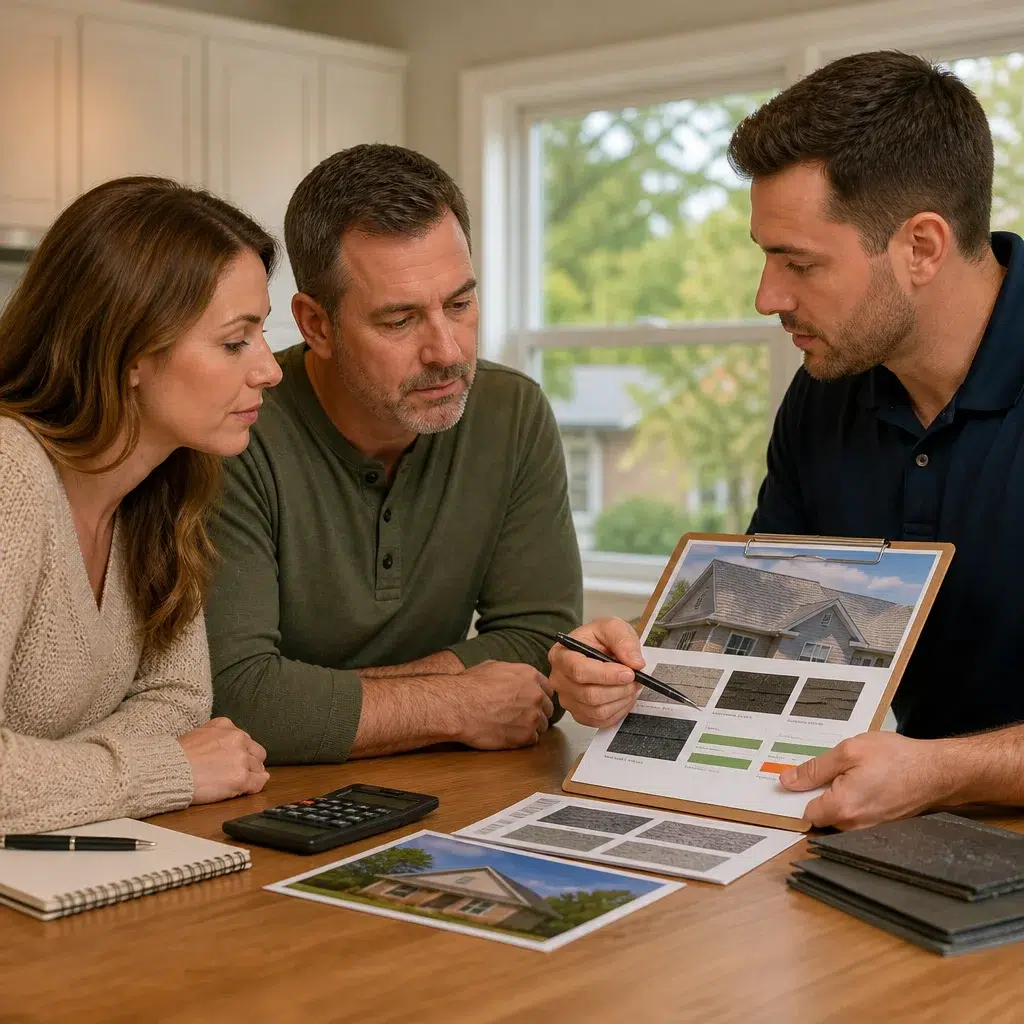
Upfront payment discounts reward cash payments and encourage clients to move forward confidently. If your savings or insurance settlement covers the full cost, paying upfront often qualifies you for a modest discount.
Financing plans through established lending partners allow you to spread replacement costs over 12 to 60 months. Monthly payments often align better with household budgets than lump-sum costs. Interest rates vary based on credit and terms, but many plans feature competitive rates.
Insurance claim coordination matters significantly. If your roof damage qualifies under your homeowner’s insurance, we handle the claims process paperwork and inspection coordination. Insurance often covers 70-90% of replacement costs, dramatically reducing your out-of-pocket expense. Some policies cover only damage from covered perils (storms, hail) but not age-related failure, so we clarify your coverage before starting work.
Seasonal scheduling can influence financing needs. If you can wait until spring or early fall, we often have more flexible scheduling that might reduce labor costs slightly.
Our exterior renovations budgeting guide explores financing options in more detail and discusses how to evaluate different approaches for your situation.
What to do next: Gather your recent insurance policy documents and any estimate information. When we discuss your project, we can immediately assess insurance eligibility and discuss realistic financing options for your circumstances.
The Long-Term Savings of Quality Roof Replacement
Viewing roof replacement as only an expense misses the substantial financial benefits of quality work. The right investment pays dividends for decades.
Energy efficiency improves with new roofing. Older roofs are often undersized for ventilation. New installations include proper ventilation that keeps your attic cool in summer and prevents moisture accumulation in winter. This reduces heating and cooling costs by 10-15%, savings that compound over the roof’s 25-30 year lifespan.
Insurance benefits accrue when you replace an aging roof. Insurance companies charge higher premiums for homes with roofs nearing end-of-life because claim likelihood increases. A new roof with manufacturer warranty often qualifies for premium reductions of $200-500 annually. Over 25 years, that’s $5,000-$12,500 in savings.
Property value increases measurably. Real estate appraisers recognize that a new roof represents one of the highest-impact home improvements. Your home’s resale value increases by 60-80% of the replacement cost, making this investment particularly valuable if you plan to sell within 10 years.
Structural protection prevents far more expensive repairs. Water damage that reaches framing, insulation, and interior walls costs $10,000-$30,000+ to repair. A quality roof replacement prevents this entirely.
Warranty coverage on quality installations means you’re protected against defects. Premium roofing materials come with 25-30 year warranties. If shingles fail prematurely due to manufacturing defects, the manufacturer covers replacement.
When you compare a $12,000 quality roof replacement against cumulative energy savings ($3,000-$4,500), insurance premium reductions ($5,000+), and property value increase ($8,000-$12,000), the actual cost to your household becomes significantly lower—sometimes even negative if you’re selling soon.
What to do next: Calculate your potential savings. Estimate your annual energy costs, research local insurance premium reductions for new roofs, and get a real estate appraisal impact estimate from your agent. This total picture clarifies whether premium materials justify their upfront cost.
How We Protect You From Unexpected Additional Charges
Transparency and clear communication eliminate budget surprises. Our process includes specific protections you should expect from any contractor.
Written estimates specify exactly what’s included and what’s not. We detail materials, labor, permits, disposal, and any optional items separately. If we identify potential concerns during inspection (like possible deck repair), we discuss those as “contingencies” with estimated costs, not as automatic additions.
Contingency discussions happen before work starts. If we suspect deck damage might be present, we establish the exact cost for deck repair should inspection reveal it. You approve these potential charges beforehand, so nothing surprises you if work proceeds.
Change order processes govern any mid-project modifications. If you want upgraded materials or additional work surfaces once the old roof is off, we provide a written change order specifying cost and impact before proceeding. You approve every change in writing.
Daily communication keeps you informed of progress and any developing issues. If our crew discovers unexpected structural problems, we photograph them, explain the situation, and discuss solutions before proceeding.
Crew accountability means our entire team understands budget parameters. We don’t authorize additional work without your explicit approval.
Warranty coverage protects your investment. We provide written warranty documentation covering both materials and labor. If problems arise within the warranty period, we address them promptly at no additional cost.
Our roof replacement preparation guide includes a pre-project checklist that helps establish clear expectations and prevents miscommunications.
What to do next: Before signing any agreement, request everything in writing—the estimate, contingency costs, warranty terms, and payment schedule. Don’t rely on verbal agreements.
Signs You Need Immediate Roof Repair vs. Full Replacement
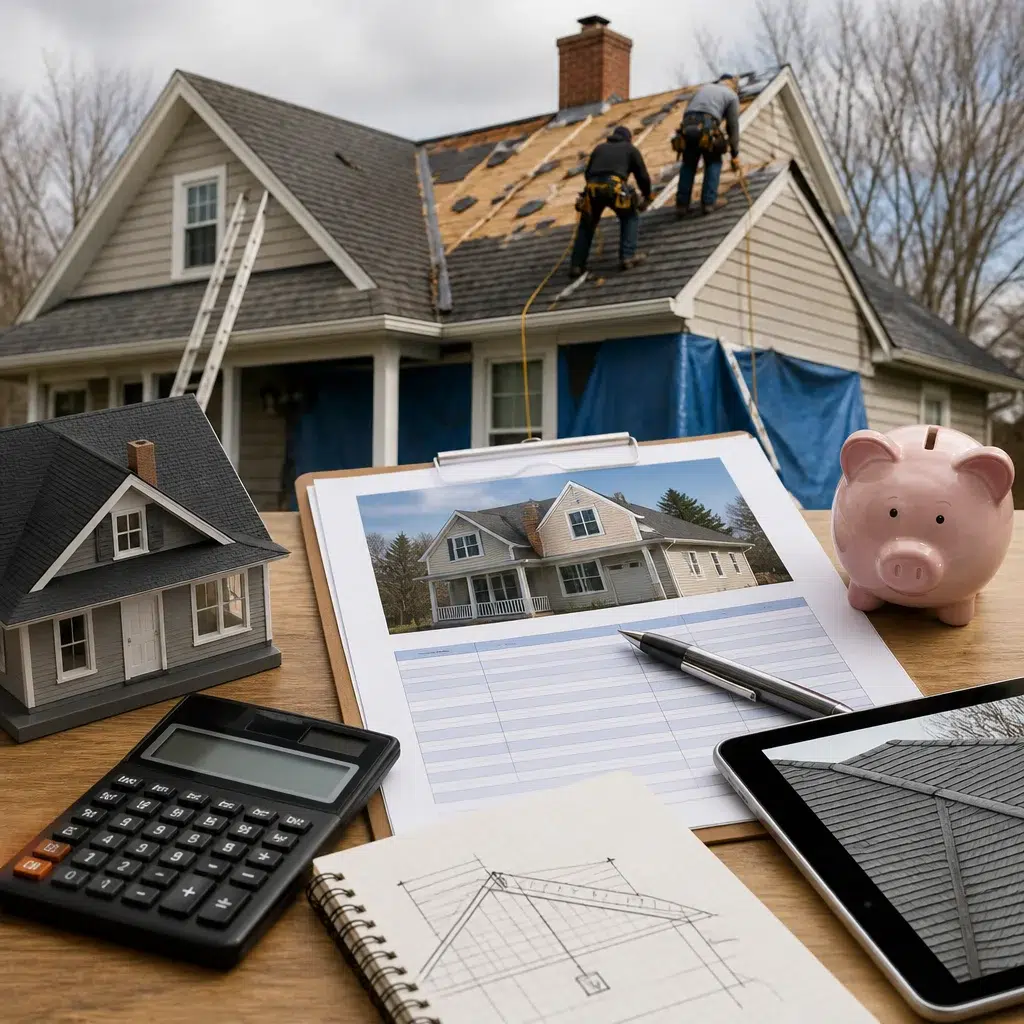
Not every roof problem requires complete replacement. Understanding the distinction saves money and prevents unnecessary work.
Repair is appropriate when:
Your roof is less than 20 years old and damage is localized. A few missing shingles, minor flashing damage, or a small leak usually warrants repair rather than replacement.
Damage is storm-related and isolated to one section. A hail-damaged area or wind damage affecting a portion of your roof doesn’t require replacing the entire roof.
Your roof has 5+ years of useful life remaining. If inspection shows your roof is generally sound with minor issues, repair extends its life cost-effectively.
Water intrusion is minor and contained. A small leak in one location might be patched rather than requiring full replacement.
Full replacement is necessary when:
Your roof shows widespread age-related deterioration. Granule loss across large areas, curled shingles, or frequent leaks indicate the roof is failing.
Damage is extensive. Storm damage affecting 25%+ of the roof usually means replacement.
Multiple repairs are needed. If you’ve already repaired the roof twice in five years, replacement is more cost-effective than continued patching.
The roof is 20+ years old. Even without obvious damage, roofs this old typically reach end-of-life and are replacement candidates.
Water damage has reached structural elements. If water has infiltrated to framing or insulation, replacement addresses both the roof problem and damaged components.
What to do next: Have an inspection specifically identify whether your situation calls for repair or replacement. Sometimes property owners delay replacement hoping for a temporary fix, only to face emergency situations and costlier work.
Getting Your Expert Exteriors Estimate Today
Moving from uncertainty to confidence starts with understanding your roof’s actual condition and realistic costs. Our inspection and estimation process gives you that clarity.
Here’s how to proceed:
Contact us through our website or by phone to schedule a free inspection. Describe any concerns you’ve noticed—leaks, missing shingles, ice damming, or visible damage. This context helps us conduct a thorough evaluation.
Our inspector will examine your roof, attic, and structural components. We’ll take photographs and document our findings in detail.
You’ll receive a comprehensive inspection report with specific observations, photographs, and our professional assessment.
We’ll discuss your options—whether your situation calls for repair or replacement, what materials we recommend, what timeline makes sense, and what your investment will be.
If you decide to move forward, we’ll discuss financing options, scheduling, and answer all remaining questions before you commit.
We’re committed to the best roof replacement process for Wisconsin property owners, and that process begins with thorough assessment and honest communication.
Your roof protects everything you value. Budgeting properly for its replacement ensures you get quality materials, skilled installation, and peace of mind. We’re here to guide you through every step and protect your investment.
Take the first step today: Contact Expert Exteriors to schedule your free roof inspection and estimate. We’ll provide the clarity you need to budget confidently and make the right decision for your property.