
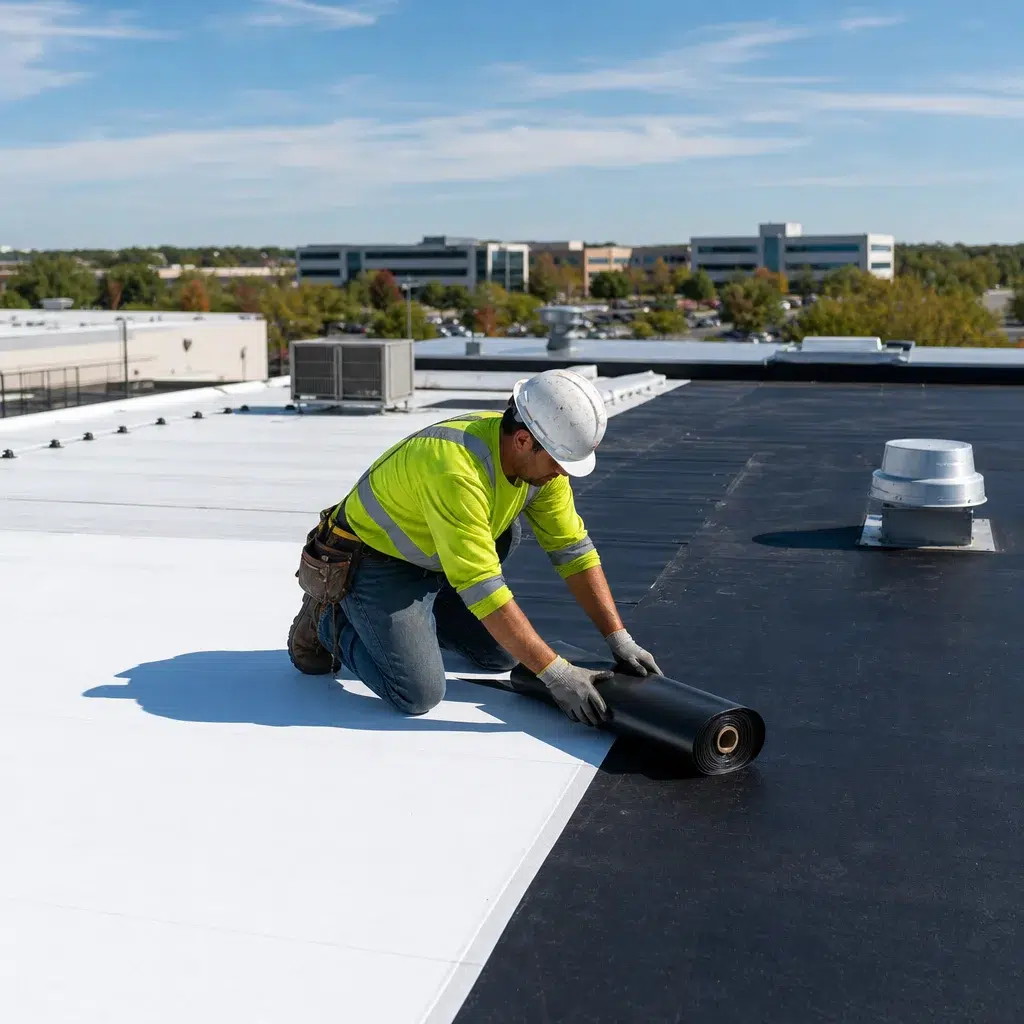
Commercial EPDM and TPO Roofing Solutions for Brookfield Businesses
Why Your Commercial Roof Matters More Than You Think
Your commercial roof is arguably the most critical investment you can make in your building’s longevity. Unlike residential roofs, commercial flat roofs face unique stresses: constant exposure to weather extremes, heavy foot traffic from maintenance personnel, HVAC equipment loads, and the cumulative wear of thermal cycling. When a commercial roof fails, it doesn’t just leak into one bedroom—it threatens your entire operation, inventory, and bottom line.
At Expert Exteriors, we’ve spent years helping Brookfield businesses understand that choosing the right roofing system upfront saves tens of thousands in emergency repairs down the road. EPDM and TPO membranes have become industry standards for good reason: they’re durable, cost-effective, and proven to protect commercial properties through Wisconsin’s demanding climate. This guide walks you through what you need to know to make an informed decision for your building.
A commercial roof isn’t merely a protective barrier—it’s a strategic asset that directly impacts your operational efficiency, insurance costs, and property value. Most business owners don’t realize their roof affects energy consumption until they see utility bills spike after an aging system fails to regulate temperature properly.
When a roof begins to fail, the damage compounds quickly. A small leak in January becomes a major structural issue by spring. Mold develops inside walls. HVAC systems work overtime to compensate for temperature loss. What started as a $5,000 problem turns into a $50,000 project involving remediation, equipment replacement, and business interruption.
Here’s what matters most about commercial roofing:
- Structural integrity: Your roof supports equipment, handles snow loads in winter, and manages water drainage across the entire building
- Energy performance: A quality membrane with reflective properties can reduce cooling costs by 15-25% annually
- Insurance and liability: Many insurers require regular roof inspections and documented maintenance; a failing roof can void coverage or spike premiums
- Tenant relations: Leaks and water damage are primary sources of tenant complaints and lease violations
- Resale value: Buyers conduct roof inspections as a condition of purchase; a new roof often means better financing terms and higher valuations
The roofing system you choose today will determine whether your building stays protected for 20+ years or becomes a constant source of headaches. Choosing the right commercial roof requires understanding both material options and your building’s specific demands.
Next step: Schedule a roof inspection before problems develop. Early assessment lets you plan replacements strategically rather than responding to emergencies.
Common Commercial Roofing Failures and What Causes Them
We’ve inspected hundreds of failing commercial roofs across Brookfield and Wisconsin. The failures follow predictable patterns, and most could have been prevented with proper material selection and maintenance.
Built-up roofing (BUR) systems, once standard, deteriorate rapidly in our climate. The tar-based layers crack as temperatures swing from winter cold to summer heat. Granules wash away during heavy rains. Within 15-20 years, these roofs leak consistently. Many Brookfield buildings still carry aging BUR systems that were installed in the 1990s and early 2000s—they’re now living on borrowed time.
Single-ply membranes like EPDM and TPO fail for different reasons. Improper installation creates the biggest risk: seams that aren’t properly welded, fasteners placed incorrectly, or membranes that aren’t secured with enough ballast in windy areas. We’ve found roofs where corners were cut during installation, only to see failures within five years.
Common failure points include:
- Seam separation: The weakest point of any membrane roof is where seams meet. Poor welding allows water infiltration and accelerates degradation
- Membrane punctures: Foot traffic, equipment installation, and maintenance activities create holes that go unnoticed until major leaks develop
- Flashing deterioration: Where the membrane meets walls, chimneys, or HVAC penetrations, flashing gaps allow water underneath the membrane system
- Poor drainage: If a flat roof doesn’t slope properly toward drains, water pools and accelerates membrane breakdown
- Thermal movement: Temperature swings cause membranes to expand and contract; if the roof isn’t designed to accommodate this movement, seams fail prematurely
Age matters, too. Most commercial membranes last 20-25 years if maintained properly. After that, even well-cared-for roofs become vulnerable to UV degradation and membrane embrittlement.
The building’s use affects durability. A manufacturing facility with constant rooftop activity wears a membrane faster than a lightly-trafficked office building. High-heat equipment like kitchen exhaust vents accelerates degradation in adjacent areas.
Next step: Have your roof professionally inspected annually. Catching small problems (pooling water, separated seams, punctures) prevents them from becoming expensive failures.
EPDM vs TPO: Understanding Your Roofing Options
EPDM and TPO are both single-ply membrane systems, but they have distinct characteristics. Understanding the differences helps you choose the right solution for your building’s climate, budget, and maintenance capacity.
EPDM (ethylene propylene diene monomer) is the established veteran. It’s been protecting commercial roofs since the 1970s, and contractors have decades of installation knowledge. EPDM is typically black, which means it absorbs solar heat. This matters less in climates with abundant cooling costs, but in Wisconsin’s winters, that heat absorption can slightly reduce heating loads.
Key EPDM advantages:
- Lower material cost: Generally 10-15% cheaper than comparable TPO systems
- Proven track record: Extensive documentation of long-term performance across diverse climates
- Easier repair: If punctured, EPDM can be patched without removing surrounding material
- Flexible in cold: EPDM remains pliable in freezing temperatures, reducing seam stress during thermal cycling
- Fewer seam failures: EPDM’s adhesive-based seams have been refined over decades, with excellent reliability when properly installed
EPDM limitations worth considering:
- Solar reflectivity: The dark color absorbs heat, which can increase cooling costs in warm seasons
- UV sensitivity: EPDM degrades faster under direct sunlight exposure without protective coatings
- Maintenance requirements: To maintain UV protection, EPDM roofs benefit from regular coating reapplication every 5-10 years
TPO (thermoplastic polyolefin) emerged in the 1990s and has gained significant market share. It’s typically light gray or white, reflecting solar radiation and reducing cooling costs substantially.
Key TPO advantages:
- Superior energy efficiency: Light color reflects 60-75% of solar radiation, reducing cooling costs significantly
- Cleaner installation: Heat-welded seams create strong, long-lasting bonds without exposed adhesive
- Modern formulation: Newer TPO products resist UV degradation better than earlier EPDM systems
- Lower maintenance: Most quality TPO systems don’t require reflective coatings to maintain UV protection
TPO considerations:
- Higher upfront cost: Premium TPO membranes cost 15-20% more than EPDM
- Shorter installation history: While TPO has proven itself, it has less long-term track record than EPDM
- Cold weather brittleness: Some TPO formulations become brittle in extreme cold, though high-quality products minimize this issue
- Seam welding expertise: TPO installation quality depends heavily on contractor skill; poor welding causes premature seam failure
TPO vs EPDM for business requires honest assessment of your priorities. If energy efficiency and modern performance matter most, TPO is worth the premium. If you’re budget-conscious and comfortable with modest maintenance, EPDM delivers excellent value.
Next step: Calculate your building’s annual cooling costs. If you’re in a high-cooling zone, TPO’s energy savings typically offset its higher material cost within 10 years.
How We Select the Right System for Your Building
Choosing between EPDM and TPO isn’t a one-size-fits-all decision. We evaluate multiple factors specific to your building and usage.
First, we assess your roof’s current condition and configuration. Does the roof have adequate slope toward drains, or is it absolutely flat? Flat roofs require slightly different considerations than sloped ones. Does the building have heavy rooftop equipment, or is it a clean, uncluttered surface? Does the space below the roof get naturally heated or cooled, or is it unconditioned?
Climate and usage patterns matter significantly. A manufacturing facility with constant rooftop foot traffic and equipment vibration benefits from TPO’s superior seam strength. A lightly-used office building might prioritize EPDM’s lower cost and proven track record. A facility in a high-cooling climate (like a sunbaked warehouse) gains measurable savings from TPO’s reflectivity.
We also consider your maintenance capacity and plans. EPDM systems, if well-maintained with periodic coatings, can push toward 30 years of service life. TPO systems, properly installed and occasionally inspected, reliably reach 25-28 years. If you’re planning to sell the building within 10 years, TPO’s modern perception and energy credentials might matter more. If you’re in this building long-term, EPDM’s proven reliability becomes more valuable.
Budget constraints are real. We design solutions that fit your financial parameters while protecting your building. Sometimes that means recommending a premium TPO system with superior warranties. Sometimes it means EPDM with a solid maintenance plan. Sometimes it means recommending repair or recoating of your existing roof if replacement can wait another few years.
We examine your roof’s existing structure and insulation. Newer commercial buildings often have high-quality insulation and modern drainage systems designed for TPO. Older buildings with basic construction might benefit from EPDM’s flexibility and lower installation stress on aging structural components.
Our assessment process includes a complete roof survey: checking for active leaks, evaluating membrane condition, testing drainage systems, documenting equipment locations, and identifying penetrations and flashing conditions. This comprehensive view reveals whether your building can accommodate either system or has specific constraints that favor one option.
Next step: Get a professional assessment that goes beyond just pricing. Ask contractors to explain why they recommend a specific system for your building, not just which one is cheaper.
Our Commercial Roofing Installation Process
Our installation process prioritizes precision and long-term performance. Skipping steps to save time leads to the seam failures and premature degradation we see in poorly-installed roofs.
We start with complete surface preparation. Any existing roofing material must be removed properly. Old asphalt, tar, or deteriorated membrane gets stripped completely—no shortcuts of layering new material over old. The substrate gets cleaned of debris, loose material, and contamination. If the roof deck has soft spots or damage, we repair or replace it before membrane installation. A weak substrate undermines even the best membrane system.
Next comes the insulation and substrate layer. Modern commercial roofs typically include rigid insulation board for energy efficiency. We verify that insulation is properly adhered, staggered for structural integrity, and securely fastened to prevent movement under wind or thermal stress. Any gaps get sealed; any irregular surfaces get leveled with appropriate materials.
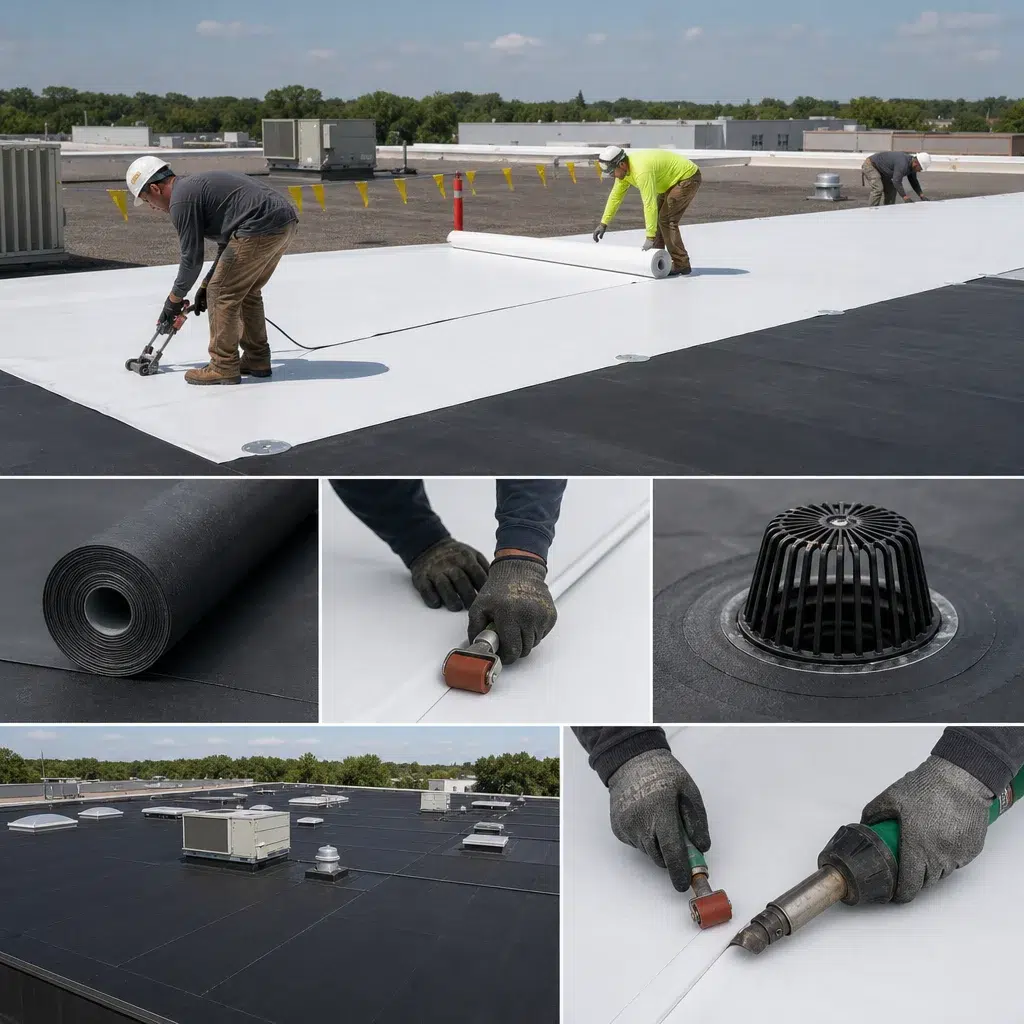
For drainage systems, we inspect and repair existing drains or install new ones if needed. Poor drainage is one of the quickest paths to roof failure. We ensure every drain functions properly and that the roof deck slopes slightly toward drainage points, even if the slope is subtle.
Now the membrane installation begins. For EPDM systems, we roll out the membrane, verify proper positioning and alignment, and apply adhesive according to manufacturer specifications. Seams get special attention: overlapping material is cleaned, adhesive is applied precisely, and seams are pressed firmly to create lasting bonds. We don’t compromise on seam quality—this is where EPDM roofs either succeed or fail.
For TPO systems, the process is similar but emphasizes heat welding. The membrane rolls out, and we weld seams using industrial hot-air equipment that fuses the material together at precise temperatures. Proper welding creates a continuous, impermeable bond. Undertrained installers often rush this process, creating weak seams that separate within years. We take time to weld properly.
Penetrations get flashing details that keep water out. HVAC vents, roof hatches, electrical conduits, and other equipment get sealed with properly-installed flashing and secondary sealants. These details are easy to botch, and botching them guarantees leaks.
After membrane installation, we perform a thorough inspection: visually checking all seams, walking the entire roof surface to verify membrane integrity, running water tests on flashing details, and documenting everything with photos. Roof installation in Brookfield, WI demands attention to detail that separates quality contractors from those just trying to finish the job.
Final touches include ballast or fastening (depending on the system), edge details, and cleanup. We remove all debris, verify that equipment is functioning properly, and provide you with detailed documentation of the installation.
Next step: When hiring a contractor, ask to see references from commercial projects completed 5+ years ago. Call those references and ask specifically about membrane performance and maintenance needs.
Long-Term Protection and Energy Efficiency Benefits
A properly installed commercial roofing system protects your building for decades while reducing operational costs. Understanding these benefits helps justify the investment.
Energy efficiency is one of the most underappreciated benefits. If you choose TPO, you’re selecting a membrane that reflects 60-75% of solar radiation. On a 10,000-square-foot roof in Wisconsin, that reflects roughly 600,000-750,000 BTUs of heat daily during summer months. Your HVAC system doesn’t have to work as hard, running less frequently and using less energy. Over 25 years, that adds up to tens of thousands in savings.
Even EPDM, with its darker surface, performs well in Wisconsin’s moderate climate. The slight heat absorption actually helps reduce winter heating loads marginally, offsetting some cooling costs.
Membrane durability compounds savings. A roof that lasts 25-28 years without major repairs or emergency patches saves dramatically compared to older systems that need costly intervention every 10-12 years. You avoid the business disruption, labor costs, and emergency pricing that come with urgent repairs.
Water damage prevention is perhaps the most critical benefit. A failed roof creates exponential costs: structural damage to building materials, mold remediation, replacement of damaged insulation, equipment damage, inventory loss, and business interruption. A single significant leak might cost $20,000-50,000 to remediate. Quality roofing systems prevent these scenarios entirely.
Insurance and financing implications matter too. Lenders view well-maintained roofs as lower-risk collateral. New roofing systems can improve financing terms or appraisal values when refinancing or selling. Insurance companies may offer premium discounts for buildings with recent, quality roof systems and documented maintenance.
Structural protection ensures your building envelope remains intact. A sound roof prevents the insidious degradation that happens when water gets into wall cavities or between structural components. Water damage to structure is expensive and difficult to fully remediate.
Next step: Calculate your annual energy costs and ask roofing contractors to estimate TPO versus EPDM energy savings specific to your building. Factor that into your long-term cost analysis.
Maintenance Strategies That Extend Your Roof’s Lifespan
A roof’s lifespan depends less on the materials chosen and more on the maintenance it receives. Two identical roofs, maintained differently, will perform dramatically differently.
Regular inspections form the foundation of any maintenance plan. We recommend professional roof inspections at least twice annually—once in spring after winter weather and again in fall before cold season returns. These inspections catch small problems before they become expensive: a lifted seam, a crack in flashing, debris accumulation around drains, or standing water areas.
Drainage maintenance is critical. Gutters, downspouts, and roof drains collect leaves, debris, and sediment. When blocked, water pools on the roof, accelerating membrane degradation and eventually causing leaks. Quarterly cleaning of all drainage systems prevents this common failure mode.
For EPDM systems, periodic cleaning and coating reapplication extends UV protection. We recommend evaluating membrane condition every 5-7 years and applying protective coatings when UV degradation becomes visible. A quality coating costs $500-1,500 and extends the roof’s functional life by 5-10 years.
For TPO systems, maintenance focuses more on inspections and repairs. Quality TPO resists UV degradation without coatings, but regular inspection identifies any developing issues. Promptly repairing small punctures or seam separations prevents water infiltration that causes structural damage.
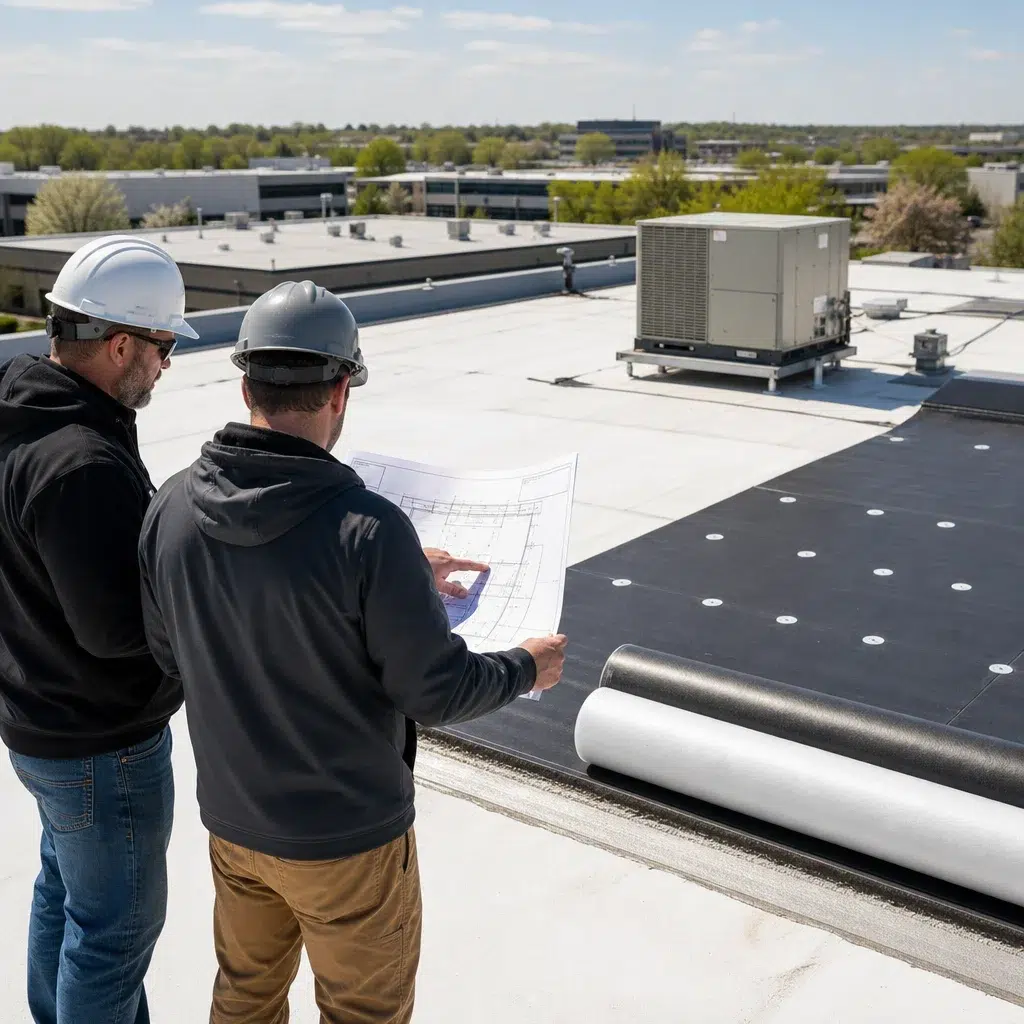
Keeping the roof clear of debris and excessive equipment helps. Tree branches, leaves, and accumulated dirt retain moisture against the membrane. Unnecessary equipment creates foot-traffic areas that accelerate wear. Keep the roof as clean and uncluttered as practical.
Document everything. Keep records of inspections, repairs, and maintenance activities. When you eventually sell the building or refinance, this documentation demonstrates that you’ve maintained the asset properly. It supports warranty claims if issues arise and helps contractors understand your roof’s history.
Flat roof assessment becomes increasingly important as your roof ages. By year 15-18, professional assessment helps determine whether you’re 3-5 years from replacement or have another decade of service life. Planning ahead lets you budget for replacement and avoid emergency situations.
Partner with contractors who offer maintenance services. Rather than calling different people each time something needs attention, working with one trusted partner ensures consistency and continuity of knowledge about your specific roof.
Next step: Create a maintenance schedule and stick to it. Set phone reminders for inspections. Budget annual maintenance costs (typically $500-2,000 depending on size) to protect your much larger roof investment.
Why Expert Exteriors Is Your Brookfield Roofing Partner
We’ve been serving Brookfield and surrounding communities for years, building our reputation on honest recommendations and quality craftsmanship. When we assess a commercial roof, we’re not trying to sell you the most expensive option—we’re identifying the right solution for your specific situation.
Our experience across hundreds of commercial properties means we’ve solved virtually every roofing challenge Brookfield’s climate and building types present. We understand the freeze-thaw cycles that stress roofing systems, the spring and fall weather patterns that require drainage preparation, and the summer heat loads that make energy efficiency relevant.
We’re fully licensed and insured for commercial roofing work, and we carry manufacturer warranties that protect you long-term. Our installation crew is trained specifically in both EPDM and TPO systems, with years of hands-on experience creating durable seams and proper flashing details.
We believe in transparency. Before work begins, we provide detailed estimates that break down materials, labor, timeline, and expectations. We explain our recommendations clearly and address your questions without pressure. If we think your roof can be maintained another few years rather than replaced immediately, we’ll tell you that honestly.
Our maintenance programs keep roofs healthy between major projects. We perform inspections, handle repairs promptly, and manage drainage and minor issues before they become major problems. Many of our clients have extended their roof systems 5-10 years beyond typical lifespan through consistent maintenance partnership with us.
Commercial roof replacement experts need more than technical skill—they need the reliability and communication that keep your building protected. We show up when scheduled, complete work on timeline, and follow up after projects to ensure everything is performing as expected.
Next step: Call or email us with photos of your roof and a brief description of your building. We’ll schedule a professional assessment at no obligation and provide honest guidance on your best path forward.
Getting Started with Your Commercial Roof Assessment
Taking action starts with a single step: getting your roof properly assessed by experienced professionals who understand your building’s specific needs.
Contact Expert Exteriors to schedule your commercial roof assessment. Bring any documentation you have: previous roof inspections, maintenance records, or known issues. If you have interior leaks or water damage, note those locations and patterns.
During our assessment, we’ll walk the roof completely, documenting membrane condition, identifying any active leaks or potential problem areas, and evaluating your building’s configuration and equipment. We’ll test drainage systems to ensure water moves properly off your roof. We’ll examine flashing details and penetrations for vulnerabilities.
We’ll discuss your timeline, budget, and priorities. Are you planning to own this building long-term, or is sale or refinancing on the horizon? Do energy efficiency improvements interest you, or is durability your primary focus? Are you dealing with active leaks requiring urgent attention, or planning ahead strategically?
Based on all this information, we’ll provide a detailed recommendation: whether your roof needs immediate replacement, can be maintained and recoated for extended life, or falls somewhere between. We’ll explain the EPDM versus TPO decision specific to your building. We’ll provide transparent pricing and timeline expectations.
You’ll receive a comprehensive report documenting conditions, recommendations, and next steps. This report serves multiple purposes: it guides your decision, supports future financing or sale documentation, and provides a baseline for tracking roof condition over time.
From there, the path forward depends on your needs. If replacement is needed, we’ll schedule the work and manage the entire process. If maintenance and repair is the recommendation, we’ll provide an annual maintenance plan that keeps your roof healthy.
Membranes matter for your business—the choice you make protects your building and affects your operational costs for the next 25 years. We’re here to help you make that choice confidently, backed by real expertise and genuine commitment to your building’s success.
Contact Expert Exteriors today to schedule your commercial roofing assessment. Your building deserves professional protection from a team that understands Brookfield’s unique challenges and delivers the quality that stands the test of time.