
Navigate Roof Replacement Insurance Claims After Hail and Storm Damage
How Hail and Storm Damage Affects Your Roof and Insurance Coverage
When severe weather hits your Brookfield-area home or commercial property, hail and windstorms can cause significant damage to your roof. While the initial impact is stressful, understanding how to navigate the insurance claims process puts you in control. We’ve helped dozens of property owners work through roof replacement insurance claims, and we know the process feels overwhelming without clear guidance. This article walks you through each step, from initial damage assessment to approved claim settlement and final roof replacement.
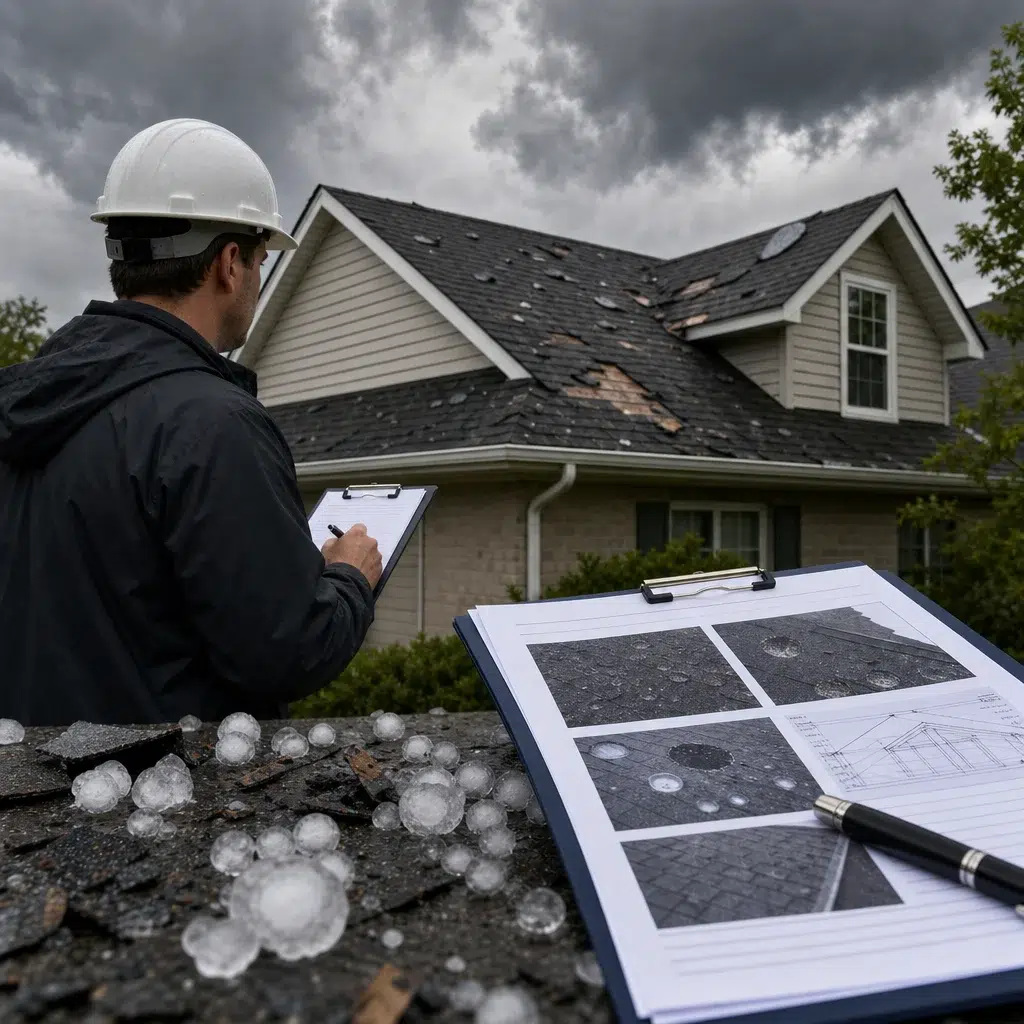
Hail and storm damage manifest differently depending on your roof type and age. Hail typically creates bruising, cracking, or missing shingles, while high winds can tear shingles, expose underlayment, and damage flashing around chimneys and vents. Over time, these vulnerabilities lead to leaks, water intrusion, and structural damage that compounds quickly.
Insurance companies recognize hail and windstorm damage as covered perils under standard homeowner’s policies. However, coverage depends on your specific policy wording, deductible, and whether damage exceeds that deductible amount. A roof that sustains scattered shingle damage worth $2,500 in repairs, for example, may not justify filing a claim if your deductible is $2,500 or higher (assuming you’d receive no payout after meeting the deductible).
The timing of when damage occurred also matters. Most policies cover sudden, accidental damage. Damage from age, lack of maintenance, or gradual wear typically falls outside coverage. Insurance adjusters focus on distinguishing between storm-caused damage and pre-existing wear. This distinction shapes whether your claim gets approved.
What to do next: Review your homeowner’s policy documents or contact your agent to confirm your deductible, coverage limits, and any specific exclusions related to hail or wind damage. Knowing these details before filing saves time and prevents surprises later.
Understanding Your Homeowner’s Insurance Policy for Roof Damage
Your homeowner’s insurance policy contains critical language that determines what the insurance company will and won’t cover. Most standard policies include Coverage A (dwelling protection), which covers your home’s structure, including the roof. However, the details matter significantly.
Deductibles typically range from $500 to $2,500, though some policies now include percentage-based deductibles (5% or 10% of your home’s insured value). A percentage deductible on a $300,000 home valued at 5% means you’d pay $15,000 out of pocket before insurance covers anything. This type of deductible is especially common in coastal areas but increasingly appears in regions prone to hail damage.
Your policy also specifies whether replacement cost coverage or actual cash value applies to your roof. Replacement cost coverage pays the full cost of replacing damaged materials at current prices. Actual cash value deducts depreciation based on age and condition. Replacement cost is almost always the better option for roof claims, as it covers modern materials and labor rates without the depreciation penalty.
Some policies include a wind or hail deductible separate from your standard deductible, which applies specifically to these perils. You need to know which deductible applies to your situation. Additionally, some insurers now cap roof coverage or apply them based on roof age (typically excluding coverage if your roof exceeds 15-20 years old). Older roofs may only receive actual cash value coverage, not replacement cost.
What to do next: Call your insurance agent and ask these specific questions: (1) What is my deductible for hail and wind damage? (2) Do I have replacement cost or actual cash value coverage for my roof? (3) Are there any age-related exclusions or caps on roof coverage? (4) What documentation will you require if I file a claim?
The Roof Inspection Process: What Insurance Companies Look For
Once you file a claim, your insurance company assigns an adjuster to inspect the damage. Understanding what they examine helps you prepare and ensures nothing gets overlooked.
Adjusters look for evidence of impact or weather-related damage. On asphalt shingles, they search for bruising (soft spots where hail hit), loss of granules, cracks radiating from impact points, and exposed underlayment. On metal or tile roofs, they look for dents, punctures, and bent panels. They also inspect flashing around chimneys, vents, skylights, and gutters, as these areas frequently sustain damage.
The adjuster documents everything with photographs, measurements, and detailed notes. They may use specialized equipment like moisture meters to detect water intrusion, and they often climb into the attic to check for water stains or structural damage. They’re also assessing roof condition overall, noting existing wear, previous repairs, and maintenance issues. If the roof shows signs of poor maintenance or age-related decline, they may argue that some damage existed before the storm.
Timing matters. Insurance companies prefer inspections within a specific window after the loss (typically 30-90 days). Waiting longer can complicate claims because weather exposure and additional damage make it harder to pinpoint what the storm caused versus what happened afterward.
What to do next: Before the insurance adjuster arrives, take your own photographs and video of all visible damage from ground level and roof edges (do not climb onto your roof). Document weather conditions on the date of the storm. If your neighbors also sustained damage, mention this to the adjuster as corroborating evidence. This preparation strengthens your claim’s credibility.
Documenting Damage Effectively to Strengthen Your Claim
Your documentation directly influences whether insurance pays your claim in full, reduces it, or denies it entirely. Strong documentation removes ambiguity and shows the adjuster exactly what the storm caused.
Start by photographing damage immediately after the storm (weather permitting). Capture close-ups of damaged shingles, missing granules, exposed underlayment, and any visible water damage inside the home. Include wide-angle shots showing where damage clusters on your roof, as this pattern proves storm impact. Photograph the same areas from multiple angles.
Next, create a written timeline. Document the date and time of the storm, weather conditions (hail size if visible, wind gusts if reported), and the date you discovered damage. If you called your insurance company, note the date, agent name, and claim number. This documentation establishes when damage occurred and when you reported it.
If you have a professional roof inspection done before the insurance adjuster arrives, that report becomes powerful evidence. A licensed roofing contractor’s assessment of damage type, location, and scope carries weight because it comes from an impartial expert. We offer free roof inspections that document damage clearly and provide a detailed report you can submit with your claim. This step often proves the difference between partial and full coverage.
Collect supporting evidence beyond photos. Repair estimates from roofing contractors detail damage extent and repair costs, providing the insurance company with a baseline for their payout calculation. Weather reports or insurance loss data showing the storm’s severity help corroborate your claim. If your community issued disaster declarations, include those.
What to do next: Create a folder with photos, your written timeline, the weather report from the storm date, any contractor estimates, and your insurance policy documents. Organize these chronologically. Share this folder with your insurance adjuster and keep a copy for your records.
Common Reasons Insurance Claims Get Denied and How to Avoid Them
Understanding why claims fail helps you avoid these pitfalls. We’ve seen preventable denials that cost property owners thousands.
The most common denial reason is filing a claim after waiting too long. Insurance companies have strict deadlines (typically within 30-90 days). Delays allow additional weather exposure, making it difficult to prove the original storm caused specific damage. Submit your claim as soon as possible after discovering damage.
Claims also get denied when documentation doesn’t clearly prove the damage was storm-caused. If you submit only distant photos or vague descriptions, adjusters cannot confidently attribute damage to the hail or wind event. Close-up photographs with clear time stamps provide undeniable evidence. Including a professional roof inspection report eliminates guesswork.
Pre-existing conditions are another denial culprit. If your roof shows multiple repair patches, algae growth, missing shingles before the storm, or other signs of neglect, the insurance company may argue that damage resulted from poor maintenance, not the storm. They’ll deny the claim, claiming the roof was already compromised. This is why maintaining your roof and addressing small issues promptly protects your insurability.
Misrepresenting damage also triggers denials. If your estimate vastly exceeds what the adjuster observes, skepticism increases. Conversely, underestimating damage means you might accept a settlement that doesn’t cover actual repair costs. Professional assessments prevent both extremes.
Some claims fail because property owners accept the first insurance offer without questioning it. Adjusters sometimes underestimate damage extent or repair costs. You have the right to hire your own adjuster (called a public adjuster) or dispute the insurer’s assessment. Getting a second opinion from a reputable roofing contractor often reveals additional damage the insurance adjuster missed.
What to do next: Don’t wait. Call your insurance company within days of discovering damage. Schedule a professional roof inspection immediately. Obtain at least two repair estimates from licensed contractors. If the insurance settlement seems low, request a detailed breakdown from the adjuster showing how they calculated the amount, or hire a public adjuster to review the claim independently.
Our Role in Supporting Your Insurance Claim Journey
We understand the insurance claims process because we work with property owners through it daily. Our role is to help you navigate it successfully while ensuring your roof gets the quality replacement it needs.
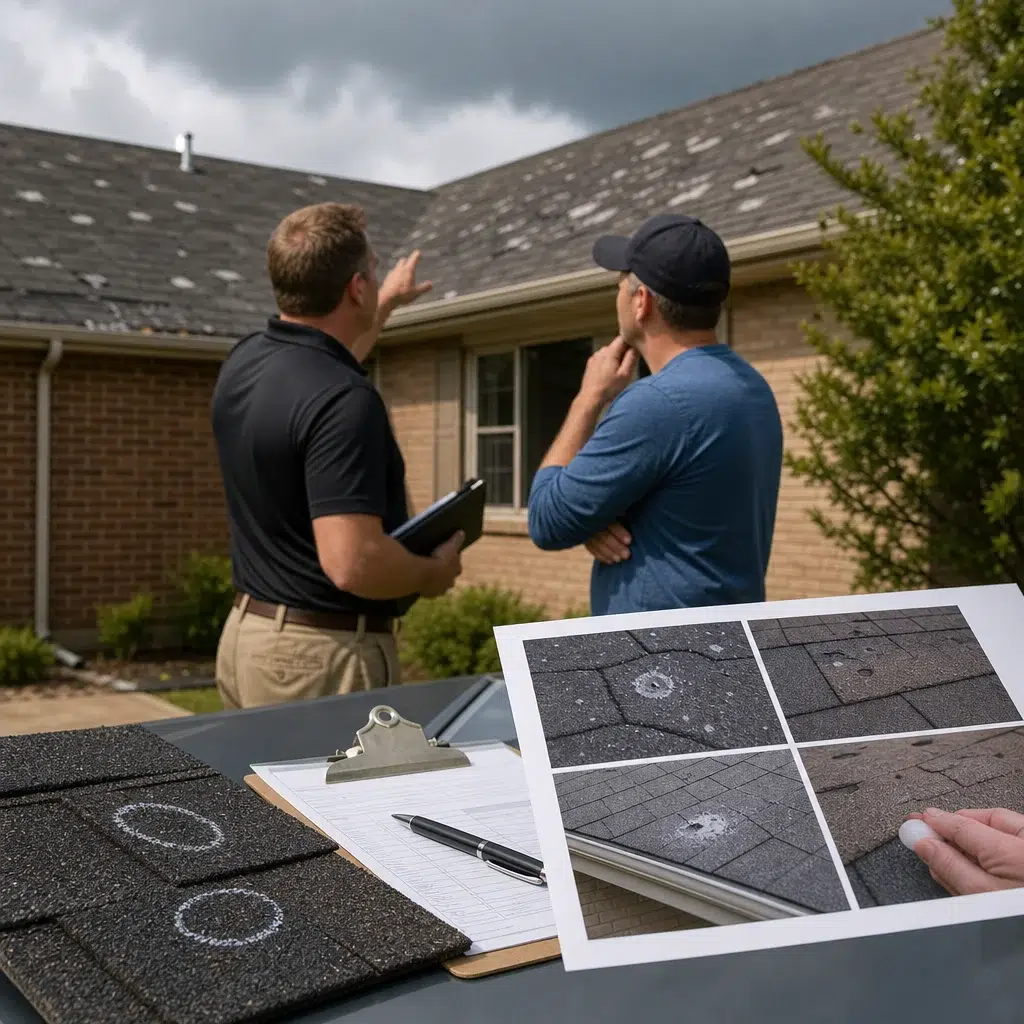
When you contact us after a storm, our first step is a comprehensive roof inspection. We document damage using high-resolution photography, detailed measurements, and written assessments that meet insurance company standards. Our inspection report clearly identifies damage type (impact bruising, missing shingles, flashing separation, etc.), location, and extent. We explain findings in plain language so you understand exactly what the storm caused. This report becomes a critical supporting document in your claim.
We also help you understand your next steps. We discuss your insurance policy’s deductible, coverage type, and what you can realistically expect to receive. We’re honest about whether damage warrants a claim (recognizing that not every damage scenario justifies filing). We never push you toward unnecessary claims that could increase your premiums.
Once you’ve filed your claim and scheduled the insurance adjuster’s inspection, we’re here to answer questions about what to expect. We’ve worked with hundreds of insurance adjusters, and we understand their process. We help you prepare documentation and ensure nothing gets overlooked during the inspection.
If the insurance settlement comes back lower than your actual repair costs, we help you evaluate your options. We can provide detailed repair estimates that justify additional coverage, help you understand discrepancies between our assessment and the insurer’s, and support you if you decide to challenge the settlement.
What to do next: Contact us for a free roof inspection after any hail or storm event. We’ll document damage professionally, provide a detailed report you can share with your insurance company, and answer all your questions about the claims process. This consultation is completely free and obligates you to nothing.
Working with Our Roofing Experts During the Claims Process
Our roofing team becomes your advocate during claims processing. Beyond the initial inspection, we provide ongoing support that makes the process smoother.
When the insurance adjuster schedules their inspection, we can be present if you’d like. Our contractors can answer technical questions about damage, roofing materials, and repair complexity. We point out damage the adjuster might miss, ensuring nothing is overlooked. This prevents scenarios where you accept a settlement only to discover later that additional damage exists.
We also help interpret the adjuster’s damage report. Insurance company terminology and damage classifications can confuse property owners. If the adjuster uses language like “impact damage to 15% of exposed surface area,” we translate that into what it means for your roof and repair timeline. We clarify whether the insurance company’s assessment aligns with what we observed.
If disputes arise between your documentation and the insurance company’s assessment, we provide detailed support. We explain the discrepancies professionally, back up our observations with photographs and measurements, and present information in formats insurance companies understand. We’ve successfully resolved dozens of disputes by providing clear evidence.
Throughout this process, we maintain transparent communication. You’ll know exactly where your claim stands, what happens next, and what we’re doing to support approval. We don’t use claim complexity as a reason to delay or avoid involvement. Instead, we see it as an opportunity to demonstrate why working with professionals matters.
What to do next: When you’re ready to file your claim or if you’ve already filed and need support, reach out to us. We’ll coordinate with your insurance company, provide any additional documentation they need, and keep you informed throughout the process.
Getting Your Roof Replaced After Claim Approval
Once your insurance claim is approved and you receive your settlement check, the actual roof replacement begins. This phase requires careful planning and contractor selection.
The approval letter specifies the amount your insurance company will pay. This becomes your budget for roof replacement. You need to ensure that your contracted roofing work stays within this amount, though you can always spend more if you choose to upgrade materials or scope.
Choosing the right contractor is critical. You want someone who understands insurance-approved repairs, communicates clearly about materials and timeline, and delivers quality workmanship that protects your property for decades. We help property owners evaluate roofing bids by explaining what different contractors charge for, what materials you’re getting, and what warranties apply. This prevents surprises when the invoice arrives.
Most insurance-approved roofs use standard asphalt shingles matching your existing roof’s appearance and grade. However, you can choose premium materials if you’d like. We offer various shingle types, colors, and durability levels. We also work with you to ensure your chosen materials and timeline align with your insurance settlement.
Before work begins, confirm the contractor’s licensing, insurance, and warranty details. Verify they’ll handle all insurance paperwork if needed (some insurers require additional documentation as work progresses). Confirm the start date, expected completion timeline, and what happens if weather delays the job.
What to do next: Contact us with your insurance approval letter. We’ll review the approved amount, discuss material options that fit your budget, outline the replacement timeline, and schedule your roof replacement within a timeline that works for you.
Timeline Expectations for Roof Replacement and Repairs
Roof replacement timelines vary based on roof size, complexity, weather, and material availability. Understanding realistic timelines prevents frustration.
For a typical residential roof (1,200-2,000 square feet) with straightforward design, replacement takes 3-5 business days. This includes removal of old roofing, any necessary underlayment or structural repairs, installation of new materials, and final cleanup. Larger roofs or roofs with multiple penetrations (chimneys, vents, skylights, valleys) take longer. Commercial roofs may require 1-3 weeks depending on size and complexity.
Weather significantly impacts timelines. Roofing work requires dry conditions. Rain, snow, or high winds delay progress. If you’re replacing your roof during season when storms are likely, build extra time into your expectations. Spring and summer typically offer more reliable working conditions than fall and winter.
Material availability occasionally extends timelines. Popular colors or premium materials may have longer lead times. Ordering materials early prevents delays. Standard asphalt shingles usually ship quickly, but specialty materials might require 1-2 weeks.
We provide detailed exterior replacement timelines before work begins so you know exactly what to expect. We also discuss what to expect during roof replacement regarding noise, safety considerations, and property access.
What to do next: When scheduling your replacement, discuss realistic timelines with your contractor. Ask about contingencies if weather delays work. Confirm you’ll receive updates if unexpected issues emerge during removal (like structural damage hidden by old roofing).
Maximizing Your Insurance Settlement for Quality Roof Replacement
The insurance settlement you receive might not cover the absolute newest or most premium roofing materials, but strategic choices maximize value and longevity.
First, understand what your settlement covers. It typically funds complete removal of old roofing, installation of new materials, and basic repairs to exposed decking or underlayment. It usually doesn’t cover upgrades (like premium architectural shingles instead of standard three-tab shingles) or additional work beyond the storm damage (like adding ventilation or upgrading gutters).
You can apply your settlement toward any licensed roofing contractor’s work. You’re not obligated to use the insurance company’s recommended contractor. Compare options by reviewing contractor credentials, warranty terms, and customer reviews. We encourage you to compare local roofers with larger national companies. Local contractors often provide more personalized service and stand behind their work through direct relationships.
If the settlement amount falls short of your contractor’s bid, you have options. You can pay the difference out of pocket to upgrade materials or address additional issues. You can ask the contractor to reduce scope (though this isn’t recommended for safety-critical elements). Or you can dispute the insurance settlement if you believe the damage was underestimated. A public adjuster or detailed contractor estimate can support your dispute.
Consider long-term value when the insurance settlement is tight. A quality asphalt roof with a 30-year lifespan protects your property longer than a budget option with a 15-year lifespan. The incremental cost difference often pays for itself through durability and fewer future repairs. We help you understand these trade-offs so you make informed choices.
What to do next: Once your claim is approved, contact us with the settlement amount. We’ll show you what that budget covers, present material options within that budget, and discuss any upgrade possibilities. We’ll ensure you get the best quality roof possible for your approved settlement amount.
—
Navigating roof replacement insurance claims feels daunting, but breaking it into steps makes it manageable. From documenting damage effectively to working with your insurance company and selecting the right contractor, each phase has clear actions you can take. We’re here to guide you through every step, starting with a free professional roof inspection that documents damage and supports your claim.
If you’ve recently experienced hail or storm damage, don’t wait. Contact us today for a comprehensive roof inspection and claim support. We’ll help you maximize your insurance settlement and ensure your roof gets the quality replacement that protects your property for decades to come.