
How New Siding Upgrades Transform Your Home’s Energy Efficiency
Why Your Current Siding Is Costing You Money on Energy Bills
Your home’s exterior does far more than define its curb appeal. The siding that wraps your property acts as a thermal barrier, influencing how much energy your heating and cooling systems must work to maintain a comfortable interior. Many property owners don’t realize that deteriorating or outdated siding directly impacts their monthly utility costs. We’ve seen firsthand how upgrading to modern siding materials can recover thousands of dollars over a decade through reduced energy consumption alone.
This guide walks you through how new siding upgrades transform your home’s energy efficiency, what materials make the biggest difference, and how professional installation ensures you capture every benefit.
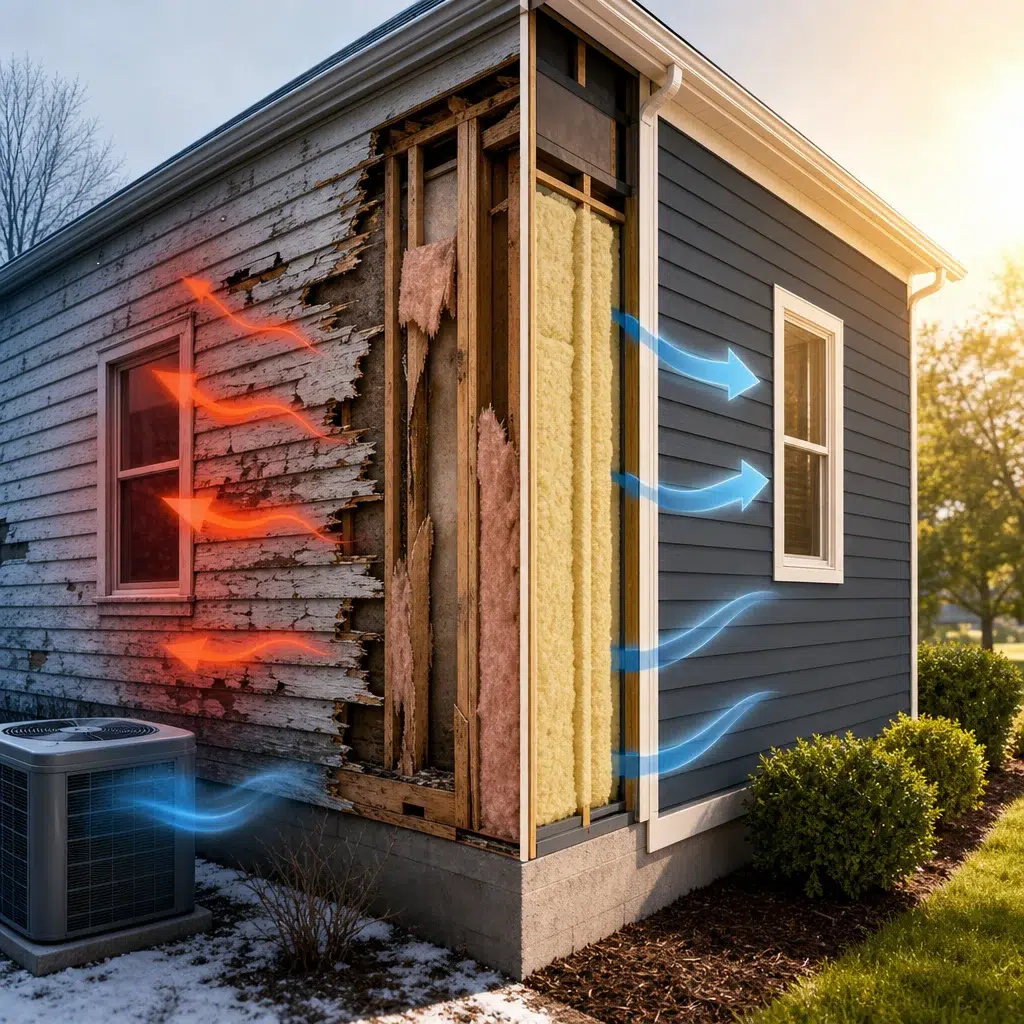
Older siding materials and compromised siding systems allow conditioned air to escape your home year-round. When gaps form between panels, moisture seeps behind the exterior layer, and insulation degrades, your HVAC system runs longer and harder to compensate. A home with aging vinyl siding or deteriorating wood can lose 15-20% of its heating and cooling energy through the walls alone.
The culprit isn’t always visible wear. Even siding that looks intact may have:
- Cracks or warping that create air leaks
- Moisture trapped behind panels reducing insulation R-value
- Poor sealing at joints and corners allowing drafts
- Missing or compromised underlayment that fails to block wind penetration
Consider a Brookfield homeowner with 25-year-old vinyl siding. Their winter heating bill climbs each year, yet the siding appears mostly fine from street level. Inside, warm air escapes through tiny gaps and thermal bridging at the studs. Their air conditioning runs longer in summer because heat radiates through thin, sun-exposed panels. By the time they notice the efficiency loss, they’ve paid thousands in excess energy costs.
Action: Walk around your home’s exterior on a windy day. Feel for drafts near corners, windows, and seams. Check for visible cracks, separation, or moisture staining that signals siding failure.
The Hidden Energy Drain: Poor Siding Performance
Siding performance depends on three factors: material conductivity, assembly integrity, and weather resistance. Most older homes fall short on all three.
Conductivity matters because materials with lower thermal conductivity transfer less heat between outside and inside. Old vinyl, which conducts heat readily, means temperature swings on your interior walls. This forces your thermostat to call for heating or cooling more frequently. Wood siding, while aesthetically appealing, has poor moisture resistance and requires constant maintenance to prevent degradation that worsens energy loss.
Assembly integrity refers to how well all the pieces work together. Improper installation of older siding systems leaves gaps at overlaps and seams. Water and air infiltration follow, compromising the insulation layer behind the siding. We’ve removed plenty of siding during replacement projects only to discover the sheathing underneath is soft from years of moisture exposure.
Weather resistance determines how effectively siding blocks wind, rain, and temperature extremes. Standard vinyl siding offers moderate weather resistance but degrades under UV exposure, becoming brittle and prone to cracking. Without proper flashing and sealing, water finds its way behind panels, leading to wood rot and insulation saturation.
The combined effect is significant. Your furnace or AC unit must run constantly to overcome the thermal losses. In Wisconsin’s climate, where winters are harsh and summers can be humid, poor siding performance adds 20-30% to annual energy costs for many homeowners. This doesn’t include the hidden damage: rotting framing, mold growth, and foundation settling caused by moisture intrusion.
Action: Request a professional energy audit that includes an assessment of your siding’s condition. Many contractors offer these evaluations at little or no cost.
How Modern Siding Materials Reduce Heating and Cooling Costs
Today’s siding materials are engineered for superior thermal and weather performance. The most impactful improvements come from three areas: better insulation integration, advanced weatherproofing, and optimized air sealing.
Modern siding systems incorporate insulation directly into the assembly. Instead of relying solely on the insulation in your wall cavities, today’s siding adds an extra thermal layer. When paired with proper underlayment and installation, this creates a more uniform barrier that minimizes thermal bridging at studs and fasteners. The result is significantly lower heat transfer through exterior walls.
Advanced weatherproofing means today’s materials resist UV damage, moisture infiltration, and thermal expansion far better than older options. Premium vinyl formulations resist fading and brittleness for 30+ years. Modern construction-grade materials include integrated moisture management that directs water away from your home’s structure rather than trapping it.
Air sealing has become a critical focus. Professional siding installation includes sealing every joint, corner, and penetration with compatible materials. Proper flashing at windows, doors, and transitions prevents the air leaks that plagued older installations. This alone can reduce infiltration losses by 30-40%.
Real-world efficiency gains vary by climate and existing conditions, but studies show properly installed modern siding reduces heating and cooling energy use by 10-15% compared to aging siding. For a typical Brookfield home spending $1,500 annually on heating and cooling, this translates to $150-225 in annual savings.
Our Vinyl and LP SmartSide Solutions for Maximum Efficiency
We’ve chosen vinyl and LP SmartSide for our siding replacement projects because both materials deliver excellent energy performance with different benefits for different situations.
Vinyl Siding Excellence
Our vinyl siding options use premium-grade materials formulated with advanced polymer compounds that improve insulation properties. Modern vinyl includes an integrated foam backing that adds 0.5 to 1.5 inches of thermal insulation directly to the siding assembly. This backing reduces heat transfer significantly and provides superior sound dampening. The material resists moisture intrusion through overlapping panel design and proper sealing techniques.
Vinyl’s low maintenance makes it ideal for homeowners prioritizing efficiency without adding upkeep. It doesn’t require painting, staining, or sealing. The color is formulated throughout the material, so it resists fading for decades. In Wisconsin’s freeze-thaw cycles, vinyl’s flexibility prevents cracking that compromise air sealing.
LP SmartSide Performance
LP SmartSide offers engineered wood advantages for homeowners who want the aesthetic warmth of wood with modern performance. SmartSide is manufactured from strand board treated with advanced moisture barriers and fungicides. This construction makes it significantly more stable and moisture-resistant than traditional wood siding.
SmartSide’s superior insulation value, combined with its wood-grain appearance, appeals to homeowners wanting authentic aesthetics without the maintenance burden. The material’s density and construction reduce air infiltration at joints when properly installed with compatible sealants and flashing.
Both materials, when installed with our professional standards, include:
- Proper house wrap or weatherproofing membrane beneath siding
- Air-sealing at all joints and transitions
- Flashing at windows, doors, and roof lines
- Correct fastening patterns that accommodate thermal expansion
- Sealed penetrations for utilities and features
Action: Compare the thermal efficiency specifications of your current siding against modern options. Our comparison guide breaks down both materials side by side.
The Installation Process: Why Professional Craftsmanship Matters
Installing siding correctly is where energy efficiency is either captured or lost. Small mistakes during installation that might go unnoticed visually can undermine your entire efficiency investment.
Professional siding installation follows a methodical sequence. We begin by evaluating the existing wall assembly. If the sheathing shows moisture damage, we replace it before proceeding. This foundation step prevents future problems and ensures the surface is true and properly prepared.
Next comes underlayment installation. We use weather-resistant barriers that allow interior moisture vapor to escape while blocking water infiltration. Proper underlayment overlap and fastening creates a secondary water defense that keeps your wall assembly dry for decades. This step often gets skipped by inexperienced installers, but it’s critical to long-term energy performance and structural integrity.
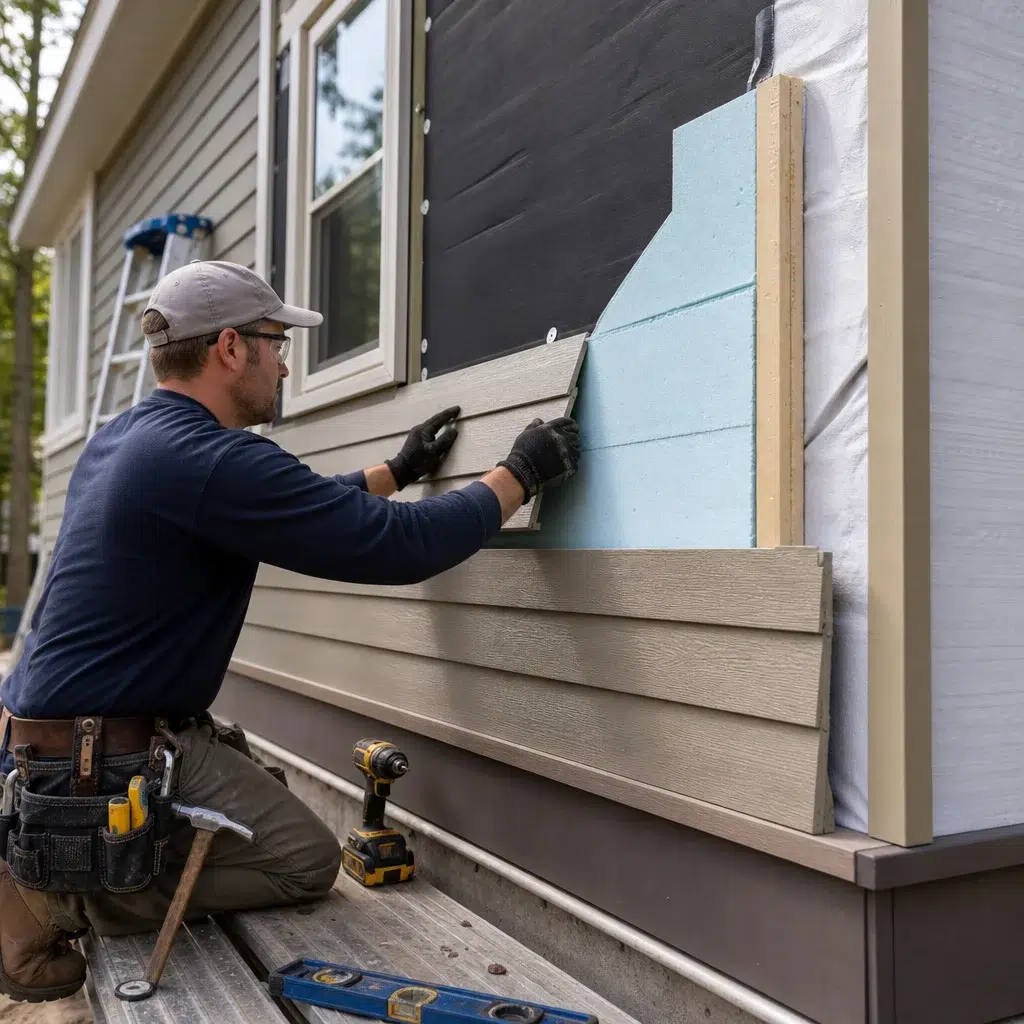
Flashing installation follows careful planning. Every window, door, transition, and roof line requires custom flashing that directs water down and away from vulnerable areas. We use materials compatible with both the siding and existing structures, ensuring proper drainage slopes and secure attachment.
Siding panel installation demands precision. Panels must be fastened at consistent intervals with room for thermal expansion and contraction. Too-tight fastening restricts movement and causes buckling. Too-loose fastening creates gaps that let air pass. We space fasteners according to manufacturer specifications for your specific material and climate zone, accounting for Wisconsin’s temperature swings.
Sealing final details makes the difference between good and great. Every corner, J-channel, soffit transition, and penetration receives compatible sealant applied according to material specifications. Foam backer rod fills large gaps before sealing, preventing sealant from pulling away as materials expand and contract seasonally.
The entire process takes attention to detail that separates professional crews from DIY attempts or inexperienced contractors. We’ve replaced hastily installed siding that looked fine from the street but had moisture trapped behind panels and significant air leaks at joints.
Action: Request that your siding contractor explain their installation process, specifically how they handle underlayment, flashing, and thermal expansion.
Calculating Your Energy Savings After a Siding Upgrade
Understanding your potential savings helps justify the investment. Here’s how to estimate realistic energy reductions for your property.
Start with your baseline. Pull your last 12 months of energy bills. Focus on heating and cooling costs, excluding fixed charges and other utilities. For a typical Brookfield home, this might total $1,500-2,000 annually.
Apply efficiency improvement factors. Modern siding typically reduces heating and cooling energy use by 10-15% when installed professionally. Use the conservative end (10%) for initial calculations. This assumes your existing insulation is adequate and your siding replacement doesn’t include additional wall insulation. If you’re upgrading insulation simultaneously, gains can reach 20-25%.
For a home spending $1,800 on annual heating and cooling with a 10% efficiency gain, annual savings equal $180. Over 20 years (a typical siding lifespan), that’s $3,600 in energy savings alone, not accounting for inflation or increased utility rates.
Add premium valuation. Energy-efficient upgrades typically add 3-5% to home resale value. On a $350,000 home, that’s $10,500-17,500 in enhanced property value. Combined with energy savings, your investment starts recovering quickly.
Subtract installation costs. Professional siding replacement typically costs $12,000-25,000 for a mid-sized home, depending on square footage, material choice, and existing conditions. Higher-quality materials like LP SmartSide cost more initially but last longer and offer better energy performance.
The math varies by home, but most homeowners recover their siding investment through energy savings and property value appreciation within 12-15 years. In Wisconsin, where heating costs are substantial, payback periods are often shorter.
Action: Request a detailed quote that includes energy efficiency specifications and projected annual savings for your property.
Durability and Long-Term Protection Beyond Energy Efficiency
While energy savings capture headlines, siding durability protects your investment more fundamentally. Poor siding allows moisture to reach structural components, causing damage that costs far more to repair than siding replacement itself.
Modern siding materials last 30-50 years with minimal maintenance, compared to 15-20 years for older vinyl or 10-15 years for untreated wood. This extended lifespan reflects improved material science and manufacturing processes. Vinyl formulations now include UV stabilizers and impact resistance unheard of 20 years ago. LP SmartSide’s treatment process creates wood that resists rot and insect damage while maintaining structural integrity.
The protection extends to your home’s framing. Wood rot develops when moisture penetrates behind siding and saturates framing members. A single spot of rot can compromise load-bearing capacity if it reaches critical studs or headers. We’ve discovered extensive framing damage during siding replacement projects where poor original installation allowed water infiltration for years. The homeowner’s “bargain” installation cost thousands more in structural repairs.
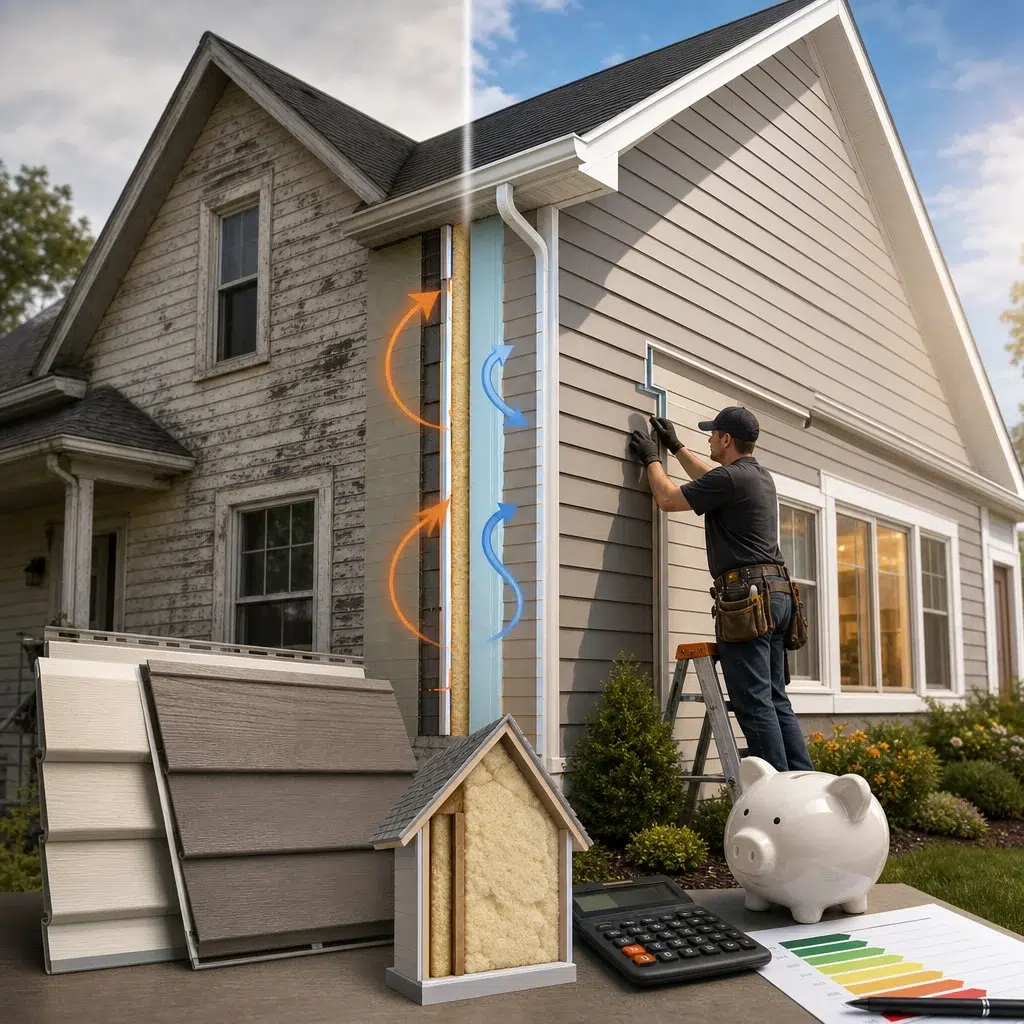
Weather resistance matters in Wisconsin’s climate. Our freeze-thaw cycles stress siding materials. Water infiltrates cracks and expands as it freezes, widening gaps and accelerating deterioration. Modern materials resist this damage through superior moisture barriers and flexible construction that accommodates thermal stress.
Proper installation amplifies durability benefits. Correct flashing, underlayment, and sealing prevent the moisture infiltration that causes premature failure. A $15,000 siding installation with professional craftsmanship lasts 40 years. The same material installed poorly lasts 20 years and causes structural damage requiring expensive repairs.
Action: When evaluating siding contractors, ask about their warranty coverage and what specifically is warranted beyond material defects.
Why Expert Exteriors Delivers Superior Siding Results
We’ve built our reputation on understanding that siding replacement involves more than selecting materials and attaching panels. Energy efficiency, durability, and aesthetic results all depend on comprehensive attention to every detail in the installation process.
Our team brings decades of combined experience with residential and commercial siding projects throughout Brookfield and surrounding areas. We’ve worked with virtually every siding material and condition, developing best practices that maximize performance and longevity. This experience means we anticipate problems before they develop and implement solutions that prevent callbacks and warranty issues.
We invest in proper equipment and techniques. Our crews use laser levels and professional-grade tools that ensure straight, aligned installations. We follow manufacturer specifications precisely, respecting thermal expansion requirements and fastening patterns specific to each material. We don’t cut corners on flashing, underlayment, or sealing because we know these details determine whether energy efficiency goals are achieved.
Material selection matters, which is why we partner with premium suppliers and manufacturers. Our vinyl and LP SmartSide options represent the upper performance tier, not budget options. Higher quality means better efficiency, longer lifespan, and fewer maintenance headaches.
Communication throughout the project prevents surprises. We inspect existing conditions thoroughly before pricing and prepare homeowners for any issues discovered during removal. We explain our process, answer questions, and provide regular progress updates. Most importantly, we stand behind our work with warranties that reflect our confidence in quality.
Our customers consistently report satisfaction not just with final results, but with the professionalism, timeliness, and attention to detail throughout their projects. We view each siding replacement as an opportunity to earn long-term relationships with property owners who value quality and expertise.
Getting Started with Your Efficiency Improvement Project
If aging or failing siding is costing you money on energy bills, upgrading to modern materials installed professionally is one of the highest-return home improvements available. The combination of lower utility costs, enhanced durability, improved aesthetics, and increased property value creates a compelling case for action.
Start by scheduling a professional evaluation of your current siding condition. We offer thorough assessments that identify specific problems and explain how they’re affecting your home’s performance. This inspection provides the information you need to make confident decisions about whether siding replacement makes sense for your timeline and budget.
During evaluation, we discuss material options, explain the energy efficiency benefits of each, and provide realistic cost and savings projections specific to your property. Our comparison of vinyl and LP SmartSide options helps you understand the tradeoffs between cost, performance, and aesthetics.
Once you’ve selected materials, we provide a detailed quote that breaks down all costs, explains our installation process, and outlines the warranty coverage we provide. We can typically schedule projects within 2-4 weeks, minimizing disruption to your daily life.
Throughout installation, our crews work systematically and safely, protecting your landscaping and keeping the worksite clean. We complete the project on schedule and conduct a final walkthrough to ensure you’re completely satisfied with the results.
New siding transforms how your home performs and looks. Your reduced energy bills start appearing on your next utility statement, and the protection benefits develop quietly over decades as your properly sealed and installed exterior shields your home’s structure from Wisconsin’s weather.
Ready to explore how energy-efficient siding upgrades can transform your home? Contact us today for a comprehensive evaluation and custom quote tailored to your property’s specific needs and your efficiency goals.