
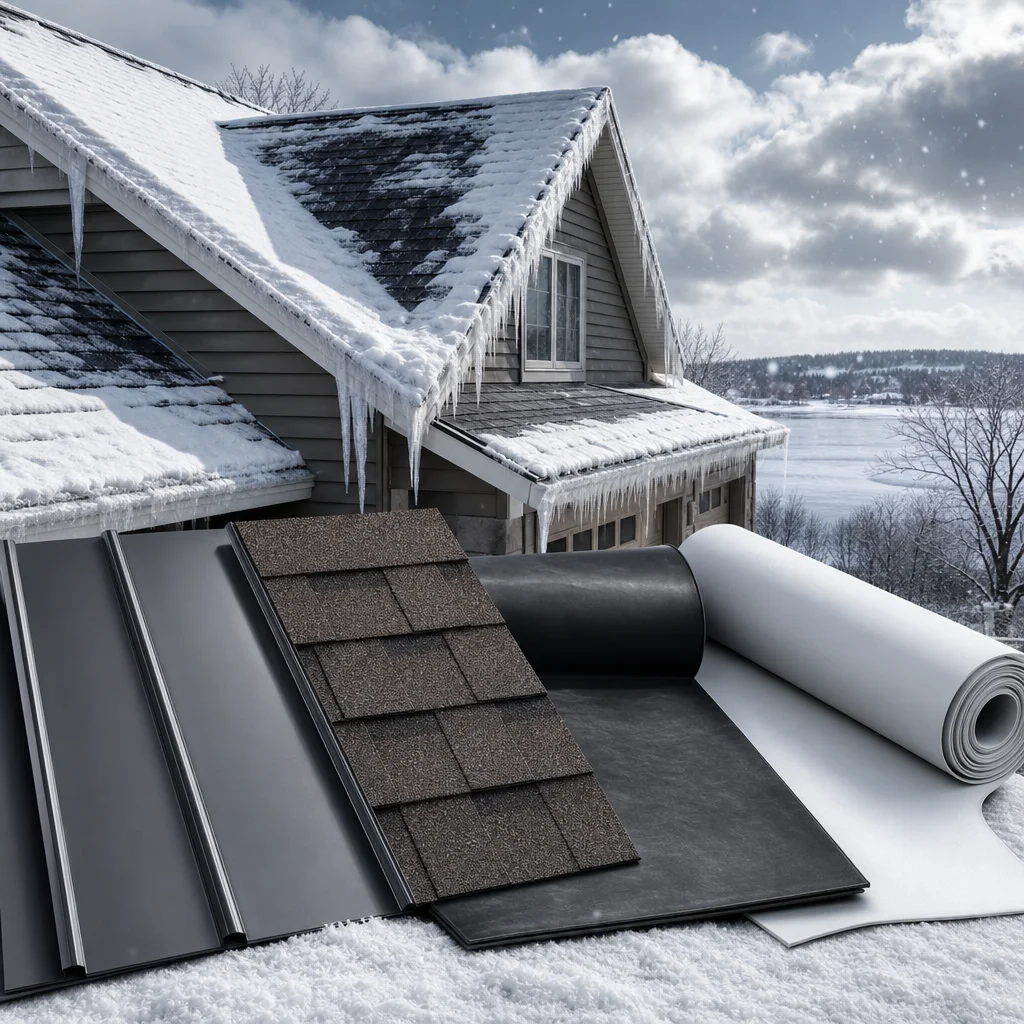
Best Cold Climate Roofing Materials for Wisconsin Properties
Why Cold Climate Roofing Requires Specialized Materials
Wisconsin winters are relentless. Freeze-thaw cycles, heavy snow loads, and ice dams create extreme stress on roofing systems that simply don’t occur in milder climates. A material that performs beautifully in temperate regions can crack, curl, or fail prematurely when exposed to our conditions year after year. At Expert Exteriors, we’ve worked on thousands of roofs across Brookfield and the surrounding area, and we’ve learned firsthand which materials truly withstand what Wisconsin throws at them.
The difference between choosing a cold climate roofing material and choosing a generic one often means the difference between a roof that lasts 15 years and one that lasts 25 or more. In this guide, we’ll walk you through the materials we recommend most frequently, explain how they perform under Wisconsin conditions, and help you understand which option makes the most sense for your property.
Standard roofing materials aren’t engineered for the specific challenges cold climates present. When temperatures swing from below zero to above freezing repeatedly throughout winter, materials expand and contract constantly. This thermal stress alone can cause shingles to become brittle, crack, or lose their sealant integrity. Add heavy snow loads pressing down on the structure, and you’ve got a recipe for premature failure if the wrong material is installed.
Moisture is another critical factor. Snow accumulation on a roof means meltwater running down to the eaves, where it often refreezes into ice dams. These ice formations prevent proper drainage and force water underneath the shingles, leading to leaks and interior damage. Some materials handle this scenario much better than others because of how they shed water, absorb movement, or resist ice adhesion.
Additionally, Wisconsin’s intense UV exposure during winter (snow reflects sunlight back at the roof) accelerates degradation in materials that aren’t UV-resistant. We’ve seen roofs installed with tropical-climate materials lose their protective granules and color within just a few seasons here. The investment you make in your roof needs to be built for Wisconsin, not for Florida or California.
By selecting a material engineered for cold climates, you’re not just avoiding premature failure. You’re protecting your home or business from interior water damage, mold, structural deterioration, and the expensive repairs that follow. We always tell our customers: the cost difference between a mediocre material and a cold-climate-grade material is usually recovered in years of extended lifespan and avoided damage.
Action step: Before any roof replacement conversation, identify whether your current or proposed material is specifically rated for Wisconsin’s freeze-thaw cycles and snow loads.
Key Performance Criteria for Wisconsin Roofing
When we evaluate roofing materials for our clients in Wisconsin, we look at specific performance metrics that matter most in cold climates. Not all roofing materials are rated equally, and understanding these criteria helps you make an informed choice.
Impact and hail resistance ranks high because Wisconsin experiences severe summer storms with hail, and winter ice can put tremendous stress on shingles. Look for materials rated Class 4 impact resistance on the ASTM D3746 scale. Architectural shingles and metal roofing typically excel here.
Wind resistance is another critical factor. Wisconsin’s spring and fall storms bring high winds that can lift and tear shingles. Quality cold-climate materials should be rated for at least 130 mph winds, though 150+ mph ratings are better.
Temperature flexibility refers to how well a material handles the constant expansion and contraction that Wisconsin winters create. Rubber and TPO membranes are excellent because they remain flexible even at very low temperatures, whereas brittle materials like standard asphalt shingles can develop stress cracks.
Snow load bearing capacity varies by material type and installation. A metal roof sheds snow more effectively, potentially reducing the weight your structure carries. Steeper pitches generally shed better than shallow pitches, which is why we consider both the material and the roof slope together.
Moisture resistance and ice dam prevention matter tremendously. Materials that don’t absorb water and that shed water quickly prevent ice from backing up under shingles. Self-adhering underlayments and certain membrane materials perform much better in this regard than older tar-paper systems.
Understanding these criteria helps you avoid choosing based on price alone. A cheap material that fails in 10 years costs far more than investing in quality upfront. When we consult with property owners, we always connect material selection directly back to these performance standards.
Action step: Ask any contractor to show you the specific performance ratings (ASTM, FM Approvals, or UL ratings) for any material being proposed.
Metal Roofing: Superior Durability and Snow Shedding
Metal roofing stands out as one of the most durable options available for Wisconsin properties, and its performance in cold climates is exceptional. We install standing seam metal roofs regularly, and the longevity we see consistently exceeds 40 to 50 years, even in harsh conditions.
The primary advantage in winter is snow shedding. Metal’s smooth surface provides minimal friction, allowing snow and ice to slide off rather than accumulate. This reduces weight on your structure, decreases ice dam formation, and means less thermal cycling stress on the material itself. On a steep-pitched roof with standing seam metal, you’ll see snow slide off naturally within days of a storm, whereas other materials may hold snow for weeks.
Metal roofing also won’t become brittle or crack from freeze-thaw cycles because it’s engineered to flex slightly as temperatures change. The material expands and contracts without developing the stress fractures you see in aged asphalt shingles. And metal doesn’t absorb moisture, so ice doesn’t have a pathway to penetrate underneath.
From a durability standpoint, quality metal roofing is virtually maintenance-free. Unlike asphalt shingles that require periodic inspection for curling or deteriorating sealant, metal roofing simply ages in place without active degradation. Fasteners and seams need periodic inspection, but the primary roofing material itself won’t fail.
The trade-off is upfront cost. Metal roofing typically costs 2 to 3 times more than standard asphalt shingles. For properties where longevity and minimal future maintenance matter most, this investment often makes financial sense over 30, 40, or 50 years. For budget-conscious property owners looking for a solid 20-year roof, it may not be the best fit.
Installation quality matters significantly with metal. Poor sealing, inadequate fastening, or inexperienced installation can create leaks and voided warranties. This is why we invest heavily in training our metal roofing crews and why we stand behind every metal installation with comprehensive warranties.
Action step: If considering metal roofing, get a 30-year cost projection (including replacement cycles for other materials) to compare true lifetime value.
Asphalt Shingles: Cost-Effective Cold Climate Performance
Asphalt shingles remain the most common roofing material in Wisconsin, and for good reason. When selected specifically for cold climates, they offer a practical balance of performance and affordability that suits many residential properties.
Not all asphalt shingles perform equally in Wisconsin winters, though. Standard 3-tab shingles are more prone to cracking and brittleness as they age in cold climates. Architectural or laminated shingles perform significantly better because they’re thicker, contain more asphalt, and maintain flexibility longer. The additional mass and construction also improves wind and impact resistance.
Cold-climate-rated asphalt shingles include features that matter specifically for Wisconsin. Look for shingles with strong adhesive sealants that remain pliable even at temperatures well below freezing. Some premium brands engineer shingles to resist ice damming with improved water-shedding profiles. Others use granule blends that resist UV degradation from snow reflection.
The realistic lifespan for quality architectural asphalt shingles in Wisconsin is 15 to 20 years, sometimes extending to 22 or 25 years with excellent installation and maintenance. This is shorter than metal roofing, but the upfront cost is typically one-third the price, making them attractive to property owners planning to stay in their homes 15 to 20 years.
Installation details are critical with asphalt shingles in cold climates. Proper nailing techniques, adequate underlayment with ice dam protection, and ventilation that prevents heat buildup are all essential. Poor installation can reduce lifespan significantly. We focus heavily on these details because they directly affect how well shingles perform through Wisconsin winters.
One more consideration: asphalt shingles do require periodic maintenance. Inspections after severe storms, checking for curling or deterioration every few years, and addressing any sealing issues extends lifespan. If you’re willing to maintain your roof proactively, quality asphalt shingles remain cost-effective.
Action step: If choosing asphalt shingles, specify architectural grade and ask for a cold-climate-rated product with ice dam protection features built in.
EPDM Rubber Roofing: Excellent Flexibility in Freezing Temperatures
EPDM (ethylene propylene diene monomer) is a synthetic rubber membrane commonly used on flat and low-slope commercial roofs throughout Wisconsin. Its cold climate performance is excellent, which is exactly why it remains popular in our region despite newer alternatives.
The defining characteristic of EPDM is its flexibility. Unlike materials that become brittle in extreme cold, EPDM remains pliable even at temperatures far below zero. This means it expands and contracts with temperature swings without developing cracks or seams that leak. During freeze-thaw cycles, EPDM’s elasticity absorbs stress that would damage more rigid materials.
EPDM is also highly water-resistant and UV-stable. It won’t absorb moisture, so ice penetration under the membrane isn’t a concern. The material resists UV degradation better than older rubber products, and it maintains structural integrity even after decades of Wisconsin sun and snow exposure.
Installation longevity for EPDM typically ranges from 20 to 30 years, sometimes longer. We’ve maintained EPDM roofs in the area that are approaching their fourth decade still performing well. The material simply outlasts many alternatives in cold climates.
The main limitation is that EPDM seams (where sheets are joined) require careful installation and ongoing maintenance. Seams are typically the weak point in an EPDM system, so proper sealing, periodic inspection, and maintenance of sealants is essential. Wind can also be problematic with EPDM if not mechanically fastened properly, as the flexibility that protects against freeze-thaw can allow membranes to shift in high winds.
We typically recommend EPDM for commercial properties and flat residential roofs (like dormers or extensions) where its cold climate performance and cost-effectiveness make it an excellent choice. For properties where you want a single-layer protection with minimal seams, our newer TPO systems sometimes outperform EPDM.
Action step: If you have an existing EPDM roof, schedule annual inspections focused on seam integrity and sealant condition to maximize lifespan.
TPO Roofing: Modern Protection with Thermal Efficiency
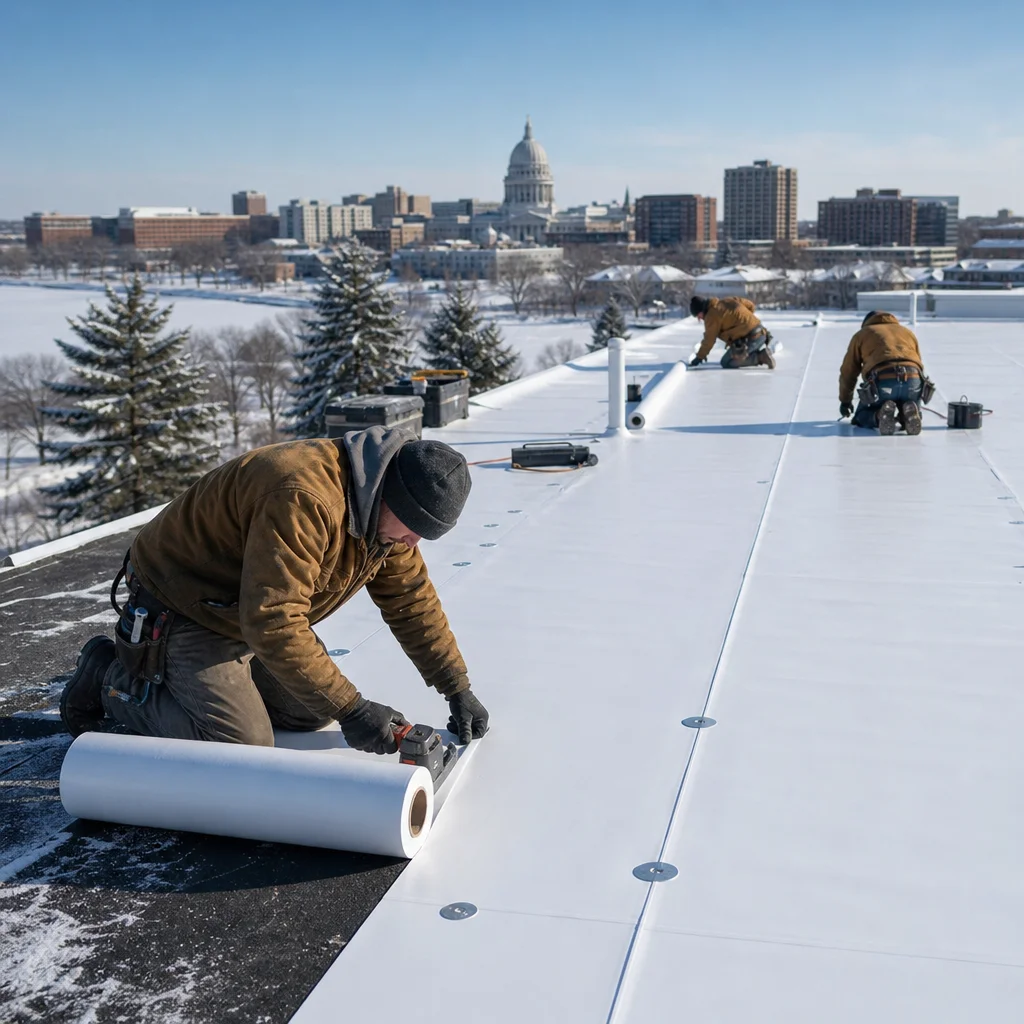
TPO (thermoplastic polyolefin) represents a newer generation of roofing membranes that has gained significant adoption in Wisconsin over the past 15 years. We’ve installed hundreds of TPO roofs across the area, and cold climate performance is one of its strongest attributes.
TPO combines the flexibility benefits of EPDM with improved seaming technology and thermal efficiency. TPO seams are heat-welded, creating bonds that are as strong as the membrane itself rather than relying on adhesives or tape. This dramatically improves reliability and reduces the maintenance burden compared to EPDM. The welded seams also perform better under the stress of freeze-thaw cycles and wind movement.
Thermally, TPO roofing offers advantages that matter in Wisconsin. Its light color reflects solar heat, reducing building cooling costs in summer and actually helping prevent ice dam formation by promoting faster snow melt in early spring. While this sounds counterintuitive, the slight increase in radiant heat on the roof surface when sun hits light-colored TPO does help shed snow faster than darker materials.
TPO’s cold climate flexibility rivals EPDM. It remains supple at very low temperatures, so expansion and contraction don’t create stress fractures. In freeze-thaw scenarios, TPO accommodates movement gracefully, which is essential for longevity in Wisconsin.
The lifespan for quality TPO installations is typically 20 to 30 years, matching or exceeding EPDM in cold climates. We’ve begun seeing 10 and 15-year-old TPO installations still performing flawlessly, suggesting that real-world longevity may trend longer as the material weathers and settles.
We often recommend TPO over EPDM for new flat roof installations because the heat-welded seams require less maintenance, the thermal benefits align with Wisconsin’s seasonal patterns, and we’re accumulating more long-term data showing excellent durability. TPO does cost slightly more than EPDM upfront, but the reduced maintenance and improved seam reliability often justify the difference.
For EPDM and TPO performance details specific to commercial applications, we maintain comprehensive performance data.
Action step: When evaluating flat roof systems, compare heat-welded TPO against EPDM, accounting for both upfront cost and expected maintenance requirements over 25 years.
Slate and Architectural Shingles: Longevity and Aesthetics
Slate roofing represents the absolute pinnacle of roofing longevity. Natural slate stones are fundamentally immune to the temperature cycling, moisture, and UV exposure that degrade other materials. We’ve inspected slate roofs in Wisconsin that are 80, 100, or even 150 years old and still fully functional.
From a cold climate standpoint, slate is ideal. The stone’s imperviousness means water doesn’t penetrate. Freeze-thaw cycles don’t affect slate the way they affect shingles because there’s no absorption or flexibility involved. The weight of slate (typically 12 to 15 pounds per square foot) is heavy, but Wisconsin home structures built to accommodate slate handle this load without issue.
The primary drawback is cost. Quality slate roofing can run $15,000 to $25,000+ for an average home, compared to $8,000 to $12,000 for architectural asphalt. Additionally, not all structures are designed to support slate’s weight, so reinforcement may be necessary. And finding experienced slate roofers is increasingly difficult.
Architectural (laminated) asphalt shingles offer a middle ground. They’re thicker and more durable than standard shingles, they resist wind and impact better, and they maintain better appearance over time in Wisconsin’s harsh conditions. Architectural shingles in winter provide an excellent value proposition for homeowners wanting something more substantial than basic 3-tab shingles.
Architectural shingles typically cost 30 to 50% more than standard asphalt but deliver significantly better cold climate performance. Lifespan tends to be 18 to 25 years, and their three-dimensional appearance often appeals to homeowners who want visual distinction without the extreme cost of slate.
We recommend slate for properties where budget allows and structure supports it, or for historic homes where slate restoration or replacement aligns with the original construction. For most Wisconsin homeowners, quality architectural shingles deliver the best balance of durability, aesthetics, and cost.
Action step: If slate interests you, have a structural engineer confirm your home can support the weight before committing to slate replacement.
How Expert Exteriors Selects the Right Material for Your Property
Selecting a roofing material isn’t a one-size-fits-all decision, and this is where our experience working on hundreds of properties across Wisconsin makes a real difference. When you contact us for a roof replacement consultation, we follow a systematic evaluation process.
We start by understanding your home or building’s specific situation. What’s the current roof pitch? How’s the ventilation system? Are there any structural concerns or water intrusion issues from the existing roof? For flat roofs, we assess drainage patterns and any history of ponding water. These factors directly influence which materials will perform best for your property.
Next, we discuss your timeline and budget. If you’re planning to stay in your home for 5 more years, a cost-effective asphalt shingle solution makes sense. If you’re in for 30+ years, metal or premium materials become more financially attractive. We run true lifetime cost analyses that include replacement cycles and maintenance, not just upfront price.
We also consider your property’s exposure and microclimate. Roofs facing north stay wet longer in spring and remain colder in winter, affecting material choices. Buildings in valleys where wind accelerates need wind-rated materials. Properties with heavy tree cover deal with moisture and debris differently than open properties. These nuances matter.
Our team physically inspects the roof structure to identify any reinforcement needs, ventilation improvements, or underlying damage that needs addressing. A material recommendation is only as good as the installation foundation beneath it. We’ve seen beautiful roofing materials fail because the structure, ventilation, or underlayment wasn’t right. That’s not an acceptable outcome for any of our clients.
For commercial properties, we additionally assess the building’s insulation, climate control costs, and any specialized needs (solar integration, roof-mounted equipment, frequent access, etc.). These factors can shift recommendations significantly compared to residential standards.
Finally, we discuss warranty coverage, maintenance expectations, and long-term durability data specific to each option we present. We don’t push the most expensive material; we recommend the material that delivers the best value for your situation.
Action step: During your consultation, ask us to explain why we’re recommending a specific material and how it addresses your property’s unique characteristics.
Comparison: Performance Ratings Across Wisconsin Winters
Let’s compare how these materials perform across the specific challenges Wisconsin winters create:
Freeze-thaw resistance: Metal roofing and rubber membranes (EPDM and TPO) excel because they remain flexible throughout temperature swings. Asphalt shingles are moderate; they handle freeze-thaw reasonably well if they’re quality architectural grade, but brittle 3-tab shingles can crack. Slate is excellent due to imperviousness.
Snow shedding: Metal roofing is superior due to its smooth surface. Steep-pitched asphalt shingles shed reasonably well. Flat rubber membranes don’t shed snow, so weight accumulation can be higher. Slate sheds moderately well depending on pitch and surface texture.
Ice dam resistance: Metal and steep-pitch roofs inherently resist ice dams. Quality asphalt with proper underlayment systems (ice and water shield) performs well. Flat membranes like TPO and EPDM rely on proper drainage design rather than gravity.
Wind resistance: Metal roofing, architectural asphalt shingles, and properly fastened slate all handle Wisconsin winds well (130+ mph ratings). Standard asphalt is weaker. TPO and EPDM performance depends on mechanical fastening and edge restraint.
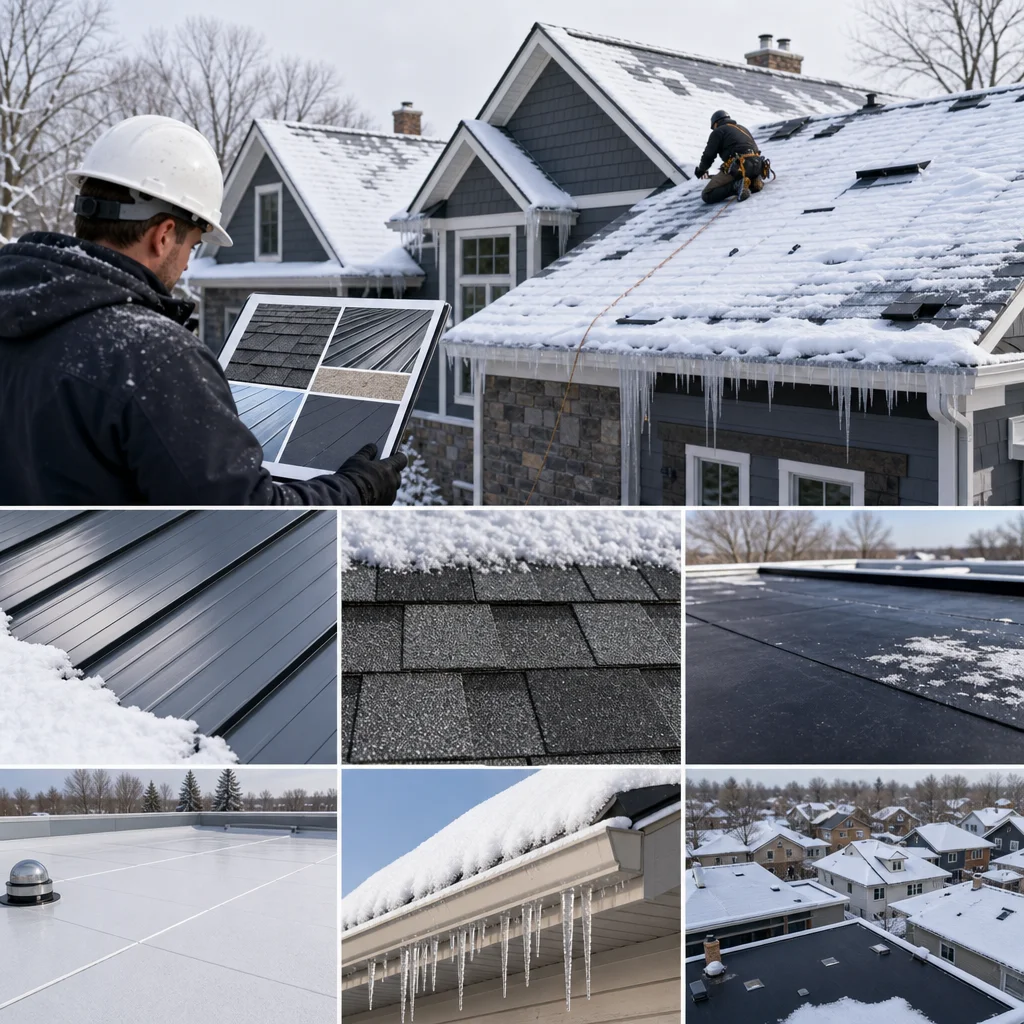
Maintenance demands: Metal roofing is lowest maintenance. TPO requires periodic seam inspection. Asphalt shingles require routine inspection and periodic repairs. Slate requires occasional inspection but rarely needs repair. EPDM requires more active seam maintenance.
Lifespan in Wisconsin: Slate (50+ years), metal (40-50 years), TPO/EPDM (20-30 years), architectural asphalt (18-25 years), standard asphalt (12-18 years).
Cost per year of lifespan: This is where the analysis gets interesting. Metal’s higher upfront cost amortized over 45 years often works out to less than asphalt replaced three times. TPO’s moderate cost and 25-year lifespan often provides excellent value. Architectural asphalt remains cost-effective for 18-year timelines.
Each material excels in different areas. The right choice depends on which factors matter most for your situation.
Action step: Use the comparison above to prioritize which factors matter most to you (maintenance, lifespan, shedding ability, cost), then match that priority to the material that performs best in those areas.
Our Expert Recommendation for Maximum Value and Protection
After installing thousands of roofs across Brookfield and Wisconsin over many years, we’ve observed clear patterns in what works best for different property types in our region.
For residential properties where homeowners plan to stay 20+ years and want to minimize future roof replacement, we recommend quality architectural asphalt shingles with ice and water shield underlayment. This combination delivers cold climate performance, withstands Wisconsin winters reliably, and costs 40% less than metal or slate. The 20-year lifespan is realistic, and maintenance demands are manageable. This is our most common recommendation because it balances performance with practical budgeting.
For homeowners willing to invest more for truly exceptional durability and maintenance-free operation, standing seam metal roofing is the definitive choice. Yes, the upfront cost is higher, but you’re buying a roof that will still be protecting your home 40 or 50 years from now while your neighbors replace their asphalt roofs multiple times. The snow-shedding benefits alone reduce ice dam risk significantly. When you factor in the certainty of longevity and the virtual elimination of maintenance, metal roofing becomes the premium option that delivers on its promise.
For commercial properties with flat roofs, TPO membranes with heat-welded seams outperform EPDM in Wisconsin because the seam reliability eliminates the ongoing maintenance burden. TPO’s thermal efficiency also reduces cooling costs, which adds hidden value that pure material cost doesn’t capture.
For properties where budget is extremely constrained, quality architectural asphalt shingles without premium underlayment can work, though we’d strongly encourage adding ice and water protection in the valley and eave areas. The modest additional cost prevents water intrusion damage that costs thousands to repair.
We don’t recommend standard 3-tab asphalt shingles for new installations in Wisconsin, even at lower price points, because the lifespan and cold climate performance gap is simply too large. And we don’t recommend installing materials designed for warm climates regardless of cost savings.
What makes Expert Exteriors different is that we don’t have financial incentive to push you toward the most expensive option. We profit equally whether we install a $10,000 asphalt roof or a $30,000 metal roof. Our reputation is built on recommending the material that’s right for your specific property, your timeline, and your budget. This honesty is why property owners trust us year after year.
Action step: Schedule a free roof consultation where we assess your property, discuss your timeline, and recommend the specific material that delivers the best value for your situation.
Getting Started with Your Cold Climate Roof Replacement
If your roof is showing signs of age or weather damage, or if it’s simply reached the typical lifespan for its material, it’s time to plan your replacement. Starting early prevents emergency repairs and water intrusion damage.
The first step is a professional roof inspection. We examine the condition of your current roof, check for leaks or structural issues, and assess whether your roof is failing or has a few more functional years remaining. This inspection is complimentary for property owners in our service area, and it provides the foundation for accurate replacement planning.
Once we understand your roof’s current state, we discuss your options. If your roof is close to failure, replacement makes sense sooner rather than later. If your roof has 3 to 5 years remaining, you have time to budget and plan carefully. If significant water intrusion is occurring, emergency repairs may be needed while you plan a complete replacement.
During the material selection conversation, we walk through the comparison factors we’ve outlined in this article. We discuss your budget, timeline, and maintenance preferences. We show you samples of the materials we’re recommending. We answer every question you have until you feel confident in the decision.
Once you’ve selected a material, we provide a detailed estimate that breaks down labor, materials, warranty, timeline, and any structural repairs your roof might need. We’re transparent about what’s included and what might be necessary once we remove the old roof and inspect the structure beneath.
Our installation process follows Wisconsin building codes and the material manufacturer’s specifications precisely. This isn’t where we cut corners. We use the proper underlayments, ventilation systems, flashing details, and fastening methods that ensure your new roof performs exactly as the material is designed to perform. We also document everything with photos and provide you with detailed warranty paperwork.
After installation, we schedule follow-up inspections at appropriate intervals to ensure everything is performing perfectly. For our TPO and EPDM customers, we recommend annual inspections. For metal and asphalt, we suggest a post-storm inspection and periodic checks, but maintenance demands are lighter.
Protecting your property is our job, and we take it seriously. The roof we install today is the barrier between your home or business and Wisconsin’s harshest weather. Getting it right the first time, with the right material and expert installation, is how we earn your confidence.
Action step: Contact us today for a free roof inspection and material consultation. We’ll assess your property, discuss your options, and recommend the specific cold climate roofing material that delivers the best value and protection for your situation.
For further reading: Residential materials for Wisconsin.