
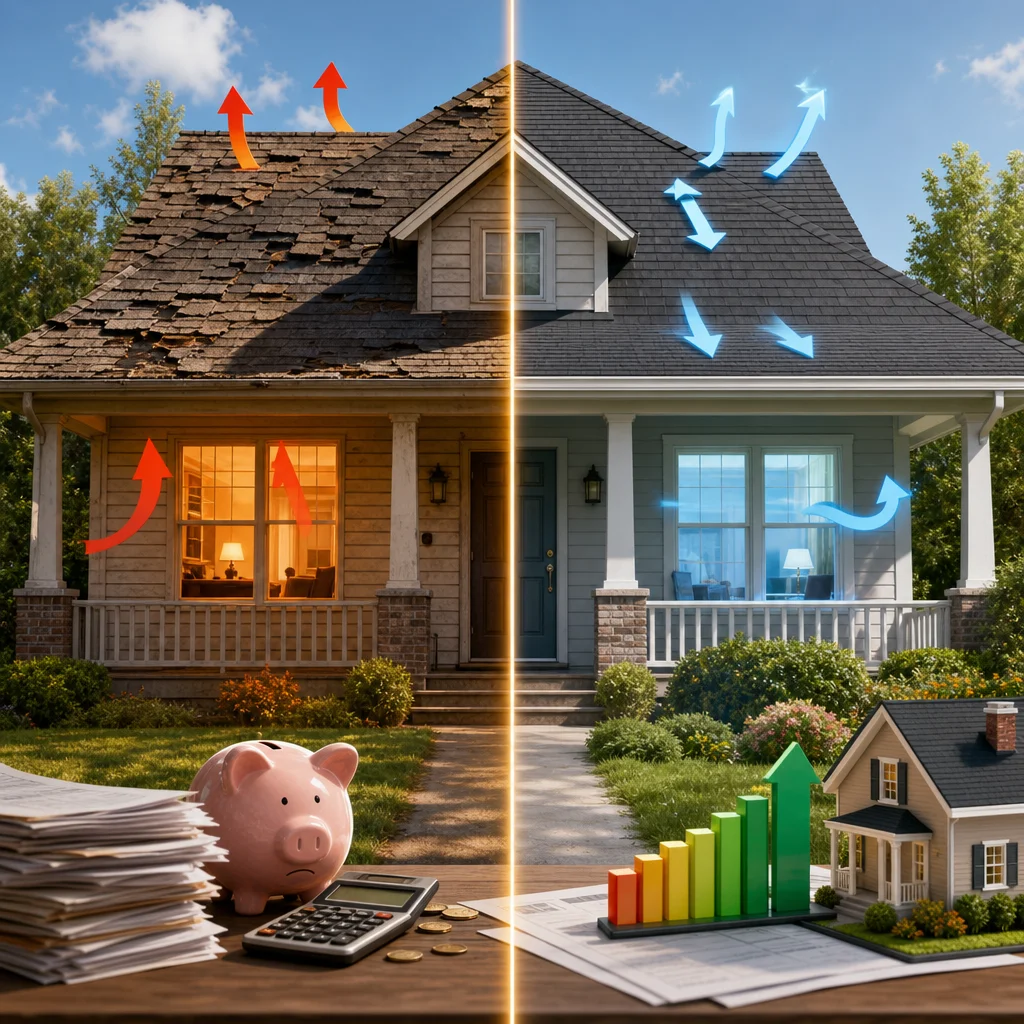
How New Roofs Boost Energy Efficiency and Home Resale Value
Why Your Current Roof Is Costing You Money in Energy Bills
A roof is one of your home’s largest investments, yet many property owners don’t realize how much it affects your monthly energy bills and future resale potential. An aging roof doesn’t just look worn—it actively works against your comfort and your wallet. We’ve helped hundreds of homeowners in Brookfield and surrounding areas discover that a new roof isn’t just a repair; it’s a strategic upgrade that pays dividends in energy savings and property value.
This guide walks you through exactly how modern roofing improves efficiency, what financial returns you can realistically expect, and why the right roof replacement is one of the smartest decisions you can make for your property.
Your roof is your home’s primary defense against heat loss in winter and heat gain in summer. When shingles age, curl, or develop gaps, that protective barrier weakens. Air escapes through cracks, your HVAC system works overtime, and your energy costs climb.
Here’s the reality: roofs older than 15-20 years typically lose their thermal efficiency. Granules wear away, UV protection diminishes, and the underlying structure can develop micro-leaks that compromise insulation. Even if your roof doesn’t leak visibly, it’s bleeding energy. A homeowner with an aging roof might spend 10-15% more on heating and cooling than one with a properly installed, modern roof.
The problem compounds in regions with temperature extremes. Wisconsin winters mean your roof must prevent warm air from escaping; summers demand it reflects solar heat rather than absorbing it. Old asphalt shingles do neither effectively.
What to do next: Schedule a professional roof inspection to measure current energy performance. We can assess your roof’s condition and estimate potential energy savings from replacement, giving you concrete numbers rather than guesses.
The Direct Connection Between Roof Quality and Home Resale Value
Buyers scrutinize roofing carefully because they understand what you’re learning: a roof is either an asset or a liability. A newer, high-quality roof adds measurable value and closes sales faster. Appraisers expect to see roofs in good condition, and a deteriorating roof triggers immediate inspection requests and renegotiations.
Research from the National Association of Home Builders shows that a roof replacement recovers 60-80% of its cost in resale value. That’s among the highest ROI of any home improvement. Compare that to a kitchen remodel (typically 50-60% recovery) and you see why roofing matters so much to your bottom line.
Beyond the dollars, a new roof gives buyers confidence. It removes a major uncertainty from their inspection, reduces their perceived risk, and lets them focus on features they love rather than worrying about repairs. In competitive markets, that peace of mind translates to higher offers and faster sales.
For commercial properties, the effect is even more pronounced. Tenants and investors examine roof condition closely because a failing roof disrupts operations and threatens inventory. A strong roof signals responsible property management and attracts quality tenants willing to pay premium rates.
What to do next: If you’re planning to sell within 5-7 years, a roof replacement should be a priority. Consult with a real estate agent and get a pre-sale roof inspection to understand your property’s current market position.
How Modern Roofing Materials Reduce Your Energy Consumption
Modern roofing has evolved dramatically. Today’s materials are engineered to reflect solar radiation, manage thermal expansion, and work seamlessly with ventilation systems to maintain consistent interior temperatures.
Cool roofing technology is the biggest advance. Materials with high solar reflectance bounce more sunlight away rather than absorbing it as heat. Some newer asphalt shingles achieve a Solar Reflectance Value (SRV) of 0.65 or higher—compared to 0.25 for standard dark shingles. That difference keeps your attic and upper floors measurably cooler, reducing air conditioning load during hot months.
TPO and EPDM membranes (common on flat and low-slope commercial roofs) excel at thermal efficiency. TPO’s light color reflects heat naturally. EPDM, though darker, provides superior insulation value and flexibility across temperature swings. Both handle Wisconsin’s freeze-thaw cycles better than aged materials.
Ventilation integration matters as much as the material itself. Modern roof designs include proper intake and exhaust ventilation that prevents heat and moisture buildup in the attic. This reduces thermal stress on shingles and supports your home’s overall climate control. We’ve seen homes cut cooling costs by 15-20% simply by upgrading from poorly ventilated old roofs to modern systems with optimized airflow.
Impact-resistant shingles resist hail and weather damage, meaning they maintain their reflective properties longer. They also reduce insurance premiums in many Wisconsin areas, offsetting some installation costs.
What to do next: Ask us about our material options during your quote. We’ll match energy-efficient materials to your climate zone, budget, and aesthetic preferences. Cool roofing makes the biggest difference in summer; proper ventilation provides year-round benefit.
Our Expert Roof Replacement Process Maximizes Efficiency Gains
Installation quality determines whether your roof delivers promised energy savings. A poorly installed roof—with improper ventilation, gaps in underlayment, or misaligned shingles—fails to perform regardless of material quality.
Our process prioritizes efficiency from the ground up. We begin with a thorough roof replacement assessment that evaluates your home’s existing ventilation, insulation, and thermal performance. This tells us exactly what upgrades will maximize your energy gains.
Next, we prepare the substrate properly. Old roofing is removed completely, exposing the deck for inspection and repair. Damaged framing or decking is corrected before any new material goes down. We install high-quality underlayment—not just to meet code, but to create a thermal and moisture barrier that enhances efficiency.
Ventilation design is intentional. We ensure soffit vents allow adequate intake airflow and ridge vents or turbines provide proper exhaust. This circulation prevents heat and moisture trapping that degrades roofing performance and forces HVAC systems to work harder.
Installation follows manufacturer specifications precisely. Every shingle is nailed at the correct angle and depth; every seam in membrane roofing is heat-sealed to specification. We don’t cut corners because even small installation errors reduce energy performance and longevity.
After installation, we verify proper performance. We walk the entire roof with you, explaining what’s been done and why, and answer questions about maintaining your investment.
What to do next: Request a detailed quote that includes our specific approach to ventilation and energy optimization. Learn more about what to expect during installation so you can plan accordingly.
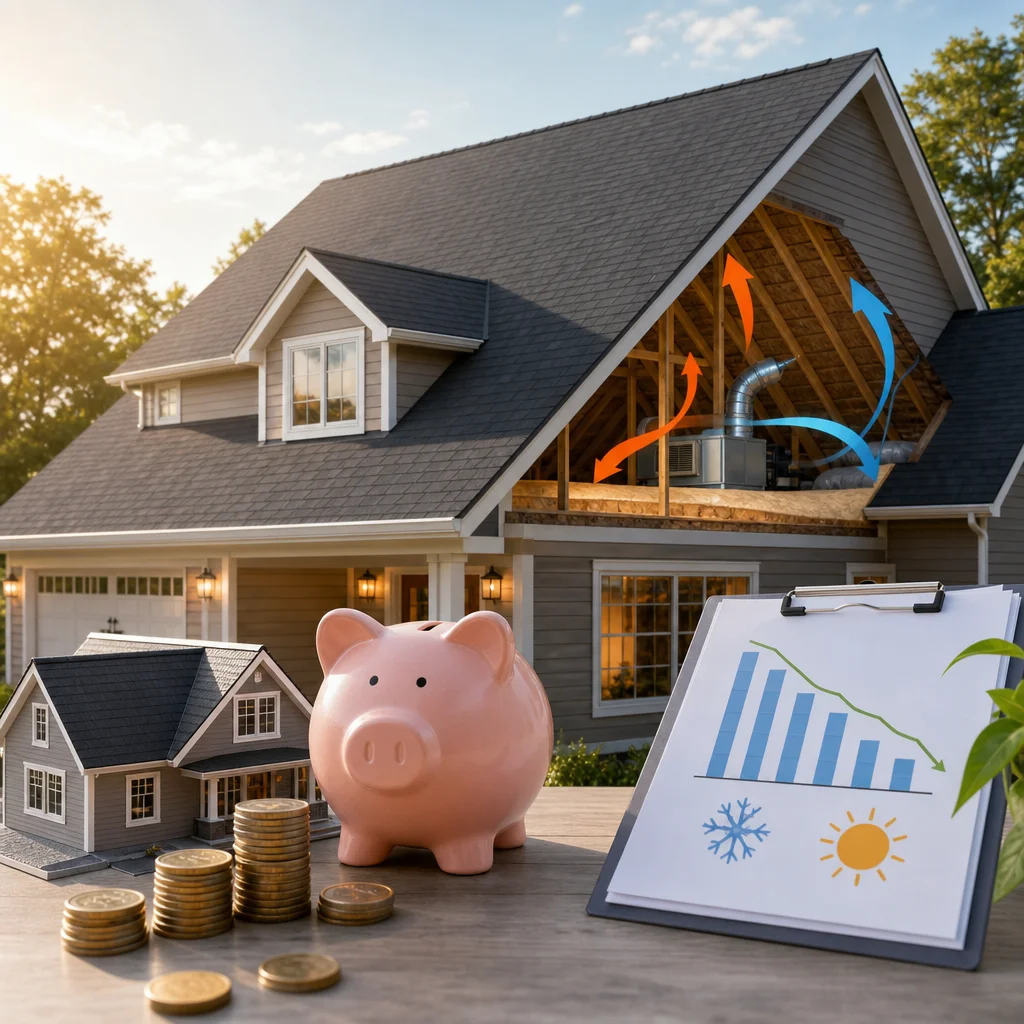
What to Expect: Energy Savings After Your New Roof Installation
Real-world savings depend on several factors: your previous roof’s condition, climate zone, home insulation, HVAC efficiency, and your cooling/heating patterns. But we see consistent patterns across our Brookfield clients.
Homeowners typically report 10-20% reductions in heating and cooling costs within the first year. Homes that were poorly ventilated before replacement often see savings on the higher end. A family that spent $2,000 annually on heating and cooling might save $200-400 yearly once their new roof is properly ventilated and reflective.
Year-one impact: Most noticeable during extreme seasons. Homes stay cooler in summer with less AC strain; they retain heat better in winter. You’ll feel the difference in comfort as well as utility bills.
Year-two and beyond: As your roof settles and ventilation systems optimize airflow, savings typically stabilize. Properly maintained roofs sustain these gains for 20+ years. Unlike initial retrofit costs, energy improvements compound over decades.
Financial calculation: If a $15,000 roof replacement yields $300 in annual energy savings, you’ve recovered the investment in 50 years. But factor in resale value recovery (60-80%), avoided repair costs on an aging roof, and extended lifespan, and the real payback happens in 7-10 years.
What to do next: After installation, monitor your first-year energy bills to establish a baseline. Compare them to the previous year’s bills from the same seasons. This data validates your investment and helps with future property management decisions.
Why Choosing Expert Exteriors Ensures Both Performance and ROI
We’re not a general contractor who dabbles in roofing. We specialize exclusively in exterior remodeling—roofing, siding, gutters, and fascia. That focus means deep expertise in material selection, installation best practices, and how exterior systems interact to protect and perform.
Our team has been serving Brookfield and surrounding areas for years. We understand Wisconsin’s specific climate challenges: heavy snow loads, freeze-thaw cycles, intense summer sun, and humidity. We don’t install generic solutions; we engineer roofs that thrive in this environment.
We’re also transparent about what influences your energy savings. During consultation, we’ll assess your home’s existing insulation, ventilation, and orientation—not just your roof condition. If your attic lacks adequate insulation, we’ll explain how adding it alongside your new roof maximizes your returns. If ventilation improvements are needed, we’ll scope that work clearly.
Quality materials are our standard, not an upsell. We partner with manufacturers who stand behind their products with strong warranties. Our installation follows those manufacturer specs precisely because that’s how you preserve warranty protection and ensure performance.
When you invest in a new roof with us, you’re investing in expertise, accountability, and long-term performance. We back our work with solid warranties and remain your resource for any questions or maintenance guidance down the road.
What to do next: Ask us the right questions before you commit. We’re happy to discuss our installation process, material options, and how we’ll maximize your property’s energy efficiency and value.
Financing Your New Roof as a Smart Investment
A new roof is a significant expense, but several financing approaches make it manageable while you’re realizing energy savings and building equity.
Traditional financing options include:
- Home equity lines of credit (HELOC): typically 4-8% interest; interest may be tax-deductible
- Personal loans: faster approval; fixed terms; no home equity risk
- Manufacturer financing: some offer promotional rates (0% for 12-24 months on qualified projects)
- Home improvement loans: designed specifically for this purpose; competitive rates
Evaluate the math: If your roof costs $15,000 and saves $300 yearly, financing over 10 years at 6% means monthly payments around $166. Your energy savings cover roughly 25% of that payment, with the balance paid from your normal budget. Over the loan term, you’ve recovered most of the cost through resale value and avoided repairs.
Home improvement grants and incentives vary by state and utility company. Wisconsin offers some energy efficiency rebates. Check with your local utility provider; they may cover a percentage of high-efficiency roofing upgrades.
Insurance considerations: If your roof is aging and you’ve had claims, a new roof can lower your insurance premium by 10-20% annually. That ongoing savings should factor into your financing decision.
What to do next: Request a detailed quote and ask about financing options we recommend. We’ll help you understand the true cost of ownership including energy, insurance, and resale implications.
Real Results: How Our Clients See Increased Home Values
We’ve seen this benefit firsthand across dozens of projects. Here’s what real homeowners have experienced:
A Brookfield family with a 22-year-old asphalt roof and poor attic ventilation invested $16,500 in a new roof with proper ventilation design. Their summer cooling costs dropped from $1,800 to $1,400 annually. When they sold their home two years later, their appraiser noted the new roof as a major positive, contributing to a final sale price $22,000 above comparable homes with aging roofs.
A commercial property owner in the area replaced an EPDM roof on a 15,000-square-foot office building. The new TPO system reflected more heat, reducing the building’s cooling load by roughly 12%. That translated to $3,200 in annual utility savings. More importantly, tenants’ lease renewals cited the improved climate control as a reason to stay, securing long-term occupancy and premium rental rates.
Another residential client upgraded from a standard asphalt roof to cool-rated shingles with optimized ventilation. Over three years, energy savings totaled $1,200. Combined with the roof’s appeal to buyers, that home sold in 8 days at asking price—a rarity in today’s market. The buyer specifically mentioned the new roof as a major factor in their offer.
These aren’t outliers; they’re typical results from properly designed and installed roofing. The key in each case was intentional energy engineering, not just material quality.
What to do next: Let’s discuss your specific situation. Whether you’re planning to sell soon, hoping to reduce energy costs, or simply want to protect your property’s long-term value, a professional roof assessment reveals exactly what’s possible for your home. Contact us to schedule your evaluation and receive a personalized estimate.
A new roof is one of the clearest investments you can make in your property’s future. It protects what you’ve built, reduces what you spend on utilities, and increases what you’ll receive when you sell. We’re here to ensure that investment delivers maximum returns.