
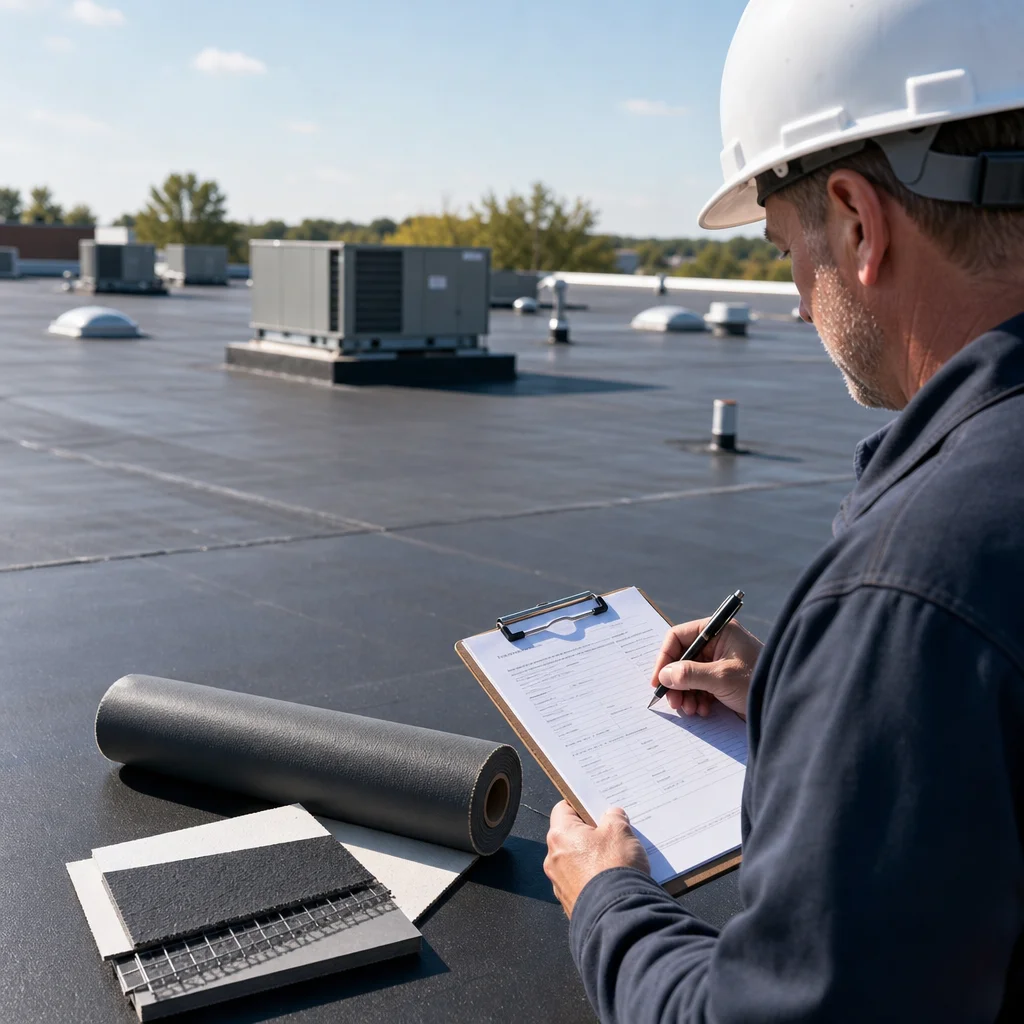
Commercial Flat Roof Warranties: Complete Guide for Property Owners
Why Commercial Flat Roof Warranties Matter for Your Investment
A commercial flat roof represents one of the largest capital investments on your property. Unlike pitched residential roofs, flat roofing systems require specialized materials and installation techniques, making warranty coverage critical to protecting that investment.
When you purchase a new flat roof system, you’re not just buying materials and labor. You’re securing peace of mind against manufacturing defects, installation errors, and premature failure. Without proper warranty protection, a roof that fails early can cost tens of thousands of dollars in emergency repairs, business interruption, or property damage.
Most commercial flat roofs cost between $5 and $15 per square foot installed, depending on the membrane type and complexity of your building. Over a 25-year lifespan, that’s a substantial commitment. The right warranty ensures the roofing contractor and manufacturer stand behind their work, covering you against defects that weren’t your fault.
Property owners who understand their warranty coverage sleep better at night. They know exactly what happens if problems arise and who bears the financial responsibility. Beyond the obvious protection, warranties also influence your property’s resale value and your ability to secure financing for future improvements.
Next step: Review your current roof documentation to identify what warranty you have in place and when it expires. If you can’t locate the warranty paperwork, contact your original roofing contractor immediately.
Common Warranty Coverage Gaps Property Owners Face
Most property owners assume their roof warranty covers everything. In reality, significant gaps exist that leave you vulnerable to unexpected costs.
Many standard warranties explicitly exclude damage from extreme weather events like hail, ice damming, or high winds. Even though these events damage roofs regularly in our region, they’re often classified as “acts of God” and fall outside manufacturer coverage. You’ll need a separate comprehensive insurance policy to handle these scenarios.
Foot traffic and maintenance-related damage is another common exclusion. If an HVAC technician or your maintenance staff accesses the roof and accidentally punctures the membrane, the manufacturer won’t cover repairs. This can be surprising when a small maintenance project results in a costly warranty claim denial.
Improper installation and workmanship issues create murky territory. If the contractor didn’t seal seams correctly or installed fasteners improperly, is that the manufacturer’s responsibility or the contractor’s? Warranty language often leaves this unclear, leading to disputes where neither party takes responsibility.
Thermal movement and structural settlement damage frequently falls into gray areas. Flat roofs expand and contract with temperature changes. If your building’s structure settles or moves, it can stress the roofing membrane. Most warranties won’t cover damage caused by structural issues, even though the roof bears the consequences.
Chemical contamination, including damage from HVAC cleaning solvents or rooftop equipment maintenance, is typically excluded. If cleaning chemicals splash onto the roof, you’re responsible for repairs. This becomes particularly problematic for commercial kitchens or facilities using rooftop equipment.
What to do next: Request your warranty document and read the exclusions section carefully. Circle anything unclear and ask your contractor to explain what isn’t covered before you experience a problem.
Understanding Manufacturer vs. Contractor Warranties
Commercial flat roof warranties come in two distinct forms, and understanding the difference is essential.
Manufacturer warranties cover defects in the roofing material itself. The membrane manufacturer (whether that’s Firestone, Carlisle, or another producer) guarantees their product performs as specified. If the EPDM rubber or TPO plastic has a factory defect that causes failure, the manufacturer will replace that material. However, manufacturer warranties typically don’t cover labor costs for removal and reinstallation.
Contractor warranties cover workmanship and installation quality. This is where we at Expert Exteriors stand behind our work. Our contractor warranty ensures that we properly installed the membrane, sealed all penetrations correctly, and followed industry best practices. If improper installation causes problems, we cover the repairs. This is your recourse when the issue stems from how the roof was built, not from material defects.
The strength of your overall protection depends on both warranties working together. A manufacturer might provide a 20-year material warranty, but if the contractor’s workmanship warranty is only five years, you have limited recourse after that point if installation problems emerge.
Duration varies significantly. High-end contractors offer 10, 15, or even 20-year workmanship warranties. Cheaper contractors might only offer 2-3 years. This difference directly reflects the contractor’s confidence in their installation quality and their willingness to stand behind the work long-term.
Some contractors bundle warranties through extended coverage programs. Instead of separating material and labor coverage, they offer comprehensive warranties that cover both for a specified period. These hybrid warranties simplify understanding what you’re protected against, though they may cost more upfront.
Actionable step: When getting roofing quotes, request written warranty details from each contractor. Compare the coverage periods side-by-side and ask specifically what would happen if problems appear three years after installation.
What Expert Exteriors Includes in Our Warranty Protection
We take warranty coverage seriously because we’re confident in our work. Our standard offering includes both manufacturer protection and robust contractor coverage that sets us apart.
We provide a 10-year workmanship warranty on all commercial flat roof installations. This means if our installation creates problems during that decade, we cover the repairs at no cost to you. This extended coverage period reflects our installation expertise and our commitment to standing behind our teams’ work.
Our warranty protection includes:
- Full coverage for sealing and penetration work at vents, HVAC openings, skylights, and roof drains
- Labor coverage for repairs resulting from installation defects
- Membrane replacement for material-based issues within manufacturer specifications
- Flashing and trim coverage throughout the entire system
- Access and mobilization costs if roof access is required for warranty repairs
We also coordinate with the manufacturer warranty to eliminate gaps. When both coverages apply to a problem, we work with the manufacturer to ensure you’re fully covered without being caught in disputes between parties.
For enhanced protection, we offer extended warranty plans that stretch coverage to 15 or 20 years. These plans provide additional peace of mind and become particularly valuable when you’re planning a long-term hold on the property. The investment in extended coverage typically costs $0.25 to $0.50 per square foot, which is minimal compared to potential repair costs.
We include annual inspections as part of our warranty service for certain coverage tiers. These proactive inspections catch minor issues before they become major problems, preserving your warranty and preventing costly damage.
Documentation is crucial to warranty coverage. We provide you with complete warranty documents including material specifications, installation photos, and service records. Maintaining these documents and keeping us informed of any roof changes ensures your warranty remains valid.
What to do: Ask any roofing contractor whether they offer workmanship warranties and for how long. Request their warranty documentation before signing any agreement.
Comparing EPDM and TPO Warranty Benefits
The roofing membrane you choose significantly impacts warranty terms and coverage duration. EPDM (ethylene propylene diene monomer) and TPO (thermoplastic polyolefin) have different warranty characteristics that influence your long-term protection.
EPDM is a rubber-based membrane that’s been used on commercial roofs for over 50 years. Most manufacturers offer 20-30 year warranties on EPDM material, making it the longest-covered option. EPDM’s track record of durability supports these extended warranty periods. Labor costs for EPDM installation are typically lower because the installation process is straightforward and less equipment-intensive.
However, EPDM has vulnerability points that warranties often exclude. UV exposure can gradually degrade EPDM at seams and edges. While the main membrane is covered, exposed seams and joints sometimes fall under different coverage terms. EPDM roofs also require more frequent maintenance, and some maintenance-related damage isn’t covered under standard warranties.
TPO membranes are newer (widely adopted in the 1990s) and offer modern performance characteristics. Manufacturers typically warrant TPO for 15-25 years, which is competitive with EPDM. However, TPO warranties sometimes have shorter coverage periods because the long-term durability data is less extensive.
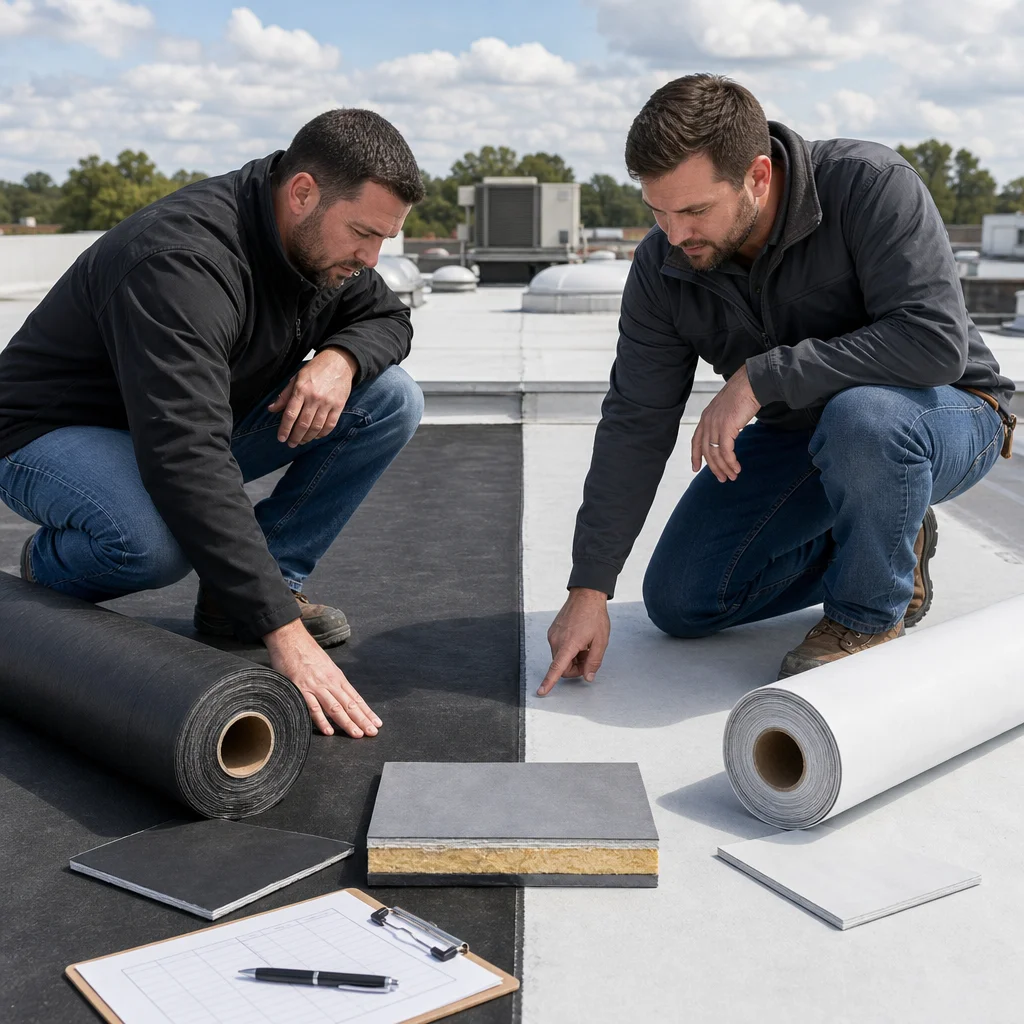
Where TPO shines is in covered advantages. Many TPO warranties include better UV protection, making edge and seam coverage more robust. TPO’s white color provides superior solar reflectivity, which can extend the membrane’s lifespan by reducing thermal stress. Some manufacturers extend TPO warranties specifically because of this proven performance benefit.
We offer both EPDM and TPO roofing options because each has merit depending on your building’s specific situation. EPDM works excellently for straightforward roofs with minimal penetrations. TPO performs better on buildings with heavy sun exposure or where reflectivity provides energy efficiency benefits.
Our contractor warranty applies equally to both materials. We back our installation quality regardless of whether you choose EPDM or TPO, which means the membrane choice is about performance fit rather than warranty strength.
Action item: Request warranty documentation for both material options you’re considering and compare coverage side-by-side. Ask your contractor which material they recommend for your specific roof configuration and why.
How Weather and Maintenance Impact Your Coverage
Your warranty doesn’t protect against every damage scenario. Understanding how weather and maintenance affect coverage prevents costly disappointments when problems occur.
Extreme weather exclusions are standard across almost all commercial roofing warranties. Hail damage, wind uplift, ice damming, and severe storm damage typically fall outside manufacturer and contractor protection. This isn’t because manufacturers are trying to avoid responsibility; it’s because weather damage is unpredictable and unrelated to the roof’s quality.
This is where commercial property insurance becomes critical. Your comprehensive building insurance should cover weather-related roof damage. Many property owners underestimate this protection gap and end up paying thousands out-of-pocket for hail or wind damage. Review your property insurance policy to confirm weather-related roof coverage is included.
Regular maintenance directly impacts warranty validity. Most warranties explicitly require annual or bi-annual roof inspections and maintenance. If you neglect the roof and later experience failure, the manufacturer can argue you violated warranty terms by not maintaining the system. This isn’t a technicality—it’s a real reason warranties are denied.
Maintenance requirements vary by membrane type. EPDM roofs benefit from cleaning every few years to prevent algae growth and extend membrane life. TPO roofs require less frequent cleaning but benefit from debris removal and drain clearing. Whatever your membrane type, documented maintenance protects your warranty and extends your roof’s lifespan.
Rooftop equipment modifications and future work impact coverage. If you install new HVAC units, cell towers, or other structures on the roof after installation, you must hire professionals to ensure any roof penetrations are properly sealed. DIY equipment installation or amateur penetration work voids warranty protection for those areas.
Foot traffic during maintenance or access work creates liability questions. If your maintenance staff damages the membrane while servicing rooftop equipment, your warranty likely won’t cover repairs. Documenting who has roof access and requiring contractors to carry appropriate insurance protects you from these disputes.
Next step: Schedule an inspection with a professional roofing contractor to assess your current roof’s maintenance status. Request their recommendations for ongoing care to preserve warranty coverage.
Steps to Maximize Your Warranty Claims Process
If problems arise with your roof, following proper procedures ensures smooth warranty claims and coverage approval.
Document everything from day one. Take photos of your new roof immediately after installation. Record the date you received warranty documentation. If issues develop later, having baseline documentation helps prove they result from installation defects rather than deterioration from lack of maintenance. Photograph any damage with date stamps when you discover problems.
Report issues immediately to your original contractor. Most warranties require prompt notification of potential defects. Delaying reporting and continuing to use a damaged roof can give manufacturers an argument that you failed to mitigate further damage, reducing their liability.
When reporting issues, be specific. Rather than saying “the roof is leaking,” explain exactly where water enters, when you first noticed it, and what weather preceded the problem. Include information about any recent roof access or maintenance work. This detail helps your contractor and the manufacturer understand the issue quickly.
Request an inspection from your contractor before contacting the manufacturer. Your contractor has a vested interest in getting you through the warranty process successfully. We know what issues trigger manufacturer coverage and which ones might be disputed. Our expertise prevents mischaracterization of problems that could result in warranty denials.

Gather maintenance records to demonstrate you’ve cared for the roof properly. If your warranty required annual inspections and maintenance, having documentation proves you fulfilled those obligations. This directly impacts the manufacturer’s willingness to approve claims.
Understand coverage limits and exclusions before claiming. Review your warranty documents to confirm the specific issue you’re experiencing is covered. Don’t assume something is covered; verify it in writing. This prevents surprises when claims are denied for issues specifically excluded in fine print.
Request written authorization before any repair work proceeds. Never assume a claim is approved based on verbal conversations. Get written confirmation of exactly what’s covered and who’s responsible for labor versus materials. This protects you if disputes arise about who should pay.
Keep the manufacturer involved in the process. While your contractor handles most communication, the manufacturer should acknowledge your claim and confirm coverage. Don’t rely on contractor assurances alone; direct communication with the manufacturer ensures clarity.
Practical action: Create a warranty file with all original documentation, inspection reports, and maintenance records organized chronologically. Store digital copies in cloud storage and keep physical copies in a safe place.
Protecting Your Roof Beyond the Warranty Period
Your warranty eventually expires, but your roof’s protection shouldn’t end with it. Transitioning from warranty coverage to long-term maintenance requires strategy and planning.
Most commercial flat roofs have 20-30 year lifespans, but warranties typically cover 10-20 years. This gap means years five through fifteen are covered, but years sixteen through thirty depend entirely on maintenance and eventual replacement decisions. Smart property owners plan for this transition well before warranties expire.
After-warranty maintenance becomes even more critical. Annual inspections should continue indefinitely, not stop when warranty expires. These inspections catch deterioration early before small problems become roof failures. A preventive inspection costs $300-500 annually but can prevent $20,000+ emergency repairs.
Consider extending protection through maintenance plans. Rather than relying solely on DIY inspections or sporadic contractor visits, formalized maintenance agreements ensure consistent attention. We offer commercial roof maintenance plans that provide regular inspections, cleaning, and minor repairs at predictable costs.
Membrane condition assessment becomes important around years 12-15 of a 20-25 year roof’s life. A professional assessment determines whether your roof will reach its expected lifespan or needs early replacement. Our roof assessment guide helps property owners understand when to repair versus replace.
Budgeting for eventual replacement prevents financial surprises. If your roof is 15 years old with five to ten years remaining life, building replacement costs into your capital budget ensures you’re not caught without funds for emergency replacement. Flat roofs typically cost $5-15 per square foot to replace; planning ahead eliminates scrambling for financing.
Document everything post-warranty. Continue photographing roof conditions, maintaining inspection records, and logging maintenance work. If disputes arise about the roof’s condition or maintenance history years later, documentation protects you.
Roof coating systems offer an alternative to full replacement. If your flat roof is deteriorating but still has potential lifespan, protective coatings can extend its life another five to ten years at a fraction of replacement costs. We can discuss whether coating makes sense for your specific situation.
Final action: If your roof is within five years of warranty expiration, schedule a professional assessment to plan your transition strategy. Starting this conversation early prevents emergency decisions and gives you time to budget properly.
—
Understanding commercial flat roof warranties puts you in control of your property’s protection. The difference between comprehensive coverage and significant gaps often comes down to the details you negotiate upfront and the maintenance you commit to throughout the roof’s life.
At Expert Exteriors, we’ve guided countless property owners through warranty selection, claims processes, and long-term roof management. We’re here to answer your specific questions and help you protect your investment. Contact us for a warranty review or to discuss your roofing needs.
For further reading: Commercial flat roof warranties.