

Best Residential Roofing Materials for Wisconsin’s Cold Climate
Why Wisconsin Winters Demand Superior Roofing Materials
Wisconsin winters are unforgiving. Temperatures plummet below zero, ice accumulates on roofs for months, and freeze-thaw cycles test every material to its limits. Your roof isn’t just an aesthetic choice in this climate, it’s your home’s primary defense against conditions that can cause serious structural damage in a single season.
We’ve spent years working with homeowners across the region, and we’ve learned that choosing the right residential roofing materials for Wisconsin winters isn’t about picking the cheapest option or following national trends. It’s about understanding how different materials perform when exposed to extreme cold, heavy snow loads, and repeated ice dam formation. The material you select today will determine whether your roof lasts 15 years or 25 years, and whether you’re dealing with leaks during your first tough winter.
Wisconsin’s climate creates specific challenges that roofing materials in milder regions never face. Temperatures swing dramatically from day to night and season to season, causing materials to expand and contract repeatedly. Snow sits on roofs for extended periods, adding significant weight that tests structural integrity. Most problematic for homeowners: ice dams form when heat escapes from attics, melting snow that then refreezes at the eaves, trapping water underneath shingles.
These conditions accelerate material degradation. Asphalt loses flexibility in extreme cold, making it prone to cracking. Inferior installation techniques that might work in moderate climates fail under Wisconsin conditions. Metal expands and contracts with temperature swings, which is why fastening method matters enormously here.
We recommend choosing materials specifically rated for cold climate performance and working with installers experienced in Wisconsin weather patterns. Your roofing investment needs to account for freeze-thaw cycles, heavy snow loads of 30+ pounds per square foot, and the realistic possibility of temperatures dropping 40 degrees in a single day.
The Real Cost of Choosing the Wrong Roof for Cold Climates
Cutting corners on residential roofing materials in Wisconsin creates costs that far exceed your initial savings. A cheap asphalt shingle might save you $2,000 upfront but fail within 10 years, requiring a complete replacement at standard market rates (typically $8,000-$15,000 for residential roofs in our service areas).
Poor installation compounds the problem. We’ve inspected countless roofs where shortcuts taken during installation led to premature failure. Inadequate fastening means shingles lift in high winds. Improper ventilation causes ice dams to form more easily. Gutter systems installed without attention to Wisconsin’s heavy snow loads pull away from fascia, creating water entry points.
The hidden costs extend beyond replacement. Water damage from a failing roof migrates into your attic, insulation, and wall cavities. Structural rot develops silently. Mold growth affects indoor air quality. By the time these problems become visible, repair bills can exceed $20,000 or more. Insurance often won’t cover damage from a roof that was already compromised.
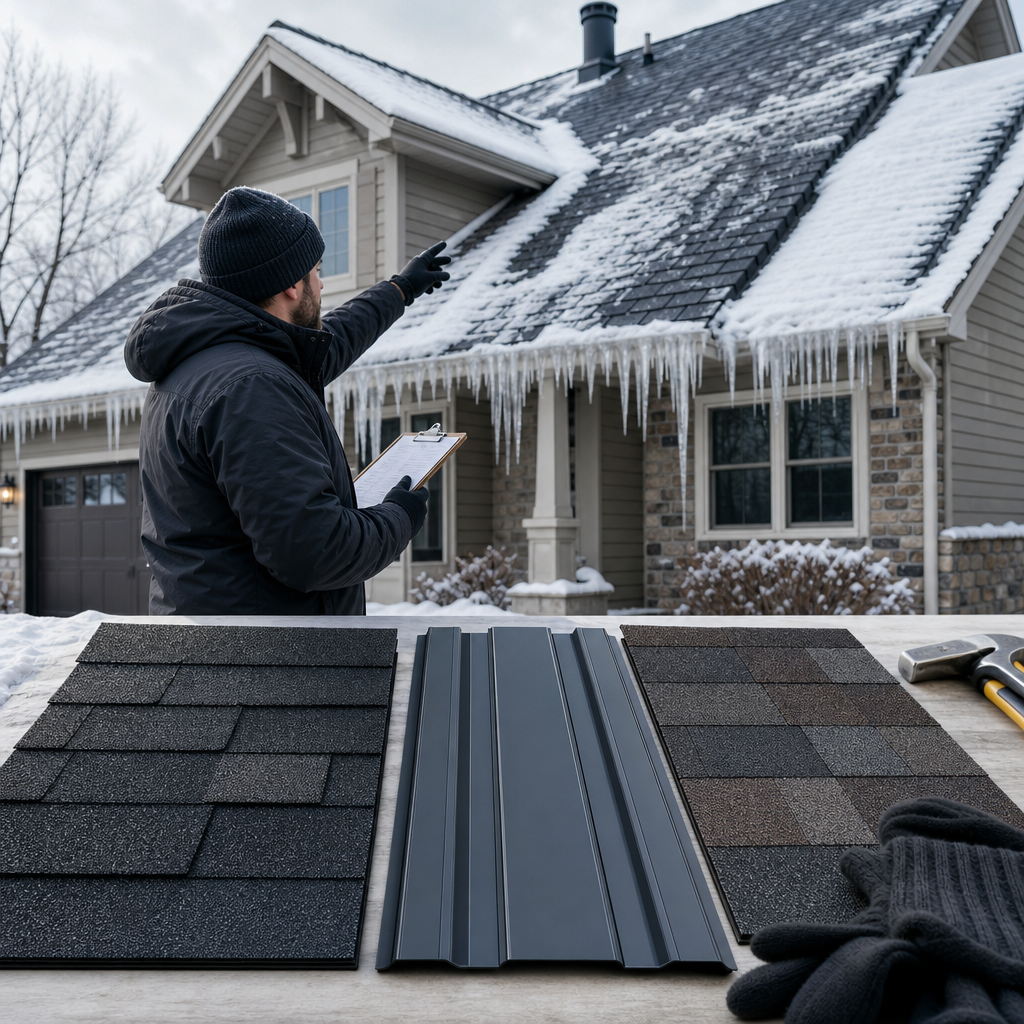
Your actionable takeaway: budget for quality materials and professional installation as a single investment, not as two separate line items where one might be compromised.
Asphalt Shingles: Understanding Performance in Extreme Cold
Asphalt shingles remain the most popular roofing material for residential properties nationwide, and they can work in Wisconsin if you select the right type and ensure proper installation. Standard three-tab shingles, however, are not suitable for our climate. They become brittle in extreme cold and lose waterproofing effectiveness faster than premium options.
Architectural asphalt shingles (also called dimensional shingles) perform much better because they’re thicker and contain more asphalt. Look for shingles rated for temperatures down to -40°F and specifically marked for cold climate performance. These shingles maintain flexibility longer in freezing conditions, reducing the risk of cracks that expose underlying layers to moisture.
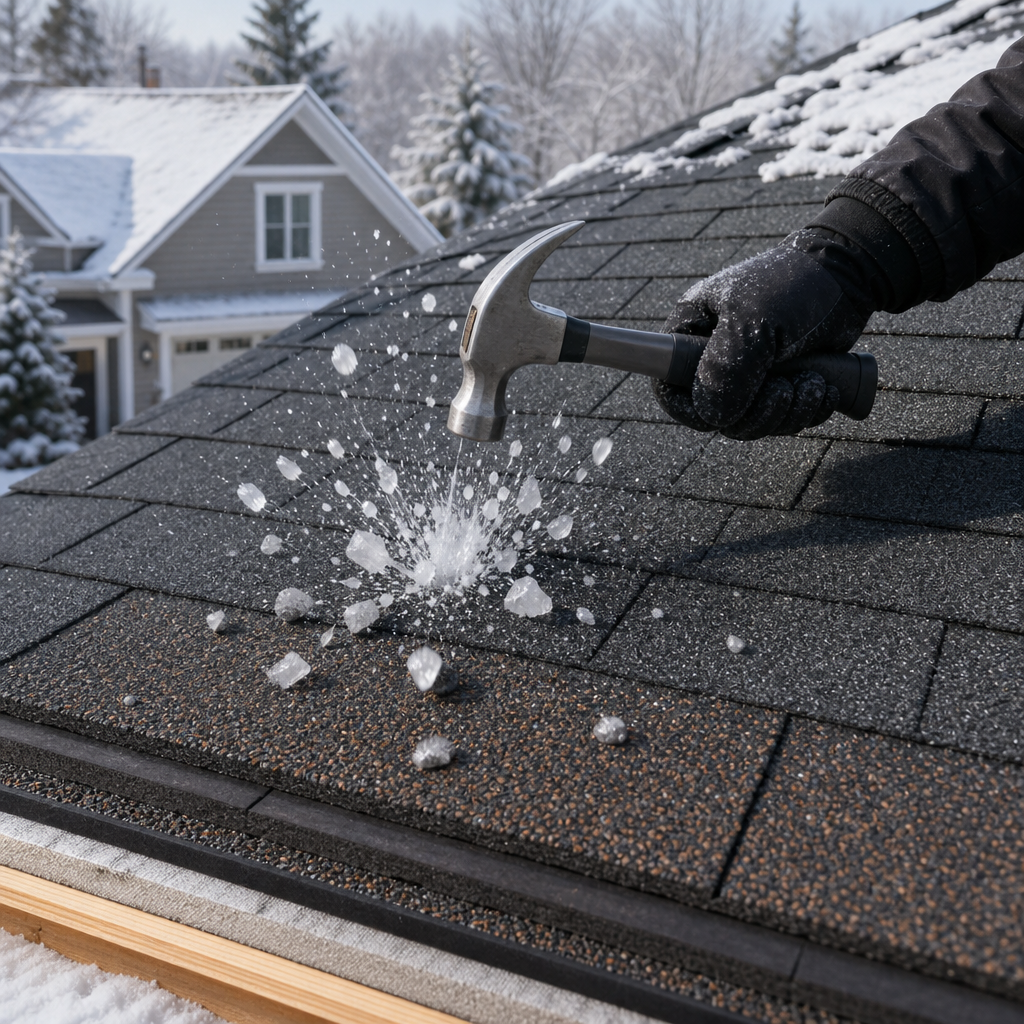
Impact resistance matters significantly in Wisconsin. Heavy ice accumulation and falling ice chunks can damage standard shingles. We recommend impact-resistant asphalt shingles rated Class 4, which can withstand the hail and ice impact that’s common during Wisconsin’s spring and winter transitions.
The critical limitation of asphalt in Wisconsin: even premium versions typically last 20-25 years maximum, while metal roofing can last 40+ years. If longevity and reduced future replacement costs are priorities, asphalt might not be your best long-term choice despite lower initial cost.
Metal Roofing: Our Recommended Solution for Wisconsin Homes
Metal roofing is our go-to recommendation for Wisconsin homes seeking durability and superior cold climate performance. Properly installed metal roofs routinely outlast 40 years and often reach 50+ years, making them the most economical choice over your property’s lifetime despite higher upfront costs.
Metal performs exceptionally well in freeze-thaw cycles because it expands and contracts with temperature changes without cracking or losing structural integrity. The smooth surface naturally sheds snow and ice more effectively than asphalt, reducing ice dam formation when combined with proper attic ventilation. In heavy snow events, metal roofs shed accumulated snow more readily, reducing weight stress on your structure.
Standing seam metal roofing offers the best performance for Wisconsin conditions. The vertical seams and interlocking design prevent water from entering through fastening points, which is where many roofing failures occur. Aluminum or steel in Kynar 500 coatings resists salt and corrosive environmental factors while maintaining color and finish for decades.
Installation is critical with metal roofing. Thermal movement must be accommodated through proper fastening and panel design. We ensure that fasteners are placed in the right locations to allow for expansion without creating stress points. Improper metal roof installation can lead to fastener corrosion and water entry, which is why choosing an experienced installer across Brookfield and surrounding communities matters significantly.
Impact Resistant Shingles: Enhanced Protection Against Ice and Snow
Impact-resistant shingles bridge the gap between standard asphalt and metal roofing. They offer superior durability compared to conventional asphalt while maintaining the familiar appearance and lower cost of traditional shingles.
These shingles use thicker materials, reinforced construction, and rubber polymers that remain flexible in cold conditions. Class 4 impact ratings mean they’ve been tested to withstand impacts equivalent to 2-inch steel balls dropped from 15 feet. In Wisconsin, this translates to protection against ice chunks, wind-driven debris, and hail that would damage standard shingles.
Impact-resistant shingles also qualify for insurance discounts in many cases. Insurers recognize that superior impact resistance reduces claim frequency, so your premium savings might offset a portion of the material upgrade cost. We’ve had homeowners recover 20-30% of their additional material investment through lower insurance premiums over five years.
The trade-off is lifespan. Impact-resistant asphalt shingles typically last 25-30 years, better than standard options but not matching metal roofing longevity. They work well for homeowners who want meaningful improvement in Wisconsin weather resistance without committing to metal’s full investment.
Proper Installation as the Critical Factor in Material Success
The best roofing material fails if installation doesn’t account for Wisconsin’s specific demands. We see this regularly: homeowners invested in quality materials, but improper installation undermined years of durability.
Fastener placement is foundational. In high-wind and heavy-snow regions, fastener patterns must follow manufacturer specifications exactly, and in Wisconsin, this often means closer spacing than code minimums. Fasteners must penetrate solid decking by the correct depth. Over-driving fasteners tears shingle material; under-driving leaves room for water infiltration under wind and ice dam pressure.
Ventilation is equally critical. Inadequate attic ventilation creates temperature differentials that drive ice dam formation. When warm air escapes into the attic, it melts snow on the roof’s upper sections. That water runs down to the colder eaves, where it refreezes into ice dams that trap additional water under shingles. Proper roof ventilation requires intake vents near the soffit and exhaust vents near the ridge, with clear airflow paths unobstructed by insulation.

Underlayment selection and application often gets overlooked. Ice and water shield should extend up the slope past the anticipated ice dam line, typically 24-36 inches from the eave. This secondary water barrier catches water that backs up under ice dams and channels it safely to gutters.
Our team follows manufacturer specifications precisely and adds additional protective measures based on local climate experience. This combination of strict adherence to standards plus regional expertise is what separates professional installation from simply following a checklist.
How Our Expert Exterior Team Ensures Your Roof Survives Wisconsin Winters
At Expert Exteriors, we approach residential roof replacement as a long-term investment in your home’s protection rather than a short-term cost management project. Every roof we install includes our detailed site assessment, material selection consultation, and installation protocols designed specifically for Wisconsin conditions.
Our process begins with a thorough inspection of your existing structure, ventilation system, and underlying damage. We identify water entry points, assess attic conditions, and evaluate whether your current ventilation will support the new roof. This foundation work often reveals needed repairs that, if skipped, would undermine your new roof’s performance.
Material selection happens collaboratively. We review options that match your climate needs, aesthetic preferences, and budget constraints. We explain performance differences clearly so you understand why we recommend specific products, whether that’s impact-resistant architectural shingles, metal roofing, or premium asphalt options.
Installation follows Wisconsin best practices we’ve developed across thousands of projects in Brookfield and surrounding areas. Our crews use fastener patterns optimized for our climate, install ice and water shield with coverage that exceeds code, ensure proper ventilation is established or improved, and test all installation details before considering the project complete.
Getting Started With Your Cold Climate Roof Replacement
If your current roof is showing age, failing, or simply approaching the end of its expected lifespan, Wisconsin’s next winter will test it severely. Starting the replacement process now means you’ll have a properly installed, climate-appropriate roof in place before the next freeze-thaw cycle.
Contact us for a free evaluation. We’ll inspect your roof’s current condition, discuss available materials with their Wisconsin-specific advantages, and provide a detailed estimate that explains what’s included in our exterior services. We serve residential and commercial properties across Brookfield, Sussex, Menomonee Falls, and surrounding communities, and we’re ready to help you choose the right roof for decades of Wisconsin weather protection.
For further reading: Sussex roof replacement.