

Top 6 Best Roofing Materials for Wisconsin’s Harsh Winter Climates
1. Architectural Asphalt Shingles – Proven Winter Performance
Wisconsin winters are relentless. Temperatures plummet below freezing, ice dams form along gutters, and heavy snow loads test roofing systems to their limits. When spring arrives and your roof shows signs of damage, it’s often too late to switch materials. Selecting the right roofing material before winter sets in protects your home or commercial property for decades to come.
At Expert Exteriors, we’ve worked on countless roofs across Brookfield, Sussex, and the surrounding communities. We’ve seen which materials truly perform when temperatures drop and which ones fail prematurely. This guide covers the six best roofing materials specifically suited to Wisconsin’s demanding climate, so you can make an informed decision backed by real performance data.
Architectural asphalt shingles remain the most popular residential roofing choice in Wisconsin, and for good reason. Unlike standard three-tab shingles, architectural shingles feature a multi-layered design that provides superior dimensional appearance and enhanced durability in freeze-thaw cycles.
What makes them excel in winter conditions is their asphalt composition and granule embedding. Quality architectural shingles are rated for cold weather performance and resist cracking when temperatures fluctuate dramatically. They also provide excellent traction for snow and ice, reducing the risk of sudden slippage that can damage gutters and siding below.
Modern architectural shingles come with impact-resistant ratings and 30-to-50-year warranties. We typically recommend shingles with a UL 2218 Class 4 impact rating, which means they’ve proven effective against hail and harsh weather stress. Brands like GAF Timberline and Owens Corning Duration are engineered specifically for colder climates.
The main limitation is that asphalt shingles require proper installation to perform. Improper ventilation or inadequate attic insulation can cause ice dams, which pool water beneath shingles and ultimately lead to leaks. When we install roofs in Brookfield and nearby areas, ventilation and insulation assessment is always part of our process.
What to do next: If you’re replacing an older asphalt roof, ask your contractor about architectural shingles with cold-climate certification and ensure proper attic ventilation is in place.
2. Metal Roofing – Superior Snow and Ice Shedding
Metal roofing is gaining traction in Wisconsin, and it’s easy to see why. Metal panels shed snow and ice far more effectively than asphalt shingles because of their smooth, slippery surface. Instead of snow accumulating and forming dams, it slides off safely once the sun warms the roof slightly.
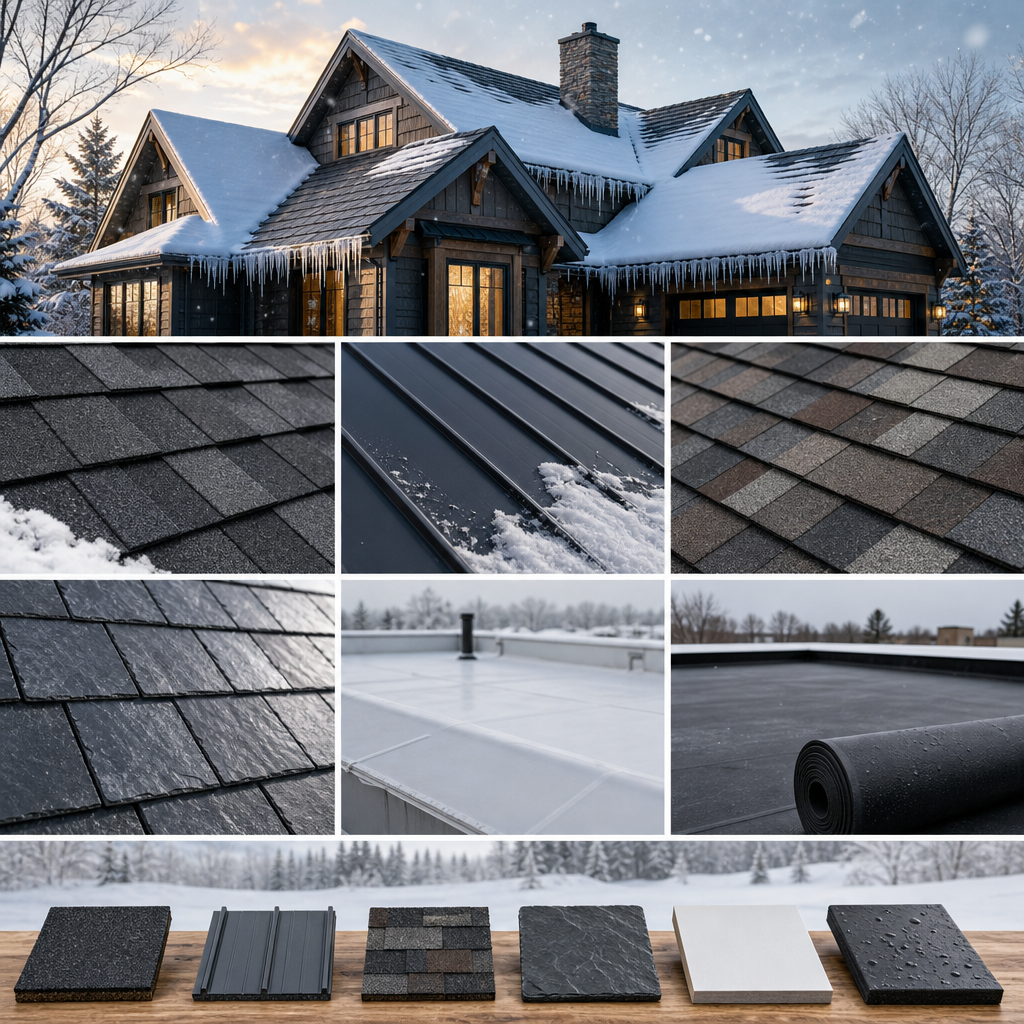
There are two primary types: standing seam (interlocking vertical panels) and metal shingles (which mimic traditional roofing but offer metal’s advantages). Standing seam is the superior choice for Wisconsin winters because the seams are elevated and prevent water from pooling during freeze-thaw cycles. The material itself (usually steel or aluminum coated with protective finishes) resists rust and corrosion, even when exposed to road salt in nearby urban areas.
Metal roofs also excel at reflecting solar radiation in summer while retaining heat efficiency in winter. They’re lightweight compared to slate or tile, making them suitable for older structures that might not support heavier materials. A typical metal roof lasts 40 to 70 years and requires minimal maintenance beyond occasional gutter cleaning.
The trade-off is cost. Metal roofing typically runs 30 percent higher upfront than architectural asphalt shingles. However, when you factor in durability, energy savings, and the extended lifespan, the cost per year of protection is often lower than asphalt.
What to do next: Request samples of standing seam metal in different finishes and get a full lifecycle cost comparison, not just the initial installation price.
3. Composite Shingles – Enhanced Durability and Longevity
Composite shingles are engineered blends of asphalt, fiberglass, and synthetic materials designed to outperform traditional asphalt while maintaining a similar look and installation process. They’re particularly effective in Wisconsin climates because they resist the brittleness that pure asphalt shingles develop when exposed to repeated freeze-thaw stress.
The synthetic components in quality composite shingles reduce UV degradation and provide better flexibility at low temperatures. When winter winds gust and temperature swings are extreme, composite shingles resist cracking and curling far better than standard asphalt. They also tend to hold their color longer and resist moss or algae growth, which thrives in Wisconsin’s humid springs.
Composite shingles typically carry 40-to-50-year warranties and cost slightly more than architectural asphalt shingles but significantly less than metal or slate. They install using the same techniques as traditional asphalt, so labor costs remain reasonable. Premium brands like CertainTeed Landmark and Timberline HD include cold-weather testing in their product certifications.
One consideration: composite shingles are still asphalt-based, so they require proper attic ventilation to avoid ice dam issues. Installation quality matters just as much as material choice.
What to do next: When comparing composites to basic architectural shingles, focus on the warranty coverage for wind and impact damage, which are common winter issues in Wisconsin.
4. Slate Roofing – Premium Protection Against Extreme Weather
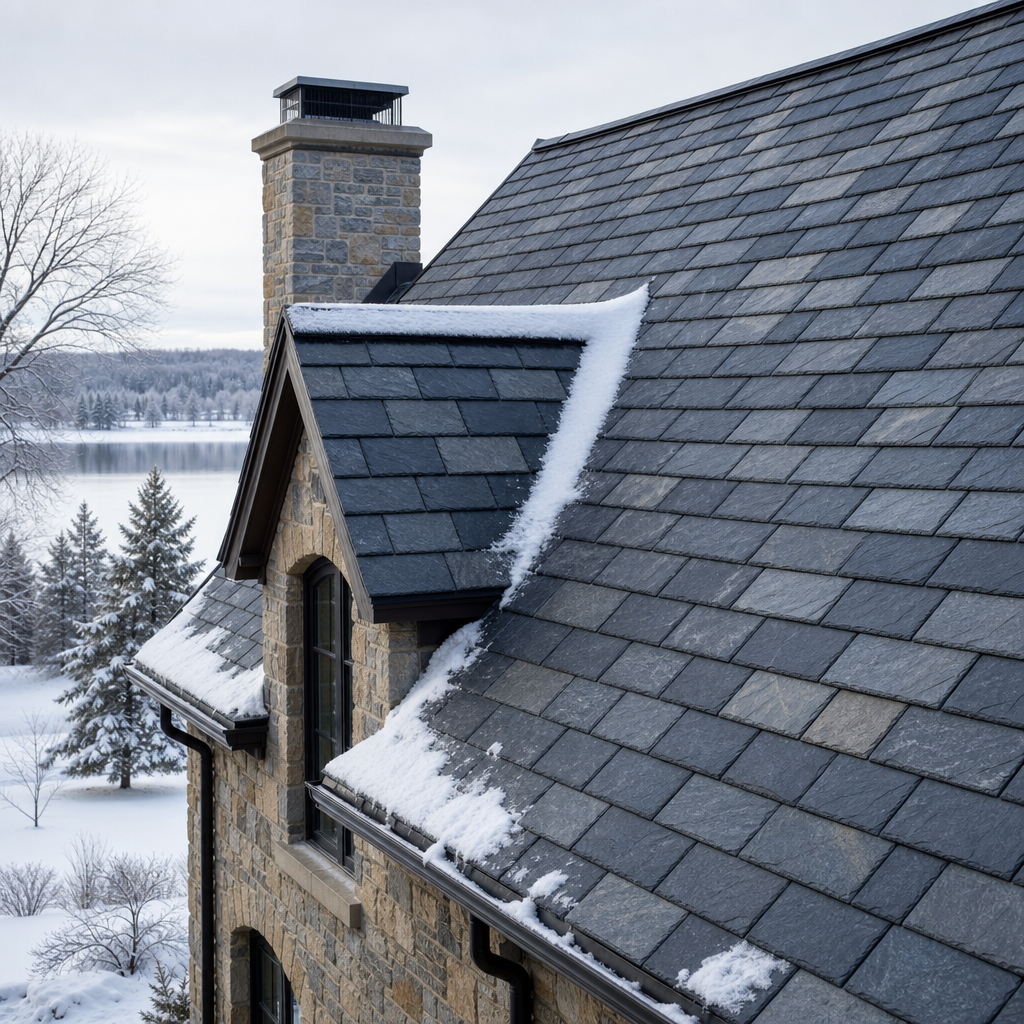
Slate roofing represents the pinnacle of durability and weather resistance. Sourced from natural stone quarried in Vermont, Pennsylvania, and other regions, slate is virtually immune to Wisconsin’s harshest winters. It doesn’t crack from freeze-thaw cycles, doesn’t absorb moisture, and can last 75 to 150 years with minimal maintenance.
The aesthetic appeal is undeniable. Slate’s natural color variations and authentic texture enhance property value and curb appeal in ways that other materials simply cannot match. Historic homes and high-end properties throughout Wisconsin rely on slate because it’s one of the few materials that actually improves with age.
However, slate carries substantial drawbacks for most residential applications. Installation costs range from $15,000 to $30,000 or more for a typical home, and the roof structure must support the weight (slate is significantly heavier than other options). Repair and replacement require specialist craftspeople, which drives maintenance costs up. Finding roofers experienced in slate installation can also be challenging in some Wisconsin communities.
Slate is best suited for properties where longevity and aesthetics justify the premium cost and where the home’s structure can handle the weight load. It’s an investment in multi-generational durability rather than a practical choice for typical residential replacements.
What to do next: Have a structural engineer assess your home’s load-bearing capacity before pursuing slate as an option. If the structure supports it and your timeline extends beyond 75+ years, slate may be worth the investment.
5. TPO Commercial Roofing – Flexibility in Freezing Temperatures
Thermoplastic polyolefin (TPO) is the dominant flat roofing material for commercial properties in Wisconsin, and our team has installed hundreds of TPO systems across the region. TPO excels in cold climates because it remains flexible even when temperatures drop well below zero, preventing the brittleness that affects some other commercial roofing materials.
TPO membrane is typically installed in large rolls, creating a seamless or minimal-seam roof surface. The single-ply construction sheds water efficiently, and the light-colored surface (bright white is standard) reflects sunlight, keeping cooling costs lower in summer. For commercial buildings with flat roofs, TPO offers a 15-to-30-year lifespan at a cost point that makes sense for businesses balancing capital expenditure.
What sets TPO apart for Wisconsin winters is its cold-weather installation capability. While some roofing materials require specific temperature ranges, TPO can be installed successfully even in subfreezing conditions, which is crucial when you need to protect a commercial building before winter arrives. When we handle commercial roof replacements, TPO is often our recommended starting point for durability and cost-effectiveness combined.
The seams are the critical detail. Properly heat-welded TPO seams create a permanent bond that doesn’t fail even after years of expansion and contraction. Poor installation, however, can result in seam separation. Working with experienced commercial roofing contractors is essential.

What to do next: If you manage a commercial property with an aging flat roof, request a TPO system proposal that includes detailed seam specifications and warranty coverage.
6. EPDM Rubber Roofing – Reliable Residential and Commercial Choice
EPDM (ethylene propylene diene monomer) rubber roofing has been a trusted choice for flat roofs on residential and commercial properties across Wisconsin for decades. It’s a single-ply synthetic rubber membrane that stretches and contracts with temperature swings, which is exactly what you need in a climate where winter temperatures can fluctuate by 40 degrees in a single week.
EPDM’s flexibility at low temperatures is its defining advantage. The rubber doesn’t become brittle, and seams remain watertight through the most extreme freeze-thaw cycles. Installation is straightforward, and repairs are simple and affordable, making it an economical choice for long-term ownership. A quality EPDM roof lasts 20 to 40 years, and the black color absorbs solar heat, which some property owners appreciate for winter warmth retention (though it costs slightly more to cool in summer).
One limitation is that EPDM seams are typically glued or mechanically fastened rather than heat-welded like TPO. While properly installed EPDM seams are reliable, they require more attention to maintenance and are slightly more vulnerable if the adhesive degrades over time. Choosing between EPDM and TPO depends on your specific roof structure and maintenance capacity.
EPDM is also UV-sensitive without protective coating, which means exposed EPDM should be inspected regularly and may require re-coating after 10 to 15 years. This ongoing maintenance is an important cost to factor in.
What to do next: If you have an EPDM roof, schedule a professional inspection every two years to catch potential seam issues before they become leaks.
Selecting roofing materials for Wisconsin’s harsh winters comes down to balancing durability, cost, and your property’s specific needs. Architectural asphalt shingles work well for residential properties where cost matters but durability is non-negotiable. Metal roofing eliminates ice dam concerns and lasts longer, justifying the premium investment. Composite shingles bridge the gap, offering enhanced performance over basic asphalt. Slate delivers unmatched longevity and beauty at a premium price. For commercial properties, TPO and EPDM provide proven, cost-effective flat-roof solutions that perform reliably year after year.
We’ve installed all of these materials across Brookfield, Sussex, Menomonee Falls, and surrounding communities. We understand Wisconsin’s climate challenges firsthand and can help you select the material that best fits your budget, timeline, and long-term plans. Whether you’re protecting a residential home or a commercial building, we ensure proper installation so your roof performs as intended through every winter season.
Contact us today for a roof inspection and material recommendation tailored to your property’s unique situation.
For further reading: Commercial roofing overview, EPDM and TPO performance, Brookfield roof installation.