
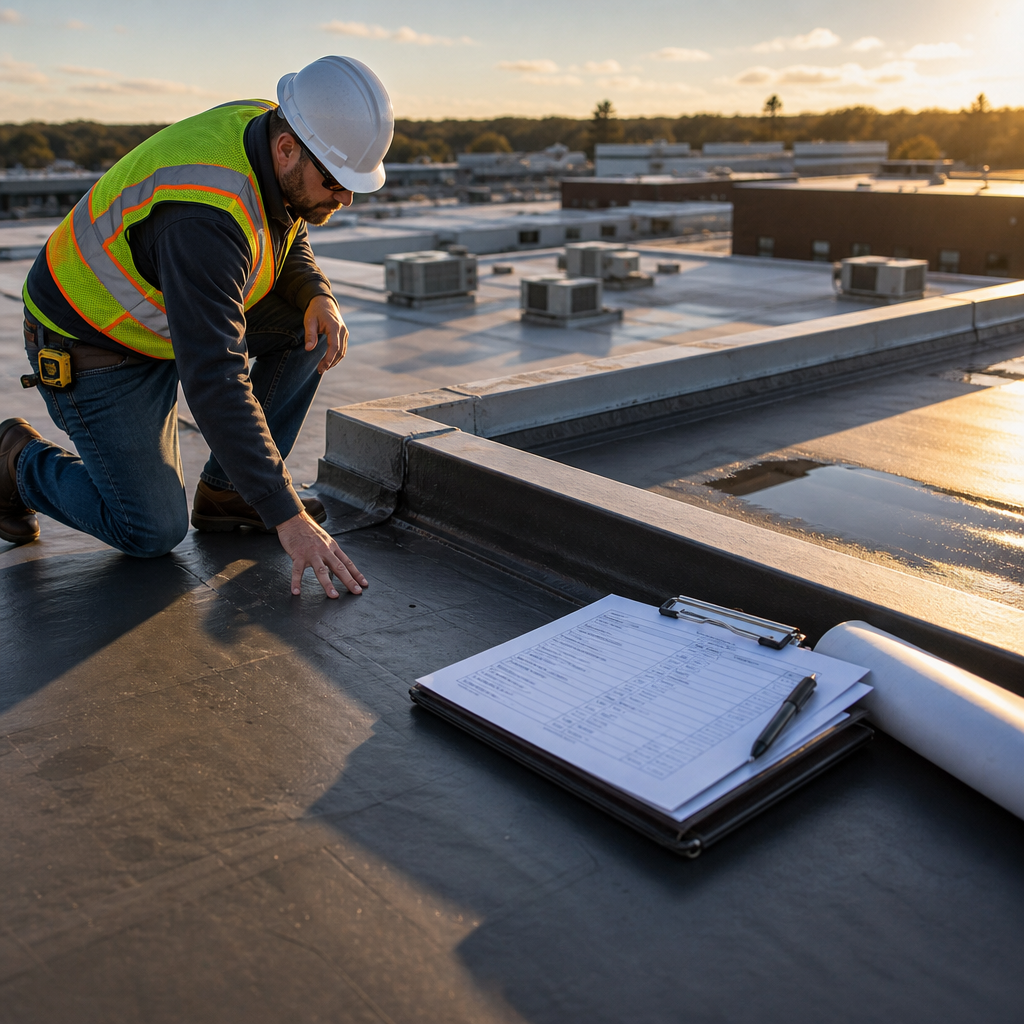
Commercial Flat Roof Warranty Contractors: Protecting Your Business Investment
Why Commercial Flat Roof Warranties Matter for Your Business
A commercial flat roof is one of your property’s largest capital investments. When water penetrates, equipment fails, or structural damage occurs, the financial impact ripples across your entire operation. That’s where a solid warranty becomes your safety net.
We understand that warranties aren’t just paperwork—they’re protection that keeps your business running without unexpected repair costs derailing your budget. A comprehensive warranty covers the roof system itself, the installation work, and sometimes parts and labor for a defined period. Without it, you’re absorbing the full cost of repairs that could have been prevented or covered by the contractor.
The difference between a weak warranty and a strong one can mean thousands of dollars. If your roof develops a leak three years after installation and your warranty is inadequate, you’re paying out of pocket for remediation. A properly structured warranty shifts that risk to the contractor, incentivizing quality work from day one.
Action item: Before selecting any commercial flat roof warranty contractor, request the full warranty documentation upfront and have someone review the coverage limits with you.
Common Warranty Coverage Gaps Property Owners Face
Many commercial property owners discover coverage limitations too late. Here are the gaps we see most often:
Limited timeframes on material defects. Most manufacturer warranties on EPDM and TPO membranes last 10-20 years, but some contracts bury exclusions for UV degradation, weathering, or “normal wear and tear”—terms that are frustratingly vague.
Workmanship warranties that exclude specific failure modes. A contractor might warrant seams and penetrations for five years but exclude leaks caused by “inadequate drainage” or “improper maintenance”—definitions they control.
No coverage for labor on repairs. You get a material replacement covered, but you’re responsible for the installation cost when your roof is repaired during year six of a ten-year warranty.
Maintenance requirements that void coverage. Many warranties require annual inspections, specific cleaning protocols, or certifications that property owners don’t know about until they file a claim.
Transferability restrictions. If you sell the property, the original warranty may not transfer to the new owner, or it transfers with reduced coverage—a significant loss of asset value.
Exclusions for secondary damage. Water intrusion causes mold in the interior or damages HVAC systems, but the roofing warranty only covers the roof membrane itself, leaving thousands in losses uncompensated.
Understanding these gaps before signing protects you from surprises later.
What Expert Exteriors Includes in Our Warranty Protection
Our approach is built on transparency and genuine protection. We provide 15-Year Workmanship Warranties on full roof replacements, covering both labor and materials for installation defects.
Here’s what we include:
- Seam integrity: All seams are warranted for the full duration against separation or failure due to our installation.
- Flashing and penetrations: Roof penetrations, curbs, and flashing are covered for leaks caused by improper installation.
- Labor coverage: If we need to repair something covered under our warranty, we cover the labor cost, not just the material.
- Transferability: Your warranty transfers to the next building owner, protecting the resale value of your property.
- Clear maintenance standards: We provide a maintenance guide, but our warranty doesn’t require expensive proprietary inspections or certifications to remain valid.
We also coordinate with manufacturers to ensure material warranties complement our workmanship coverage, so you’re not left deciphering overlapping policies.
How We Ensure Your Warranty Remains Valid and Enforceable
A warranty is only valuable if it’s actually enforceable when you need it. We protect this through meticulous documentation and professional installation practices.
From day one, we photograph every stage of your roof installation—substrate preparation, membrane installation, seam work, and final inspection. This documentation protects both of us if a dispute ever arises. We maintain detailed records of materials used, including batch numbers and manufacturer certifications, so there’s no question about what was installed.
During installation, we follow manufacturer specifications exactly. Deviation from those specs voids both our warranty and the manufacturer’s warranty, so we don’t cut corners. Our crews are trained and certified in the systems we install, and we conduct quality inspections before, during, and after the project.
We also provide you with complete warranty documentation—manufacturer certificates, our workmanship warranty terms, and maintenance guidelines—in writing before we start. No surprises later.
Your responsibility: Keep our final inspection report and all warranty documents in a safe, accessible location. When you file a claim, these records make the process faster.
Understanding Material vs. Workmanship Warranty Coverage
These two warranty types work together but cover different things, and it’s critical to understand the distinction.
Material warranty (typically from the manufacturer) covers defects in the roofing materials themselves. If the EPDM or TPO membrane has a manufacturing defect that causes premature failure, the manufacturer replaces the defective material. This usually runs 10-20 years depending on the product.
Workmanship warranty (from us) covers the quality of the installation. If your roof leaks because we didn’t seal a seam properly, installed flashing incorrectly, or failed to prepare the substrate, our warranty covers the cost to fix it. Our 15-year workmanship warranty extends protection well beyond what most contractors offer.
The distinction matters for claims. A leak caused by poor sealing is a workmanship issue, which we handle. A leak caused by a manufacturing defect in the membrane is a material issue, which the manufacturer handles. Both warranties need to be in place for complete protection.
We coordinate claims between both warranties so you don’t get caught in the middle. If there’s ambiguity about whether an issue is material or workmanship-related, we advocate on your behalf.
Extended Warranty Options We Offer to Protect Your Investment

Beyond our standard 15-year warranty, we offer extended options for property owners who want additional peace of mind.
Extended labor coverage: For an additional premium, we extend labor coverage to 20 years. This means even if a covered repair falls outside the typical warranty window, you’re not paying installation costs.
Expanded coverage plans: These cover secondary damage—such as interior water damage from a roofing failure—beyond the membrane itself. This is valuable insurance if your roof failure could cascade into costly interior damage.
Maintenance plan packages: We offer guided maintenance programs that include annual inspections by our team. This keeps your roof in peak condition, often extends manufacturer warranties, and documents that you’re meeting all maintenance requirements—critical if you ever need to file a claim.
Discuss these options during your initial consultation. The cost of extended coverage is often minimal compared to the protection it provides.
The Warranty Claims Process: How We Support You When You Need Us
When you discover a roof issue, the claims process should be straightforward, not bureaucratic. Here’s how we handle it.
First, contact us immediately. We schedule an inspection at your convenience and assess the damage. During this visit, we photograph the issue, document the cause, and determine whether it’s covered under our warranty or the manufacturer’s warranty (or both).
If it’s our workmanship warranty, we provide a repair estimate and timeline. We coordinate with your insurance company if needed and handle the repair under warranty terms.
If it’s a material defect, we submit the claim to the manufacturer on your behalf, including all required documentation and photographs. We don’t leave you managing manufacturer bureaucracy alone.
Throughout the process, we keep you informed. You receive written confirmation of claim approval, repair schedules, and final completion reports.
Key point: Warranty claims move fastest when issues are reported early. Don’t wait months hoping a small leak goes away—contact us as soon as you suspect a problem.
How Our Commercial Roofing Installation Preserves Warranty Benefits
Quality installation is what makes a warranty valuable. We preserve warranty benefits through several specific practices.
We start with substrate inspection. A wet, dirty, or damaged substrate leads to membrane failure, voiding warranties. We clean and repair the substrate before any membrane installation begins.
Our sealing practices exceed manufacturer minimums. We use manufacturer-approved sealants, apply them at correct temperatures, and allow proper curing time. We don’t rush through seams to meet unrealistic project timelines.

For penetrations—HVAC units, vents, electrical conduits—we install flashing systems that accommodate building movement and thermal expansion. Poor penetration work is one of the top causes of roofing failures and warranty disputes. We install them right the first time.
Finally, we schedule final inspections with you present. You see the completed work, we explain maintenance requirements, and you receive all warranty documentation before we leave the property. This transparency prevents misunderstandings later.
Comparing Warranty Terms: Why Our Approach Protects Your Bottom Line
Not all commercial flat roof warranty contractors offer equal protection. Here’s how ours compares to typical industry standards.
Coverage duration: Our 15-year workmanship warranty is at the high end of the industry. Many contractors offer 5-10 years. Over the life of your roof, this extended period catches failures that shorter warranties miss.
Labor coverage: We cover labor costs for repairs. Many contractors only cover materials. When your roof needs repair, labor often exceeds material costs, so this distinction is significant.
Transferability: Our warranty transfers to new owners, protecting your property value in the resale market. This is often a selling point that recoups your investment.
Documentation transparency: We provide complete, understandable warranty terms upfront. Some contractors bury exclusions in fine print or use vague language designed to deny claims later.
Manufacturer coordination: We manage the relationship between our warranty and the manufacturer’s warranty. You’re not caught between two organizations passing blame.
When comparing contractor quotes, don’t focus only on price. Request full warranty terms in writing and compare them point by point. The lowest bid often comes with the shortest, most limited warranty.
Getting Your Commercial Flat Roof Warranty in Place Today
Ready to protect your business investment with comprehensive flat roof warranty coverage? Here’s how to move forward.
Contact us for a consultation. We’ll assess your current roof condition, discuss your building’s specific needs, and explain the warranty options available to you. There’s no obligation, and we provide honest guidance about whether a full replacement or repairs are right for your situation.
Once you decide to proceed, we’ll provide a detailed estimate and complete warranty documentation before we start work. You’ll know exactly what’s covered, for how long, and what your maintenance responsibilities are.
Our team handles the installation, manages quality at every stage, and coordinates manufacturer warranties on your behalf. You get a durable, protected roof and peace of mind that your investment is backed by a warranty that actually protects you.
Reach out today to get your commercial flat roof warranty in place. Your business deserves protection from a contractor who stands behind their work.