
What to Expect During Roof Replacement: Safety and Noise Management
Why Property Owners Worry About Roof Replacement Disruptions
A roof replacement is one of the largest exterior projects a property owner will undertake. Whether your home or commercial building needs a new roof due to age, storm damage, or wear, the project brings legitimate questions about safety, noise, and daily disruptions. Understanding what happens on your property during this process helps you prepare mentally and practically for the work ahead.
At Expert Exteriors, we’ve completed hundreds of residential and commercial roofing projects across Brookfield and surrounding areas. We know that transparency about the process builds trust and keeps everyone on the same page. This guide walks you through roof replacement safety, noise levels, and what to expect each day.
Roof replacement is inherently disruptive. Work happens above your home or business, and the project involves heavy equipment, multiple workers, and activity that extends across several days. For homeowners with families, pets, and work-from-home arrangements, the concern about noise and safety is real and reasonable.
Property owners also worry about property damage during the process. Ladders, scaffolding, and foot traffic on the roof create potential for accidents. If debris falls or materials aren’t properly secured, landscaping, vehicles, or neighboring properties could be affected. Commercial property managers face the added complexity of keeping business operations running while crews work overhead.
The good news: these concerns are manageable with proper planning and professional execution. When you hire experienced contractors like us, we’ve already anticipated and addressed most of these worries through established safety protocols and communication systems.
The Real Safety Concerns During Roofing Projects
The primary safety risks during roof replacement center on three areas: worker safety at height, falling debris or tools, and structural integrity during the removal and installation phases.
Workers on your roof face constant exposure to fall hazards. Even small mistakes in foot placement or equipment positioning can result in serious injury. Structural concerns arise when old roofing material is stripped away, potentially exposing underlying damage or creating temporary weak spots before new material is installed.
Falling objects are also a legitimate concern. Even a dropped nail or small piece of shingle can be dangerous to people below. Larger debris like old roofing material or discarded wood creates both a safety and cleanup challenge if not properly contained.
Weather adds another layer of risk. High winds, sudden rain, or icy conditions can make roof work dangerous and compromise the quality of installation. Rain exposure during partial removal can cause water intrusion into the structure, which is why timing and weather monitoring are critical.
How Our Team Prioritizes Safety Standards
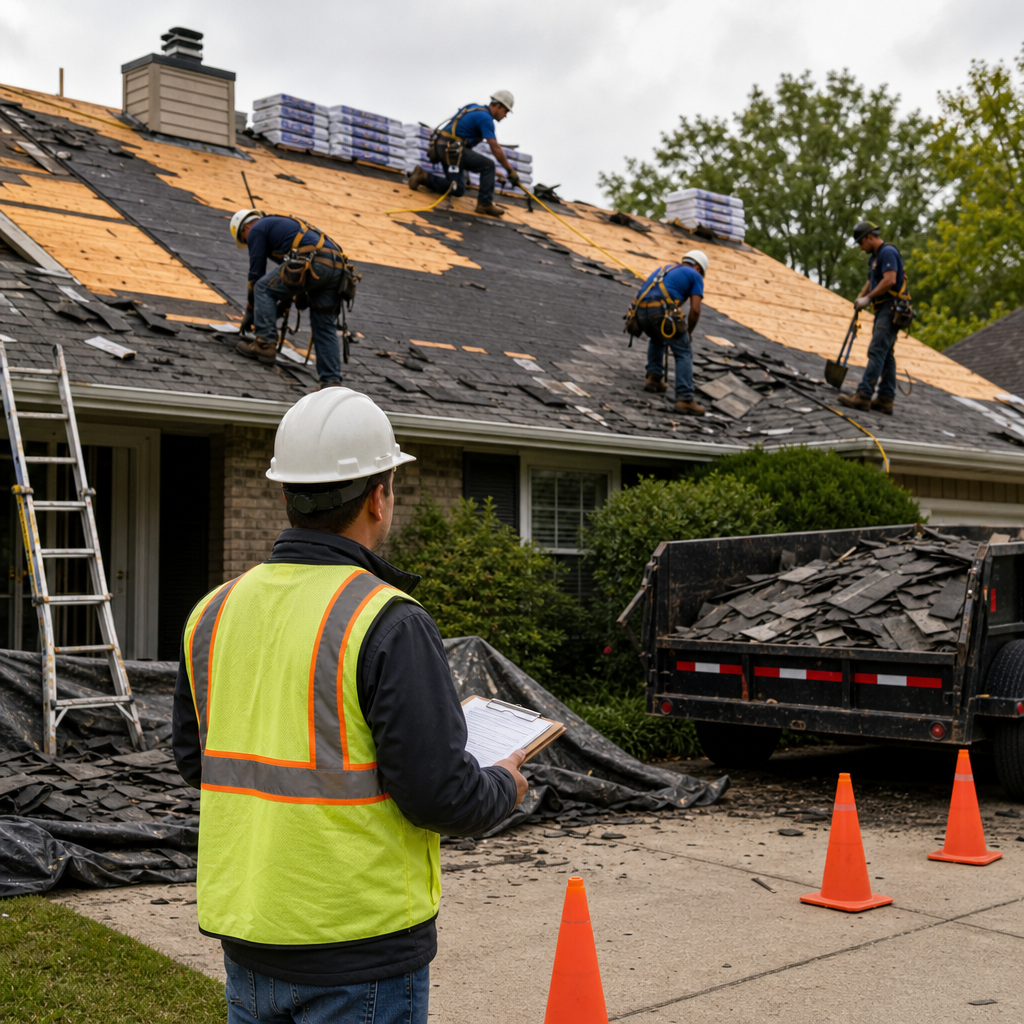
We follow OSHA standards and industry best practices for all roofing work. Every crew member on our team is trained in fall protection, proper equipment use, and hazard recognition. We use OSHA-approved fall protection systems, including harnesses and anchor points, for all elevated work.
Before any project begins, our safety manager conducts a site inspection to identify hazards unique to your property. Are there power lines nearby? Steep roof pitch? Proximity to a busy street? We develop a site-specific safety plan addressing each concern.
Our equipment inventory includes safety railings, warning signs, debris netting, and proper ladders positioned by trained personnel. We maintain insurance coverage for worker injuries and property damage, so you’re protected even in the unlikely event something goes wrong.
Communication among crew members happens constantly. We use radio systems and hand signals to coordinate movements on the roof. Our crew leaders conduct daily safety briefings, and we document all safety activities on-site. This systematic approach means safety isn’t an afterthought but a core part of how we work.
We also recommend that property owners temporarily fence off the work area or establish a “no entry” zone below the roof during the project. This prevents curious visitors or children from wandering underneath active work zones.
Understanding Noise Levels Throughout the Process
Roof replacement involves different noise levels depending on the work phase. Tearing off old roofing is the loudest phase, typically reaching 85-90 decibels. This is comparable to heavy traffic or a vacuum cleaner running continuously. The noise comes from the impact of pry bars, the scraping of shingles, and the sound of materials being loaded into dumpsters.
Installing new roofing is somewhat quieter, usually 75-80 decibels, because the work involves fastening materials rather than removing them. Hammer strikes and nail guns create noise, but the intensity is lower than tearoff work.
The loudest hours typically occur between 8 AM and 4 PM on weekdays. Morning tearoff work (8-11 AM) is usually the noisiest period. If you work from home or have young children, understanding this timeline helps you plan your day. Some families arrange to be elsewhere during the loudest phases, while others simply adjust their expectations for those few days.
Noise mitigation is limited during tearoff, since the work itself requires significant force and impact. However, we schedule tearoff for weekdays (not weekends) and communicate the specific noise windows with you in advance. We also respect quiet hours in residential neighborhoods by stopping work by late afternoon.
Our Pre-Project Preparation and Communication
Three to five days before work begins, we schedule a pre-project walkthrough. During this meeting, we discuss the noise timeline, establish communication expectations, answer safety questions, and address any specific concerns about your property.
We provide you with a detailed project schedule showing which days we’ll be on-site, what work phase happens when, and how long we estimate each phase to take. This exterior replacement timeline helps you plan around the disruption.
We also discuss parking. Our crew vehicles will occupy space on or near your property, and we need access for equipment delivery. We work with you to minimize impact on your driveway, street parking, or business operations. For commercial properties, we coordinate timing to avoid peak business hours when possible.
Before the first day, we clearly mark the work area, place warning signs, and set up containment systems if needed. We confirm contact information and establish a communication protocol. If an issue arises during the project, you know exactly who to call and how quickly you’ll hear back.
Daily Operations and What Happens On-Site
A typical roof replacement runs three to five days depending on roof size, complexity, and weather. Here’s what each phase looks like:
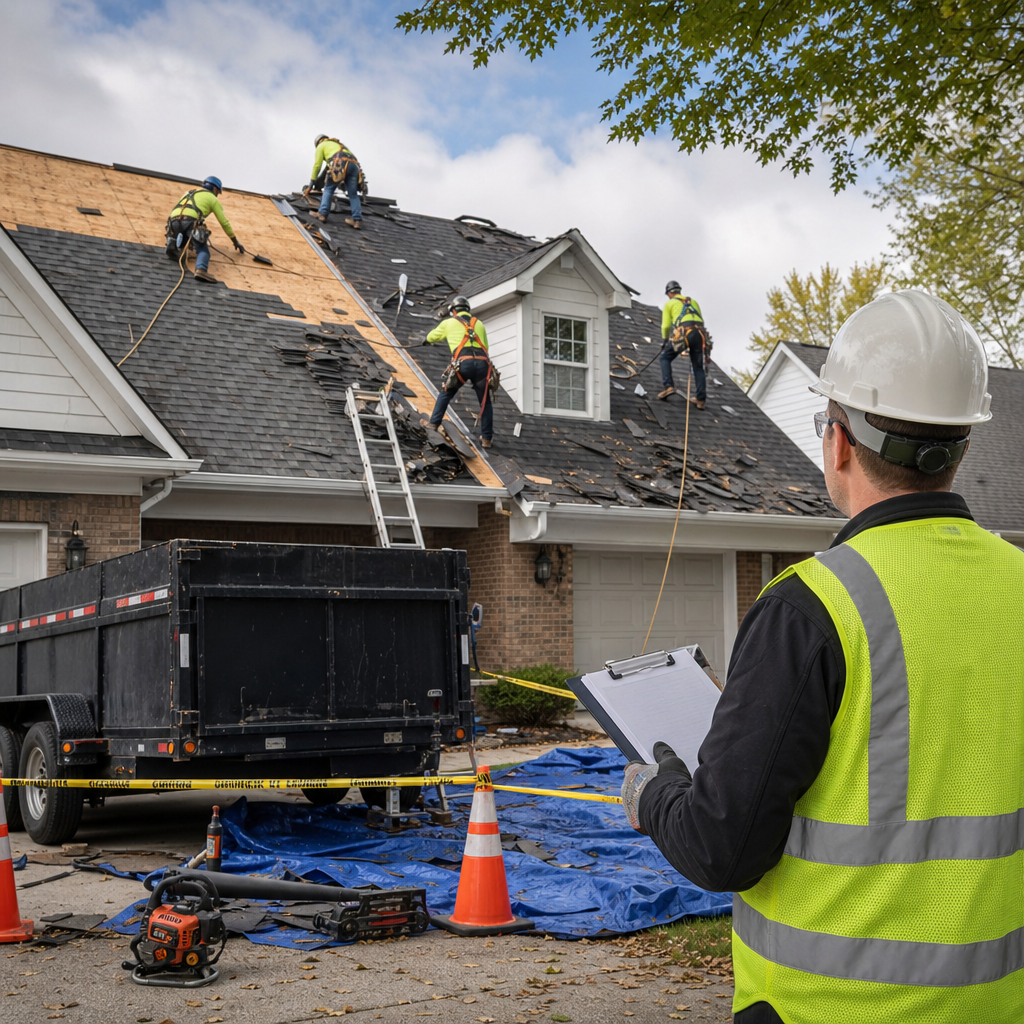
Day 1: Tearoff and Inspection. Crews arrive early, set up safety equipment and containment barriers, then begin removing old roofing material. Nails, wood, shingles, and any old flashing are stripped down to the roof deck. Once exposed, our crew inspects the underlying structure for damage or rot. If we find structural issues, we notify you immediately and discuss repair options.
Days 2-3: Repairs and New Installation. Any structural repairs are completed first. Then we install new underlayment, flashing, starter strips, and finally the new roofing material. This phase is less noisy and more methodical than tearoff.
Final Day: Cleanup and Inspection. Crews remove all debris, sweep and vacuum the roof, clean up the ground area, and remove containment systems. Our quality control team inspects the entire installation before we leave.
On each day, crews typically work 8 AM to 4 PM with a lunch break. We secure all materials and equipment overnight, ensuring your property is clean and safe when work stops for the day.
Protecting Your Property During Installation
We protect your property through multiple layers of precaution. Tarps or protective netting contain debris and prevent material from falling to the ground below. We position dumpsters strategically to catch debris as it’s removed from the roof.
Ground crews work continuously during tearoff phases, sweeping and clearing materials before they accumulate. This means your yard or parking area stays relatively clean even during the messiest phase of work.
We also protect landscaping, vehicles, and HVAC units by covering them with tarps if they’re near the work zone. Before we begin, we ask you to move vehicles away from the work area and identify any plants or structures of particular concern.
For commercial properties, we coordinate with your maintenance team to protect roof-mounted equipment like HVAC units or antennas. Nothing is disturbed except the roofing material itself.
Weather Delays and How We Handle Them
Wisconsin weather is unpredictable, and roof work cannot proceed safely in heavy rain, high winds, or icy conditions. If weather forces us to pause, we don’t compromise safety by rushing to stay on schedule.
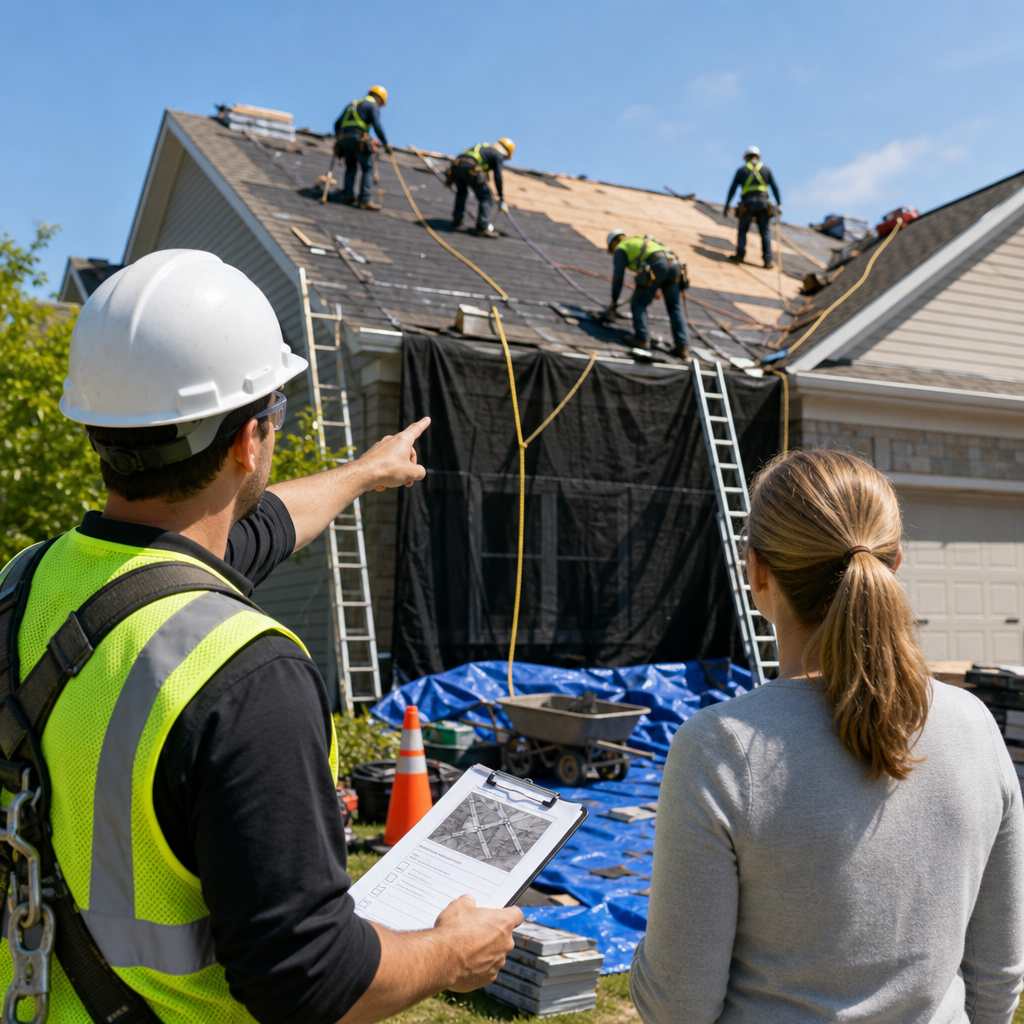
When a weather delay occurs, we secure the roof in its current state. If we’re mid-tearoff, we’ll cover exposed areas to prevent water intrusion. If we’re in the middle of installation, we secure new material to prevent wind damage. We then reschedule those days, communicating the new timeline to you immediately.
For most projects, we build one or two weather buffer days into our schedule. This means we rarely fall more than a day behind due to weather. However, if an unexpected severe weather event creates a longer delay, you’ll know about it within hours of our crew assessing conditions.
Cleanup and Final Inspections
The final cleanup phase is crucial. We use magnetic sweepers to ensure no nails remain on your ground or driveway. We vacuum the roof itself to remove granules and dust. We remove all tarps, signs, and containment equipment.
Before we leave for the final time, our quality control inspector walks the entire roof and ground area with you. We check for proper installation, verify that all flashing is secure, and ensure no debris or damage remains. You receive documentation of the completed work, including photos and warranty information.
For a Brookfield roof replacement or any of our service areas, we also provide you with care instructions and information about future maintenance that will extend your roof’s lifespan.
Why Professional Installation Protects Your Investment
A roof replacement is a significant investment, typically lasting 20-30 years depending on materials chosen. Professional installation isn’t just about safety and noise management; it directly affects how long your roof lasts and how well it performs.
Proper installation includes correct underlayment, appropriate fastening patterns, proper flashing at valleys and penetrations, and ventilation that prevents moisture buildup. These details are invisible once the project is complete, but they’re the difference between a roof that lasts 25 years and one that develops leaks in 10.
When you hire an experienced team like ours, you’re paying for expertise that prevents costly problems down the road. Our work is backed by manufacturer warranties on materials and our own workmanship guarantee, giving you peace of mind that your investment is protected.
Getting Started With Expert Exteriors
If you’re ready to move forward with a roof replacement in Brookfield or the surrounding areas, contact us for a free inspection and detailed estimate. We’ll assess your roof’s current condition, discuss your options (whether you need residential asphalt shingles, TPO or EPDM commercial roofing, or other materials), and provide a transparent project timeline.
During that initial consultation, we’ll answer your specific questions about safety, noise, and timing. Every property is different, and we customize our approach to your situation. Call us today to schedule your inspection and take the first step toward protecting your property with a new, professional roof installation.
For further reading: Project management process.