
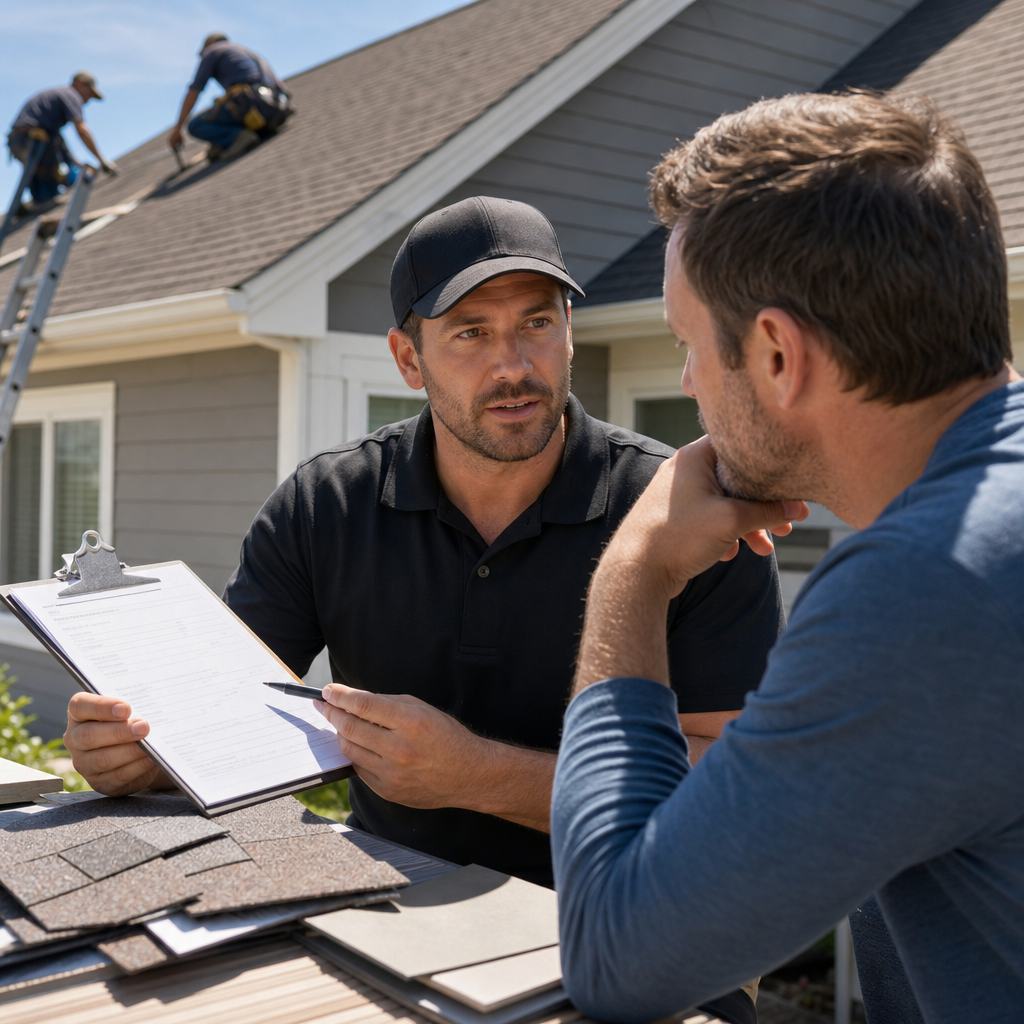
10 Essential Questions to Ask Your Roofing Contractor Before You Bid
Why Asking the Right Questions Matters for Your Roof Project
Your roof is one of your property’s most critical investments. A quality installation protects everything underneath it, while a poor one can lead to leaks, structural damage, and expensive repairs down the road. The difference often comes down to the contractor you choose and the clarity you establish upfront.
We’ve worked with hundreds of property owners in Brookfield and surrounding areas, and the ones who end up most satisfied are those who ask targeted questions before signing any agreement. These conversations help you understand what you’re paying for, what timeline to expect, and how the contractor will handle real-world complications that arise on nearly every job.
This guide walks you through the essential questions that separate informed buyers from those who end up regretting their choice. By the end, you’ll know exactly what to ask when you’re evaluating bids from different contractors.
1. What Roofing Materials Do You Recommend and Why
Not every roof needs the same solution. A residential home in Brookfield might benefit from architectural shingles, while a commercial building could be better served by TPO or EPDM membrane systems.
When a contractor jumps straight to recommending materials without asking about your priorities, that’s a red flag. A solid contractor will ask about your budget, climate concerns, aesthetic preferences, and how long you plan to stay in the property before making a recommendation.
At Expert Exteriors, we listen first. If you’re looking at a residential replacement, we discuss whether standard three-tab shingles, architectural shingles, or premium options make sense. For commercial properties, we evaluate whether TPO or EPDM better fits your building’s structure and your maintenance budget. Each has different cost profiles and longevity characteristics.
Ask your contractor to explain the pros and cons of their top two or three recommendations. If they can’t articulate why one material outperforms another for your specific situation, keep asking until you get a clear answer. This conversation often reveals whether a contractor prioritizes your needs or just wants to close the sale quickly.
2. Can You Provide References From Recent Roofing Projects
References from past clients carry real weight. A contractor willing to connect you with homeowners or commercial property managers from jobs completed in the last 12-18 months is confident in their work.
Request at least three references, ideally from projects similar to yours. If you need a residential roof replacement, ask for residential references. If it’s a commercial job, seek out commercial clients. Ask the references specific questions: Did work start and finish on schedule? How did the crew handle disruptions? Did the final product meet expectations? Have there been any issues since completion?
Be wary of contractors who refuse to provide references or offer only outdated ones. Also, don’t settle for a phone number and move on. Actually call or visit if possible. A 10-minute conversation with someone who watched the crew work can tell you far more than a contractor’s promises.
3. What Warranties Do You Offer on Materials and Labor
Warranties come in two flavors: material warranties from the manufacturer and labor warranties from your contractor.
Material warranties typically cover defects in the roofing product itself. These vary widely. Some manufacturers offer 20-year warranties; others go longer. The catch is that material warranties often have conditions. They might be prorated, meaning coverage decreases each year. Read the fine print.
Labor warranties are where your contractor’s reputation matters. We stand behind our work with 15-year workmanship warranties on full roof replacements. This means if something fails due to improper installation within that timeframe, we fix it at no cost to you. Not all contractors offer this level of commitment.
Ask your contractor to provide warranty details in writing before you sign. Know what’s covered, how long protection lasts, and what voids the warranty. Some contractors include limited labor warranties or none at all. That’s a significant cost difference you should factor into your decision.
4. How Long Will Our Roof Replacement Take
Project timeline affects more than just your schedule. It impacts your exposure to weather, neighborhood disruptions, and logistics planning.
A typical residential roof replacement takes 1-3 days depending on size and complexity. Commercial jobs can stretch longer. Your contractor should give you a realistic timeframe upfront, not a rushed estimate they can’t meet. If a contractor promises to finish your residential roof in one day, they’re either understaffing the job or setting expectations they can’t keep.
Ask what happens if weather delays the work. Will crews mobilize to finish another section, or does the project pause entirely? A well-organized contractor typically has a contingency plan and won’t leave your roof partially exposed during unexpected rain.
The crew size also matters. Larger crews finish faster but create more coordination challenges. Smaller crews work more methodically but take longer. Neither is inherently better; just understand what you’re getting.
5. What Insurance and Licensing Do You Carry
This question protects you legally and financially. Roofing is dangerous work. Injuries happen. You need assurance that your contractor carries workers’ compensation insurance and general liability coverage.
Ask for proof of current licenses and insurance certificates. Don’t accept verbal promises. Most legitimate contractors keep this paperwork accessible and can email copies immediately. If a contractor seems defensive about this, that’s a warning sign.
Different states and municipalities have different licensing requirements. In Wisconsin, verify your contractor holds proper licensing through your local building department. Unlicensed contractors expose you to liability if something goes wrong.
Checking these credentials takes 10 minutes and could save you thousands in unexpected costs if an accident occurs during work.
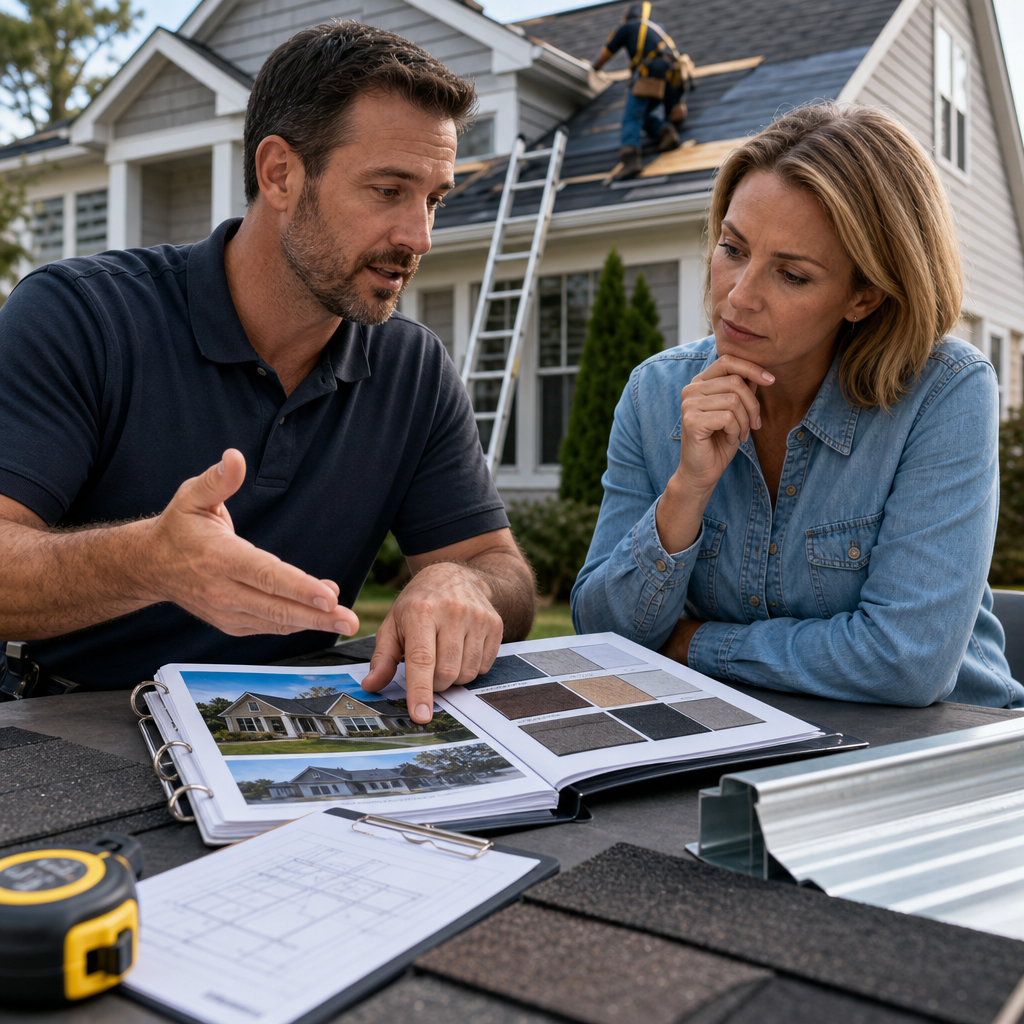
6. How Do You Handle Unexpected Damage During Installation
Surprises happen. Your contractor pulls off the old roof and discovers rotted decking underneath. Water damage in the fascia. Structural issues hidden until the moment work begins.
Ask how your contractor addresses these discoveries. Do they have authority to make emergency repairs, or does every change require approval? What’s the process for discussing scope changes and revised pricing? Do they bill hourly for unexpected work, or have they already priced in a contingency?
A transparent contractor explains their change order process upfront. They’ll walk you through what happened, show you the damage, explain why repairs are necessary, and present pricing options. Some contractors use change orders as profit centers, over-bidding on unexpected work. Others build reasonable contingencies into their initial bid.
Understanding this ahead of time means you won’t be blindsided by surprise invoices when work reveals hidden problems.
7. What Payment Schedule Works Best for Your Company
Payment terms vary. Some contractors want full payment upfront. Others work on a deposit-then-completion basis. A few require staged payments tied to project milestones.
The most common arrangement we see is a deposit (typically 30-50% of the project cost) to secure materials and crew scheduling, with the balance due upon completion. This protects both parties. You’re not paying for work that hasn’t started, and your contractor knows you’re committed.
Avoid contractors demanding 100% payment before work starts. Similarly, be cautious of agreements where final payment isn’t due until weeks after completion. You want the contractor motivated to finish and stick around for any immediate warranty concerns.
Discuss payment methods too. Do they accept checks, credit cards, bank transfers? Will they provide a detailed invoice? Clear payment terms prevent misunderstandings later.
8. Are There Additional Costs We Should Expect
The bid price is rarely the final price. Permit fees, disposal costs, flashing replacement, soffit and fascia work, and gutter repairs sometimes fall outside the core roofing estimate.
When contractors present a bid, ask them to itemize everything included and flag what’s extra. A thorough bid lists labor, materials, permits, debris removal, and any specialty work. If something’s vague or grouped as “miscellaneous,” ask for clarification.
Some contractors structure bids to look competitive upfront, then nickel-and-dime clients during installation. Others price comprehensively from the start, even if the headline number is higher. You want the latter approach. It shows respect for your budget and reduces stress during the project.
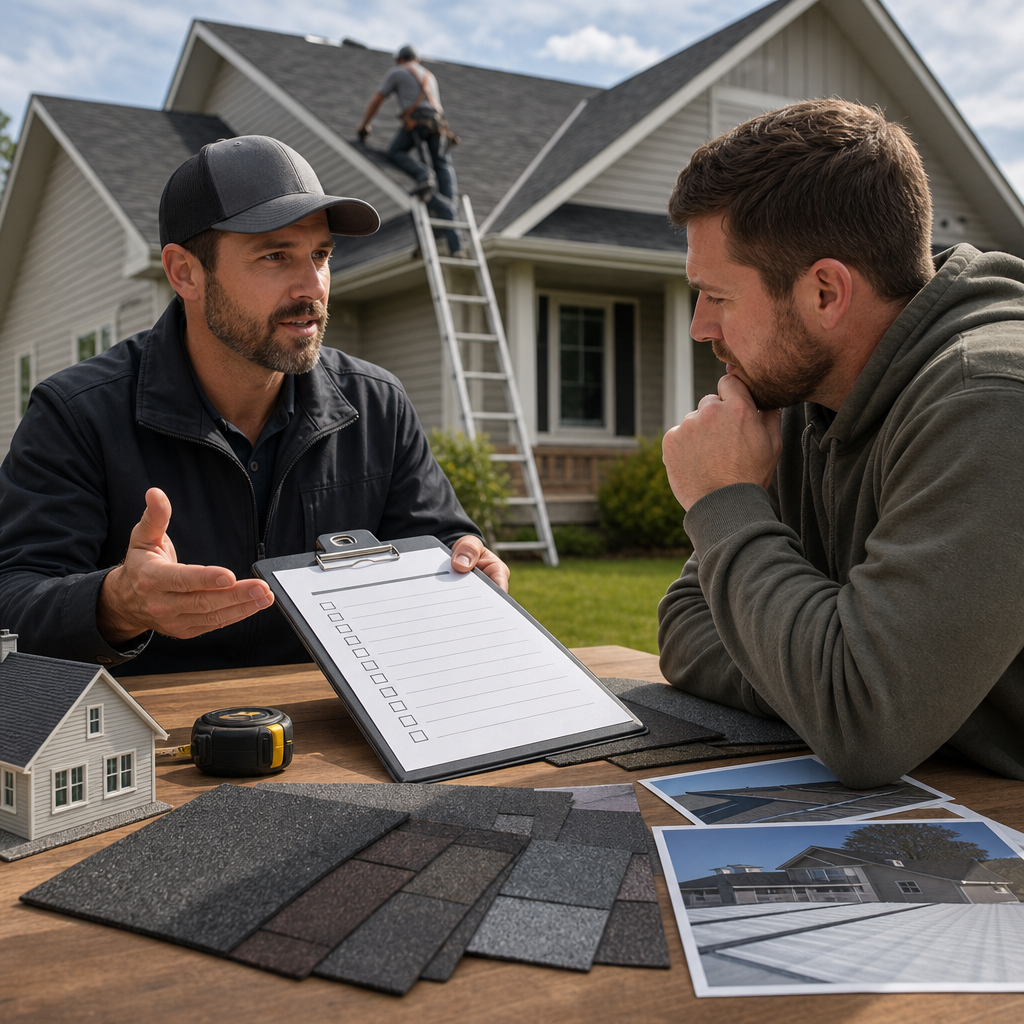
Ask specifically about permit costs, disposal fees, and whether flashing, gutters, and soffit are included or quoted separately.
9. How Will You Protect Our Property During Work
Roof work creates dust, debris, and the risk of dropped materials. You need assurance that your contractor takes precautions to protect your landscaping, vehicles, and the interior of your home.
Professional contractors deploy tarps, use plywood walkways, and coordinate carefully around delicate areas. They ask in advance where you park, what plants matter most to you, and whether you have outdoor AC units or other equipment that needs shielding.
Discuss cleanup expectations too. Will they remove debris daily, or will you see piles until the final day? Do they pressure-wash the driveway afterward? A contractor who walks the property before work and explains their protection strategy typically handles these details better than one who just shows up with a crew.
Also ask about foot traffic. Will workers track debris into your home? Can you access your driveway during work? Small details like these shape your experience during the project.
10. What Post-Installation Support and Maintenance Do You Provide
Installation day is important, but what happens after matters equally. Does your contractor provide any follow-up?
Some contractors schedule a post-installation walkthrough to show you the work and answer questions. Others offer seasonal maintenance recommendations or free inspections within the first year. A few provide educational materials on how to protect your investment long-term.
Ask what happens if you notice a problem six months later. Will the contractor come back to assess it, or is that a separate service call? Understanding post-installation support clarifies how much attention you’ll receive after the work is complete.
At Expert Exteriors, we include follow-up support because we want your roof to perform for decades. If questions arise, you know who to contact and how to reach us.
Making Your Decision With Confidence
You now have a framework for evaluating roofing contractors. Use these 10 questions with every bid you collect. Write down the answers and compare them side by side. You’ll notice patterns: some contractors prioritize transparency and detailed explanations; others rush through conversations and focus on closing the sale.
The lowest bid rarely delivers the best value. A contractor $2,000 cheaper might use lower-grade materials, employ less experienced crews, or offer minimal warranty protection. A slightly higher bid from a contractor who answers all these questions thoroughly usually proves more cost-effective over time.
When you’re ready to move forward with your roofing project in Brookfield or surrounding areas, we’re here to help. We’ve answered these questions for hundreds of property owners, and our 15-year workmanship warranties back up our commitment. Request an instant roof replacement quote to see how we approach your specific project, or contact us with any questions. We’d be happy to walk through these conversations with you and show why informed property owners trust us with their roofs.