
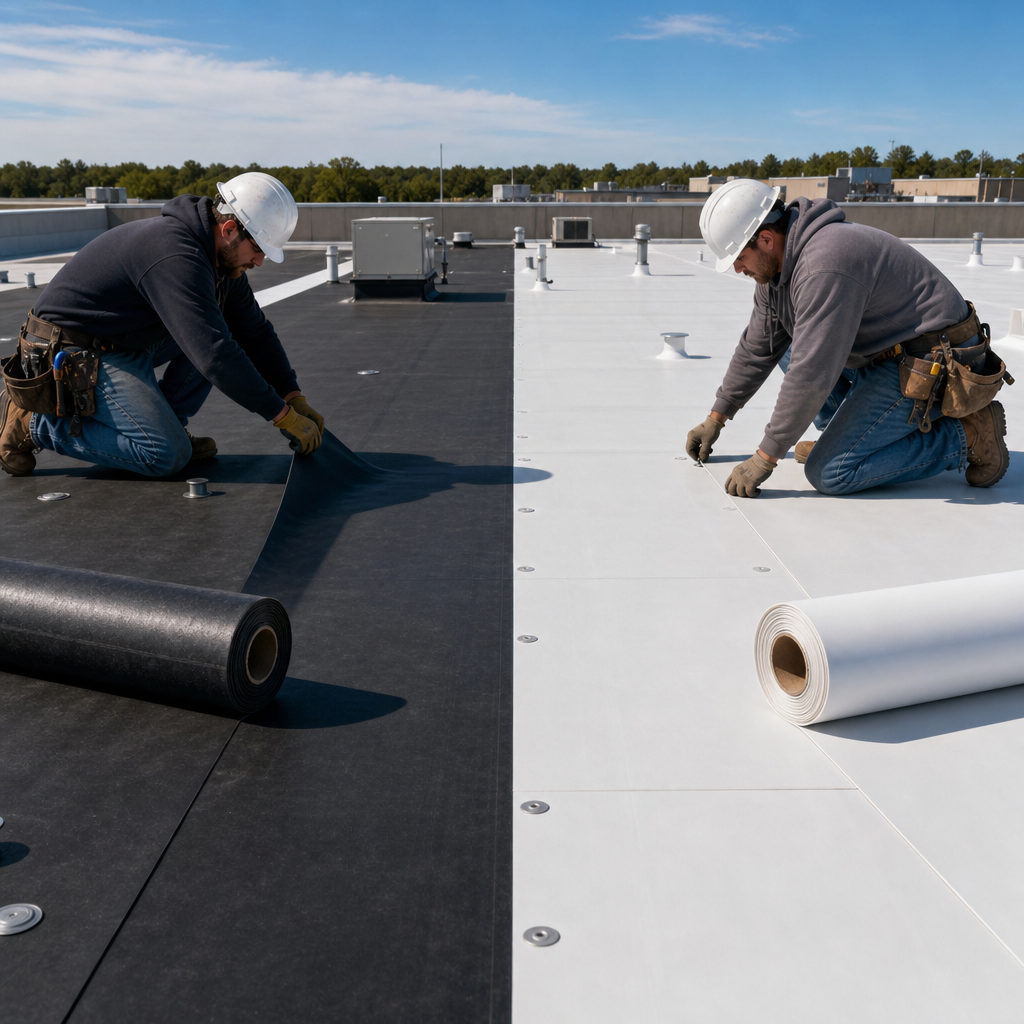
Commercial EPDM and TPO Roofing: Performance, Durability, and Expert Reviews
Why Commercial Roofing Membranes Matter for Your Business
Your commercial roof is one of your property’s most critical assets. Unlike residential roofing, which typically handles pitched designs with multiple materials, commercial roofs are usually flat or low-slope surfaces that demand specialized protection. Single-ply membrane systems like EPDM and TPO are engineered to provide seamless coverage that shields your building from weather, extends its structural life, and protects the equipment and inventory inside.
A quality membrane system keeps water out, reduces energy costs through reflectivity, and can add years to your roof’s lifespan. Poor installation or the wrong membrane choice often leads to costly leaks, unexpected repairs, and business disruption. That’s why selecting the right flat roof membrane isn’t just about initial cost; it’s about long-term reliability and peace of mind.
When you invest in a durable roofing system, you’re protecting employees, customers, and assets while maintaining property value.
The Challenge of Selecting the Right Membrane System
Choosing between EPDM and TPO roofing isn’t straightforward. Both are proven single-ply membranes used across Wisconsin and beyond, yet they differ significantly in material composition, installation requirements, longevity expectations, and cost structures. Property owners often feel caught between budget constraints and performance needs, and salespeople sometimes oversimplify the comparison.
What complicates the decision further is that performance also hinges on installation quality, climate conditions specific to your location, and maintenance commitment. A cheaper membrane installed poorly will fail faster than a premium system properly installed and maintained. You need clear information grounded in real performance data, not just marketing claims.
Our approach is straightforward: we explain what each membrane does best so you can make an informed decision aligned with your building’s specific needs and your budget.
Understanding EPDM Roofing Performance and Longevity
EPDM (ethylene propylene diene monomer) is a rubber-based synthetic membrane that’s been used in commercial roofing for over 50 years. Its proven track record and lower material cost make it attractive to many property owners. EPDM typically costs less upfront than TPO and performs reliably in cold climates like Wisconsin’s.
EPDM’s main strengths include excellent resistance to UV exposure over decades, flexibility in temperature fluctuations (crucial for freeze-thaw cycles), and resistance to punctures and tears during installation and maintenance. The material remains pliable even when temperatures drop, reducing the risk of cracking during harsh winters. A properly installed EPDM roof typically lasts 40-50 years with good maintenance.
The trade-off is that EPDM requires special detailing around penetrations and seams, and it can absorb water if seams aren’t sealed correctly. It also performs less effectively in extreme heat and isn’t as energy-efficient as reflective TPO. Routine maintenance includes checking seams, inspecting for standing water, and addressing debris accumulation.
For Wisconsin properties in cooler zones with moderate exposure, EPDM remains a reliable, cost-effective choice that delivers decades of service when installed by skilled crews.
Understanding TPO Roofing Performance and Advantages
TPO (thermoplastic polyolefin) is a newer single-ply membrane technology that combines rubber and plastic polymers. It’s gained significant market share over the last 15 years because it offers excellent energy efficiency and easier installation in many scenarios. TPO membranes reflect more sunlight than EPDM, which can reduce cooling costs and lower roof surface temperatures.
TPO’s advantages include superior energy performance (particularly important for buildings with air-conditioning demands), resistance to algae and dirt accumulation, and heat-welded seams that create strong, reliable joints. The installation process is faster in many cases, which can reduce labor costs and project timelines. TPO typically lasts 20-30 years, though some premium formulations are engineered for longer lifespans.
The drawbacks involve exposure to certain chemicals and potential brittleness if lower-quality formulations are used in very cold climates. Not all TPO products perform equally; material quality varies by manufacturer. Additionally, some TPO membranes have shown puncture-resistance issues in environments with heavy foot traffic or frequent maintenance access.
For buildings with significant cooling needs, regular maintenance access, or a focus on energy efficiency, TPO roofing delivers measurable benefits and faster installation timelines.
EPDM vs TPO: Key Differences That Impact Your Choice
Let’s break down how these membranes compare across the factors that matter most:
Material and Lifespan: EPDM is rubber-based and typically lasts 40-50 years with good care. TPO is polyolefin-based and typically lasts 20-30 years, though premium TPO can extend beyond that. Wisconsin’s temperature swings favor EPDM’s inherent flexibility.
Installation and Seams: EPDM uses tape or adhesive seams that require precise application. TPO uses heat-welded seams that are generally stronger and faster to create. Heat-welding typically results in fewer callbacks related to seam failure.
Energy Efficiency: TPO’s light color reflects solar heat, reducing cooling loads. EPDM absorbs more heat, which can increase cooling costs in warm months but provides minimal benefit in cold climates.
Cost: EPDM is cheaper upfront but may require more maintenance. TPO costs more initially but often justifies itself through energy savings and faster installation.
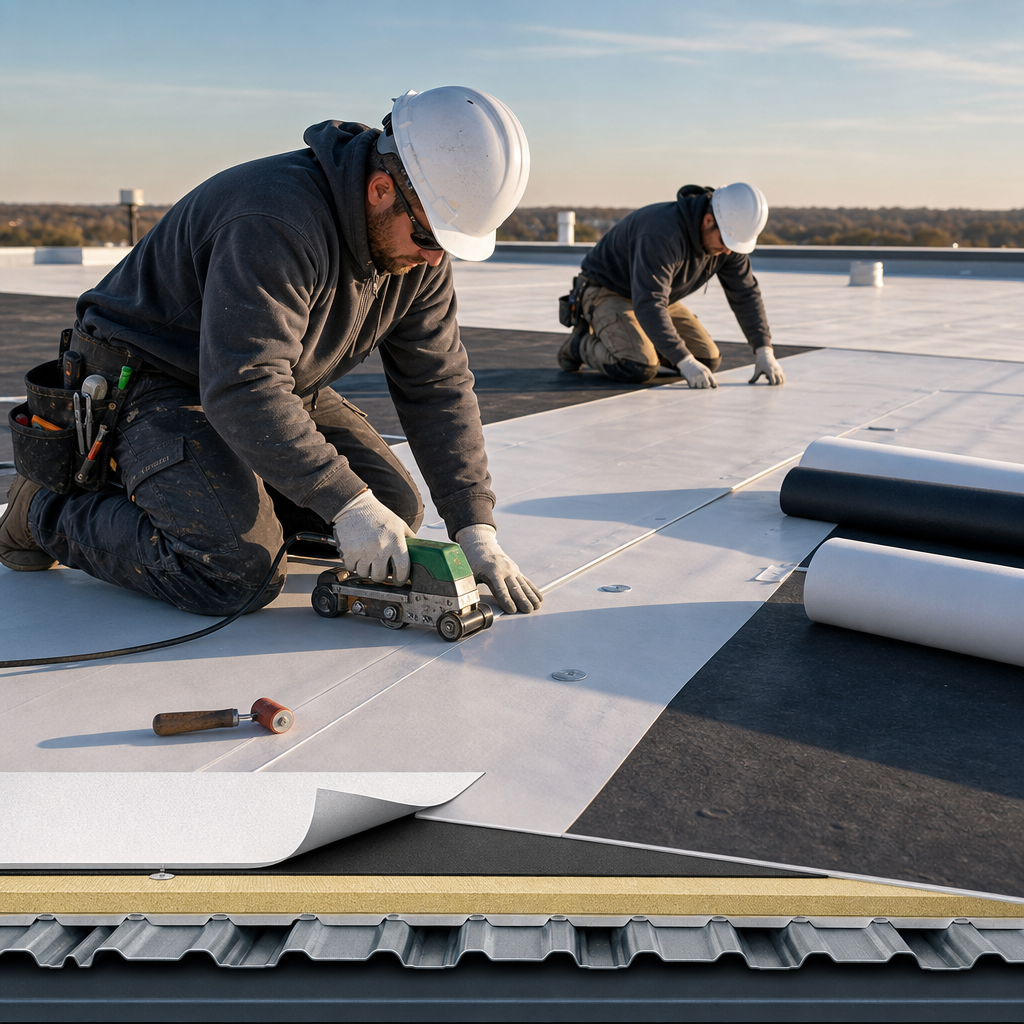
Maintenance: EPDM requires regular seam inspection and cleaning. TPO resists dirt and algae but needs vigilant puncture monitoring in high-traffic areas.
Your choice depends on your building’s climate exposure, usage patterns, energy priorities, and how long you plan to own the property. We help you weigh these factors against real-world conditions rather than applying a one-size-fits-all recommendation.
How Our Expert Installation Maximizes Roofing Performance
The best membrane in the world fails if installation is subpar. We’ve seen expensive roofs leak within five years due to poor seaming, inadequate flashing, or shortcuts during application. That’s why we invest heavily in crew training and quality control.
Our installation process includes detailed substrate preparation, proper fastening patterns, meticulous seam work, and thorough testing before we consider the job complete. For EPDM, we ensure tape seams overlap correctly and adhesive is fully cured. For TPO, our crews verify heat-weld temperatures and overlap measurements to guarantee strong, watertight bonds.
We also handle critical details like pipe penetrations, roof edges, and transitions to parapets with the precision they deserve. Poor flashing leads to leaks that undermine the entire system. Our attention to these “invisible” components is what separates roofs that last from roofs that deteriorate.
When we complete a commercial roof replacement, you receive documentation of materials used, installation specifications, and warranty details. This transparency protects your investment and provides clear maintenance guidance for years ahead.
Real Results from Our Commercial Roofing Projects
We’ve completed dozens of commercial EPDM and TPO installations across Brookfield, Menomonee Falls, Sussex, and surrounding communities. One healthcare facility chose EPDM for its long-term reliability and cold-weather performance; we installed it across a 25,000-square-foot facility, and it’s delivered trouble-free service for over a decade. Another light industrial building selected TPO to reduce cooling costs; the energy savings offset the material cost difference within four years, and the faster installation minimized production disruption.
A multi-tenant office complex in need of an urgent roof installation in Brookfield chose TPO specifically because we could complete the work quickly without excessive project timeline extensions. The building owner appreciated the reflective properties, which helped tenants reduce utility costs.
These projects reflect the diversity of real-world needs. There’s no universally “best” choice, only the right choice for your specific property, climate, budget, and goals. Our job is to listen to your priorities and recommend the membrane that delivers the best outcome for your situation.
Why Wisconsin Property Owners Trust Our Membrane Expertise
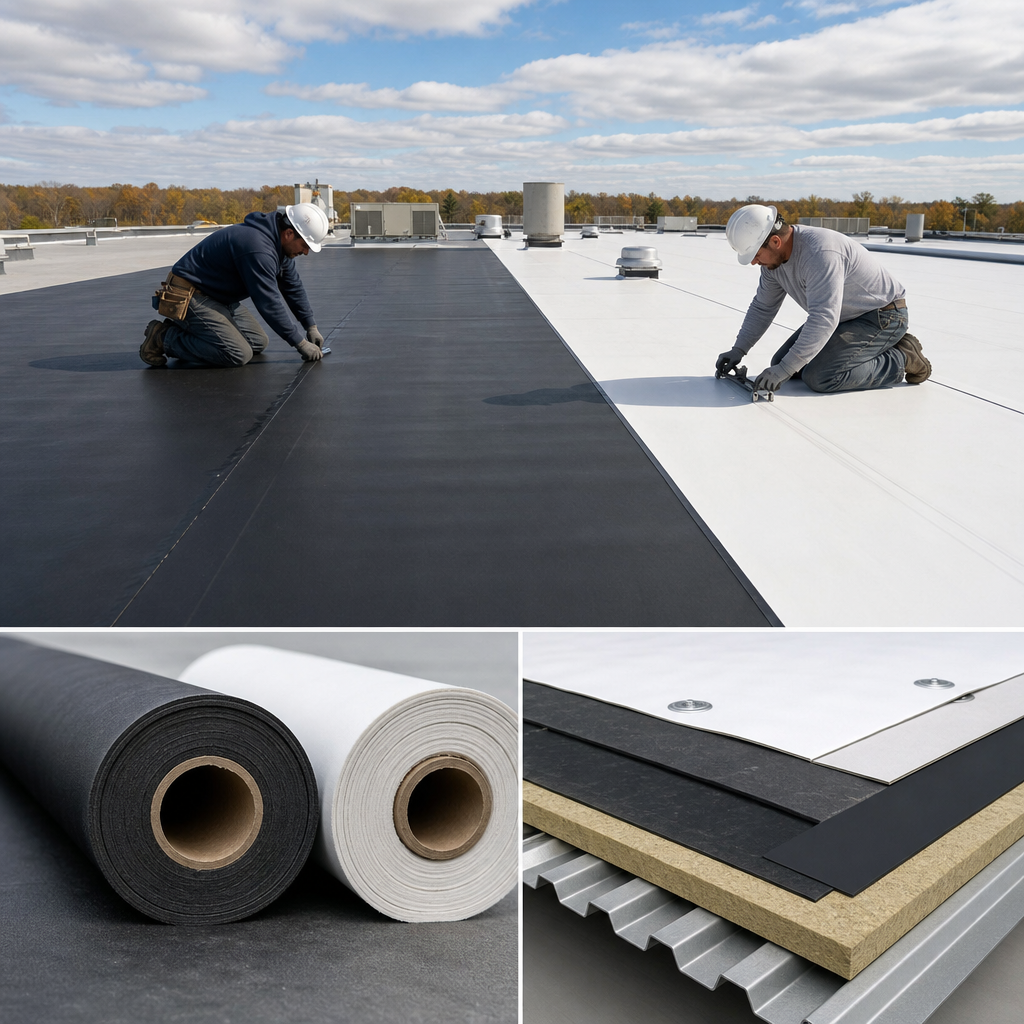
Wisconsin’s climate is demanding. Freeze-thaw cycles, significant temperature swings, heavy snow loads, and occasional high wind events stress roofing systems constantly. We work in this environment year-round and understand which materials and installation approaches handle it best.
Our teams have installed hundreds of commercial roofs in Wisconsin communities. We know how EPDM performs through Wisconsin winters, how TPO handles our rapid temperature changes, and how different installation details either protect buildings or create failure points. This local expertise, combined with manufacturer training and industry certifications, positions us to deliver guidance grounded in actual performance data rather than sales pitches.
We also maintain long-term relationships with our clients. Many reach out years after installation for maintenance advice or routine inspections. These relationships keep us accountable; our reputation depends on roofs that perform reliably over decades, not just passing inspections at completion.
Protecting Your Investment with Proper Maintenance
Your membrane choice is only part of the equation. A proper maintenance plan extends roof life, prevents small issues from becoming expensive failures, and validates your warranty coverage. We recommend bi-annual inspections: one in spring after winter stress and one in fall before harsh weather returns.
During inspections, we check for standing water (which can cause premature deterioration), debris accumulation, seam integrity, flashing condition, and any punctures or damage. For EPDM, we verify tape seams are holding. For TPO, we inspect for cracks or brittleness, particularly in heavily trafficked areas. We also identify and address minor issues before they require costly repairs.
We’ll provide a simple maintenance schedule tailored to your membrane type and building conditions. Most property owners are surprised at how affordable preventive care is compared to emergency repairs. Investing $500-$1,000 annually in inspections and minor repairs can easily prevent $15,000-$30,000 in water damage and structural deterioration.
Getting Started with Your Commercial Roof Replacement
If your commercial roof is nearing the end of its lifespan, showing signs of leaks, or simply becoming a recurring maintenance burden, now is the time to evaluate replacement options. Contact us for a thorough inspection and honest assessment. We’ll examine your current roof, discuss your building’s exposure and usage patterns, and explain how EPDM and TPO would perform in your specific situation.
We provide a detailed estimate that breaks down material costs, installation labor, timeline, and expected lifespan. No hidden fees, no pressure tactics. Our goal is to help you make a confident decision that protects your property and aligns with your budget.
We’re available across Brookfield and surrounding areas in Wisconsin. Whether you need expert guidance on commercial roofing systems or are ready to move forward with installation, we’re here to ensure your roof performs reliably for decades.
Reach out today to schedule your commercial roof evaluation. Let’s find the right membrane solution for your building.