
Flat Roof Assessment: When to Replace vs. Resurface Your Commercial Property
Why Flat Roof Decisions Matter for Your Property Value
Your commercial roof is one of your largest capital assets, yet it’s easy to overlook until problems appear. A flat roof protects everything underneath—your inventory, equipment, employees, and the structural integrity of the building itself. When water begins to pool or leaks start showing up in your ceiling tiles, you’re facing a decision that affects not just immediate repairs, but long-term property value and operational safety.
The difference between a hasty repair and a strategic replacement choice can mean tens of thousands of dollars. A roof that’s struggling to function costs more in energy efficiency, insurance claims, and emergency repairs. Conversely, replacing a roof that could still perform well for several years wastes money you could redirect elsewhere. Our role is to help you see the full picture so you make a decision grounded in facts, not panic.
Property value, tenant confidence, and operational continuity all hinge on this choice. That’s why a professional assessment isn’t just helpful—it’s essential.
Understanding the Costs of Ignoring Flat Roof Problems
Flat roofs are particularly vulnerable to water pooling, UV damage, and thermal stress. Unlike pitched roofs, water doesn’t naturally drain away, so minor membrane cracks or seam failures quickly become serious leaks.
Here’s what happens when problems linger:
- Interior water damage: Leaks migrate through insulation and drywall, creating hidden mold and structural decay that becomes exponentially more expensive to remediate.
- Energy loss: A compromised roof loses its insulation value, forcing your HVAC system to work harder. We’ve seen commercial properties spend an extra 15-25% annually on utilities with a failing flat roof.
- Liability exposure: Water damage to tenant spaces or equipment creates legal and financial liability you can’t predict.
- Compounding deterioration: Small failures spread quickly on flat roofs. A patch today may buy you six months, but the underlying membrane continues to degrade around it.
The cost of ignoring a failing flat roof typically exceeds the cost of replacement within 2-3 years. A comprehensive professional assessment now prevents costlier emergency situations later.
Signs Your Flat Roof Needs Professional Assessment
Don’t wait for a catastrophic leak to call. These warning signs mean your roof deserves expert evaluation:
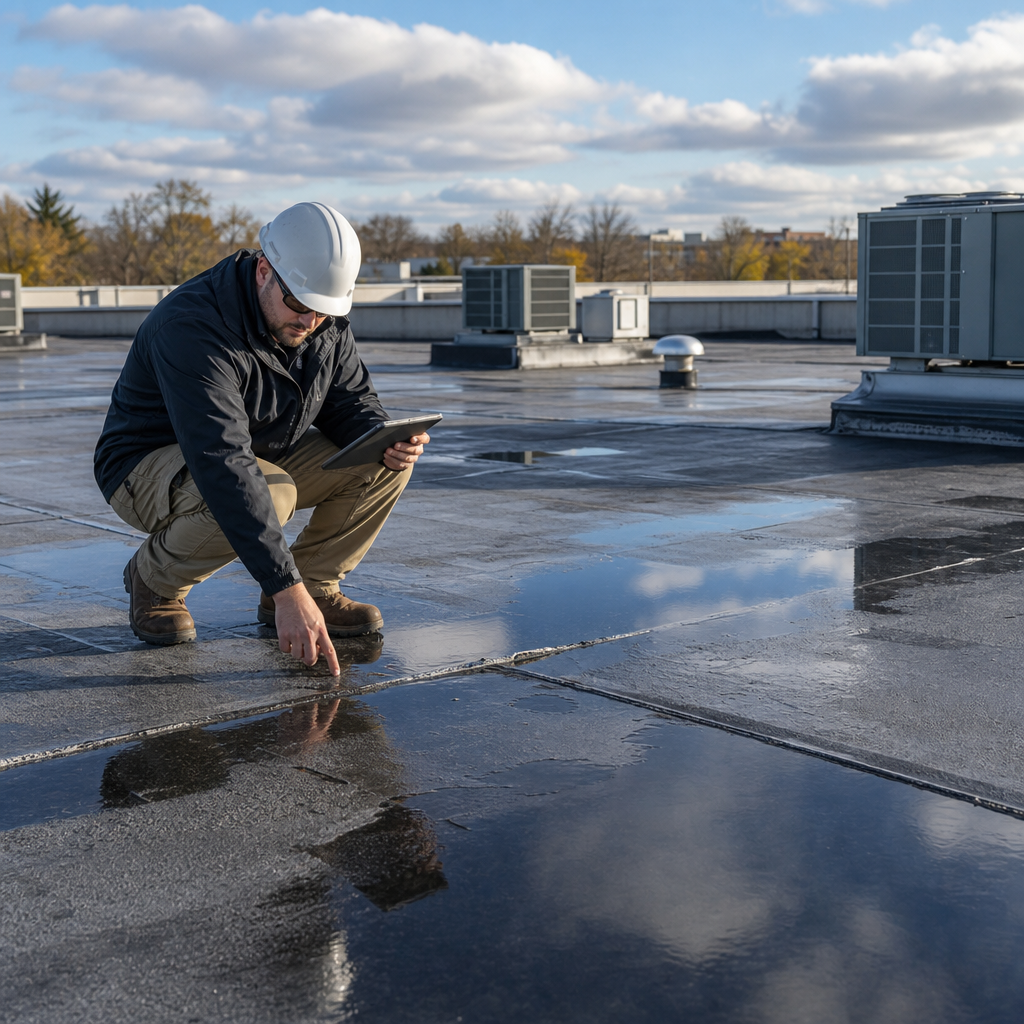
- Visible pooling water that remains for days after rain (standing water accelerates membrane breakdown)
- Blistering or bubbling on the membrane surface (indicates moisture trapped beneath the surface)
- Visible seam separation or cracks, especially around HVAC penetrations and edges
- Interior stains or water marks on ceiling tiles or walls below the roof line
- Increased energy bills without changes to occupancy or usage patterns
- Age approaching or exceeding 15-20 years, depending on the original material and maintenance history
- Sagging or uneven roof surface when viewed from a distance (points to structural or drainage issues)
A professional assessment identifies whether these signs point toward membrane resurfacing or full replacement. Many property owners assume they need a new roof when a resurface would suffice, or conversely, they attempt patches when replacement is more economical.
Full Replacement: When It’s the Best Investment
Full flat roof replacement makes sense when the underlying structure or membrane is beyond recovery. We recommend replacement when:
- The roof has reached 20+ years of age with multiple layers of previous patches or repairs
- Structural issues are visible: sagging decks, significant water damage to insulation, or compression of the substrate beneath the membrane
- Membrane failure is widespread: more than 30% of the roof shows blistering, cracking, or separation
- Penetrations and seams are failing repeatedly despite recent repairs
- You’re planning a major renovation or tenant improvement that will benefit from new warranty coverage
When we perform a commercial roof replacement, we remove old layers completely, inspect the structural deck, replace compromised insulation, and install a fresh membrane system with a new manufacturer warranty. This gives you a predictable 15-25 year service life and peace of mind that the roof won’t create surprise failures during your ownership.
The upfront cost is higher, but the long-term protection and warranty coverage justify the investment if the roof’s condition warrants it.
Membrane Resurfacing: How We Extend Roof Life
Membrane resurfacing is a middle-ground option when the roof structure is sound but the membrane has reached the end of its service life. We install a new membrane layer over the existing roof, essentially giving you a fresh waterproof barrier without the cost and complexity of full removal.
Resurfacing works well when:
- The underlying roof structure is intact with no sagging, rot, or major water intrusion
- Patches and repairs have been isolated rather than widespread
- The existing membrane is 15-18 years old but hasn’t failed catastrophically
- Budget constraints are a real consideration, and you need to maximize value
Resurfacing typically costs 40-60% less than full replacement because we avoid the expense and disruption of tearoff. The new membrane provides a fresh warranty period, usually 10-15 years depending on material choice. You’ll gain several additional years of reliable protection while preserving your capital for other priorities.
The tradeoff is that you’re building on an older substrate. If problems emerge within a few years that suggest deeper structural issues, a future replacement becomes necessary.
Our Assessment Process: How We Determine Your Best Option
We don’t make roof recommendations based on what generates the largest invoice. Our assessment follows a structured process:
Initial site visit: We inspect the roof surface, looking for visible membrane damage, seam condition, pooling patterns, and penetration integrity. We also check the interior for water stains or active leaks.
Moisture detection: We use thermal imaging and moisture meters to identify trapped moisture in insulation layers. This often influences whether resurfacing or replacement is viable.
Age and maintenance history: We review any documentation on previous repairs, coatings, or maintenance. A roof with patched seams and repeated repairs is a candidate for replacement, even if the membrane appears structurally sound.
Structural evaluation: We assess the roof deck for sagging, rot, or compression that would compromise any new system.
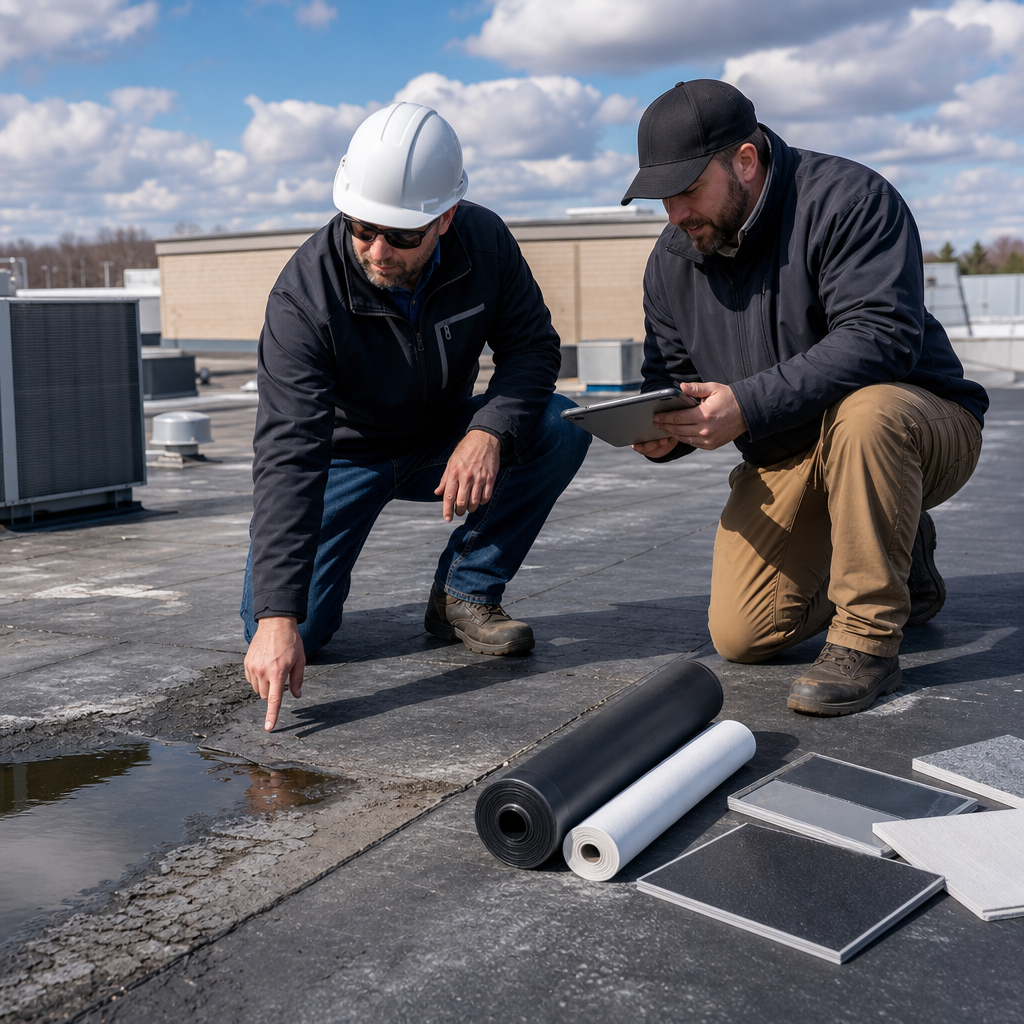
Cost analysis: We present both options side-by-side, with realistic timelines and warranty information. Our goal is to match the solution to your actual needs and budget reality, not the most expensive option.
After we complete this assessment, you’ll have a clear recommendation backed by professional expertise, not guesswork.
EPDM and TPO Solutions We Install for Long-Term Protection
We install two primary membrane systems for flat roof applications, each suited to different priorities and budgets.
EPDM (Ethylene Propylene Diene Monomer)
EPDM is a proven synthetic rubber membrane that’s been used for decades. It’s durable, flexible in cold climates (important in Wisconsin), and relatively affordable. EPDM performs well in shaded areas and tolerates ponding water better than some alternatives. Seams are sealed with adhesive and tape, creating a reliable waterproof barrier. EPDM typically carries a 15-20 year warranty and costs less upfront than TPO.
TPO (Thermoplastic Polyolefin)
TPO offers superior energy efficiency with its white reflective surface, helping reduce cooling costs in summer months. It resists UV exposure and ozone better than EPDM, which can be an advantage in areas with strong sun exposure. TPO seams are heat-welded, creating an extremely strong bond. The trade-off is a higher initial cost and slightly less flexibility in extreme cold. TPO warranties typically span 15-25 years.
We recommend EPDM when budget is the primary concern and performance expectations are standard. We suggest TPO when energy efficiency and maximum warranty coverage justify the higher upfront investment. Both solutions provide reliable protection through our commercial roofing expertise.
Timeline and Disruption: What to Expect with Each Approach
Understanding project duration helps you plan operational continuity and coordinate tenant communications.
Membrane Resurfacing
A typical resurfacing project on a 5,000-10,000 square foot building takes 3-5 days, depending on weather and existing membrane condition. We work in sections, maintaining roof access and minimizing disruption to tenants. You’ll experience minimal equipment staging and no structural vibration. The existing roof stays in place, so there’s no exposure risk during construction. Weather delays are minimal since we’re not removing the old system.
Full Replacement
A complete replacement typically requires 7-10 days for a similar-sized building. The added time accounts for tearoff, structural inspection, insulation replacement if needed, and new system installation. Weather can impact the schedule more significantly since we’re removing the old membrane and need favorable conditions for installation. Equipment staging is more substantial. However, once complete, you gain the certainty that every layer is new and protected by a fresh manufacturer warranty.
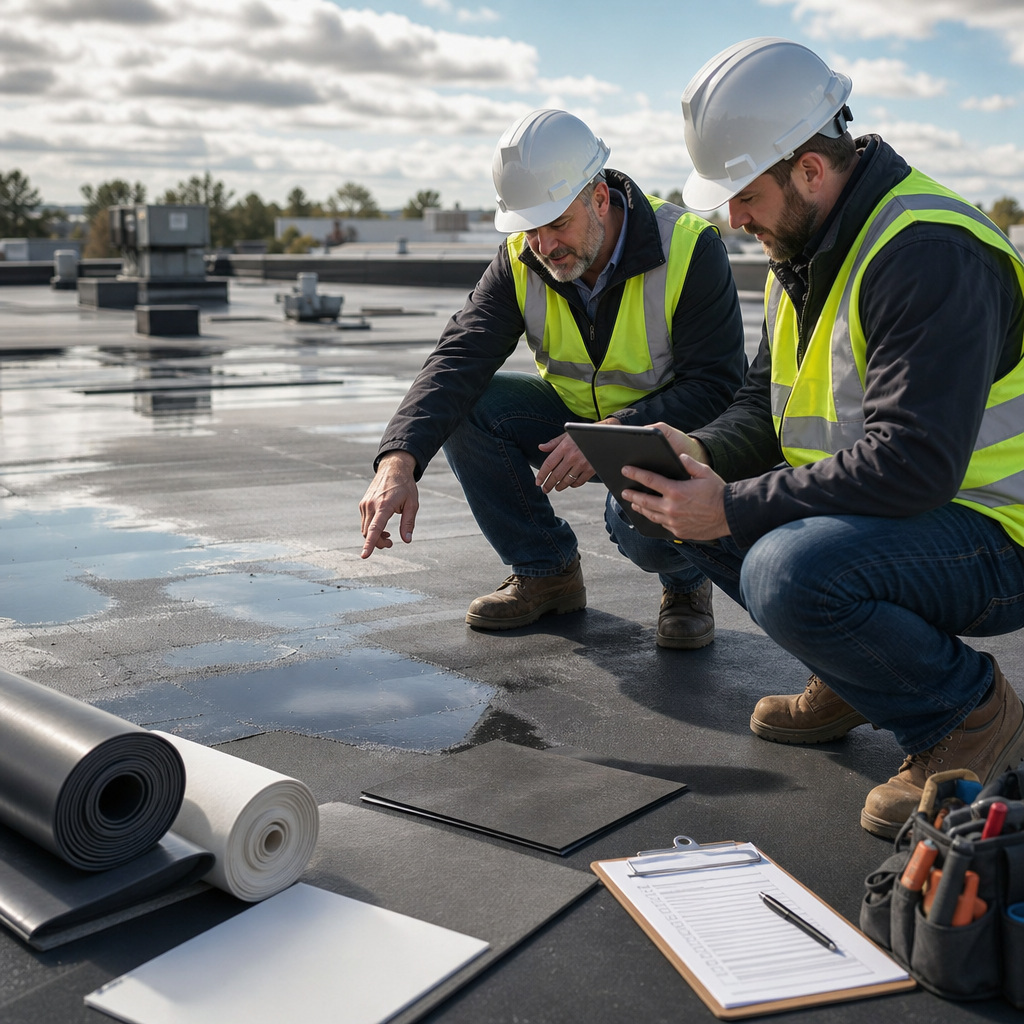
Both approaches allow occupancy during work. We coordinate with your operations to minimize impact on normal business activity.
Financing Your Flat Roof Project with Expert Exteriors
Roof projects represent significant capital expenditure, and we understand that timing and budget matter. We work with property owners to make quality projects financially feasible.
We partner with several financing providers to offer:
- Flexible payment terms that spread the project cost across 12-60 months, depending on loan structure
- No-money-down options for qualified property owners
- Project bundling with other exterior work (siding, gutters, fascia) to maximize contractor efficiency and reduce overall costs
Our team can discuss financing options during your initial consultation. We’ve found that many property owners discover the true cost of delayed action is higher than the financing cost of addressing problems now.
How We Guarantee Quality and Performance After Installation
We stand behind our work with comprehensive warranties and ongoing support.
Manufacturer warranties on both EPDM and TPO membrane systems typically span 15-25 years, covering material defects and workmanship issues. We’re an authorized installer for major manufacturers, which means your warranty is backed by the material supplier as well as our company.
Our workmanship guarantee extends 5 years beyond manufacturer terms on labor and installation. If seams fail, fasteners shift, or flashing develops problems due to our installation practices, we make it right.
Regular inspections are available post-project to catch minor issues before they become expensive problems. We recommend annual inspections, especially after severe weather events.
Quality control starts before installation begins. We carefully inspect materials on arrival, verify proper substrate preparation, and document every stage of installation with photos and reports. Your new roof isn’t just installed to code—it’s installed to exceed expectations.
When you work with us, you’re not just buying a new roof. You’re investing in years of dependable protection and a partner committed to your property’s long-term performance.
Next Step: Schedule a free professional assessment of your flat roof. We’ll provide a detailed analysis and clear recommendation, backed by expertise and honest guidance. Contact us today to arrange your evaluation.
For further reading: Exterior replacement timeline.