
Vinyl vs. LP SmartSide Siding: Which Material Lasts Longer for Your Home
Why Choosing the Right Siding Material Matters for Your Property
Your home’s siding is its first line of defense against Wisconsin’s harsh winters, summer humidity, and UV exposure. Beyond protection, siding dramatically influences curb appeal and property value. A siding failure doesn’t just look bad; it can lead to water damage, insulation problems, and structural deterioration that costs thousands to repair.
When we work with homeowners on exterior remodeling projects, the siding material choice consistently determines how well a home weathers decades of wear. Vinyl and LP SmartSide represent two fundamentally different approaches to residential cladding. Understanding their strengths and limitations helps you make a decision aligned with your property’s exposure, budget, and maintenance tolerance.
The right material for your home depends on factors beyond price alone. Consider your home’s orientation, whether it receives direct sun exposure, wind load, and how actively you want to maintain your exterior. We’ve seen homes where either option thrived and others where the material choice created unnecessary problems.
Understanding Vinyl Siding: Benefits and Longevity Expectations
Vinyl siding dominates the residential market for good reason. It’s affordable, requires minimal maintenance, and comes in virtually any color and texture you want. Vinyl panels cost roughly 30-40% less than engineered wood alternatives, making it accessible for budget-conscious homeowners.
From a durability standpoint, modern vinyl typically lasts 20-30 years under normal conditions. Quality matters significantly here. Thicker gauge vinyl (around 0.048 inches) performs better than thinner stock, maintaining structural integrity through temperature swings better than cheap alternatives. When properly installed, vinyl resists rot, insect damage, and moisture infiltration.
The maintenance appeal of vinyl is real. You’re looking at occasional washing with a garden hose and maybe some caulk touch-ups around trim. Unlike wood-based products, vinyl doesn’t require painting or staining. For busy property owners, this simplicity has genuine value.
However, vinyl has notable vulnerabilities. Extreme cold makes it brittle; panels can crack if struck during harsh winters. Direct, prolonged sun exposure can fade color over 15-20 years, particularly on south and west-facing walls. In areas with significant temperature swings, vinyl expands and contracts, which can eventually compromise seals and fasteners. Vinyl also shows every impact and tends to dent more readily than engineered wood.
Key takeaway for vinyl: Plan for replacement in the 20-30 year range, understand that color fading is cosmetic but expected, and ensure installation includes proper expansion gaps to accommodate seasonal movement.
LP SmartSide Performance: Engineered Durability and Lifespan
LP SmartSide represents a different category altogether. It’s engineered wood siding, meaning Louisiana-Pacific combines wood fibers with resins and proprietary treatments to create a product engineered specifically for exterior performance. The result is something that behaves like quality wood but with built-in resistance to rot, moisture, and decay.
SmartSide products typically last 25-40 years, sometimes longer with proper maintenance. The engineered structure is inherently more impact-resistant than vinyl, so it doesn’t dent easily. It maintains structural integrity through severe temperature swings, making it particularly suited to Wisconsin’s climate extremes.
What sets SmartSide apart is its dimensional stability. Unlike vinyl’s expansion and contraction challenges, engineered wood remains relatively consistent. This stability means fewer long-term seal failures and less movement-related stress on fasteners and trim.
The aesthetic advantage is substantial for homeowners wanting authentic wood appearance without softwood vulnerabilities. SmartSide accepts stain and paint beautifully, allowing truly custom finishes. Many of our customers appreciate that SmartSide can be re-stained or repainted every 7-10 years, keeping homes looking fresh or completely changing the color scheme.
The trade-off is maintenance. SmartSide requires periodic staining or painting, ideally every 7-10 years depending on exposure. It also demands more careful installation and attention to detail during caulking and sealing. When corners are cut during installation, SmartSide can absorb moisture and experience faster deterioration than vinyl.
Key takeaway for SmartSide: Expect superior durability and impact resistance, but commit to maintenance cycles that keep the protective finish intact.
Comparing Durability: How These Materials Withstand Wisconsin Weather
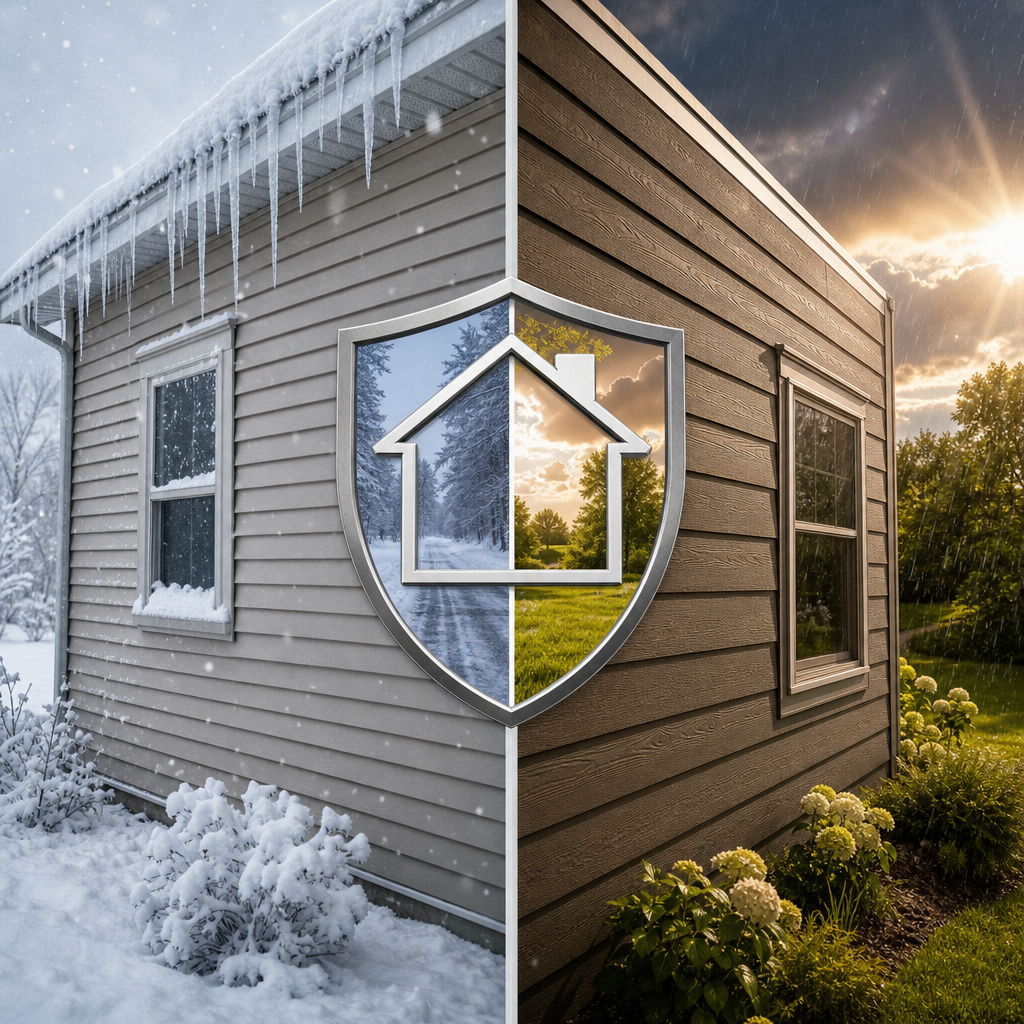
Wisconsin weather tests exterior materials relentlessly. We experience freeze-thaw cycles that punish rigid materials, intense summer UV that fades unprotected surfaces, and wind events that demand impact resistance. Your choice between vinyl and SmartSide ultimately depends on how well each performs under these specific stressors.
Freeze-thaw cycles are particularly revealing. Vinyl becomes increasingly brittle below 20 degrees Fahrenheit. While modern vinyl is formulated to handle this, repeated cycles over years can compromise seals and create cracks, especially where fasteners create stress concentration. SmartSide, being wood-based, naturally accommodates freeze-thaw movement better due to its inherent flexibility.
UV exposure matters most on south and west-facing walls. Vinyl fades noticeably over time; it’s a known characteristic of the material. SmartSide with quality stain maintains color far longer, though the protective finish itself (not the underlying material) eventually weathers and needs refreshing. A professional stain job lasts 7-10 years; vinyl fading becomes noticeable after 15-20 years on exposed walls.
Wind-driven rain is where material impact resistance becomes critical. Vinyl dents and cracks more easily from debris impact, particularly in corners and edges where force concentrates. SmartSide’s denser composition resists these impacts better, maintaining its protective barrier even after wind events. Impact damage to vinyl can look cosmetic but sometimes compromises the weather seal.
Temperature swings create movement. Vinyl expands and contracts with seasonal temperature changes, roughly 0.5 inches per 100 feet of run. SmartSide moves too, but less dramatically and more predictably. Installers who account for vinyl’s movement properly minimize long-term failure, but overlooking this detail causes problems. SmartSide’s smaller movement profile means fewer seal failures even with less experienced installation.
What to do next: If your home faces direct west or experiences frequent wind-driven rain, prioritize material impact resistance. If you’re in a heavily shaded location, vinyl’s color stability becomes less important.
Installation Quality: The Critical Factor in Siding Longevity
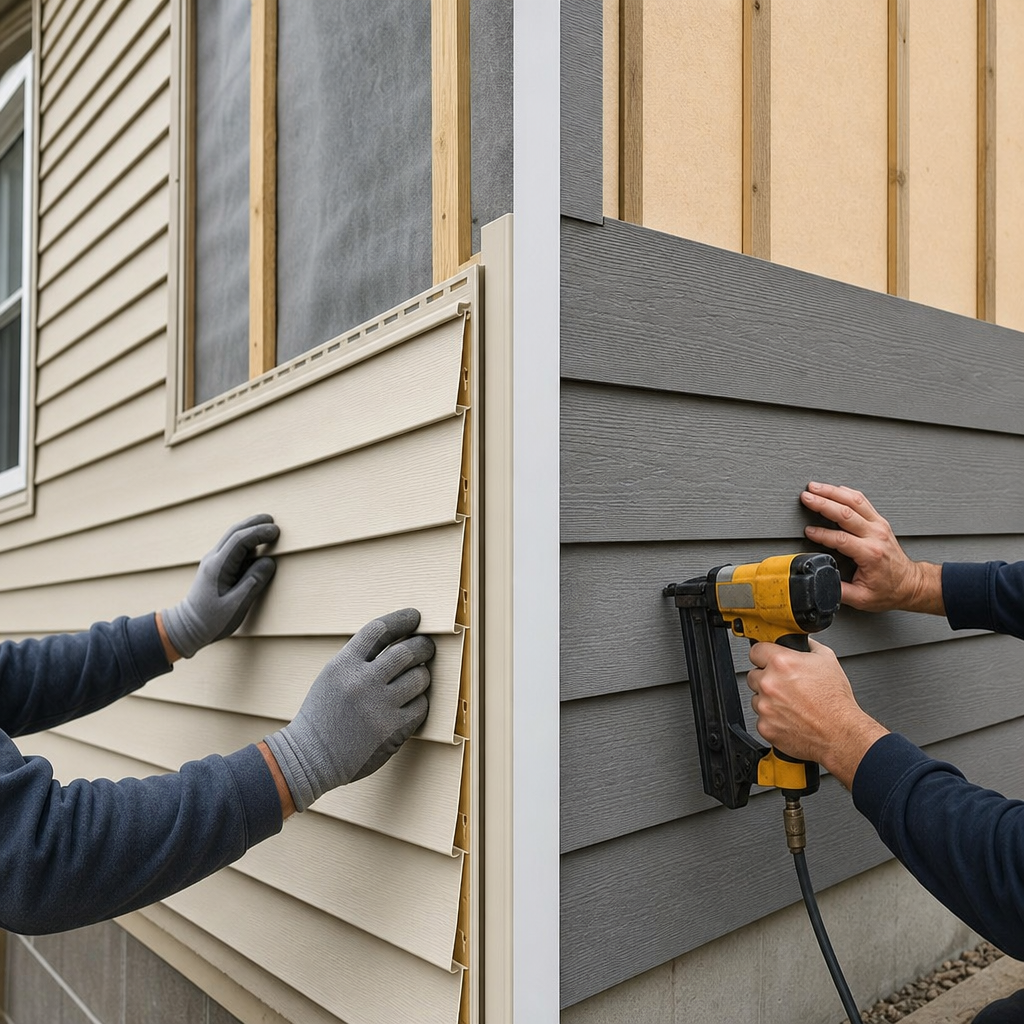
Here’s what we’ve learned from years of replacing failing siding: material choice matters less than installation quality determines longevity.
Both vinyl and SmartSide require careful attention to flashing, caulking, and fastening. Vinyl needs properly spaced panels to allow expansion; fasteners should be driven through the center of nail slots, not tight against the edge. SmartSide needs comprehensive caulking at joints, trim, and penetrations, plus careful sealing of cut edges that would otherwise absorb moisture.
Poor installation kills longevity faster than material deficiency. We’ve seen ten-year-old vinyl installed by amateur crews where water penetrated behind the siding because flashing details were missed. We’ve also seen 30-year-old SmartSide in excellent condition because original installation was meticulous.
When we handle siding replacement, we treat installation as the foundation of durability. This means addressing roof-to-wall transitions properly, ensuring gutters perform correctly before siding goes up, and installing moisture barriers where needed. It means taking time on trim and caulking rather than rushing.
The difference between professional and amateur installation typically shows within 5-10 years. Water intrusion causes hidden rot, mold growth, and structural damage that becomes expensive when finally discovered. Professional installation, backed by a workmanship warranty, protects you from these scenarios.
Actionable step: Ask any contractor for their installation process details and warranty terms. We offer 15-year workmanship warranties on siding replacements specifically because we stand behind our installation quality.
Maintenance Requirements and Long-Term Cost Considerations
Total cost isn’t just material expense. It’s material plus installation plus maintenance plus eventual replacement, all measured across decades of ownership.
Vinyl’s maintenance costs are genuinely low. Annual or biennial washing and occasional caulk repairs total perhaps $200-400 across a decade. You’re not paying for staining, painting, or sealant applications. This simplicity appeals to homeowners prioritizing low maintenance over longevity.
SmartSide requires more active care. Professional staining runs $2,000-5,000 for an average home, needed every 7-10 years. That’s $2,000-7,000 per decade in maintenance costs. Over 40 years, you might spend $8,000-28,000 in maintenance alone. However, quality stain jobs actually extend material life by protecting the underlying wood fibers from UV damage.
When you factor in replacement cycles, the math becomes interesting. Vinyl at $8-12 per square foot installed costs roughly $15,000-25,000 for an average home and lasts 25-30 years. That’s roughly $500-1,000 per year in annualized cost. SmartSide at $12-18 per square foot installed costs $20,000-35,000 and lasts 30-40+ years with maintenance, or roughly $500-1,000 per year in annualized cost, plus $2,000-5,000 maintenance every 7-10 years.
For many homeowners, the real consideration is commitment level. Do you plan to stay in your home long-term and maintain it actively? SmartSide makes sense. Are you budget-conscious and prefer simplicity? Vinyl performs well if installed properly.
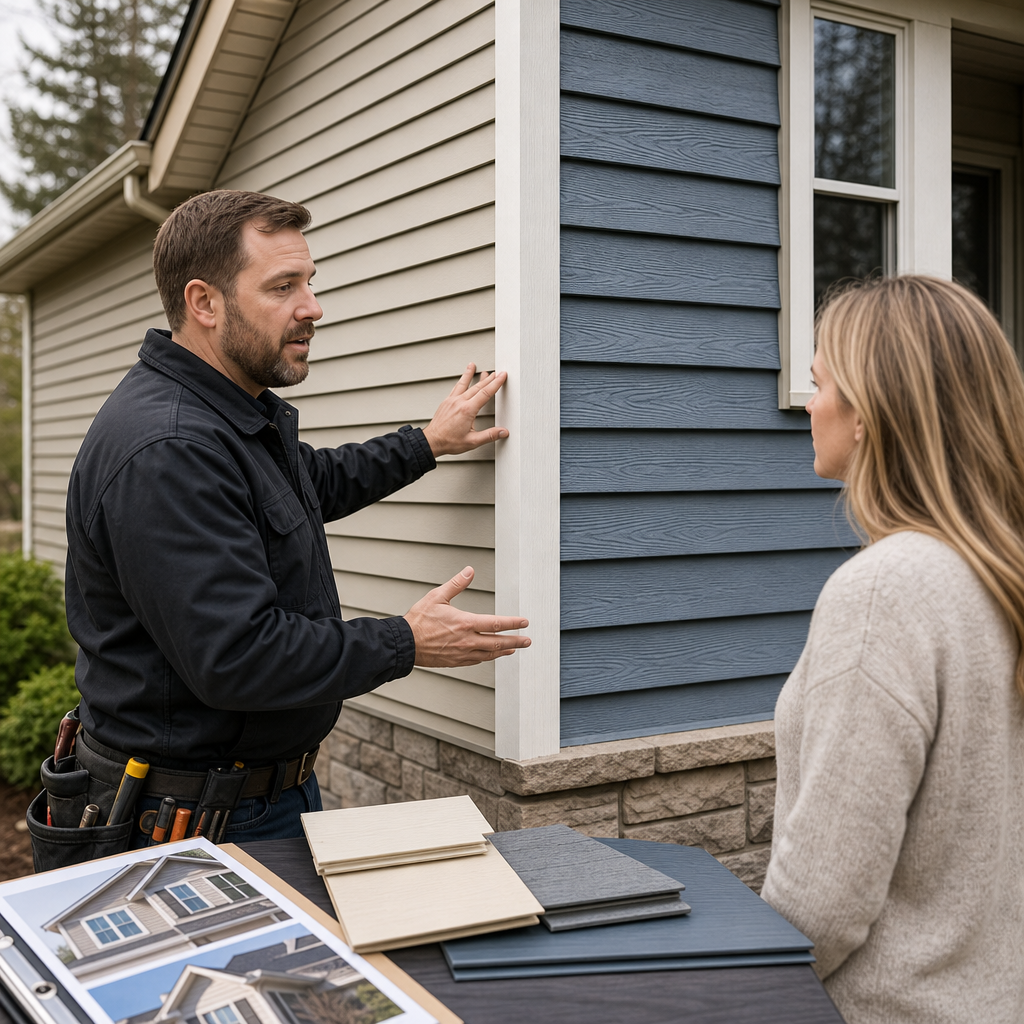
Critical takeaway: Don’t just compare initial material costs. Calculate 30-year ownership cost including maintenance, and align that with your personal priorities and lifestyle.
Why Expert Exteriors Recommends LP SmartSide for Most Homeowners
For Wisconsin properties, we typically recommend SmartSide for homeowners planning to keep their homes for 15+ years and willing to maintain the finish.
SmartSide’s engineered durability, impact resistance, and dimensional stability align with Wisconsin’s climate in ways vinyl simply doesn’t. Our freeze-thaw cycles, UV intensity, and wind events are exactly what SmartSide was engineered to handle. The material performs predictably, ages gracefully with professional maintenance, and can last 40+ years rather than 25-30.
The aesthetic flexibility matters too. We work with homeowners who want specific finishes that vinyl can’t deliver, or who appreciate that their siding can be refreshed with new stain rather than replaced. SmartSide feels substantial and performs substantially, which our customers notice and appreciate.
We recommend vinyl for specific situations: tight budgets, simple maintenance preferences, or shorter-term ownership plans. Vinyl is a solid choice when installed properly. But for the majority of our customers asking which material lasts longer and performs better, SmartSide is the answer.
Protecting Your Investment: Our Professional Installation Guarantee
Choosing the right material is step one. Professional installation is step two, and equally important.
We approach every siding project as a long-term investment in your home’s protection and value. Our process includes thorough assessment of existing conditions, proper moisture barriers where needed, meticulous flashing details, and careful fastening and caulking. We don’t cut corners on installation even when dealing with budget-conscious projects.
We back our work with 15-year workmanship warranties. This means if installation issues cause failures within that period, we address them. This warranty exists because we’re confident in our process and stands as proof that we take installation quality seriously.
If you’re deciding between vinyl and SmartSide for your home, we’re happy to assess your specific situation. Different properties have different needs based on orientation, exposure, and climate positioning. We’ll help you understand which material makes sense for your home and ensure it’s installed to last.
Ready to discuss your siding replacement? Contact us for a consultation, and we’ll help you make the choice that protects your property for decades to come.
For further reading: Siding Replacement Durability.