
How a New Roof Enhances Your Home’s Energy Efficiency and Value
Why Your Current Roof May Be Costing You More Than You Think
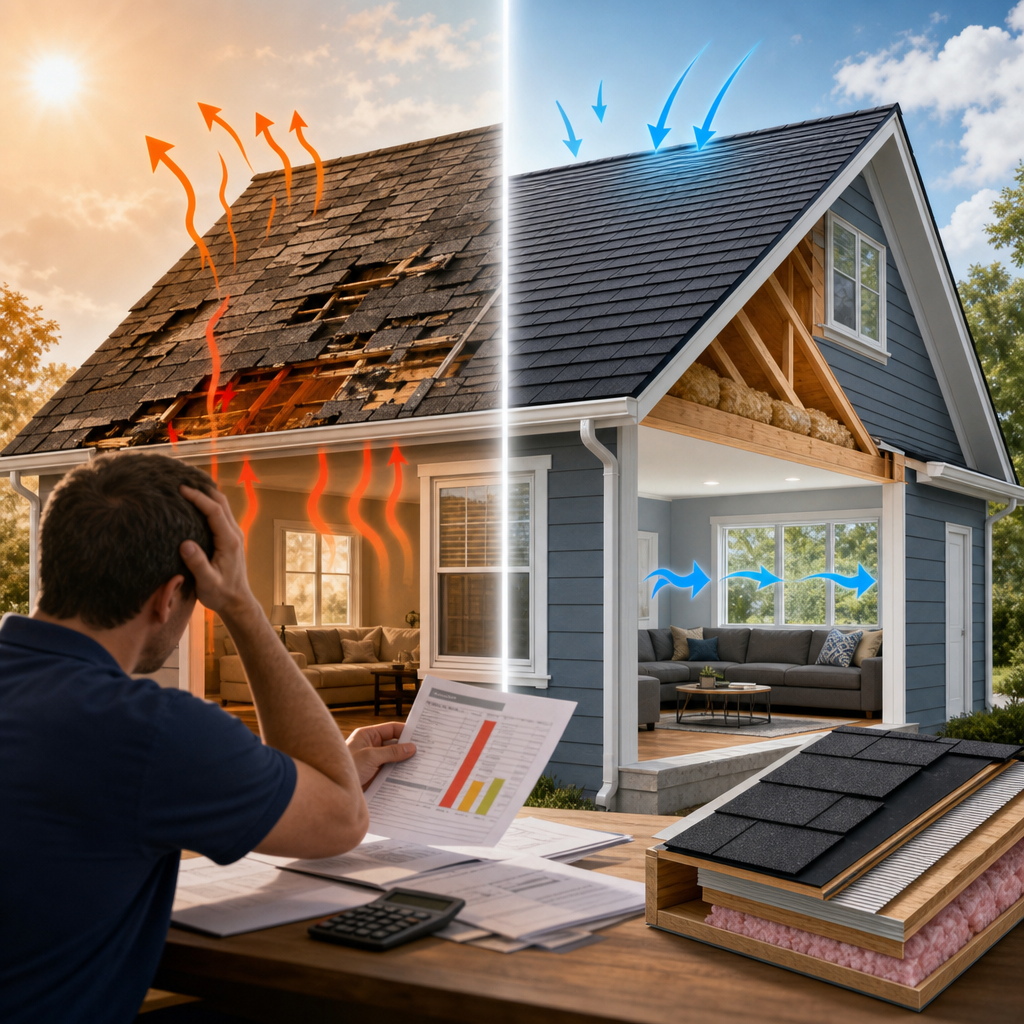
Your roof is your home’s first line of defense against weather, but it’s also a major factor in how much you spend on heating and cooling. An aging or poorly installed roof allows conditioned air to escape, forcing your HVAC system to work harder and longer. If your roof is over 15 years old, you’re likely losing money every month without realizing it.
Consider this scenario: A homeowner in Brookfield with an older asphalt shingle roof notices their winter heating bills are consistently higher than their neighbors’. When we inspect the roof, we often find gaps, deteriorated flashing, and inadequate ventilation. These issues create thermal leaks that cost hundreds of dollars annually in wasted energy.
The real problem isn’t always visible from the ground. Poor roof installation, missing insulation, or worn underlayment silently drain your budget. Many homeowners don’t connect rising utility costs to roof condition until the problem becomes severe. By replacing your roof with modern, energy-efficient materials and proper installation techniques, you can recover those losses and gain control over your energy spending.
Action item: Check your roof’s age by reviewing your home purchase documents or asking previous owners. If it’s approaching 15 years, scheduling a professional inspection is the first step toward understanding your energy efficiency potential.
The Energy Efficiency Problem Most Homeowners Face
Most roofs are installed with a single priority: keeping water out. Energy efficiency often takes a back seat, even though it directly impacts monthly utility costs and long-term home comfort. We’ve found that many properties lack adequate ventilation, insulation coordination between roof and attic systems, and reflective surface properties that reduce heat absorption.
The typical issue breaks down into three areas:
- Thermal bridging: Wood rafters and framing conduct heat between your conditioned space and outside air, reducing the effectiveness of attic insulation.
- Ventilation gaps: Improper ridge vents, blocked soffit vents, or missing ventilation pathways allow hot air to build up in summer and condensation problems in winter.
- Surface material limitations: Standard asphalt shingles absorb and retain heat, increasing cooling loads during warm months.
A home with a south-facing roof in full sun can experience attic temperatures exceeding 150 degrees Fahrenheit on summer days. That heat radiates downward, forcing air conditioning systems to compensate. Without addressing the roof’s role in this equation, you’re fighting a losing battle against rising energy costs.
The solution requires looking at the roof system holistically, not just replacing old shingles with identical new ones.
How Modern Roofing Materials Transform Your Home’s Performance
Today’s roofing materials are engineered with energy efficiency in mind. We work with several high-performance options designed to reduce heat transfer, improve ventilation, and last longer than older alternatives.
Reflective and cool roof products are game-changers. These materials feature light colors or special coatings that reflect solar radiation rather than absorbing it. A light-colored metal roof or reflective asphalt shingle can reduce attic temperatures by 20-30 degrees compared to dark traditional shingles, directly lowering cooling costs.
Architectural and premium shingles offer superior insulating properties and thicker construction. They create a more substantial thermal barrier and often include ventilation-enhancing designs that promote better attic airflow.
Metal roofing delivers exceptional durability, energy performance, and reflectivity. Metal naturally reflects heat and conducts it away from your living space. The 50+ year lifespan also means you’re avoiding the repeated replacement cycles that older materials require.
Proper underlayment and ventilation systems are equally important. Modern synthetic underlayments provide superior insulation value compared to felt, and engineered ventilation systems maximize airflow without compromising moisture control. We coordinate these components with your existing attic insulation to create a cohesive thermal envelope.
For commercial properties, we specialize in EPDM and TPO systems that combine durability with reflective properties, significantly reducing cooling costs for larger buildings.
Next step: Request a consultation to discuss which material aligns with your climate, budget, and efficiency goals. We’ll explain how each option performs in Wisconsin’s seasonal conditions.
The Direct Connection Between Roof Quality and Energy Bills
The relationship between roof quality and energy expenses is direct and measurable. A poorly installed or aging roof system can increase heating and cooling costs by 15-25% compared to a properly designed, modern roof system.
Here’s the breakdown: Your roof system works alongside your insulation, ventilation, and HVAC equipment. When one component fails to perform, the others compensate by using more energy. A leaky, deteriorated roof forces your furnace to heat longer and your air conditioner to run more frequently. Over a single year, this can add hundreds of dollars to your utility bills.
We’ve documented cases where homeowners reduced their annual energy costs by $800-$1,200 after upgrading to an energy-efficient roof system. These savings accumulate quickly and often offset a significant portion of the replacement investment within 5-7 years.
The efficiency gains come from:
- Reduced air infiltration through a properly sealed roof system
- Better thermal performance from modern insulation layers
- Improved attic ventilation that prevents heat buildup
- Lower solar heat gain from reflective surface materials
Beyond immediate cost savings, improved energy efficiency enhances comfort. Rooms stay warmer in winter without drafts and cooler in summer without hot spots. Your HVAC system operates more smoothly, reducing wear and extending its service life.
Protecting Your Investment with Professional Roof Replacement
A new roof is one of the most significant home investments you’ll make. Protecting that investment starts with professional installation by experienced contractors who understand how every component contributes to energy performance.
Poor installation sabotages even the best materials. Common mistakes include improper flashing around penetrations, inadequate ventilation installation, incorrect shingle nailing patterns, and failure to coordinate with existing insulation systems. These errors reduce energy efficiency and shorten roof lifespan.
When we perform comprehensive roof services, we follow strict protocols that maximize both durability and energy efficiency. Our team ensures proper ventilation, correct thermal bridging mitigation, and seamless integration with your home’s existing systems. We also address related components like fascia and soffit guidance to create a complete exterior envelope.
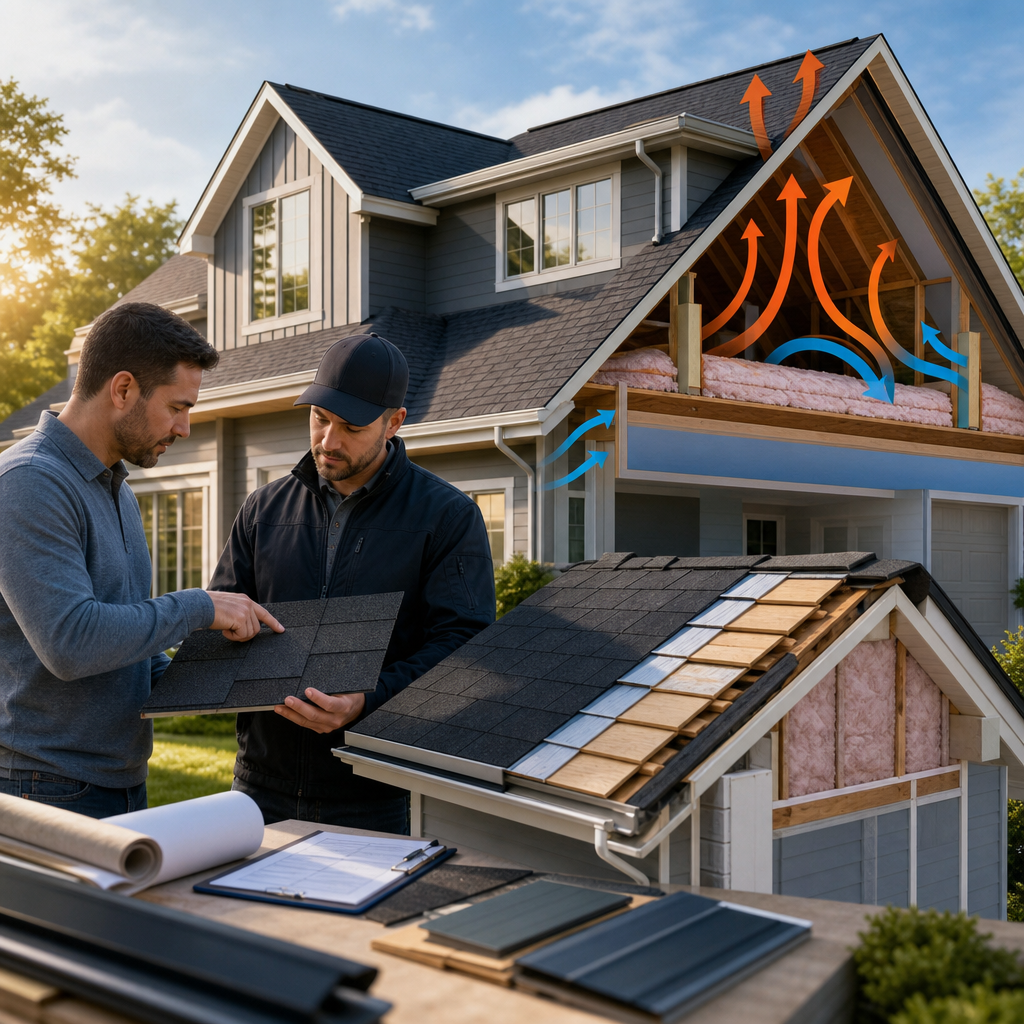
We back our work with a 15-year workmanship warranty, giving you confidence that your investment is protected for years to come. This commitment means we install every roof as if it were our own home.
What to do: Ask any roofing contractor about their installation standards, ventilation practices, and how they coordinate with existing attic systems. Quality contractors welcome these questions and provide detailed answers.
How We Select the Right Materials for Maximum Efficiency
Choosing the right roofing material requires understanding your specific situation: climate, home orientation, existing insulation, budget, and aesthetic preferences all factor into the decision.
In the Brookfield and surrounding areas, we typically recommend materials that perform well with Wisconsin’s temperature extremes, heavy snow loads, and seasonal UV exposure. We consider:
Reflectivity ratings: We review Solar Reflectance (SR) values for materials to predict heat absorption and cooling cost reduction.
Insulation R-value: We examine the thermal resistance provided by the material and coordinate it with your attic insulation to avoid over-insulation in some areas and under-insulation in others.
Ventilation compatibility: We assess whether the existing attic ventilation can support the new material or if improvements are needed.
Long-term performance data: We rely on real-world data from similar installations in our service area rather than manufacturer estimates alone.
For residential properties, we often recommend premium architectural shingles with reflective coatings or metal roofing for homeowners prioritizing maximum efficiency. For commercial applications, our roofing warranties cover TPO and EPDM systems that deliver energy savings at scale.
We provide detailed comparisons showing estimated annual energy cost savings for each material option, helping you make an informed decision based on actual performance projections.
The Long-Term Value Increase from a Quality Roof Installation
Beyond immediate energy savings, a new energy-efficient roof increases your home’s resale value and marketability. Real estate data consistently shows that roof condition ranks among the top three factors buyers evaluate during home inspections.
A home with a new, high-quality roof commands a price premium compared to identical homes with aging roofs. Buyers view a quality roof as reduced risk and lower future maintenance costs. Depending on market conditions and your location, a professional roof replacement can return 60-85% of its cost in increased home value.
The combination of energy efficiency and longevity amplifies this benefit. When you can tell potential buyers that your roof will provide 30+ years of service and reduce their energy costs, you’ve addressed two major concerns simultaneously. This positioning strengthens your negotiating position and accelerates the sale process.
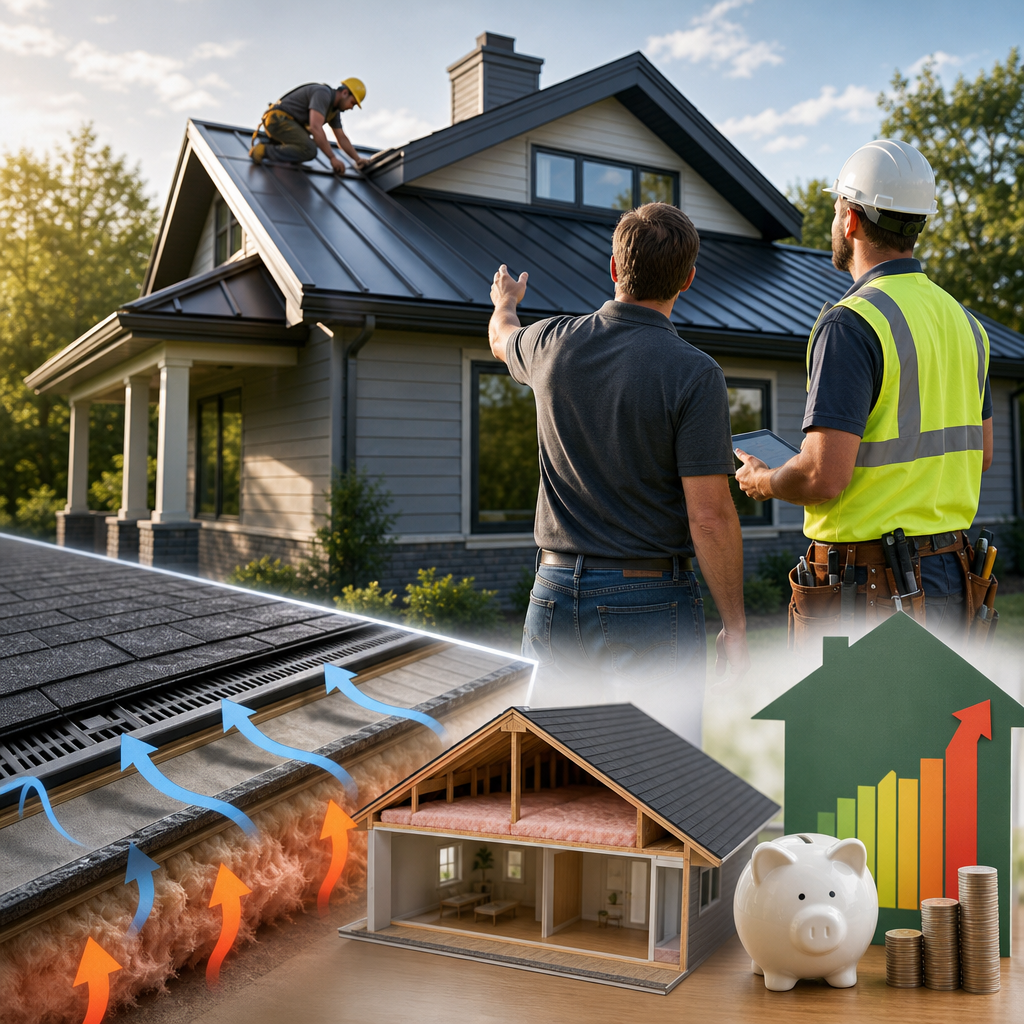
Properties with comprehensive exterior upgrades, including roof replacement alongside siding or fascia and soffit guidance improvements, see even greater value appreciation. These integrated upgrades signal a well-maintained home and complete exterior protection.
What Property Buyers Look For in Roof Condition and Efficiency
Today’s home buyers are increasingly energy-conscious and view roof condition as a key indicator of overall home maintenance quality. During inspections, they evaluate several factors that directly relate to energy efficiency and protection.
Material age and condition: Buyers want to know the roof’s installation date and expected remaining lifespan. A 5-year-old roof is far more attractive than a 20-year-old roof, even if both are still functional.
Visible damage or repairs: Multiple patches, missing shingles, or sagging sections suggest poor maintenance and potential hidden problems. Buyers factor costly repairs into their offers.
Ventilation and attic condition: Inspectors examine attic ventilation, insulation levels, and signs of moisture or heat damage. These visible factors confirm whether the roof system is performing its energy efficiency function.
Energy efficiency features: Buyers increasingly ask about reflective coatings, ventilation design, and thermal performance. Properties with documented energy efficiency improvements often command higher prices and sell faster.
Warranty coverage: Documentation of manufacturer and workmanship warranties provides peace of mind and protects resale value. Our 15-year workmanship warranties on full roof replacements are a significant selling point.
When you invest in a quality, energy-efficient roof now, you’re creating competitive advantage for your future sale and ensuring your home meets modern buyer expectations.
Getting Started with Your Energy-Efficient Roof Upgrade
Taking action on roof replacement starts with understanding your current roof’s condition and energy performance potential. We recommend a professional inspection as your first step.
During an inspection, we assess:
- Roof age and remaining lifespan
- Current ventilation effectiveness
- Thermal performance compared to modern standards
- Integration with existing insulation systems
- Maintenance history and visible damage
Based on these findings, we provide a detailed report with material recommendations, projected energy savings, estimated costs, and timeline. You’ll have all the information needed to make a confident decision.
If you’re ready to explore roof installation in Brookfield, Menomonee Falls, or Sussex, we offer free, no-obligation quotes. Our team will walk you through options, answer your questions, and help you understand the investment and return.
A new, energy-efficient roof protects your home, reduces monthly utility costs, enhances comfort, and increases resale value. The sooner you upgrade, the sooner you’ll benefit from these advantages. Contact us today to schedule your inspection and take the first step toward a more efficient, protected home.