
5 Best Roofing Materials for Wisconsin’s Snowy Climates
Why Wisconsin Winter Weather Demands the Right Roofing Material
Wisconsin winters are no joke. Heavy snow loads, ice dams, freeze-thaw cycles, and extreme temperature swings all put tremendous stress on your roof. Choosing the right roofing material isn’t just about aesthetics or initial cost—it’s about protecting your investment for decades while standing up to our demanding climate.
At Expert Exteriors, we’ve installed thousands of roofs across the Brookfield area and beyond. We’ve seen what works and what fails when winter hits hard. In this guide, we’ll walk you through the best roofing materials specifically suited to Wisconsin’s snowy conditions, so you can make an informed decision that keeps your property safe and dry year-round.
Our state experiences some of the most challenging roofing conditions in the country. Winter temperatures can drop to 20 degrees below zero, and we regularly see 12 to 18 inches of snow in a single storm. That’s not even accounting for the freeze-thaw cycles that occur when temperatures fluctuate around freezing—these cycles cause materials to expand and contract repeatedly, which accelerates wear and damage.
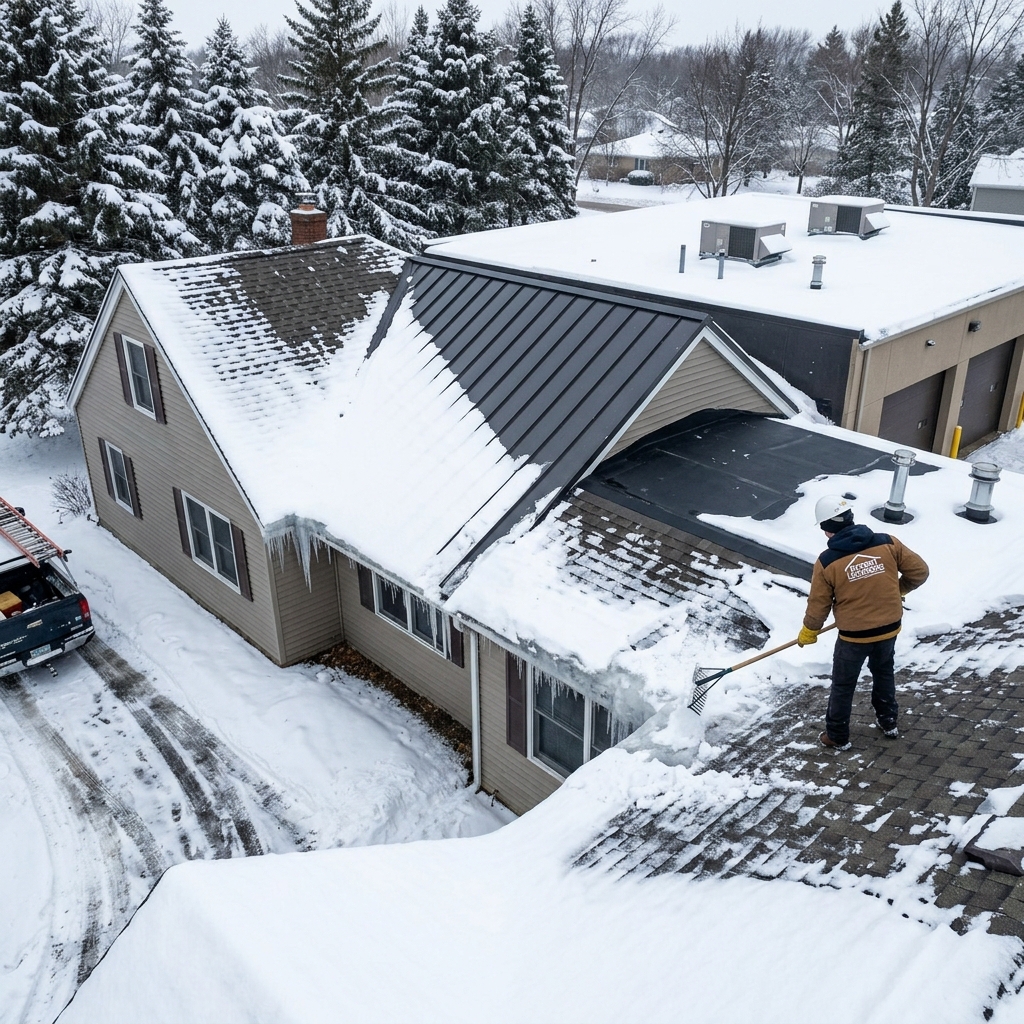
Snow load is the most obvious concern. Wisconsin roofs must support 30-50 pounds per square foot of snow weight depending on the region. But the real threat comes from ice dams, which form when heat escapes through your attic, melting snow on the roof surface. That meltwater flows to the cold overhang, refreezes, and creates a dam that traps water. This water backs up under your shingles and leaks into your home.
The right roofing material handles these conditions by:
- Shedding snow efficiently rather than holding it
- Resisting ice dam formation through proper design
- Maintaining flexibility in extreme cold without becoming brittle
- Preventing moisture penetration during thaw cycles
Not all roofing materials perform equally in our climate. Standard three-tab shingles might be affordable, but they’re often inadequate for Wisconsin winters. We recommend materials engineered specifically for snow load, impact resistance, and durability. Your roof is your home’s first line of defense, and it deserves materials that match Wisconsin’s weather.
Common Roofing Failures in Snow-Heavy Regions
Before we cover what works, let’s look at what typically fails. Understanding these common problems helps explain why certain materials outperform others in Wisconsin.
Ice dam damage is our most frequent claim source. When water backs up behind ice dams, it seeps under shingles and into your attic, causing rot, mold, and structural damage. Some roofing materials are more prone to this because of how they shed water or how they flex under freeze-thaw stress.
Splitting and cracking happen when standard asphalt shingles become too brittle in sub-zero temperatures. The material loses flexibility, and roof movement from snow load causes stress cracks that rapidly become leaks.
Punctures and granule loss occur when ice and heavy snow damage the roof surface. Poor-quality materials lose their protective granules faster, exposing the asphalt underneath. Within a few years, these roofs deteriorate significantly.
Thermal shock damage results from rapid temperature swings. When exposed to 60-degree temperature changes within hours, inferior materials can buckle, warp, or separate at seams.
Inadequate snow shedding means snow piles up on the roof, increasing weight and creating more opportunities for ice dams. Metal roofing excels here because its slick surface naturally sheds snow.
The common denominator in these failures? Using materials not designed for Wisconsin’s extreme climate, or using quality materials with poor installation. Both factors matter equally.
Impact-Resistant Asphalt Shingles for Superior Winter Performance
We specify impact-resistant asphalt shingles for many residential properties because they offer excellent performance at a reasonable cost. These aren’t your typical builder-grade shingles.
Impact-resistant asphalt shingles feature a reinforced fiberglass mat core and adhesive technology that flexes in freezing temperatures without cracking. They’re rated to withstand impact from hail, ice, and falling debris without tearing or cracking. Many homeowners don’t realize they can also qualify for homeowner’s insurance discounts (typically 15-30%) when they upgrade to impact-resistant shingles.
Key advantages for Wisconsin winters:
- Maintain flexibility even at minus 20 degrees
- Feature interlocking tabs that prevent wind lift and ice infiltration
- Resistant to granule loss and UV degradation
- Rated for 30-50 pound snow loads
- Available in architectural profiles for curb appeal
What to expect:
Expect a lifespan of 25-30 years when properly installed. Impact-resistant shingles cost more than standard asphalt (roughly 10-20% premium), but the durability increase justifies the expense. They handle Wisconsin freeze-thaw cycles far better than basic three-tab shingles.
We often pair these with proper ventilation and ice-and-water shield underlayment to maximize performance. The combination significantly reduces ice dam risk and extends roof life.
One actionable step: ask roofing contractors whether they use ice-and-water shield beneath impact-resistant shingles. This extra layer is critical in Wisconsin and often makes the difference between a roof that lasts 25 years versus one that fails in 15.
Metal Roofing: Durability and Snow Shedding Excellence
Metal roofing excels in Wisconsin winters for one simple reason: its smooth surface sheds snow and ice before they accumulate. This single feature eliminates most ice dam problems and dramatically reduces snow load stress on your structure.
Metal roofs come in several options. Standing seam metal roofs feature vertical ribs that prevent water intrusion and create a sleek appearance. Metal shingles mimic the look of traditional asphalt or wood shakes while providing metal’s durability benefits. Both perform exceptionally well in Wisconsin.
Why metal outperforms other materials in snow country:
- Snow slides off naturally; no ice dam formation
- Aluminum and steel both handle extreme cold without brittleness
- Standing seam designs prevent water penetration at joints
- Lightweight compared to asphalt, reducing structural stress
- Reflect sunlight, reducing heat buildup that causes ice dams
- Lifespan reaches 40-70 years depending on finish
The realistic picture:
Metal roofing costs 2-3 times more than asphalt shingles upfront. For a 2,000-square-foot residential roof, expect to invest $15,000-$25,000 versus $8,000-$12,000 for quality asphalt. However, the 50-year lifespan means you’re likely installing metal once while replacing asphalt twice or three times.
Metal noise during rain is often overstated. Proper insulation and attic ventilation make metal nearly as quiet as asphalt indoors. Some homeowners actually appreciate the sound.
For commercial properties with flat or low-slope roofs, metal panels combined with appropriate edge details handle heavy snow extremely well. We’ve seen metal roofs on commercial buildings successfully shed 3-foot snow accumulations that would devastate standard flat roofing.
EPDM Rubber Roofing for Commercial Properties
Commercial buildings often feature flat or low-slope roofs, which present different challenges than pitched residential roofs. EPDM (ethylene propylene diene monomer) rubber is one of the most reliable options for these applications in Wisconsin.
EPDM is a synthetic rubber membrane that we install as a continuous sheet. There are no seams across the roof surface (though seams occur at perimeter edges and around penetrations). This design virtually eliminates water infiltration points.
EPDM advantages for Wisconsin commercial roofing:
- Exceptional cold weather flexibility; won’t crack in extreme cold
- UV resistant; maintains integrity under intense sun exposure
- Tolerates foot traffic and weather exposure without degradation
- Black surface absorbs heat, reducing snow accumulation
- Proven track record of 25-30+ year lifespan
- Easier repairs than competing membrane systems
Snow load considerations:
While EPDM itself handles snow weight well, flat roofs require proper drainage and snow removal protocols. We recommend commercial clients develop a snow removal plan rather than relying on the roof to shed snow. Pooling water combined with heavy snow loads stresses the roof structure.
Our EPDM and TPO roofing solutions are backed by 15-year workmanship warranties. We ensure proper installation with fully sealed seams and appropriate fastening, which is crucial for long-term performance.
For property managers asking what to do next: document your roof’s condition before winter arrives, schedule drainage inspections, and establish a relationship with a roofing contractor who can respond quickly if problems develop. Proactive maintenance prevents expensive emergency repairs.
TPO Membrane Systems: Modern Solutions for Snow Load
TPO (thermoplastic olefin) represents newer membrane technology that’s gaining popularity for commercial properties throughout Wisconsin. It bridges some gaps between EPDM’s proven reliability and the latest roofing innovations.
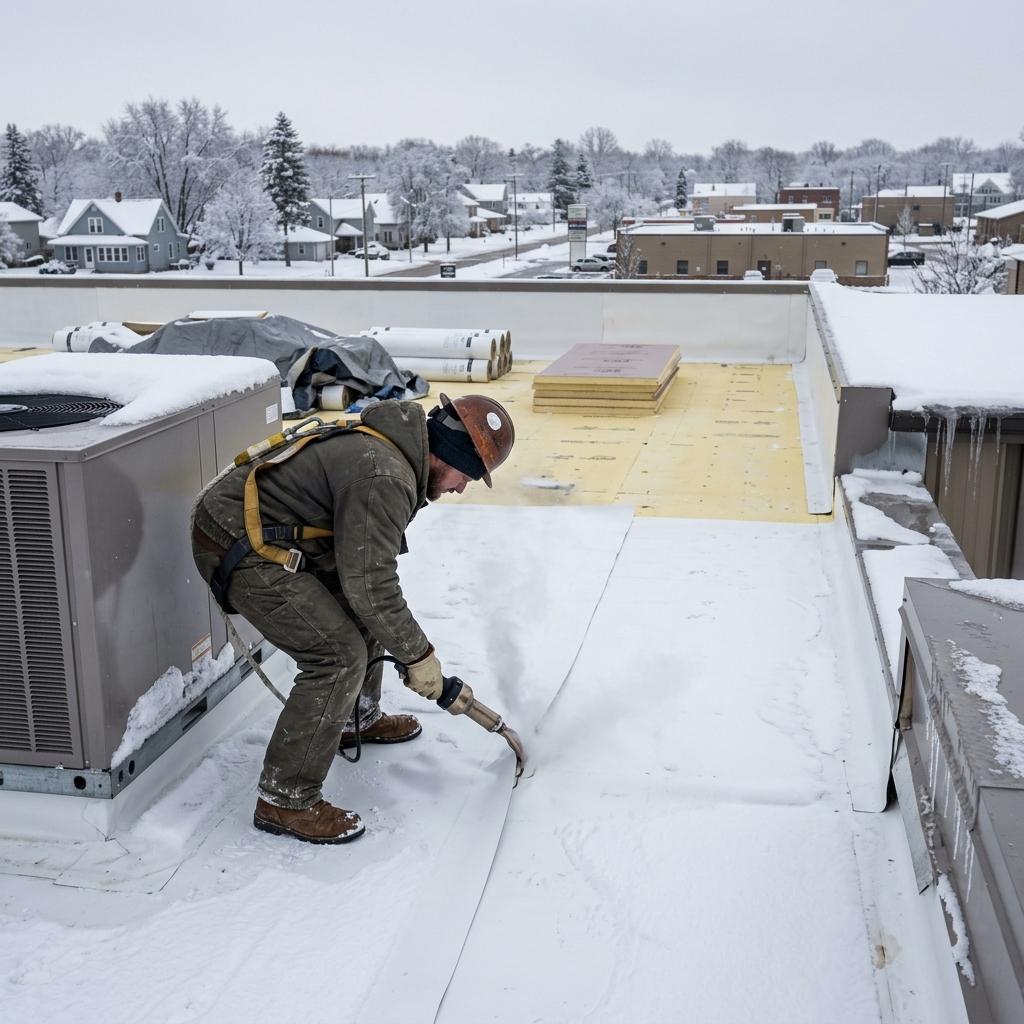
TPO is a single-ply membrane that combines rubber and plastic polymers. It’s heat-welded at seams rather than taped, creating very strong seam bonds. This manufacturing approach makes TPO particularly resistant to seam failure, a key concern in Wisconsin’s temperature extremes.
TPO benefits for snowy climates:
- Heat-welded seams exceed taped seams in reliability
- White membrane reflects more solar heat than EPDM, reducing ice dam potential
- More puncture-resistant than EPDM in most conditions
- Flexibility remains in freezing temperatures
- 25-30 year lifespan with proper maintenance
- Lower upfront cost than EPDM in many cases
Real-world performance:
We’ve installed TPO roofs on commercial properties throughout the Brookfield area that have handled multiple severe winters without issues. The white surface reflects sunlight effectively, which matters for buildings where you want to minimize heat absorption.
One consideration: TPO technology varies significantly between manufacturers. Some TPO products perform better than others in extreme climates. We specify high-quality TPO systems from manufacturers with proven Wisconsin track records rather than selecting based on price alone.
Our commercial roofing solutions include detailed specifications for both EPDM and TPO, with recommendations based on your specific building characteristics, budget, and maintenance preferences.
Architectural Shingles: Premium Protection Against Wisconsin Winters
Architectural shingles (also called laminate or dimensional shingles) represent the premium asphalt shingle option. They feature multiple layers that create depth and shadow lines, giving roofs a high-end appearance while delivering superior performance in winter.
These shingles combine the cost-effectiveness of asphalt with durability approaching metal roofing. They’re heavier than standard shingles, which means they stay firmly attached during Wisconsin wind events. The multiple layers also provide better impact resistance.
What makes architectural shingles Wisconsin-appropriate:
- 25-30 pound weight per square provides excellent wind resistance
- Multi-layer design handles freeze-thaw cycling
- Class IV impact rating available (hail-resistant)
- Architectural profiles enhance home appearance
- Proper installation with ice-and-water shield dramatically improves performance
- Cost sits between standard asphalt and metal
Performance expectations:
Quality architectural shingles typically last 25-30 years in Wisconsin’s climate. They handle ice dams better than standard shingles because the thicker material resists water penetration more effectively. When combined with proper attic ventilation and ice-and-water shield, these roofs rarely develop ice dam damage.
The investment typically runs $10,000-$15,000 for a 2,000-square-foot residential roof. That’s significantly less than metal but more than budget asphalt options. Many homeowners find this sweet spot between value and performance.
We often recommend architectural shingles for homes where metal roofing’s appearance doesn’t match neighborhood character or where homeowners prefer a more traditional aesthetic.
How We Select the Right Material for Your Property
Choosing a roofing material requires balancing several factors. We don’t recommend the same material to every customer because every property is different.
Our selection process considers:
- Climate exposure: How much wind, sun, and snow does your specific location experience? North-facing slopes and exposed ridges face different conditions than south-facing slopes
- Current roof structure: Can your building support heavier materials like metal or dimensional asphalt? Adding metal to a structure designed for light asphalt might require additional framing
- Budget and timeline: What’s your investment capacity? Do you need the roof replaced immediately or can you plan ahead?
- Aesthetic preferences: Architectural styles vary across Wisconsin. Material choices should complement your home’s character
- Maintenance willingness: Some materials require more active maintenance; others are virtually maintenance-free
- Long-term ownership plans: If you’re selling in five years, ROI matters differently than if you’re planning to stay 20+ years
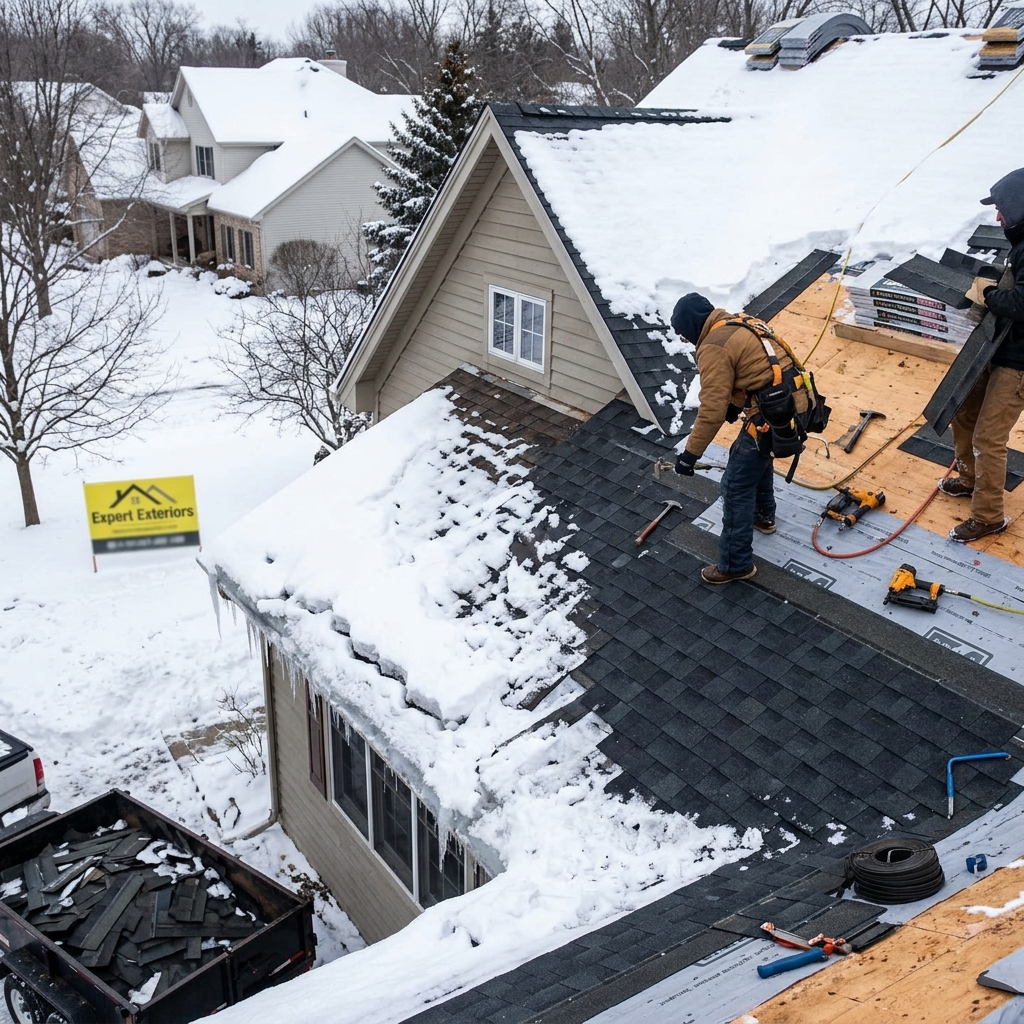
Our residential roof replacement consultations include detailed property assessments. We evaluate your attic ventilation, insulation, current water damage signs, and structural capacity before recommending specific materials.
For a property in Brookfield with poor attic ventilation, we might recommend impact-resistant shingles with upgraded ice-and-water shield rather than metal, because ventilation improvements would address the underlying ice dam issue. For another property with excellent ventilation and budget available, metal roofing might be the ideal long-term investment.
This customized approach ensures your roofing investment matches your specific situation rather than following generic recommendations.
Installation Matters: Why Professional Craftsmanship Protects Your Investment
Even the best roofing material fails with poor installation. We’ve seen premium metal roofs leak because contractors didn’t properly flash around penetrations. We’ve seen architectural shingles fail early because installers didn’t install ice-and-water shield correctly.
Installation quality directly impacts winter performance. Here’s why it matters most:
Flashing integrity: Valleys, roof-to-wall transitions, and chimney flashing must be installed with precise overlapping and sealing. Water always finds the easiest path downward, and installation shortcuts create that path. One improperly sealed flashing detail can cause years of water damage.
Ice-and-water shield application: This critical underlayment must extend a minimum of 6 feet up the roof from the eave in Wisconsin climates. We often extend it further on north-facing slopes and low-pitched roofs. Skimping on coverage means ice dams leak directly into your home.
Proper fastening: Shingles must be fastened with precise nail placement and appropriate nail count. Too few nails and wind lifts shingles; too many and you damage the shingle. Our crews are trained in manufacturer specifications for each specific product.
Ventilation integration: Your new roof should coordinate with your existing attic ventilation or we’ll recommend improvements. Poor ventilation causes premature roof failure regardless of material quality. We identify ventilation issues during the initial inspection and address them before installation.
Seam sealing on metal: Properly sealed seams on standing seam metal roofing require specific sealant products and installation technique. We don’t cut corners on sealing because seam failures become ice dam generators.
Our installation teams have decades of combined experience. We follow manufacturer specifications precisely and often exceed them based on Wisconsin-specific experience. This craftsmanship is backed by our warranty commitments, which we’ll detail next.
Our Warranty and Long-Term Support Commitment
We stand behind our work because we’re confident in our installation quality. Here’s what we provide:
15-year workmanship warranty on all residential roof replacement and siding replacements. This covers any defects in our installation for 15 years. If flashing leaks, seams fail, or fasteners back out due to our workmanship, we repair it at no charge.
Material warranties vary by product. Impact-resistant asphalt shingles typically include 25-30 year manufacturer warranties covering material defects. Metal roofing warranties often extend 40+ years. We provide complete warranty documentation explaining what’s covered and how to file claims if needed.
Ongoing support doesn’t end at project completion. We’re available to answer questions about maintenance, to address concerns that develop after installation, and to help you understand your warranty coverage. Our team remains accessible throughout winter when roofing issues are most likely to emerge.
Winter responsiveness is crucial. If you experience water damage during a snowstorm, call us immediately. We offer emergency tarping and temporary repairs to prevent additional damage while we schedule permanent fixes. Many contractors are overwhelmed during Wisconsin winters; we maintain capacity for emergency situations.
Maintenance recommendations are part of our service. We’ll advise you on seasonal inspections, gutter cleaning importance, and any issues we identify during yearly check-ups. Regular maintenance extends roof life and identifies problems before they become expensive.
For customers with commercial roofing or flat-roof systems, we offer maintenance contracts that include inspections and minor repairs. These contracts keep buildings protected while controlling long-term costs.
To move forward, contact us for a professional roof inspection. We’ll evaluate your current roof, identify winter vulnerabilities, and recommend appropriate materials backed by detailed cost and performance comparisons. Our team serves the entire Wisconsin service area, with particular focus on Brookfield and surrounding communities.
Your roof protects everything you’ve invested in. Wisconsin winters demand the right material, proper installation, and professional support. We’re here to provide all three.